Elastane Blends in Knitted Bags: What 3, 5 and 8 Per Cent Actually Cost You
How much elastane should a knitted bag contain? Three per cent gives about 95 per cent recovery after a 30 per cent extension; five per cent reaches roughly 97 per cent and is where most programmes settle; eight per cent reaches 98 per cent but adds about 18 per cent to knitting cycle time and degrades above 190 °C. Elastane costs roughly eight to ten times polyester per kilogram. MOQ 100 pcs, sampling 7 working days, bulk 30 days, FOB Xiamen.
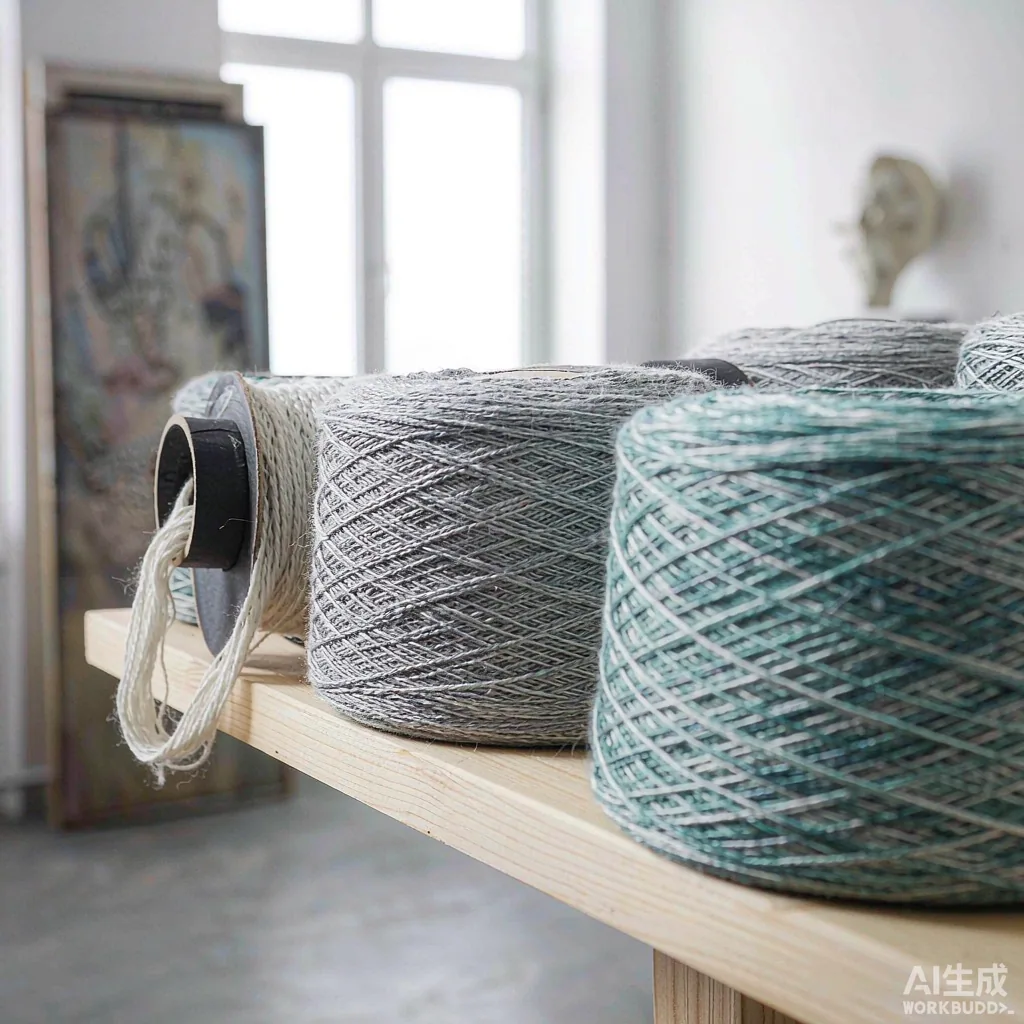
The Number Behind Elastane: What You Buy Per 100 g
Elastane is bought by weight but sold by performance, and at eight to ten times the price of polyester per kilogram the percentage in the specification is the whole commercial decision.
A 300D polyester body at 520 g/m² uses about 158 g of yarn in a mid-size shopper. Add 5 per cent elastane and the shell carries roughly 150 g of polyester plus 8 g of elastane. The polyester line barely moves; the elastane line is small in grams but large in cost, because the material is priced an order of magnitude above the base yarn.
That asymmetry is why the ratio deserves more attention than it usually gets. Moving from 3 to 8 per cent elastane adds about 8 g of material to a 158 g shell — a 5 per cent increase in mass and a far larger increase in material cost. Whether it is worth it depends entirely on what the recovery is for, which is the next branch of the decision.
The useful way to frame it: elastane is not a strength material and does not improve abrasion. It buys recovery and fit. A programme that specifies it for any other reason is paying for performance it will not use.
Ratio 1: Three Per Cent Elastane, Recovery Without Restraint
Three per cent is the entry level: enough to pull a knit body back into shape after light crushing, without changing the handle or the cycle time materially.
- Elastane linear density
- 20D, plated under the ground yarn
- Elastane share of shell
- 3 % by weight
- Recovery after 30 % extension
- 95 %
- Shell GSM change
- +4 % against unblended reference
- Knitting cycle time change
- +6 %
- Heat setting
- 180 °C for 30 s
- Hand effect
- Minimal, retains the base yarn handle
- Best fit
- Casual shoppers, pouches, linings
At 3 per cent the elastane is normally plated — knitted as a covered or bare filament alongside the ground yarn rather than twisted into it. Coverage is the reason: a bare elastane filament exposed on the fabric face picks up abrasion and snags, and it also shows a slightly different lustre against the polyester.
For a buyer weighing risk against performance, 3 per cent is the low-risk option worth testing first. It improves recovery measurably without moving the handle, the GSM or the unit cost by enough to trigger a repricing conversation, and it does not add a process step that can go wrong.
Ratio 2: Five Per Cent, Where Most Programmes Land
Five per cent is the practical default for knit bags that get folded, stuffed or overpacked, because the recovery gain is real while the cost and cycle-time penalty stays manageable.
| Ratio | Recovery | GSM change | Cycle time | Yarn cost index | Typical use |
|---|---|---|---|---|---|
| 0 % elastane | 90 % | reference | reference | 100 | Flat-packed promotional shoppers |
| 3 % elastane | 95 % | +4 % | +6 % | 118 | Casual totes and pouches |
| 5 % elastane | 97 % | +7 % | +11 % | 132 | Gym bags, weekenders |
| 8 % elastane | 98 % | +11 % | +18 % | 155 | Compression sleeves, structured styles |
The recovery number is measured the same way every time: extend the specimen by 30 per cent of its original length, hold for a fixed period, release, and measure the permanent extension after recovery. The gap between 90 per cent recovered and 97 per cent recovered is the difference between a bag that looks tired after a season and one that still looks new. That gap is also what a retailer notices when a returned item is assessed, because poor recovery reads as poor quality even when nothing has actually failed.
The cycle time penalty is the part buyers forget to plan for. Elastane has to be fed at controlled tension, which usually means a slower carriage speed and more frequent tension checks. Eleven per cent more machine time on a 30-day bulk slot is a meaningful chunk of capacity, and it is why the 5 per cent option is often the honest recommendation rather than the 8 per cent one.
Ratio 3: Eight Per Cent, Compression and Structure
Eight per cent is a structural specification, not a comfort one — it is used where a knit bag has to grip, compress or hold a shape against a load.
Compression sleeves for laptops and tablets are the clearest case: the panel has to hold a device firmly enough that it does not shift, and that requires real elastic power in the structure. The same applies to bottle holders and to any style where the knit is doing the job of a strap or a band rather than just enclosing a volume.
The penalty is heat. Elastane loses its power above roughly 190 °C, and a heat-set cycle run too hot will permanently kill the recovery the programme paid for. For a 5 or 8 per cent blend, set the board and heat-set cycle at 180 °C and verify recovery after the cycle rather than before it.
What Elastane Adds to Machine Minutes
Expect about 6 per cent more knitting time at 3 per cent elastane, 11 per cent at 5 per cent and 18 per cent at 8 per cent, mostly from reduced carriage speed and added tension checks.
| Stage | No elastane | 5 % elastane | Added time |
|---|---|---|---|
| Yarn loading and tension set-up | 12 min | 21 min | +9 min |
| Knitting, per 100 bodies | 13.3 h | 14.8 h | +1.5 h |
| Heat setting, per 100 bodies | 1.2 h | 1.8 h | +0.6 h |
| Tension checks, per lot | 2 | 5 | +3 checks |
The larger number here is the set-up, not the knitting. Tensioning elastane correctly takes longer than loading a standard ground yarn, and getting it wrong produces a body with uneven recovery that no amount of downstream boarding will fix. On short runs this is the dominant cost of using elastane at all. Above roughly 2,000 pieces the set-up spreads thin enough that the ratio decision is driven by performance rather than by process overhead, and programmes below that figure are usually better served by the 3 per cent option unless the brief specifically calls for grip or compression.
The Heat-Set Step That Decides Whether It Lasts
Elastane blends need a controlled heat-set cycle at about 180 °C for 30 to 45 seconds, and recovery has to be verified after the cycle, not before it.
The failure mode is specific and easy to miss in development. A body that recovers 97 per cent before heat setting can drop to 92 per cent after a cycle run 15 °C too hot, because the elastane has lost part of its power. Nothing looks wrong on the bench; the bag simply stops springing back after a few weeks of use.
The control is simple: record the temperature and dwell for every cycle, and test recovery on a specimen taken after heat setting. Where a programme runs multiple lines, check each line separately, because ovens drift and a 10 °C difference between two lines changes the result.
Where Elastane Costs You Twice
Five situations make an elastane blend more expensive than the specification suggests, and all five are visible before sampling if you look for them.
- Short runs — set-up time dominates, so a 100-piece order carries most of the tensioning cost of a 5,000-piece one.
- High ratios — 8 per cent slows the carriage enough to cut effective daily output by roughly 15 per cent.
- Re-boarding — a blend that misses recovery after the first pass may need a second heat-set cycle, doubling the step.
- Shade matching — elastane takes dye differently, so a blend needs its own lab dip rather than the base yarn reference.
- Scrap rate — a tension error in elastane is harder to recover than the same error in a plain ground yarn.
None of these make elastane a bad choice. They make it a choice that should be costed at the specification stage, when the ratio is still a variable, rather than at the quotation stage, when it has already been committed to a tech pack.
Plating Rather Than Blending: Getting Coverage Right
In knit bags elastane is almost always plated under a ground yarn rather than blended into it, because coverage decides whether the elastic survives abrasion.
Bare elastane, plated
Lowest in material cost and highest in power, but the filament sits close to the surface. Use only where the structure is ribbed or the face is protected by a second yarn.
Covered elastane
Elastane wrapped in polyester or nylon. Costs more and adds bulk, but survives abrasion far better and handles like the base yarn.
Core-spun yarn
Elastane core with a staple fibre sheath, used mainly in recycled cotton blends. Good hand, moderate recovery, higher cost.
Ground yarn choice
Plating a 20D elastane under 300D polyester keeps the cover full. Plating under 150D leaves the elastic more exposed to wear.
Coverage and ratio interact, which is the practical reason not to treat the percentage as an isolated number. Five per cent elastane plated under a coarse ground yarn behaves differently from the same percentage under a fine one, and the specification should state the percentage alongside the ground yarn and the plating arrangement, since either number alone leaves the technician to guess how the two are fed together.
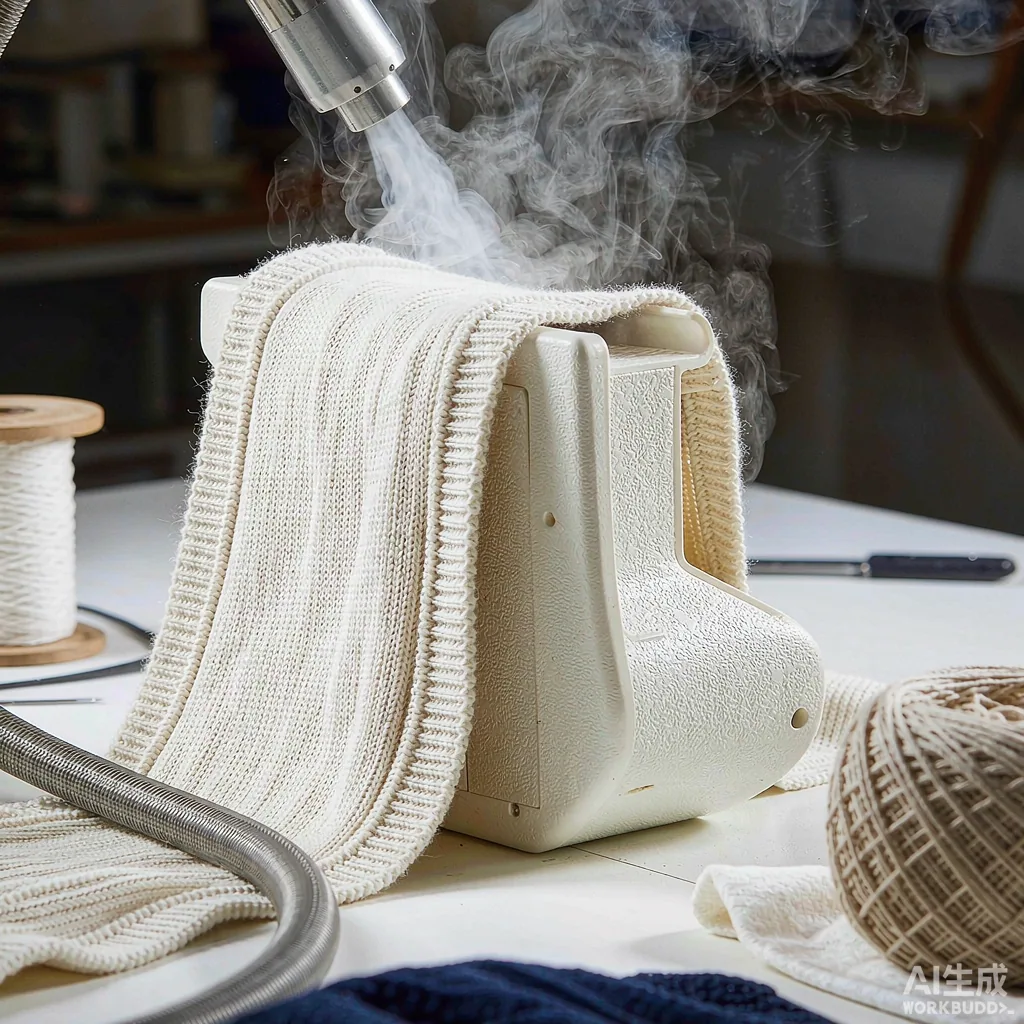
A Costed Example From a Knit Bag Programme
On a 5,000-piece weekender, moving from 0 to 5 per cent elastane adds roughly 22 per cent to yarn cost and about 1.5 hours of knitting per 100 bodies.
- Style
- 450 x 300 x 220 mm weekender
- Ground yarn
- 450D / 144f polyester
- Elastane
- 40D, plated, 5 % by weight
- Shell GSM
- 600 g/m² unblended, 642 g/m² blended
- Shell mass
- 372 g unblended, 398 g blended
- Knitting time per 100 bodies
- 13.3 h unblended, 14.8 h blended
- Heat setting
- 180 °C for 40 s, verified after cycle
- Sampling
- 7 working days
- Bulk
- 30 days, FOB Xiamen
The blended shell is 26 g heavier, which is the number that shows up in the yarn line, and the knitting takes about 11 per cent longer, which is the number that shows up in capacity planning. Against that, recovery improves from about 90 to about 97 per cent, which is what keeps the bag looking right after a season of being packed and unpacked. It is also the reason recovery belongs on the tech pack as a number rather than as a description such as stretchy or springy, which two people will read differently.
Whether that trade is worth making depends on the retail context. On a premium style where the customer handles the bag in store, recovery is part of the perceived quality and the trade is easy. On a flat-packed promotional item shipped direct to a distribution centre, it is harder to justify, and the same money is usually better spent on the base yarn or on a two-layer base panel, both of which extend life in ways a customer can see rather than feel.
Cost an elastane blend
Send the style, target recovery and volume and we will return the ratio, GSM impact and unit cost effect with a 7-working-day sampling slot. Request a blend costing
Frequently Asked Questions
What percentage of elastane is right for a knitted bag?
Three per cent for light recovery on casual shoppers and pouches, five per cent as the default for gym bags and weekenders, and eight per cent only where the knit has to grip or compress. Each step up adds cost and cycle time without improving strength.
Does elastane make a knitted bag stronger?
No. Elastane adds recovery, not tenacity or abrasion resistance. A 5 per cent blend still relies on the ground yarn for breaking force, so the load path and base zone should be specified from the polyester or nylon figure rather than the blend figure. Confirm the ratio on the yarn ticket and again on the panel.
Why is elastane plated rather than blended into the yarn?
Plating keeps the elastic filament under a ground yarn so it is protected from abrasion and does not show a different lustre on the face. Bare elastane exposed on the surface snags and wears through far faster in everyday use. Record the elastane percentage and its filament count on the tech pack.
What temperature should an elastane blend be heat set at?
About 180 °C for 30 to 45 seconds. Above roughly 190 °C elastane loses its power permanently, so the recovery the programme specified disappears even though the fabric looks unchanged on the bench. Most programmes check recovery after five wash cycles. Treat any heat-set figure without a dwell time as incomplete.
How is recovery measured on a knit bag fabric?
Extend a specimen by 30 per cent of its original length, hold for a fixed period, release, then measure the permanent extension after recovery. Record the figure after heat setting, since recovery measured before the cycle overstates what the customer will experience. Ask whether the ground yarn is plated or blended with the elastane.
Does elastane change the GSM of a knitted bag body?
Yes, modestly. Adding 5 per cent elastane to a 450D body raises shell GSM from about 600 to about 642 g/m², roughly 7 per cent. The increase comes from the added yarn mass and the slightly tighter structure needed to plate it. Test recovery in both wale and course direction.
Can elastane be used with recycled polyester?
Yes, and it is common. A 300D rPET ground yarn plated with 20D or 40D elastane keeps its recycled-content claim, though the elastane portion counts as non-recycled and the certificate states the recycled percentage of the whole shell. Re-check the panel after boarding, since heat changes recovery.
Does elastane affect colour fastness?
It can. Elastane takes dye differently from polyester, so a blend needs its own lab dip and should be tested for washing and rubbing fastness as a composite rather than relying on the ground yarn's results. Confirm the setting temperature is logged for every batch.
How long does elastane last in a bag?
With correct heat setting and no exposure to chlorine or high heat, recovery should hold for the expected life of the bag. Degradation shows as a bag that no longer springs back, and it is usually traced to an over-hot heat-set cycle. Confirm the ratio on the yarn ticket and again on the panel.
Is 8 per cent elastane worth the extra cost?
Only where the structure has to hold something firmly, such as a compression sleeve or a bottle holder. For a general tote, the extra 8 g of yarn and 18 per cent more machine time buy recovery the customer rarely notices. Record the elastane percentage and its filament count on the tech pack.
Does elastane change the sampling timetable?
No. Sampling stays at 7 working days for either specification. What changes is the bulk cycle time, which is about 11 per cent longer at 5 per cent elastane and about 18 per cent longer at 8 per cent. Most programmes check recovery after five wash cycles.
Which elastane linear density should be specified?
20D for light recovery in fine structures at E14, 40D as the default for 300D to 450D bodies at E12, and 70D where the knit is doing structural work. Match it to the ground yarn rather than picking the highest figure. Treat any heat-set figure without a dwell time as incomplete.
How does elastane change the way a knit bag is boarded?
Elastane blends need a lower, more tightly controlled board temperature, around 180 °C with 30 to 45 seconds of dwell. Verify recovery on a specimen taken after boarding, because a cycle that is too hot damages the elastic permanently. Ask whether the ground yarn is plated or blended with the elastane.
Can an elastane blend be re-dyed or corrected after bulk?
Rarely. Re-dyeing exposes the elastane to a second high-temperature cycle, which reduces its power further. Where a shade correction is needed on a blend, the realistic option is usually to re-knit rather than to re-dye. Test recovery in both wale and course direction. Re-check the panel after boarding, since heat changes recovery.
Can elastane blends be certified for recycled content?
Yes, provided the recycled portion is certified and the certificate states the actual recycled percentage of the finished fabric. A 95 per cent rPET shell with 5 per cent elastane typically certifies around 90 per cent recycled content. Confirm the setting temperature is logged for every batch.
People Also Ask
Why add elastane to a knitted bag at all?
For recovery and fit. Elastane pulls a crushed or overpacked knit body back into shape, which is what keeps a bag looking new after a season. It does not add strength or abrasion resistance.
Does elastane make bags more expensive?
Yes. Elastane costs roughly eight to ten times polyester per kilogram, and a 5 per cent blend raises yarn cost by about 22 per cent on a weekender, plus roughly 11 per cent more knitting time.
What is the difference between bare and covered elastane?
Bare elastane is the filament on its own and gives the most power at the lowest cost. Covered elastane is wrapped in polyester or nylon, which adds cost and bulk but greatly improves abrasion life.
Can elastane be knitted at E14?
Yes, typically with a 20D filament plated under a fine ground yarn such as 150D/48f. Coarser elastane at fine gauge tends to show through and stiffen the structure. Confirm the ratio on the yarn ticket and again on the panel.
How do I check that the elastane percentage is correct?
Ask for the yarn composition declared on the cone and confirm it against the test report for the delivered lot. Where the claim matters commercially, a laboratory analysis of the fabric gives the definitive figure.
Sources and further reading
Every figure on this page is either our own programme data or attributed below. Open the originals before you write them into a specification.
- ASTM D5034 Breaking Strength and Elongation of Textile Fabrics (Grab Test)ASTM International Method for confirming breaking force and elongation on knitted bag bodies including elastane blend structures.
- ASTM D5035 Breaking Force and Elongation of Textile Fabrics (Strip Method)ASTM International Strip method alternative, used where a full-width specimen is available for recovery and strength checks.
- Standards — Recycled Claim Standard and Global Recycled StandardTextile Exchange Governs how recycled content is stated when an elastane portion is present in the shell.
- OEKO-TEX STANDARD 100OEKO-TEX Restricted substance limits for the finished knitted fabric, including elastane-containing structures.