Knitted Bags for Product Launches: Three Sealed-Bag Specifications Compared Against One Embargo Date
Can one knitted bag specification serve a press seeding, a launch-day gift and a retail sell-through line, or does each audience need its own build? It needs three, and the differences are measurable rather than cosmetic: a 9 L press mailer at E12 in 300D recycled polyester and 280 g/m², a 16 L launch-day carrier at E7 in 600D and 400 g/m², and a 4 L sell-through pouch at E14 in 150D and 180 g/m². All three clear MOQ 100 pcs per style and colourway, sample in 7 working days and run bulk in 30 days. The variable that actually breaks a launch programme is not the bag — it is the order date, which has to sit about 78 calendar days before embargo lifts.
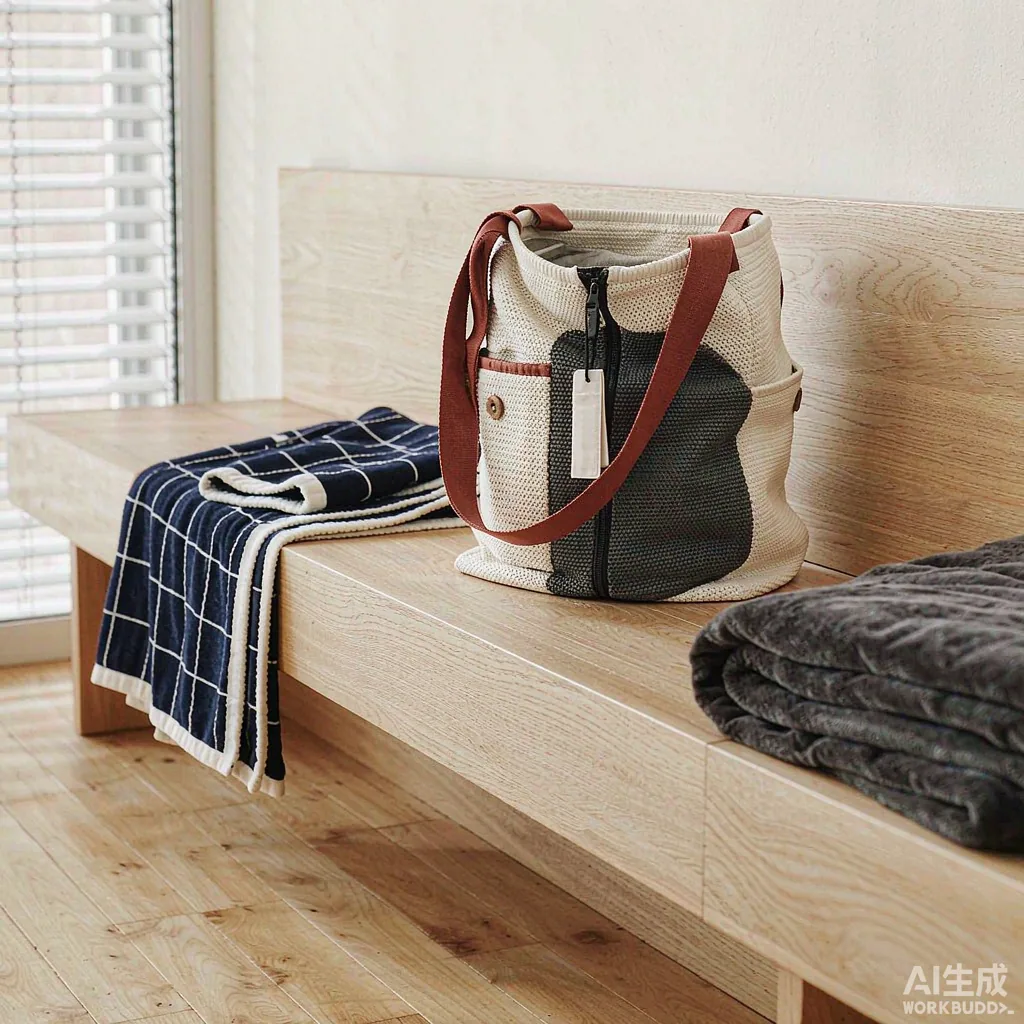
Three Launch Audiences, Three Different Failure Modes
A launch bag is never one product. Press seeding, launch-day gifting and retail sell-through are three audiences with three duty cycles, and each fails in a different place. A press mailer fails in transit, because it is packed by a fulfilment house and dropped by a courier. A launch-day carrier fails on the way home, because it is asked to swallow a boxed product that nobody measured. A sell-through pouch fails on margin, because it has to price at retail rather than at cost.
Treating all three as one specification produces the classic launch error: a single mid-weight bag that is too heavy for the mailer parcel, too small for the launch-day box, and too costly to carry retail margin. Writing three specifications is not three times the engineering work. One yarn family, one colour reference set and one knit platform can cover all three, so the extra effort is a size and gauge change rather than a new development.
Spec Matrix by Launch Audience: Gauge, Capacity, Duty, Mark
The comparison that matters is gauge against duty. Gauge sets loop size, which sets both the surface quality and the abrasion behaviour, so a press mailer and a launch-day carrier should not share a number. E12 gives a surface fine enough for a detailed knit-in mark and light enough for a courier parcel; E7 gives the loop mass a loaded carrier needs; E14 gives the fine face a retail pouch needs to look like a finished product rather than a wrapper.
| Parameter | Press mailer | Launch-day carrier | Sell-through pouch |
|---|---|---|---|
| Capacity | 9 L | 16 L | 4 L |
| Gauge | E12 | E7 | E14 |
| Yarn | 300D recycled polyester | 600D recycled polyester | 150D recycled polyester |
| Fabric mass | 280 g/m² | 400 g/m² | 180 g/m² |
| Empty weight | ~190 g | ~430 g | ~85 g |
| Abrasion target | 12,000 rubs | 25,000 rubs | 10,000 rubs |
| Mark method | Knit-in jacquard | Knit-in plus woven label | Woven label or jacquard |
| Mark zone | 200 x 140 mm | 220 x 160 mm | 90 x 60 mm |
| Typical run | 100-400 pcs | 300-1,000 pcs | 500-2,000 pcs |
Press Seeding: The 9-Litre Mailer That Has to Survive a Courier
A press mailer has one job: arrive looking deliberate. That means the outer face has to resist the scuffing of a courier network and the crush of a sorting belt, which points to a tight E12 surface at 280 g/m² rather than a heavier, coarser loop. Twelve thousand Martindale rubs is enough for a single courier journey; specifying 30,000 here adds mass and cost for a duty cycle the piece will never see.
The dimension that decides the mailer is the product box inside it. Measure the box, add 8 mm of ease per axis, and the bag follows — for a typical cosmetics or device launch box at 240 x 180 x 70 mm that resolves to roughly a 9 L body with a 260 x 200 mm clear opening. Flat-packing matters too: a mailer that folds to 22 mm keeps the outer parcel inside the courier's lowest dimensional band, which is usually a larger saving than anything negotiable on the bag itself.
Launch-Day Gift: The 16-Litre Carrier That Carries the Box Home
The launch-day carrier is the only one of the three that gets loaded hard and immediately, because the recipient leaves the venue with a boxed product, printed material and usually a second gift inside. Sixteen litres at E7 in 600D recycled polyester and 400 g/m² handles that, and the jump to 25,000 rubs is justified because the piece is carried through doorways, car boots and public transport on the day it matters most.
Two details separate a launch carrier that gets reused from one that does not. The first is strap width: 25 mm webbing set into a reinforced knit channel spreads the load and avoids the shoulder roll that comes from a narrow strap on a 4 kg carry. The second is the base — a whole-panel knit turns the corner continuously, so there is no joining seam at the point where the box corner presses hardest.
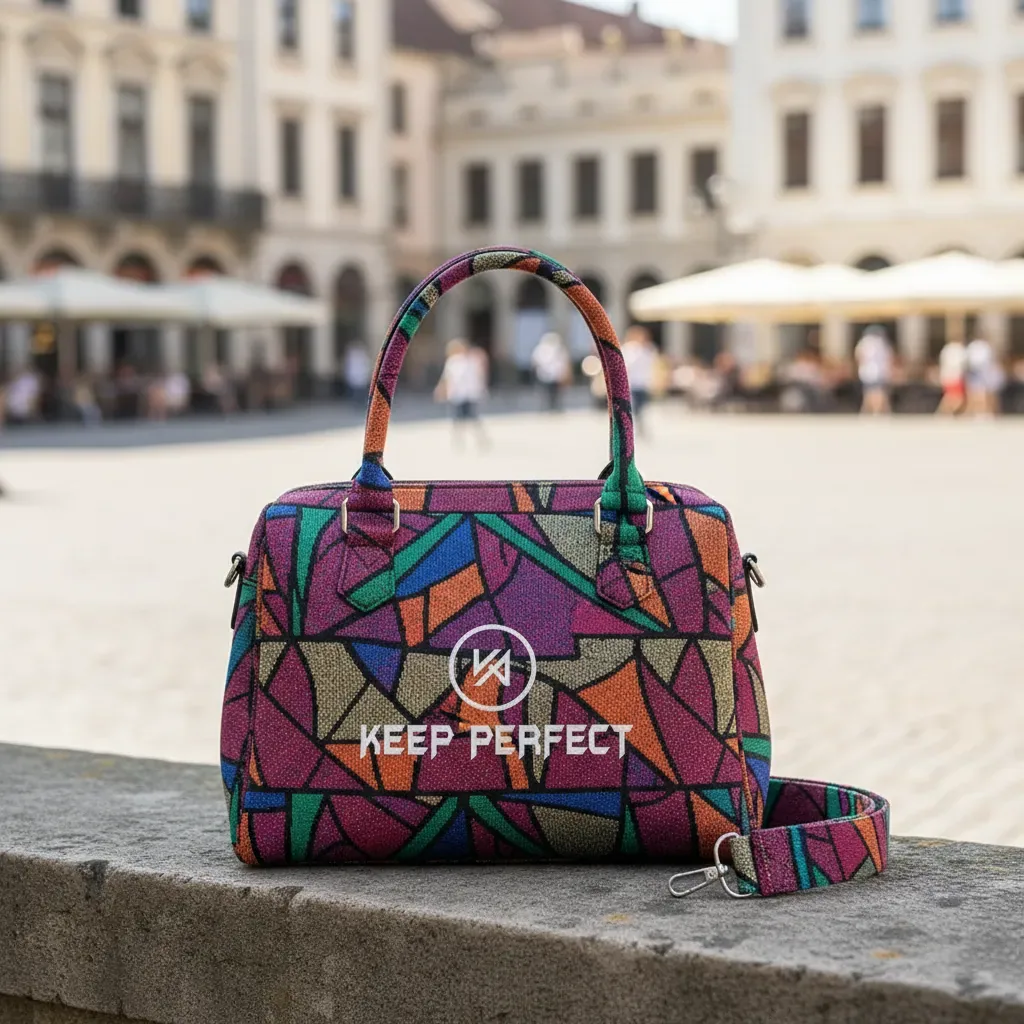
Sell-Through: The 4-Litre Pouch That Has to Price for Retail Margin
A sell-through pouch is a retail product, not a giveaway, so the specification is governed by the price band rather than by the duty cycle. At E14 in 150D recycled polyester and 180 g/m² the empty piece lands near 85 g, which keeps it inside an impulse price band and gives the buyer a workable margin. Ten thousand rubs is a perfectly honest target for a pouch that lives inside a handbag or a drawer.
The retail requirement that catches buyers out is presentation. A sell-through piece needs a sewn-in care label, a hangtag with fibre content and country of origin, and a barcode that scans on the first pass at the till. Those three items are not bag engineering — they are retail compliance — but they have to be specified at the same time as the knit file, because adding a hangtag after bulk starts means opening every piece.
Where the Mark Goes When Three Audiences See the Same Logo
One logo, three placements. On the press mailer the mark belongs on the front panel at 200 x 140 mm, centred and sitting above the opening so it is the first thing seen when the parcel is opened. On the launch-day carrier it moves to 220 x 160 mm and sits higher, because the bag is carried rather than unwrapped and the mark has to read across a room. On the retail pouch it drops to 90 x 60 mm and moves off-centre, leaving room for a hangtag.
Method should follow audience, not house style. Knit-in jacquard is the right default for the mailer and the carrier: it is made during knitting, adds no second operation, and cannot lift. It also carries a colour limit — four yarn colours is the practical ceiling for a readable jacquard mark at these sizes — so a gradient or photographic logo has to move to a woven label or a transfer. For the retail pouch, a woven label is usually correct because it also carries the care and content information.
A knit-in mark reads cleanly at up to four yarn colours. Beyond that the loop structure starts to muddy the edge, and a woven label or transfer gives a sharper result than pushing the jacquard past its limit.
Colourway Count and the 100-Piece Minimum Across a Launch Wave
A launch wave usually wants more colourways than the volume supports. Because the minimum is 100 pcs per style and colourway, a 400-piece press seeding supports four colourways at 100 each and no more. The temptation is to run eight colourways at 50 pcs; the arithmetic stops that, and the alternative — one base construction with four yarn colours and two mark treatments — delivers the same visual range inside the minimum.
Colour consistency across the wave is the second constraint. Each dye lot has a tolerance, and a launch where the press mailer, the carrier and the pouch all carry the same brand colour has to be dyed from one reference. Lock a lab-dip against a Pantone reference at sampling, and hold that reference for all three constructions: three separate dye lots matched by eye will produce three slightly different brand colours in the same photograph.
Backwards Planning From Embargo Day to Purchase Order
Embargo day is a hard date and it does not move. Work back from it: allow five working days for the fulfilment house to pack and dispatch, ten days of buffer, about 32 days of sea freight from FOB Xiamen, a week for customs and inland delivery, 30 days of bulk, and 7 working days of sampling. That puts the order release at roughly 78 calendar days before embargo lifts, and the artwork lock about a week before that.
- T-78 days: purchase order released, artwork and lab-dip references locked.
- T-71 to T-61: sampling across 7 working days; all three constructions sampled against the real product box.
- T-60: sample approval and AQL criteria signed off.
- T-59 to T-30: bulk production, 30 days across all three constructions in one window.
- T-29 to T-25: pre-shipment inspection to AQL 2.5 (ISO 2859-1), then booking.
- T-24 to T-8: sea freight plus customs and inland delivery to the fulfilment house.
- T-7 to T-1: packing, dispatch, and hold for embargo.
Packaging for Three Distribution Routes: Courier, Counter, Warehouse
Each of the three audiences ships by a different route and therefore needs a different pack format. The press mailer goes to a fulfilment house that will over-pack it, so it should arrive flat-packed, individually polybagged, 50 pcs to an inner and 200 to a carton. The launch-day carrier goes to a venue, so it needs cartons marked by colourway with a carton count that matches the registration split. The retail pouch goes to a distribution centre, so it needs barcode-labelled inners and a carton that stacks to a standard pallet footprint.
Courier route
Flat-packed mailer, individual polybag, 50 per inner, 200 per carton, delivered direct to the fulfilment house.
Venue route
Carrier cartons split by colourway and numbered, so registration teams can stage by hall without recounting.
Distribution centre
Retail pouch in barcode-labelled inners on a standard pallet footprint, with hangtags applied before packing.
Direct to press
Single-piece dispatch available when the seeding list is under roughly 150 names and addresses are supplied early.
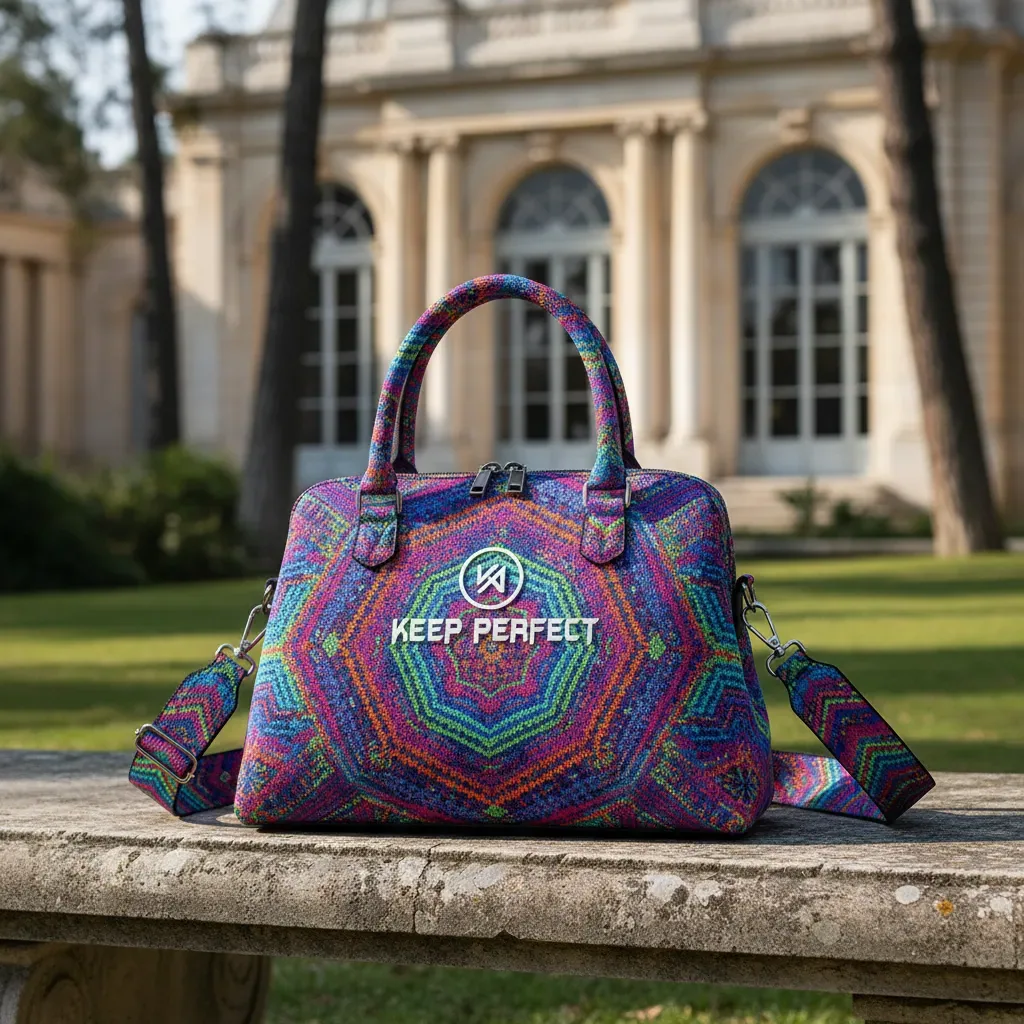
The Launch Numbers Sheet Buyers Actually Sign Off
Put every figure on one sheet before sampling starts, because a launch programme has no slack for a second round. The sheet carries capacity per audience, gauge and yarn per audience, fabric mass with a stated tolerance, abrasion target, strap pull where a strap exists, mark method and zone, colourway count against the 100-piece minimum, dye reference, pack format per route, inspection level, and the T-minus dates from the previous section.
- Capacity
- 9 L mailer / 16 L carrier / 4 L pouch
- Gauge and yarn
- E12 300D / E7 600D / E14 150D recycled polyester
- Fabric mass
- 280 / 400 / 180 g/m², ±5% tolerance (ISO 3801)
- Abrasion
- 12,000 / 25,000 / 10,000 rubs, ISO 12947-2
- Strap pull
- 400 N on the carrier handle root, ISO 13934-1
- Colour fastness
- Grade 4 dry / 3-4 wet, ISO 105-X12
- Dimensional change
- ≤3% after five launderings, ISO 5077 and ISO 6330
- Minimum
- MOQ 100 pcs per style and colourway
- Inspection
- AQL 2.5, ISO 2859-1, zero tolerance on critical defects
- Sampling
- 7 working days from approved artwork
- Bulk
- 30 days from sample approval, FOB Xiamen
What Kills a Launch Bag Programme, and How to Pre-Empt It
Four failure modes account for nearly every unhappy launch bag. The first is the unmeasured product box: the bag arrives and the box does not fit, and there is no time to remake it. The second is artwork arriving as a raster file, which cannot be converted into a jacquard knit file without redrawing. The third is a dye reference agreed by eye rather than by lab-dip, which produces a brand colour that photographs wrong. The fourth is an order released inside the freight window, which converts the whole programme to air.
All four are preventable in the first week. Measure the box and add ease; supply artwork as vector with the colour separations called out; approve a physical lab-dip rather than a screen colour; and release the order at T-78 rather than when the marketing calendar catches up. A launch bag programme that does those four things is unremarkable — which is exactly what a launch needs, because the bag should never be the story.
Plan a three-audience launch programme
Send the product box dimensions, the seeding and gifting volumes, and the embargo date. You will get a specification matrix across all three constructions, a 7-working-day sampling plan and a backwards schedule to embargo day.
Frequently Asked Questions
Can one knitted bag specification cover an entire product launch?
It should not. Press seeding, launch-day gifting and retail sell-through have different duty cycles and different economics, so three specifications are correct: 9 L at E12, 16 L at E7 and 4 L at E14. All three can share one yarn family and one dye reference, so the extra work is a gauge change rather than new development.
What is the MOQ for knitted bags for product launches?
The MOQ is 100 pcs per style and colourway. A 400-piece press seeding therefore supports four colourways at the minimum. If the creative route calls for eight, express the extra variants through the mark treatment rather than through eight yarn colours, which would halve every run below the minimum.
How long does sampling take for a launch bag programme?
Sampling takes 7 working days from approved vector artwork and a confirmed yarn and gauge. Sample all three constructions in one window and test each against the real product box, because a mailer that fits the box on paper can still fail once the box has corners and protective wrap.
How far before embargo day should the order be placed?
About 78 calendar days. That covers 7 working days of sampling, 30 days of bulk, roughly 32 days of sea freight from FOB Xiamen, a week of customs and inland delivery, five days for the fulfilment house, and a ten-day buffer. Inside about 55 days the programme has to move to air.
Which gauge suits a press seeding mailer?
E12 in 300D recycled polyester at 280 g/m². The finer surface resists courier scuffing, takes a detailed knit-in mark, and keeps the empty piece near 190 g so the outer parcel stays inside a sensible dimensional band. Twelve thousand Martindale rubs is an honest target for a single journey.
Why does the launch-day carrier need a heavier yarn?
Because it is loaded hard on the day it matters. Sixteen litres at E7 in 600D recycled polyester and 400 g/m² carries a boxed product plus printed material at roughly 4 kg, and the jump to 25,000 rubs reflects doorways, car boots and public transport rather than a courier belt.
How should a brand logo be applied to a launch bag?
Knit-in jacquard is the default for the mailer and the carrier, because it is made during knitting, adds no second operation and cannot lift. It carries up to four yarn colours. A gradient or photographic mark should move to a woven label, which also carries care and fibre content on the retail pouch.
How is colour consistency held across three constructions?
Lock one physical lab-dip against a Pantone reference at sampling and hold it for all three constructions. Three dye lots matched by eye will produce three slightly different brand colours, which is obvious as soon as the mailer, carrier and pouch appear in the same photograph.
What pack format suits a press seeding dispatch?
Flat-packed, individually polybagged, 50 pcs per inner and 200 per carton, delivered direct to the fulfilment house. Flat-packing at roughly 22 mm is what keeps the outer parcel inside the courier's lower dimensional band, which usually saves more than any negotiable line on the bag.
What does a retail sell-through pouch need that a giveaway does not?
Retail compliance: a sewn-in care label, a hangtag with fibre content and country of origin, and a barcode that scans first time at the till. These have to be specified alongside the knit file, because applying a hangtag after bulk starts means opening every piece.
Which inspection standard applies to launch shipments?
Pre-shipment inspection runs to AQL 2.5 under ISO 2859-1, with critical defects such as a detached strap or a misplaced mark treated as zero-acceptance rather than counted inside the AQL. On a launch, placement defects matter more than durability defects, because the piece is photographed.
What is the most common cause of a launch bag arriving too small?
A product box that was never measured. The bag is designed around a nominal size and the real box, with protective wrap and corners, is 15 mm larger on two axes. Measure the box, add 8 mm of ease per axis, and write the resulting clear opening into the brief as a dimension.
Can the three launch formats share one production window?
Yes, and they should. One yarn family, one dye reference and one knit platform mean all three constructions can run inside the same 30-day bulk window, which is what makes a single embargo date achievable across press, gifting and retail simultaneously. It also means one sampling round rather than three, so the 7-working-day window covers the whole launch wave at once.
What documents should a launch buyer request before shipping?
A GRS transaction certificate where recycled content is claimed, OEKO-TEX STANDARD 100 on the yarn, REACH Annex XVII screening, and California Prop 65 documentation for any piece distributed in the United States. Retail sell-through pieces additionally need the care-labelling and country-of-origin file. Assemble the set during the sampling window rather than at shipment, because certificate turnaround is usually longer than the 30-day bulk run.
People Also Ask
Do press seeding and retail sell-through need different knitted bags?
Yes. A press mailer is 9 L at E12 and 280 g/m², built to survive one courier journey. A sell-through pouch is 4 L at E14 and 180 g/m², built to hit a retail price band. Different gauge, different mass, different economics.
When should a launch bag order be placed?
About 78 calendar days before embargo lifts. That covers 7 working days of sampling, 30 days of bulk, roughly 32 days of sea freight from FOB Xiamen, and domestic handling plus a ten-day buffer.
How many colourways can a 400-piece seeding carry?
Four, because the minimum is 100 pcs per style and colourway. Eight colourways would mean 50 pcs each, which falls below the minimum. Express further variants through the mark treatment instead of more yarn colours.
Which logo method works best on a knitted launch bag?
Knit-in jacquard, because it is created during knitting with no second operation and cannot lift or peel. It carries up to four yarn colours; a photographic or gradient mark should move to a woven label.
Why does the product box size matter so much?
Because it sets the clear opening. A box at 240 x 180 x 70 mm plus 8 mm of ease per axis resolves to roughly a 9 L body with a 260 x 200 mm opening. Designing without that measurement is the main cause of bags that arrive too small.
Sources and further reading
Every figure on this page is either our own programme data or attributed below. Open the originals before you write them into a specification.
- ISO 2859-1 — Sampling procedures for inspection by attributesISO The AQL-indexed scheme behind the AQL 2.5 pre-shipment inspection on launch shipments.
- ISO 12947-2 — Textiles, determination of abrasion resistance by the Martindale methodISO Source of the 12,000 / 25,000 / 10,000 rub targets set per launch audience.
- ISO 13934-1 — Textiles, tensile properties of fabrics, Part 1: maximum force using the strip methodISO Referenced for the 400 N strap pull test on the launch-day carrier handle root.
- ISO 3801 — Textiles, determination of mass per unit length and mass per unit areaISO Method behind the g/m² figures and the ±5% tolerance written into the launch numbers sheet.
- Global Recycled StandardTextile Exchange Traceability framework behind the recycled polyester yarns offered across all three launch constructions.
- Proposition 65California OEHHA The California requirement referenced for launch pieces distributed in the United States.
Turning the Matrix Into One Purchase Order
A launch programme compresses everything that is difficult about a bag order into a fixed date, so the useful discipline is to decide early and decide once. Pick the three constructions, lock one dye reference, write the clear opening for each audience as a dimension, and release the order at T-78. Everything after that is execution rather than decision.
The payoff is that the bag stops being a risk. When the mailer fits the box, the carrier carries it home, and the pouch prices at margin, the launch team never has to think about packaging again — and the piece keeps working after the embargo lifts, which is the only measure of a launch bag that survives contact with the people who receive it.