Knitted Bags for Employee Kits: Ten Specification Lines That Decide Whether an Onboarding Bag Survives Month Three
How do you specify knitted bags for employee kits so the piece is still in use at month three rather than in a cupboard? Fix the numbers before sampling starts: MOQ 100 pcs per style and colourway, 7 working days to a finished sample, 30 days to bulk, AQL 2.5 inspection before booking. For a standard onboarding cohort the working specification is a 12 L whole-panel knit at E10 gauge in 300D recycled polyester, 340 g/m², 25,000 Martindale rubs and 450 N strap pull, with the employer mark knitted into a 140 x 90 mm zone. Colourway count is the variable most buyers get wrong: a 250-person intake supports two colourways at the 100-piece minimum, not five.
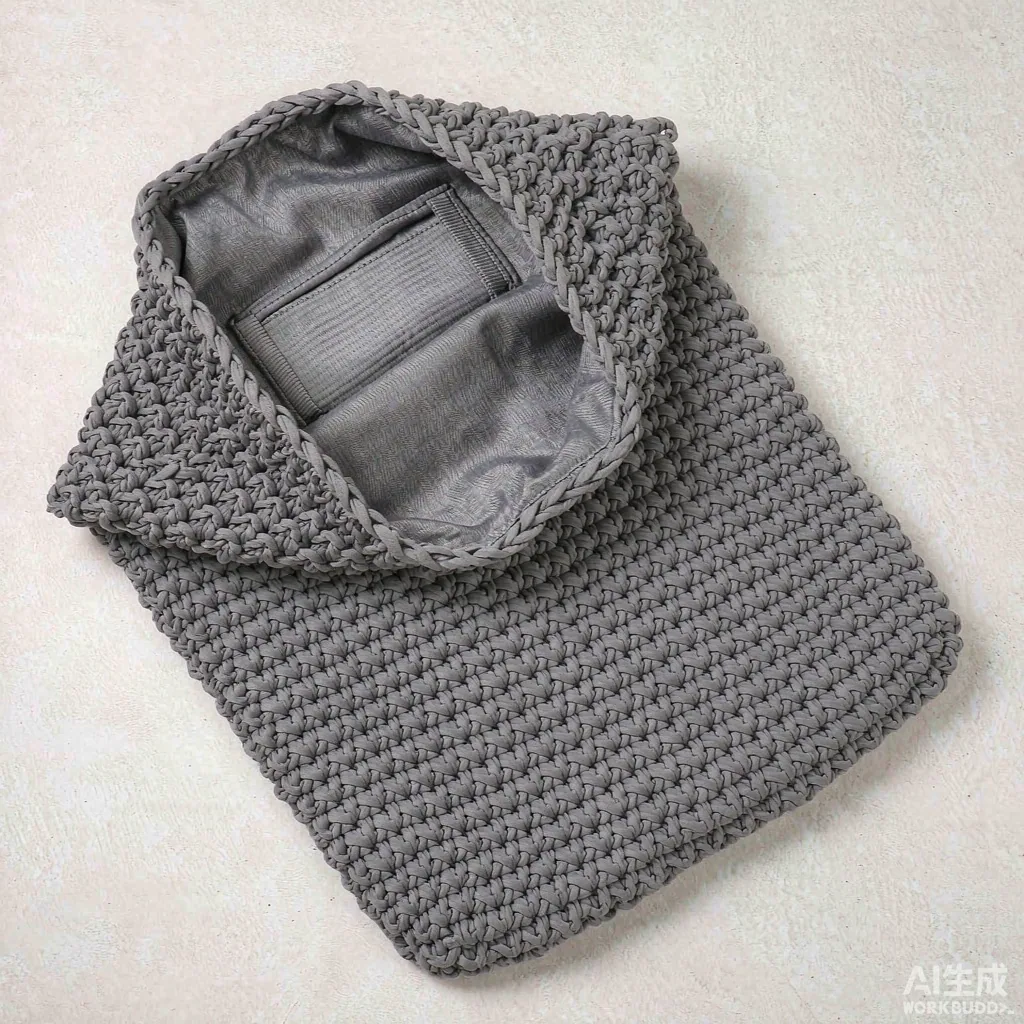
Spec Line 1: Cohort Size Decides Colourway Count
Cohort size, not the brand palette, sets how many colourways an onboarding knit programme can carry. Because the minimum is 100 pcs per style and colourway, a 250-person intake realistically supports two colourways — one at 150 pcs and one at 100 pcs — rather than a separate trim for every department. Buyers who ask for five colourways on a 250-piece order are asking for five engineering slots on a volume that only justifies two, and the unit figure rises accordingly.
The practical route is to split by role rather than by department. One colourway covers the general intake, a second covers field or site-based staff who need a darker yarn and a higher abrasion figure. A third colourway becomes viable once the annual intake passes roughly 300 people, because that is the point at which each variant clears the 100-piece minimum without forcing an artificial split. Anything beyond three colourways should wait for a second intake window inside the same production year.
Spec Line 2: Day-One Contents vs Month-Three Contents
Specify for month three, not for day one. On the first morning an onboarding bag carries a welcome folder, a notebook and a water bottle — roughly 1.8 kg in a 12 L body. By week six the same bag is carrying a 13-inch laptop, a charger, a packed lunch and a gym kit, which is closer to 3.6 kg and a different load path entirely. A specification written around the day-one contents will show strap elongation and base sag inside two months.
The fix is to write both numbers into the brief and design to the heavier one. A 12 L body with a 350 x 240 mm device bay accommodates a 13-inch laptop with a sleeve, and the strap attachment then needs to be specified against 450 N rather than the 300 N a document-only bag would accept. Knit relaxes under sustained load, so the strap root and the bay seam are the two places where a day-one specification quietly fails at month three.
Spec Line 3: The Three Failure Points on an Onboarding Tote
Three locations account for most warranty complaints on an onboarding knit bag: the handle root where webbing meets knit, the base corner where the panel turns, and the device bay seam where an internal divider is joined. All three are joint problems rather than fabric problems, which is why an abrasion figure alone never predicts field performance. A body that passes 25,000 Martindale rubs will still fail if the strap is tacked rather than bar-tacked into a reinforced knit channel.
- Handle root: specify a reinforced knit channel and bar-tack, then test to 450 N under ISO 13934-1 rather than relying on a visual check.
- Base corner: a whole-panel knit turns the corner without a joining seam, so the panel geometry — not the yarn — carries the load.
- Device bay seam: join the divider with a bound edge, and confirm the bay still measures 350 x 240 mm after five launderings.
An onboarding bag rarely fails in the middle of a panel. It fails where knit meets webbing or where an internal divider is joined, so the strap pull figure under ISO 13934-1 is the number that actually predicts a warranty claim.
Spec Line 4: Device Bay and Lining, Written as Dimensions
Write the device bay as a dimension, not as an adjective. "Fits a laptop" is not a specification; "350 x 240 mm clear internal bay with a 6 mm bound edge and 3 mm of ease on each axis" is, and it is the version that can be checked on a sample under a rule. The same discipline applies to lining: an unlined whole-panel knit saves mass and cost, but a lined bay protects a device from the zip pull and the keys that inevitably share the compartment.
For most onboarding cohorts the answer is a partial lining — a lined device bay inside an unlined body. That keeps the empty mass near 310 g while giving the laptop compartment a smooth face and a closed seam allowance. Full lining adds roughly 60 g and a second operation, which is only worth it when the kit also contains a rigid notebook or a metal bottle that would otherwise abrade the knit from the inside.
- Construction
- E10 gauge whole-panel knit, minimal joining seams
- Yarn
- 300D recycled polyester, GRS-scope certified
- Fabric mass
- 340 g/m² target, ±5% tolerance (ISO 3801)
- Capacity
- 12 L, empty mass 310 g ±20 g
- Device bay
- 350 x 240 mm clear internal, 6 mm bound edge
- Abrasion
- 25,000 rubs minimum, ISO 12947-2
- Strap pull
- 450 N minimum at the handle root, ISO 13934-1
- Colour transfer
- Grade 4 dry / 3-4 wet, ISO 105-X12
- Dimensional change
- ≤3% after five launderings, ISO 5077 and ISO 6330
- Inspection
- AQL 2.5, ISO 2859-1, before booking
- Sampling
- 7 working days from approved artwork and yarn confirmation
- Bulk
- 30 days from sample approval, FOB Xiamen
Spec Line 5: Colourway Count Against a 100-Piece Minimum
Colourways on a knit programme are a yarn swap, not a fabric minimum, which is why the low 100-piece minimum is genuinely useful for onboarding. The constraint is not the yarn itself but the machine time: each colourway change means a fresh set-up, a fresh first-off check and a separate inspection lot. Three colourways on one 300-piece order is workable; six colourways on the same order spreads three set-up charges across 50 pcs each and pushes the unit figure up sharply.
A cleaner structure for smaller intakes is one base construction with two colourways and a third variant created through the mark rather than the yarn. A knit-in employer mark in a contrast colour reads as a distinct tier without a third yarn set-up. This is where the 140 x 90 mm mark zone earns its place: it is large enough for a wordmark at 60 mm cap height, and small enough that it does not distort the surrounding loop structure.
Spec Line 6: Where the Employer Mark Sits and How It Is Made
Four methods put an employer mark on a knitted bag, and they differ on cost, durability and the minimum quantity each one needs. A knit-in mark is created during knitting and therefore adds no second operation, which makes it the correct default for an onboarding piece that will be washed. A woven label is the lowest-cost option and reads well at close range but adds a sewing operation. Heat transfer gives photographic detail at the lowest unit addition and the shortest life. Embroidery reads most formally and can pucker on a stretch knit substrate.
| Method | Added unit cost | Life on a washed knit | Best onboarding use |
|---|---|---|---|
| Knit-in jacquard mark | None — made during knitting | Highest; no thread or film to lift | Standard intake, 100 pcs and up |
| Woven label | Minimal plus one sewing operation | Good if bar-tacked at all four corners | Interior brand and care label |
| Heat transfer | Lowest unit addition | Shortest; edges lift after repeated washing | Single-event welcome days |
| Embroidery | Second operation surcharge | Moderate; can pucker on stretch knit | Executive or long-service tiers |
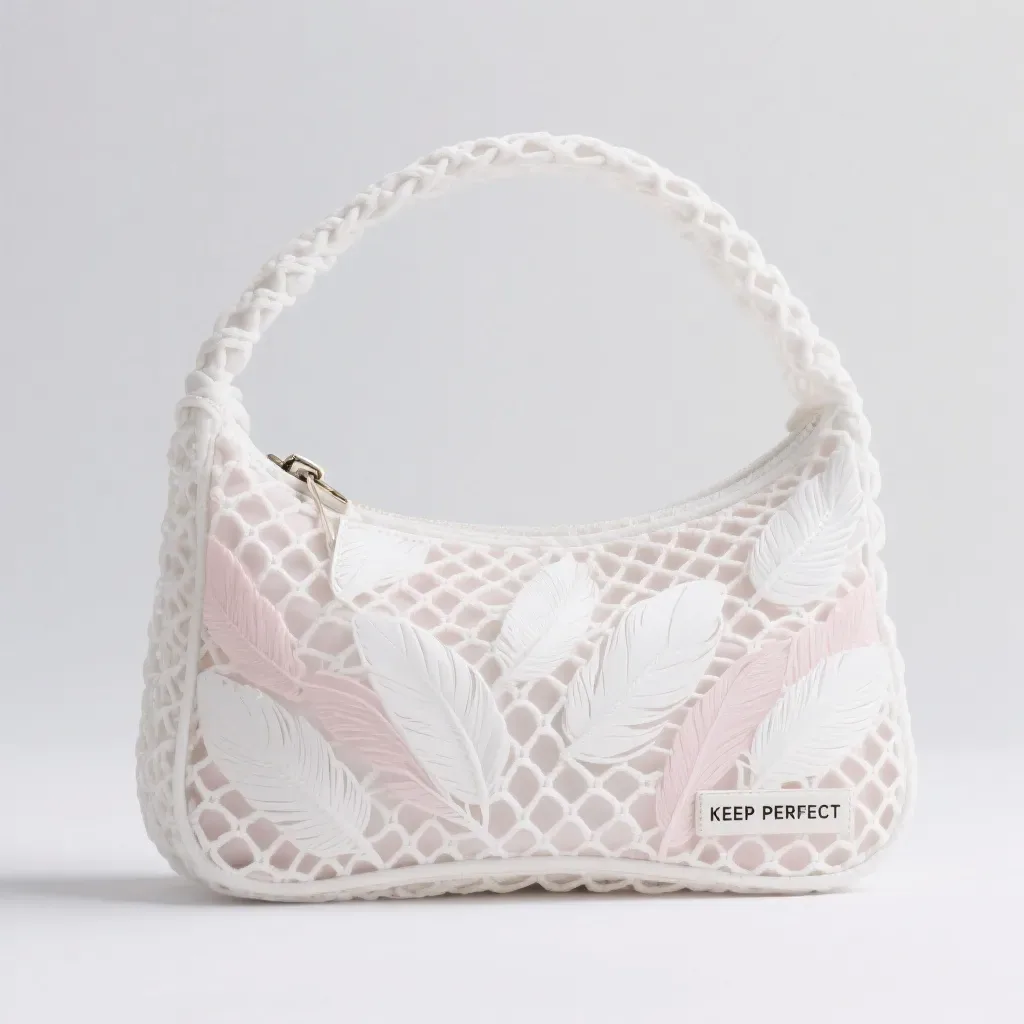
Placement matters as much as method. On a 12 L onboarding tote the mark belongs on the front panel, centred horizontally and sitting 60 mm below the top edge, so it stays visible when the bag is carried by the handle and is not folded when the bag is packed flat for distribution. Interior marks belong on the back of the device bay divider, where they are seen every time the laptop goes in rather than once at handover.
Spec Line 7: Holding the Unit Cost Line Across Cohort Tiers
Unit cost on a knitted onboarding bag is driven by five variables in a fixed order: yarn denier, machine gauge, mark method, hardware count and order quantity. Everything else moves the figure by single-digit percentages. The most economical lever for an employer running several tiers is a shared knit file — one panel geometry, one gauge, one yarn family — with the tier expressed through colourway and mark rather than through construction. That removes a second engineering charge entirely.
Standard intake
E10 in 300D recycled polyester, general colourway, knit-in mark, unlined body with a lined device bay.
Field and site staff
Same shell in a darker colourway, abrasion raised to 35,000 rubs, strap pull to 550 N, base corner reinforced.
Executive or long service
Same construction with an embroidered mark and a metal zip pull; the highest tier is usually the smallest volume.
Contractor and intern
A fourth colourway at the 100-piece minimum, often held as buffer stock for mid-year starts.
As an order-of-magnitude check, yarn accounts for roughly 38% of the unit figure on this construction, knitting time 27%, finishing and labelling 14%, packing 9%, and inspection and programme overhead the remaining 12%. Those shares are what make quantity the least flexible lever: moving from 100 pcs to 500 pcs changes the figure far more than negotiating any single component. A reference unit figure for a 500-piece two-colourway run sits in the region of USD 4.80 before freight.
Spec Line 8: Working Back From the Start Date to the Order Date
Work backwards from the first day new starters walk in, not forwards from the purchase order. Sampling takes 7 working days from approved artwork and a confirmed yarn, bulk production takes 30 days from sample approval, and FOB Xiamen sea freight to northern Europe adds roughly 32 days with a further week for customs and inland delivery. Add five working days for internal kitting and a ten-day buffer, and the order needs to be released about 70 calendar days before the intake date.
Air freight compresses that to roughly 46 calendar days but moves the freight line by a multiple rather than a percentage, which is why the buffer exists. The two dates that slip most often are artwork approval and yarn confirmation — both sit before the 7-working-day sampling clock even starts, so a buyer can lose three weeks without any production time being consumed. Locking a lab-dip reference at the same time as the artwork removes the more common of the two delays.
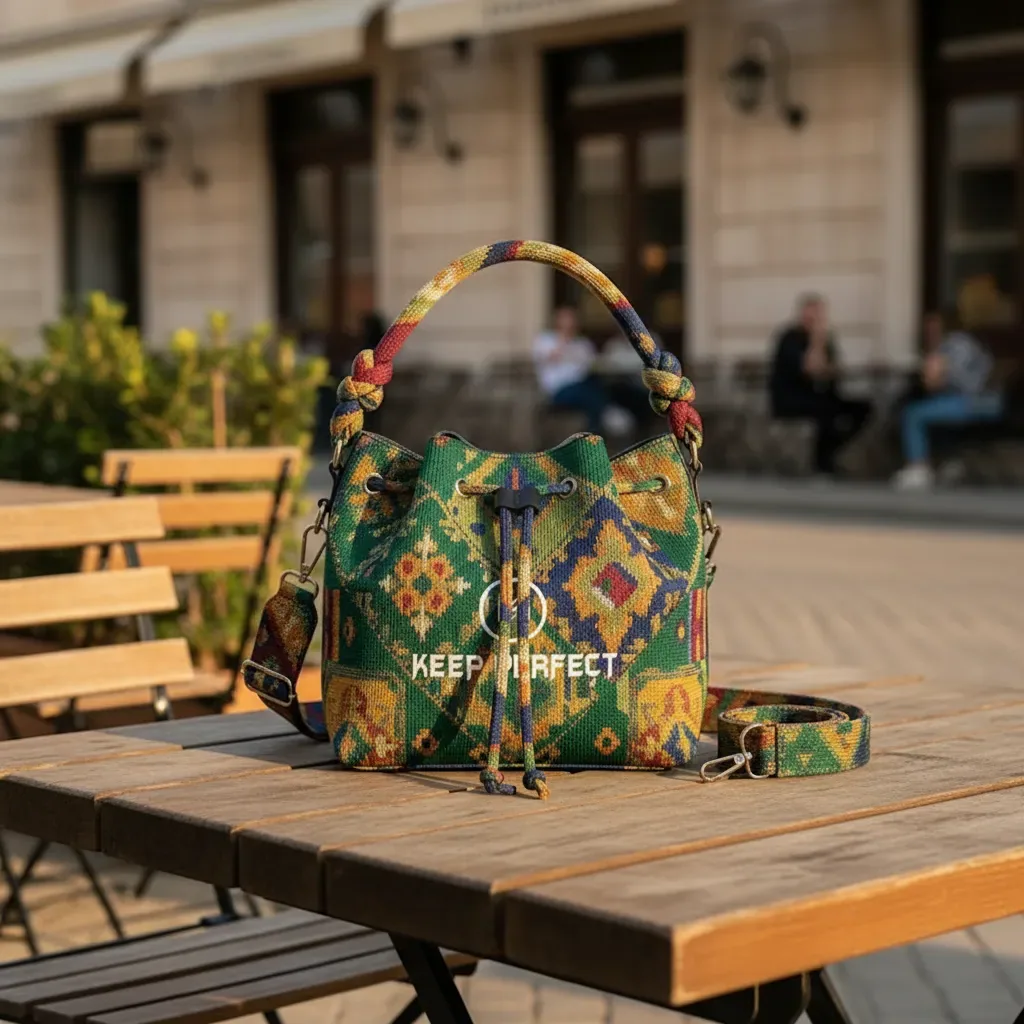
Spec Line 9: Individual Bagging, Carton Pack and Desk Drop
Onboarding distribution is a desk-drop exercise, so the pack format matters as much as the bag. Each piece ships in an individual polybag with a barcode sticker on the outside, 25 pcs to an inner bag and 100 pcs to an export carton measuring roughly 60 x 40 x 40 cm at about 11.5 kg. That format lets a facilities team unpack one carton per floor and hand out pieces straight from the inner bag without a counting step.
- Individual polybag with an outer barcode so the piece can be issued without opening the bag.
- 25 pcs per inner bag, 100 pcs per carton, carton marked with colourway and a running carton number.
- Flat-packed at roughly 22 mm folded depth, which is what keeps the carton count at 100 rather than 60.
- Straight-to-desk delivery available when the intake is a single site; split cartons by colourway when it is not.
Spec Line 10: Reorder Rhythm for a Rolling Intake Calendar
Treat the onboarding bag as a repeating calendar rather than a one-off purchase. Once the knit file, the colour references and the inspection criteria exist, every later intake costs less to develop because the engineering is already paid for — only yarn price and freight move. Employers on a quarterly intake usually hold one colourway as buffer stock at the 100-piece minimum and top it up inside a single 30-day production window each quarter.
The reorder trigger should be set against forecast stockout, not against an empty shelf. With 30 days of production plus roughly 32 days of sea freight plus a week of inland handling, the purchase order has to be raised around 72 days before the buffer is predicted to run out. Buyers who set the trigger at 72 days keep the whole programme on sea freight; buyers who set it at 40 days end up paying for air on every single reorder.
Cost an employee kit programme
Send the intake size, the split between office and field staff, and the start date you are working back from. You will get a unit-cost breakdown by colourway count, a 7-working-day sampling plan and a 30-day production slot.
Frequently Asked Questions
What is the MOQ for knitted bags for employee kits?
The MOQ is 100 pcs per style and colourway. That structure lets an employer run two colourways on a 250-person intake without paying for fabric minimums, because a colourway change on a knit programme is a yarn swap rather than a new fabric buy. A third colourway becomes practical once the annual intake passes roughly 300 people.
How long does sampling take for an onboarding knit bag?
Sampling takes 7 working days from approved vector artwork and a confirmed yarn and gauge. Use those days to load the sample rather than to look at it: knit relaxes under sustained weight, so strap attachment and device bay geometry should be checked with a laptop inside before bulk is released.
How long is bulk production after sample approval?
Bulk production runs 30 days from sample approval. Combined with 7 working days of sampling, the development-to-handover path is roughly 37 working days plus freight. An employer onboarding in early September should therefore release the order in late June to stay on sea freight rather than paying for air.
What capacity should an employee onboarding bag carry?
Twelve litres covers both use cases. It swallows a welcome folder and a notebook at 1.8 kg on day one, and it still holds a 13-inch laptop, charger and lunch at 3.6 kg by week six. Specifying for the lighter day-one load is the single most common reason an onboarding bag sags within two months.
Which gauge and yarn suit a daily office carry?
E10 gauge in 300D recycled polyester at 340 g/m² is the working answer. The gauge gives a surface smooth enough for a clean knit-in mark, and the yarn is heavy enough to hold shape when the bag is set down loaded. Field staff should move to a heavier abrasion target rather than a different gauge.
Should an onboarding bag have a device bay?
Yes, and it should be written as a dimension. A 350 x 240 mm clear internal bay with a 6 mm bound edge and 3 mm of ease per axis fits a 13-inch laptop with a sleeve and can be checked with a rule on the sample. "Fits a laptop" is not a specification and cannot be inspected.
Is a knit-in mark better than a printed mark for staff bags?
For a piece that gets washed, yes. A knit-in jacquard mark is created during knitting, so there is no film to lift and no thread to snag, and it adds no second operation. Heat transfer carries a lower unit addition and gives finer detail, but its edges lift after repeated laundering, which suits a single event rather than daily carry.
How many colourways can one employee kit order carry?
Plan for two on a 250-person intake and three above roughly 300 people. Each colourway needs its own machine set-up, first-off check and inspection lot, so spreading a small order across many colourways multiplies fixed charges. One base construction with two yarns and a contrast mark reads as three tiers at two set-ups.
What inspection standard applies before goods ship?
Pre-shipment inspection runs to AQL 2.5 under ISO 2859-1. That sampling scheme indexes acceptable quality by lot size, so a 300-piece onboarding order and a 1,000-piece order are inspected on different sample sizes at the same quality level. Critical defects such as a detached strap are treated separately from the AQL count.
How is an employee kit bag packed for distribution?
Each piece ships in an individual polybag with an outer barcode, 25 pcs to an inner bag and 100 pcs to an export carton of roughly 60 x 40 x 40 cm at about 11.5 kg. That format lets a facilities team issue pieces straight from the inner bag without counting, and it keeps one carton per floor on a multi-site intake.
How far ahead should the purchase order be raised?
About 70 calendar days before the intake date for sea freight, or roughly 46 days if air is acceptable. The figure combines 7 working days of sampling, 30 days of bulk, about 32 days of sea freight from FOB Xiamen, a week of customs and inland delivery, five days of kitting and a ten-day buffer.
What compliance files should an employer request for staff bags?
Ask for OEKO-TEX STANDARD 100 on the yarn, a GRS transaction certificate where recycled content is claimed, and REACH Annex XVII screening for restricted substances. Where the piece is issued alongside children's or campus materials, CPSIA and California Prop 65 documentation should be added to the file before the first shipment.
Can one knit file serve several staff tiers?
Yes, and it is the most effective cost lever available. One panel geometry, one gauge and one yarn family, with the tier expressed through colourway and mark method rather than construction, removes a second engineering charge entirely. The executive tier then differs by an embroidered mark and a metal zip pull rather than by a new shell.
What is the most common mistake on an employee kit bag order?
Specifying for day-one contents rather than month-three contents. A bag designed around a welcome folder and a notebook will show strap elongation and base sag once a laptop and a packed lunch go in. Write both load cases into the brief and design to the heavier one.
People Also Ask
Are knitted bags practical for employee onboarding kits?
Yes, when capacity and load are specified rather than assumed. A 12 L whole-panel knit at E10 gauge in 300D recycled polyester carries a 13-inch laptop and a lunch at 3.6 kg. The failure point is the strap root, so that is where the 450 N test belongs.
How many colours can one staff bag order include?
Two on a 250-person intake, three once the annual intake passes roughly 300 people. Each colourway carries its own machine set-up and inspection lot, so more colourways on a small order multiply fixed charges per unit.
When should an employer order onboarding bags?
Roughly 70 calendar days before the intake date for sea freight. That covers 7 working days of sampling, 30 days of bulk, about 32 days from FOB Xiamen, and a week of customs plus inland delivery, with a ten-day buffer.
Is a knit-in logo worth it for staff bags?
For daily carry, yes. The mark is made during knitting, so there is no film to lift in the wash and no second operation charge. Heat transfer costs less per unit but its edges lift after repeated laundering.
Do employee kit bags need a lined interior?
A partial lining is usually correct: a lined device bay inside an unlined body. It protects the laptop from zip pulls and keys while keeping empty mass near 310 g. Full lining adds roughly 60 g and a second operation.
Sources and further reading
Every figure on this page is either our own programme data or attributed below. Open the originals before you write them into a specification.
- ISO 2859-1 — Sampling procedures for inspection by attributesISO The AQL-indexed sampling scheme used for the AQL 2.5 pre-shipment inspection on every onboarding order.
- ISO 12947-2 — Textiles, determination of abrasion resistance by the Martindale methodISO Source of the 25,000-rub abrasion target specified for daily office carry.
- ISO 13934-1 — Textiles, tensile properties of fabrics, Part 1: maximum force using the strip methodISO Referenced for the 450 N strap pull test at the handle root.
- ISO 105-X12 — Textiles, tests for colour fastness, Part X12: colour fastness to rubbingISO Basis for the grade 4 dry and 3-4 wet rubbing requirement on contrast colourways.
- Global Recycled StandardTextile Exchange Traceability framework behind the GRS-scope 300D recycled polyester used for onboarding kits.
- OEKO-TEX STANDARD 100OEKO-TEX The restricted-substance screen requested on yarn for pieces issued directly to staff.
What to Send With the First Employee Kit Enquiry
The fastest enquiries carry four things: the intake size, the split between office-based and field-based staff, the start date being worked back from, and the mark artwork in vector form. With those four, a unit-cost breakdown by colourway count, a 7-working-day sampling plan and a 30-day production slot can be returned in one pass. Without the start date, the first exchange is usually spent establishing whether sea freight is still available at all.
The second pass is where the specification becomes real. Confirm gauge and yarn against the load case, write the device bay as a dimension, choose the mark method against the wash expectation, and set the inspection criteria before the sample is made rather than after. An onboarding bag that is specified this way tends to stay in service well past the first year, which is the only return an employer can actually measure on a welcome kit.