Knitted Bags for E-commerce Fulfilment: A Decision Tree From Packing Line to Doorstep
Should an e-commerce order ship in a knitted bag at all, and if so which one? Yes, when the piece is specified against the packing line rather than against a mood board: an 8 L mailer at E12 gauge in 300D recycled polyester and 260 g/m², folding flat to 22 mm, held to ±4 mm on width and ±6 mm on height, and closed with a 12 mm knit channel and a peel-and-seal strip. Those four numbers decide whether an automated line runs or jams. MOQ is 100 pcs per style and colourway, sampling takes 7 working days, bulk runs 30 days, and the reorder trigger has to sit roughly 72 days before forecast stockout.
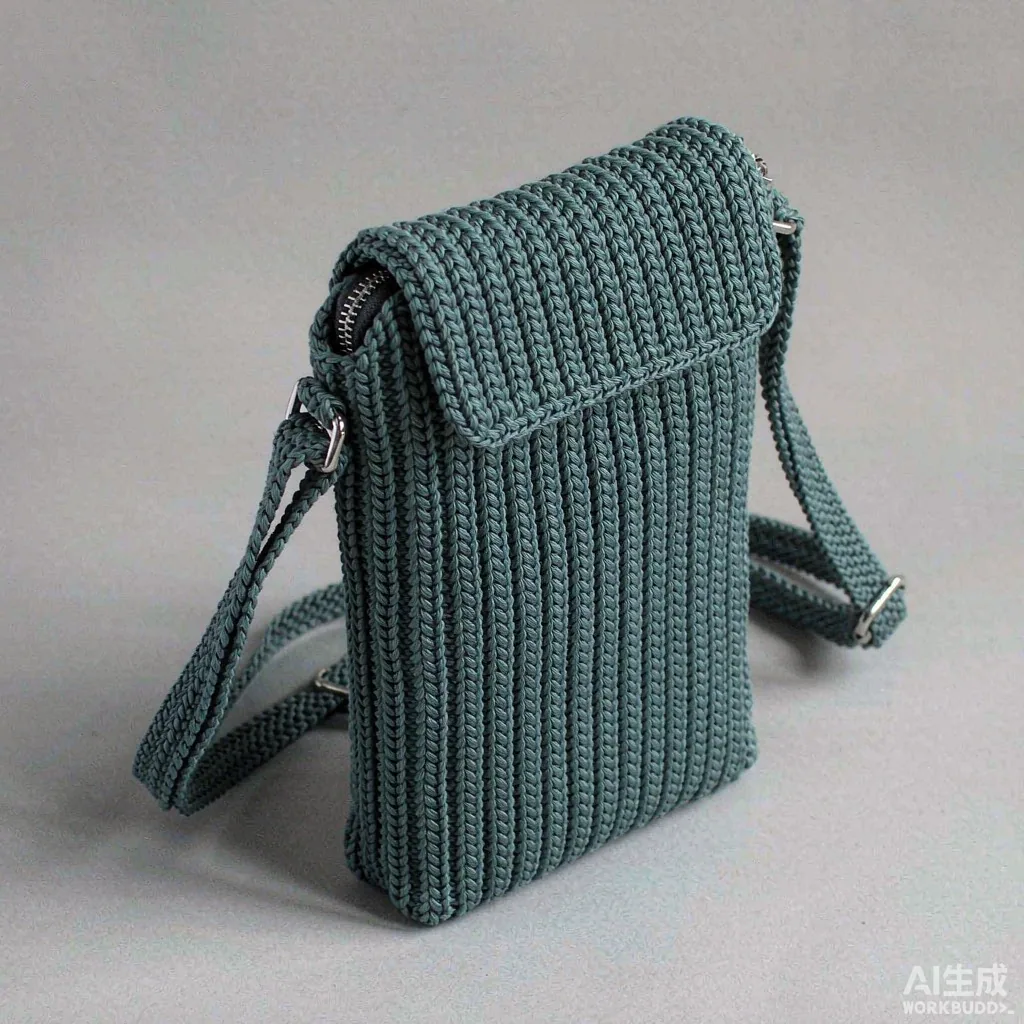
The Decision Order for a Fulfilment Knit Specification
A fulfilment bag is specified in a fixed order: packability first, role second, returns third, reuse promise fourth, and only then branding. Buyers who start with branding end up with a piece that looks right and jams a line, which is an expensive way to discover that dimensional tolerance matters more than surface finish. This order exists because each answer constrains the next one, and reversing it produces a specification that has to be re-engineered.
The four branch questions below each eliminate a set of options. By the end of the tree the specification is narrowed to one gauge, one yarn, one closure and one pack format, and the only thing left to decide is quantity. That is the point of the exercise: on a fulfilment programme, decisions made after the first shipment are paid for twice — once in re-engineering and once in parcel freight.
Branch One: Does the Bag Pack Flat on an Automated Line?
If the bag goes through an automated packing line, it has to fold flat and stay flat. The working target is a folded depth of 22 mm with a recovery of less than 4 mm after twenty-four hours under a 2 kg load. A whole-panel knit achieves this because there is no base board, no reinforcement panel and no stiffener — the piece folds to the thickness of two layers of knit plus the closure strip.
The second half of this branch is tolerance. An automated line does not care about nominal size; it cares about variance. Specify ±4 mm on width and ±6 mm on height across the lot, measured flat after conditioning to ISO 139. A bag that is consistently 6 mm oversized is fine; a lot that varies by 12 mm is not, because the line will be set to the largest piece and every small piece will sit loose in its sleeve.
Branch Two: Is It the Outer Shipper or the Inner Presentation Piece?
This branch sets the abrasion target and the closure specification. An outer shipper travels through a parcel network on its own, so it needs 25,000 Martindale rubs, a sealed base seam and a closure that survives a sorting belt. An inner presentation piece travels inside a corrugated carton, so 15,000 rubs is honest and the closure only has to look deliberate when the customer opens the box.
The commercial difference is real. An outer shipper replaces a single-use mailer and therefore has to be priced against it; an inner presentation piece is part of the unboxing and is priced against the product margin. Both can share the same knit file at 8 L and E12, which is why one construction serves both branches — the divergence is in seam treatment, closure and test targets, not in the panel.
Branch Three: Does It Survive a Returns Loop?
If the bag is part of a returns loop, it needs a closure that can be opened and resealed without a second consumable. The specification is a 12 mm knit channel with a peel-and-seal strip rated to 2,000 open-and-close cycles, plus a reinforced top edge, because the top edge is what a customer grips when they pull the bag open. A closure that needs tape on the return leg is a closure that will be replaced by tape on the first leg.
Label strategy belongs in this branch too. A returns-capable bag needs a 100 x 60 mm label zone on the outer face that accepts a second adhesive label without leaving residue that hides the first, or a sewn-in pocket that takes a printed returns card. The common failure is a label applied directly onto the knit loop, which lifts in transit and leaves the parcel unidentifiable at the sorting centre.
Branch Four: Is There a Reuse Promise Attached to the Order?
If the brand is making a reuse claim, the bag has to be tested to the claim. A piece sold as a reusable shipper should carry 25,000 rubs, a strap or handle tested to 350 N, and colour fastness at grade 4 dry and 3-4 wet under ISO 105-X12, because it will be washed. A piece with no reuse claim can sit at 15,000 rubs and omit the handle entirely, which removes roughly 40 g and a sewing operation.
If a bag is marketed as reusable, the reuse figure has to be backed by a test target — 25,000 rubs and 350 N strap pull at minimum. A claim without a number behind it is the exposure point, not the bag.
Where a Fulfilment Knit Wears Out: Base, Handle Root and Closure
Three locations account for nearly all fulfilment complaints. The base seam fails when a heavy item is dropped into the bag on the line rather than placed. The handle root fails when a customer carries a 4 kg parcel by one handle. The closure fails when a peel-and-seal strip is applied to a knit surface with too much loft, so it never achieves full contact and peels in the first sorting machine.
- Base: seal rather than stitch the base seam, and test the seam to 350 N under ISO 13934-1.
- Handle root: set the webbing into a reinforced knit channel and bar-tack; a tacked handle pulls out at roughly half the load.
- Closure: keep the seal strip on a bound edge rather than on raw loop, where loft prevents full adhesive contact.
- Label zone: use a bound, smooth facing so a shipping label adheres fully and scans on the first pass.
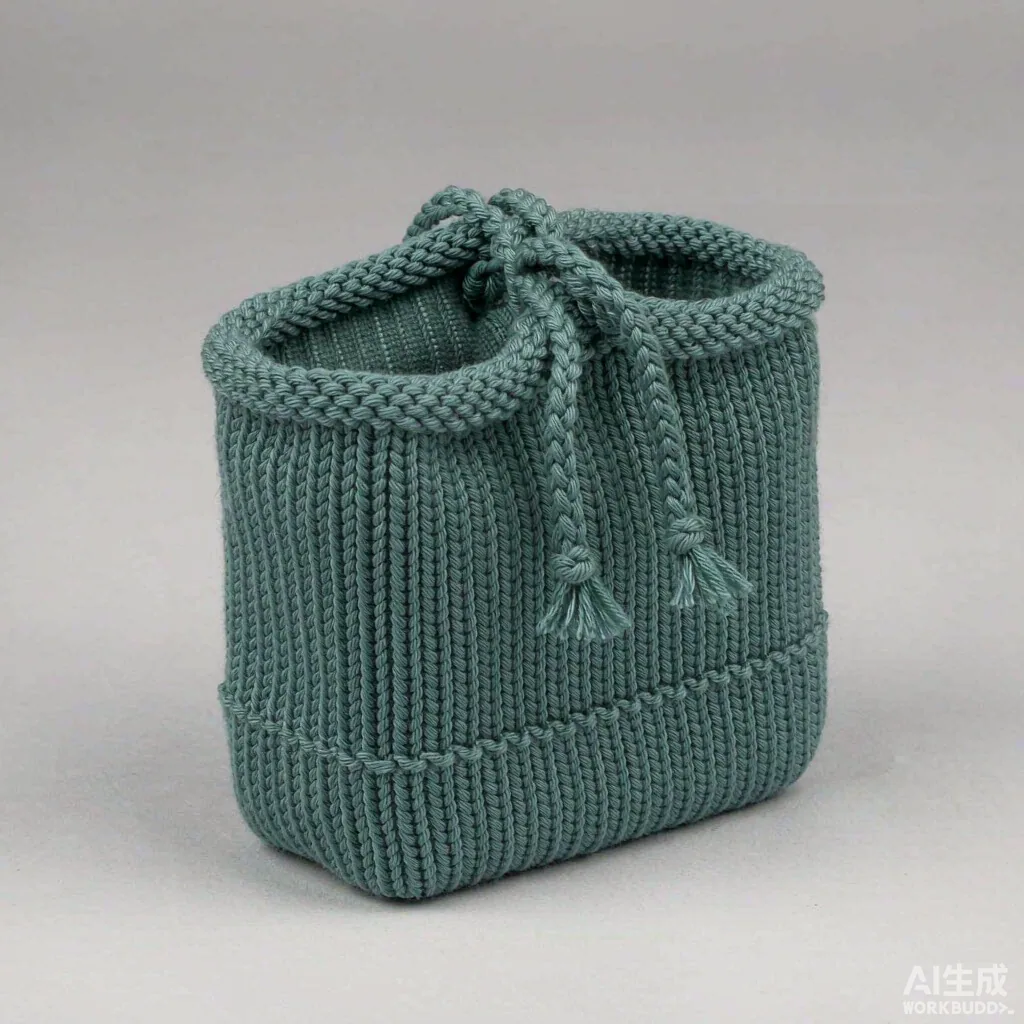
Dimensional Tolerance: The Number That Decides Whether a Line Jams
Tolerance is the single most under-specified number on a fulfilment brief and the one that costs the most when it is wrong. Nominal size is easy; variance is what a machine experiences. Across a 5,000-piece lot, specify ±4 mm on width and ±6 mm on height measured flat, plus a folded-depth tolerance of ±2 mm, and require the measurement to be taken after conditioning to ISO 139 rather than straight off the machine.
Knit has a particular behaviour here that a cut-and-sew bag does not: it relaxes. A panel knitted to 320 x 240 mm will measure differently at the end of the line, after packing, and after a week in a carton. Sampling in 7 working days is what exposes this — a buyer who approves a sample on the day it is made and then receives bulk two weeks later is comparing two different states of the same piece.
Cost Per Shipment, Not Cost Per Bag
The correct unit of comparison on a fulfilment programme is cost per shipment, not cost per bag. At 5,000 pcs an 8 L knitted mailer at E12 and 260 g/m² lands near USD 3.40 before freight. Against a single-use poly mailer at roughly USD 0.18, that is a delta of about USD 3.22 per parcel — which only makes sense if the piece is reused, resold, or removes a secondary packaging component.
Where the bag replaces an inner presentation box as well as the outer mailer, the arithmetic changes: the delta against a boxed presentation format is usually under USD 1.00 per parcel. Where the brand amortises the piece across a reuse loop, 40 trips brings the effective cost to roughly USD 0.09 per shipment. Both are legitimate; neither is visible if the buyer only ever compares the bag line against a poly mailer line.
Carton Cubage, Freight Mode and the Landed Figure
Flat-packing is worth more on the freight line than on the unit line. At a 22 mm folded depth, 200 pieces fit an export carton of roughly 56 x 38 x 30 cm, which stacks to about 1,200 pieces per pallet. The same bag packed structured would fit roughly 60 per carton, so the flat format cuts inbound cubage by close to two thirds, and on a 30-day sea shipment that is often the difference between one container and two.
| Format | Pieces per carton | Carton size | Pieces per pallet |
|---|---|---|---|
| Flat-packed knit mailer | 200 | 56 x 38 x 30 cm | ~1,200 |
| Same bag, packed structured | 60 | 56 x 38 x 45 cm | ~360 |
| Sewn pouch with base board | 80 | 56 x 38 x 40 cm | ~480 |
| Knit tote with reinforced base | 50 | 60 x 40 x 40 cm | ~300 |
Fulfilment Knit Specification Table
One table ends the tree. It carries capacity, gauge, yarn, mass, folded depth, tolerance, closure, seam and strap test targets, label zone, colour fastness, dimensional change, pack format, minimum and inspection level. A warehouse manager should be able to read it without asking a single clarifying question, because every answer they would need is a number.
- Construction
- E12 gauge whole-panel knit, sealed base seam
- Yarn
- 300D recycled polyester, GRS-scope certified
- Fabric mass
- 260 g/m² target, ±5% tolerance (ISO 3801)
- Capacity
- 8 L, takes a 320 x 240 x 60 mm inner box
- Folded depth
- 22 mm ±2 mm, recovery under 4 mm in 24 hours
- Dimensional tolerance
- ±4 mm width, ±6 mm height, conditioned to ISO 139
- Abrasion
- 15,000 rubs inner piece / 25,000 rubs outer shipper, ISO 12947-2
- Seam and strap
- 350 N on base seam and handle root, ISO 13934-1
- Closure
- 12 mm knit channel with peel-and-seal, 2,000 cycles
- Label zone
- 100 x 60 mm bound facing for a shipping label
- Minimum
- MOQ 100 pcs per style and colourway
- Inspection
- AQL 2.5, ISO 2859-1, before booking
- Bulk
- 30 days from sample approval, FOB Xiamen
Reading the Tree Back as a Purchase Order
Finish the tree by writing it backwards into a purchase order. State the branch answers explicitly — flat-pack yes, outer shipper yes, returns loop yes, reuse claim yes — because each one maps to a line item in the specification. Then set the reorder trigger: with 30 days of production, roughly 32 days of sea freight and a week of inland handling, the order has to be raised about 72 days before forecast stockout.
Outer shipper, reuse claim
25,000 rubs, sealed base, 350 N handle, peel-and-seal rated to 2,000 cycles, label zone bound.
Inner presentation piece
15,000 rubs, no handle, open top with a turned edge, packed flat at 200 per carton.
Returns-loop variant
Second peel-and-seal strip and a sewn pocket for the returns card, same knit file as the outbound piece.
Subscription replenishment
Standing 30-day production window with the reorder trigger set 72 days ahead of forecast stockout.
Specify a fulfilment knit programme
Send the inner box dimensions, whether the piece is the outer shipper, and whether it enters a returns loop. You will get a specification table, a 7-working-day sampling plan and a landed cost per shipment.
Frequently Asked Questions
What is the MOQ for knitted bags for e-commerce fulfilment?
The MOQ is 100 pcs per style and colourway. That is low enough to test one mailer format on a single product line before committing a whole fulfilment operation. Because colourways are a yarn swap rather than a fabric minimum, a second or third brand colour can be added later inside the same production window.
How long does sampling take for a fulfilment mailer?
Sampling takes 7 working days from approved artwork and a confirmed yarn and gauge. Test the sample in the actual packing process rather than on a bench, and measure it flat after conditioning, because knit relaxes between the machine and the carton and the relaxed dimension is the one your line will see.
What dimensional tolerance should a fulfilment bag carry?
Specify ±4 mm on width and ±6 mm on height, plus ±2 mm on folded depth, measured flat after conditioning to ISO 139. Automated lines react to variance rather than to nominal size, so a consistent oversize is workable while a lot that varies by 12 mm is not.
How flat does a knitted mailer need to fold?
Twenty-two millimetres is the working target, with recovery under 4 mm after twenty-four hours under a 2 kg load. A whole-panel knit reaches this because there is no base board or stiffener. At that depth 200 pieces fit a carton of roughly 56 x 38 x 30 cm.
Should the knitted bag be the outer shipper or an inner piece?
Both work, and they can share one knit file. An outer shipper needs 25,000 Martindale rubs, a sealed base seam and a closure that survives a sorting belt. An inner presentation piece needs 15,000 rubs and no handle, which removes roughly 40 g and a sewing operation.
Which closure suits a returns-loop bag?
A 12 mm knit channel with a peel-and-seal strip rated to 2,000 open-and-close cycles, applied to a bound edge rather than to raw loop. A closure that needs fresh tape on the return leg will be replaced by tape on the first leg, which defeats the point of the loop.
How should shipping labels be applied to a knitted bag?
Onto a bound, smooth facing of at least 100 x 60 mm rather than directly onto the knit loop. Adhesive on raw loop never achieves full contact, so the label lifts in transit and the parcel arrives at the sorting centre unidentifiable. Keep the facing on the outer face and clear of the closure strip, so a label never bridges the seal.
What abrasion target should a reusable shipper carry?
Twenty-five thousand Martindale rubs under ISO 12947-2, with the handle tested to 350 N under ISO 13934-1 and colour fastness at grade 4 dry and 3-4 wet under ISO 105-X12, because a reused piece will be washed. A piece with no reuse claim can sit at 15,000 rubs.
How does flat-packing change inbound freight?
At a 22 mm folded depth, 200 pieces fit a carton of roughly 56 x 38 x 30 cm and about 1,200 pieces fit a pallet. The same bag packed structured fits around 60 per carton, so flat-packing cuts inbound cubage by close to two thirds on the sea leg.
What does a knitted mailer cost per shipment?
At 5,000 pcs an 8 L mailer at 260 g/m² lands near USD 3.40 before freight. Compare that per shipment rather than per bag: against a boxed presentation format the delta is usually under USD 1.00, and across 40 reuse trips the effective cost is roughly USD 0.09.
What inspection standard applies before a fulfilment shipment?
Pre-shipment inspection runs to AQL 2.5 under ISO 2859-1, with critical defects such as an unsealed base seam treated as zero-acceptance. On a fulfilment order the critical list should be written around the packing line: folded depth, tolerance spread and seal integrity. Add the tolerance spread to the inspection sheet explicitly, because it is the defect a warehouse notices first.
How far ahead should a replenishment order be raised?
About 72 days before forecast stockout. That covers 7 working days of sampling if the specification is changing, 30 days of bulk, roughly 32 days of sea freight from FOB Xiamen, and a week of inland handling to the warehouse. Raising the trigger later than that converts every replenishment to air freight, which usually costs more than the entire unit saving.
Can one knit file serve both outbound and returns pieces?
Yes. The outbound and returns variants share the panel, the gauge and the yarn; they differ by a second peel-and-seal strip and a sewn pocket for the returns card. Sharing the file keeps both inside one production window and removes a second engineering charge. Both variants can then travel in the same carton and be split at the warehouse rather than at the packing line.
What compliance files should a fulfilment buyer request?
A GRS transaction certificate where recycled content is claimed, OEKO-TEX STANDARD 100 on the yarn, and REACH Annex XVII screening. Where the bag is the outer shipper into the United States, California Prop 65 documentation should be added to the file before the first container ships.
People Also Ask
Do knitted bags work on automated packing lines?
Yes, if folded depth and tolerance are specified. A whole-panel knit folds to 22 mm and recovers under 4 mm. Set ±4 mm on width and ±6 mm on height, measured after conditioning, and the line will run without re-setting.
What size knitted mailer suits a typical e-commerce parcel?
Eight litres, which takes an inner box at 320 x 240 x 60 mm. At E12 gauge in 300D recycled polyester and 260 g/m² the piece is heavy enough for a parcel network and light enough not to move the freight band.
How many pieces fit in a carton of flat-packed knit mailers?
Two hundred, in a carton of roughly 56 x 38 x 30 cm, giving about 1,200 pieces per pallet. The same bag packed structured fits around 60 per carton, so flat-packing cuts inbound cubage by close to two thirds.
Can a knitted mailer be reused for returns?
Yes, with a second peel-and-seal strip and a reinforced top edge. Specify the closure at 2,000 open-and-close cycles and the base seam at 350 N, and provide a sewn pocket or bound label zone for the returns card.
Why is tolerance more important than size on a fulfilment bag?
Because machines react to variance. A lot that is consistently 6 mm oversized can be accommodated once by setting the line; a lot that varies by 12 mm cannot, because every small piece sits loose while the line is set to the largest.
Sources and further reading
Every figure on this page is either our own programme data or attributed below. Open the originals before you write them into a specification.
- ISO 139:2005 — Textiles, standard atmospheres for conditioning and testingISO The conditioning atmosphere referenced for the ±4 mm and ±6 mm dimensional tolerance measurement.
- ISO 12947-2 — Textiles, determination of abrasion resistance by the Martindale methodISO Source of the 15,000 and 25,000 rub targets separating an inner piece from an outer shipper.
- ISO 13934-1 — Textiles, tensile properties of fabrics, Part 1: maximum force using the strip methodISO Referenced for the 350 N test on the base seam and the handle root.
- ISO 2859-1 — Sampling procedures for inspection by attributesISO The AQL-indexed scheme behind the AQL 2.5 pre-shipment inspection before a container is booked.
- Incoterms rulesInternational Chamber of Commerce The framework behind FOB Xiamen terms and the split of freight responsibility on the inbound leg.
- Global Recycled StandardTextile Exchange Traceability framework behind the recycled polyester yarn used across the fulfilment range.
Where Fulfilment Programmes Drift
The drift is almost always the same: the first shipment is specified carefully, and the second is reordered on the original quote with no re-check of tolerance or folded depth. Knit behaves consistently, but yarn lots and finishing conditions do not, and a programme that never re-measures eventually produces a carton that jams a line that has been running for eighteen months.
The fix costs little effort and a great deal to skip. Hold the specification table, re-measure the first carton of every shipment against ±4 mm and ±6 mm, and keep the reorder trigger at 72 days so nothing has to be air-freighted into a warehouse that has already run out. A fulfilment knit programme that does those two things behaves like a component supply rather than like a packaging experiment.