Knitted Bags for Uniform Programmes: The Cost-Per-Wear Arithmetic Behind a Multi-Site Rollout
What does a knitted bag cost per wear inside a uniform programme, and what makes that figure move? At E7 gauge in 600D recycled polyester and 430 g/m², tested to 40,000 Martindale rubs and 700 N strap pull and rated for 50 industrial washes, a unit at USD 4.80 spread over 120 wears works out at roughly USD 0.04 per wear. The figure that actually sets annual spend is not the unit price — it is the replacement cycle. Two issues per person per year on a 200-person site is 400 pcs annually, and that is the number a procurement team should be managing.
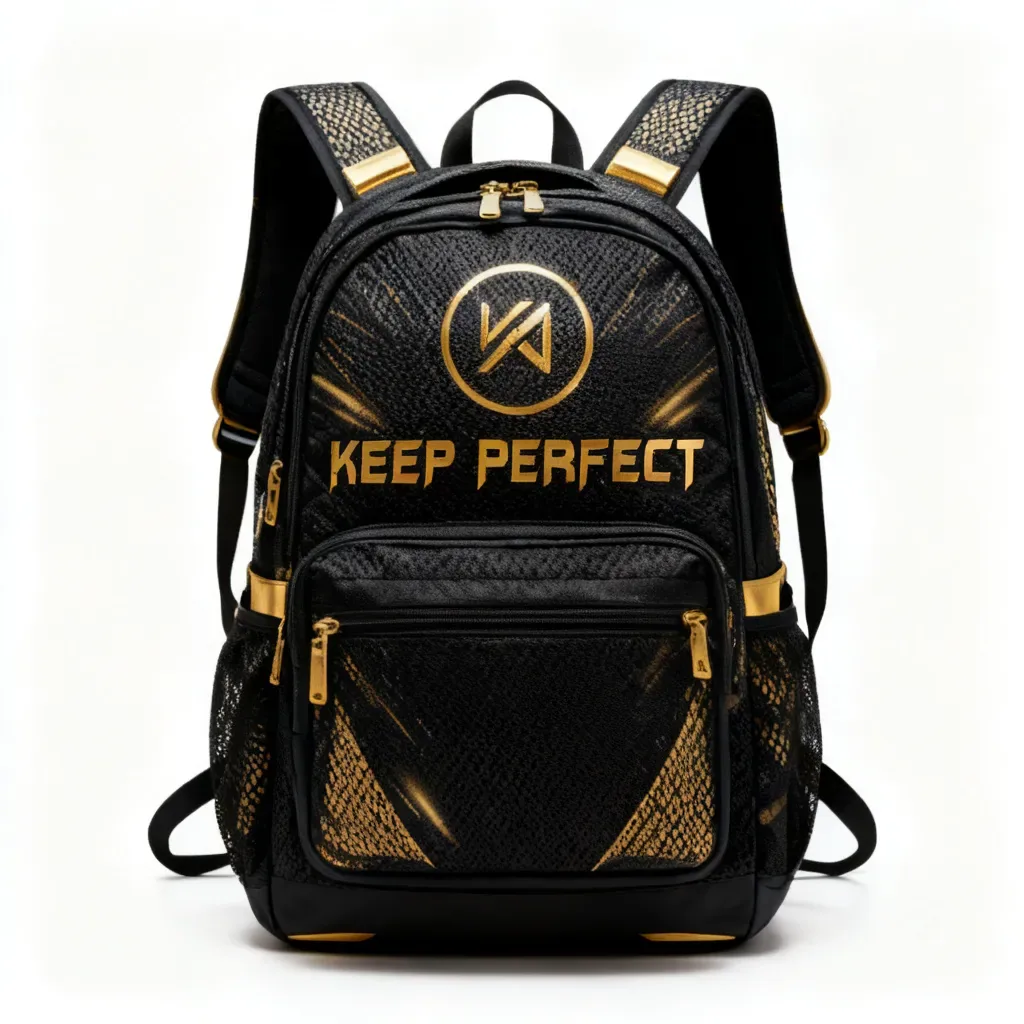
The Four Figures That Decide a Uniform Bag Programme
Four numbers decide whether a uniform bag programme works: wears per year, replacements per person per year, unit cost at the ordered quantity, and the wash rating. Everything else — stitch structure, panel geometry, closure style — matters only insofar as it moves one of those four. A procurement team that opens with the four figures gets a specification in one pass; a team that opens with a fabric swatch usually spends three months discovering them.
For a duty-grade piece the working set is 120 wears per year across roughly 240 working days, two issues per person per year, a unit near USD 4.80 at 400 pcs and above, and a wash rating of 50 industrial cycles. Putting those together gives about USD 0.04 per wear. That is the number to compare against an existing issue, and it is far more useful than a unit price quoted without a wash rating attached.
Replacement Cycle: The Figure That Actually Sets the Spend
Replacement cycle, not unit price, sets annual spend on a uniform programme. A piece at USD 4.80 that lasts two years costs less per year than a piece at USD 3.10 that has to be reissued every eight months, and the difference widens once the issuing labour is counted. The discipline is to specify the cycle first and then buy the lowest specification that delivers it, rather than buying the highest specification available and hoping.
Practically, that means writing the cycle into the brief as a number: two issues per person per year on a 200-person site is 400 pcs annually, plus roughly 8% for loss and damage, so 432 pcs on the annual order. Against a 100-piece minimum per style and colourway, that supports four role colourways cleanly. It does not support eight, and splitting the same volume across eight colourways would put each one at 54 pcs — below the minimum and therefore priced as eight small lots.
Yarn and Gauge Cost Shares on a Duty-Grade Uniform Piece
On a 600D duty-grade knit at 430 g/m² the cost shares are roughly: yarn 42%, knitting time 24%, hardware 12%, finishing and labelling 10%, packing 6%, and inspection plus programme overhead 6%. Yarn dominates because denier drives both the invoice and the machine time — a heavier yarn feeds more slowly through the same gauge. That is why negotiating the yarn specification produces more movement than negotiating any other single line.
Gauge is the second lever and the one most often settled by accident. E7 produces a coarse, heavy loop that suits a bag carrying tools, documents and a flask five days a week. E12 produces a finer surface that reads better for a front-of-house role but will not survive the same duty. The correct answer for most uniform programmes is one gauge across the range — E7 — with the role expressed through colourway and mark, because a second gauge means a second engineering charge and a second machine booking.
- Construction
- E7 gauge whole-panel knit, reinforced base corner
- Yarn
- 600D recycled polyester, GRS-scope certified
- Fabric mass
- 430 g/m² target, ±5% tolerance (ISO 3801)
- Abrasion
- 40,000 rubs minimum, ISO 12947-2
- Strap pull
- 700 N minimum at the handle root, ISO 13934-1
- Wash rating
- 50 industrial cycles, shrinkage ≤2%
- Colour fastness
- Grade 4 to washing (ISO 105-C06), grade 5 to light (ISO 105-B02)
- Name holder zone
- 90 x 55 mm bound facing
- Minimum
- MOQ 100 pcs per style and colourway
- Inspection
- AQL 2.5, ISO 2859-1, before booking
- Sampling
- 7 working days from approved artwork and yarn confirmation
- Bulk
- 30 days from sample approval, FOB Xiamen
Mark Placement Across Roles: Front of House, Back of House, Field
Uniform roles have different visibility requirements, and the mark should follow the role rather than the house style. Front of house needs the mark to read at a reception desk, so a knit-in jacquard wordmark in a 160 x 100 mm zone on the front panel is correct. Back of house needs identification more than branding, so the priority is the name holder zone at 90 x 55 mm and a role colourway. Field needs both, plus a high-visibility yarn.
The method question is settled by the wash rating. A knit-in jacquard mark has no thread or film and therefore survives 50 industrial cycles, which makes it the default across the range. A heat transfer will not, and an embroidered mark can pucker on a stretch knit substrate through repeated industrial laundering. Where a role needs a photographic or multi-colour identity, a woven label bar-tacked at all four corners is the only option that also survives the wash cycle.
Colourway Arithmetic When Every Site Wants Its Own Trim
Every multi-site rollout eventually asks for a colourway per site, and the arithmetic usually says no. Four colourways on a 432-piece annual order is roughly 108 pcs each, which clears the 100-piece minimum and keeps one production window. Six colourways puts each at 72 pcs, below the minimum, and the order then prices as six small lots with six set-up charges and six inspection lots.
| Role | Colourway | Annual volume | Mark method |
|---|---|---|---|
| Front of house | Navy | ~120 pcs | Knit-in jacquard, 160 x 100 mm |
| Back of house | Mid grey | ~150 pcs | Name holder plus woven role label |
| Field and site | High-visibility yellow | ~90 pcs | Knit-in mark plus reflective trim |
| Supervisor | Black | ~72 pcs at a single site | Knit-in mark, metal zip pull |
Where a site genuinely needs its own identity, the more economical route is a mark treatment rather than a yarn. One base colourway with three woven label variants reads as three site identities inside a single dye lot, and it avoids the colour-consistency problem that appears when the same brand colour is dyed in four separate lots for four sites. Lock one lab-dip reference at sampling and hold it for the whole rollout.
Wash Cycles and What They Do to a Knitted Uniform Piece
Fifty industrial cycles is the rating a duty-grade uniform piece should carry, and it changes three specifications. Shrinkage has to be held to 2% or less rather than the 3% acceptable on a lifestyle piece, because a bag issued to a named person has to still accept the same contents after a year of laundering. Colour fastness to washing has to reach grade 4 under ISO 105-C06. And the mark has to be made during knitting, because nothing applied afterwards survives the cycle.
Light fastness matters more than most buyers expect, because a bag carried outdoors five days a week fades faster than it wears. Grade 5 under ISO 105-B02 is the target for field and site roles; grade 4 is acceptable for indoor roles. Testing is carried out on conditioned specimens, so the reference standards are ISO 5077 for dimensional change and ISO 6330 for the domestic washing procedure, with industrial laundering procedures described in ISO 15797 where the piece goes through a contract laundry.
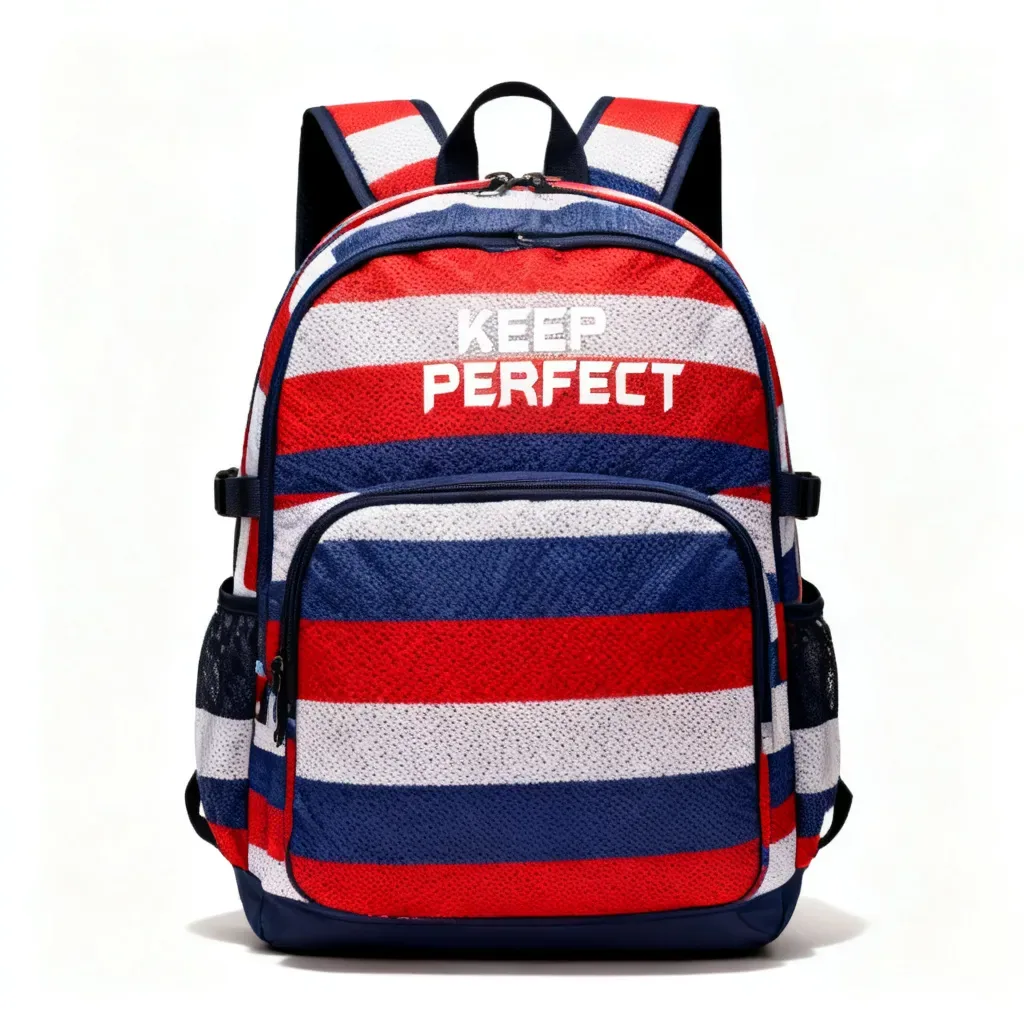
Compliance Files Behind a Multi-Site Uniform Rollout
A multi-site rollout carries a documentation burden that a single-site order does not, because each site may sit under a different corporate procurement policy. The standard set is a GRS transaction certificate where recycled content is claimed, OEKO-TEX STANDARD 100 on the yarn, REACH Annex XVII screening, and amfori BSCI or Sedex reporting where the host requires social compliance evidence. California Prop 65 documentation is added for any site in the United States.
Compliance documents take longer to assemble than a sample takes to knit. Requesting the full file set at the start of the 7-working-day sampling window means nothing holds up the 30-day bulk slot later.
Uniform Bag Specification Table
One table closes the programme. It carries capacity, gauge, yarn, mass, abrasion, strap pull, wash rating, colour fastness, dimensional change, mark zone per role, name holder provision, pack format, minimum and inspection level. A facilities manager should be able to read it and place a reorder two years later without speaking to anyone, which is the real test of whether a uniform specification has been written properly.
Issuing, Labelling and Return: How the Piece Is Tracked
A uniform bag is issued to a named person and returned when they leave, so it has to be trackable. The working format is a 90 x 55 mm bound name holder facing on the back panel, plus an individual barcode label applied at packing so the piece can be scanned at issue and at return. Cartons hold 30 pcs, marked by colourway and numbered, so a store can issue one carton at a time without opening the next.
Issue
Individual barcode label scanned at handover, with the name holder filled from the role record.
Laundering
Name holder facing rated for 50 industrial cycles, so identification survives the contract laundry.
Return
Scan at return, inspect against the same criteria, and reissue or retire the piece on condition.
Replenishment
Reorder triggered roughly 72 days before forecast stockout to stay on sea freight.
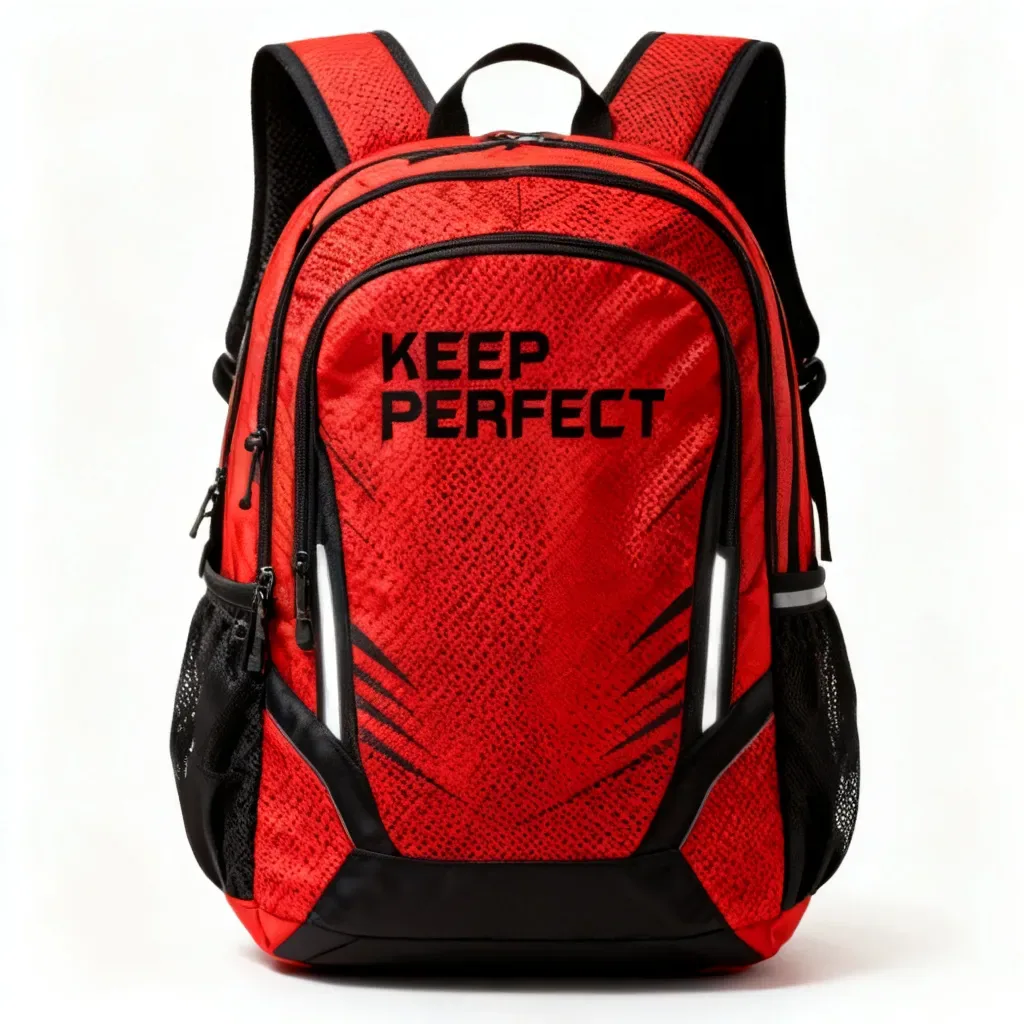
Where Uniform Bag Spend Leaks, and the Three Fixes
Three leaks account for most overspend on a uniform bag programme. The first is over-specification: a back-of-house piece built to a field specification costs roughly a third more and never uses the difference. The second is colourway sprawl, where six sites insist on six dye lots and the order prices as six small lots. The third is emergency replenishment, where the reorder trigger sits inside the freight window and every top-up arrives by air.
- Write a specification per role rather than one across the range, and let the field variant carry the higher abrasion target alone.
- Cap colourways at the number the annual volume actually supports, and express site identity through the mark rather than the yarn.
- Set the reorder trigger about 72 days before forecast stockout so 30 days of bulk and roughly 32 days of sea freight always fit.
None of the three fixes requires a better price. All three are decisions made before sampling starts, which is the recurring lesson of a uniform programme: the money is spent in the specification, not in the negotiation. A buyer who fixes the cycle, caps the colourways and holds the reorder trigger will typically find the annual figure falls without a single conversation about unit price.
Cost a multi-site uniform programme
Send the headcount per site, the role split, the wash arrangement and the replacement cycle you are planning against. You will get a cost-per-wear breakdown, a role colourway plan and a 30-day production slot.
Frequently Asked Questions
What is the MOQ for knitted bags for uniform programmes?
The MOQ is 100 pcs per style and colourway. A 200-person site needing about 432 pcs annually supports four role colourways at roughly 108 pcs each. Six colourways would put each at 72 pcs, below the minimum, and the order would price as six small lots with separate set-up and inspection.
What does a knitted uniform bag cost per wear?
At a unit near USD 4.80 spread across 120 wears, roughly USD 0.04 per wear. That figure is the one worth comparing against an existing issue, because a lower unit price on a shorter replacement cycle usually costs more per wear once issuing labour is counted.
Which gauge and yarn suit a duty-grade uniform bag?
E7 in 600D recycled polyester at 430 g/m². The coarse loop carries tools, documents and a flask five days a week, and the mass supports a 40,000-rub abrasion target. E12 gives a finer surface that suits front of house but will not survive the same duty cycle.
How many industrial washes should a uniform bag survive?
Fifty cycles is the rating a duty-grade piece should carry. That target drives three specifications: shrinkage held to 2% or less, colour fastness to washing at grade 4 under ISO 105-C06, and a mark made during knitting rather than applied afterwards. Testing runs against ISO 5077 for dimensional change, with ISO 15797 describing the industrial laundering procedure used by contract laundries.
How long does sampling take for a uniform bag programme?
Sampling takes 7 working days from approved vector artwork and a confirmed yarn and gauge. Use the window to wash a sample twice and re-measure it, because dimensional change after laundering is the specification most often discovered too late on a uniform rollout. Request the compliance file set at the same time, so documents are ready before the 30-day bulk slot opens.
How long is bulk production after sample approval?
Bulk production runs 30 days from sample approval. Combined with 7 working days of sampling, the development-to-issue path is roughly 37 working days plus freight. A site opening in September should therefore release the order in late spring to stay on sea freight. Add roughly a week for customs and inland delivery to the site or the distribution centre. Programmes that hold this trigger keep every replenishment on sea freight and never have to justify an air line.
How should a company mark a knitted uniform bag?
Knit-in jacquard is the default across the range, because it has no thread or film and survives 50 industrial cycles. Front of house takes a 160 x 100 mm wordmark; back of house takes a 90 x 55 mm name holder plus a woven role label. Heat transfer will not survive the wash cycle.
How are uniform bags issued and tracked?
Each piece carries an individual barcode label applied at packing and a 90 x 55 mm bound name holder facing on the back panel. The bag is scanned at issue and again at return, and the name holder facing is rated for the same 50 industrial cycles as the body.
Should every site get its own colourway?
Usually not. Four colourways on a 432-piece annual order clears the 100-piece minimum; six does not. Where a site needs its own identity, express it through a woven label variant inside a single dye lot rather than through a separate yarn colour. One shared dye lot also removes the colour-consistency problem that appears when the same brand colour is dyed separately for each site.
What abrasion target should a field role carry?
Forty thousand Martindale rubs under ISO 12947-2, with the strap pull at 700 N under ISO 13934-1 and light fastness at grade 5 under ISO 105-B02. Field pieces fade faster than they wear, which is why light fastness is specified separately from abrasion. Ask for the light fastness figure on the test report, because it is the specification most often omitted from a uniform brief.
What inspection standard applies before uniform goods ship?
Pre-shipment inspection runs to AQL 2.5 under ISO 2859-1, with critical defects such as a detached strap or a missing name holder treated as zero-acceptance. On a uniform order the critical list should be written around identification and closure rather than appearance. Include the name holder facing on that list, since it is an identification feature rather than a cosmetic one.
How far ahead should a uniform replenishment order be raised?
About 72 days before forecast stockout. That covers 7 working days of sampling if the specification is changing, 30 days of bulk, roughly 32 days of sea freight from FOB Xiamen, and a week of inland handling to the site or the distribution centre. Programmes that hold this trigger keep every replenishment on sea freight and never have to justify an air line.
What compliance files should a multi-site rollout request?
A GRS transaction certificate where recycled content is claimed, OEKO-TEX STANDARD 100 on the yarn, REACH Annex XVII screening, and amfori BSCI or Sedex reporting where the host requires it. California Prop 65 documentation is added for sites in the United States. Request the set during the sampling window, because certificate turnaround is usually longer than the 30-day production run.
What is the biggest overspend risk on a uniform bag programme?
Colourway sprawl. Six sites asking for six dye lots turns one production window into six small lots, each below the 100-piece minimum, each with its own set-up and inspection. Cap colourways at what the annual volume supports and express site identity through the mark. The second leak is over-specification, where a back-of-house piece is built to a field specification it will never use.
People Also Ask
Are knitted bags durable enough for work uniform programmes?
Yes at E7 in 600D recycled polyester and 430 g/m². That pairing reaches 40,000 Martindale rubs and 700 N strap pull, and it is rated for 50 industrial wash cycles with shrinkage held to 2% or less.
How many bags does a 200-person site need per year?
About 432 pcs at two issues per person per year plus an 8% loss and damage allowance. That volume supports four role colourways at the 100-piece minimum, but not six or eight.
What is a realistic cost per wear for a uniform bag?
Roughly USD 0.04, from a unit near USD 4.80 spread across 120 wears. Compare cost per wear rather than unit price, because a lower unit price on a shorter replacement cycle usually costs more annually.
How should uniform bags be marked for identification?
With a knit-in jacquard mark for branding plus a 90 x 55 mm bound name holder facing for the individual. Both survive 50 industrial cycles; a heat transfer mark will not.
When should uniform bag orders be replenished?
About 72 days before forecast stockout. That covers 7 working days of sampling, 30 days of bulk, roughly 32 days of sea freight from FOB Xiamen, and a week of inland handling.
Sources and further reading
Every figure on this page is either our own programme data or attributed below. Open the originals before you write them into a specification.
- ISO 12947-2 — Textiles, determination of abrasion resistance by the Martindale methodISO Source of the 40,000-rub abrasion target set for duty-grade uniform bags.
- ISO 13934-1 — Textiles, tensile properties of fabrics, Part 1: maximum force using the strip methodISO Referenced for the 700 N strap pull test at the handle root on uniform pieces.
- ISO 6330 — Textiles, domestic washing and drying procedures for textile testingISO Washing procedure referenced alongside ISO 5077 for the dimensional change check after laundering.
- ISO 5077 — Textiles, determination of dimensional change in washing and dryingISO Basis for the 2% shrinkage limit specified across 50 industrial wash cycles.
- OEKO-TEX STANDARD 100OEKO-TEX The restricted-substance screen requested on yarn for pieces issued directly to named staff.
- amfori BSCI — business social compliance initiativeamfori The social compliance reporting most often required by corporate hosts on multi-site uniform rollouts.
Running the Second Year on the Same Specification
The value of a uniform programme shows up in year two. Once the knit file, the dye reference, the role colourways and the inspection criteria exist, the annual reorder costs nothing to develop and only yarn and freight move. What remains is discipline: re-measure the first carton of every shipment, hold the reorder trigger at 72 days, and resist adding a colourway every time a new site opens.
Programmes that keep that discipline tend to get quieter every year, which is the correct outcome for a uniform item. Nobody should notice the bag; it should simply be issued, washed, returned and reissued at the cycle it was specified for. Getting there is a specification exercise rather than a purchasing one, and it is entirely available to any buyer willing to fix the four figures first.