Sustainable Bag Demand: Which Requests Actually Change a Knit Bag Specification
What actually drives sustainable bag demand? Not sentiment: the drivers worth planning for are the ones that arrive attached to a procurement requirement and change a line on the specification. Four do, and each has a different evidence chain. Recycled content needs a certificate chain, durability needs a test result with a method named, single-polymer design changes the trims list, and end of life changes what can be claimed in a specific market. Requests without a chain behind them tend to resolve into nothing measurable.
Reading Demand Without Inventing Numbers
The most useful thing a buyer can do with sustainability claims is stop treating volume numbers as the starting point. Reported growth figures for any sustainable category vary enormously depending on where the boundary is drawn, who is counted and which year is the baseline, and none of that variance helps a buyer decide anything at the next range meeting. The version that survives contact with reality is simpler: particular requests keep recurring in particular markets, and they repeat often enough to be worth planning for.
That reframing also removes most of the risk of being misled. A claim about consumer sentiment cannot be checked at all. A repeated request for a transaction certificate with the order number on it can be checked in minutes, and if it recurs across three buying seasons it belongs in the standard quotation rather than in an exception list. What follows is built on the second kind of observation.
There is a second reason to prefer mechanisms. Mechanistic statements age well. 'Retailers increasingly ask whoever places the order to hold evidence' will still be true in several years, whereas any specific percentage quoted today will look wrong quickly, and looking wrong once costs a buyer credibility at exactly the moment credibility matters.
The Four Routes Into a Bag Specification
Sustainable bag demand reaches the tech pack through four routes, and naming them separately matters because each requires a different artefact and fails differently when rushed. Treating all four as one vague sustainability request is why programmes spend weeks producing documents nobody asked for.
Recycled content
A stated percentage by mass. Needs Textile Exchange GRS or the Content Claim Standard plus a transaction certificate naming the same percentage as the hangtag.
Durability
A measurable working life. Needs abrasion under ISO 12947-2, tensile under ISO 13934-1 and a stated target such as 25,000 rubs.
Single-polymer design
A construction separable into one recoverable stream. Changes the trims list, thread choice and whether an interlining is used at all.
End of life route
A stated route qualified by the market of sale. Depends on local collection infrastructure, not on what the material could theoretically do.
Notice that the first two are about evidence and the second two are about design. That split is the practical one, because evidence can be added late and at low cost while design changes made late are expensive. A programme that knows which of the two it is dealing with stops treating a certificate request as a redesign.
Which Requests Change What
| Buyer request | What it touches | Document produced | Lead-time effect |
|---|---|---|---|
| State the recycled percentage | Yarn choice and fibre source | GRS transaction certificate matching the claim | None if the yarn is already held; more if the dyelot must be sourced |
| Prove the bag lasts | Gauge, yarn count and reinforcement | ISO 12947-2 abrasion and ISO 13934-1 tensile results | May add a test cycle if not already in the plan |
| Make it recyclable | Trims list, thread polymer and whether interlining is used | Bill of materials by mass with each polymer named | Design decision, should be fixed before sampling |
| Declare end of life | Market-specific route statement | Written route qualified by local collection practice | Hours of writing if the material list exists |
| Restrict substances of concern | Dyes, finishes and hardware coatings | REACH declarations and screened AO results | None if specified on request; weeks if answered late |
| Confirm social compliance | Programme records rather than the product | BSCI or Sedex SMETA evidence per audit cycle | None for the product; plan around the audit calendar |
Recycled Content: What Can Be Proved
Recycled content is the request most often made and most often answered badly, because the percentage buyers want on a hangtag is not necessarily the percentage the certificate supports. The chain has to be continuous: the input has to be certified, the party issuing the transaction certificate has to be inside the chain, and the number on that certificate has to be the number on the sewn-in label. Any break turns an honest claim into an unsupportable one.
- Common standard cited
- Textile Exchange Global Recycled Standard
- Companion scheme
- Content Claim Standard for tracking the input through processing
- Evidence document
- Transaction certificate naming style, quantity and percentage
- Typical claim basis
- Percentage by mass of the article
- Frequent mismatch
- Hangtag figure higher than the certificate figure
- Knit-specific advantage
- One body polymer and no interlining makes the mass calculation simpler
- Order minimum regardless
- 100 pcs per style and colourway
- Companion article limits
- OEKO-TEX STANDARD 100 for chemical limits, not content
A knitted body has one quiet advantage here that is worth using: fewer components means the mass calculation is faster and less contested. A construction whose body, handle and binding all use the same polymer produces a simpler bill of materials than a laminated article with an adhesive interlining, and a simple bill is easier to evidence, easier to test and easier to defend when a retailer asks how the figure was reached.
Durability as a Sustainability Demand
Durability has quietly become one of the strongest sustainability requests, because it is the only one where the evidence is already sitting in every programme that tests its products. A bag that lasts longer displaces purchases, and regulators have noticed: the European direction under the Ecodesign for Sustainable Products Regulation is explicitly toward durability, reparability and recycled content rather than toward messaging.
The consequence for specification is a change in the order of decisions. Rather than choosing a weight and hoping it survives, a buyer states the target life first and derives everything else. If the panel has to reach 25,000 rubs under ISO 12947-2 with no more than a grade 4 change in appearance, then the gauge, the yarn count and the reinforcement zones all follow from that one sentence, and the argument stops.
The order that settles arguments
- State the required test result first, then let gauge, yarn count and reinforcement follow.
- Everything downstream becomes a calculation rather than an opinion.
Repairability is the part most programmes overlook, and it is largely a design question rather than a testing one. Two decisions control it: whether the base board can be removed and replaced, and whether the strap assembly can be detached. Neither costs anything at specification stage, and both give a credible answer when a retailer's sustainability questionnaire asks what happens when the article fails.
The Evidence Checklist Before Any Claim
- Write the claim exactly as it will appear on the hangtag, including every number and every word.
- Match each word to a document: percentage to a transaction certificate, durability to a dated test report with the method named.
- Check the stated basis is the same across documents. A claim by mass and a certificate by fibre content are not interchangeable.
- Confirm the certificate covers the actual order quantity and style, because most are issued per shipment rather than per range.
- Name the standard and the issuing body, and keep the expiry date in the order file.
- Qualify any end of life statement with the market of sale, since collection infrastructure decides what is true there.
- Make sure artwork marks are based on a certification scheme or established by public authorities rather than invented in-house.
- Add a change-control clause requiring notice before any material substitution, so existing evidence does not silently expire.
One item deserves a sentence of its own because it is regularly missed: social-compliance evidence runs on an audit calendar rather than on an order calendar. Where a retailer asks for BSCI or Sedex SMETA records, those belong to a cycle that renews independently of the bag programme, and asking for them at quotation stage is sensible while asking during a pending shipment is often too late. Checking which schemes the target retailer accepts, before artwork goes to print, prevents the awkward situation where packaging carries a mark the retailer does not recognise.
What Not to Claim
Three claims cause most of the trouble, and all three fail for the same reason: they describe an intent rather than a measured fact. A claim that a bag is fully circular, a claim that it is carbon neutral without a stated boundary, and a claim that it is recyclable without naming the stream available where it is sold are all claims that a regulator can test against infrastructure rather than against paperwork.
The remedy is almost always a qualification rather than a retreat. 'Recyclable where collection for this polymer exists, which covers most but not all of the market it is sold in' is longer than 'recyclable', but it survives scrutiny and the shorter version does not. Qualifications read as competence to professional buyers, who would rather have a defensible sentence than a tidy one.
The other useful rule is to never make one part of the article stand for the whole. A bag with a recycled body and a virgin polyester strap is not a recycled bag; it is a bag with recycled content in the body, and those two sentences are not equivalent. Most regulatory difficulty arises precisely in that gap between what the words imply and what the bill of materials says.
Turning Demand Into a Specified Programme
The practical method is to fold sustainability into the first request rather than raise it after quoting. A single message stating market of sale, target recycled percentage, required durability result and whether the trims must stay single-polymer produces a quote that already accounts for everything and a colour plan that can be booked with confidence. Raised afterwards, each of those four items triggers a re-quote, and each re-quote restarts part of the calendar.
How Yarn Choice Resets the Calendar
Every sustainability request eventually lands on a yarn decision, and the yarn decision is what decides whether the calendar holds. Choosing a certified recycled input narrows the field of mills that can supply it, which means fewer dyelot slots and less flexibility when a colour is rejected. None of that makes the route wrong, but it changes what realistic looks like on the first order.
The sequence that works is to approve the construction before the colour. One approved panel in a standard shade establishes whether gauge, hand feel and joining method are right; the sustainable input can then be substituted into a construction that has already been accepted. Doing it the other way round means testing two variables at once and being unable to attribute a problem to either.
Documentation timing matters too. Transaction certificates are issued against a shipment, so asking for one before the order exists produces nothing useful, while asking after the goods have sailed produces a delay nobody can undo. Placing the request at the quotation stage, alongside market of sale and target percentage, is the version that works: it becomes a line in the order rather than a problem attached to it.
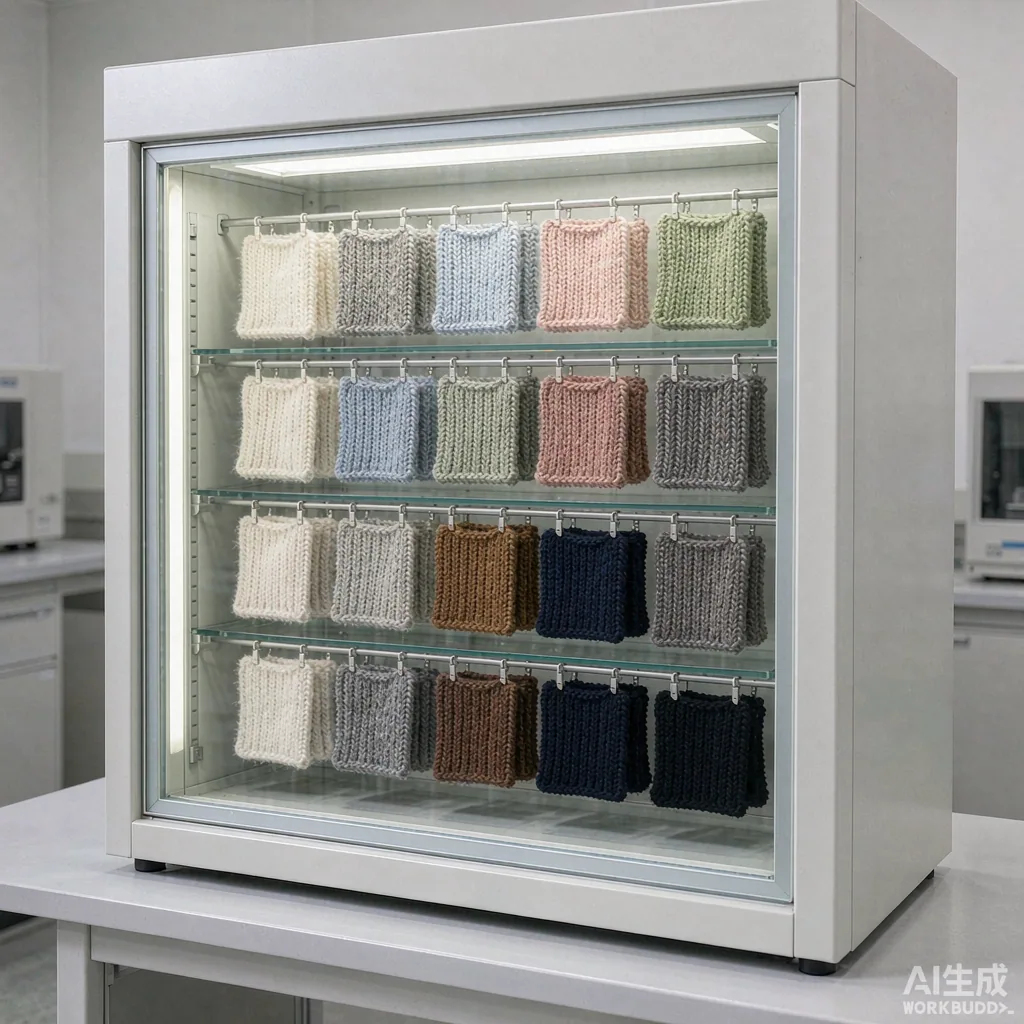
The remaining question is volume. Because evidence tends to be requested per style rather than per shipment, a programme introducing sustainability documentation usually does so across a small set: three styles or three colourways at 100 pcs each is enough to establish whether the documentation burden is worth carrying, and enough to see whether retailers respond before committing the full range.
For context on the wider picture, the knit version of these market signals covers what else is moving, and how brands adopt seamless knit covers the internal route an evidence request takes. Demand that arrives with a document attached is the kind that changes a specification.
Quote a knit bag against your sustainability list
Send the market of sale, target recycled percentage, required durability result and any single-polymer constraint. We will quote FOB Xiamen at 100 pcs per style and colourway, sample in 7 working days and run bulk in 30 days. Start on the contact page.
Frequently Asked Questions
What actually drives sustainable bag demand?
Requests attached to procurement requirements rather than sentiment. Four recur: recycled content with a certificate chain, durability with a named test result, single-polymer construction, and a market-qualified end of life route. Each changes a different part of the specification.
Is it safe to quote market growth numbers for sustainable bags?
Generally not. Published figures vary with boundaries, definitions and baseline year, so the defensible approach is to describe the mechanism and check whether the same request recurs across buying seasons in the specific market being served.
What certificate supports a recycled content claim?
Textile Exchange Global Recycled Standard evidence backed by a transaction certificate naming the style, quantity and percentage. The Content Claim Standard tracks the input through processing. The critical check is that the certificate figure matches the hangtag figure.
How is a durability claim evidenced?
With a dated test report naming the method: abrasion under ISO 12947-2, tensile under ISO 13934-1, tear under ISO 13937-2 and rubbing fastness under AATCC 8. Stating a target such as 25,000 rubs makes the requirement checkable rather than rhetorical.
Does single-polymer design really affect recyclability?
It affects separability, which is the practical question. A body whose thread, binding and labelling use the same polymer as the panel can enter one stream; mixed polymers and interlinings require separation first, and many markets cannot separate them economically.
What is the most common error in recycled claims?
A hangtag figure higher than the certificate figure, usually because an earlier or different shipment was relied on. Transaction certificates are typically issued per shipment, so each order needs its own document before the claim goes to print.
Can a bag be described as recyclable without qualification?
Only where collection actually exists for that polymer in the market of sale. Qualifying the statement by market is longer but defensible, and an unqualified claim can be tested against local infrastructure rather than against paperwork.
Is a knitted body easier to document than a laminated one?
Usually yes. One body polymer with no adhesive interlining produces a shorter bill of materials by mass, which simplifies recycled content calculation, substance screening and any recyclability statement made about the article.
What does repairability mean for a bag?
Whether a failure can be fixed rather than replaced. Two design choices control it: a removable and replaceable base board, and a strap assembly that can be detached. Neither costs anything at specification stage and both answer retailer questionnaires credibly.
When should sustainability requirements be raised?
In the first request. Stating market, target percentage, required durability result and any single-polymer constraint up front means one quote covers everything; raising the same items later triggers re-quotes and restarts part of the calendar.
Do recycled yarns change the sampling window?
They can, mostly through colour. Recycled inputs vary in base shade between dyelots, so a lab dip may take an extra round. Sampling stays at 7 working days for the panel while colour approval runs alongside, which is the part to watch.
How much volume is needed to test sustainable specifications?
Documentation tends to be requested per style, so three styles or three colourways at 100 pcs each is enough to establish whether the evidence burden pays for itself before committing the full range.
Which standards should appear on a first specification?
Textile Exchange GRS for recycled content, OEKO-TEX STANDARD 100 for chemical limits, REACH declarations for European articles, and ISO test methods for performance. Add Prop 65 assessment and CPSIA testing where the article ships to the United States.
People Also Ask
What is driving demand for sustainable bags?
Procurement requirements rather than abstract sentiment: recycled content with certificate evidence, durability measured against named test methods, single-polymer construction, and end of life statements qualified by the market of sale.
Which sustainability requests change a bag design?
Single-polymer and end of life requirements, because they change the trims list, thread polymer and whether an interlining is used. Evidence requests such as recycled content do not, provided the yarn is available.
How do you prove a recycled content percentage?
Hold a Textile Exchange GRS transaction certificate issued for that shipment and check it states the same percentage as the hangtag. Most certificates are issued per shipment rather than per range, so every order needs its own.
Is durability part of sustainability for bags?
Increasingly yes, and it is the easiest to evidence because every programme that tests already holds the results. State the target, for example 25,000 rubs under ISO 12947-2, and derive construction choices from it.
What claims should bag brands avoid?
Claims of full circularity, carbon neutrality without a stated boundary, and recyclability without naming the stream available where the article is sold. All three are testable against infrastructure rather than against paperwork.
Sources and further reading
Every figure on this page is either our own programme data or attributed below. Open the originals before you write them into a specification.
- Global Recycled StandardTextile Exchange The certificate chain most recycled content claims on bags must rest on, including transaction certificate requirements.
- Content Claim StandardTextile Exchange Tracks the certified input through processing so a hangtag figure can be traced back to source.
- Ecodesign for Sustainable Products RegulationEuropean Commission The policy direction pushing durability, reparability and recyclability into product specifications.
- ISO 12947-2 abrasion resistance of fabricsInternational Organization for Standardization The method behind most durability requirements applied to knitted bag bodies.
- OEKO-TEX STANDARD 100OEKO-TEX Article-level chemical limits that sit alongside a recycled content claim rather than replacing it.
- EU Strategy for Sustainable and Circular TextilesEuropean Commission Context for why durability and end of life questions arrive together rather than separately.