Seamless Knit Adoption by Bag Brands: What Actually Moves a First Programme
Why do some bag brands move into seamless knit while others talk about it for years? The difference is almost never conviction; it is whether anyone was willing to let one small order go through. Adoption happens when a brand converts a single existing style into a shaped knit body, runs three colourways at 100 pcs each and measures what changed in weight, return rate and assembly time. That is a 7 working day sampling step plus a 30 day bulk window, and it answers more questions than any number of meetings.
The Shape of a First Adoption
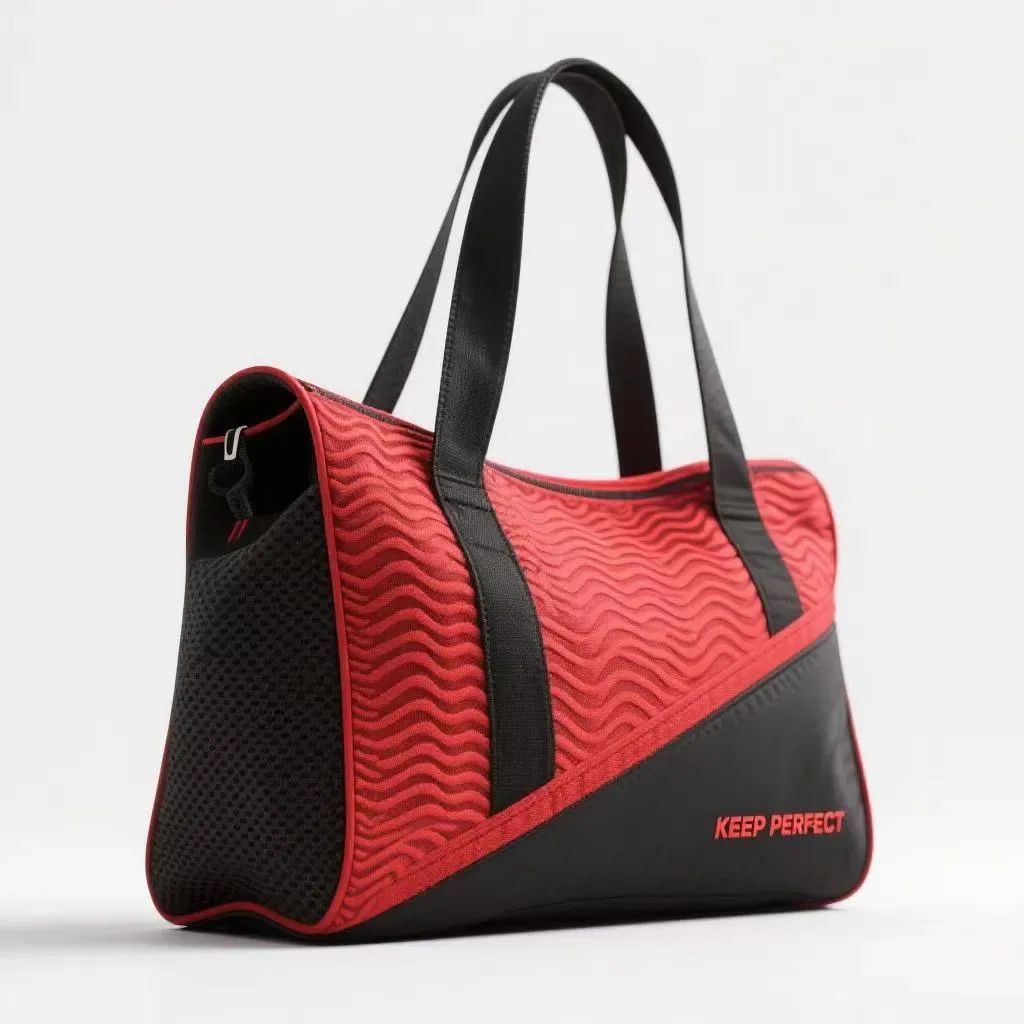
Picture the common situation. A mid-size accessories label has a twelve-style canvas range, one of which carries repeat business but constant complaints about fraying seams and heavy returns. Someone suggests converting that one style to a shaped knit body rather than the whole range. Nobody has to defend a strategic shift, because there is no strategic shift; there is one style, one body and one measurable question about whether returns improve.
That is the pattern adoption actually follows, and it has three features worth copying. The unit of change is one style, not a category. The measurable outcome is named in advance rather than discovered later. And the missing components are decided up front, because a shaped knit body still needs a handle attachment method, a closure and sometimes a base, and those decisions are what hold up the sample rather than the knitting itself.
Everything below follows from this. Not every brand that starts this way continues, and those that stop usually stop for the identifiable reasons in the next section rather than because the product failed.
What Actually Delays the Switch
Delay is rarely about the knitting. It is about designs being drawn in cut-and-sew logic, factories being asked for comparisons nobody can produce, and internal teams waiting for a certainty that only an order provides. Naming those three removes most of the delay from most programmes.
- The artwork is a flat pattern, not a shaped programme: every panel is drawn as pieces to be joined, so nobody knows how to start.
- The request asks for a price against an existing bag rather than against a stated specification, and the comparison cannot be made.
- Merchandising waits for a sales forecast before approving the first small run, but the forecast is what the small run would have produced.
- Handle attachment and hardware are treated as afterthoughts, so the first sample is rejected for reasons unrelated to the body.
- Nobody owns the decision, so the file circulates between design, sourcing and compliance without moving.
Notice that none of those is a technical objection to seamless knitting. They are process problems that would slow down any new construction, which is why experienced buyers treat the first order as research rather than as a pilot of the technology.
Three Gateways Into Seamless Knitting
Brands arrive at seamless knit through one of three doors, and the door predicts how smoothly the first programme runs because each carries a different internal sponsor with a different question to answer.
Replace a failing seam
A style with recurring seam or fraying complaints is converted to a shaped body. The sponsor is quality, and the evidence is return rate and a tensile result under ISO 13934-1.
Hit a weight or pack target
A travel or promotional item needs to pack smaller or weigh less. The sponsor is logistics, and the evidence is empty weight in grams plus packed carton dimensions.
Meet a recycled content requirement
A retailer demands documented recycled content or single-polymer construction. The sponsor is compliance, and the evidence is a GRS transaction certificate matching the hangtag.
The gateway matters because it sets the acceptance criterion before any work starts. A quality-driven conversion succeeds when returns fall; a weight-driven one succeeds when grams fall; a compliance-driven one succeeds when the certificate arrives. Programmes that name no gateway tend to be judged on unit cost alone, which is the one measure seamless knitting rarely wins on its first outing.
Rewriting a Tech Pack for Knit
A seamless knit tech pack asks different questions, so carrying a cut-and-sew sheet across produces a specification with half the fields wrong. Instead of seam allowances and panel count it needs needlebed width, gauge, stitch structure per zone, yarn count per feeder and the shaping sequence. Instead of a stitch-per-inch seam specification it needs a joining method: heat-set edge, overlocked seam, ultrasonic weld or a knitted-in channel.
- Gauge decision
- E7 for heavier bodies, E12 for finer, tighter faces
- Body fabric target
- 240 to 380 grams per square metre depending on the end use
- Yarn count range
- 300D to 600D polyester for most bag bodies
- Handle joining methods
- knitted-in channel, ultrasonic weld, taped stitch or bar-tack
- Typical sampling
- 7 working days for a shaped panel with one joining method
- Typical bulk
- 30 days from approved sample
- Minimum commitment
- 100 pcs per style and colourway
- Inspection
- AQL 2.5 under ISO 2859-1, general inspection level II
The field that most often stalls is the joining method, because it is the one place where knit behaves least like woven fabric. A cut edge from a shaped panel will not fray like a woven panel, but it also will not hold a sewn seam the same way without reinforcement. Deciding this on paper, before the first panel is knitted, saves a sample round that otherwise always happens.
Sample Economics: What a Round Costs in Time
The decision that deserves more attention than unit price is how many sample rounds a programme gets through before it learns anything. At 7 working days per round, two rounds cost roughly a fortnight and three cost the better part of a month, and each round uses the same calendar whether or not the change requested was substantive.
The way to spend rounds well is to change one variable at a time. A first panel tells you whether the gauge is right. A second can adjust the joining method or the handle width. Changing three things between rounds yields a sample that is different but not obviously better, which is how programmes end up at round four still unable to write down what they learned.
Colour behaves differently again. A lab dip is not a sample, and it typically takes one or two rounds before a colour is approved, particularly on a recycled yarn where base shade varies by dyelot. Booking all colourways into the same round rather than running them sequentially is the single largest scheduling gain available in most first programmes.
Buy-In Inside the Organisation
Adoption is an internal sale before it is a purchase order, and each function asks a different question. Answering the wrong one with the right number is a common and expensive failure mode, because design, sourcing and finance are not actually asking the same thing even when they sit in the same meeting.
| Function | The real question | Evidence that answers it | Cost of not answering |
|---|---|---|---|
| Design | Can I still get the silhouette I drew? | One shaped sample in the target gauge with the artwork engineered in | Redesign later, after tooling expectations are set |
| Sourcing | Is this going to be reliable at volume? | A 30 day bulk window with a named inspection standard | A re-source mid-season at the worst possible moment |
| Quality | What fails and how will I know? | ISO 12947-2 abrasion, ISO 13934-1 tensile, AATCC 8 rubbing results | Returns discovered by customers rather than by testing |
| Compliance | Can I defend this in my market? | REACH declarations, Prop 65 assessment, GRS transaction certificate | A held shipment and a rushed evidence hunt |
| Finance | What is landed cost per piece? | FOB Xiamen quote plus the modespecific freight assumption | A margin surprise discovered on the invoice |
Where Knit Loses to Cut-and-Sew
Honest boundaries make adoption faster, because teams trust a claim that names where it stops working. A very large duffel, a bag requiring a rigid internal frame, or a design whose value is in a printed photographic panel across the full face are all cases where traditional assembly is the better answer today, and saying so early saves everyone a season.
The line is not size alone, though. Failure usually comes from asking the panel to do structural work it is not shaped for: carrying a load through a single narrow connection point, holding rigid geometry without a board, or sealing against water without a coating. Each of those is solvable with added components, but each addition removes some of the weight and assembly-time advantage that justified the change.
Where the boundary sits
- Seamless knit wins where the body is the structure.
- It struggles where something outside the body does the structural work.
How to Read a Capacity Claim
Capacity figures on a capability sheet are easy to print and hard to interpret. Seven production lines and about 200,000 pcs per month tell a buyer that mid-range volume is plausible, but the number that decides whether a September order ships is how many of those lines can run the gauge the programme needs at the moment it needs them. Both figures matter, and the second is the one that gets forgotten.
Three questions expose the difference. How much notice does a gauge changeover need on the machines this programme would sit on? What happens to the allocation during the peak season, when several programmes compete for the same lines? And which styles get booked first if two programmes land in the same week? A partner that answers those concretely is describing an operating reality; one that repeats the headline figure is describing a brochure.
The consequence for a first conversion is straightforward. Smaller orders at 100 pcs per colourway are easy to place precisely because they ask less of the calendar, which is another argument for starting narrow. A programme that has proven itself with two or three punctual runs is in a far better position to argue for a slot in peak season than one arriving with a large first order and no history.
A Ninety Day Adoption Sequence
- Pick one style with a known problem, and write the outcome you want as a number: returns off by a stated amount, grams off, or a certificate held.
- Send a full specification, not the photograph of an existing bag, including gauge intent, target weight and joining method.
- Approve one shaped sample in the target gauge, changing nothing else, and record the empty weight.
- Decide the joining and closure method on that sample, then run the second round with those locked.
- Book colourways in a single round and approve them together to avoid restarting the calendar.
- Order the first run at 100 pcs per colourway and inspect it to AQL 2.5 under ISO 2859-1.
- Review against the number written in step one and decide whether the second style converts with evidence rather than enthusiasm.
What Changes After the First Order
Once one style has gone through, the second takes noticeably less time if the specification work was kept. Programmes that file their gauge decision, joining method and test results can quote a second body in days rather than restarting the whole sequence, and they can answer trend questions with numbers instead of opinions.
Two companion pieces cover the surrounding questions: seamless knit across the wider bag market for what is moving generally, and the practical entry path for a new buyer for the ordering of compliance, cost and sampling decisions. Both assume the same starting point as this piece: one style, one number, one order.
Convert one existing style to seamless knit
Send the existing bag, the target weight and the problem you want solved. We will specify a shaped body, sample it in 7 working days and quote FOB Xiamen at 100 pcs per style and colourway with 30 days bulk. Start on the contact page.
Frequently Asked Questions
Why do some bag brands adopt seamless knit and others hesitate?
Usually because one brand ran a small order and the other waited for certainty first. Adoption follows an actual result on one style rather than an argument about categories, so the brands that move are simply the ones who let 100 pcs go through the line.
What is the smallest sensible first knit order?
100 pcs per style and colourway is the working minimum. That is enough to test returns and handling behaviour without committing to a full range, and three colourways of one body therefore amount to a 300 pcs commitment.
What usually delays a first seamless knit programme?
Process rather than technology: artwork drawn in cut-and-sew logic, requests for a price against an existing bag instead of a stated specification, merchandising waiting for a forecast that the first run would have produced, and handle joining decided late.
Which gauge should a first conversion use?
Depends on the target weight and end use. E7 gives a heavier body around 320 to 380 grams per square metre for structured shoppers; E12 gives roughly 240 to 290 grams for foldable or packable pieces. The first sample should settle this before artwork is finalised.
How long does a first seamless knit programme take?
Allow about ninety days: specification, two sample rounds at 7 working days each, colour approval in one round rather than sequentially, then a 30 day bulk window from the approved sample. Inspection to AQL 2.5 under ISO 2859-1 follows packing.
What is the hardest part of writing a knit tech pack?
The joining method. A shaped knit edge does not fray like a woven panel but it also does not hold a sewn seam identically without reinforcement, so the choice between a knitted-in channel, ultrasonic weld, taped stitch or bar-tack should be made on paper.
Does seamless knit reduce returns?
It can, where returns were caused by seam failure or edge fraying, because the shaped body removes those failure points. It will not reduce returns caused by hardware faults, colour problems or sizing, which is why the measurable outcome should be stated before the order.
Can every bag design be made with seamless knitting?
No. Very large duffels, anything needing a rigid internal frame, and designs relying on a full-face photographic print are better resolved with traditional assembly. Naming these boundaries early tends to speed up the styles that do convert.
How many sample rounds should a programme plan for?
Two is a realistic plan, three is common, four usually signals a specification problem rather than a knitting problem. The discipline that keeps it low is changing one variable per round: gauge first, then joining method, then colour.
What evidence does quality need before approving knit?
Abrasion under ISO 12947-2, tensile under ISO 13934-1, tear under ISO 13937-2 and rubbing fastness under AATCC 8, each with the method named and the sample dated. Those four cover most of what a quality team asks for on a fabric body.
What does compliance need for a European launch?
REACH Annex XVII compliance declarations alongside SVHC screening, OEKO-TEX STANDARD 100 where the retailer asks for it, and durability evidence increasingly requested along the lines set by the Ecodesign for Sustainable Products Regulation.
Is seamless knit always lighter than cut-and-sew?
Not always, but usually, because a shaped body removes interlining, binding tape and cut waste. The advantage shrinks as reinforcement, board or coating is added, which is why the target should be expressed as grams rather than as a percentage.
Who should own the first conversion internally?
One named person with authority to approve a 100 pcs order. Files that circulate between design, sourcing and compliance without a decision owner account for more stalled programmes than any technical objection to the construction.
People Also Ask
What drives brands to adopt seamless knitting?
Usually one of three things: a seam failure they want gone, a weight or pack-size target they cannot reach otherwise, or a recycled content and single-polymer requirement from a retailer. The sponsor differs, and so does the evidence needed.
How do you start a seamless knit bag programme?
Convert one existing style. Write the outcome as a number, send a full specification rather than a photograph of a current bag, approve one sample in the target gauge, then run 100 pcs per colourway before changing anything else.
Is seamless knit harder to source than cut-and-sew?
Different rather than harder. It asks for a specification instead of a sample to copy, and it rewards programmes that decide gauge and joining method early. Programmes that send a photograph instead of a specification find it slow.
What sample lead time should first-time buyers expect?
Around 7 working days per round for a shaped panel with a joining method. Colour approvals run alongside and typically take one or two rounds, so booking all colourways together is the biggest available scheduling gain.
When should a brand stay with cut-and-sew?
When something other than the body carries the structure: rigid frames, very large duffels, heavy single-point load paths, or water sealing that requires a coating. Each of those is solvable with added parts, but they erode the weight advantage.
Sources and further reading
Every figure on this page is either our own programme data or attributed below. Open the originals before you write them into a specification.
- WHOLEGARMENT knitting technologyShima Seiki The shaped knitting lineage most modern seamless knit bag bodies descend from, and the reason a panel can be finished on the machine.
- ISO 13934-1 tensile properties of fabricsInternational Organization for Standardization The standard most quality teams cite when judging whether a knit body is strong enough for a given load.
- Substances restricted under REACHEuropean Chemicals Agency The list European compliance teams screen a new construction against before approving a first order.
- Global Recycled StandardTextile Exchange The certificate chain required when the adoption gateway is a retailer recycled content requirement.
- ISO 2859-1 sampling procedures for inspection by attributesInternational Organization for Standardization The basis for AQL 2.5 inspection of the first bulk run, including sample size tables by lot size.