Knitted Bag Market Trends in 2026: The Signals That Change a Bag Specification
Which knitted bag market trends are worth acting on this year? The honest answer is the ones that change a specification, because those are the only ones a buyer can verify. Requests for single-polymer constructions, lighter body weights and documented recycled content arrive in writing before they appear in order volumes. The useful signals are mechanical: gauge mix drifting from E7 toward E12 for lighter panels, empty-weight targets falling below 45 g for a foldable shopper, and colour counts rising while the order per colourway stays near 100 pcs. Those are parameters a programme can price, sample in 7 working days and run in 30 days.

Trends That Reach a Specification
A knitted bag trend matters only when it changes a line on the tech pack, because only then does it alter cost, sampling or risk. Anything that stops at a moodboard keyword can be discussed; anything that changes gauge, yarn count, trims or test method can be quoted. That is the test to apply to every trend report that crosses a buyer's desk this season.
Two kinds of trend fail that test in practice. The first is aesthetic vocabulary without a construction behind it, which produces conversations but no orders. The second is a claim about consumer sentiment that cannot be traced to a purchase order; it may well be true, but it gives a programme nothing to do on Monday. What survives is narrow: {gauge mix}, {body weight in grams per square metre}, {polymer count in the bill of materials} and {documented recycled content}. Each of those is a number a buyer can put into a specification and check later against a sample.
The reason this distinction has sharpened is structural: a shaped knit panel carries its own structure, so a change requested at design stage propagates into knitting time, fabric weight and finishing cost immediately. A buyer who treats a trend as a specification input rather than as decoration gets a predictable quote; one who treats it as decoration gets a surprise when the sample arrives heavier than planned.
The Number Set Behind a Knit Programme
- Minimum per style and colourway
- 100 pcs
- Sampling window
- 7 working days
- Bulk production window
- 30 days
- Inspection standard
- AQL 2.5 under ISO 2859-1
- Capacity available to the programme
- 7 production lines, about 200,000 pcs per month
- Traceable starting point
- coordinating knit bag programmes since 2014
- Typical body fabric band
- 240 to 380 g per square metre, depending on gauge
- Trade terms quoted
- FOB Xiamen, with CIF and DDP available
Those eight lines make read-only trends testable. A request for a lighter bag either moves the grams per square metre or it does not. A request for documented recycled content either arrives with a transaction certificate or it does not. A request for faster replenishment either fits inside 30 days or it needs a stock programme. Putting the numbers next to the trend collapses roughly half of what a market report claims into two or three decisions.
Gauge Mix: What Moves Between E7 and E12
Gauge is the single most informative number in a knit bag range, because it determines loop size, fabric weight, surface definition and knitting time in one move. Coarser machines such as E7 produce a heavier, more open structure suited to shoppers and beach totes in the 320 to 380 g per square metre band. Finer machines around E12 give a tighter face and a lighter body around 240 to 290 g per square metre, which suits foldable shoppers and slim backpacks.
The cost consequence is not the machine rate but cycle time. A finer gauge lays more loops per centimetre, so the same panel takes longer to knit; a coarser gauge runs faster but consumes more yarn per unit area. Where the lines sit depends on the panel shape, the stitch structure and the yarn count, which is why two quotes for visually similar bags can differ by double digits. Yarn count compounds it: a 300D polyester behaves very differently from a 600D equivalent on the same machine, and the higher count usually implies a heavier body and a higher cost per piece.
For range planning the practical rule is to decide gauge before artwork. Stitch-defined logos, engineered ventilation zones and two-colour jacquards all read differently at E7 and E12, and no change request later can recover the loop density chosen at the start. Sampling at 7 working days means a buyer can compare both gauges on the same panel within roughly a fortnight, which is the lowest-cost way to settle the question.
Weight, Pack Volume and the Freight Line
Body weight is where a small specification change turns into a visible freight difference, because a foldable shopper is bought in cartons rather than dozens. A 45 g empty knit shopper and a 70 g one look similar on a rail but differ substantially per thousand pieces once carton count and container fill are applied, and the difference compounds across footwear-size export cartons.
What makes this worth measuring rather than estimating is that pack volume and weight interact. A lighter body can still be bulky if the stitch structure is open, so the two numbers move separately. The dimension that decides cost is whichever binds first: mass for air freight, carton count for parcel networks, cubic measure for sea freight. A programme shipping mixed assortments should ask for both figures on the sample sheet, because optimising the wrong one produces a saving nobody sees.
| Weight band | Typical body fabric | Typical end use | What it changes downstream |
|---|---|---|---|
| Under 60 g empty | 240 to 280 g per square metre at E12 | Foldable shopper, packable tote | Carton count and parcel tier thresholds |
| 60 to 120 g empty | 280 to 320 g per square metre | Daily tote, grocery shopper | Balance of durability and unit freight |
| 120 to 250 g empty | 320 to 380 g per square metre at E7 | Structured shopper, weekender | Handle reinforcement and base board choice |
| Above 250 g empty | 380 g and above, often with a lining | Laptop carrier, travel bag | Tests move toward load and abrasion evidence |
Why Weight Targets Are Falling
Lighter targets are arriving for a mechanical reason rather than a stylistic one: the cost of moving goods has become a larger share of landed cost, and a shaped panel already carries its own structure, so removing grams does not require removing strength. A 3D knitted body needs no adhesive interlining and fewer cut pieces, which means fewer grams are spent holding other grams in place.
The durability question is what stops the number going lower. Abrasion resistance under ISO 12947-2 and tensile strength under ISO 13934-1 both fall as fabric gets lighter, so the useful exercise is setting the weight target from a test result rather than the reverse. A shopper that has to reach 25,000 rubs with a grade 4 colour change sets its own floor; one that only needs to survive a season of light use can sit well below that.
Lead Time as a Buying Signal
Lead time deserves to be read as a trend in its own right, because what buyers ask for has shifted from the fastest possible date to the most predictable one. A 30-day bulk window with a fixed sampling step is more useful to a merchandise plan than a shorter window that slips, which is why repeat business tracks reliability more closely than speed.
Reading the calendar
- 7 working days sampling and 30 days bulk is a two-step calendar.
- Treat the sampling step as the gate: everything downstream assumes the approved sample exists.
The reason to plan around the gate rather than around the finish is that the two steps have different failure modes. Sampling compresses well because it is mostly knitting programme time, but bulk additionally depends on yarn availability, colour confirmation and inspection booking. Colour matching by lab dip typically takes one or two rounds, and each round restarts the clock; booking an inspection against AQL 2.5 under ISO 2859-1 with general inspection level II needs the lot packed first.
Seasonality matters more than speed here. Yarn mills run on dyelots and their own calendars, and a request that arrives after a mill's cut-off for a given fibre does not get faster because the bag programme wants it to. Buyers who plan to the length of two full cycles rather than one see fewer surprises, which is the kind of trend that shows up in repeat orders rather than in any report.
Colour Count, Repeat Rate and Order Size
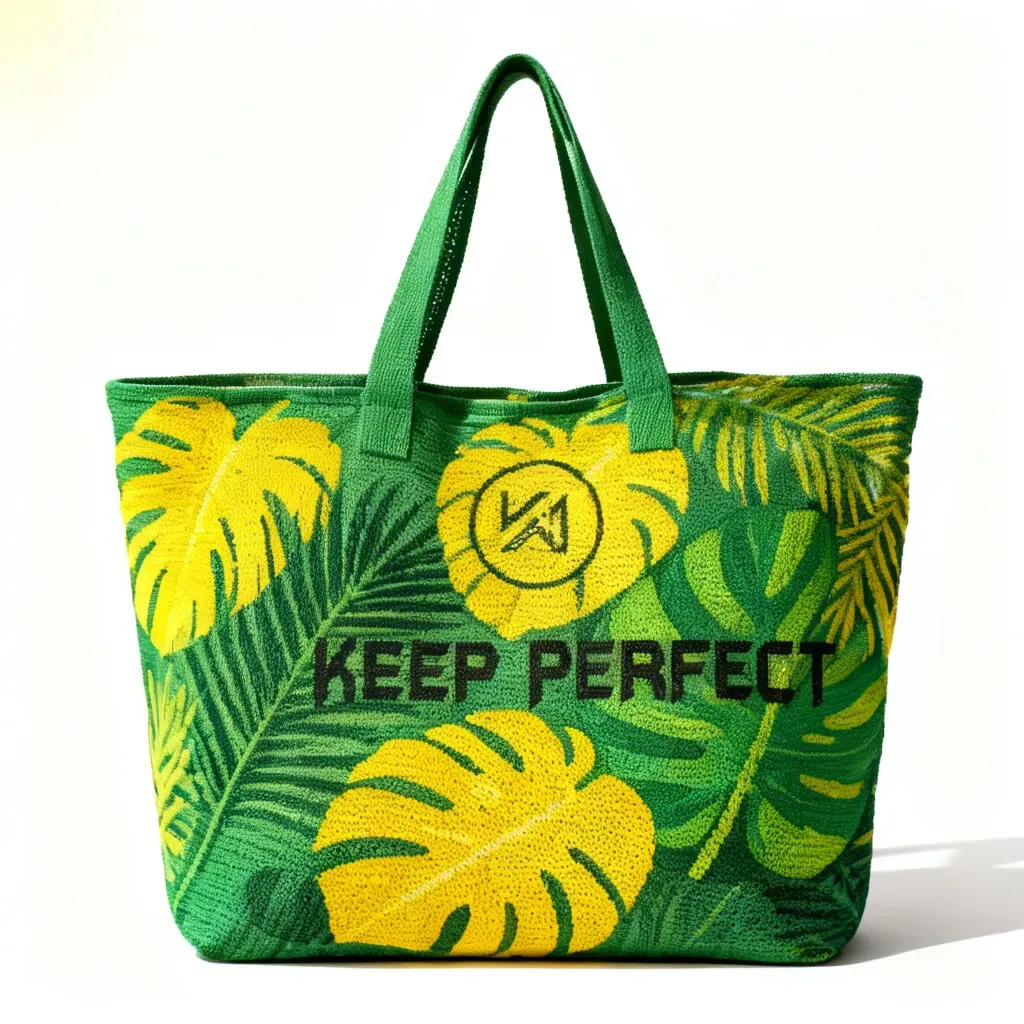
Colour count is rising while the quantity per colourway stays small, and that combination is only workable because knitting allows colour to be carried in the yarn rather than in a print paste. A minimum of 100 pcs per style and colourway means six colourways of one body is a 600-piece commitment rather than one large run, which is how retailers test demand without over-committing.
The trap in that pattern is dyelot control rather than capacity. Each colourway is effectively its own mini-programme with its own confirmation steps, so six colourways mean six approval cycles running against one bulk window. Programmes that hold up are the ones that lock all colourways in the same sampling round rather than approving them sequentially, and that keep each colourway above the minimum so the unit cost does not drift upward through setup repetition.
Repeat behaviour is the other half of this. Where a first order is split across many colourways, the second order usually consolidates: two or three colourways account for most of the volume and the rest are dropped. Reading that sooner rather than later changes how a buyer plans the second round, and it argues for keeping the base construction identical across colourways so a consolidation costs nothing to execute.
What Compliance Requests Look Like Across Regions
Compliance requests differ by market in predictable ways, and knowing which applies where prevents both over-testing and nasty surprises. European enquiries lead with chemical documentation and durability evidence; United States enquiries lead with product safety and labelling. Neither is optional for the retailer who receives them, so each should be built into the first quote rather than added later.
European Union
REACH Annex XVII restrictions with SVHC declarations, OEKO-TEX STANDARD 100 for article-level chemical limits, and increasingly durability evidence under the ESPR direction.
United States
California Prop 65 warnings where applicable, CPSIA testing for articles aimed at children, and country-of-origin labelling that has to survive a Customs review.
Recycled content buyers
Textile Exchange GRS or the Content Claim Standard with a transaction certificate whose percentage matches the claim on the hangtag.
Retail programmes generally
BSCI or Sedex (SMETA) social-compliance evidence requested by the retailer, usually once per audit cycle rather than per order.
Every market
Physical test results with the method named: ISO 12947-2 abrasion, ISO 13934-1 tensile, ISO 13937-2 tear, AATCC 8 rubbing fastness.
Emerging ask
A material breakdown by mass for each style. It takes about a morning to produce and serves several regulators at once.
Notice that none of these require inventing anything new. They require evidence that already exists or can be produced quickly, which is why the earliest point to agree them is before the first sample rather than after a shipment is held at a port.
Reading Signals Into a Range Plan
- Write the trend as a number: a target weight, a gauge, a polymer count or a certificate chain. If it cannot be written as a number it cannot be quoted.
- Decide gauge before artwork, because loop density sets what a logo or ventilation zone can look like.
- Request both empty weight and packed carton dimensions on the sample sheet, so mass and volume can be optimised against the right freight mode.
- Lock all colourways inside one sampling round rather than approving them one at a time.
- Set the durability floor from the required test result, then let the weight target follow it rather than leading it.
- Attach the compliance list for the market of sale to the first request, not to the first shipment.
- Plan the second order while quoting the first, assuming colourways will consolidate.
Turning a Signal Into a First Drop
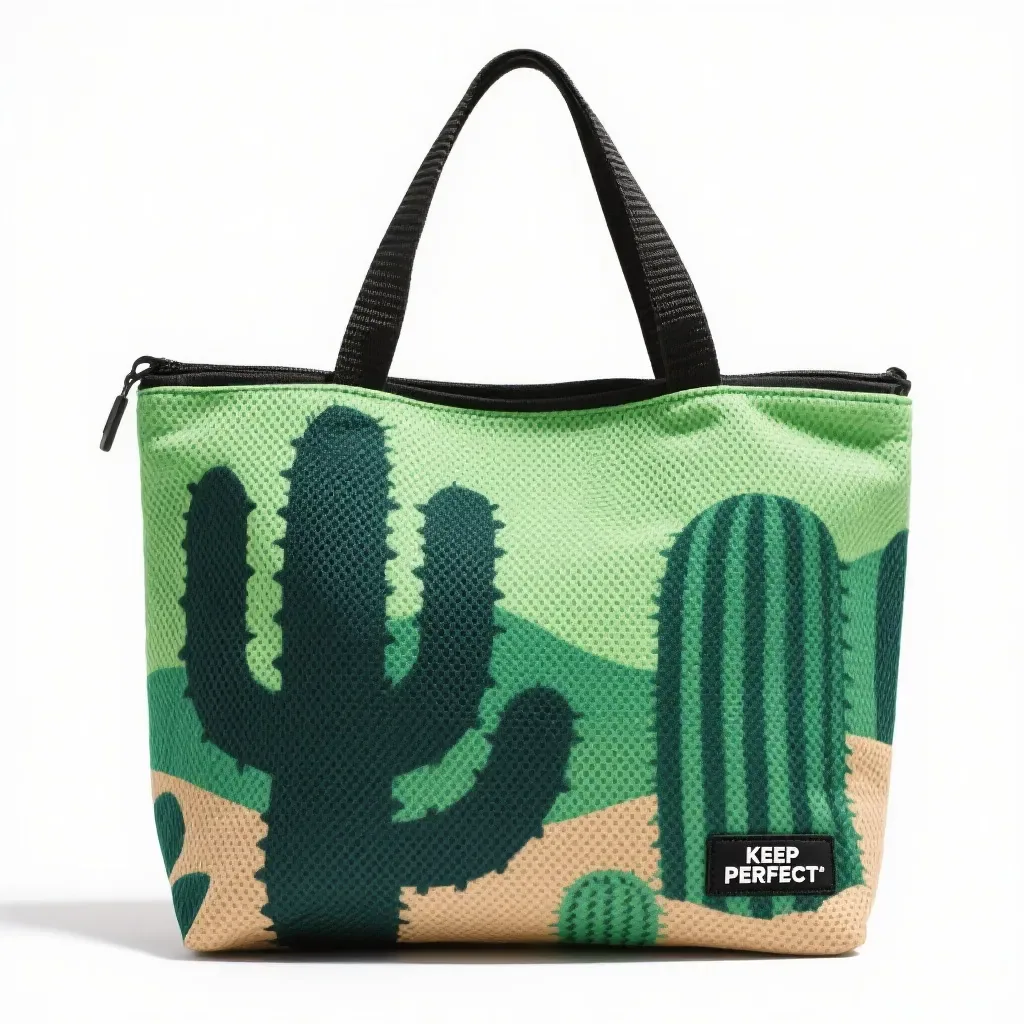
The ordering that works is narrow hardware, wide colour. Pick one body construction and one handle method, then vary yarn colour and stitch structure across the drop, because that keeps one set of programmes, one set of dies and one set of test results serving several visibly different products. It also means a second drop can add a size rather than re-engineering a body.
Sizing the first drop is where the 100 pcs minimum is most useful. Six styles in one colourway each, or one style in six colourways, are both 600 pcs, and the second reads better to a retailer because it answers a shelf question rather than a catalogue question. Whichever route is chosen, the sample gate stays the same: 7 working days for the first panel, then 30 days for the bulk, inspected to AQL 2.5 under ISO 2859-1.
Where a programme wants to go further into trend mechanics, two companions are worth reading together: seamless knit adoption across brands for how the switch usually happens internally, and the drivers behind sustainable bag demand for which sustainability requests actually arrive with evidence attached. Both end in the same place as this piece: a number on a specification.
Turn a trend into a quoted knit bag programme
Send the bag type, target weight band, gauge preference and colourway count. We will quote FOB Xiamen at 100 pcs per style and colourway, with 7 working days sampling, 30 days bulk and AQL 2.5 inspection to ISO 2859-1. Start on the contact page.
Frequently Asked Questions
Which knitted bag market trends actually change a specification?
The ones that arrive as numbers. Gauge moving from E7 to E12, a target body weight in grams per square metre, a single-polymer bill of materials and a documented recycled content all change something a tech pack records. Aesthetic vocabulary that stops at a moodboard does not change anything measurable.
What is the difference between E7 and E12 for a knit bag?
E7 is a coarser machine giving a larger loop, an open structure and a heavier body around 320 to 380 g per square metre. E12 is finer, giving a tighter face and roughly 240 to 290 g per square metre, but the same panel takes longer because more loops are laid per centimetre.
Why do two visually similar knitted bags quote differently?
Because gauge, yarn count and stitch structure set cycle time and yarn consumption independently of appearance. A 600D construction knits differently from a 300D one on the same machine, and a fine gauge takes longer per panel, so two bags that look alike can carry meaningfully different knitting time and mass.
How much does the 100 pcs minimum affect range planning?
It makes wide-colour and narrow-style plans viable. Six colourways of one body is a 600 pcs commitment rather than one large run, which lets a retailer test demand without committing to a single colour. The cost is that each colourway carries its own confirmation steps.
Should weight or durability be decided first?
Durability. Set the floor from the required test result, whether that is 25,000 rubs under ISO 12947-2, a tensile figure under ISO 13934-1 or grade 4 rubbing fastness under AATCC 8, then let the weight target follow. Reversing the order produces a bag that is light but fails its own test plan.
What is a realistic lead time for a knit bag programme?
Two steps: 7 working days for sampling and 30 days for bulk. The variable inside that window is usually colour approval, because lab dips often take a round or two, and inspection booking, because the lot has to be packed before it can be checked against AQL 2.5.
How many colourways should the first drop carry?
That depends on whether the question is about a shelf or a catalogue. One style in six colourways at 100 pcs each usually reads better to a retailer than six separate styles in one colourway, because it answers an assortment question and still fits the same 600 pcs commitment.
What compliance documents do European buyers ask for?
Typically REACH Annex XVII compliance with SVHC declarations, OEKO-TEX STANDARD 100 for article-level chemical limits, and increasingly some durability and recyclability evidence along the lines the Ecodesign for Sustainable Products Regulation points toward.
What do United States buyers ask for instead?
Usually California Prop 65 assessment where a listed substance is present, CPSIA testing and tracking labels for anything aimed at children, and country-of-origin labelling that survives a Customs review. Physical test results are requested with the method named, often ASTM rather than ISO.
Is recycled content still a buyer requirement?
Yes where it is claimed, and the requirement is evidentiary rather than marketing. Textile Exchange GRS or the Content Claim Standard supplies the percentage and its chain, and the transaction certificate has to state the same number as the hangtag says.
Why has the freight line become part of bag design?
Because transport is a larger share of landed cost than it used to be, and a foldable shopper is bought in thousands. Empty weight and packed carton volume move separately, so the binding figure depends on the mode: mass for air, carton count for parcel, cubic measure for sea.
How often do bag programmes repeat after a first order?
There is no reliable statistic to quote, but the pattern that shows up in order books is consolidation. A first drop split across many colourways usually produces a second order concentrated in two or three of them, so the base construction should stay identical across colourways.
What single number tells the most about a knit bag range?
Gauge. It sets loop size, fabric weight, surface definition and cycle time at once, and it has to be chosen before artwork because stitch-defined logos and engineered zones read differently at different gauges.
People Also Ask
What are the main trends in knitted bags?
The ones that move a specification: gauge shifting finer for lighter bodies, single-polymer bills of materials for recyclability, documented recycled content, wider colour counts at smaller per-colourway quantities, and buying patterns that reward predictable lead times over fast ones.
What gauge is best for a knitted tote?
Depends on the end use. E7 around 320 to 380 g per square metre suits structured shoppers that must stand; E12 around 240 to 290 g suits foldable shoppers where pack volume matters more than rigidity.
How heavy is a knitted shopping bag?
A foldable knitted shopper commonly sits at 45 to 70 g empty; a structured daily shopper runs 120 to 250 g; a laptop or travel piece can exceed 250 g with a lining or base board added.
Do knit bag prices follow any seasonal pattern?
Indirectly. Yarn availability follows mill dyelot calendars, so a request landing after a mill cut-off will not get faster because a programme wants it to. Planning two cycles ahead smooths this more than any negotiation.
Which certifications matter most for knit bag buyers?
For the European market, REACH Annex XVII compliance and OEKO-TEX STANDARD 100. For recycled content, Textile Exchange GRS with a transaction certificate. For programmes generally, BSCI or Sedex SMETA evidence requested by the retailer.
Sources and further reading
Every figure on this page is either our own programme data or attributed below. Open the originals before you write them into a specification.
- ISO 2859-1 sampling procedures for inspection by attributesInternational Organization for Standardization The standard behind AQL 2.5 inspection and the sample size tables used on knit bag shipments.
- ISO 12947-2 Martindale abrasion resistanceInternational Organization for Standardization The abrasion method that sets how light a body can be built while still passing its durability floor.
- Global Recycled Standard and recycled claim guidanceTextile Exchange The certificate chain behind any recycled content percentage quoted on a hangtag.
- EU Strategy for Sustainable and Circular TextilesEuropean Commission Policy direction behind European requests for durability, recyclability and material disclosure.
- OEKO-TEX STANDARD 100OEKO-TEX Article-level chemical limits that European buyers commonly request alongside REACH declarations.
- UN Comtrade international trade statistics databaseUnited Nations The public source any buyer should use to check trade figures rather than relying on secondary reports.