Seamless Knitting Versus Cut and Sew: What Changes When the Body Leaves the Bed Already Shaped
Is seamless knitting or cut and sew the better route for a bag body? For a 36 x 40 cm shopper built to carry 8 kg, seamless knitting wins on waste — about 3.5% of yarn mass against roughly 15% off the roll — on seam count, at one instead of nine, and on the time needed to launch another colourway. Cut and sew wins on material price per metre and on printed artwork detail. This article follows one comparison through two quotations on the same specification and sets out the decision rule that came out of it.
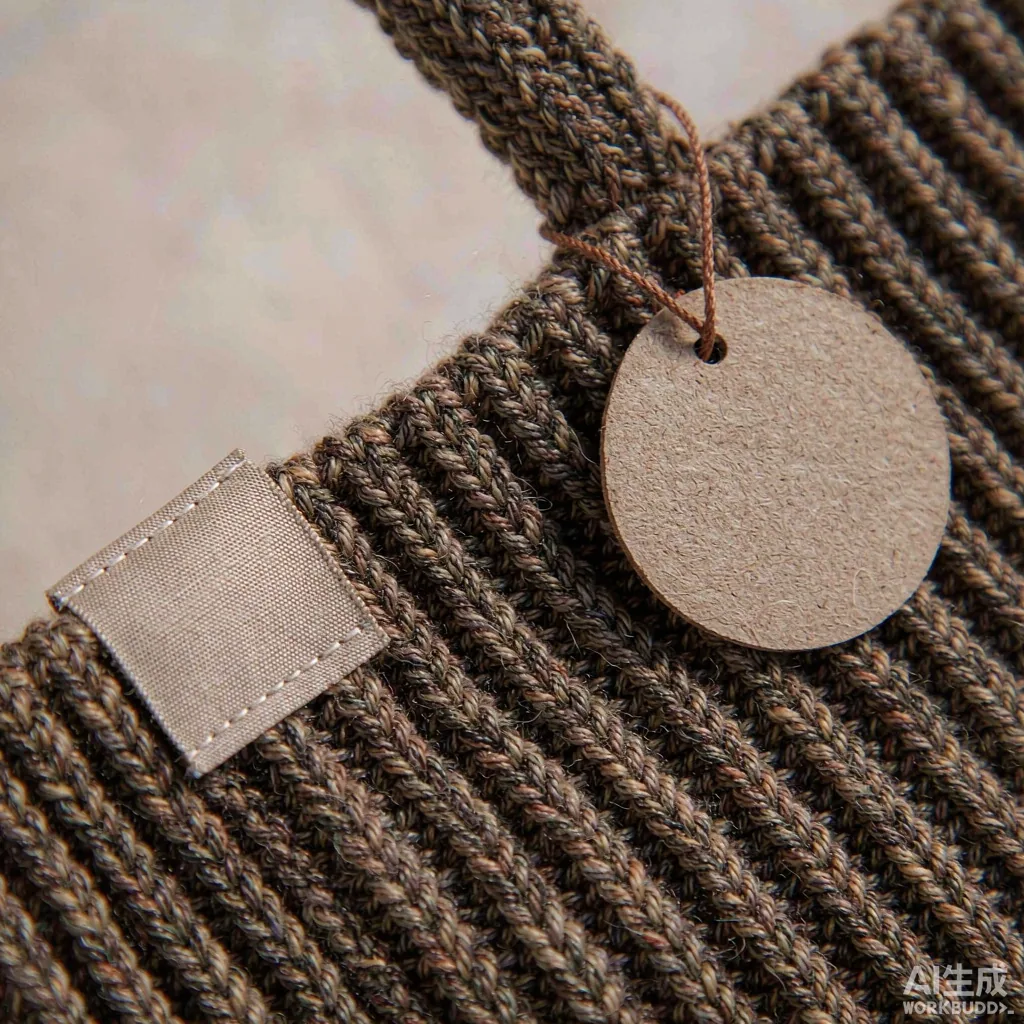
One Silhouette, Two Routes: The Buyer's Actual Question
Seamless knitting is the better route when a programme changes colour or structure often and must hold a tight tolerance on shape; cut and sew is the better route when volume is stable, artwork detail is complex, and material price per square metre decides the award. Almost every sourcing argument is really a disagreement about which of those two sentences describes the programme.
A European retail buyer put this to the test on a reusable shopper: one specification, 2,000 pieces, three colourways, 8 kg carried load, delivered FOB Xiamen inside thirty days. One route quoted 12 oz cotton canvas cut and assembled from eleven pieces; the other quoted a seamless body knitted at E12 from two ends of 300D recycled polyester, closed with an inserted base. Both met the brief. They differed by USD 0.50 per unit and by three weeks of calendar in different places.
What follows is not a claim that one construction is superior. Canvas at 407 g/m² remains an excellent material and will outlast several knit structures in abrasion against a rough floor. The useful outcome of the comparison was a rule for deciding quickly, rather than a preference — and that rule turned out to have very little to do with the material and a great deal to do with how often the range changes.
What Seamless Means in Production Terms
Seamless does not mean join-free; it means the body arrives from the machine already shaped, so the only remaining join is whatever structural closure the design needs. On this shopper that was a single inserted base instead of nine sewn seams, which removed three operations, two opportunities for misalignment, and the panel-to-panel tolerance stack-up that makes a printed design drift off register.
The important consequence for a buyer is tolerance behaviour. Sewn bags accumulate error across every operation: cutting tolerance, seam allowance variation, and pressing. A knitted body holds the tolerance the file was written to, because the same needles make the same loops at the same pitch every cycle. Programmes that are constantly arguing about a 5 mm dimension usually discover the argument stops when the seam count drops.
Where the Cutting Room Spends Money
Cut and sew spends money in three places that knitting does not: marker waste, spreading and cutting operations, and the multiple joins needed to turn flat pieces into a three-dimensional bag. On this comparison those amounted to about 23 minutes of operation time against roughly 9 minutes of machine time plus 4 minutes of finishing for the knitted body — a difference that survives every downstream cost line.
| Cost driver | Cut and sew canvas | Seamless knit body |
|---|---|---|
| Material input | 407 g/m² cotton canvas | 420 g/m² knit from two ends of 300D rPET |
| Input waste | about 15% marker waste | about 3.5% cone tails and start-up |
| Number of joins | nine sewn seams | one inserted base |
| Operation time | about 23 minutes | about 9 minutes machine, 4 minutes finishing |
| Set-up for a new colour | new cutting marker and spreading | yarn change plus a file amendment |
| Abrasion to ISO 12947-2 | about 15,000 rubs before breakdown | about 25,000 rubs before breakdown |
| Indicative FOB Xiamen | USD 4.80 at 2,000 pcs | USD 5.30 at 2,000 pcs |
Read the last row with care. The knitted version cost more per unit and still went ahead, because the buyer's range changed every quarter and each change carried no marker to re-issue. Over a year of four drops, the USD 0.50 difference reversed — which is the whole point of costing a programme rather than a piece.
Waste: 15% Off the Roll Versus 3.5% Off the Cone
A marker that nests rectangular bag panels around a curved paper pattern typically wastes 12% to 18% of the roll, and no amount of marker optimisation removes that; a knit feeds yarn only where loops form, so losses are cone tails and machine start-up, usually 2% to 4% of yarn mass. On a 143 g body the difference is a few grams, but it compounds across volume and across every colourway in the range.
The second-order effect is more interesting than the first. Where the yarn is recycled polyester carrying a Global Recycled Standard chain of custody, that small residual can be collected and reprocessed rather than landfilled, while mixed-material offcuts from a cutting room generally cannot. Programmes reporting against their own environmental targets care about that distinction considerably more than about the grams.
Seam Count, Abrasion and the Return Nobody Expected
Returns on carried-load bags concentrate at joins, not in field areas: handle roots, seam intersections and the point where a base meets the body. Cutting the join count from nine to one removes most of those locations, and testing to ISO 13934-1 shows why — the knit body failed at higher force in the field than the sewn version failed at a seam.
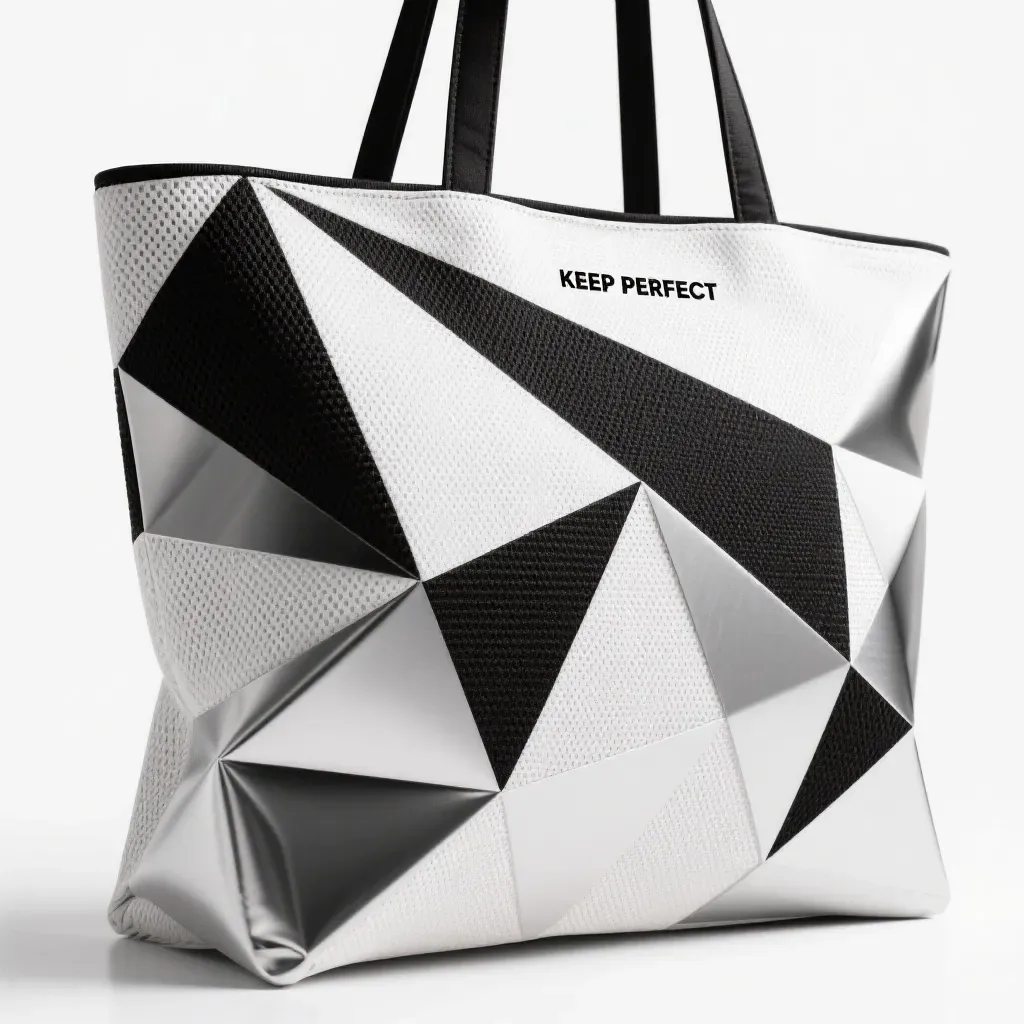
Failure points to test before you award
- Handle root pull-out, tested to ISO 13934-1 on a gripped strip not a whole bag.
- Base-to-body junction after abrasion to ISO 12947-2 at 9 kPa.
- Seam slippage where two joined panels pull in different directions under load.
- Colour fastness to rubbing under AATCC 8, wet and dry, at printed and sewn areas.
- Dimensional change after laundering, measured after controlled relaxation rather than off the line.
None of these tests favours one construction by default. They favour whichever design distributed load best, and a knitted body with a badly designed handle root will fail just as thoroughly as a sewn one with a short seam allowance. The tests matter because they convert an argument about aesthetics into a number.
Colour Changes: The Cost Nobody Priced
Changing a colourway is a yarn change on a knit line and a new cutting marker, a new lay plan and usually a new screen on a sewn one. On this programme that translated into a three-week difference per seasonal refresh, which is why the higher unit cost won the comparison. Any buying team that refreshes more than twice a year should cost that line explicitly.
- Knit route: swap cone colour, amend the file reference, run a short confirmatory sample.
- Sewn route: reissue the marker, re-confirm fabric availability, re-book printing capacity.
- Sampling window stays at 7 working days on knit programmes, because no marker exists.
- Bulk runs 30 days on knit programmes regardless of how recently the shade changed.
Have both routes quoted on your brief
Send the specification once. You receive a seamless and an assembled quotation on the same basis, each with waste, operation count and a delivered cost per colourway. Open the contact page.
Where Cut and Sew Still Wins
Cut and sew remains the better answer where the design needs a printed repeat across a large flat area, where the panel must be genuinely flat rather than gently domed, or where the material itself carries the brand story — canvas, felt or coated cotton. It also wins outright at very stable high volume, because material cost per metre keeps falling as quantities rise while machine time does not.
Complex printed artwork
A flat dense face takes a photographic repeat cleanly. Loop relief breaks fine tonal gradation below roughly 2 mm of detail.
Very large stable volume
Above several thousand pieces per style per year with no design change, material price per metre dominates and the seam cost amortises away.
Material-led positioning
Where the story is organic cotton canvas or wool felt, the substrate has to stay whole and knitting is the wrong choice.
Promotional gift lines
Where the target is the lowest possible unit cost on a static design, a cut and sew route in stock colours usually wins the line.
Reading Two Quotations on the Same Basis
A quotation comparison is only valid when both sides answer the same question: same carried load, same abrasion requirement, same tolerances, same incoterm and same lot size. Most bad comparisons are not bad arithmetic; they are two suppliers quietly assuming different specifications and then being judged against each other on price alone.
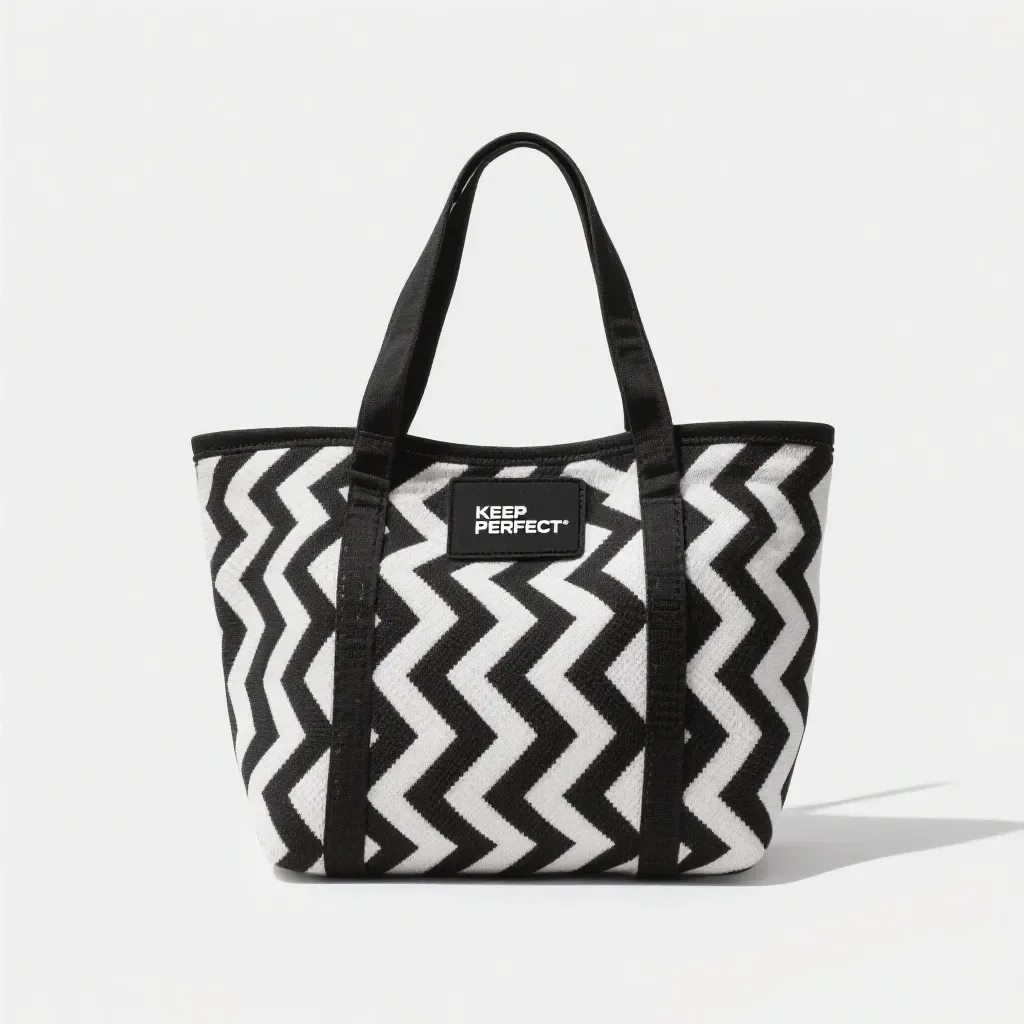
Write that shared basis into the request for quotation before sending it. State the carried load in kilograms, the abrasion target with the test number, the acceptable dimensional tolerance in millimetres, the packing requirement and the delivery incoterm. The comparison then becomes arithmetic, which is exactly when it becomes useful.
The Hybrid Answer Nobody Suggests First
The route the buyer finally took was neither of the two originally quoted: a knitted body closed with an inserted base and reinforced along the load path with webbing, which cost USD 5.05, tested above both alternatives on handle pull-out, and launched each new shade without disruption. Hybrid constructions are rarely offered first because they take longer to engineer, but they are frequently the right one.
- MOQ
- 100 pcs per style / colourway
- Sampling
- 7 working days for either route
- Bulk production
- 30 days
- Inspection
- AQL 2.5 (ISO 2859-1)
- Incoterm
- FOB Xiamen, CIF or DDP on request
- Capacity
- 7 production lines, about 200,000 pcs per month
- Programme experience
- coordinating knit bag programmes since 2014
- Reference testing
- ISO 12947-2 abrasion, ISO 13934-1 tensile, AATCC 8 rubbing
Frequently Asked Questions
Which route costs less per bag?
Cut and sew usually wins on unit price at stable volume because material cost per metre falls as quantity rises. On the comparison shopper it quoted USD 4.80 against USD 5.30 for the seamless knit at 2,000 pieces. Over a programme that refreshes colourways quarterly, the gap reverses, because each sewn refresh carries a new marker and each knit refresh does not.
Does a seamless knit bag really have no seams?
It arrives from the bed already shaped, so the panel seams are gone, but a closure still exists where the design needs one. On the comparison shopper that was one inserted base rather than nine sewn seams. Describe it as few joins rather than zero joins, and specify that single join explicitly so nobody assumes it is load-bearing by default.
How much material waste does each route generate?
A cutting marker nesting rectangular bag panels typically wastes 12% to 18% of the roll, depending on how well the pattern nests. Knitting feeds yarn only into loops, losing 2% to 4% as cone tails and start-up. Recycled polyester residues are usually easier to reprocess than mixed-material cutting room offcuts containing coating, thread and trim.
Is a knitted bag strong enough for everyday retail use?
Yes, when the load path is designed rather than assumed. A body knitted at E12 from two ends of 300D recycled polyester reaches about 25,000 rubs before breakdown under ISO 12947-2, which exceeds typical canvas at 407 g/m². Failures almost always occur at handle roots or joins, so specify the acceptance limit for those joints rather than for the fabric alone.
Can knitted bodies carry printed artwork as well as canvas?
No, and this is the clearest limit of the knit route. A flat dense face takes a photographic repeat cleanly; loop relief breaks fine tonal gradation and any stroke below roughly 2 mm reads fuzzy. Printing onto a knit panel works well up to simple line marks and solid shapes, and poorly beyond that.
How quickly can either route produce a new colourway?
On a knit programme a new shade is a cone change plus a file amendment, so the sampling window stays at 7 working days and bulk at 30 days. A sewn programme needs a fresh cutting marker, fabric availability confirmed in the new colour and printing capacity re-booked, which typically adds around three weeks per refresh.
What should a request for quotation specify so comparisons are fair?
State the carried load in kilograms, the abrasion target with the ISO test number, the dimensional tolerance in millimetres, the packing specification, the inspection level and the delivery incoterm. Give every shortlisted partner the identical document. Most comparisons fail not on arithmetic but because two parties quietly assumed different specifications and only the price was compared.
Which incoterm applies to your knit bag quotations?
Quotations are stated FOB Xiamen as standard, with CIF and DDP available where the buyer prefers delivered terms. Comparing two offers only works when both are stated on the same term, because freight, insurance and destination charges can each move the landed figure by several percent and hide a genuine difference in manufacturing cost.
What tolerance should I expect on a seamless bag body?
A knitted body typically holds within 3 mm on a 360 mm dimension once it has relaxed, because the file fixes the loop count and the needle pitch fixes everything else. Sewn assemblies stack tolerance across cutting, seam allowance and pressing, which is why a 5 mm dispute is common there and rare here. Always measure after relaxation.
Are there hybrid constructions worth considering?
Yes, and they are often the best answer. Combining a knitted body with an inserted base and reinforcement along the load path delivered a stronger bag than either original quotation and cost less than the pure seamless option. Hybrids take longer to engineer, so raise the idea during briefing rather than after the first sample round.
Does switching from canvas to knit help sustainability reporting?
It helps on two counts: input waste falls sharply, and a single-polymer construction is easier to describe honestly at end of life than a laminated or coated composite. Where recycled content is claimed, ask for a Global Recycled Standard transaction certificate at yarn booking so the claim can be evidenced later without tracing the lot backwards.
What is the minimum order for testing either route?
The minimum is 100 pcs per style or colourway, which is low enough to run both routes side by side on a test drop. Sampling takes 7 working days and bulk runs 30 days, so two constructions can be trialled, tested to the same specification and compared inside one selling season rather than two.
People Also Ask
Is seamless knitting more expensive than cut and sew?
Per unit, usually slightly more — USD 5.30 against USD 4.80 at 2,000 pieces in the comparison. Per programme, often less, because colour and structure changes cost far less when there is no marker to reissue. The answer depends entirely on how often the design changes.
Does cutting waste really reach 15%?
Roughly 12% to 18% is normal for nested bag panels, and curved panel shapes sit at the higher end. It is unavoidable in cutting: the roll is rectangular and the pattern is not.
Can a knitted bag replace canvas in retail ranges?
Yes where the range refreshes often and the artwork is simple. Canvas still suits designs led by a printed repeat or by the material itself, and it holds a cost advantage at very stable high volume.
How do I compare two bag quotations fairly?
Put load, abrasion target, tolerance, packing, inspection level and incoterm in the request for quotation, and send the same document to both. Comparing price without those six lines compares different products.
What does FOB Xiamen include?
The seller delivers goods loaded on board at Xiamen; the buyer carries freight, insurance and onward charges from that point. Under the Incoterms rules published by the International Chamber of Commerce, risk transfers when goods are on board.
Sources and further reading
Every figure on this page is either our own programme data or attributed below. Open the originals before you write them into a specification.
- ISO 12947-2 — Abrasion resistance of fabrics by the Martindale methodISO The test behind the 25,000-rub and 15,000-rub figures quoted for the two body options.
- ISO 13934-1 — Tensile properties of fabrics, maximum force by the strip methodISO Referenced for comparing handle root strength on seamless and assembled constructions.
- Incoterms rulesInternational Chamber of Commerce (ICC) Defines where risk and cost transfer under FOB Xiamen, CIF and DDP terms.
- Global Recycled StandardTextile Exchange Chain of custody behind the recycled polyester yarn used in the seamless option.
How Both Routes Are Tested and Released
Whichever route a programme takes, release depends on the same evidence: abrasion resistance to ISO 12947-2, tensile strength to ISO 13934-1, colour fastness to rubbing under AATCC 8 and to laundering under AATCC 61, plus a dimensional check after controlled relaxation. Request these at sampling, because a missing report in the final week costs far more than the development cycle that produced the bag.
The commercial frame is equally fixed across both routes: MOQ 100 pcs per style or colourway, sampling in 7 working days, bulk production in 30 days, inspection to AQL 2.5 under ISO 2859-1, and shipping FOB Xiamen with CIF or DDP available. Programmes have been coordinated on those terms since 2014, carried on 7 production lines running about 200,000 pcs per month through an SGS-validated partner production facility.
For buyers who want the decision documented rather than debated, the most useful single artefact is a one-page specification carrying load, abrasion target, tolerance and incoterm, sent identically to every partner being compared. That page is what makes the price difference meaningful rather than merely interesting.