Knitting Gauge Explained: How E7, E12 and E14 Change the Cost and Feel of a Knit Bag
What does knitting gauge actually mean for a bag buyer? Gauge is needles per inch on the machine bed, and it fixes the needle pitch: 3.63 mm at E7, 2.12 mm at E12 and 1.81 mm at E14. Pitch sets the largest loop the bed can form, and that one number then determines fabric density, weight, surface definition, cycle time and therefore unit cost. This article compares the three commercial bands field by field and gives the decision rule for each type of brief.
Gauge Is Needles Per Inch, and Everything Else Follows
Knitting gauge is the number of needles per inch on the machine bed, so it fixes the needle pitch and therefore the largest loop that can be formed; every other property of a knitted bag body — density, weight, hand, abrasion behaviour and cycle time — follows from that single geometric fact. Gauge is the first decision in the specification, not a detail to be settled later.
For bag programmes three bands cover nearly every commercial brief. E7 produces a coarse, robust, openly structured body with visible loops. E12 is the default for anything that must hold a silhouette. E14 gives the fine surface used where jacquard branding or a tight device pocket matters. Coarser and finer gauges exist, but they sit outside the economics of most bag work.
The reason gauge is a commercial lever rather than only an aesthetic one is that shaping happens course by course. A finer gauge needs more courses to cover the same height, and every course costs carriage time. Moving a programme from E12 to E14 without changing the drawing can add more than 40% to machine time before a single gram of yarn is considered.
E7 Versus E12 Versus E14 Compared Line by Line
The three bands differ on six measurable properties: needle pitch, loop length, course and wale density, finished weight, and cycle time; reading those six together is faster than sampling all three and guessing from the swatches. The table below is built on one 34 x 38 cm tote shape, so the cycle times are directly comparable.
| Property | E7 | E12 | E14 |
|---|---|---|---|
| Needle pitch | 3.63 mm | 2.12 mm | 1.81 mm |
| Typical loop length | 6.5 mm | 4.2 mm | 3.4 mm |
| Courses per 10 cm | 26 | 42 | 54 |
| Wales per 10 cm | 27 | 47 | 55 |
| Yarn normally fed | 600D, one or two ends | 300D, two ends | 150D to 300D, three ends |
| Finished GSM | 300 to 360 g/m² | about 420 g/m² | about 480 g/m² |
| Machine cycle | about 6 minutes | about 9 minutes | about 13 minutes |
| Surface character | coarse, open, visible loop | balanced, holds shape | fine, accepts jacquard |
Two patterns in that table are worth stating plainly. Weight rises with gauge even though the yarn per end gets thinner, because there are far more loops in every square centimetre. And cycle time rises faster than weight, which is why the finest gauge in the range is rarely the most profitable one to specify.
Loop Length: The Number That Actually Sets the Hand
Loop length is the length of yarn in one stitch, and it is the parameter that sets how the fabric feels and how much it moves in the wash; at E12 a typical bag body sits near 4.2 mm, while E7 sits near 6.5 mm and E14 near 3.4 mm. Two programmes on the same gauge with different loop lengths will produce bodies that behave differently in service.
Loop length also governs how much yarn the programme consumes, which is why it is the parameter most worth holding constant between sampling rounds. Changing it between rounds produces two samples that cannot be compared, because the difference in behaviour could come from the loop, the yarn, or the finishing route.
Matching Yarn Count to Gauge Without Pressing Off
The bed will only feed a yarn whose diameter suits the needle pitch, which in practice means 600D and above at E7, 300D with two ends at E12, and 150D to 300D with three ends at E14; feeding a yarn too thick for the pitch causes press-off at the hook, and too thin a yarn produces a body that will not hold a silhouette. Where more mass is needed, add ends rather than diameter.
Gauge and yarn pairing rules
- E7: 600D, one or two ends, for coarse open bodies and promotional shapes.
- E12: 300D, two ends, the default pairing for a bag that must hold shape.
- E14: 150D to 300D, three ends, where jacquard definition justifies the cycle time.
- Add ends to add mass; change count to change surface, not thickness. Confirm the pairing on the intended machine before the yarn is booked, because the same nominal denier behaves differently across two yarn lots.
- Confirm the yarn against the machine before booking, not after sampling.
What Gauge Does to Weight, Cycle Time and Unit Cost
Across the three bands the same tote moves from about 300 g/m² at E7 to about 480 g/m² at E14, and the machine cycle moves from roughly 6 minutes to roughly 13 minutes; because knitting is a capital-intensive process, that cycle difference is the dominant line in unit cost. The yarn cost difference between the bands is real but much smaller than buyers expect, and it is frequently outweighed by the difference in start-up waste and in the number of sampling rounds needed to settle a tighter structure.
The practical rule is to choose the coarsest gauge the brief will tolerate. A promotional shopper that only has to survive one season has no reason to carry E14 cycle time. A retail piece with a knitted-in monogram does. Stating the gauge reason in the specification prevents the argument from reopening every time a quotation is reviewed, which is worth more than the arithmetic because the arithmetic is usually the small part of the difference.
Abrasion and Tensile Behaviour Across the Three Bands
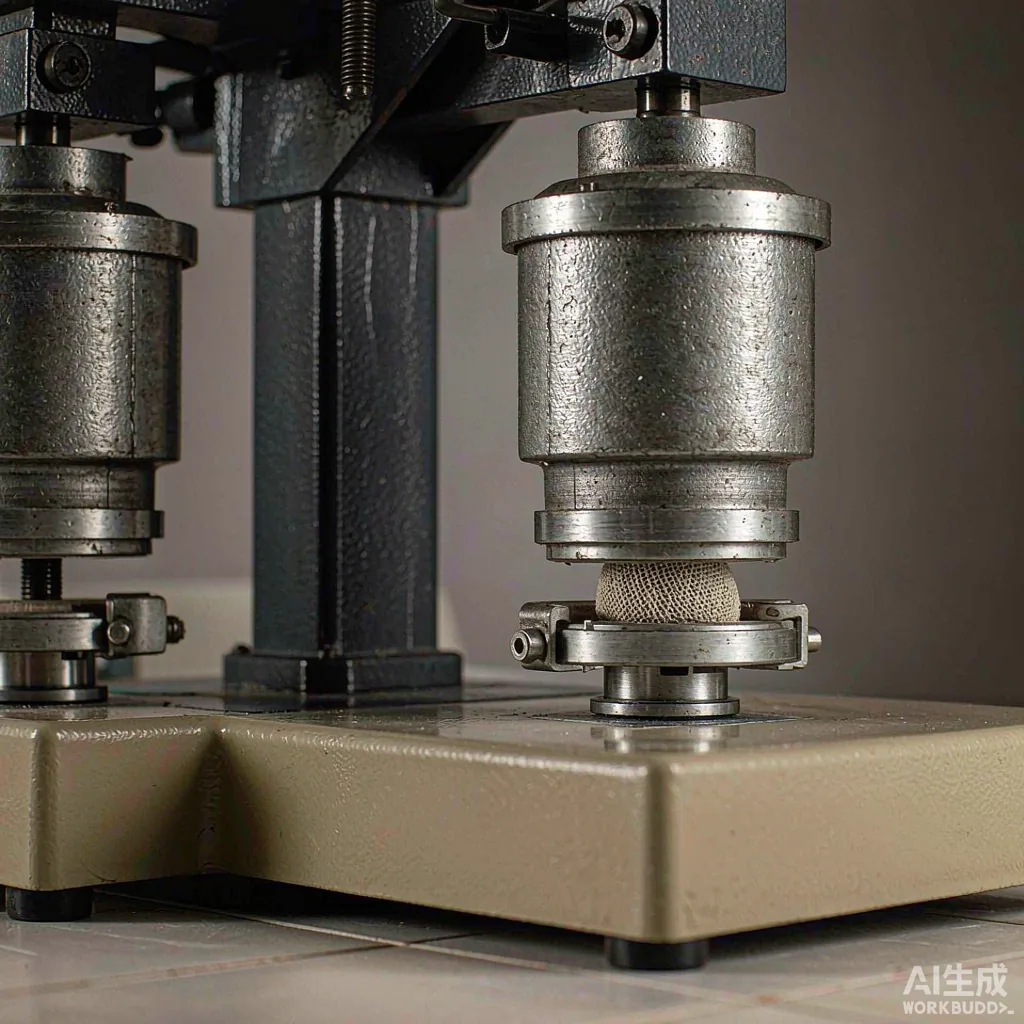
Finer gauges generally test better on abrasion to ISO 12947-2 because there are more loops per unit area sharing the load, while coarse gauges tend to show higher single-loop strength to ISO 13934-1; a heavy tote at E12 typically reaches about 25,000 rubs, and the same shape at E14 around 30,000. Neither figure means much without the carried load stated alongside it.
What matters more than either number is where the bag fails, and on every carried-load programme the answer is the same: the junction. Field returns concentrate at handle roots and base joins, not in field areas, so specifying a mechanical acceptance limit for those joints predicts returns far better than any fabric test. Fabric data is useful, joint data is decisive, and the lowest-cost time to specify that joint acceptance limit is before the first piece is knitted.
Get the gauge recommendation for your brief
Send the silhouette, target dimensions and carried load. You receive a gauge and yarn recommendation with cycle time, estimated GSM and a sampling window inside one business day. Open the contact page.
Branding Detail: Minimum Stroke Width by Gauge
Fine detail is bounded by loop size, not by print quality: below roughly 3 mm stroke width at E7, 2 mm at E12 and 1.5 mm at E14, an applied mark starts to read as loop shadow rather than as an edge. Where the artwork needs hairlines, the honest answer is a woven label set rather than a printed panel. The same limit governs knitted-in detail: jacquard lettering at E14 holds cap heights of about 4 mm comfortably and starts to lose stroke integrity nearer 2 mm.
Applied marks behave differently on a knit face than on canvas. Screen print sits on top of loop relief, so the ink bridges the valleys and the edge is defined by the loop rather than the artwork; heat transfer films anchor only at the loop crowns and can lift where the panel folds repeatedly. Specifying a print method without seeing it on the actual structure is the most common source of a branding surprise at sample stage.
Picking a Gauge: Three Briefs, Three Answers
Three briefs cover most of what arrives in an inbox, and each has a clear answer: a promotional shopper takes E7, a general retail tote takes E12, and a design-led piece with knitted-in branding takes E14. What all three share is that the answer should be written into the specification together with the reason, so the decision survives a change of buyer.
Promotional shopper
E7 in 600D, one or two ends. Shortest cycle, about 6 minutes, and the lowest unit cost at volume where the design will not change.
General retail tote
E12 in 300D, two ends, about 420 g/m². Holds a silhouette, takes simple printed marks, and refreshes easily by a change of yarn.
Design-led piece
E14 in 150D to 300D, three ends. Finest surface, knitted-in jacquard detail, and the longest cycle at about 13 minutes.
Heavy carried load
E12 body with reinforcement along the load path. Above roughly 8 kg the joint design governs, not the gauge.
Writing Gauge Into the Specification
A gauge line on a tech pack should carry four items — the gauge band, the yarn count and number of ends, the loop length target, and the expected cycle time — because together those four lines let any partner quote the same bag. Without the loop length target, two partners can knit the same style at the same gauge and deliver bodies with different weights and different shrinkage.
- Gauge bands in use
- E7 coarse, E12 default, E14 fine
- Needle pitch
- 3.63 mm at E7, 2.12 mm at E12, 1.81 mm at E14
- Loop length target
- 6.5 mm at E7, 4.2 mm at E12, 3.4 mm at E14
- Abrasion reference
- about 25,000 rubs at E12, about 30,000 at E14 (ISO 12947-2)
- MOQ
- 100 pcs per style / colourway
- Sampling
- 7 working days
- Bulk production
- 30 days
- Inspection and shipping
- AQL 2.5 (ISO 2859-1), FOB Xiamen
Frequently Asked Questions
What is knitting gauge in plain terms?
It is the number of needles per inch on the machine bed. E12 means twelve needles per inch, a pitch of 2.12 mm. That pitch determines the largest loop the needle can draw, and loop size then determines density, weight, surface definition and how many courses are needed to cover the body. It is the first specification decision because everything else depends on it.
Which gauge is best for a knitted tote bag?
E12 is the default, because it holds a silhouette without the cycle-time penalty of E14. A 34 x 38 cm tote at E12 in two ends of 300D recycled polyester reaches about 420 g/m² in roughly 9 minutes of machine time. Choose E7 for a coarse promotional piece and E14 only where jacquard definition earns the extra time.
Does a finer gauge make a stronger bag?
It improves abrasion resistance, because more loops share the load across the same area, but it does not automatically make a stronger bag. Field returns concentrate at handle roots and base joins rather than in the field of the fabric. Specify a mechanical acceptance limit for the joints and you will predict returns far better than any fabric test does.
How does gauge affect the price per bag?
Mainly through machine time. The same shape takes about 6 minutes at E7, 9 minutes at E12 and 13 minutes at E14, because a finer gauge needs more courses to cover the same height. Since knitting is capital-intensive rather than labour-intensive, that cycle difference dominates the unit cost; the yarn cost difference between bands is much smaller than most buyers expect.
Can I change gauge between sampling rounds?
Yes, but it is a structural change rather than a parameter tweak, because loop length, course count, tension values and the shaping sequence all have to be rewritten. Expect another full sampling round. Changing gauge mid-programme is one of the most common causes of a missed launch date, so settle it at briefing.
What yarn count should I pair with E12?
Two ends of 300D recycled polyester is the standard pairing for a bag that must hold shape, giving roughly 420 g/m². One end produces a limp body; three ends approach the limit of what the 2.12 mm pitch will take reliably. Where extra mass is needed, add an end rather than moving to a thicker single yarn.
How does gauge influence dimensional tolerance?
Finer gauges hold tighter tolerances, because the loop count per centimetre is higher and each individual loop contributes less to total dimension. In practice, a shaped body at E12 holds within about 3 mm on a 360 mm dimension after relaxation. Whatever the gauge, always measure after controlled relaxation rather than straight off the machine.
Is a higher gauge number always better?
No. A higher gauge number means finer needles, a tighter surface and more courses, which costs machine time. For a promotional shopper that will be used for one season, the extra definition is not worth roughly double the cycle time. Gauge should follow the brief: detail and durability for retail, speed for promotions.
What happens if the yarn is too thick for the gauge?
The hook cannot close cleanly around the yarn, which causes press-off: loops drop, the fabric opens, and in the worst case needles are damaged. The symptom in the fabric is a vertical line of dropped stitches or a section of open work. It is a set-up fault, not a yarn defect, and it is caught by confirming the pairing before the programme runs.
Can branding be knitted in rather than printed?
Yes, and it is often the better route at E14, where the finer loop accepts jacquard detail. The mark is formed by selecting different yarn colours or structures for individual needles within a course, so it will not crack or peel. The limit is detail: below roughly 1.5 mm stroke width at E14 the edge loses definition.
How do I specify gauge so two partners quote the same bag?
Give the gauge band, the yarn count with the number of ends, the loop length target and the expected cycle time. Those four lines remove the assumptions that create most quotation differences. Add the carried load in kilograms and the abrasion target with its test number, and the comparison becomes arithmetic rather than opinion.
What are the commercial terms for sampling and bulk?
The minimum is 100 pcs per style or colourway, sampling takes 7 working days and bulk production runs 30 days. Inspection is to AQL 2.5 under ISO 2859-1, and shipping is FOB Xiamen with CIF or DDP available on request. Programmes have been coordinated on those terms since 2014.
People Also Ask
What is E12 in knitting?
E12 means twelve needles per inch, a pitch of 2.12 mm. It is the default gauge for knit bags because it holds a silhouette while keeping cycle time moderate, typically about 9 minutes for a 34 x 38 cm tote.
Does a higher gauge mean a finer fabric?
Yes. More needles per inch means smaller loops and a tighter surface, which accepts finer jacquard detail but requires more courses and therefore longer machine time.
Which gauge is used for 3D knitted shoes?
Shoe uppers typically run E14 to E18 for fine detail and zonal structure. Bags sit coarser, at E7 to E14, because a bag has to hold a larger silhouette with fewer courses per centimetre.
How much does gauge change the weight of a bag?
On the same 34 x 38 cm shape, moving from E7 to E14 takes the body from roughly 300 g/m² to about 480 g/m², which is the difference between a packable shopper and a structured tote.
Can one programme use two gauges?
Yes, but not on one piece. A programme can knit the body at E12 and a detail panel at E14, then join them in assembly. This is common where branding needs finer definition than the body structure requires.
Sources and further reading
Every figure on this page is either our own programme data or attributed below. Open the originals before you write them into a specification.
- ISO 12947-2 — Abrasion resistance of fabrics by the Martindale methodISO Method behind the 25,000 and 30,000 rub targets quoted for the E12 and E14 bands.
- ISO 13934-1 — Tensile properties of fabrics, maximum force by the strip methodISO Referenced for comparing single-loop strength between coarse and fine gauges.
- Flat knitting machinery and gauge rangesShima Seiki Equipment reference for the E7, E12 and E14 bands used in bag programmes.
- Textile Exchange standards and certification programmesTextile Exchange Covers the recycled-content standards referenced for knitted bag yarn.
Carrying the Gauge Decision Into the Rest of the Programme
Gauge does not sit alone. It determines which yarn counts will run, which structures the bed can form, how long each piece occupies the machine, and how tight a tolerance the finished body can hold. Settling gauge first removes most of the ambiguity from the other four decisions, and it is the lowest-cost specification change available because it happens before any yarn is booked.
The references below take each of those dependent decisions in turn — structure, yarn, tolerance and acceptance criteria. Read them in that order and the specification writes itself; read them in any other order and the file usually has to be rewritten during sampling, which is where the calendar is lost.