Whole Garment Knitting for Bag Bodies: What One-Piece Construction Really Delivers
What does whole garment knitting deliver when the article is a bag rather than a sweater? It delivers a body that leaves the machine three-dimensional, with the handle roots, opening borders and reinforcement zones already formed in the same loop structure as the panel — no side seam and no handle attachment operation. On a 40 x 42 cm weekender knitted at E14 from three ends of 300D recycled polyester that means roughly 1,008 needles per bed, 480 g/m² and a finished weight near 210 g in an 11-minute cycle, with handle roots tested to 320 N.
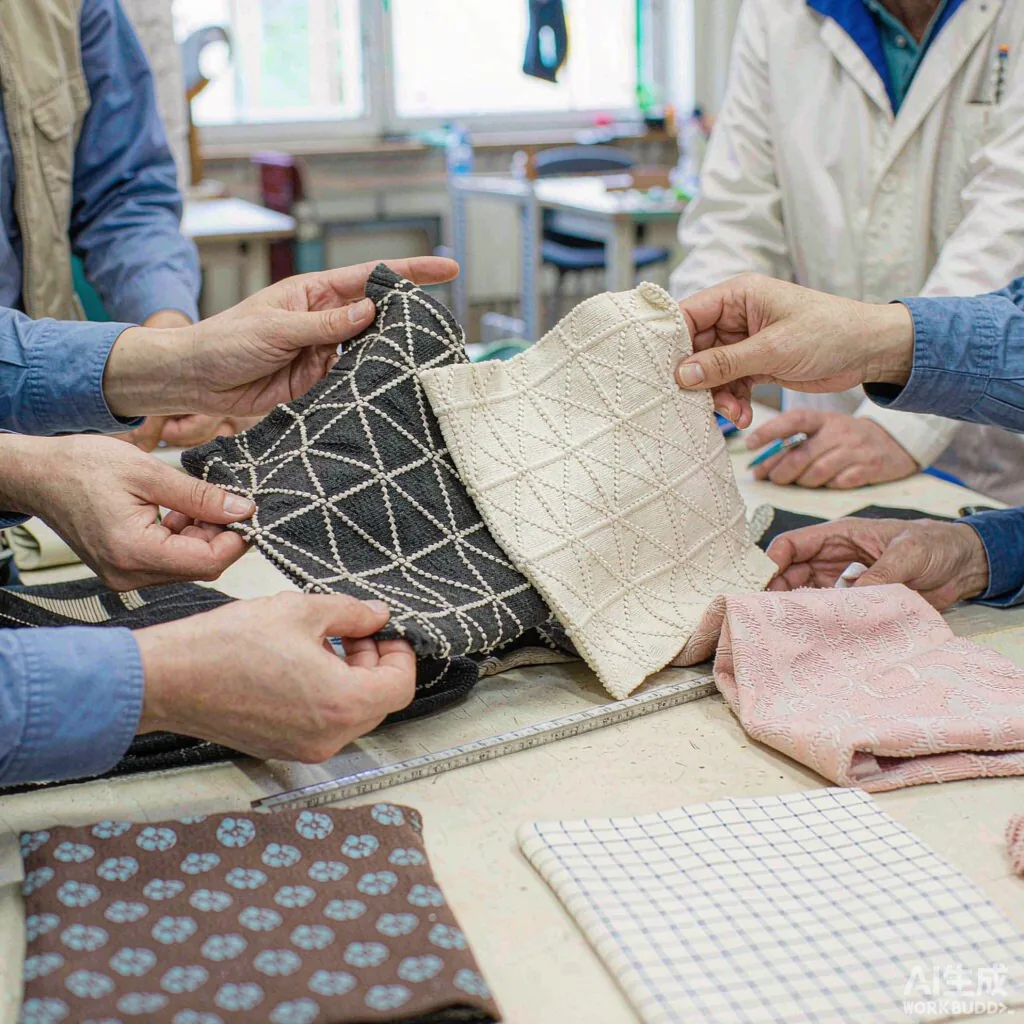
What Whole Garment Means When the Article Is a Bag
Whole garment knitting is a method of producing a complete three-dimensional article on the machine rather than knitting panels and assembling them afterwards, and on a bag that translates to a body with its handles and opening borders formed in the same continuous sequence as the panel itself. The distinction is not marketing language; it changes which operations exist downstream and which tolerances accumulate.
The technique traces to the WHOLEGARMENT machines developed by Shima Seiki, whose shaped-knitting lineage is the reference most buyers will encounter when researching the process. For a bag programme the practical consequence is narrower than the marketing suggests: the panel seams disappear, but the design rules that govern a shaped knit — minimum radius, shaping rate, maximum width — become the constraints the drawing has to respect.
The Pre-Production Checklist: Nine Decisions Before the File Exists
Nine decisions have to be settled before a shape file is written: silhouette and dimensions, carried load, gauge, yarn count and number of ends, structure by zone, handle construction, opening treatment, closure and hardware, and finishing route. Every one of them is simple to change on paper and progressively more expensive to change once the file exists, which is why this list belongs in the briefing rather than the sampling round.
Settle these before the first file
- Silhouette and the three dimensions that will actually be measured.
- Carried load in kilograms, and whether the bag must survive being set down loaded.
- Gauge: E7 for coarse and open, E12 for shape retention, E14 for fine detail.
- Yarn count and number of ends — 300D or 600D, one, two or three ends.
- Structure by zone: jersey field, rib border, tuck reinforcement.
- Handle construction: integral band, webbing insert, or sewn strap.
- Opening treatment: ribbed border, bound edge, or cut and closed.
- Closure and hardware: zip, magnet, or drawcord, with a stated trim standard.
- Finishing route: steam boarding, heat setting, or wash and relax.
Programmes that skip this list usually discover the gap at sample round two, when the shape is right and the handle is wrong. At that point the correction is not a parameter; it is a re-write of the structural sequence, which costs another seven working days and another set of samples.
Yarn and Gauge: What the Bed Can Actually Take
The bed will only reliably feed a yarn whose diameter suits the needle pitch, which in practice means 150D to 300D per end at E14, 300D to 600D at E12, and 600D and above at E7; feeding too thick a yarn risks press-off at the needle hook, and too fine a yarn produces a limp body that will not hold a silhouette. Where more mass is needed, the answer is additional ends rather than a thicker single yarn.
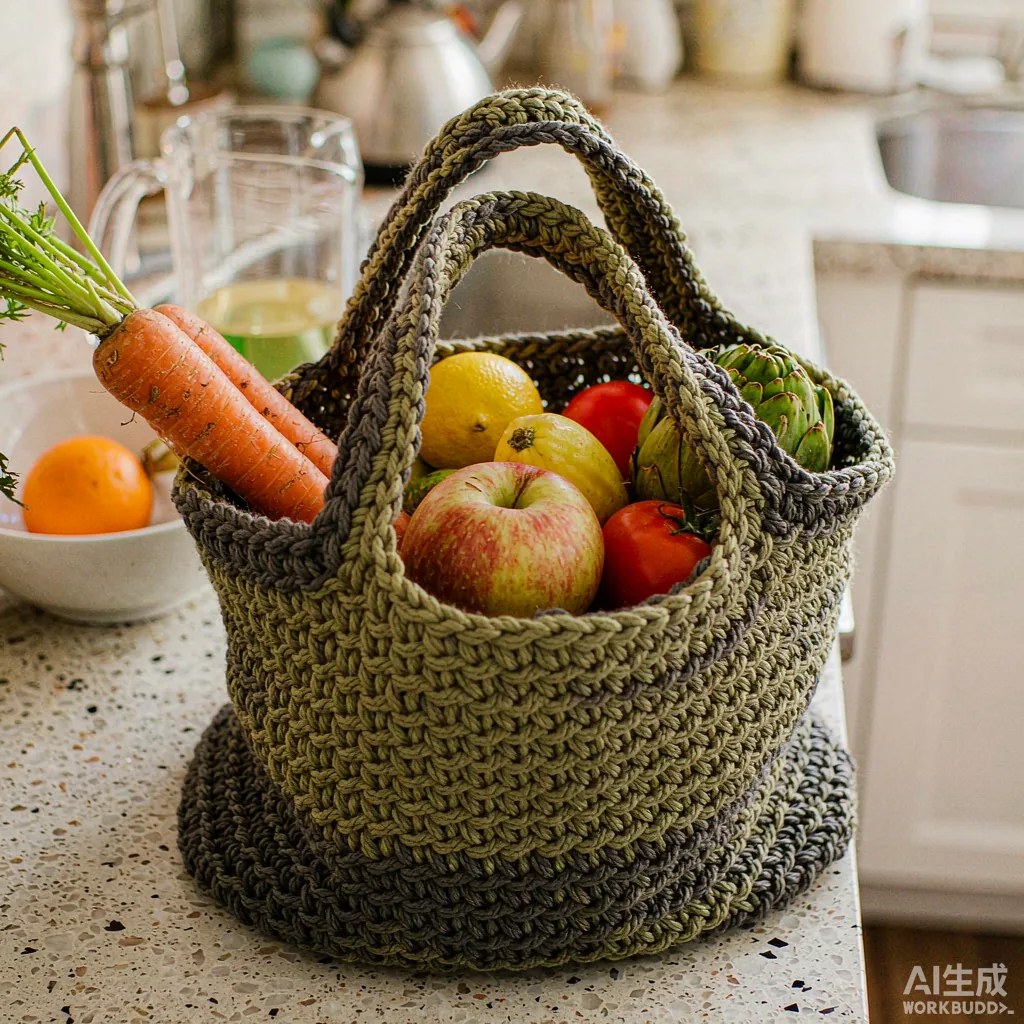
On the reference weekender, three ends of 300D recycled polyester run together at E14, giving roughly 480 g/m² across a double-bed structure and about 210 g of finished body. A machine with a 183 cm working width at E14 carries 1,008 needles per bed, so the panel fits across the full width with room for the shaping sequence at both borders.
Buyers moving from a woven specification frequently over-specify yarn mass, because a woven bag derives its strength from the fabric while a knit derives most of its in-service strength from loop geometry and load distribution. The result is a body that is heavier, slower to knit and stiffer than the brief needed. Where carried load sits below about 5 kg, two ends at E12 is usually the correct starting point rather than three.
Joining Without Sewing: Where Strength Comes From
A one-piece body is strong because load continues through unbroken loops rather than transferring across a needle-punctured seam, and because the reinforcement can be distributed over dozens of courses instead of concentrated in one stitch line. Strength comes from loop continuity plus distributed reinforcement, not from any property of the yarn.
That is why handle roots are built as a band several millimetres wide integrated across 42 courses, rather than attached at their ends. Load entering the handle spreads along the band and into the panel gradually, which is the mechanism that allows the reference piece to reach 320 N in pull-out testing instead of failing at the junction.
Check your brief against the file requirements
Send the silhouette, dimensions and carried load. You receive the nine pre-production decisions filled in for your programme, with a gauge and yarn recommendation and a sampling window. Open the contact page.
Handles, Openings and Closures Built Into the Piece
Three elements can be knitted integral to the body: handles, opening borders and the reinforcement for whatever closure the design uses, and each one changes the file complexity rather than the operation count. That trade — more file work, fewer operations — is the whole economic argument for the route.
Integral handle band
A 6 mm reinforced band knitted over 42 courses so load enters gradually. Fewest operations, highest design complexity, and the reason pull-out reaches 320 N.
Ribbed opening border
A 1x1 or 2x2 rib knitted across the top 18 courses to resist stretching at the mouth. Adds cycle time but removes a binding operation.
Knitted closure channel
A channel formed during knitting so a drawcord or stiffener can be threaded later. Useful where the closure has to be replaceable.
Reinforced trim window
A denser zone left in the structure where hardware will be set, so a rivet or zip foot has something solid to grip.
Where the Technique Still Has Limits
Shaped knitting cannot currently deliver a genuinely flat rigid panel, a sharp internal corner, or a moulded feature, because the loop structure will always relax toward its natural curvature. It also cannot carry a very tight radius on a shaped border without tension marks, and it cannot economically produce a single piece when the volume is very low and the file cost dominates.
These limits are physical, not organisational, so the honest way to brief a programme is to design within them rather than to ask for a sample that tests them. A base insert, a moulded foot or a sewn reinforcement handles most of what the bed cannot do, and hybrid construction is usually the practical answer.
The second practical limit is file economics. Writing a shaped sequence for a new silhouette is development work that has to be amortised, which is why a low-MOQ drop often reuses an existing file with a new yarn or colourway rather than commissioning fresh geometry. Where a new silhouette is genuinely required, plan the file cost into the first drop and expect a second sampling round before the shape is right.
Testing a One-Piece Body: The Methods That Predict Returns
Four methods predict most field returns on a bag: abrasion resistance to ISO 12947-2, tensile strength to ISO 13934-1, tearing resistance to ISO 13937, and colour fastness to rubbing under AATCC 8. Run them on the same lot as the approved sample, because yarn lot variation between sampling and bulk is the most common reason a passing sample becomes a failing shipment. Testing a different lot is the single most common false positive in knit bag programmes, and it is entirely avoidable.
Sampling for testing should be planned rather than improvised. A prototype proves the structure, a fit sample proves the dimensions, a salesman sample is the piece retail accounts see, and the sealer is retained for production comparison. Booking laboratory slots against those four steps avoids the familiar situation where the bulk is ready and the report is not.
| Property | Method | Typical target on a knit bag body |
|---|---|---|
| Abrasion resistance | ISO 12947-2, 12 kPa | 25,000 to 30,000 rubs before breakdown |
| Maximum force | ISO 13934-1, strip method | above 450 N in the field direction |
| Tearing resistance | ISO 13937-2, single tear | above 25 N at the panel edge |
| Colour fastness to rubbing | AATCC 8 | Grade 4 dry, Grade 3 to 4 wet |
| Colour fastness to laundering | AATCC 61 | Grade 4 change of shade |
| Dimensional change | After relaxation and one wash | within 2.5% on the measured dimensions |
Finishing a Whole Garment Body Without Losing the Shape
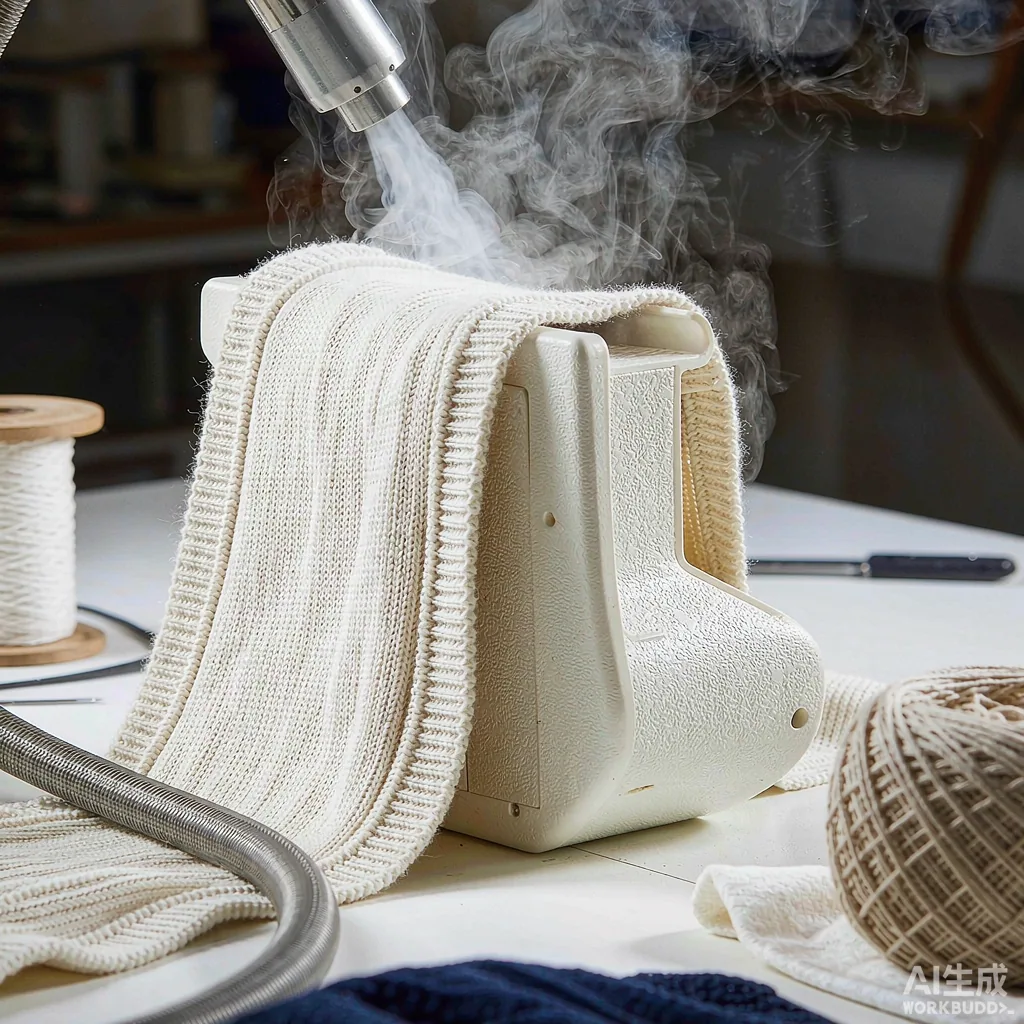
Finishing sets the final dimensions and is the last point at which a shape can be corrected or ruined: steam boarding relaxes loop stress evenly, heat setting locks a synthetic body at temperature, and a wash-and-relax route gives the softest handle at the cost of the widest dimensional spread. Choose the route at specification stage, because the tolerances have to be written around it. A wash-and-relax finish that gives the handle a retail buyer wants will routinely move a dimension by 2% to 4%, and a tolerance band written before that decision exists is a tolerance band the programme cannot hold.
- Steam boarding: even relaxation, good dimensional repeatability, moderate handle change.
- Heat setting: locks polyester at temperature, best tolerance control on a synthetic body.
- Wash and relax: softest handle, widest spread, needs the loosest tolerance band.
- None: fastest, but leaves internal stress that will show as shrinkage after the first wash.
Handover Checklist for the Tech Pack
A tech pack is complete when a partner can run the programme without asking a single question: dimension sheet with tolerances, structure map, yarn specification with lot and count, file reference and version, trim and hardware list, test methods with targets, packing specification and inspection level. One missing line always turns into a week of email later.
- MOQ
- 100 pcs per style / colourway
- Sampling
- 7 working days
- Bulk production
- 30 days
- Reference body
- 40 x 42 cm weekender, E14, 480 g/m², about 210 g
- Machine reference
- 1,008 needles per bed over a 183 cm working width at E14
- Handle root target
- 320 N pull-out, band integrated over 42 courses
- Inspection
- AQL 2.5 (ISO 2859-1)
- Incoterm
- FOB Xiamen, CIF or DDP on request
Frequently Asked Questions
What is whole garment knitting?
It is a method of knitting a complete three-dimensional article on the machine instead of knitting flat panels and joining them. Needle selection changes from course to course so the piece is shaped as it is made. Shima Seiki developed the approach and its WHOLEGARMENT line is the reference most technical buyers cite. On bags it removes panel seams and handle attachment, leaving only the closure join.
Can a whole bag really be knitted in one piece?
The body can, including handles and opening borders. Hardware cannot: zips, magnets, rivets and bases are assembled afterwards. The honest description is a one-piece body with one structural closure, which on a 40 x 42 cm weekender removes nine panel seams and three attachment operations compared with an assembled construction.
Which gauge suits a one-piece bag body?
E14 suits a body that carries fine jacquard detail or a device pocket, and runs about 1,008 needles per bed on a 183 cm working width. E12 suits most shoppers because shape retention per gram is better. E7 suits coarse open promo pieces where cycle time matters more than surface definition.
How long does one piece take on the machine?
The reference 40 x 42 cm weekender at E14 takes about 11 minutes. Shaping sequences, integral handle courses and structure changes all run at reduced carriage speed, so a plain rectangular panel of the same area clears noticeably faster. Cycle time is the dominant cost driver, not hourly labour.
How strong is an integral handle root?
Built as a 6 mm band integrated over 42 courses, the root reaches about 320 N in pull-out testing to ISO 13934-1 on a gripped strip. The mechanism is distribution: load enters along the band length rather than concentrating at a line of stitching, which is where sewn straps typically start to fail.
What limits the shapes you can knit in one piece?
Loop structure always relaxes toward its natural curvature, so genuinely flat rigid panels, sharp internal corners and moulded features stay outside the technique. Shaped borders below roughly a 12 mm radius show tension marks that finishing does not remove. Design within those limits rather than sampling to test them.
Does one-piece knitting cost more or less than assembly?
Per unit it is usually slightly more, because machine time substitutes for labour. Per programme it is often less whenever the range refreshes, since a new colourway is a yarn change and a file amendment rather than a new cutting marker. Cost both routes over a year of drops rather than one order.
What is the MOQ for a whole garment bag programme?
The minimum is 100 pcs per style or colourway. That figure is deliberately low enough for a first drop to test a colourway inside one season. Sampling runs 7 working days and bulk 30 days, so a new shade can move from approved file to shipped carton in roughly six weeks.
Which tests should be written into the specification?
Abrasion to ISO 12947-2 at 12 kPa, tensile strength to ISO 13934-1, tearing resistance to ISO 13937, colour fastness to rubbing under AATCC 8 and to laundering under AATCC 61, plus dimensional change after relaxation. Naming the method and the target turns a subjective approval into an acceptance criterion.
Can recycled yarn be used in one-piece knitting?
Yes. Recycled polyester at 300D runs cleanly at E12 and E14, and carries a Global Recycled Standard chain of custody so a recycled-content claim can be evidenced. Request the transaction certificate at yarn booking rather than at shipment, because tracing a lot backwards through two suppliers rarely succeeds.
How is a one-piece body inspected before release?
Final inspection runs to AQL 2.5 under ISO 2859-1, which sets sample size and accept and reject numbers against lot size. Add a mechanical acceptance limit such as minimum handle pull-out force, because appearance criteria alone will pass a bag whose only real defect is a weak joint.
What should the tech pack contain for this route?
A dimension sheet with tolerances, a structure map by zone, the yarn specification with count and lot, the file reference and version, the trim and hardware list, the test methods with targets, the packing specification and the inspection level. Anything missing becomes a week of correspondence during sampling.
People Also Ask
Is whole garment knitting the same as seamless knitting?
Not quite. Seamless describes the absence of panel seams; whole garment describes a complete article knitted in one sequence on the machine. A seamless body can still need an assembled base, while a whole garment piece aims to leave the bed finished.
Why choose one-piece knitting for a bag?
Fewer joins means fewer failure locations and no tolerance stack-up across operations. It suits ranges that refresh colour often, because changing a shade is a yarn change rather than a new cutting marker.
What yarns work in one-piece bag knitting?
Recycled polyester at 300D and 600D covers most briefs, with 150D reserved for fine E14 detail. Match yarn diameter to needle pitch and add ends when more mass is needed.
How much does a one-piece bag body weigh?
A 40 x 42 cm weekender at E14 from three ends of 300D recycled polyester finishes near 210 g at about 480 g/m². Lighter shoppers at E12 in two ends sit closer to 143 g.
Can one-piece knitting include a zip?
The channel or reinforced window for a zip can be knitted, but the zip itself is set afterwards. Specify the trim standard and the reinforced zone together so assembly has something solid to grip.
Sources and further reading
Every figure on this page is either our own programme data or attributed below. Open the originals before you write them into a specification.
- WHOLEGARMENT knitting and its production effectShima Seiki Reference for one-piece shaped knitting and the reduction in downstream assembly it enables.
- ISO 12947-2 — Abrasion resistance of fabrics by the Martindale methodISO Method behind the 25,000 to 30,000 rub target quoted for knit bag bodies.
- ISO 13934-1 — Tensile properties of fabrics, maximum force by the strip methodISO Used for the 320 N handle root pull-out target and the 450 N field strength figure.
- Global Recycled StandardTextile Exchange Chain of custody behind recycled polyester yarn claims at 300D and 600D.
Where to Go Next With a One-Piece Programme
One-piece construction is a structural decision, and it interacts with three others that a technical buyer has to settle in the same week: which yarn feeds the bed, which gauge the file is written to, and what tolerance band the finished body will be measured against. Getting all three consistent before sampling is what keeps a knit programme inside one season rather than two.
The commercial frame does not change with the construction route: MOQ 100 pcs per style or colourway, sampling in 7 working days, bulk production in 30 days, inspection to AQL 2.5 under ISO 2859-1 and shipping FOB Xiamen with CIF or DDP available. Programmes have been coordinated on those terms since 2014, carried on 7 production lines running about 200,000 pcs per month through an SGS-validated partner production facility. That capacity is what makes a 30-day bulk window realistic rather than aspirational, and it is why a first drop can be scheduled against a retail calendar rather than against a production queue of unknown length.