Reducing Returns on Knitted Bags: Root-Cause Breakdown, Fit-and-Size Fixes and Specification Controls
About 18% of online bag orders come back, and on a knitted bag range the figure is usually higher for a reason that has nothing to do with quality: the appearance of a loop structure is hard to predict from a screen, so the largest single cause is that the product looked different from what the shopper imagined. Splitting the number by cause is the first step — appearance 34%, size 22%, quality 16%, changed mind 18%, transit damage 10% — and each cause has a different fix. This article works through the causes in the order they cost money, from the specification controls that prevent them to the five numbers worth tracking weekly.
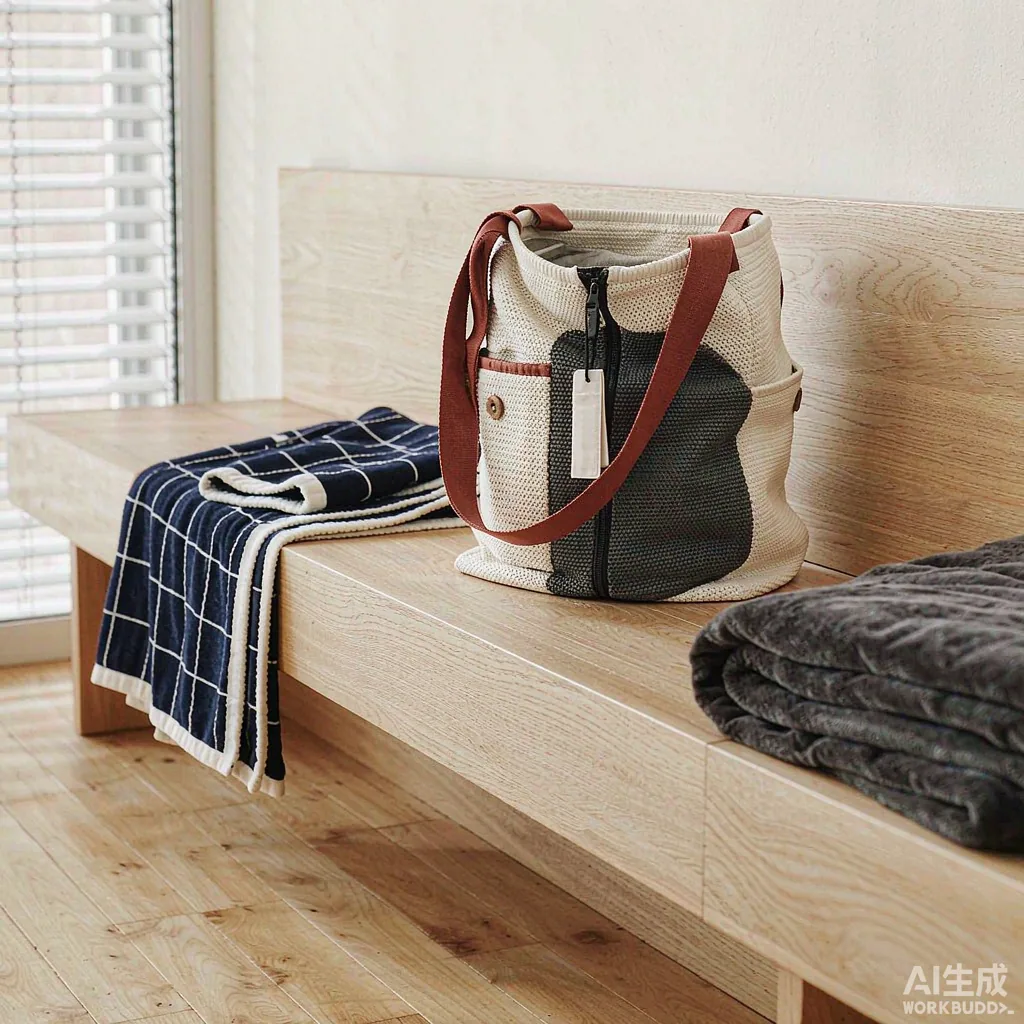
Where Do Knitted Bag Returns Come From?
Knitted bag returns split into five causes — appearance 34%, size 22%, quality 16%, changed mind 18% and transit damage 10% — and the split matters because each cause has a different fix and only three of the five are preventable.
Treating returns as one number is why reduction programmes fail. A single figure invites a single response, usually a tightening of inspection, which addresses the 16% quality share and does nothing for the 34% appearance share that dominates it. The first practical step is therefore to code returns by cause at the point of return rather than at the warehouse, because an inferred code reflects what warehouse staff assumed. The second is to accept that changed mind is not a target: that 18% is the cost of selling online and it should be excluded from any reduction goal, or the goal will be met by reclassifying rather than by fixing. The realistic target on a knit range is to halve the preventable share, which takes about 18% toward 9%.
Why Are Appearance Returns the Largest Single Cause?
Appearance is the largest cause of knitted bag returns at about 34% because a loop structure is a relief surface whose appearance depends on lighting, and a screen is a flat emitter that cannot reproduce how that relief will look under the shopper's own light.
The mechanism is specific and it is worth stating plainly. A knit body reads darker than the same yarn on a flat chip, because each loop casts a small shadow, and the depth of that shadow changes with the direction of the light falling on it. A photograph fixes one direction; the shopper's hallway, office and car each provide another. Two consequences follow. The first is that a single hero frame cannot serve the appearance decision, and a detail crop at 1:1 is the frame that carries it, because it shows the relief rather than the shade. The second is that the shade tolerance has to be held tighter on knit than on flat materials, which is why a Delta E figure belongs in the specification rather than in an email.
- Appearance share
- About 34% of returns; driven by lighting-dependent relief rather than by shade error
- Size and capacity share
- About 22%; driven by a nominal size label rather than a stated dimension
- Quality share
- About 16%; the only share that inspection directly addresses
- Changed mind share
- About 18%; the cost of selling online and not a reduction target
- Transit damage share
- About 10%; driven by packaging rather than by product
- Realistic target
- Halve the preventable share, taking about 18% toward 9%
What Fixes Size and Capacity Returns?
Size returns at about 22% are fixed by three specific statements — a stated dimension in centimetres, a capacity in litres, and a scale frame beside an object of known size — because a nominal label such as medium is the direct cause.
The failure is not that shoppers misjudge size; it is that they are never given a figure to judge against. A nominal label invites the shopper to compare against their own expectation of that word, and expectations vary far more than dimensions do. Stating 34 by 38 by 12 cm removes the guess, and stating 18 litres gives a second reference for the shopper who thinks in volume rather than in length. The scale frame is the third element and the one most often omitted, because it requires an object in the studio; it is also the one that most reliably prevents the return, since it answers the question without the shopper having to convert a number into a mental image. A tolerance belongs here too: a stated dimension with a tolerance of about 3% is a specification, and a stated dimension without one is a promise.
Why Do Comfort and Strap Returns Happen on Knit?
Strap returns on a knitted bag happen because a knit strap stretches under load in a way a webbing strap does not, and a shopper carrying 5 kg reads that stretch as a defect rather than as the behaviour of the structure.
This is a specification gap rather than a product fault. A knitted strap has an elongation figure, and that figure belongs on the page next to the capacity, because together they tell the shopper what the bag does when it is full. A webbing strap has a different figure and a different hand, and the two are often offered on the same style without the difference being stated. Two controls reduce the returns: state the recommended load and the elongation at that load, and choose the strap construction for the stated capacity rather than for the look. Where a style is intended for a heavier load, a webbing strap or a reinforced knitted strap with a lower elongation yarn is the right specification, and it should be sampled as such rather than discovered in review.
| Cause | Share | Control that reduces it |
|---|---|---|
| Appearance differs from expectation | 34% | A 1:1 detail crop, a held Delta E figure and a shade measured on the finished knit |
| Size or capacity differs | 22% | A stated dimension, a litre figure, a tolerance of about 3% and a scale frame |
| Perceived quality fault | 16% | AQL 2.5 release, plus the test figures behind the claims on the page |
| Strap comfort or stretch | Included in size and quality | State the recommended load and the strap elongation at that load |
| Transit damage | 10% | A packing specification with a stated compression and drop test |
What Does AQL 2.5 Not Catch?
AQL 2.5 under ISO 2859-1 catches defectives in a sample, and it does not catch three things that generate returns: a systematic shade drift, a dimension drifting toward the edge of tolerance, and a packaging failure that occurs after inspection.
Understanding what the inspection is for prevents the most common disappointment in a returns programme. AQL 2.5 is an acceptance sampling scheme with a defined acceptance number: it answers the question of whether this lot may be released, and it answers it on the attributes listed in the inspection plan. It is not a process control. A shade that drifts by half a grade across a lot passes, because each sampled unit is inside tolerance, and it still produces appearance returns. A dimension that drifts from the nominal toward the edge of a 3% tolerance passes and still produces size returns. The controls that catch those are different instruments: a shade reference measurement per lot and a dimension check at the start, middle and end of a run rather than at the end only.
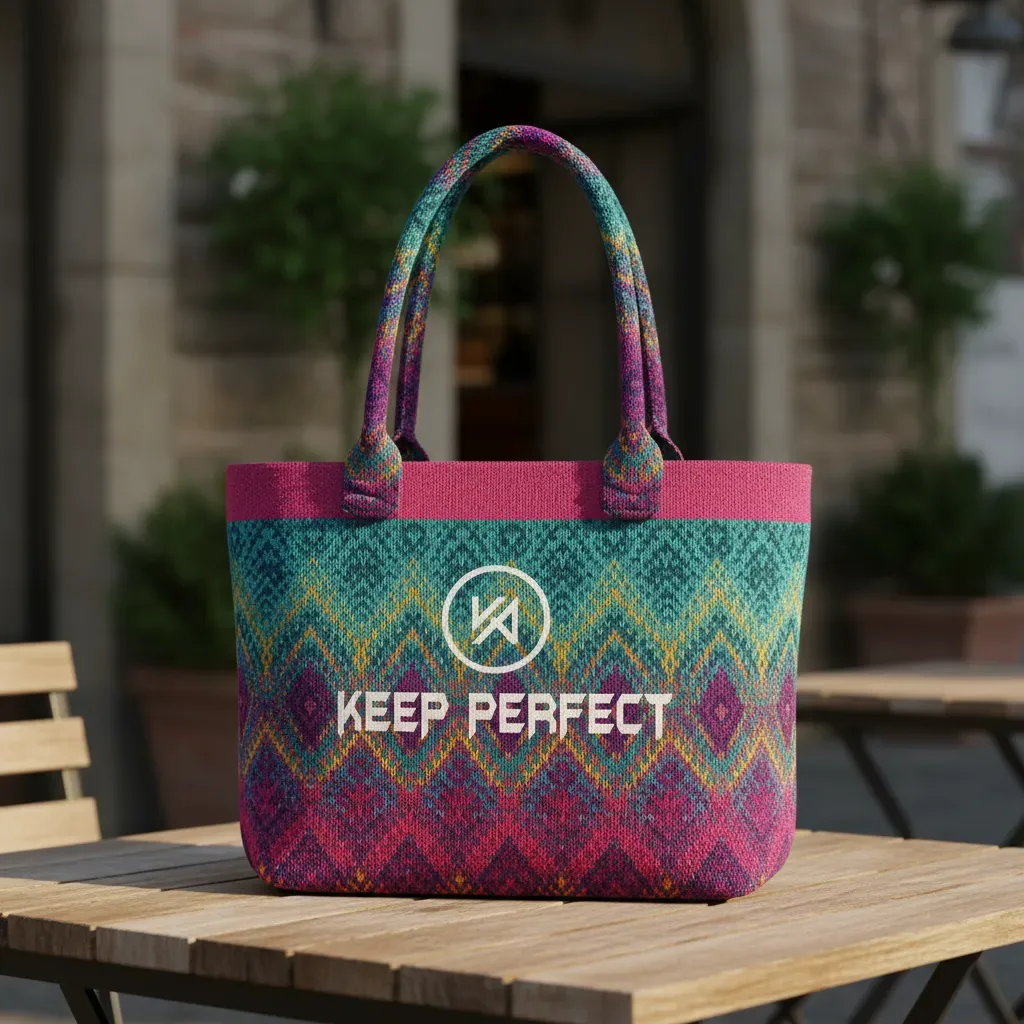
How Do Copy and Imagery Close the Expectation Gap?
The expectation gap closes with four items on the page — a stated dimension, a litre figure, a 1:1 detail crop and a plain statement of how the material behaves — and all four have to be present, because any three leave one question unanswered.
The fourth item is the one most often missing, and it is the one that addresses the largest cause. A knit body relaxes about 3% on its first wash, it snags rather than tears when caught, and it recovers its shape when reshaped damp. Stating these before purchase converts three surprises into three non-events, and the returns data shows the effect within about four weeks of the change. The wording has to be instruction rather than warning, because a warning list reads as an admission of fragility and suppresses the purchase without improving the outcome. The test of whether the page is doing this job is simple: read it as a shopper who has never handled a knitted bag, and ask whether anything on it would be surprising after two weeks of ownership.
Four items that close the expectation gap
- State the dimension in centimetres with a tolerance, not a nominal size label.
- State the capacity in litres, because some shoppers think in volume.
- Include a 1:1 detail crop; on knit it is the frame that carries appearance.
- State how the material behaves: about 3% relaxation, snagging and reshaping damp.
- State the recommended load and the strap behaviour at that load.
- Keep the wording as instructions; warnings suppress purchases without improving outcomes.
Which Packaging Choices Cause Transit Returns?
Transit returns at about 10% are caused by three packaging decisions — compression in transit, insufficient protection at the base, and a strap left loose to catch — and all three cost little to correct once they are specified.
A knitted bag is more compressible than a structured one, which is an advantage in freight and a disadvantage in presentation: a bag that arrives compressed inside a tight mailer looks flat and shapeless, and the shopper's first impression is of a product that did not travel well. The remedy is a packing specification with a stated compression limit and a light internal fill that holds the silhouette without adding bulk. The base is the second failure point, because a knit body carrying a load concentrates the weight at the bottom panel and a mailer with no base protection arrives scuffed. The third is the strap: one left loose catches in a conveyor and either marks or tears, and a strap folded flat and wrapped is a specification item that costs nothing.
What Five Numbers Belong on a Returns Dashboard?
Five numbers belong on a weekly returns dashboard — the rate, the cause split, the appearance share, the days-to-return and the resaleable share — because the rate alone is a lagging indicator that tells a brand nothing about what to change.
Return rate
Returns divided by units shipped, tracked against the about 18% baseline. Lagging, but the number a finance team will ask for first.
Cause split
The five shares, coded at the point of return. The only column that tells a brand which fix to apply.
Appearance share
Tracked separately because at about 34% it dominates, and it moves when imagery or copy changes rather than when inspection tightens.
Days to return
The gap between delivery and return. A fall toward two days points at expectation; a rise toward twenty points at use.
Resaleable share
The share of returns that can be resold. Determines whether a return cost is a handling cost or a write-off.
Days-to-return is the most diagnostic of the five and the least used. A return raised within about two days of delivery was decided before the product was used, which points at expectation, imagery or copy. A return raised after about twenty days was decided in use, which points at the product or the specification, and the two require completely different responses. Pairing that figure with the cause split tells a brand not only what is happening but when the decision was made, which is usually enough to identify the fix without further analysis.
Reduce returns on a knit range
Send the return rate you are seeing, the cause split if you have one and the channels you sell through. Our knit team will return a specification review, an imagery and copy checklist, and a programme plan at MOQ 100 pcs per style and colourway with AQL 2.5 release. Start on the contact page.
Frequently Asked Questions
What is a normal return rate for bags sold online?
About 18% of orders, and a knitted bag range often runs higher because a loop structure is harder to predict from a screen. The realistic reduction target is to halve the preventable share, which takes the figure toward 9%.
Why is appearance the largest cause of knitted bag returns?
Because a loop is a relief surface whose appearance depends on the direction of light. A photograph fixes one direction and the shopper views the bag under several, so the product reads differently at home than on screen.
Should changed mind be included in a returns reduction target?
No. At about 18% it is the cost of selling online rather than a defect. Including it invites the target to be met by reclassifying returns rather than by fixing their causes.
What fixes size-related returns on a knitted bag?
Three statements: a dimension in centimetres with a tolerance of about 3%, a capacity in litres, and a scale frame beside an object of known size. A nominal label such as medium is the direct cause.
Why do shoppers return knitted bags for strap problems?
A knit strap stretches under load in a way a webbing strap does not, and a shopper carrying 5 kg reads that stretch as a defect. State the recommended load and the elongation at that load.
Does AQL 2.5 prevent quality returns?
It prevents the release of a lot with too many defectives, which is the 16% quality share. It does not catch a systematic shade drift, a dimension drifting toward tolerance, or a packaging failure after inspection.
How should a brand detect shade drift across a bulk lot?
By measuring against the shade reference per lot rather than per unit. Every sampled unit can be inside tolerance while the lot drifts by half a grade, and the drift still produces appearance returns.
What packaging causes transit damage on knitted bags?
Three things: compression in a tight mailer, no protection at the base where the load concentrates, and a strap left loose to catch in a conveyor. All three are specification items.
How quickly do copy and imagery changes affect returns?
Within about four weeks of the change. That is the point at which the first cohort of shoppers who read the revised page has owned the product long enough to decide whether to keep it.
What is the most diagnostic returns metric?
Days to return. A return within about two days was decided before use and points at expectation; one raised after about twenty days was decided in use and points at the product.
Should care instructions be written as warnings?
No. A warning list reads as an admission of fragility and suppresses purchases without improving outcomes. Instructions such as reshape while damp are both more accurate and better for conversion.
How should return reasons be captured?
At the point of return, not inferred at the warehouse. An inferred code reflects what warehouse staff assumed, and it cannot distinguish a care problem from a genuine fault.
Does a resaleable share matter for returns reporting?
Yes, because it determines whether a return is a handling cost or a write-off. A high return rate with a high resaleable share is a very different business from the same rate with a low one.
Can a knitted bag range reach a return rate below 9%?
Yes, but the remaining share is mostly changed mind, which is not addressable by product or specification work. Below that point further reduction comes from channel mix rather than from the range.
People Also Ask
Why do people return bags bought online?
Mostly appearance: about 34% of returns on a knitted range. A loop surface looks different under the shopper's own lighting than it does in a photograph, and no single hero frame can cover that.
How can I reduce returns on an e-commerce bag range?
State a dimension with a tolerance, a capacity in litres, include a 1:1 detail crop, and say how the material behaves. Code returns by cause first, or the fix will be aimed at the wrong share.
Does AQL inspection reduce returns?
It reduces the quality share, about 16%. It does not catch shade drift, dimension drift or packaging failure, which together account for more of the total than inspection addresses.
What is a good return rate target for bags?
About 9% from an 18% baseline, reached by halving the preventable share. The 18% changed-mind portion is the cost of selling online and should sit outside the target.
Should I state size in cm or litres for a bag?
Both, plus a scale photograph. Some shoppers think in volume and some in length, and a nominal label such as medium is the direct cause of size returns.
Sources and further reading
Every figure on this page is either our own programme data or attributed below. Open the originals before you write them into a specification.
- ISO 2859-1 — Sampling procedures for inspection by attributes, Part 1: AQL-indexed sampling schemesISO Defines the AQL 2.5 scheme, and therefore what the inspection does and does not cover.
- ISO 139:2005 — Textiles, standard atmospheres for conditioning and testingISO The conditioning standard behind any dimension measured against a stated tolerance.
- ISO 5077:2007 — Textiles, determination of dimensional change in washing and dryingISO The method behind the about 3% relaxation figure that should be stated before purchase.
- ISO 105-X12:2016 — Textiles, tests for colour fastness, Part X12: colour fastness to rubbingISO One of the attributes listed in the inspection plan behind the quality share of returns.
- ISO 12947-2:2016 — Textiles, determination of abrasion resistance by the Martindale methodISO The abrasion figure used to distinguish a genuine quality fault from wear at a contact point.
Code the Cause Before Fixing the Product
A returns reduction programme aimed at the total rate will always land on inspection, because inspection is the lever a supply team holds. On a knitted bag range that lever addresses about 16% of the problem while the largest share sits with appearance, which is closed on the page rather than on the line. Code the cause at the point of return, exclude changed mind from the target, and the fix becomes obvious within about four weeks.
For the policy that stands behind the quality share, see knitted bag care and warranty. For the education that prevents the appearance and care returns, see knitted bag customer education, and for the range decisions that change the profile as it grows, see knitted bag category expansion. The cluster overview sits under knit bag brand guide.