Knitted Bag Care and Warranty: Care Labelling, Repair Paths and Warranty Terms for Seamless Knit Products
A warranty on a knitted bag is easier to honour than on most bags and easier to write badly, because the failure modes are structural and therefore arguable. The workable policy separates four failure categories — seam or loop failure, hardware, trim and care-induced change — assigns each a repair path, and covers the first two while excluding the last. Twenty-four months is the term that fits a knit body: long enough to exceed the statutory position in most markets and short enough that the failure still reflects the construction rather than the owner. This article sets out the labelling, the term comparison, the exclusions, the claim procedure and the per-unit cost of the provision.
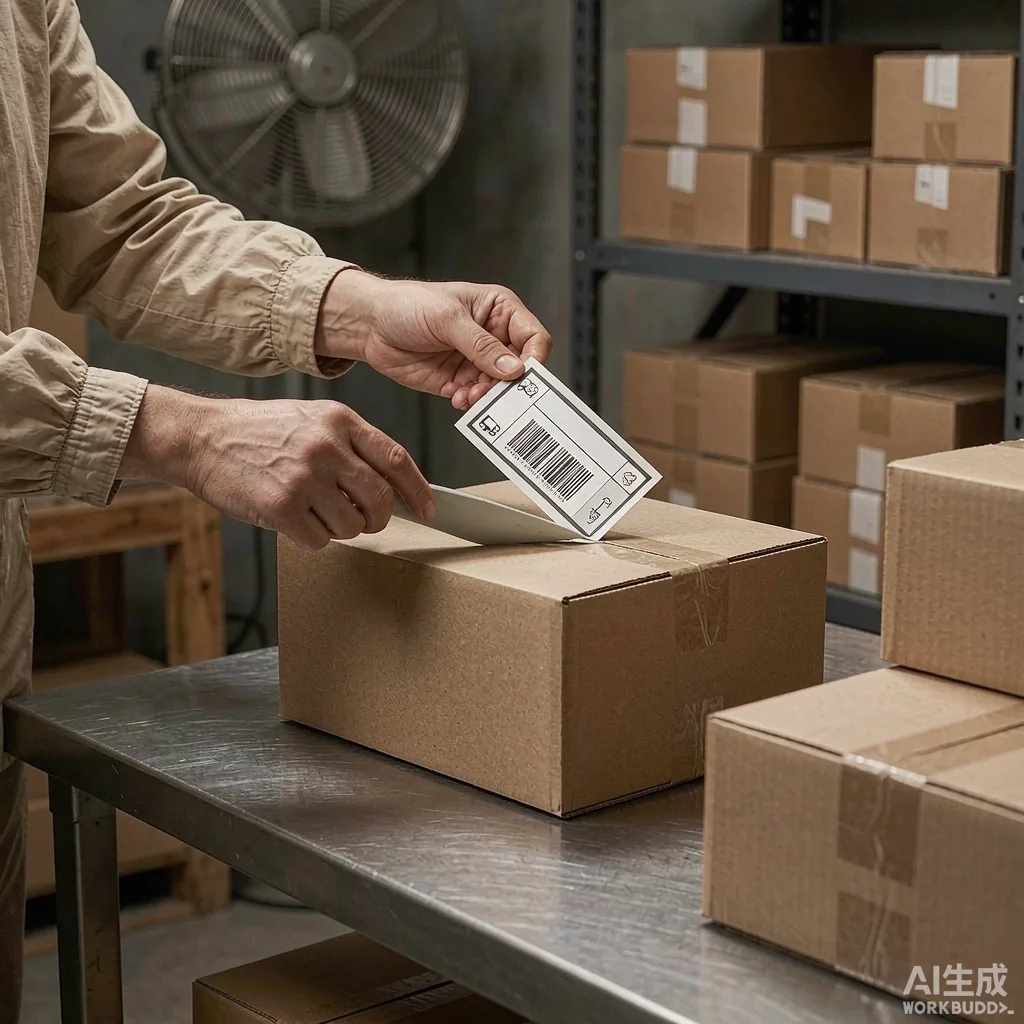
Care Labelling: The Five Symbols and the Wording Behind Them
A knitted bag care label needs five symbols — wash temperature, bleach, drying, ironing and professional care — and one written line, because the symbol set alone does not tell an owner to reshape the body while damp.
The written line is the part that prevents claims. Symbol sets are standardised and compact, which is exactly why they cannot carry the one instruction that matters most on knit: reshape while damp. A label showing a 30-degree tub and a flat-dry square tells the owner the temperature and the position, and neither of them describes the action that restores the panel geometry. The line should be short — a single sentence is enough — and it should sit beside the symbols rather than replacing them, because symbols survive translation and a sentence does not. Where a range sells into several markets, the symbols carry the legal weight and the sentence carries the practical one.
Warranty Length Compared: 12, 24 and 60 Months
Twenty-four months is the right warranty term for a knitted bag body, because it comfortably exceeds the statutory position in most markets while staying inside the period in which a failure still reflects the construction rather than the owner's use.
The comparison is usually framed as generosity, which is the wrong frame. A twelve-month term is largely redundant where the statutory position already gives the buyer a longer remedy, so it costs nothing and communicates nothing. A sixty-month term commits the brand to failures that are overwhelmingly caused by use: by month forty a knit body has been washed dozens of times, carried loads it was never specified for, and stored in conditions the brand cannot know about. Honouring the term then means accepting claims that are not construction failures, and declining them means a policy that is written but not honoured, which is worse than a shorter honest one.
| Term | What it communicates | What it commits the brand to |
|---|---|---|
| 12 months | Little; usually below the statutory remedy already available | Almost nothing; the term is decorative in most markets |
| 24 months | Confidence in the construction without overreach | Construction and hardware failures within a period use cannot explain |
| 36 months | A premium position, defensible on a top-tier style | The point at which care-induced failures begin to dominate the claim mix |
| 60 months | A strong signal, but increasingly about use rather than construction | Claims whose cause is washing, loading and storage rather than knitting |
| Lifetime | A marketing term that is rarely defined | An undefined obligation, which is the least defensible position of all |
What a Warranty Covers and What It Cannot
A knitted bag warranty should cover two things and exclude two: it covers loop and seam failure and hardware failure, and it excludes care-induced change and damage from use, because the first two are measurable and the second two are not attributable.
The dividing line is attribution rather than severity. A loop failure — a run that opens without a catch, or a shoulder that separates along a yarn path — is a construction question and can be tested: the sample either meets the abrasion and tensile figures or it does not. A care-induced change is an owner question: the body was washed above 30 degrees, tumble-dried, or loaded beyond its specification, and none of those can be established from the returned object. A policy that blurs the two commits the brand to a standard of proof it cannot meet. Stating the exclusions plainly is not ungenerous; it is what makes the covered items credible, because a policy that covers everything is a policy nobody believes.
- Covered: loop failure
- A run opening without a catch, or a shoulder separating along a yarn path
- Covered: hardware failure
- A closure, slider or fitting failing under normal specified load
- Excluded: care-induced change
- Dimensional change above about 3%, shrinkage, or distortion from heat
- Excluded: damage from use
- Snags, abrasion at contact points, overloading and storage damage
- Term
- 24 months from the date of purchase, with proof of purchase required
- Evidence
- A photograph of the failure and the order reference; a physical return where asked
The Four Failure Categories and Their Repair Paths
Four failure categories cover a knitted bag — loop run, shoulder separation, hardware failure and trim failure — and three of the four are repairable on the object rather than replaceable, which is what makes a knit warranty economical to honour.
Repairability is the distinctive advantage of a knit product in a warranty context, and it follows directly from the construction. A loop run can be worked back along its yarn path and secured from the reverse; a shoulder can be re-stitched on a linking machine because the loop structure at the edge is intact and can be joined. A hardware failure is a component replacement rather than a structural repair, and a trim failure — a webbing handle separating from the body — can usually be re-attached. Only a widespread loop failure across a panel is genuinely unrepairable, and that is the case worth replacing for. Sorting claims into these four categories at intake is what keeps the cost of honouring the policy predictable.
Loop run
Work the run back along the yarn path from the reverse and secure it. Repairable in almost every case, and usually by the owner with a blunt needle.
Shoulder separation
Re-link the edge on a linking machine. The loop structure at the edge is intact, so the join is structural rather than cosmetic.
Hardware failure
Replace the component. Keeps a spare-part list rather than a finished-goods reserve, which is a far smaller commitment.
Widespread panel failure
Replace the unit. Rare, and the only case where a finished-goods reserve is actually needed to honour the term.
Spare Parts, Repair Kits and the Service Window
A knitted bag programme should hold spare parts for six years from the last production run, and the reserve should be components rather than finished goods, because a component reserve costs a fraction of a finished-goods one for the same service coverage.
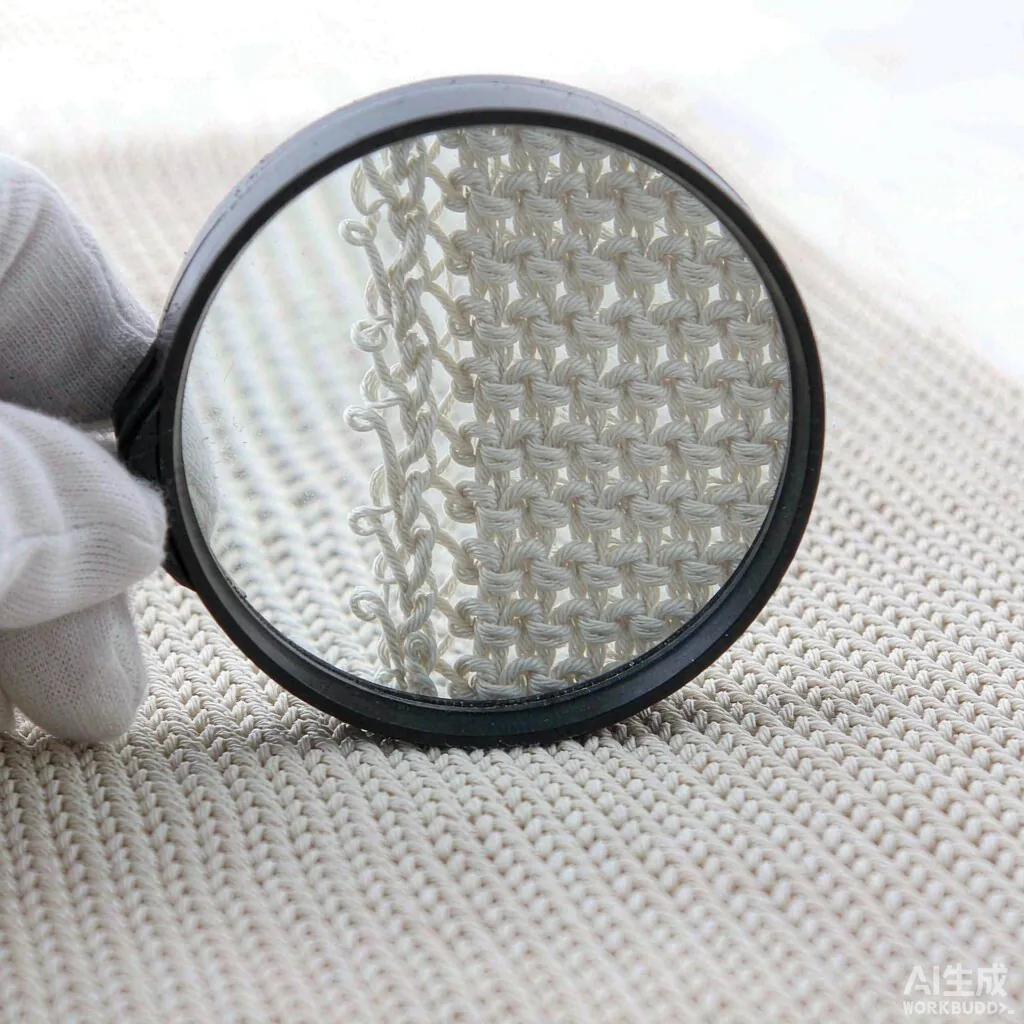
The six-year window is set by hardware rather than by knit. A closure or a slider is a bought-in component with its own product cycle, and once it goes out of manufacture the repair path for a hardware failure disappears, however good the body still is. Holding a component reserve against the last run is inexpensive and it is the single decision that determines whether a warranty can be honoured in year four. A repair kit is a different instrument and a useful one: a small card with a blunt needle, a short length of matching yarn and the two-sentence repair note, offered with the bag rather than sent after a claim. It resolves most loop runs before they ever become claims.
Claims Handling: Evidence, Turnaround and Decision Rules
A knitted bag claim should be decided within ten working days on two pieces of evidence — a photograph of the failure and the order reference — because requiring a physical return first doubles the elapsed time and most claimants abandon the process.
The ten-day target is achievable because most knit claims are visibly attributable from a photograph: a loop run with no catch point looks nothing like an abrasion patch at the base of the bag, and a separated shoulder looks nothing like a cut strap. Asking for the physical item therefore adds cost without adding information in most cases, and it should be reserved for the small share of claims where the photograph is ambiguous. Two decision rules keep the process consistent: attribute first, then decide remedy, so the same category always produces the same outcome; and where attribution is genuinely unclear, resolve in favour of the claimant, because the cost of a repair is far below the cost of an escalated dispute.
Claim handling rules for a knit warranty
- Decide within ten working days from a photograph and an order reference.
- Attribute the failure before deciding the remedy, so the same category always gets the same outcome.
- Request a physical return only where the photograph is ambiguous.
- Resolve genuinely unclear cases in favour of the claimant; a repair costs less than a dispute.
- Record every claim by category; the mix is what tells a brand whether the construction or the care card is at fault.
- Offer the repair kit before the claim, not after it.
Writing Care Copy That Holds Up in a Claim
Care copy has to be written to be read twice — once by the buyer and once by whoever adjudicates a claim — so every instruction should state its number: 30 degrees, not cool; about 3%, not some change.
This is the practical reason to avoid soft wording in care content. A policy that excludes care-induced change is only enforceable if the care instruction was specific enough to be compared against, and cool wash is not: the claimant washed at 40 degrees and believes that is cool, and there is no figure to hold them to. Thirty degrees is a number and can be compared. The same logic applies to the dimensional figure. A brand that states about 3% has told the owner what normal looks like, and a claim for a 12% change can be attributed to care rather than to construction. A brand that says may shrink slightly has given itself nothing to compare against.
The Cost of a Warranty Provision per Unit
A twenty-four month warranty on a knitted bag should be provisioned at about 1.5% of the retail price per unit, which on a USD 29 tier is roughly USD 0.44 and covers repairs, replacements and the handling cost of the claims themselves.
The provision is smaller than most brands expect, and the reason is the repairability described above: three of the four failure categories are repaired rather than replaced, and a repair consumes minutes of linking time and a component rather than a finished bag. The handling cost is the part usually overlooked, because a claim costs staff time whether or not it is upheld, and on a low-value item that time can exceed the cost of the remedy. This is the argument for the two-evidence, ten-day process — it is not primarily about the claimant's convenience but about keeping handling cost below the cost of the remedy, which is the condition under which a warranty is worth offering at all.
Write the care and warranty set for a knit range
Send the tier structure, the markets you sell into and the term you are considering. Our knit team will return a care label specification, a warranty wording with covered and excluded categories, and a programme plan at MOQ 100 pcs per style and colourway, 7 working days of sampling and 30 days of bulk. Start on the contact page.
Frequently Asked Questions
What warranty term should a knitted bag carry?
Twenty-four months. It comfortably exceeds the statutory remedy in most markets while staying inside the period in which a failure still reflects the construction. A sixty-month term commits the brand to failures that are overwhelmingly caused by use.
Why is a lifetime warranty a bad idea on a bag?
Because it is an undefined obligation. By month forty a knit body has been washed dozens of times and loaded beyond specification, so honouring the term means accepting claims that are not construction failures, and declining them means a policy that is not honoured.
What should a knitted bag warranty cover?
Loop failure and hardware failure. Both are measurable against a test figure. It should exclude care-induced change and damage from use, because neither can be attributed from the returned object.
Is a loop run covered under warranty?
It depends on attribution. A run that opens without a catch point is a construction question; a run with a catch point is damage from use. A photograph usually distinguishes the two, which is why photographs are the primary evidence.
How many care symbols does a knitted bag label need?
Five: wash temperature, bleach, drying, ironing and professional care. Plus one written line telling the owner to reshape while damp, because the symbol set cannot describe that action.
Why should care instructions use numbers rather than words?
Because the instruction is read twice — once by the owner and once by whoever adjudicates a claim. Thirty degrees can be compared against a wash at 40 degrees; cool cannot, so there is nothing to hold the claim to.
What dimensional change should be stated on the care card?
About 3%. Stating the figure tells the owner what normal looks like, so a claim for a 12% change can be attributed to care rather than to construction. Saying that the bag may change slightly gives the brand nothing to compare against.
How long should spare parts be held?
Six years from the last production run, and held as components rather than finished goods. A closure or slider has its own product cycle, and once it leaves manufacture the hardware repair path disappears.
Is a repair kit worth including with a knitted bag?
Yes. A card with a blunt needle, a short length of matching yarn and a two-sentence repair note resolves most loop runs before they become claims, and it costs far less than the handling cost of a single claim.
How quickly should a warranty claim be decided?
Within ten working days from a photograph and an order reference. Requiring a physical return first doubles the elapsed time and adds cost without adding information in most knit cases.
What should happen when a claim's cause is unclear?
Resolve in favour of the claimant. The cost of a repair is far below the cost of an escalated dispute, and on a low-value item the handling time can exceed the cost of the remedy anyway.
How much should a warranty be provisioned per unit?
About 1.5% of the retail price, roughly USD 0.44 on a USD 29 tier. It is small because three of the four failure categories are repaired rather than replaced, using linking time and a component rather than a finished bag.
Should the care card and the warranty card be separate?
They can be combined if the hierarchy is clear: care instructions on one side, the term and the covered and excluded categories on the other. Combining them keeps the numbers identical, which matters when a claim is adjudicated.
Does a warranty affect the product page copy?
Yes. The term should be stated on the page in the same words as on the card, and any durability claim on the page should carry the test method behind it, because a claim without a method cannot be defended in a dispute.
People Also Ask
What warranty should a bag come with?
Twenty-four months is the right term for a knitted bag: above the statutory position in most markets, and short enough that a failure still reflects the construction rather than years of use.
Does a warranty cover normal wear?
No. A knit warranty covers loop failure and hardware failure and excludes care-induced change and damage from use, because only the first two can be measured against a test figure.
How do you handle a bag warranty claim?
Decide within ten working days from a photograph and an order reference. Attribute the failure to a category first, then apply the remedy, so the same failure always gets the same outcome.
Can a knitted bag be repaired rather than replaced?
Usually. A loop run can be worked back from the reverse, a shoulder can be re-linked on a linking machine, and hardware is a component swap. Only widespread panel failure needs a replacement unit.
Why should care instructions give numbers?
Because they are read again during a claim. Thirty degrees and about 3% can be compared against what actually happened; cool and may change slightly give the brand nothing to compare.
Sources and further reading
Every figure on this page is either our own programme data or attributed below. Open the originals before you write them into a specification.
- ISO 6330:2021 — Textiles, domestic washing and drying procedures for textile testingISO The washing procedure behind the 30-degree instruction that a care-induced exclusion is compared against.
- ISO 5077:2007 — Textiles, determination of dimensional change in washing and dryingISO The method behind the about 3% figure stated on a care card and used in claim adjudication.
- ISO 12947-2:2016 — Textiles, determination of abrasion resistance by the Martindale methodISO The method behind the abrasion figure used to distinguish a construction failure from wear at a contact point.
- ASTM D2061 — Standard test methods for strength tests for zippersASTM International The hardware test method behind the component failures covered by the warranty.
- ISO 2859-1 — Sampling procedures for inspection by attributes, Part 1: AQL-indexed sampling schemesISO Defines the AQL 2.5 release that governs the bulk the warranty is written against.
A Warranty Is a Statement About Attribution
The strength of a knit warranty is not its length but its precision. Two covered categories and two excluded ones, a stated temperature, a stated dimensional figure and a ten-day decision: that combination makes the policy honoured rather than merely published, and it keeps the provision at about 1.5% of retail because three of the four failure modes are repaired on the object instead of replaced.
For the root-cause view of what the warranty does not cover, see reducing returns on knitted bags. For the education that prevents most of these claims, see knitted bag customer education, and for the range a policy has to cover as it grows, see knitted bag category expansion. The cluster overview sits under knit bag brand guide.