Knitted Bag Customer Education: Care Content, Expectation Setting and Post-Purchase Sequence for Knit Buyers
Most knitted bag complaints are not defects; they are expectations that were never set. A loop structure behaves differently from a woven panel in ways an owner cannot guess: it relaxes slightly on first wash, it snags rather than tears, and it recovers its shape when reshaped damp rather than when dried flat by accident. The answer is education delivered at four touchpoints — the product page, the care card, the post-purchase sequence and the retail conversation — with six care rules stated as instructions and a dimensional change figure given as about 3% before the customer discovers it. This article sets out the touchpoints, the rules, the sequence and the two numbers that show whether the education worked.

The Four Touchpoints Where Education Actually Happens
Education reaches a knitted bag owner at four touchpoints — the product page, the care card in the bag, the post-purchase message sequence and the retail conversation — and the care card is the only one read more than once.
The distribution of effort across those four is usually wrong. Brands invest in the product page because it is easy to change, and underinvest in the card because it is printed and therefore felt to be fixed. In practice the page is read once at the point of purchase, when the shopper is deciding rather than learning, and the card is read every time the bag is washed, which is when the information is needed. The post-purchase sequence reaches the owner in the first fortnight, which is when a return decision is actually made, and the retail conversation is the only touchpoint where a question can be answered. A plan that treats all four as one content asset will over-write the page and under-write everything else.
- Product page: read once, at the point of decision, so it carries expectation setting rather than instruction.
- Care card: read repeatedly, at the point of need, so it carries the six rules in instruction form.
- Post-purchase sequence: read in the fortnight when a return decision is made, so it carries reassurance and the first wash guidance.
- Retail conversation: the only touchpoint where a question can be answered, so it carries a script rather than a document.
- Each touchpoint carries a different job; one asset resized four ways fails at all four.
What a Knit Owner Does Not Know About a Loop Structure
A first-time owner of a knitted bag does not know three things: that a loop relaxes slightly on its first wash, that it snags rather than tears when caught, and that it recovers shape when reshaped damp rather than when dried.
All three are properties of the structure rather than faults, and none of them is intuitive from handling the bag in a shop. Relaxation happens because a knitted loop is held in tension by the knitting process and releases part of that tension on its first immersion; the result is a small dimensional change that is engineered for and tested, not a shrinkage defect. Snagging rather than tearing is a consequence of a continuous yarn path: a caught loop pulls a run rather than opening a hole, and the run can usually be worked back into place. Shape recovery is the least obvious of the three, and it is the one that determines whether a washed bag looks right on the second day.
The Six Care Rules and the Reason Behind Each
Six rules cover a knitted bag: wash at 30 degrees, use a mesh bag, reshape while damp, dry flat away from heat, keep the trim away from direct heat, and store empty and open — and each one exists to prevent a specific, named failure.
Stating the reason beside each rule is what makes the card effective, because an instruction without a reason is the first thing skipped. Thirty degrees keeps the dimensional change inside the figure the product was engineered to, which is about 3%. A mesh bag prevents the strap from catching on a drum or on another garment, which is how most snags start. Reshaping damp sets the panel geometry before the fibre sets. Drying flat away from heat prevents the panel from drying in a distorted position. Keeping the trim away from heat protects a webbing or coating that tolerates less temperature than the body. Storing empty and open prevents a crease from setting into a relaxed loop.
- Wash temperature
- 30 degrees, on a short cycle, with similar colours
- Containment
- A mesh laundry bag, primarily to stop the strap catching on a drum
- Reshape
- While damp, by hand, before the fibre sets in a distorted position
- Drying
- Flat, away from direct heat and away from a radiator
- Trim care
- Webbing, coatings and hardware tolerate less heat than the knit body
- Storage
- Empty and open, so a crease does not set into a relaxed loop
Shrinkage, Pilling and Snagging: Set the Expectation First
Three properties should be stated before purchase rather than explained after a complaint: dimensional change of about 3%, surface pilling in the first weeks, and snagging behaviour when a loop is caught.
Stating these up front converts a complaint into a non-event. A dimensional change of about 3% on a 38 cm body is roughly a centimetre, which is invisible in use and obvious to anyone holding a tape measure, so the figure has to appear before the customer reaches for one. Pilling in the first weeks is normal on a filament yarn surface and is usually superficial; the pills release and the surface settles, and a customer warned of this will wait rather than return. Snagging is the one that most needs explaining, because a pulled loop looks alarming and is generally repairable: the run can be worked back along the yarn path with a blunt needle from the reverse side.
| Property | What the owner sees | What should be stated before purchase |
|---|---|---|
| Dimensional change | The bag is slightly smaller after the first wash | About 3%, roughly a centimetre on a 38 cm body; tested to ISO 6330 |
| Surface pilling | Small pills appear in the first weeks | Normal on a filament surface; superficial and settles with use |
| Snagging | A caught loop pulls a visible run | Repairable: work the run back from the reverse with a blunt needle |
| Shape relaxation | The body relaxes when empty | Reshape while damp and dry flat to bring the panel geometry back |
| Abrasion wear | Surface fuzzing at a high-contact point | Abrasion resistance quoted to ISO 12947-2 with the cycle figure achieved |
The Post-Purchase Sequence: Five Messages
Five messages over the first fortnight — confirmation, first-wash guidance, a check-in, a repair note and a review request — cover the window in which a return decision is made, which is why the sequence matters more than any single message.
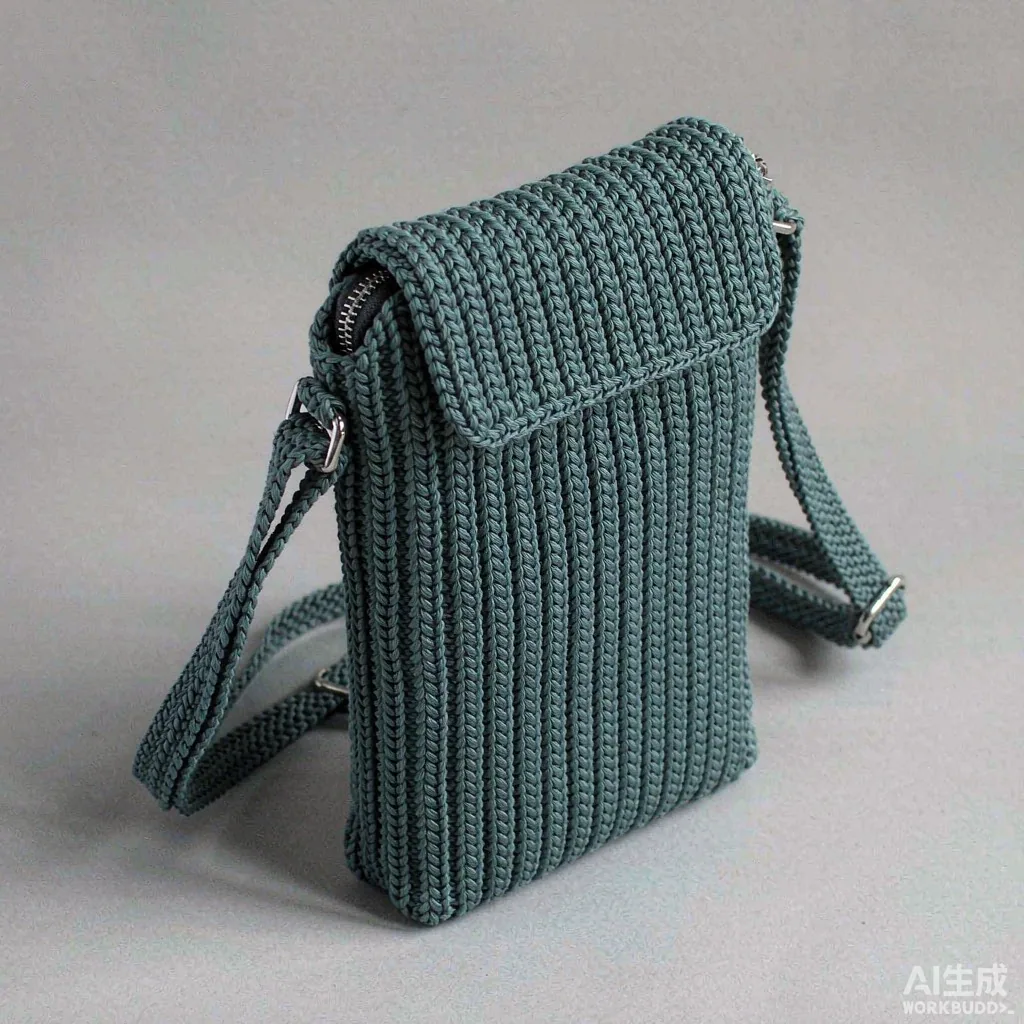
The timing is set by behaviour rather than by convenience. Day one carries confirmation and the care card text, because the owner has the bag in hand and may wash it the same week. Day three carries the first-wash guidance, which is the message that prevents the largest single class of complaint. Day seven is a check-in with the dimensional change figure repeated, so the owner who has washed the bag already has an explanation ready before they look for a fault. Day eleven carries the repair note about snags and pills. Day fourteen asks for a review, by which point a customer who was going to return it usually already has.
Rules for a knit post-purchase sequence
- Send five messages over fourteen days, not one message on day one.
- Repeat the dimensional change figure in the check-in, before the owner measures.
- Put the first-wash guidance on day three, before most owners wash the bag.
- Include the snag repair note; a pulled loop looks alarming and is usually repairable.
- Ask for a review on day fourteen, after the explanation has landed rather than before.
- Keep every message under 120 words; a long care essay is not read in a fortnight window.
Teaching a Retail Team to Explain a Knitted Bag
A retail assistant needs three sentences rather than a training manual: it is knitted in one piece so there is no seam, it is washed at 30 degrees and reshaped damp, and it relaxes about 3% on the first wash and that is normal.
Three sentences is the right amount because that is what survives a busy shift and gets repeated accurately to a shopper. Anything longer becomes a version, and versions diverge within a week. The three chosen here map onto the three questions a shopper actually asks at a fixture: what is special about it, how do I look after it, and will it change. Where a team needs more, the right format is a single laminated card behind the till rather than a training session, because turnover on a shop floor is fast and a card does not need re-delivering. The card should carry the same six rules as the customer card, in the same words, so the two channels never contradict each other.
Content Formats: Card, Video and Page
Three formats carry knit education — a printed card in the bag, a short video linked from the care page, and the care section of the product page — and the card is the only one guaranteed to reach the owner at the moment of need.
Printed care card
Six rules in instruction form, delivered with the product. The only format present at the moment the owner actually needs it, roughly every wash.
Short video
About two minutes, showing the reshape and dry-flat steps. The two steps that most need demonstrating rather than describing.
Care page section
Six lines plus the three expectation figures, linked from the order confirmation and the post-purchase sequence.
Till card for staff
The same six rules in the same words, laminated behind the till. Survives staff turnover in a way a training session does not.
The formats should agree word for word rather than in substance, because a customer who reads 30 degrees on the card and cool wash on the page will conclude that one of them is wrong and will then trust neither. Producing them from one source file is the only reliable way to achieve that, and it costs nothing beyond the discipline of maintaining one file. The video is the one place where extra effort pays: reshaping a damp knit body is a technique, and a two-minute clip communicates it in a way no sentence does. It should be linked from the care card by QR code rather than by a printed URL, because a URL is rarely typed and a code is scanned in the kitchen.
Measuring Whether Education Worked
Two numbers show whether knit education worked: the share of returns coded as a product fault rather than as a change of mind, and the share of returns whose free-text reason mentions washing, shape or size.
Both should fall together, and if only one falls the education has been misdirected. A drop in fault-coded returns with no change in care mentions means the education reached the wrong people; a drop in care mentions with no change in fault codes means the product changed rather than the understanding of it. The measurement needs one discipline to be worth running at all: the reason code has to be captured at the point of return rather than inferred at the warehouse, because an inferred code reflects what the warehouse staff assumed. A weekly count of the two figures against a season baseline is enough, and it tells a brand within about four weeks whether a revised card worked.
Build the education set for a knit range
Send the style count, the markets you sell into and the channels you use after purchase. Our knit team will return a six-rule care card, an expectation-setting block with the tested figures, and a programme plan at MOQ 100 pcs per style and colourway, 7 working days of sampling and 30 days of bulk. Start on the contact page.
Frequently Asked Questions
Why do knitted bags generate complaints that are not defects?
Because a loop structure behaves differently from a woven panel in ways an owner cannot guess: it relaxes on first wash, snags rather than tears, and recovers shape when reshaped damp. Each is a property of the structure, not a fault.
What are the six care rules for a knitted bag?
Wash at 30 degrees, use a mesh bag, reshape while damp, dry flat away from heat, keep the trim away from direct heat, and store empty and open. Each prevents a specific failure, and the reason should be printed beside it.
How much does a knitted bag change on its first wash?
About 3%, which is roughly a centimetre on a 38 cm body. It is invisible in use and obvious to anyone holding a tape measure, so the figure has to be stated before purchase rather than after a complaint.
Is pilling on a knitted bag a defect?
Usually not. Surface pilling in the first weeks is normal on a filament yarn and is superficial; the pills release and the surface settles. Saying so on the card prevents a return that would otherwise be coded as a fault.
Can a snagged loop on a knitted bag be repaired?
Usually yes. A caught loop pulls a run rather than opening a hole, and the run can be worked back along the yarn path from the reverse side with a blunt needle. Explaining this before it happens prevents the most alarming-looking complaint.
How many post-purchase messages should a knit brand send?
Five over fourteen days: confirmation, first-wash guidance on day three, a check-in on day seven repeating the dimensional figure, a snag repair note on day eleven, and a review request on day fourteen.
Why is the care card more important than the product page?
The page is read once at the point of decision, when the shopper is deciding rather than learning. The card is read every time the bag is washed, which is when the information is actually needed.
How should retail staff be trained on a knitted bag?
With three sentences rather than a manual: it is knitted in one piece, wash at 30 degrees and reshape damp, and it relaxes about 3% on the first wash. Longer training becomes a version, and versions diverge within a week.
Should the care card and the care page use the same wording?
Yes, word for word. A customer who reads 30 degrees on one and cool wash on the other concludes that one of them is wrong, and then trusts neither. Produce both from one source file.
Is a care video worth producing for a knit range?
Yes, for the reshape and dry-flat steps specifically. Reshaping a damp knit body is a technique, and a two-minute clip communicates it in a way no sentence does. Link it by QR code from the card.
How do I know whether care education is working?
Track two numbers weekly: the share of returns coded as a product fault, and the share whose free-text reason mentions washing, shape or size. Both should fall together; if only one does, the education reached the wrong people.
Why must return reasons be captured at the point of return?
Because a reason inferred at the warehouse reflects what the warehouse staff assumed rather than what the customer said. An inferred code cannot distinguish a care problem from a genuine fault, which is the whole point of the measurement.
Should the trim be cared for differently from the knit body?
Yes. Webbing, coatings and hardware tolerate less heat than the knit body, so the trim needs its own line on the card. A single set of instructions applied to both will damage the trim before it damages the body.
What figure should a care card quote for durability?
The abrasion result with its method, for example resistance tested to ISO 12947-2 with the cycle figure achieved. A figure without a method cannot be compared and will not be believed by the reader who checks.
People Also Ask
How do you wash a knitted bag?
At 30 degrees on a short cycle inside a mesh bag, then reshape while damp and dry flat away from heat. Expect about 3% dimensional change on the first wash, which is normal.
Why did my knitted bag change shape after washing?
A knitted loop releases part of its knitting tension on first immersion, so the body relaxes slightly. Reshape it while damp and dry it flat, and the panel geometry comes back.
Can you fix a pulled loop on a knitted bag?
Usually. A caught loop pulls a run rather than opening a hole, and the run can be worked back along the yarn path from the reverse side with a blunt needle.
Do knitted bags pill?
Superficially, in the first weeks, and it is normal on a filament yarn surface. The pills release and the surface settles with use, so stating this on the card prevents an unnecessary return.
What should a care card include for a knit product?
Six rules stated as instructions, the dimensional change figure, a snag repair note and a QR code to a short reshaping video. Instructions are followed more often than prohibitions.
Sources and further reading
Every figure on this page is either our own programme data or attributed below. Open the originals before you write them into a specification.
- ISO 6330:2021 — Textiles, domestic washing and drying procedures for textile testingISO The washing procedure behind the dimensional change figure quoted on a knitted bag care card.
- ISO 5077:2007 — Textiles, determination of dimensional change in washing and dryingISO The method behind the about 3% relaxation figure that should be stated before purchase.
- ISO 12947-2:2016 — Textiles, determination of abrasion resistance by the Martindale methodISO The method behind the durability figure quoted on a care card or product page.
- OEKO-TEX STANDARD 100OEKO-TEX Referenced when a care card carries a statement about the safety of the finished textile.
- ISO 139:2005 — Textiles, standard atmospheres for conditioning and testingISO The conditioning standard behind any dimensional figure quoted in customer-facing care content.
Set the Expectation Before It Is Discovered
A dimensional change of about 3% is invisible in use and alarming under a tape measure, and the difference between those two readings is entirely a question of when the customer was told. State the three properties before purchase, repeat them in the fortnight when the return decision is made, and put the six rules on a card that travels with the bag. Most knit complaints are not faults; they are surprises.
For the policy that stands behind the care guidance, see knitted bag care and warranty. For the root-cause view of the returns this prevents, see reducing returns on knitted bags, and for the narrative that frames these properties as advantages, see knitted bag brand storytelling. The cluster overview sits under knit bag brand guide.