Building a Knitted Bag Collection: The SKU Grid, Three Price Ladder Models and the Numbering That Keeps It Stable
What is the right shape for a first knitted bag collection? Treat it as a grid rather than a list: four styles across three sizes is twelve style-and-size combinations, and three shared colourways turns that into thirty-six sellable SKUs. Those three colourways should be shared rather than duplicated per style, because the minimum 100 pcs per colourway applies per style or colourway and nine lots would cost far more than three. Landed values on this grid run about USD 4.80, 6.90, 10.40 and 15.80 across four price rungs, set by gauge E7 to E14 and GSM 240 to 400.
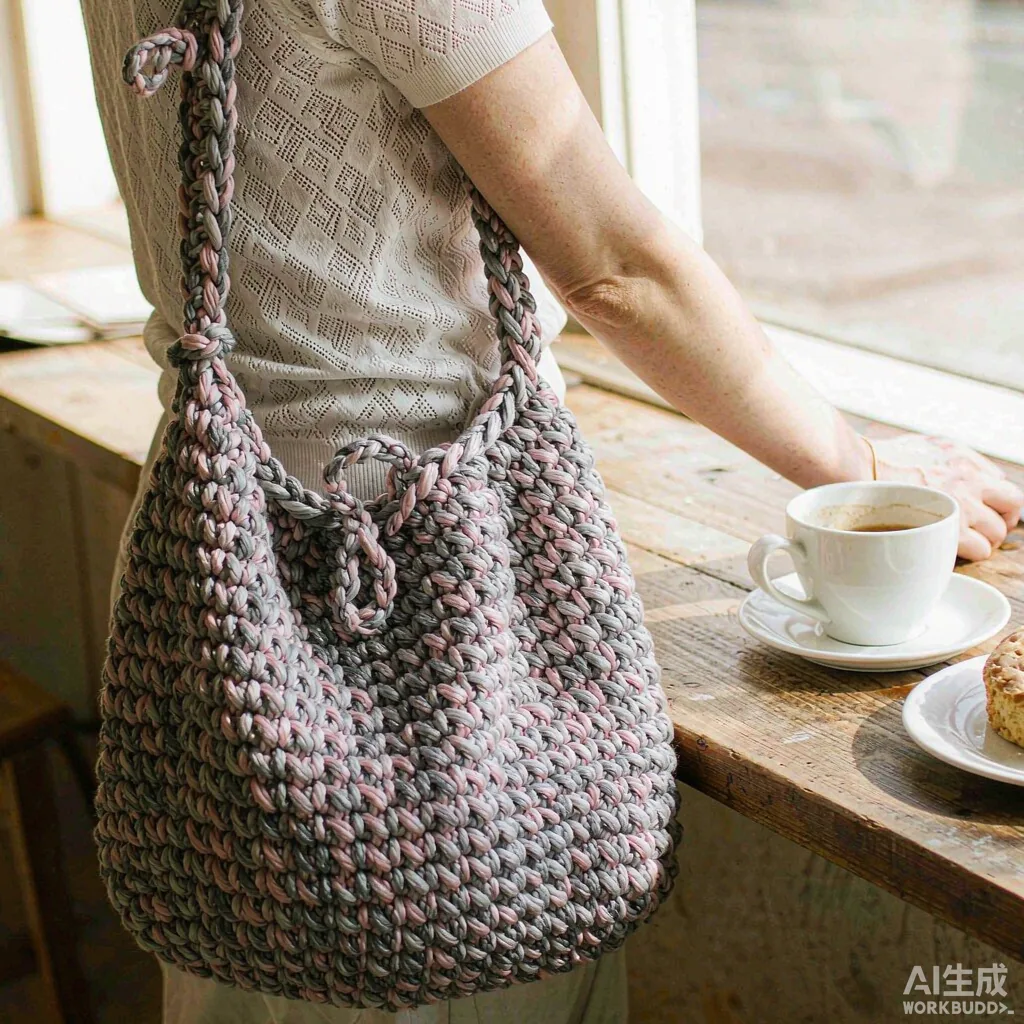
A Collection Is a Grid, Not a List: Styles, Sizes, Colourways
A knitted bag collection is a multiplication problem before it is a design problem: the number of sellable SKUs equals styles multiplied by sizes, then multiplied again by colourways. Four styles at three sizes with three shared colourways gives thirty-six SKUs, and that is roughly the practical ceiling for a first knit range — past forty the administrative load per style begins to exceed the margin each one contributes.
Grids fail in a predictable way. Most first collections are lists: six unrelated shapes, each drawn because someone liked it, each in a slightly different size and its own colour. That approach costs more to sample, more to photograph, more to merchandise, and produces nothing that repeats next season. A grid shares its construction across the family, so each new style reuses patterns the previous one paid for.
The practical way to build it is to fix sizes first, then colourways, then let styles vary. Three formats — a small pouch, a mid tote and a larger carry-all — cover most retail floors, and once those dimensions are locked the same printing file, the same care label layout and the same hangtag can run across every style in the family.
Three Ladder Models Compared: Wide-Shallow, Stepped and Steeple
Once the grid exists, the question becomes how deep to go at each price rung. Three models cover almost everything seen on a in-store fixture, and each one suits a different kind of brand: the wide-shallow ladder for breadth-led gifts, the stepped ladder for a core fashion range, and the steeple ladder for a brand built around one hero piece.
| Variable | Wide-shallow ladder | Stepped ladder | Steeple ladder |
|---|---|---|---|
| Grid shape | 6 styles at 1 size, 2 colourways — 12 SKUs | 4 styles at 2 sizes, 3 colourways — 24 SKUs | 3 styles at 3 sizes, 4 colourways — 36 SKUs |
| Retail rungs | two only, USD 24 and USD 39 | three: USD 29, USD 49, USD 79 | four: USD 34, USD 54, USD 79, USD 96 |
| Landed values | USD 4.80 opening, USD 6.90 at the top | USD 4.80, 6.90 and 10.40 across three rungs | the same three plus USD 15.80 for the hero piece |
| Gauge spread | E12 throughout | E12 with one E14 style | E7 carry-all through to E14 small piece |
| Sampling load | six rounds across two development cycles | four styles in one development cycle | three styles, but the hero needs two extra rounds |
| Fixture behaviour | reads as a wall of colour | reads as a clear price ladder | reads as one hero with supporting pieces |
| Best for | gift, museum and promotional doors | a first own-brand fashion range | a brand that already has a signature shape |
The stepped ladder is the right default for a first own-brand collection. It puts twelve of its twenty-four SKUs above the opening price point, which is where contribution margin actually comes from, while keeping the sampled style count to four. The steeple model earns more per piece but concentrates risk in one hero item, and if that item misses, the whole collection underperforms.
Price Ladder Math: From Landed Cost to Trade to Retail
A knit price ladder is built from the bottom up, not top down: start at landed cost, apply the trade multiple, then check whether the resulting retail figure still reads as credible. The useful screening numbers are a trade multiple of about 2.2 times landed cost and a retail multiple of roughly 2.5 to 2.8 times the trade figure, both of which vary by channel.
- Opening rung
- USD 4.80 landed, about USD 10.60 trade, about USD 27 retail
- Second rung
- USD 6.90 landed, about USD 15.20 trade, about USD 39 retail
- Third rung
- USD 10.40 landed, about USD 22.90 trade, about USD 59 retail
- Hero rung
- USD 15.80 landed, about USD 34.80 trade, about USD 89 retail
- Trade multiple applied
- about 2.2 times landed cost
- Retail multiple applied
- about 2.5 to 2.8 times the trade figure
- Minimum per colourway
- 100 pcs per style or colourway
- Breakeven test applied
- a SKU must clear about 60 pieces per season to keep its slot
Working one line through: a second-rung tote at USD 6.90 landed becomes about USD 15.20 to the trade and roughly USD 39 on the fixture. If a competitive review of the same fixture says that shape will only support USD 32 retail, the decision is not to cut the margin — it is to redesign the piece to USD 5.60 landed, which usually means moving from 320 g/m² to 280 g/m² and from E12 to E7.
Where GSM and Gauge Move Price Inside One Silhouette
Inside a single shape, three variables move cost more than all the rest: finished GSM, gauge, and how much hand finishing the piece needs after knitting. The interesting result is how tightly the durability floor limits how far a brand can go: cutting body GSM from 320 to 240 typically saves about 18% of landed cost, and typically costs about 35% of abrasion life under ISO 12947-2.
Finished GSM
Measured per ISO 3801. Moving 320 g/m² to 280 g/m² is usually invisible; below 240 g/m² on a tote, the base starts to sag when loaded.
Gauge choice
E7 runs coarse and fast at about 9 minutes per body panel; E12 takes longer for finer surface definition; E14 is reserved for small pieces.
Yarn count
A 300D body against a 600D base mixes within one fabric programme. Mixed counts add set-up time but often pay it back in durability.
Post-knit operations
Heat setting, joining and trim cost more than knitting on light pieces. Every additional label, tab or zip adds a manual operation.
Colourway count
Each additional colourway adds machine changeover of about 45 minutes, plus a separate yarn commitment at the 100-piece minimum.
Trim standard
Stock trims ship in days; bespoke trims add development weeks. Standard hardware is the most reliable way to protect a launch date.
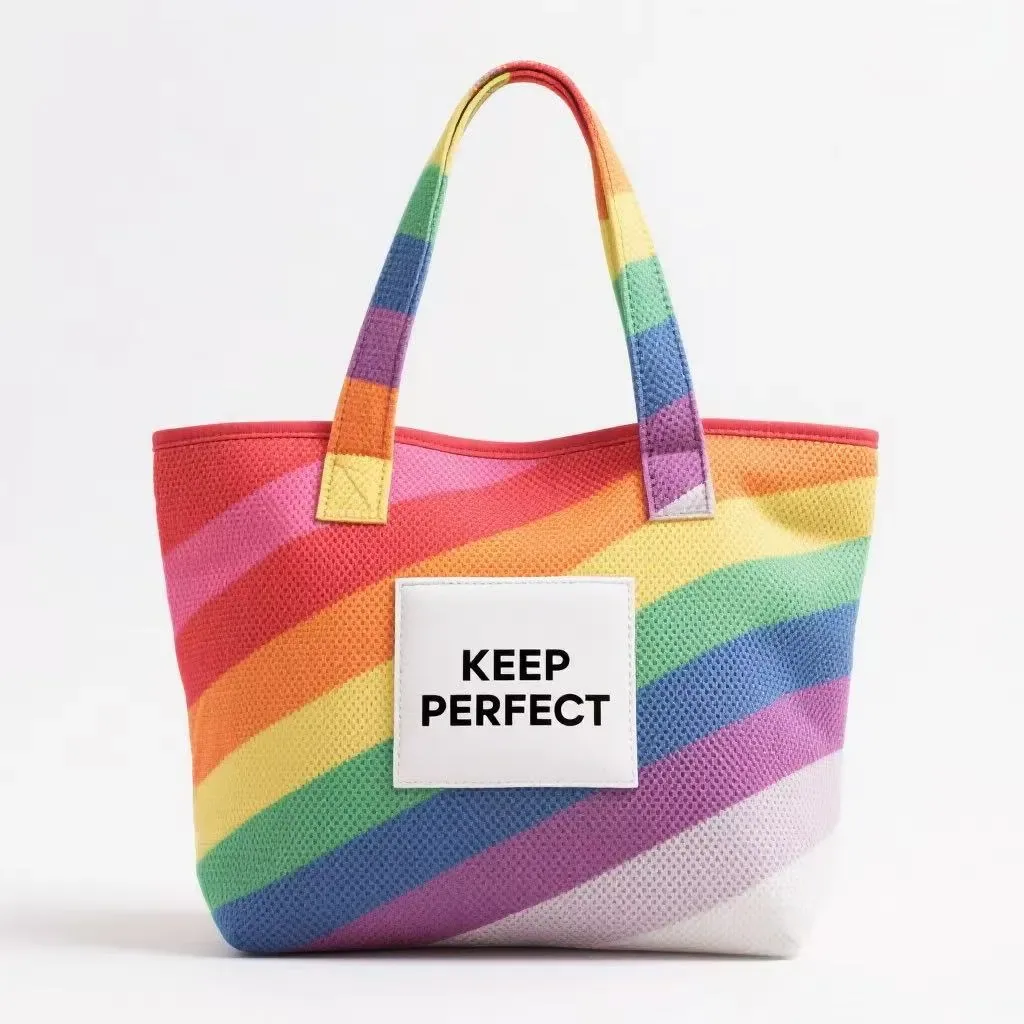
SKU Numbering: A Code That Survives Year Three
The numbering system has to survive three things: a second season, a colour retiral, and a change of range planner. A nine-character code built from a family letter, a style number, a colourway number and a revision digit handles all three without ever having to rename anything the supply chain already knows.
A workable structure is a two-letter family prefix, followed by a two-digit style number, a two-digit colourway number, then a hyphen and a single revision digit — for example "KP-12-04-1" for family KP, style twelve, colourway four, first revision. Sequencing matters more than elegance: the colourway number should always sit immediately after the style number, because that is the field most often changed at reorder. Rules for the shopper-facing name are a separate question and sit alongside this rather than inside it; see the dedicated knitted bag product naming conventions for that side.
Each sellable combination also needs a GS1 barcode once it reaches a scanned till. Allocating GLT-level codes early avoids the situation where a range is approved and then held for three weeks waiting on GTIN assignment, which happens more often than most first-time range planners expect.
How Many SKUs Before the Grid Stops Paying
Every SKU carries a fixed administrative cost regardless of how well it sells: pattern storage, photography, a care-label artwork, a barcode, a planogram slot and a line in the range review. At roughly USD 40 to 60 per style per season in internal handling, a SKU selling fewer than about 60 pieces is consuming more than it contributes.
Signals that a grid has grown too large
- More than 40 SKUs with no single style above about 8% of net sales
- Colourways that exist on one style only, forcing extra lots at the 100-piece minimum
- Two shapes within 2 cm of each other in width and depth — they cannibalise rather than ladder
- Any style whose care-label artwork differs only in text from a sister style
- Replenishment that has to skip a SKU because its orderable quantity rounds below a shipper carton
- Range review time exceeding two days per season per hundred SKUs
The remedy is almost always subtraction rather than addition. Cutting a fourth colourway from every style usually saves more money and more range-planning time than removing a whole style, precisely because colourways multiply against the minimum per colourway while silhouettes multiply only against one development cost.
Care Label and Warranty Copy Inside the Grid
Care labels are part of the grid work, not an afterthought, and they are the most economical place to build credibility. One shared care artwork across a whole family reduces artwork cost, and because every style in the grid is knitted from the same polymer family, one label can legitimately cover all of them.
The wording should be concrete. "Machine wash cold, reshape while damp, dry flat" is a claim a customer can test; "do not machine wash above 30 °C, do not tumble dry, do not iron" backed by ISO 6330 testing is a claim a customer can trust. Warranty copy works the same way: state the period, name what is covered, and name what is not — a twelve-month cover on seams and handles with wear excluded reads stronger than a vague lifetime promise.
Build Order: Which Twelve SKUs Come First
A collection should launch in one wave, not dribble in, but the development order inside that wave matters. Build strongest-selling sizes first, because their learnings set the fit and construction standards every later SKU inherits.
- Sample the hero or core silhouette first, at its highest-selling size, and settle gauge and GSM there
- Approve the three shared colourways against one retained reference sample before any style repeats them
- Sample the second rung second, reusing the approved yarn lots rather than booking fresh ones
- Add the small piece next; it usually needs the least development and fills the opening price point
- Confirm care-label artwork and hangtag layout once, then apply across the whole grid
- Book photography for all twelve SKUs in one studio day, so colour matches across the collection
- Release the full wave against one 30-day bulk window, then measure sell-through before adding SKUs
Assembling a first knit grid?
Send your target retail rungs, channel and fixture width, and the knit programme team will return a SKU grid, landed values per rung with suggested gauge and GSM, and a development order for the first wave. Minimum 100 pcs per style or colourway, 7 working days of sampling, 30 days of bulk, FOB Xiamen. Request a collection grid.
Frequently Asked Questions
How many SKUs should a first knitted bag collection carry?
About twenty-four to thirty-six. A practical grid is four styles at three sizes with three shared colourways, which gives thirty-six sellable combinations. Below twenty-four the range looks thin on a fixture; above forty the administrative cost per style begins to exceed the margin each one contributes, which shows up as range review time rather than as a direct cost line.
What is the right price ladder for a knit bag range?
Three rungs is the standard answer for a first own-brand collection: roughly USD 29, USD 49 and USD 79 retail, built from landed values near USD 4.80, 6.90 and 10.40. Two rungs leaves nothing to trade a customer up to, while four rungs usually means the top one sells so few pieces that it cannot justify keeping its slot.
Should each style in a collection have its own colourways?
No. Sharing three colourways across every style keeps you at three dye lots instead of nine, which matters because the minimum per colourway applies per style or colourway. Shared colourways also let a customer recognise the family across the fixture, which is most of what makes a collection read as a collection rather than as separate products.
Which gauge should a knit collection use?
A spread rather than one setting: E7 for the large structured carry pieces where cycle time and durability matter, E12 for mid-size totes needing surface definition, and E14 for small pieces where fine detail shows. Running one gauge across a whole range is possible but gives up either durability at the large end or detail at the small end.
How much does GSM affect the landed figure?
Substantially, but not linearly. Moving from 320 g/m² to 280 g/m² typically saves roughly 10% of landed cost and is usually invisible to a customer. Going further, to 240 g/m², saves about 18% but usually costs around 35% of abrasion life under ISO 12947-2, and a tote below that begins to sag visibly at the base under load.
What is a reasonable retail multiple for a knit bag?
About 2.5 to 2.8 times the trade figure, on top of a trade multiple of roughly 2.2 times landed cost. Together that puts a USD 6.90 landed tote near USD 39 retail. If the fixture will not support that retail figure, redesign the product down rather than compressing the margin, because a thinned margin cannot be recovered later in the season.
How should SKUs be numbered in a knit range?
Use a family prefix, a two-digit style number, a two-digit colourway number and a revision digit — roughly nine characters in total. The ordering matters: put colourway immediately after style, because that is the field changed most often at reorder. Keeping revision as the final digit means a construction change never requires renaming anything the existing supply chain already recognises.
When should barcodes be assigned to a new collection?
As soon as SKUs are fixed, before samples are approved. Assigning GS1 codes late is a common cause of a three-week delay between range approval and purchase order, because a product cannot go live at a scanned till without one. Allocating them early costs nothing and removes the most avoidable item on the critical path.
How many pieces must a SKU sell to keep its slot?
About sixty pieces per season. Every SKU carries fixed administrative cost regardless of performance — pattern storage, photography, care-label artwork, barcode, planogram slot and range review time — worth roughly USD 40 to 60 per style per season internally. Below sixty pieces that fixed cost exceeds what the SKU contributes, however attractive the design.
Why do collections drift toward too many SKUs?
Because adding a colourway feels like a lower-commitment move than adding a style, and initially it is. But each colourway multiplies against the minimum per colourway and adds about 45 minutes of machine changeover, so fifteen small lots often cost more than four large ones. The correction is nearly always to remove colourways before removing silhouettes.
Can one care label cover a whole knit collection?
Yes, when the whole family uses the same polymer family, which is typical for a knit grid. One shared artwork reduces artwork cost and avoids claims that later prove untrue. The wording should be grounded in actual testing — wash behaviour checked under ISO 6330 and, ideally, dimensional change under ISO 5077 — rather than copied from an unrelated product.
What order should SKUs be developed in?
Strongest-selling size of the core silhouette first, because its gauge and GSM decisions become the standard every later SKU inherits. Then the shared colourways against one retained reference, then the second rung reusing approved yarn lots, then the small piece. Finish with one shared care artwork and one studio day for the whole wave.
People Also Ask
What is a knit bag SKU grid?
The multiplication of styles by sizes by colourways that produces sellable combinations. Four styles at three sizes with three shared colourways gives thirty-six SKUs, which is roughly the practical maximum for a first own-brand collection.
How many colourways does a knit collection need?
Three shared across the whole range. Sharing keeps you at three dye lots rather than one per style, holds each order above the 100-piece minimum and makes the family read coherently across a fixture.
What is a price ladder in retail?
A set of ascending retail price points, each with a product behind it, that gives a customer somewhere to trade up to. For a knit range three rungs usually work best, at about USD 29, USD 49 and USD 79.
What does landed cost mean for a bag programme?
The unit cost including the goods, duty and freight to your receiving point. It is the figure a price ladder should be built from, because comparing offers on an ex-works basis hides the part of the cost you cannot later negotiate away.
Why do most first collections have too many SKUs?
Colourways feel like a low-commitment addition but multiply against the minimum per colourway and add machine changeover time. Twenty spreads thin over fifteen lots usually costs more than four strong silhouettes run in depth.
Sources and further reading
Every figure on this page is either our own programme data or attributed below. Open the originals before you write them into a specification.
- EAN/UPC barcodesGS1 Standard behind the per-SKU barcode allocation every sellable style-size-colourway combination needs before it reaches a scanned till.
- ISO 3801 — Textiles, determination of mass per unit length and mass per unit areaISO The method behind the finished GSM figures quoted for each rung of the price ladder.
- ISO 12947-2:2016 — Textiles, determination of abrasion resistance by the Martindale methodISO The abrasion test referenced when weighing a GSM reduction against the durability floor a collection must not cross.
- ISO 6330:2021 — Textiles, domestic washing and drying procedures for textile testingISO The domestic washing procedure used to substantiate the wording printed on a shared care label.
- Recycled Claim Standard and Global Recycled StandardTextile Exchange Referenced when a collection claims recycled content across its whole yarn programme rather than on one style only.
Reading a Collection Plan
A collection plan is comparable only when three numbers are stated together: total SKU count, landed cost per rung rather than an average, and the number of dye lots the colourway structure implies. Those three decide whether a grid will fit its fixture and its allowance; a per-style unit figure quoted on its own does not.
For how the grid sits on the shelf once it arrives, see knitted bag merchandising and planogram rules. For the knit bag brand guide covering positioning across the whole cluster, see the knit bag brand guide.