Knitted Bag Brand Positioning: Five Claim Tests, Three Viable Positions and the Evidence Each One Demands
Which brand positions can a knitted bag range credibly hold, and which will collapse under scrutiny? Three pass the test — engineered performance, urban minimalism and circular responsibility — and each needs a different evidence file. The honest numbers behind them: about 8% process waste for engineered knit against roughly 18-22% for cut-and-sew panel production, seam counts falling from fourteen to two, and a 210 g knit piece against a 340 g woven equivalent. The retail ceiling sits near USD 96 without metal hardware, above which the construction has to carry visible craft rather than engineering alone.
Q1: Can One Knit Range Hold Two Different Positions?
No — a range that tries to speak two positions at once gets read as neither. Assign exactly one position per knit range and let the second position live in a separate range with separate naming, separate colour discipline and its own fixture block. Mixing them inside one range is the most common cause of a knit collection that sells through slowly despite strong sell-in.
The reason is mechanical rather than philosophical. Each position requires different evidence, different structural choices and different price architecture. An engineered-performance position needs visible zone mapping and tested numbers; a circular-responsibility position needs a single-polymer bill of materials and documented recycled content. Those two pull the same offer in opposite directions on yarn selection alone.
There is a fast test for this. Write the range promise as a single sentence of fifteen words or fewer and read it to two people who did not write it. If they cannot repeat it back immediately, the range is holding two positions and neither will survive contact with a buyer. The same sentence should also survive being read aloud next to the product on a fixture, because that is the only place a customer will ever meet it.
Practically, that means deciding early which of the two candidates becomes the primary claim and which becomes a secondary support for it. A performance range may still use recycled yarn, but the recycled content is supporting evidence rather than the headline. That distinction is what lets one range stay coherent while still carrying more than one true idea.
Q2: Which Claims Does a Knit Structure Actually Substantiate?
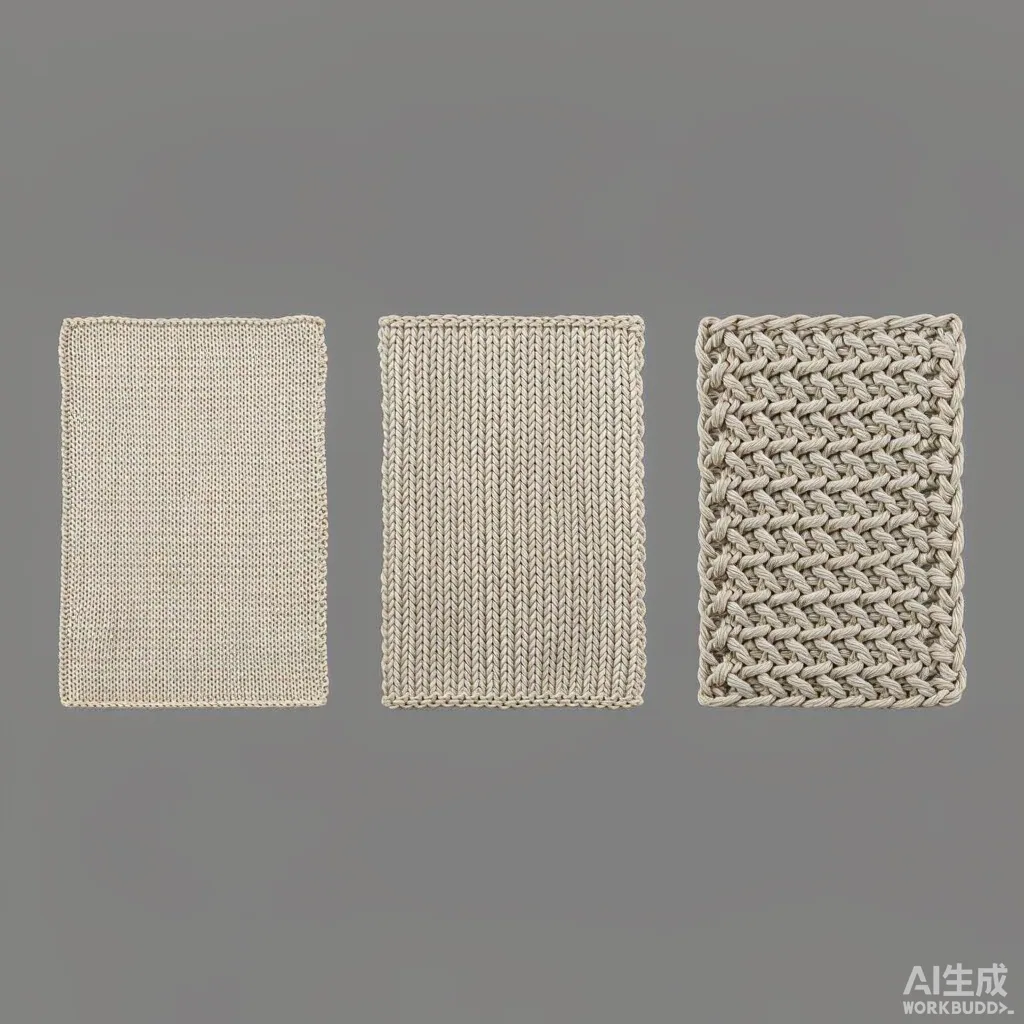
A knit structure substantiates five claims well and one claim badly. It genuinely supports lightweight comfort, seam-count reduction, engineered zone mapping, made-to-order colour at low volume, and reduced process waste. It struggles to support a heritage craft claim, because machine-knitted loop structure reads as technology rather than as handwork.
| Claim | Does knit support it | The figure that decides |
|---|---|---|
| Lightweight comfort | Yes, strongly | 210 g knit piece against about 340 g for a comparable woven build — roughly 38% less |
| Fewer seams, fewer failure points | Yes, strongly | Seam count falls from about 14 to about 2 on a one-piece body |
| Engineered zones in one piece | Yes, strongly | Three to five distinct stitch zones possible within one knitted cycle |
| Made to order colour at low volume | Yes | Colour changes through yarn, so minimum stays at 100 pcs per style or colourway |
| Reduced process waste | Yes, with evidence required | About 8% process waste against 18-22% for cut-and-sew panel cutting |
| Heritage handcraft and gear work | Poorly | Knit reads as technology; craft claims need visible hand finishing to land |
Q3: What Evidence Does Each Claim Require?
A claim without a supporting document is a liability, particularly under the European rules on environmental and social claims now coming into force. The standard expectation is seven documents: a test report per claim, one retained reference sample per colourway, and a written statement tying each marketing sentence to one of them.
- Lightweight claim
- Finished mass per unit area measured under ISO 3801, plus the comparison specification
- Abrasion and durability claim
- ISO 12947-2 Martindale result at the stated pressure
- Strength claim
- ISO 13934-1 strip test on the load-bearing panels and straps
- Colour claim
- ISO 105-X12 rubbing and ISO 105-B02 light fastness results per colourway
- Recycled content claim
- Textile Exchange scope documentation against the Global Recycled Standard
- Substance safety claim
- OEKO-TEX STANDARD 100 coverage for the finished article
- Brochure-to-file traceability
- One retained sample per colourway, signed off and dated before marketing copy is locked
The last item is the one usually missing. Keeping a sealed retained sample per colourway dated before any copy is written means every marketing sentence can be traced to something physical, which is exactly what a regulatory request or a retailer challenge asks for twelve months later.
One practical detail makes the system work: date everything. A test report without a date and a sample without a sign-off cannot be tied to the season in question, and an undated file is treated as no file at all when a retailer asks for proof. Assigning this to one named person before the season starts costs an afternoon and removes the scramble that otherwise happens mid-campaign.
Q4: Where Is the Price Ceiling for an Engineered Knit Bag?
About USD 96 retail without metal hardware, and roughly USD 140 with it. Below those figures the engineering story carries the price; above them the customer expects visibly hand-finished craft, and a knitted panel — however clever the structure — does not read as handmade at that level.
That ceiling moves with one variable: how much visible craft sits alongside the knit. A one-piece knit tote with bound edges and a jacquard-integrated mark sits comfortably near USD 79 to USD 96. Add leather binding, solid-brass hardware and a hand-finished edge coat, and the same shape supports about USD 140 because the hand work is now visible. The engineering claim alone does not bridge the gap.
The ceiling also interacts with channel margin, which is where most mispriced ranges fail. A department door typically wants its own multiple on top of your trade figure, so a knit piece that looks comfortably premium at USD 79 retail may become impossible at USD 120 once the door's requirements are applied. Running the ceiling backwards from the channel rather than forwards from the construction is the safer order of calculation.
Q5: Which Channel Reads Which Position?
Channels reward different positions, and putting one in front of the wrong retailer costs a season. Specialty outdoor reads engineered performance immediately; design-led independent stores read urban minimalism; department stores and museum shops read circular responsibility; promotional and gift channels read none of the three and simply want the number.
Specialty outdoor
Reads engineered performance. Wants zone mapping, tested figures and restrained colour. Runs the numbers before the story.
Design-led independent
Reads urban minimalism. Wants a restrained palette, one strong silhouette and a clear signature detail on the body.
Department store
Reads circular responsibility, and asks for the certification file at the buying meeting rather than after it.
Museum and cultural shop
Reads provenance and responsibility together; wants a short, honest story printed on the hangtag.
Own-brand e-commerce
Reads whichever position is stated most clearly in photography. Consistency of lighting beats words on the page.
Uniform and corporate channel
Reads none of the three. Wants longevity, replacement pricing and a stable colourway that re-orders identically.
Three Positions a Knit Range Can Hold Without Stretching
Three positions survive contact with a buying meeting, and each maps cleanly onto a structural decision rather than just a marketing one. Choosing the position should therefore happen in the same meeting as choosing the gauge, because they are the same decision made twice.
- Engineered performance: coarse E7 body with zoned density, restrained palette, tested figures on the hangtag, proof-driven photography
- Urban minimalism: E12 fine surface, one dominant silhouette, two neutrals and one accent, minimal visible branding on the panel
- Circular responsibility: single-polymer construction wherever possible, recycled content documented, undyed or dope-dyed options leading the range
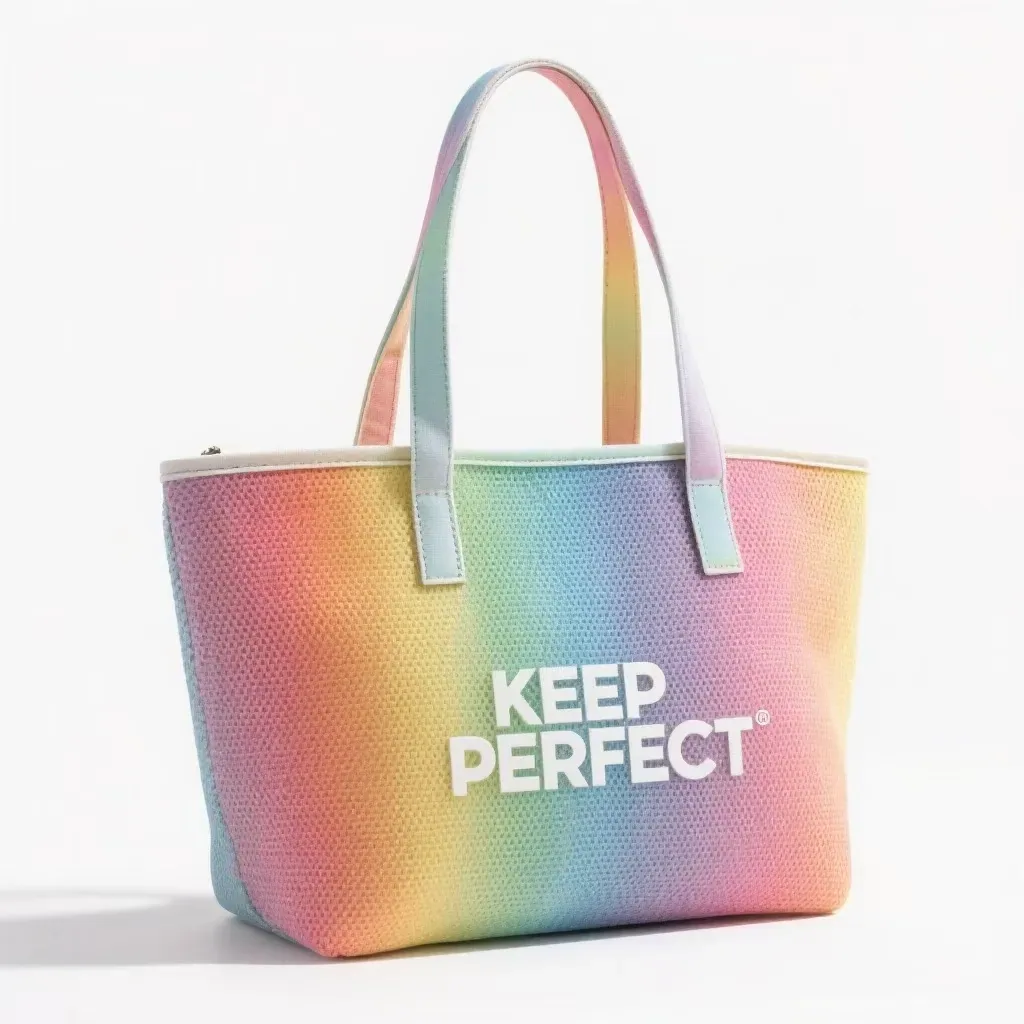
The single-polymer decision deserves a note, because it is structural and irreversible later. Whenever practically possible a circular position should target one polymer family across body, lining and thread, since mixed materials complicate end-of-life processing. Written as a target rather than as a rule, it gives the range planner a real constraint to design inside, and it is far easier to meet at the briefing stage than to retrofit in year two when the range already has history.
Colour, Mark and Trim as Positioning Signals
Positioning is read before it is spoken: the customer decides what kind of brand this is within about three seconds of seeing the piece, largely from colour temperature, mark scale and hardware finish. These three signals should be set together, because they contradict one another very easily.
A performance position wants a cool, desaturated palette, a compact mark placed low on the panel, and matte hardware. A minimalist position wants warm neutrals, either no visible mark or a very small one, and hardware that disappears. A circular position wants undyed or naturally pigmented tones, a mark that reads as information rather than decoration, and recycled-finish metal. Mixing a matte performance palette with brass hardware, for example, sends two different messages from the same fixture.
Three further signals are decided in the same meeting. Mark scale — a mark below about 60 mm on a tote body reads as design-led, while anything above roughly 120 mm reads as promotional. Product naming voice — technical codes reinforce performance, single descriptive words reinforce minimalism. And photography treatment — shadowless, even lighting reinforces technology, while natural shadowed light reinforces material honesty. Setting all five together prevents the most common failure, which is a range where each element is individually well chosen and collectively incoherent.
Positioning Against Cut-and-Sew Without Starting a Spec War
The temptation when positioning knit against cut-and-sew is to fight on every specification at once, which loses the argument even when every number is true. The stronger move is to pick the two specifications where knit genuinely wins and concede the rest openly.
Where knit wins, and where to concede
- Win on seam count: about 14 seams down to about 2 is a structural fact, not a preference
- Win on process waste: roughly 8% against 18-22% for panel-cut construction
- Win on colour change cost: no new tooling, only a yarn lot and a machine changeover
- Concede on tear resistance: woven still leads, and pretending otherwise invites a test you will lose
- Concede on hand-finished detail: visible craft still reads better on cut-and-sew constructions
- Compete on lead time rather than price: 7 working days of sampling and 30 days of bulk
Conceding tear resistance is particularly valuable, because it buys credibility for the three wins. A brand that claims everything is believed about nothing; a brand that names the one thing it loses is usually trusted on the other five.
Renegotiating a Position After Year One
Positions should be reviewed once a year against three diagnostics: which SKU actually carried the sell-through, what customers said in returns and reviews, and whether the retained samples still match what is shipping. If the best-selling piece contradicts the stated position, the position — not the best-seller — is the thing that should move.
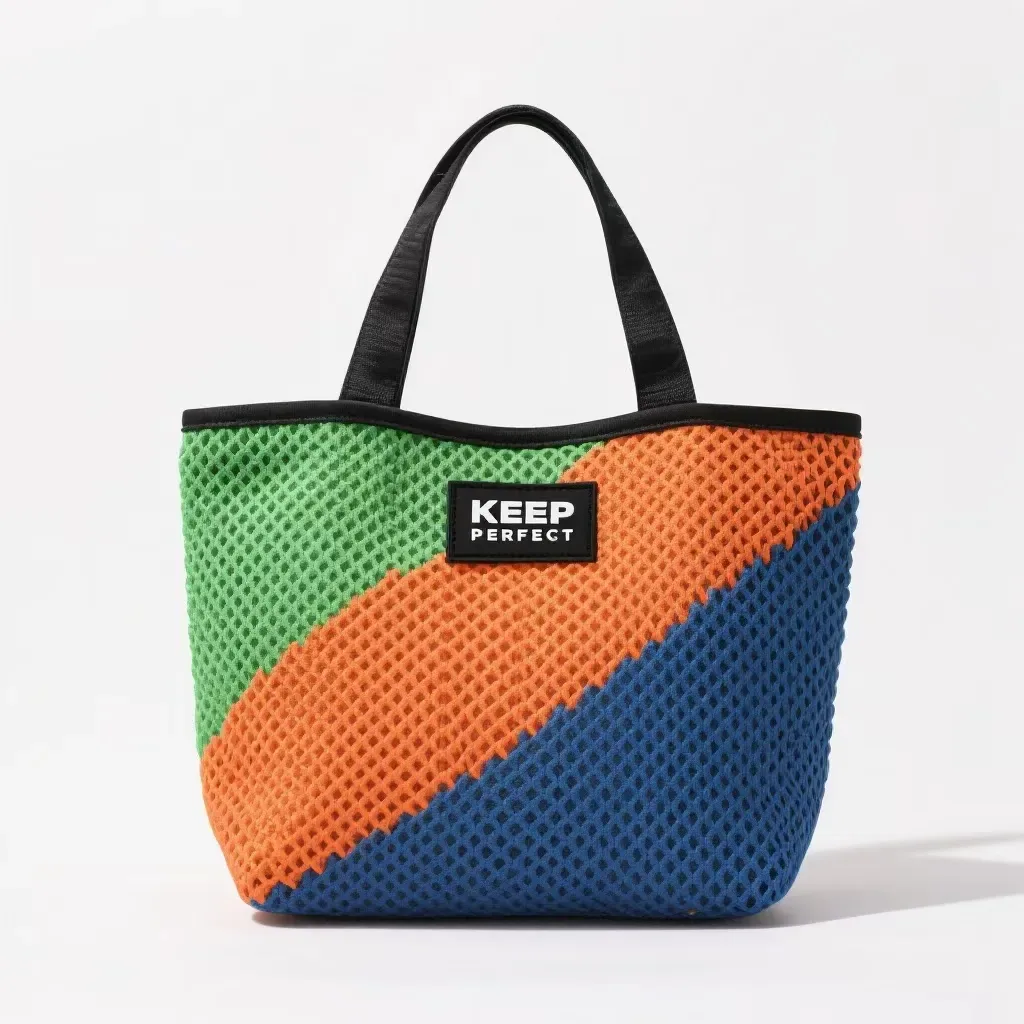
Most adjustments are small. A performance range that sells mostly on colour should shift to a colour-led performance story rather than abandoning performance entirely. A minimalist range that keeps getting asked about recycled content should fold that into the same position with a single secondary claim, rather than launching a competing range that cannibalises the first.
Deciding what your knit range should stand for?
Send your target channel, intended retail band and the two or three claims you want to make, and the knit programme team will return a positioning recommendation, the evidence needed per claim, and structural choices in gauge and GSM to match. Minimum 100 pcs per style or colourway, 7 working days of sampling, 30 days of bulk, FOB Xiamen. Request a positioning review.
Frequently Asked Questions
What is the strongest brand position for a knitted bag range?
Engineered performance, because the evidence is structural and visible. Zone mapping, reduced seam count and lower process waste can all be demonstrated on the product itself, which is more durable than any story told through copy. Minimalism and circular responsibility also work, but they ask more of colour discipline and certification respectively.
Can one brand run two knit positions at the same time?
Yes, but never inside one range. Give the second position a separate range with its own naming system, its own colourway architecture, its own photography treatment and its own block on the fixture. Mixing two positions inside one range usually means neither registers with the buyer, and sell-in succeeds while sell-through quietly stalls for two seasons.
How much process waste does knit actually save?
Engineered knit typically produces about 8% process waste, against roughly 18% to 22% for cut-and-sew panel cutting of a comparable shape. The saving comes from knitting near-net panels rather than cutting them out of a wider marker. Any public figure should be measured on your own patterns before it is printed.
What evidence should back an environmental claim on a knit bag?
A minimum of seven documents: ISO test reports for each physical claim, Textile Exchange scope documentation for recycled content, OEKO-TEX STANDARD 100 coverage for the finished article, and one sealed retained sample per colourway dated before the copy was written. European rules on environmental claims increasingly expect exactly this traceability.
Where is the price ceiling for a knitted bag?
Around USD 96 retail without metal hardware, and about USD 140 with it. Above that level customers expect visible hand finishing, which a knitted panel does not deliver no matter how advanced the structure. Extending the ceiling means adding hand work, not adding engineering claims.
Does knit support a heritage or craft positioning?
Weakly. Knit reads as technology, so a heritage story is difficult to land unless visible hand finishing sits alongside it — bound edges, leather trim, hand-applied hardware. If the position genuinely has to be about craft, plan for that hand work in the specification from the first sample rather than adding it later.
How does colour affect perceived positioning?
Colour temperature and saturation carry the position before any word does. Cool desaturated palettes read as performance, warm neutrals read as minimalism, and undyed or naturally pigmented tones read as environmental responsibility. Choosing hardware finish in isolation from the palette is how well-made ranges end up sending mixed signals.
Which channel suits an engineered knit range best?
Specialty outdoor, which rewards tested figures and restrained colour and usually asks for the numbers during the buying meeting. Design-led independents suit minimalism, department stores suit circular responsibility with certification ready, and the corporate uniform channel suits none of them — it buys longevity and repeatable colour instead.
How often should a brand reposition a knit range?
Once a year, and only against evidence: sell-through by SKU, content of returns and reviews, and whether current shipping pieces still match the retained reference samples. Most reviews produce a small adjustment, such as folding one secondary claim into the same position, rather than abandoning the direction entirely.
What should be conceded when comparing knit with cut-and-sew?
Tear resistance and hand-finished detail, and concede them openly rather than arguing both. Woven constructions still lead on each, and claiming otherwise invites the one test a knit range will lose. Making those two concessions buys credibility for the genuine advantages on seam count, process waste, colour-change economy and overall lead time.
How many stitch zones can one knitted bag carry?
Between three and five within a single continuous cycle is realistic: typically a dense load-bearing base, a softer mid-body, a firmer opening, a padded strap channel and a fine branding panel. Beyond five zones the cycle time and programming load grow faster than the perceived benefit does.
Why do some knit ranges sell in well but sell through badly?
Usually because the buyer read one position and the end customer read another — most often when two positions share one range. Strong sell-in means the commercial story landed; weak sell-through means the product promise did not. Testing statement and product together before launch catches this earlier than post-season analysis does.
People Also Ask
What is brand positioning for a bag range?
The single idea a range stands for in the customer's mind, expressed through structure, colour, mark and price. It should be one idea per range, applied consistently across every touchpoint rather than re-stated in each season's copy.
Does seamless knitting support sustainability claims?
Yes, mainly through reduced process waste of about 8% against 18-22% for cut-and-sew, and through better mono-material potential at end of life. Both need documentation — measured on your own patterns and recorded before any copy is printed — rather than being asserted as a general property of the technique.
How is a marketing claim substantiated?
By tying each sentence to one test report or certificate, then keeping a retained production sample dated before the copy is written. European rules on environmental claims increasingly expect exactly that level of traceability.
Why do brands fail with knit ranges?
Most often by holding two positions in one range, or by claiming tear resistance on par with woven. Both problems are commercial rather than technical, and both are avoidable at the briefing stage.
Can a knit bag reach a premium price point?
Yes, up to about USD 96 retail on engineering alone and roughly USD 140 with visible hand finishing such as leather binding and metal hardware. Beyond that, customers expect craft that a knitted panel does not visually deliver.
Sources and further reading
Every figure on this page is either our own programme data or attributed below. Open the originals before you write them into a specification.
- Directive (EU) 2024/825 on empowering consumers for the green transition through better protection against unfair practicesEuropean Union The European rule governing how environmental claims must be evidenced before they are used in marketing copy.
- Recycled Claim Standard and Global Recycled StandardTextile Exchange Source of the recycled input documentation required to make any recycled content claim on a knitted bag.
- OEKO-TEX STANDARD 100OEKO-TEX Article-level substance testing that supports the safety claim made across a whole positioned range.
- ISO 12947-2:2016 — Textiles, determination of abrasion resistance by the Martindale methodISO Evidence method for the durability figure quoted inside an engineered performance position.
- ISO 13934-1 — Textiles, tensile properties of fabrics, Part 1: maximum force using the strip methodISO Strength evidence cited for load-bearing panels and straps in a performance-leaning range.
Reading a Positioning Decision
A positioning decision is finished when three things are written down: the single claim the range leads with, the document that supports it, and the price band it can credibly occupy. Everything else — colour, naming, photography — follows from those three and should be derived rather than debated again each season.
For how the grid behind the position is built, see building a knitted bag collection. For colour discipline inside one position, see knitted bag colour strategy.