Low MOQ Knitted Bag Programmes: What 100 Pieces Costs, What It Does Not Cover, and When to Size Up
A low MOQ knitted bag programme is available at 100 pcs per style and colourway, and the unit price at that volume sits at the top of the range rather than the bottom. The reason is not the knitting: it is that programming, dye lot, trim booking and compliance testing are fixed costs that do not shrink with quantity. This article sets out what the first 100 pieces actually cost, which of those costs a small run can avoid, and the volume at which sizing up becomes the better decision.
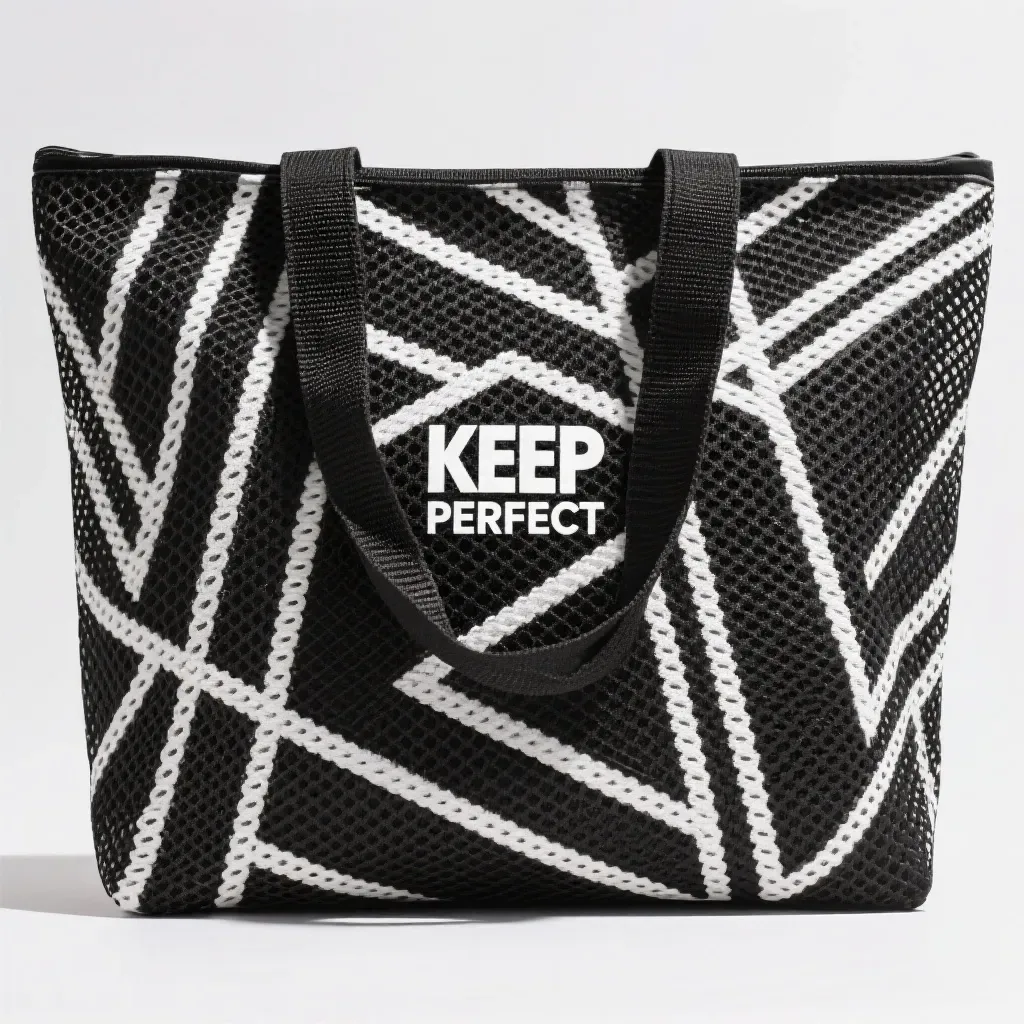
What 100 Pieces Actually Costs
A low MOQ knitted bag programme starts at 100 pcs per style and per colourway, and at that quantity the unit price sits at the top of its range because the fixed costs of the programme are spread across the smallest possible number of pieces.
The figure most buyers expect is wrong in a specific way. They expect a 100-piece price to be perhaps 20% above a 1,000-piece price, because that is how volume pricing behaves in most categories. On a knitted bag programme the difference is larger, and it is larger because the knitting is not the expensive part. Programming the stitch file, booking the yarn, setting up the bed and clearing the compliance screen are all fixed, and at 100 pieces each of them is divided by 100 rather than by 1,000.
Stating the number plainly is more useful than describing the shape. On a standard E12 tote at 320 g/m² in a stock shade, the reference unit cost is USD 4.80 FOB Xiamen. That figure is the one quoted at volume. A 100-piece first run carries the same knitting cost and a larger share of the fixed costs, and the honest way to present it is as an index against the volume figure rather than as a separate price that looks arbitrary.
What that index looks like in practice is worth spelling out, because it is the number a buyer actually needs. On the same tote, a 100-piece run sits at an index of 100, a 500-piece run at about 91 and a 3,000-piece run at about 85. The gap between the first and the second is therefore far larger than the gap between the second and the third, which tells a buyer where the useful decision is: the move from 100 to 500 is worth roughly one and a half times the move from 500 to 3,000, and it is available for a fraction of the inventory commitment.
The Fixed Costs That Do Not Shrink With Quantity
Five costs on a knitted bag programme are fixed rather than variable — stitch programming, yarn dye lot, trim booking, compliance testing and sample making — and together they dominate the unit price below about 500 pieces.
Programming is the clearest example and the one buyers understand least, because it has no physical form. A knitted bag is not cut from a pattern; it is produced from a stitch file that has to be written, tested on the bed and corrected. That work is identical whether the run is 100 pieces or 10,000, and at 100 pieces it is the single largest element of the unit price. The same logic applies to the dye lot at around 300 kg, the label loom minimum near 1,000 pieces and the hardware trim minimum around 500 to 1,000 components.
- Stitch programming
- One-off per style; identical at 100 pieces and at 10,000
- Yarn dye lot
- About 300 kg minimum for a custom shade
- Label loom minimum
- Typically about 1,000 pieces for a custom woven label
- Hardware trim minimum
- Around 500 to 1,000 pieces per component
- Compliance testing
- Charged per material, not per bag; the same at any volume
- Sampling
- 7 working days on the bed, plus the sample cost itself
Where the Unit Price Steps and by How Much
Unit price on a knitted bag programme steps at three bands rather than sliding — 100 to 499 pcs, 500 to 2,999 pcs and 3,000 pcs and above — with roughly 9% between the first and second and a further 6% between the second and third.
The step shape is what makes a small programme worth planning carefully. Because the change is discrete rather than continuous, a run at 480 pieces is priced in the first band and a run at 520 pieces is priced in the second, and the difference is 9% applied to all 520 rather than to the 40 extra. That arithmetic favours sizing up in most cases, provided the extra stock can be distributed — and it is the reason the band boundaries belong in the brief before the quantity is fixed rather than after the quotation arrives.
| Volume band | Unit cost index | Fixed cost treatment | Typical programme |
|---|---|---|---|
| 100 to 499 pcs | 100, the reference band | Programming, dye lot and trim carried in full | Market test, capsule drop, pilot |
| 500 to 2,999 pcs | About 91 | Programming amortised; dye lot still binding | Seasonal range, regional launch |
| 3,000 pcs and above | About 85 | All fixed costs amortised; yarn booked as one lot | National rollout, multi-market programme |
| Repeat run, same style | Below the first-run index | Programming already paid; yarn and trim held | Reorder and replenishment |
| Additional colourway | Adds about 11% at four colourways | Each colourway is a separate yarn set-up | Merchandising-led ranges |
What a Low MOQ Programme Can and Cannot Change
A 100-piece programme can choose the yarn, the gauge, the colour from stock, the dimensions and the knit structure — and it cannot economically choose a custom shade, a custom label or custom-finish hardware.
That boundary is not a policy; it is the arithmetic of the minimums. A custom shade books around 300 kg of yarn, which is several times what 100 pieces consume, so the surplus sits in storage and its cost lands on the run. A custom woven label has a loom minimum near 1,000 pieces and the same problem. Custom-finish hardware has a component minimum around 500 to 1,000. None of these is refused at low volume; all of them are available, and all of them are poor value until the run is large enough to consume what they commit.
- Available at 100 pcs: stock yarn, any gauge, any knit structure, any dimension, stock hardware finish.
- Poor value below about 500 pcs: a custom dyed shade at a 300 kg lot minimum.
- Poor value below about 1,000 pcs: a custom woven label with a loom minimum.
- Poor value below about 500 components: custom-finish hardware on any single component.
- Always available at any volume: a knitted-in logo, since it lives in the stitch file and adds no trim.
The Four Costs That Sit Outside the Unit Price
Four cost lines sit outside the quoted unit price — freight, duty, compliance testing and packaging — and on a 100-piece programme they add roughly 25% to 40% to the landed figure, a wider band than on a large run.
The band is wider at low volume for one reason: compliance testing is charged per material and does not know how many bags there are. One restriction screen costs the same whether it covers 100 pieces or 3,000, so at 100 pieces it is a visible percentage and at 3,000 it is invisible. Freight behaves the same way at the low end, because a small shipment still carries a minimum handling charge and does not fill a container, so the per-piece freight on 100 pieces can be several times the per-piece freight on 3,000.
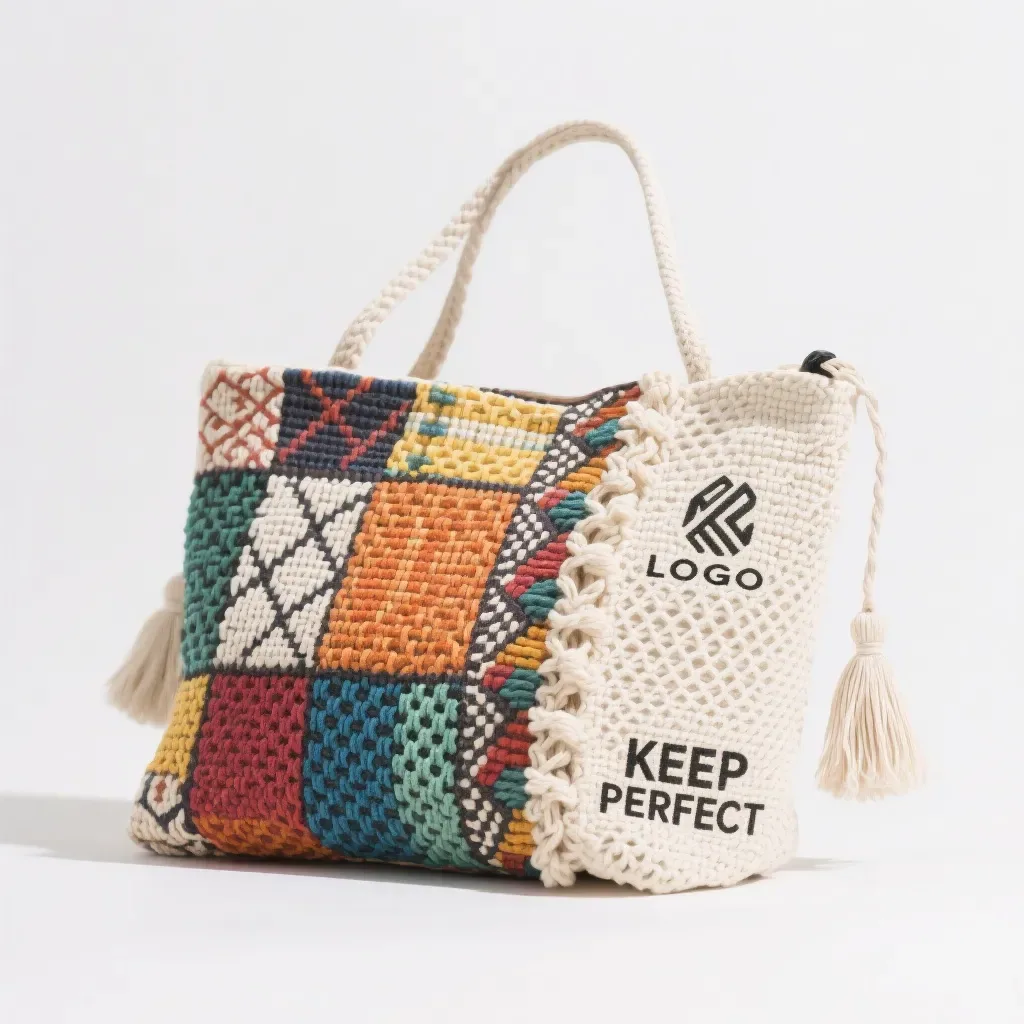
Making 100 Pieces Work: Six Levers
Six levers reduce the cost of a 100-piece knitted bag programme without changing the bag: share the stitch file, take a stock shade, standardise the trim finish, use a knitted-in mark, ship by sea and plan the reorder.
Each lever works on a different fixed cost, which is why they compound rather than overlap. Sharing the stitch file across colourways removes a second programming charge. A stock shade removes the dye lot entirely. A single trim finish consolidates several component bookings into one. A knitted-in mark removes a label and its loom minimum. Sea freight at about 21 days costs a fraction of air at about 5. And planning the reorder from the outset means the second run inherits the programming that the first run paid for, which is the largest single saving available across two programmes.
- Share the stitch file across colourways, so one programming charge covers the whole range.
- Take a stock shade and avoid the 300 kg dye lot and its surplus holding entirely.
- Standardise the trim finish, consolidating several component bookings into one.
- Knit the brand mark in, removing a label and its loom minimum from the programme.
- Ship by sea at about 21 days rather than by air at about 5, unless the date binds.
- Plan the reorder at quotation stage, so the second run inherits what the first paid for.
Share the stitch file
One knitting programme across every colourway, so only the yarn changes. Removes a second programming charge.
Take a stock shade
Avoids the 300 kg dye lot entirely. The single largest saving available on a first run under 500 pieces.
Standardise the trim finish
One finish across every component means one booking instead of several, each with its own minimum.
Knit the mark in
No label, no loom minimum, no second material in the compliance file. Costs programming only.
When Sizing Up Beats Staying Small
Sizing up beats staying small whenever the extra stock can be distributed within about two seasons, because the 9% step between the first and second volume band is applied to the whole run rather than to the additional pieces.
The distribution test is the whole question and it is a commercial one rather than a production one. A bag with no date on it, in a stock shade, in a size that will still be current next year, passes the test easily: the extra 400 pieces become next season's opening inventory and the 9% is free money. A bag carrying a campaign date, a seasonal print or a shade tied to one collection fails the test, because surplus becomes obsolete rather than becoming inventory. Where a programme fails the distribution test, staying at 100 pieces is correct and the fixed-cost share is simply the price of that flexibility.
Repeat Runs: Where the First Programme Pays Back
A repeat run on the same style inherits the stitch programming and draws down held yarn and trim, which is why the second programme prices below the first even at identical volume.
This is the part of the economics that a single-run view misses entirely. A first programme at 100 pieces looks expensive because it carries every fixed cost alone; the same style reordered at 100 pieces six months later carries none of them, because the file exists, the surplus yarn is already booked and the label surplus is in storage. Buyers who plan a two-run programme from the outset and read the combined cost of both runs make different decisions from buyers who read the first run alone, and the difference is usually large enough to change the specification.
Two practical rules follow from that and both cost nothing to apply. The first is to tell the programme team at the quotation stage that a repeat is planned, because it changes which yarn and which trim are proposed: a component that is available as a stock item in two seasons' time is worth more than one that is not, even at the same price today. The second is to hold the surplus deliberately rather than writing it off, since surplus dye lot and surplus labels are the reason a repeat prices below a first run and are therefore assets rather than waste.
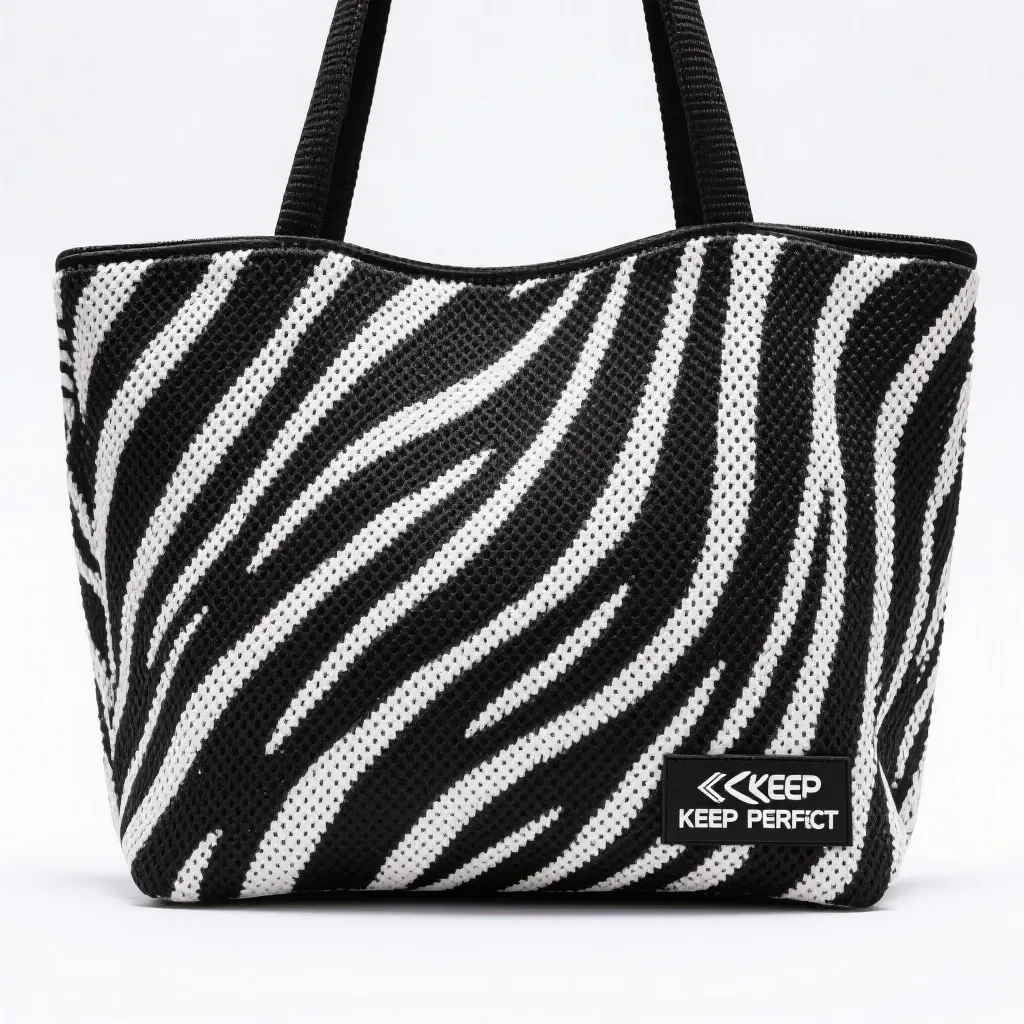
Cost a low MOQ knit programme
Send the style, the volume per size and colourway, and whether a repeat run is planned. Our knit team will return a unit cost index by volume band, the fixed costs your run would carry, a lever plan to reduce them and a quotation on 7 working days of sampling and 30 days of bulk. Start on the contact page.
Frequently Asked Questions
What is the minimum order for a custom knitted bag?
100 pcs per style and per colourway. A two-colourway programme therefore commits 200 pieces, and a three-size range commits 300 pieces before any colourway is counted.
Why is a 100-piece order more expensive per piece than a large one?
Because five costs are fixed rather than variable: stitch programming, the yarn dye lot, trim booking, compliance testing and sampling. At 100 pieces each is divided by 100 instead of by 1,000.
How much does the unit price fall as volume rises?
It steps rather than slides: about 9% between the 100 to 499 band and the 500 to 2,999 band, and a further 6% at 3,000 and above. The steps apply to the whole run, not to the extra pieces.
Can I get a custom colour on a 100-piece order?
Yes, but it is poor value. A custom shade books a dye lot of around 300 kg, which is several times what 100 pieces consume, so the surplus sits in storage and its cost lands on the run.
Can I have a custom woven label on a small run?
Yes, with the same caveat. The label loom minimum is typically around 1,000 pieces, so a small run carries a large surplus. A knitted-in mark avoids the minimum entirely.
What can I change on a 100-piece programme without penalty?
Yarn, gauge, knit structure, dimensions and stock hardware finish. All are choices inside the stitch file or the stock trim range, and none of them carries a separate minimum.
How much do freight and compliance add to a small order?
Roughly 25% to 40% to the landed figure at 100 pieces, against about 18% to 32% on a large run. Compliance is charged per material and freight carries a minimum handling charge.
Is sea freight viable for a 100-piece order?
Yes, and it usually should be. Sea at about 21 days costs a fraction of air at about 5, and on a bulky knitted bag the air differential per piece can exceed the FOB unit cost itself.
Should I order 520 pieces instead of 480?
Usually yes, if the surplus can be distributed within about two seasons. The 9% step applies to all 520 pieces, so the saving is far larger than the cost of the 40 extra bags.
When is staying at 100 pieces the right decision?
When the bag carries a campaign date, a seasonal print or a shade tied to one collection. Surplus then becomes obsolete rather than becoming inventory, and the fixed-cost share is the price of flexibility.
Does a repeat run cost less than a first run?
Yes, at identical volume. The repeat inherits the stitch programming and draws down held yarn and trim, so it carries none of the fixed costs the first run paid for.
How should I read the cost of a two-run programme?
Combined, not per run. A first run at 100 pieces carrying every fixed cost and a repeat drawing down held stock produce a combined figure that is materially better than either run read alone.
Does MOQ apply per size as well as per colourway?
Yes. MOQ is 100 pcs per style and per colourway, and a size variant is a style variant, so a three-size range in one colourway commits 300 pieces.
What is the single largest saving available on a small run?
Taking a stock shade. It removes the 300 kg dye lot and the surplus holding that comes with it, and on a first run under 500 pieces it is worth more than any other lever.
People Also Ask
What is a low MOQ for custom knitted bags?
100 pcs per style and per colourway. That is the smallest programme that clears the knitting set-up, and it is well below what a cut-and-sew bag programme would usually accept.
Why is my small order so expensive per piece?
Fixed costs. Programming, dye lot, trim booking and compliance testing are the same at 100 pieces as at 1,000, so at 100 each one is divided by a much smaller number.
Is it worth ordering more to get a better price?
If the surplus can be sold within about two seasons, yes. The step at 500 pcs is about 9% applied to the entire run, which usually outweighs the cost of the extra stock.
Can I get custom branding on a small knitted bag order?
Yes, and a knitted-in mark is the best route, because it lives in the stitch file and carries no trim minimum. A custom woven label has a loom minimum near 1,000 pieces.
How do I reduce the cost of a 100-piece programme?
Take a stock shade, share the stitch file across colourways, standardise the trim finish, knit the mark in, ship by sea and plan the reorder from the outset.
Sources and further reading
Every figure on this page is either our own programme data or attributed below. Open the originals before you write them into a specification.
- Incoterms rulesInternational Chamber of Commerce Defines FOB, CIF and DDP, the terms under which a landed figure is built from the unit price.
- ISO 2859-1 — Sampling procedures for inspection by attributes, Part 1: AQL-indexed sampling schemesISO Defines the AQL 2.5 release that applies equally to a 100-piece run and a large one.
- Substances restricted under REACH (Annex XVII)ECHA The per-material restriction screen whose fixed cost weighs heaviest on a small run.
- Proposition 65California Office of Environmental Health Hazard Assessment The warning assessment that applies per material and is charged the same at any volume.
- OEKO-TEX STANDARD 100OEKO-TEX One of the fixed compliance costs that a low volume programme carries in full.
- Recycled Claim Standard and Global Recycled StandardTextile Exchange The certification route whose transaction certificate is a fixed cost on recycled yarn programmes.
Read Two Runs, Not One
The economics of a low MOQ knitted bag programme only make sense across two runs. The first carries every fixed cost and looks expensive; the second inherits the file, draws down held yarn and trim, and prices well below it. Buyers who plan both from the outset make better specification decisions than buyers who read the first quotation alone, because the lever that matters most — what to make standard now so that the repeat is inexpensive — is invisible in a single-run view.
For the line-by-line construction of that unit price, see knitted bag cost breakdown. For the variables that move it, see knitted bag pricing factors, and for the volume structure behind the quotation, see custom knit bags.