Custom Knitted Bag Sizing Strategy: A Decision Tree From Capacity to Dimensions to Set Sizes
Sizing a knitted bag starts with capacity in litres, not with a list of dimensions, because a loop structure gives under load and a dimension taken flat is not the dimension the customer experiences. From capacity, seven decisions take a programme to a dimension sheet: what the bag carries, how it is carried, whether it needs one size or a range, how much tolerance a knit body needs, whether the size survives loading, how the sample is verified, and whether the size fits the machine and the freight. This article walks the tree in that order.
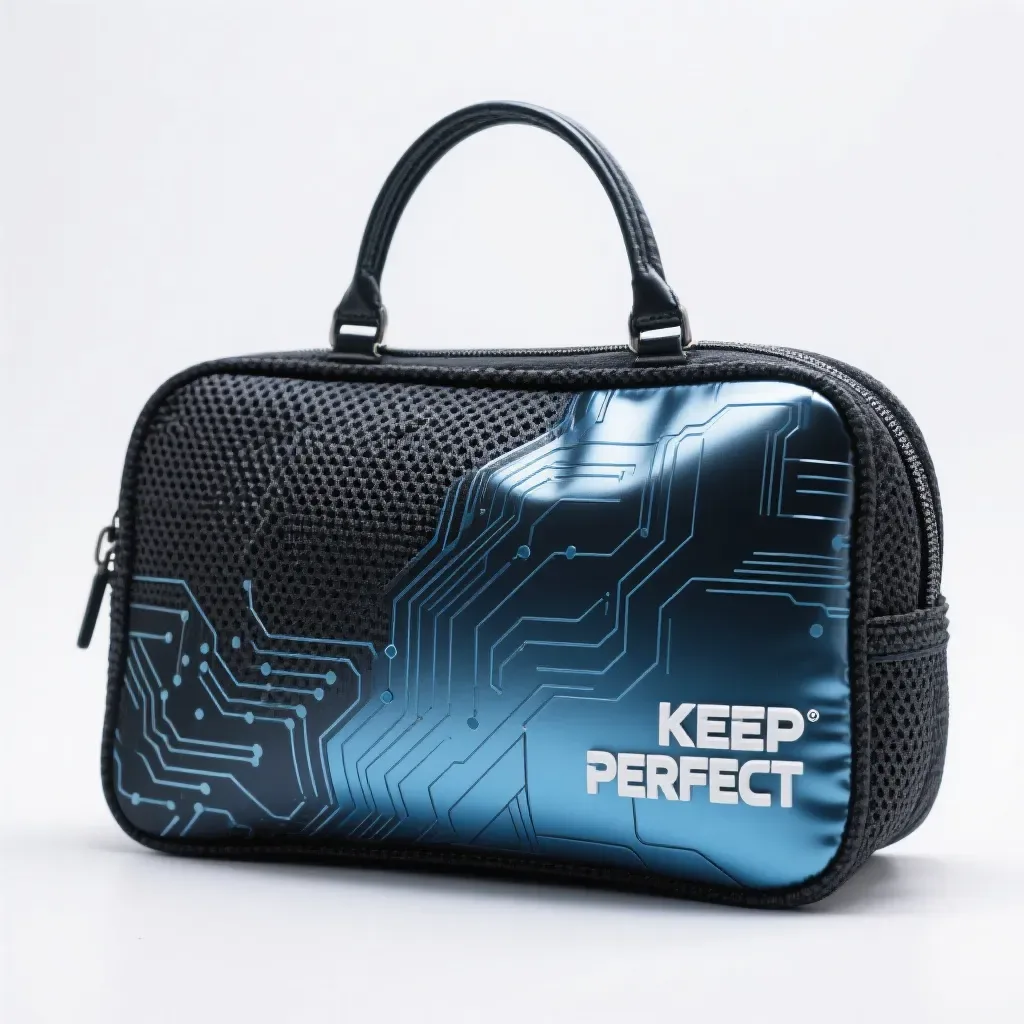
Start With Capacity, Not Dimensions
Capacity in litres is the honest specification for a knitted bag and millimetres are the derived one, because a loop structure gains roughly 3% to 5% in width under load and a dimension sheet cannot express that.
The convention is inherited from cut-and-sew, where a woven panel holds its shape and a dimension sheet is a complete description. On a knitted body the same sheet describes the bag only in the state it was measured in, and the state a bag is measured in is empty and flat. A customer experiences the bag loaded and upright, and those two states differ by more than the tolerance most packs allow. Stating capacity first and deriving dimensions second inverts the usual order and removes the ambiguity at the source.
Decision One: What Is the Bag Carrying?
The load decides the capacity band: about 8 litres for a mini bag, 18 to 22 litres for an everyday tote, 30 litres for a gym or weekender, and 45 litres and above for a duffel.
Capacity follows contents, and contents are more specific than most briefs state. A tote that carries a laptop, a water bottle and a lunch box needs about 18 litres with a flat base; the same tote described as an everyday bag gets specified at 22 litres and ends up too large for its purpose. The useful exercise is to list the three heaviest items the bag is expected to hold and size the base to those, since the base is the dimension that cannot be borrowed from anywhere else — a bag can be taller than necessary without failing, and it cannot be narrower than its contents without failing every day.
- Mini bag and pouch
- About 8 litres; phone, card holder, keys
- Everyday tote
- 18 to 22 litres; laptop up to 14 inch, bottle, lunch
- Gym and weekender
- About 30 litres; shoes, kit, wash bag
- Duffel and travel
- 45 litres and above; packed flat, carried loaded
- Foldable shopper
- About 20 litres; packs to roughly 90 mm by 120 mm
- Beach and large shopper
- 35 litres and above; irregular and often damp contents
Decision Two: Worn on the Shoulder or in the Hand?
A hand-carried tote needs a handle drop of about 220 mm and a shoulder bag needs a strap drop of 250 to 300 mm, and the strap length that produces that drop depends on the body height rather than being a fixed figure.
Drop is the measurement that matters and it is rarely the one specified. Programmes specify strap length, which is meaningless without the body height it is attached to, and then discover on the sample that a 1,000 mm strap on a taller body produces a drop that puts the bag at the wrong point on the hip. The fix is to specify the drop and let the strap length be derived, in the same way capacity is specified and dimensions derived. Where a bag is carried both ways — a tote with a detachable strap — both drops should be stated, because a detachable strap sized for the shoulder does not also work in the hand.
- Hand carry: handle drop about 220 mm, measured from the top edge to the underside of the handle.
- Shoulder carry: strap drop 250 to 300 mm, which usually means an adjustable range rather than a fixed length.
- Crossbody: strap drop 400 to 550 mm, with the bag sitting at the opposite hip.
- Adjustable range: about 600 to 1,200 mm of total strap length covers hand through crossbody.
- Specify the drop and derive the length, not the other way round.
Decision Three: One Size or a Size Range?
A knitted bag range is usually three sizes rather than five, and the split is decided by the capacity step: sizes should differ by at least 5 litres or customers cannot tell them apart on a shelf.
Below that step the range is a costing problem dressed as a merchandising one. Three sizes that differ by 3 litres produce three SKUs, three sets of packaging, three inspection references and a customer who cannot decide and therefore does not buy. Three sizes that differ by 8 litres produce a decision the customer can make in seconds. Where a programme genuinely needs intermediate sizes, the better route is usually two sizes with an adjustable element — a strap, a fold, an expansion gusset — rather than a fourth fixed size.
The split across the sizes is the second half of this decision and it is frequently guessed. A three-size range is not three equal quantities: the middle size carries the majority of the volume and the two outer sizes carry the tails. On a first programme without sales history, a split of roughly 20%, 50% and 30% across small, medium and large is a defensible starting point, and it should be revisited after the first reorder rather than fixed in the opening brief. What should be fixed in the brief is that MOQ applies per style and per size as well as per colourway, so a three-size range commits 300 pieces at minimum before any colour is counted.
| Size | Capacity | Typical body dimensions | Programme note |
|---|---|---|---|
| Small | About 8 litres | Roughly 250 by 200 by 120 mm | Mini bag, pouch, gift size |
| Medium | About 18 litres | Roughly 350 by 380 by 120 mm | The reference everyday tote |
| Large | About 30 litres | Roughly 450 by 400 by 160 mm | Gym, weekender, large shopper |
| Extra large | 45 litres and above | Roughly 550 by 420 by 200 mm | Duffel and travel |
| Foldable | About 20 litres | Packs to roughly 90 by 120 mm | Shopper, event and handout |
Decision Four: How Much Tolerance Does a Knitted Body Need?
A knitted body needs a dimensional tolerance of about plus or minus 10 mm, roughly double what a cut-and-sew specification would allow, because loop formation varies with yarn tension and relaxation time.
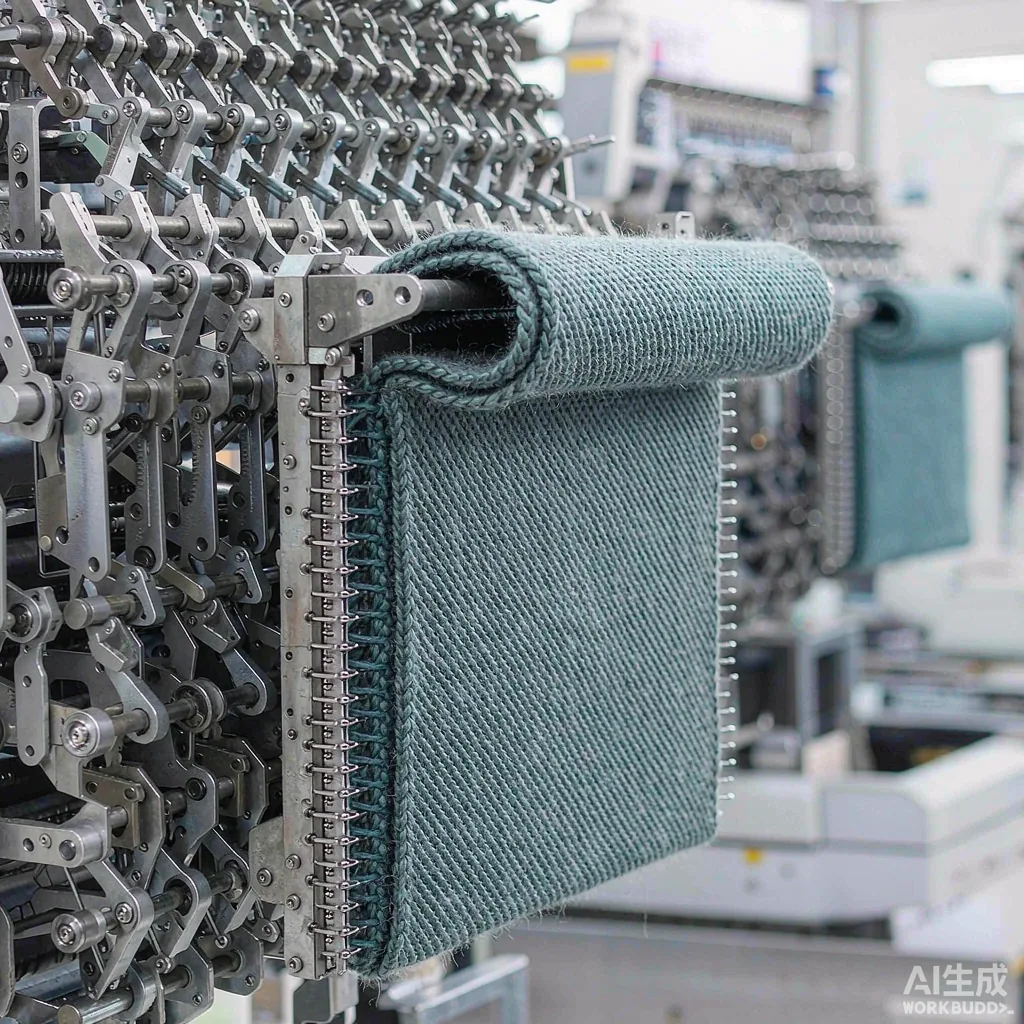
This is the tolerance that inspectors and buyers argue about most, and the argument exists because the number is inherited rather than derived. A woven panel cut to a pattern is accurate to a few millimetres; a knitted panel is formed loop by loop, and the loop size responds to yarn tension, to the humidity in the room and to how long the fabric has been allowed to relax before it is measured. The practical controls are to state the tolerance explicitly, to specify a relaxation period before measurement, and to measure at stated points rather than wherever the tape happens to sit.
Decision Five: Does the Size Have to Survive Loading?
A knitted bag specified at 18 litres should still return to that capacity after being loaded to 5 kg, and the check is a load-and-recover test rather than a single measurement.
Recovery is the property a dimension sheet omits entirely and the one that decides whether a bag looks right after a month. A loop structure that has been stretched and does not return produces a bag that sits lower, holds its opening wider and eventually stops resembling the approved sample. The test is simple and worth specifying: load the bag to its stated working load, hold it for a stated period, unload it, allow it to relax, and measure again. The acceptable change should be written into the pack alongside the tolerance, and around 2% on the principal dimension is a workable figure for a polyester body.
Mini bag, about 8 litres
Working load about 1 kg. Least exposed to recovery failure because it is never heavily loaded.
Everyday tote, about 18 litres
Working load about 5 kg. The size where recovery matters most, because it is loaded daily and often overloaded.
Weekender, about 30 litres
Working load about 8 kg. Base and handle junction are the two dimensions to check after recovery.
Duffel, 45 litres and above
Working load about 12 kg. Packed flat and carried loaded, so width recovery is the governing measurement.
Decision Six: How Is the Size Verified on the Sample?
Size should be verified on the second sample rather than the first, because a knitted body has not finished relaxing when it comes off the bed, and a measurement taken too early reads small.
The relaxation period is the part of the protocol most programmes skip, and it is the reason a first sample is often rejected for being undersized when it is in fact correct. A knitted panel continues to change dimension for a period after knitting, and the change is not trivial at a tolerance of plus or minus 10 mm. The workable protocol is to measure the first sample for reference, allow a stated relaxation period, measure again, and approve against the second figure. Where a programme is on a tight calendar, that relaxation can run in parallel with the internal review rather than after it.
Size verification protocol for a knitted bag sample
- State the capacity first and derive the dimensions from it, not the reverse.
- Measure at stated points, named in the pack, rather than wherever the tape sits.
- Allow a relaxation period before the approval measurement and record both figures.
- Run a load-and-recover check at the stated working load and record the change.
- Measure the handle or strap drop rather than the strap length alone.
- Keep the approved sample as the dimensional reference for the AQL 2.5 inspection.
Decision Seven: Does the Size Fit the Machine and the Freight?
A knitted bag size has to fit two external constraints — the working width of the bed, which sets the maximum panel width, and the freight cube, which sets what a size costs to ship.
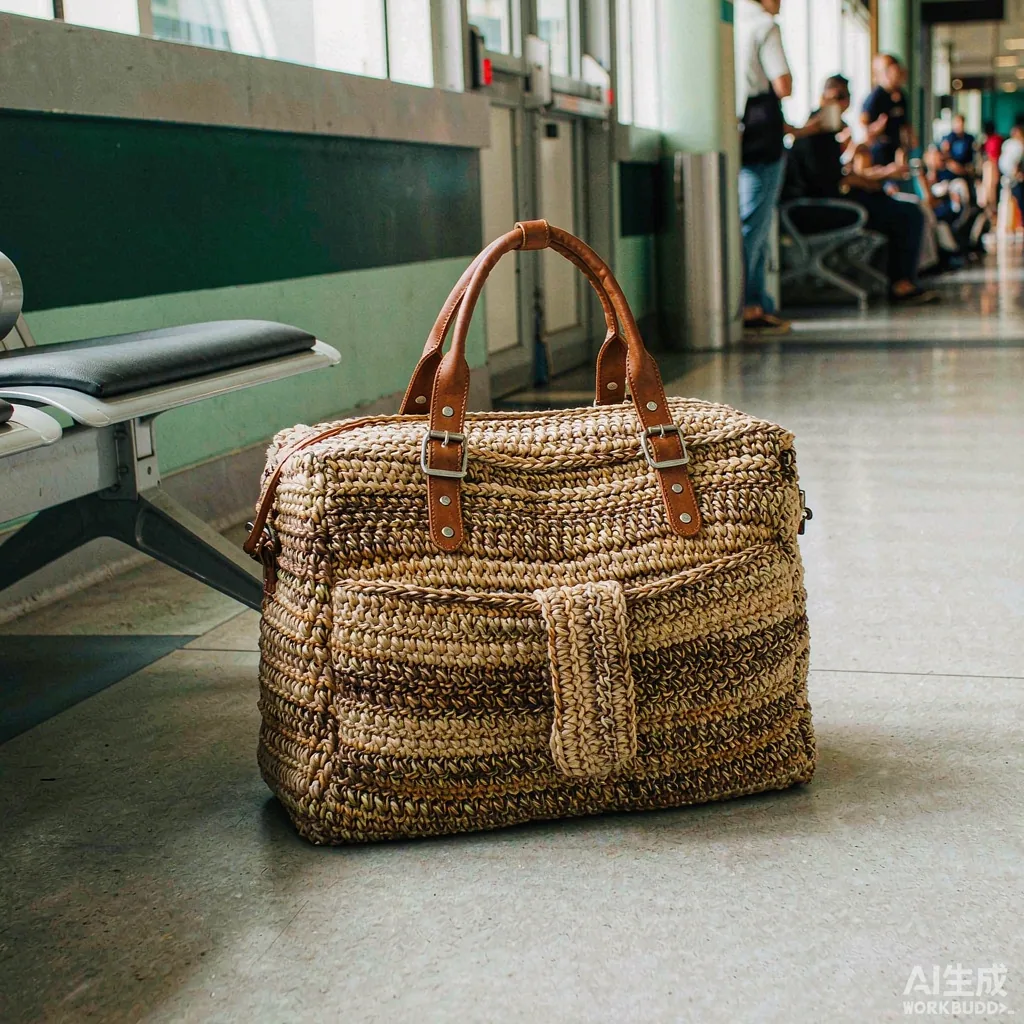
Both are invisible in a dimension sheet and both bind in practice. On the machine side, a panel wider than the working width has to be knitted in two pieces and joined, which introduces a seam into a body that was chosen for being seamless, and the seam is then the weakest line in the bag. On the freight side, a bulky knitted bag is charged on volumetric weight, so a size increase that costs nothing to knit can cost a great deal to ship, and the cost lands in the same way that air freight lands on a promotional programme. The two checks together usually settle the upper bound of a size range before any other consideration does.
The two constraints also interact with the packing method, which is worth deciding at the same time. A bag shipped flat-packed occupies one cube; the same bag shipped stuffed with tissue to hold its shape occupies markedly more, and the difference is paid for on every carton of every order. Where a knitted body is stable enough to travel flat — which it usually is, since a loop structure recovers from compression — flat packing is the default and the stuffing decision should be made per market rather than globally.
Size your knit programme from capacity outward
Send the contents the bag has to carry, how it is worn, and the volume per size and colourway. Our knit team will return a capacity recommendation, a derived dimension sheet with tolerances, a set-size plan and a quotation on MOQ 100 pcs, 7 working days of sampling and 30 days of bulk. Start on the contact page.
Frequently Asked Questions
Should I specify a knitted bag by capacity or by dimensions?
By capacity. A loop structure gains about 3% to 5% in width under load, so a flat dimension sheet describes the bag only in the state it was measured in. State the litres and derive the millimetres.
What capacity should an everyday knitted tote be?
About 18 to 22 litres. Size the base to the three heaviest items the bag is expected to hold, because a bag can be taller than necessary without failing but cannot be narrower than its contents.
What is a handle drop and why does it matter more than strap length?
It is the distance from the top edge of the bag to the underside of the handle, about 220 mm for hand carry. Strap length is meaningless without the body height it attaches to, so specify the drop and derive the length.
What strap drop should a shoulder bag use?
About 250 to 300 mm, which usually means an adjustable strap rather than a fixed one. A crossbody sits at 400 to 550 mm, and a total adjustable range of about 600 to 1,200 mm covers hand through crossbody.
How many sizes should a knitted bag range have?
Usually three. Sizes should differ by at least 5 litres or customers cannot distinguish them on a shelf, and a range that differs by 3 litres creates three SKUs without creating a decision.
What dimensional tolerance does a knitted body need?
About plus or minus 10 mm, roughly double a cut-and-sew allowance. Loop formation responds to yarn tension, humidity and relaxation time, so the tolerance has to be stated rather than inherited.
Why did my first knitted bag sample measure too small?
It probably had not finished relaxing. A knitted panel continues to change dimension after it leaves the bed, and at a tolerance of plus or minus 10 mm that change is not trivial. Approve against a second measurement.
What is a load-and-recover test?
Loading the bag to its stated working load, holding it, unloading it, allowing it to relax, then measuring again. About 2% change on the principal dimension is a workable acceptance figure for a polyester body.
What working load should a knitted tote be tested at?
About 5 kg for an 18-litre everyday tote, about 8 kg for a 30-litre weekender and about 12 kg for a 45-litre duffel. Recovery matters most on the size that is loaded daily.
Can a knitted bag panel be wider than the knitting bed?
Only by knitting it in two pieces and joining them, which puts a seam into a body chosen for being seamless. The working width of the bed is what usually settles the upper bound of a size range.
Does bag size affect freight cost?
Yes, and disproportionately. A bulky knitted bag is charged on volumetric weight, so a size increase that costs nothing to knit can add a great deal to the landed figure.
How small can a foldable knitted shopper pack?
About 90 mm by 120 mm for a 20-litre shopper. Packability is a stated specification on this style, so added weight from a lining or a base board works directly against the proposition.
Should a detachable strap be sized for the shoulder or the hand?
Both drops should be stated, because a strap sized for the shoulder does not also work in the hand. A total adjustable range of about 600 to 1,200 mm covers both.
How should volume be split across a three-size range?
Roughly 20%, 50% and 30% across small, medium and large on a first programme without sales history, then revised after the first reorder. Note that MOQ applies per style and per size as well as per colourway.
Which dimension should be checked after a recovery test?
The base and the handle junction on a weekender, and the width on a duffel, because those are the two lines that carry the load and the two most likely to show a permanent change.
People Also Ask
What size should a custom knitted bag be?
Start with capacity: about 8 litres for a mini bag, 18 to 22 for an everyday tote, 30 for a gym or weekender and 45 and above for a duffel. Derive the dimensions from that figure.
How much bigger should a knitted bag be than its contents?
Size the base to the three heaviest items and allow height beyond that. A bag can be taller than necessary without failing; it cannot be narrower than its contents without failing daily.
Why is my knitted bag a different size than the sample?
Usually relaxation or tolerance. A knit body moves with tension, humidity and time, and needs about plus or minus 10 mm. Measure at stated points after a stated relaxation period.
Do I need more than one size of knitted bag?
Three is usually right, with steps of at least 5 litres. Below that step the range adds SKUs without helping the customer decide. An adjustable strap often beats a fourth fixed size.
Does a bigger knitted bag cost more to ship?
Yes. Freight on a bulky knit is charged on volumetric weight, so a size increase can cost more in freight than in knitting. Check the freight cube before fixing the upper end of a range.
Sources and further reading
Every figure on this page is either our own programme data or attributed below. Open the originals before you write them into a specification.
- ISO 2859-1 — Sampling procedures for inspection by attributes, Part 1: AQL-indexed sampling schemesISO Defines the AQL 2.5 release under which dimensional defects are inspected against the approved sample.
- ISO 13934-1 — Textiles, tensile properties of fabrics, Part 1: maximum force using the strip methodISO Referenced for the strength figures that sit behind a stated working load.
- WHOLEGARMENT knitting technologyShima Seiki The machine family whose working width sets the maximum seamless panel width on a knitted bag.
- Incoterms rulesInternational Chamber of Commerce Defines FOB, CIF and DDP, the terms under which volumetric freight cost is allocated.
- ISO 12947-2 — Textiles, determination of abrasion resistance, Part 2: specimen breakdownISO Referenced for the base abrasion figure on a bag whose size puts load on the base panel.
- EU strategy for sustainable and circular textilesEuropean Commission The policy direction behind durability requirements that a load-and-recover figure supports.
Capacity First, Dimensions Second, Tolerance Always
Every sizing argument on a knitted bag programme traces back to the same inversion: dimensions were specified before capacity, so the bag was described in the one state a customer never experiences. Reversing the order, stating the tolerance that a loop structure actually needs, and verifying after relaxation rather than before, turns a dimension sheet into a specification a factory can inspect and a buyer can rely on.
For the interior an approved size has to hold, see knitted bag interior and lining options. For what a size does to the unit cost, see knitted bag cost breakdown, and for the volume structure behind a size range, see custom knit bags.