Knitted Bag Interior and Lining Options: Linings, Pockets, Dividers and Laptop Panels Answered in Sequence
A knitted bag interior is decided by one question nobody asks first: does this bag need a lining at all. A seamless knit body has no seam to conceal and no raw edge to cover, so the lining is doing a different job than it does in cut-and-sew. Answering that, then the material, then the layout, then the inspection, produces an interior specification in eight steps. This article works through them in that order, with the weight, cost and dimensional figures that decide each one.
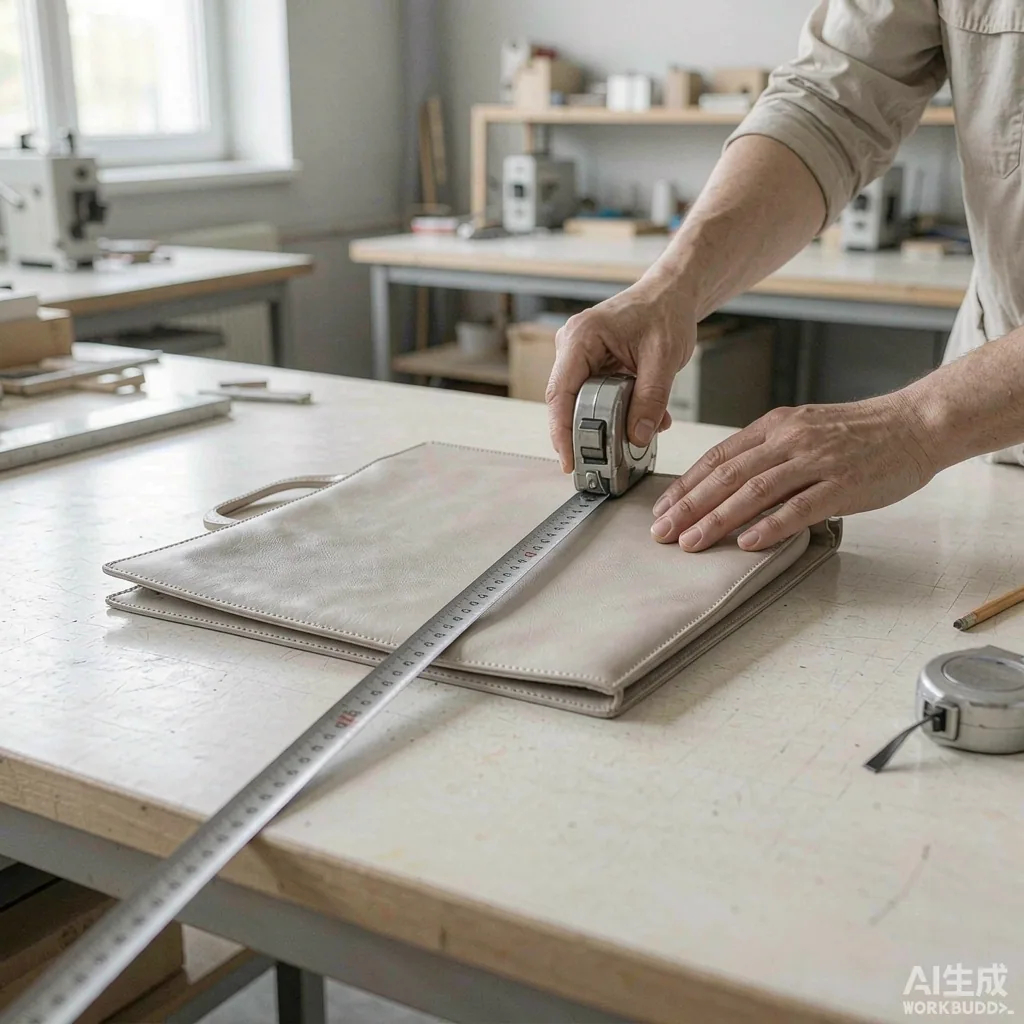
Does a Knitted Bag Need a Lining at All?
A knitted bag needs a lining when it has to hold a shaped object, conceal a reinforcement, or carry a pocket — and it does not need one when the body is seamless, the contents are soft, and the interior surface is already finished.
The default assumption that every bag is lined comes from cut-and-sew, where the lining hides seam allowances, stabilises a floppy shell and covers the back of an embroidery. A knitted body has none of those three problems. It has no seam allowance to hide where it is knitted whole, the loop structure is stable in itself, and a knitted-in mark has no reverse side to cover. So the lining question is functional rather than decorative: what is the bag holding, and does the knitted surface do the job on its own.
Three answers push toward a lining and they are worth naming. The first is a hard or angular object — a laptop, a camera, a lunch box — which abrades the interior and whose shape the knit does not restrain. The second is a pocket, because a pocket needs a second layer to exist and that layer is the lining. The third is a reinforcement, since a stiffener or a base board has to be concealed from the inside. A shopper carrying groceries needs none of the three and is usually better unlined.
What Should a Knitted Bag Lining Be Made Of?
A polyester taffeta lining at 190T to 210T and roughly 90 to 120 g/m² is the reference choice for a knitted bag, because it is dimensionally stable, dries quickly and costs less than the recycled alternatives.
The specification that decides it is shrinkage compatibility rather than appearance. A knitted polyester body relaxes very little in a wash, typically under 1.5%, and a lining that moves more than the body will pull the interior into folds after the first cycle. That is why a lining is specified on its washed shrinkage as well as on its weight, and why a cotton or a viscose lining — both of which move more than polyester — needs a pre-shrink step before it can be used inside a knit. Where a programme wants a recycled lining, recycled polyester taffeta with a documented claim is the compatible choice and a cotton one is not.
- Lining construction
- Polyester taffeta at 190T to 210T, about 90 to 120 g/m²
- Shrinkage compatibility
- Lining movement within about 1.5% of the knitted body
- Abrasion
- About 10,000 Martindale rubs to ISO 12947-2 on the lining face
- Seam strength
- Around 180 N on the lining seam, tested alongside the body seam
- Laptop padding
- About 5 mm of closed-cell foam in a dedicated panel
- Pocket depth
- About 140 mm for a phone pocket, about 180 mm for a bottle pocket
How Much Does a Lining Add to Weight and Cost?
A full lining adds about 60 to 120 g of weight and 12% to 25% to the unit cost of a knitted bag, with the range set by whether the lining carries pockets or is a simple drop-in sleeve.
Both figures are worth having in front of a buyer before the decision, because they are the two that get discovered late. Weight matters on a foldable shopper in a way it does not on a weekender: a shopper sold on packability that gains 120 g has lost part of its proposition. Cost matters everywhere, and the shape of it is step-like rather than linear — a drop-in sleeve is one operation, a lined interior with three pockets and a laptop panel is five, and the difference between them is most of the quoted range.
| Interior specification | Added weight | Added cost | Suitable for |
|---|---|---|---|
| Unlined, integral knit pockets | No added weight | No added cost beyond programming | Shopper, gift bag, beach bag |
| Drop-in lining sleeve | About 60 g | About 12% | Tote, crossbody, mini bag |
| Lining plus two slip pockets | About 85 g | About 17% | Everyday tote, shoulder bag |
| Lining plus padded laptop panel | About 110 g | About 22% | Laptop bag, messenger, work tote |
| Full divider set with base board | About 120 g and above | About 25% and above | Weekender, duffel, structured piece |
What Interior Layout Suits Which Bag Type?
Four interior layouts cover almost every knitted bag type: an open lined body, a body with two slip pockets, a body with a padded device panel, and a divided body with a base board — and the bag type selects the layout rather than the other way round.
Matching layout to use is where interior design either earns its cost or wastes it. A beach bag wants one large open space and a wet pocket, because its contents are irregular and often damp. A work tote wants a device panel and a place for a bottle, because its contents are regular and upright. A weekender wants a base board and a divider, because it is packed flat and carried loaded. A gift bag wants nothing at all. The mistake is specify-by-default: giving every bag three pockets because three pockets appeared on the last one.
Open lined body
One drop-in sleeve, no pockets. Lowest added weight at about 60 g and the fastest to assemble.
Two slip pockets
Phone pocket at about 140 mm depth, bottle pocket at about 180 mm. The everyday default on a tote.
Padded device panel
About 5 mm closed-cell foam, sized to the device with about 10 mm of ease. Adds about 110 g.
Divided body with base board
A concealed base board plus a centre divider. Heaviest interior at about 120 g and above.
How Are Pockets and Dividers Attached to a Knitted Body?
Pockets attach to a knitted body either by being knitted in as integral channels or by being sewn to a lining that is then set into the body — and the second route is the one that holds its shape under load.
An integral knitted pocket is elegant and costs nothing per piece, because it is a stitch-file decision. It also has a specific limitation: it shares the stretch of the body, so a pocket knitted into a panel stretches with that panel, and a bottle in a stretchy pocket sits lower every time the bag is loaded. A pocket sewn into a lining is dimensionally independent, which is why device panels and bottle pockets are almost always lining-mounted. The hybrid that works well is an integral slip pocket for soft items and a lining-mounted pocket for anything with weight or a fixed shape.
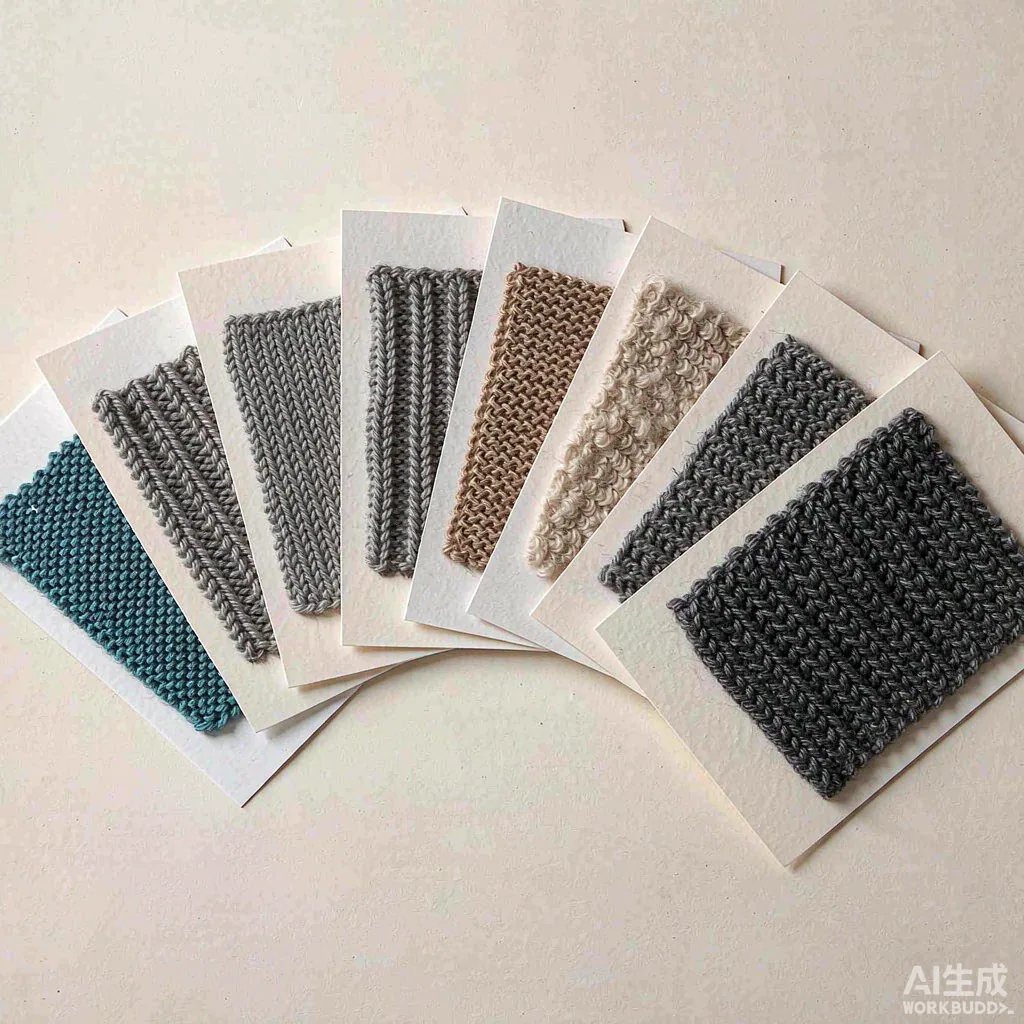
One further layout decision belongs here because it costs less to make early than late: where the interior seam runs. A lining assembled as a closed box and set into the body through the top opening carries one continuous seam; a lining assembled panel by panel carries several, each of which is a place where twist can enter and a place where a defect list has to look. Programmes that specify the box construction usually find both their assembly time and their interior defect rate fall together.
How Is a Laptop Panel Specified Inside a Knitted Bag?
A laptop panel inside a knitted bag is specified on three figures: the device size it accepts with about 10 mm of ease, the padding thickness at about 5 mm of closed-cell foam, and a suspended base that keeps the device off the floor of the bag.
The third figure is the one that prevents the majority of field failures. A panel that is correctly sized and correctly padded can still let a device rest on the bottom seam, and a laptop dropped into a loaded bag puts its corner straight through that point. Suspending the base of the panel about 15 mm above the bottom of the bag costs one extra seam and removes the failure entirely. The panel should also be closed on the side facing the body rather than the side facing the user, so that a device sliding out moves into the bag rather than out of it.
- Size: device diagonal plus about 10 mm of ease on width, depth and height.
- Padding: about 5 mm of closed-cell foam, which recovers after compression unlike open-cell.
- Suspended base: about 15 mm above the bottom seam of the bag.
- Opening direction: toward the body panel, so a device sliding out stays inside.
- Closure: a size 3 coil zip or a hook-and-loop tab, depending on the price point.
Does a Lining Change the Wash and Care Instructions?
A lining changes the care instruction whenever its shrinkage or its finishing differs from the body, and the practical rule is to wash-test the assembled bag rather than either component on its own.
Component testing is what produces the failure. A knitted body and a polyester lining can each pass a dimensional change test separately and still produce a distorted bag together, because the two are joined at seams and a seam constrains the movement of both. The wash test that predicts the field result is run on the finished bag, measured before and after at stated points, with the acceptable dimensional change written into the specification. Where a bag is not intended to be washed at all — a structured piece with a base board, for example — the care instruction should say so plainly rather than inheriting the body's instruction by default.
Foam is the second component that behaves differently inside a finished bag. Closed-cell foam recovers after compression and open-cell foam does not, which matters because a device panel is compressed every working day and a lining is compressed every time the bag is packed. A panel that has lost its thickness after three months is no longer protecting anything, and the loss is invisible from the outside. Specifying closed-cell foam at the outset, and checking the recovered thickness after a compression cycle, is the only way to know that the panel will still be doing its job at the end of the first year.
How Are Interior Defects Inspected at AQL 2.5?
Interior defects are inspected under the same AQL 2.5 plan as the exterior under ISO 2859-1, but only if the defect list names them — and the four that most packs omit are pocket symmetry, lining twist, seam pucker and foam displacement.
An unnamed defect cannot be inspected, and interior defects are unnamed with striking consistency. Lining twist is the clearest example: a lining set into a body with a rotational error of a few degrees produces a bag that stands slightly crooked, which every shopper notices and no defect list catches unless it is written down. The remedy is a one-line addition to the inspection sheet covering each of the four, with a measurable tolerance. That addition costs nothing and is the difference between an interior specification and an interior intention.
The inspection also has to state how the interior is presented, because an interior inspected flat and an interior inspected stuffed are two different objects. A foam panel looks correct flat and shows its displacement only when a device is in it; a pocket looks symmetrical flat and reveals its asymmetry when loaded. Naming the presentation condition alongside the tolerance takes one more line and removes the argument that follows when a buyer and a programme team disagree about whether a defect exists at all.
Specify the interior of your knit programme
Send the bag style, what it has to carry, the device sizes if any, and the volume per colourway. Our knit team will return an interior specification with lining weight, pocket dimensions, panel construction and a quotation on MOQ 100 pcs, 7 working days of sampling and 30 days of bulk. Start on the contact page.
Frequently Asked Questions
Does a knitted bag need a lining?
Only for a function. A seamless knit has no seam to conceal, so the lining is there to carry a pocket, conceal a stiffener or protect against a hard object. A shopper carrying soft contents is usually better unlined.
What is the best lining material for a knitted bag?
Polyester taffeta at 190T to 210T and about 90 to 120 g/m². It is dimensionally stable and compatible with a polyester knit body, which moves less than about 1.5% in a wash.
Can I use a cotton lining inside a knitted bag?
Only after a pre-shrink step. Cotton moves more in a wash than a polyester knit body does, and a lining that shrinks faster than the shell pulls the interior into folds after the first cycle.
How much weight does a lining add?
About 60 g for a drop-in sleeve, about 85 g with two slip pockets, about 110 g with a padded device panel and about 120 g and above with a base board and dividers.
How much does a lining add to the unit cost?
From about 12% for a simple sleeve to about 25% and above for a full divider set. The range is step-like rather than linear, because each pocket is an additional operation.
Should pockets be knitted in or sewn into a lining?
Knit them in for soft items and sew them into the lining for anything with weight or a fixed shape. An integral pocket shares the stretch of the panel, so a bottle sits lower every time the bag is loaded.
How thick should laptop padding be?
About 5 mm of closed-cell foam, which recovers after compression unlike open-cell foam. The panel should be sized to the device plus about 10 mm of ease on all three dimensions.
Why should a laptop panel have a suspended base?
Because a device dropped into a loaded bag puts its corner straight through the bottom seam. Suspending the panel about 15 mm above that seam costs one extra seam and removes the failure.
Which way should a laptop pocket open?
Toward the body panel rather than toward the user, so that a device sliding out of the pocket moves into the bag rather than out of it.
Does a lining change the care instruction?
It can, whenever the lining shrinkage or finishing differs from the body. The reliable check is a wash test on the assembled bag, since component tests miss the constraint the seams impose on both layers.
What interior defects should be in the inspection list?
Pocket symmetry, lining twist, seam pucker and foam displacement, in addition to the usual appearance checks. A defect that is not named in the AQL 2.5 list cannot be inspected.
What is lining twist and why does it matter?
It is a rotational error when the lining is set into the body, producing a bag that stands slightly crooked. Every shopper notices it and almost no defect list names it unless it is written in deliberately.
How deep should an interior pocket be?
About 140 mm for a phone pocket and about 180 mm for a bottle pocket. Deeper than that and the contents disappear into the bottom of the bag; shallower and they fall out when it is tilted.
Can a knitted bag interior be made without any sewn parts?
Yes, and it is worth considering. Integral knitted channels and pockets cost nothing per piece because they live in the stitch file, and they suit soft contents well even though they share the stretch of the panel.
People Also Ask
Do knitted bags come with a lining?
They can, but a seamless knit does not need one by default. A lining is added to carry pockets, conceal a stiffener or protect against a hard object, and it adds about 12% to 25% to the unit cost.
What is the lightest interior option for a knitted bag?
Integral knitted pockets with no lining at all, which add no weight and no cost beyond programming. The next lightest is a drop-in taffeta sleeve at about 60 g.
How do I stop a lining from puckering after washing?
Match the shrinkage. Specify a lining that moves within about 1.5% of the knitted body, and wash-test the assembled bag rather than each component separately.
Can a knitted bag carry a 16-inch laptop?
Yes, with a lining-mounted panel holding about 5 mm of closed-cell foam and a suspended base about 15 mm above the bottom seam. Specify the device size plus about 10 mm of ease.
Are interior defects covered by AQL 2.5 inspection?
Only if the defect list names them. Add pocket symmetry, lining twist, seam pucker and foam displacement to the list, each with a measurable tolerance.
Sources and further reading
Every figure on this page is either our own programme data or attributed below. Open the originals before you write them into a specification.
- ISO 12947-2 — Textiles, determination of abrasion resistance, Part 2: specimen breakdownISO The abrasion method behind the 10,000-rub figure specified for a lining face.
- ISO 2859-1 — Sampling procedures for inspection by attributes, Part 1: AQL-indexed sampling schemesISO Defines the AQL 2.5 release under which interior defects are inspected.
- ISO 13934-1 — Textiles, tensile properties of fabrics, Part 1: maximum force using the strip methodISO Referenced for the body and seam strength figures used alongside the interior specification.
- OEKO-TEX STANDARD 100OEKO-TEX Applies to the lining as a component of the finished bag, alongside the knitted body.
- Recycled Claim Standard and Global Recycled StandardTextile Exchange The chain-of-custody route for a recycled polyester lining with a documented claim.
- AATCC test methodsAATCC Home of the laundering methods used to measure dimensional change on an assembled bag.
Answer the Lining Question Before the Layout Question
Interiors go wrong in a predictable order: the lining is specified before anyone asks whether it is needed, the pockets are copied from a previous bag, and the device panel is sized by the marketing name of the device rather than by its dimensions. Reversing that order — function, material, layout, inspection — produces an interior that costs what it should and fails where nothing fails.
For the dimensions that an interior has to fit, see custom knitted bag sizing strategy. For the trim that closes and adjusts an interior, see custom knitted bag hardware options, and for the volume commitment behind the quotation, see custom knit bags.