Knitted Bags for Retail Campaigns: Specifying a Six-Week Window Without Markdown Risk
A European lifestyle chain wanted 5,000 knitted bags for a six-week gift promotion and briefed the artwork first. The specification came second, which is why the first sample failed: the handle root tore at the root seam under a 3 kg gift set and the base corners curled after two days on a shop floor. The answer is to size the bag to the gift set rather than to the artwork: 12 L of capacity, a 310 g body, a 180 by 200 mm mark area, and a marked fact date held against the goods-in calendar.

The Campaign Brief That Put Artwork Before Duty Cycle
The buyer in question had a finished visual identity and a launch date, and treated the bag as a canvas rather than as a load-bearing object. First samples looked excellent flat on a table and failed in the shop: a gift-set box plus two bottles plus a catalogue comes to roughly 3 kg, well past the point where handle geometry stops forgiving shortcuts. Nothing about the artwork was wrong. What was missing was a duty statement, which is the sentence that should precede any seasonal brief.
The fix took one round of sampling and no extra calendar time, because the failure appeared early. Handle root reinforcement and a widened base panel turned a bag that survived one carry into one that survived the campaign. The lesson to carry into any promotional programme is short: write down what goes inside the bag before deciding what goes on the outside of it, and let the two decisions happen in that order.
What a Gift-With-Purchase Bag Has to Survive
A campaign bag lives a short, hard life. It is handed over once, carried home at full load, then used for a few weeks before being replaced, and during that window pictures of it circulate far beyond the store. That means the failure cost is not the unit - it is the damage to how the promotion reads. The specification target is therefore about first impression and about surviving the walk home, rather than about multi-year durability.
Three numbers define that life: capacity in litres, load in kilograms, and the number of carries before it is set down. A gift-with-purchase tote typically holds 12 L, carries about 3 kg, and gets four to six carries in the first week. Everything else - handle width, base stiffening, whether a lining is worth the cost - follows from those three numbers, which is why they belong in the first line of the brief rather than inferred later.
Capacity and Load: The First Two Lines of the Brief
Capacity should be derived from what the promotion puts inside, not from a shape liked in a mood board. A boxed skincare set, two bottles and a catalogue occupy roughly 11 L, so a 12 L body at about 45 by 32 by 12 cm leaves just enough headroom without looking oversized on a counter. Oversizing is a common and expensive mistake: a bag that looks generous empty looks sagging when loaded, and sagging reads as poor quality in photographs.
Load then sets the structure. Three kilograms on two handles is comfortably handled by a 600D recycled polyester body at about 380 g per square metre with a tucked band at the handle root, and it would be handled poorly by the same body with the handles simply knitted in at the panel edge. Empty mass sits near 310 g at that construction, which matters because every gram is also freight across 5,000 pieces.
Where Campaign Bags Actually Fail: Handle Root and Base Corners
Return data from gift-with-purchase programmes concentrates in two places, and neither is the printed area. Roughly seven in ten structural complaints trace to the handle root, where the strap meets the body, and most of the remainder to base corners that curl because nothing holds them square. Abrasion is measured to ISO 12947-2 on the Martindale apparatus, and a handle-root zone specified at about 15,000 rubs holds up over a campaign-length life in a way that an unspecified root does not.
Both are solved by zoning rather than by upgrading everything. Reinforcing the root band adds around 12 g; moving the entire body to a heavier yarn count adds about 190 g and more unit cost. For promotional use the zoned approach is nearly always correct, because the campaign spend is better directed at first impression than at twenty-year durability. Ask for the root to be reinforced during the strap run rather than joined afterwards, and have it verified to ISO 13934-1 on the root strip.
| Specification line | Gift-with-purchase tote | Why that number | Cost signal |
|---|---|---|---|
| Capacity | 12 L, about 45 x 32 x 12 cm | fits a boxed set, two bottles and a catalogue | baseline |
| Load | about 3 kg carried home | sets handle width and root reinforcement | low for this line |
| Body | 600D recycled polyester, 380 g/m2 | enough bulk next to nothing at 12 L | baseline |
| Handle root | tucked band, 15,000 rubs to ISO 12947-2 | the dominant failure point in returns | about 12 g added |
| Base corners | zoned densification, no insert needed | keeps corners from curling on the shelf | no added process at the knitting stage |
| Lining | none for gift sets, hang tag plus care label | nothing inside abrades or spills | removed cost line |
| Empty mass | about 310 g | multiplies across freight on 5,000 pcs | freight-sensitive line |
To Line or Not to Line: Where the Line Sits for Gift Sets
Lining is the largest removable cost line in most promotional bags, and for a gift promotion it is usually removable. A boxed skincare set, a catalogue and a sealed sample each arrive wrapped, so nothing inside the bag abrades or spills; a smooth knitted interior is therefore more than adequate. Spend the money on the handle root and on hand feel instead, because those are what a customer notices in the first ten seconds of ownership.
The exceptions are specific and easy to list. A promotion that includes loose glass bottles wants a base divider rather than a full lining. A promotion involving anything damp - swimwear, beach sets, chilled goods - wants a wipe-clean liner in the base panel only. Anything involving a bottle situation is about structural division, not about covering the whole interior, and compartmented zones can be knitted into the structure rather than sewn in later.
Brand Exposure: Knitted Mark, Woven Label, or Applied Print
Three routes put a campaign identity onto a knit body, and they behave quite differently. A knitted jacquard mark carries the identity inside the structure, so it cannot crack, peel or rub off, and it reads as more considered than an applied logo. An applied print gives unlimited colour and photographic fidelity at a modest unit addition, but adds a process step. A woven label is the lowest-commitment route and suits small marks placed at a seam or handle end.
Knitted jacquard for heritage identities
A 180 x 200 mm front-panel mark carries most brand blocks and survives abrasion because the colour sits in the yarn rather than on top of it.
Applied print for campaign artwork
Best when the visual identity is photographic or changes each season, but it adds a pass and its own colour-fastness evidence under AATCC 61.
Woven label for minimal disclosure
A 45 mm label at the side seam or handle end suits contemporary marks and keeps the body clean for resale into other channels.
Tone-on-tone for discreet campaigns
Same yarn, different stitch direction: visible in movement and photographs, invisible in poor light, which some fashion campaigns prefer.
The Colourway Roll-Up Against a Six-Week Window
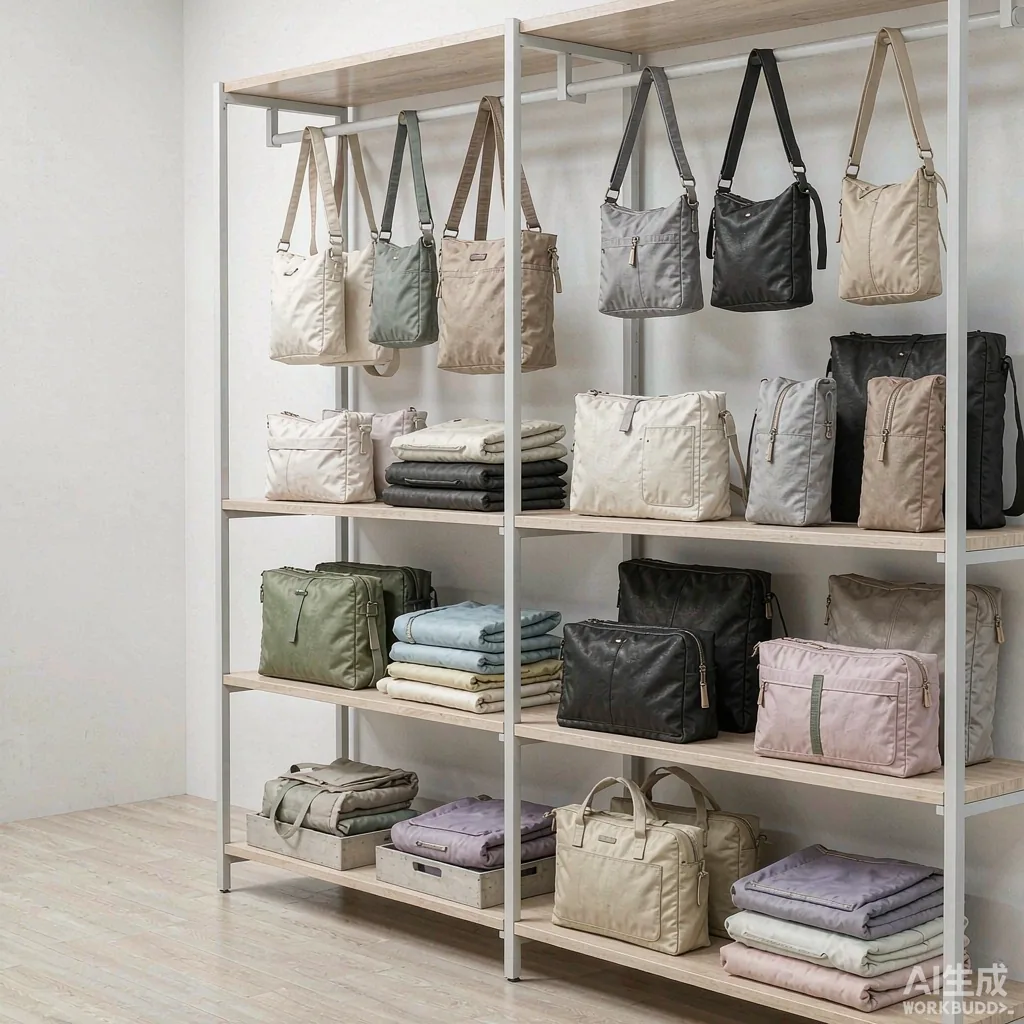
Campaign calendars and flexible seasonality rarely agree, so plan the colourway matrix against the calendar first. Three colourways at the minimum of 100 pcs per style and colourway let a 5,000-piece order split by forecast without forcing a single-shade compromise, and additional shades added later reuse the validated base structure. Because sampling takes 7 working days and bulk takes 30 days, goods are alongside roughly ten weeks after a brief is frozen, which is earlier than most visual merchandising calendars expect.
Two tactics reduce risk inside a fixed window. First, hold the base body neutral and vary only the accent yarn, so a second-wave reprint can go ahead without a new approval cycle. Second, reserve a reprint window in week four of the campaign: with a 100-piece reorder floor and a 30-day run, a reorder decided in week one can physically arrive before the promotion closes, but only if the ordering is open before it starts.
Carton, Shelf and Handover Format
Promotional volume lives or dies on how quickly store staff can get pieces onto the sales floor. Bags nested flat rather than folded with creases avoid the hour spent steaming before opening, and a polybag-per-piece decision should be made against how the goods are handed over at the counter. Because the packing format has real cost and labour consequences downstream, it belongs in the tech pack alongside the structure rather than being decided by the receiving team.
Freight arithmetic also belongs here. An empty mass of about 310 g across 5,000 pieces is about 1,550 kg of product before cartons, so cube rather than weight usually governs cost. Carton dimensions that let garments and bags share one container work better than optimising each carton alone, which is why the packaging and handover guide should be read before the first carton specification is frozen.
What to Hold Back for Week Four
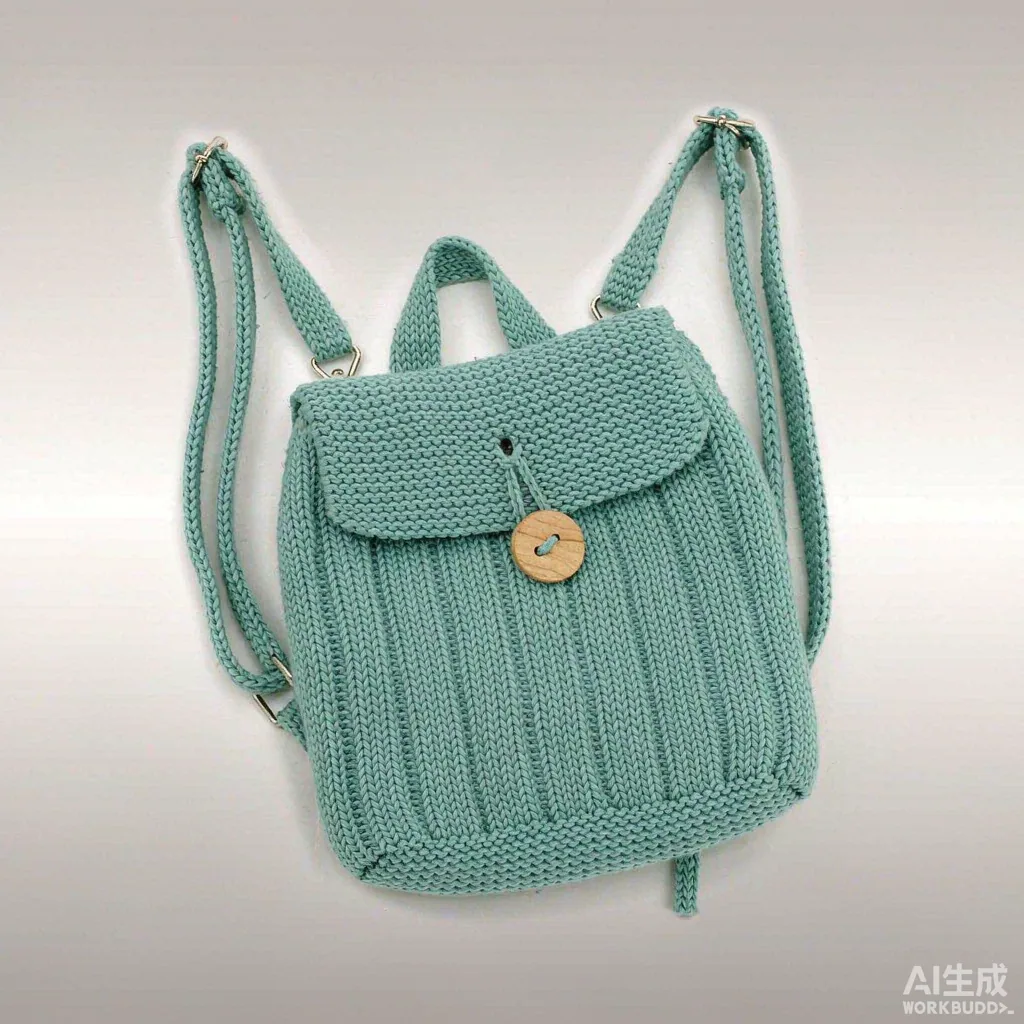
Campaign demand clusters in week one and again once social coverage lands, so a flat production plan tends to run out at exactly the wrong moment. Holding back roughly 15% of volume for a week-four release is a common pattern, and the 100-piece reorder floor makes it workable rather than theoretical. The constraint is calendar rather than quantity: a decision taken after the campaign opens cannot physically arrive in time, so the reserve has to be agreed while the tech pack is being signed.
Write both the release trigger and the acceptance evidence into the plan. A re-release decision keyed to sell-through percentage is clearer than one keyed to instinct, and inspection to AQL 2.5 under ISO 2859-1 gives the second batch the same evidence as the first. Anyone considering how this kind of work compares with the rest of the range can start with the collection overview and the sustainable knit route for recycled yarn options.
Size a campaign bag to its gift set
Send the contents list, the target load and the promotion dates. The team returns a capacity figure, a body weight, a mark placement recommendation either knitted or applied, and a calendar working back from a 7 working day sample and 30-day bulk to AQL 2.5. Begin on the contact page.
Frequently Asked Questions
What size should a knitted gift-with-purchase bag be?
Around 12 L, roughly 45 by 32 by 12 cm, because that clears a boxed gift set, two bottles and a catalogue without looking oversized empty. Oversizing is the most common error: a generous empty bag sags when loaded, and sagging reads badly in the photographs that carry a promotion beyond the store.
How much weight should a campaign knitted bag carry?
Specify about 3 kg as the carry-home load for a gift set. That figure sets handle width, whether the root needs a tucked band, and how dense the base panel should be. A 600D recycled polyester body at about 380 g per square metre handles it comfortably when the root is reinforced properly.
Should gift-with-purchase bags have a lining?
Usually not. Boxed sets, catalogues and sealed samples arrive wrapped, so nothing inside abrades or spills and a smooth knitted interior is enough. Add lining only for damp contents or loose glass, and consider a knitted base divider instead, since it costs less than a full interior.
What is better for a campaign logo: knitted or printed?
A knitted jacquard mark at about 180 by 200 mm cannot crack or peel because the colour sits in the yarn, and it reads as more considered. Applied print wins when artwork is photographic or changes every season, though it adds a pass and its own colour-fastness evidence under AATCC 61.
Which part of a knitted campaign bag fails first?
The handle root, where the strap joins the body, accounts for roughly seven in ten structural complaints. Most of the remainder is curling base corners. Both are fixed by zoning the structure rather than by upgrading the whole body, which keeps a few grams off the unit and the freight.
How many colourways suit a single campaign order?
Three works well for a 5,000-piece order, because the minimum is 100 pcs per style and colourway and three shades let a forecast split rather than forcing one compromise colour. Keeping the body neutral and varying only the accent yarn also allows a second-wave reprint without a fresh approval cycle.
How early should a campaign brief be frozen?
About ten weeks before goods need to arrive at the distribution centre. Sampling takes 7 working days and bulk takes 30 days, leaving room for one revision round plus shipping and customs entry. Late freezes tend to convert into air freight, which costs more than the whole unit margin.
Can you reorder during a running campaign?
Yes, but only if it is decided early. A 100-piece reorder floor and a 30-day run mean a decision taken in week one can arrive before the promotion closes, while one taken in week four cannot. Reserve about 15% of volume ahead of launch and agree the release trigger in advance.
How much does an empty knitted campaign bag weigh?
About 310 g at a 600D recycled polyester body of roughly 380 g per square metre. That number matters mostly through freight: across 5,000 pieces it is roughly 1,550 kg of product before cartons, and carton cube rather than weight usually governs the freight cost.
Is a 600D yarn the right choice for promotional totes?
It is the usual default for this capacity and load, and it holds shape better than lighter counts. Going to 900D across the whole body adds about 190 g and unit cost for little promotional benefit, so density is better applied in zones at the handle root and base corners.
What evidence should accompany a promotional knit shipment?
Inspection to AQL 2.5 under ISO 2859-1, abrasion data to ISO 12947-2 for the root zone, tensile data to ISO 13934-1 on the root strip, and colour fastness to AATCC 8 and AATCC 61 for any applied print. Agreeing the inspection level before production avoids a debate at loading.
Are sustainable yarn claims safe to use on campaign pieces?
They are safe when documented. Recycled content claims need a transaction-level trail such as the Global Recycled Standard from Textile Exchange, and the European Union has been tightening green-claim rules under recent consumer-protection directives. A claim without evidence is now a legal exposure rather than a marketing asset.
How should campaign bags be packed for store handover?
Nested flat rather than folded with creases, so staff can put stock straight onto the sales floor instead of steaming it first. Carton dimensions are best planned so bags share a container with other goods, and details of that side of things sit in the packaging guide.
People Also Ask
What makes a good knitted gift-with-purchase bag?
Correct capacity and a reinforced handle root. At 12 L and 3 kg of load, root reinforcement matters more than any other single line, and a lining rarely earns its cost.
How long does a knitted campaign bag order take?
Roughly ten weeks from frozen brief to goods-in: 7 working days for sampling, 30 days for bulk, plus shipping and customs. A late freeze converts into air freight rather than into saved time.
Do promotional knit bags need a lining?
Usually not. Gift-set contents arrive wrapped, so a smooth interior is enough. Add a wipe-clean base panel only for damp contents, or a knitted divider for loose bottles.
Can a running campaign be resupplied?
Only if decided in the first weeks. Reserve about 15% of volume before launch and agree a release trigger, because a 30-day run cannot catch a decision taken late.
What is the minimum for a campaign colourway?
100 pcs per style and colourway, so three colourways are practical inside a 5,000-piece order. Varying only the accent yarn against a neutral body also allows a later reprint without re-approval.
Sources and further reading
Every figure on this page is either our own programme data or attributed below. Open the originals before you write them into a specification.
- ISO 12947-2:2016 - Textiles, determination of abrasion resistance by the Martindale methodISO The method used to put a rub figure on the handle-root zone of a promotional tote.
- ISO 13934-1:2013 - Textiles, tensile properties of fabrics, Part 1: maximum force using the strip methodISO Used for tensile verification on the handle-root strip.
- AATCC colour fastness test methodsAATCC Cover both crocking and laundering colour change for applied campaign artwork.
- Recycled Claim Standard and Global Recycled StandardTextile Exchange Transaction-level documentation behind recycled content claims used in campaign marketing.
- Directive (EU) 2024/825 on empowering consumers for the green transitionEuropean Union Tightens substantiation obligations behind environmental claims in retail marketing.
- ISO 2859-1 - Sampling procedures for inspection by attributes, Part 1: AQL-indexed sampling schemesISO Framework for the AQL 2.5 inspection agreed before bulk production begins.
A Short Checklist to Send With Every Campaign Brief
Five lines prevent most promotional rework. Contents list with dimensions, target carry load in kilograms, expected number of carries in week one, the mark with its clear area, and the goods-in date at the distribution centre. Those five give a specification writer everything needed to choose gauge, yarn count, handle geometry and base treatment without a second round of questions, and they take less than an hour to assemble.
The final line is the calendar. Working back from a sampling window of 7 working days and bulk production of 30 days, a frozen brief roughly ten weeks ahead of the goods-in date leaves room for one revision instead of zero. Programme teams coordinating knit bag work since 2014 will confirm the same point: the missing item in most late campaigns is not machine capacity, it is a signed-off sample nobody allowed time for.