Knitted Bags for Events and Festivals: Three Formats Compared by Duty
Which knitted format suits a festival or event commission? Three formats cover almost every brief, and the choice is made on duty rather than taste: an 8 L sling carries about 1.5 kg across the body, a 14 L drawstring pack carries roughly 2.5 kg on two shoulders, and a 16 L folding tote carries about 4 kg of merchandise and brochures. Each then differs on where it abrades, whether it needs a finish, and how identity reads at twenty metres.
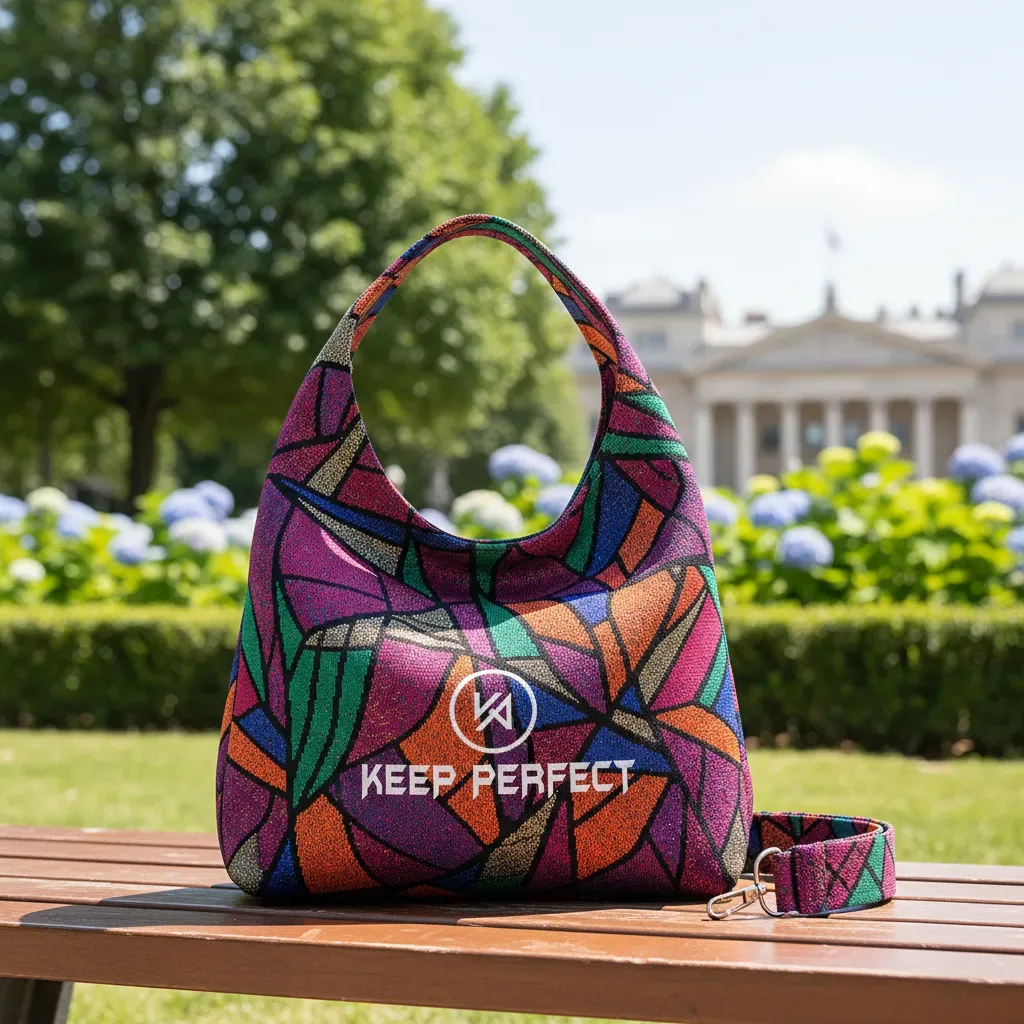
Three Format Choices Before Any Other Decision
Event commissions begin with a crowd and a gate, not with a silhouette. Those two facts set the carry position, the capacity, and how much security the closure needs, and they eliminate most of the catalogue before anyone looks at colour. The three families that survive that filter are the crossbody sling, the drawstring pack and the folding tote, and everything in a brief can be answered by comparing them line by line.
Pick the format first and then write the specification around it. Doing it the other way round - starting with a favourite bag and asking it to work at a gate - produces the two failures that dominate festival returns: a strap too narrow for the load it ends up carrying, and a closure that cannot be managed one-handed while holding a drink. Neither is a knitting problem; both are format problems.
The Comparison Matrix: Capacity, Load, Abrasion and Identity
The comparison below puts the three formats against the six lines that decide an event order. Read down the columns rather than across the rows: each column is one coherent answer to a brief, and no column wins everything. The sling wins hands-free security, the drawstring wins comfort over several hours, and the folding tote wins merchandise capacity and sponsor space.
| Specification line | Crossbody sling 8 L | Drawstring pack 14 L | Folding tote 16 L |
|---|---|---|---|
| Governing load | about 1.5 kg | about 2.5 kg | about 4 kg of merchandise |
| Carry position | across the body, strap 25 mm | two shoulders, cord 20 mm webbed | hand or shoulder, strap 38 mm |
| Abrasion hot spot | strap edge against clothing | base panel on grass and gravel | base corners and rolled fold |
| Abrasion target | about 20,000 rubs at the strap edge | about 30,000 rubs at the base | about 25,000 rubs at the corners |
| Lining needed | no; slip pocket for cards | base panel only if damp ground | no, unless drink containers are included |
| Identity area | 120 x 80 mm at the flap | about 200 x 150 mm on the body | about 240 x 200 mm across the front |
| Closure and security | zip behind the body, one-handed | draw cord plus toggle | open top with an inner clip |
Where Each Format Wears Out
Abrasion maps to carry position, and getting this wrong is the most expensive mistake in event work. A crossbody sling abrades at the strap edge first, because that edge is dragged across clothing and zip hardware thousands of times per day, so it wants about 20,000 rubs to ISO 12947-2 along the edge rather than across the face. A drawstring pack sits on the ground at every stage, so its base panel wants roughly 30,000 rubs.
Folding totes fail at the rolled fold, which is exactly the line most festival artwork is printed across. Two rules follow. Keep heavy artwork away from the fold line, and densify the four base corners to about 25,000 rubs, because that is where the structure has least support and most contact. Both are simple to add inside the sampling stage and impossible to change once the bulk run has started.
Zone the strap edge on slings
A rolled rather than flat strap edge removes the sharp line that works against clothing and against the wearer's own zip hardware.
Give drawstring packs a base
Grass, gravel and damp dust sheets abrade far faster than clothing does, so the base panel is the whole durability question here.
Keep artwork off the fold
On folding totes the rolled fold is where a print cracks first, which turns good artwork into visible product failure.
Add reflectivity at the back
A 25 mm reflective line at the outside edge costs little and matters after sunset, which is most of the event day.
Weather Behaviour and Whether a Finish Earns Its Keep
Rain behaves differently on each format and the decision is not uniform. A crossbody sling worn under a jacket stays largely dry, so a finish is optional. A drawstring pack worn over a coat takes everything from above, and a spray rating of about grade 4 under ISO 4920 buys meaningful protection for the contents. The honest limitation is that no knit structure is waterproof: it sheds a shower and wets through under sustained rain.
Drying behaviour matters more than the initial wetting. A knit body dries faster than a coated woven one because its structure moves air, which means a bag soaked in the afternoon is usually wearable by evening. Where a finish is applied, check whether it affects hand feel, because festival audiences notice the difference immediately and a board finish can make a soft knit feel synthetic.
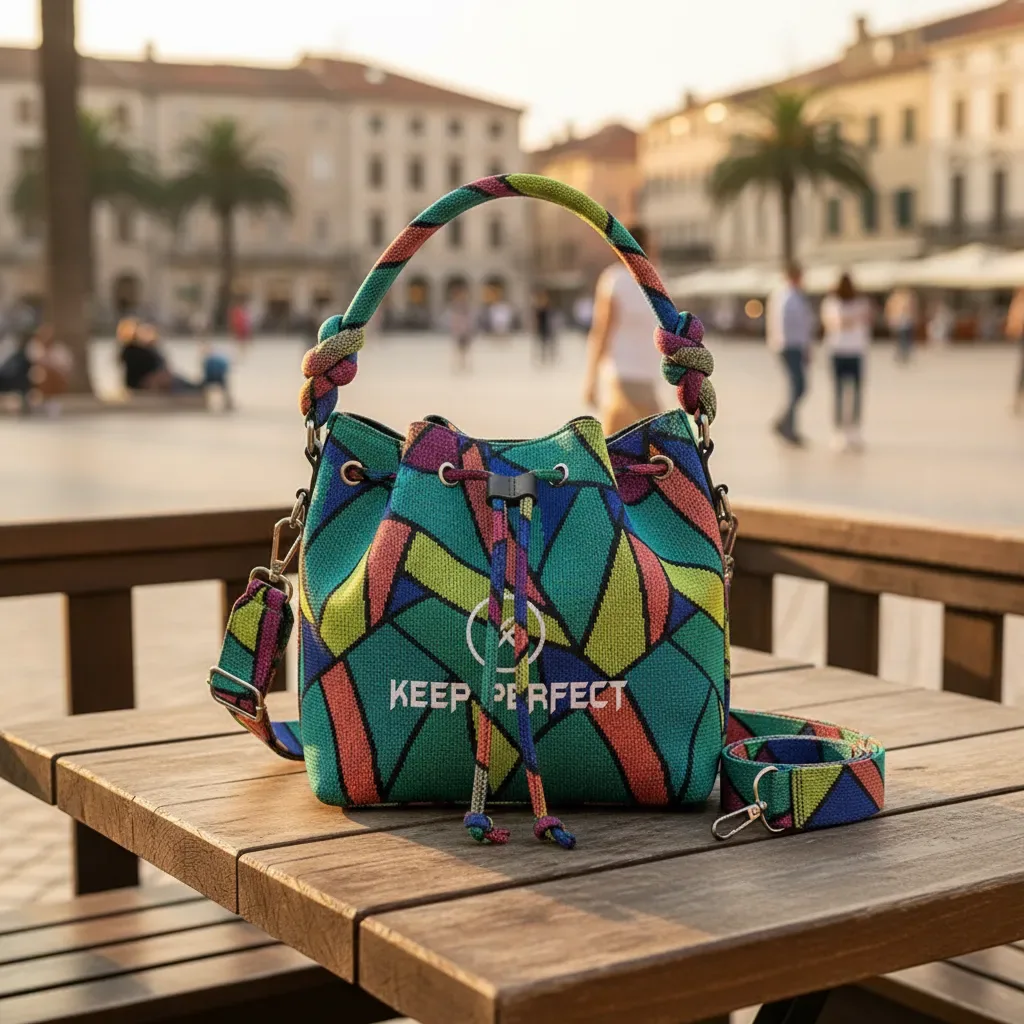
Lining or Not: What Actually Goes Inside at a Gate
What goes into an event bag is usually dry and soft: a phone, cards, sunglasses, a programme, sometimes a soft drink can. None of it abrades a knitted interior or spills in a way that needs a full liner. The exceptions are specific - cans want a knitted base divider to stop them rolling, and anything chilled wants a wipe-clean base panel - and both cost a fraction of lining the whole thing.
Instead of lining, spend on pocket geometry. One slip pocket for cards, one padded channel or firm panel if a phone must be protected, and one external channel for a programme or poster tube all cost little and are felt every time the piece is used. Pockets are remembered; a lining is invisible and, on a good knit, unnecessary.
Identity at Twenty Metres: What Reads Across a Crowd
Event identity has a different legibility rule from retail identity, because it is read at distance and in motion. A wordmark needs roughly 200 mm of clear width to read across twenty metres, which rules out discreet placement entirely and favours the drawstring body or the tote front. Fine detail disappears below about 6 mm of stroke at that distance, so artwork with fine lines has to be simplified at brief stage rather than scaled down later.
Colour contrast does more work than size here. Two-colour graphics read across a crowd where a tonal five-colour design reads as a blur, and a jacquard limitation of around four yarn colours is usually plenty for that purpose. Where sponsor logos are involved, knitted panels leave no doubt about permanence, since the mark cannot peel off and reappear in a landfill photograph.
Queue Behaviour, Security and the Twelve-Week Gate Calendar
Gates impose two requirements that do not appear in a design brief. First, one-handed operation: if a bag cannot be opened while holding a drink or a programme, users give up on it for the rest of the day, which means zips behind the body beat zips at the front on slings. Second, visibility during search: a pale interior makes a security check take seconds rather than minutes, and that is a queue-throughput argument rather than an aesthetic one.
The calendar is the harder constraint. Sampling takes 7 working days and bulk takes 30 days, so with shipping to the event country the workable figure is about twelve weeks ahead of the gates opening. Merchandise runs of around 3,000 pcs across two colourways are typical, and because the minimum is 100 pcs per style and colourway, an additional sponsor shade can be added late without disturbing the main run.
Recommendation by Event Type
Multi-stage festivals suit the drawstring pack, because audiences carry for hours and take the same load every day of the weekend. Conferences and trade shows suit the folding tote, which carries the largest volume - brochures, samples and bottles - and doubles as the takeaway item afterwards. Sports and city events suit the sling, where hands-free security and a low profile matter more than capacity, particularly in dense crowds.
Hybrid briefs are best answered rather than compromised. A multi-stage event that also runs a sponsor village usually wants the drawstring pack at the gate and the folding tote at the merchandise stand, and both can share one body yarn, one colourway family and one identity placement so the two pieces read as a programme rather than as two separate orders. Sharing the base structure keeps the development cost at one instance of 7 working days of sampling rather than two.
- Recommended body
- 600D recycled polyester, about 400 g per square metre
- Empty mass target
- roughly 240 g for the sling, about 320 g for the tote
- Closure rating
- zip near 5,000 cycles where a zip is specified
- Strap adjustment
- sling worn up to about 140 cm of diagonal reach
- Weather finish
- spray resistance around ISO 4920 grade 4 for outdoor use
- Order floor
- 100 pcs per style and colourway
- Timeline
- 7 working days sampling, 30 days bulk, quoted FOB Xiamen
- Acceptance
- AQL 2.5 inspection under ISO 2859-1
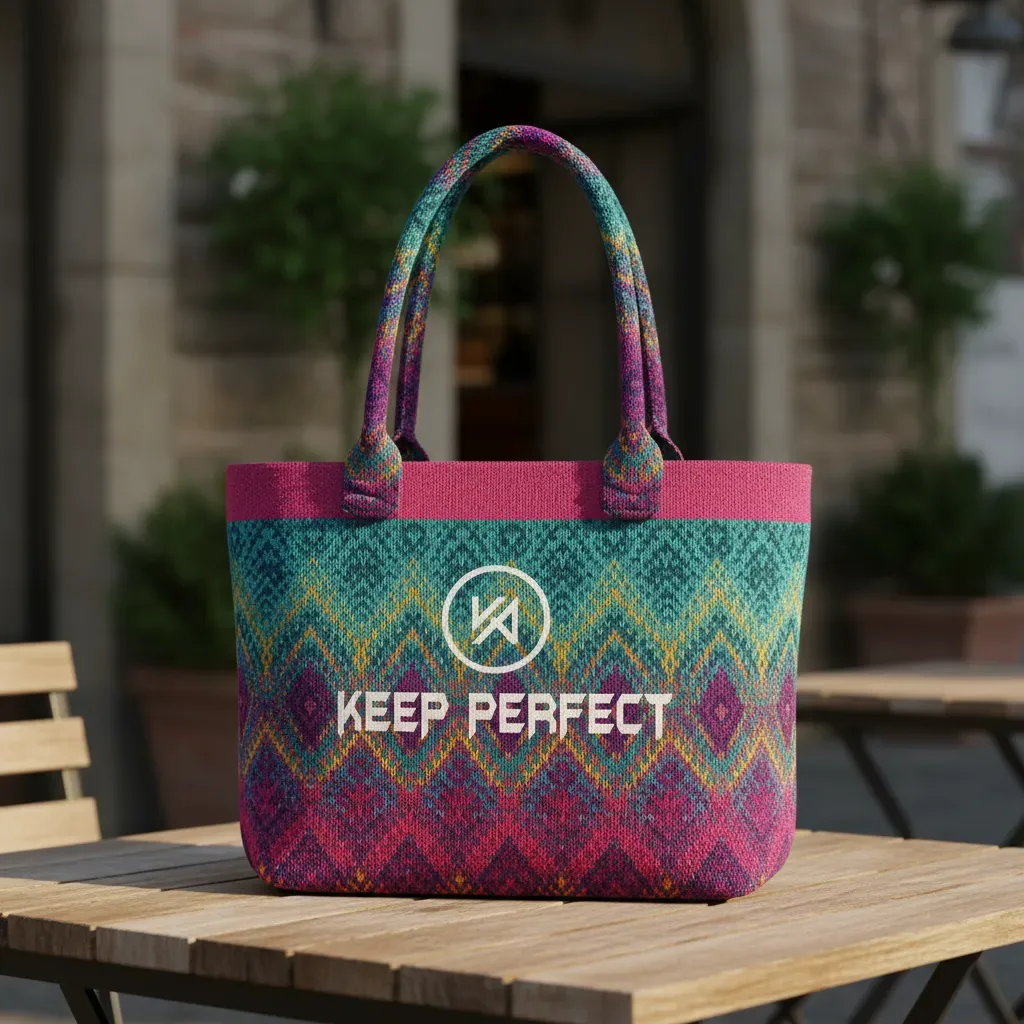
What to Ask For Before Approving a Sample
Three documents settle most event approvals. A rub figure with its method stated - ISO 12947-2 for abrasion - so the same test can be repeated later; a tensile figure to ISO 13934-1 on the strap and its join, which is where slings and drawstrings fail; and colour-fastness results to AATCC 8 and AATCC 61, because festival pieces get rubbed against clothing and soaked in rain within the same afternoon.
Add one field check that no laboratory standard covers: wear the sample for one full day with the intended contents and at the intended load. Most event returns come from discomfort in the second hour rather than from failure in the second month, and comfort is the one line no certificate will tell you. Where a brief has to serve several audiences at once, the knit versus traditional comparison sets out how a zoned knit body behaves against established woven constructions.
Match an event format to crowd, load and gate
Send the event type, the expected carry load and how many weeks remain before the gates open. You receive a format recommendation with capacity, strap width, abrasion targets and identity area, quoted at 100 pcs per colourway with 7 working days sampling and 30-day bulk. Start on the contact page.
Frequently Asked Questions
Which knitted bag format suits a multi-stage festival?
The drawstring pack, because audiences carry for several hours each day and repeat that load across the weekend. Its governing load is about 2.5 kg on two shoulders, with a base panel specified at roughly 30,000 rubs to resist grass and gravel. A spray rating near ISO 4920 grade 4 is usually worth adding, and a pale interior speeds up gate searches considerably.
How much can a crossbody knitted sling carry?
About 1.5 kg in 8 L is the comfortable governing load. Above that the 25 mm strap starts to cut in during a long day, and the strap edge begins abrading clothing noticeably. Larger loads suit a wider strap or a different format rather than a stronger yarn.
Do knitted event bags need a lining?
Rarely. Event contents are dry and soft, so nothing abrades the interior. Cans or bottles want a knitted base divider to stop them rolling, and anything chilled wants a wipe-clean base panel, but a full interior liner almost never earns its cost here.
How large should event artwork be on a knitted bag?
Around 200 mm of clear width reads at roughly twenty metres in a crowd. Detail below about 6 mm of stroke disappears at that distance, so fine line work should be simplified at brief stage. Two-colour designs read better than tonal multi-colour ones.
Can a knitted bag be made rain-resistant for outdoor events?
It can be made water-repellent to about ISO 4920 grade 4, which sheds a shower and buys useful time for the contents. No knit structure is genuinely waterproof, so any electronics inside need their own protection. Knit does dry faster than a coated woven body afterwards.
How far ahead should an event order be placed?
About twelve weeks before gates open. Sampling takes 7 working days, bulk takes 30 days, and shipping plus customs to the event country takes several weeks more. Later freezes tend to convert into air freight, which costs more than the unit margin.
What is the minimum for an event merchandise run?
100 pcs per style and colourway, which is why a typical 3,000-piece order can comfortably carry two colourways. A late sponsor shade can also be added as a separate colourway without disturbing the main run, provided the base structure stays unchanged.
Should event bags have reflective detailing?
Yes for anything used after sunset, which covers most festivals and sports events. A reflective line around 25 mm at the outside edge costs little, is one of the few additions that genuinely improves safety rather than just appearance, and survives repeated washing better than a printed reflective transfer.
Why do folding totes fail at the fold line?
Because the rolled fold is where the structure flexes most and where applied artwork cracks. Keeping heavy artwork away from that line and densifying the four base corners to about 25,000 rubs removes almost all of the failures seen in this format.
Which closure works best in a crowd?
One that can be opened with one hand while holding something else. On a sling, that means a zip running behind the body rather than across the front. On drawstring packs, a toggle at the base is easier to manage than one high on the cord.
Which tests should accompany an event shipment?
Abrasion to ISO 12947-2 on the governing zone, tensile to ISO 13934-1 on the strap and its join, colour fastness to AATCC 8 for rubbing and AATCC 61 for laundering, and inspection to AQL 2.5 under ISO 2859-1. Agree which are mandatory before production begins.
Can the same base be reused for next year's event?
Yes, and it should be. Keeping the validated structure in the file means next season changes one line - a strap width, an abrasion target, a new colourway - rather than restarting the whole development cycle. A 100-piece floor also lets a revised version be tested alongside the original at the next event rather than replacing it blind.
Where should waste or recycling claims sit on event pieces?
On a sewn-in care card alongside the method evidence, rather than as a headline claim. Recycled content needs transaction-level documentation such as the Global Recycled Standard, and unsubstantiated environmental statements carry tightening legal exposure in several markets.
People Also Ask
What is the best knitted bag format for a festival?
A 14 L drawstring pack. It carries about 2.5 kg on two shoulders for hours, sits happily on the ground between sets, and offers around 200 by 150 mm of identity space.
How much load can a knitted event sling take?
About 1.5 kg in 8 L. Beyond that the strap edge begins abrading clothing and wearers complain in the second hour, which is an argument for another format rather than stronger yarn.
Do event knit bags need waterproofing?
A spray rating near ISO 4920 grade 4 is usually enough. Nothing knitted is fully waterproof, but knit dries faster than coated woven material, so it is wearable again by evening.
How big should a festival logo be?
Roughly 200 mm of clear width to read at twenty metres, with no stroke under about 6 mm. Contrast carries further than detail, especially in low light.
What is the lead time for event bag orders?
About twelve weeks before the event, covering 7 working days of sampling, 30 days of bulk production and several weeks of transit and customs entry.
Sources and further reading
Every figure on this page is either our own programme data or attributed below. Open the originals before you write them into a specification.
- ISO 12947-2:2016 - Textiles, determination of abrasion resistance by the Martindale methodISO Method behind the rub targets set on strap edges and base panels.
- ISO 13934-1:2013 - Textiles, tensile properties of fabrics, Part 1: maximum force using the strip methodISO Used for verification of straps and their joins under event loads.
- AATCC colour fastness test methodsAATCC Covers rubbing and laundering fastness relevant to soaked and rubbed event pieces.
- ISO 2859-1 - Sampling procedures for inspection by attributes, Part 1: AQL-indexed sampling schemesISO Sampling framework used when an AQL 2.5 acceptance level is agreed.
- Recycled Claim Standard and Global Recycled StandardTextile Exchange Documentation needed behind any recycled content statement on event pieces.
The Second Run Is Always Better Than the First
Event programmes repeat, and each repetition is an opportunity to change one line of the specification rather than the whole design. Wear data collected after the first weekend - which part failed, which strap was complained about, how many were left at the gates - is worth more than any internal review, because it reflects real crowd behaviour rather than a buyer sitting at a desk.
Keep those notes with the tech pack. A second run that adjusts one abrasion target and one pocket is a revision rather than a new development, and a 100-piece floor means a sponsor shade or a revised strap width can be tested without rewriting the programme. Volume improvements noted across programmes coordinated since 2014 tend to follow exactly that pattern: one good first run, and then three years of small improvements.