Knitted Bags for Hospitality Brands: Six Questions Before Guest Arrival
Hospitality pieces are judged by a guest within about ninety seconds of arrival, and failed by housekeeping within ninety days. Six questions decide everything downstream: which piece actually gets used, how much the guest carries, whether it goes through industrial laundering, where it abrades against chrome and stone, whether wet contents need a liner, and how large the property crest should sit. Answer them in that order and the specification writes itself; skip one and the replacement order arrives before the first one was paid for.
Which Hospitality Piece Actually Gets Used?
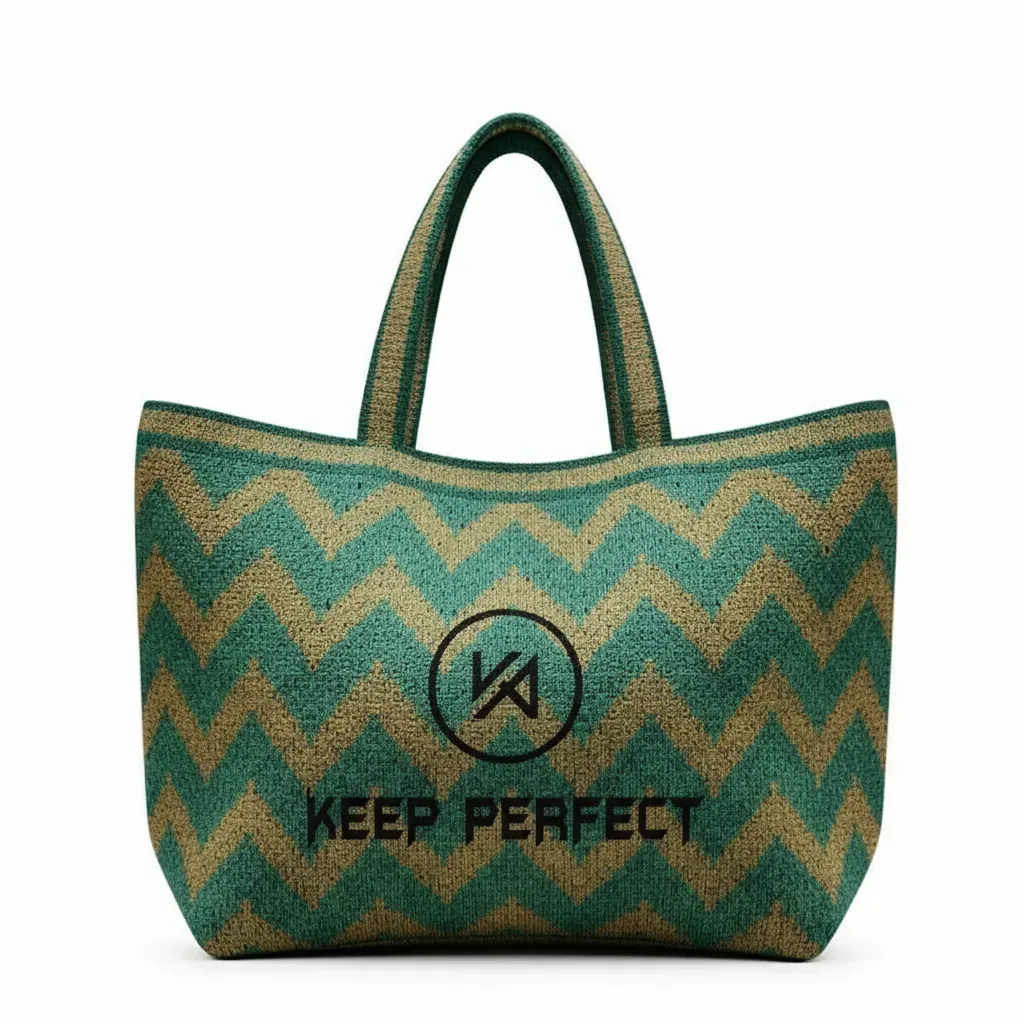
Three pieces appear in most guest-facing programmes: the in-room welcome tote, the spa or wet-kit bag, and the back-of-house laundry bag. Only one of them is usually taken home, and it is rarely the one the property expects. The welcome tote at 14 L becomes the pool bag, the spa pouch gets used for the rest of the stay, and the laundry bag sees the most physical abuse of the three.
Allocate spend according to that behaviour rather than by unit cost. The laundry bag should be engineered for roughly 100 industrial cycles, since replacing it every quarter is both expensive and visible to guests who notice inconsistency. The welcome tote should be engineered for appearance and for two or three years of guest use after checkout, because that is where the marketing value sits. Specifying all three identically wastes money in both directions.
One further pattern is worth noting because it shapes nearly every hospitality brief. Guests rarely use the piece the property photographs. Welcome totes appear in room shots but get their real life at the pool, while the laundry bag - which appears in no marketing at all - carries more weight and passes through more wash cycles than anything else in the programme. Specification follows usage, and usage is almost always the opposite of what the photography suggests.
How Much Does a Guest Actually Carry to the Pool?
Around 2.5 kg, and the number is dominated by towels rather than by personal items. Two rolled pool towels come to about 1.2 kg, a half-litre bottle adds 0.5 kg, and sunscreen, sunglasses and a paperback complete the load. That figure sets capacity at roughly 14 L and sets the strap specification too, because a bag carrying 2.5 kg between pool and room several times a day needs a strap of about 32 mm rather than a cord.
Capacity mistakes show up as shape complaints rather than as failures. A 10 L body technically holds two towels and looks acceptable empty but bulges badly when loaded, which reads as poor quality in a setting where guests are paying for polish. Fourteen litres at roughly 40 by 32 by 11 cm leaves headroom for one towel to be removed and replaced without the whole bag losing its shape.
Amenity additions change the numbers more than they appear to. A wellness trail adding a yoga mat roll takes the length requirement to about 42 cm, while a family property adding sand toys needs a wipe-cleanable base rather than more capacity. Ask what the property actually hands guests at the door - including anything added after the initial fit-out - rather than working from the photography brief, because the second round of additions is what turns a well-sized bag into a badly proportioned one.
Is This Piece Laundered, or Single-Stay?
This is the single question most properties get wrong, and it changes almost every other line. A laundered piece must hold colour and dimension through repeated cycles at elevated temperature, which means verifying fastness to domestic and commercial laundering under ISO 105-C06 with reference washing procedures under ISO 6330, and checking dimensional change under ISO 5077. A guest take-away piece faces neither requirement and can safely be specified for touch instead.
Getting it wrong costs more than the line items suggest. A take-away spec placed into a laundering cycle typically shows visible shade change and dimensional drift within about 20 cycles, which means visible inconsistency on the floor and a replacement order nobody scheduled. Decide the laundering route first, write the target number of cycles into the tech pack - around 100 is realistic for hospitality - and ask for evidence against those specific methods.
Where Does Hospitality Knit Abrade?
Hospitality has its own abrasion map, and it is not the one used for commuter or retail work. Chrome hooks abrade strap tops, stone and tile floors damage base panels when a loaded bag is set down wet, and housekeeping trolleys rub side panels hundreds of times per week. Verification to ISO 12947-2 should therefore be applied to three separate zones rather than to the body fabric as a single sample.
- Strap top zone
- about 25,000 rubs to ISO 12947-2 - chrome hook contact
- Base panel
- about 30,000 rubs - wet set-downs on tile and stone
- Side panel
- about 15,000 rubs - housekeeping trolley contact
- Welcome tote load
- about 2.5 kg, strap width near 32 mm
- Laundry bag load
- up to 4 kg of damp towels, draw cord closure
- Wash target
- around 100 industrial cycles at roughly 60 degrees Celsius
- Liner where needed
- about 0.12 mm wipe-clean film in spa and wet kits
- Crest placement
- around 60 mm at the lower front panel or strap end
Does It Need a Lining for Wet Contents?
Only where contents are wet, and only in that zone. A spa kit carrying damp swimwear wants a wipe-clean base panel and side walls around 0.12 mm, because nothing ruins a knit interior faster than damp fabric sitting in it overnight. A welcome tote carrying towels wants none, since towels themselves are dry and a liner would add cost, weight and drying time in a humid climate for no benefit.
Ventilation is the other half of the decision, and it is where knit has a genuine advantage over coated materials. An open mesh structure allows damp contents to dry in place overnight rather than developing odour, so for laundry applications a ventilated knit body outperforms a sealed one despite being less protective. Where both properties are needed, knit the lower panel open and line only the base tray.
Odour is the reason most hospitality pieces get retired early, and it is rarely considered at specification stage. Damp contents left overnight in an unvented structure develop a smell that no amount of laundering fully removes from memory, and guests notice it immediately on the following morning. Specifying an open upper panel, avoiding dense closed structure in contact zones, and confirming that any finish holds up to the intended wash temperature all cost nothing and extend useful life considerably.
How Should a Property Put Its Mark on the Piece?
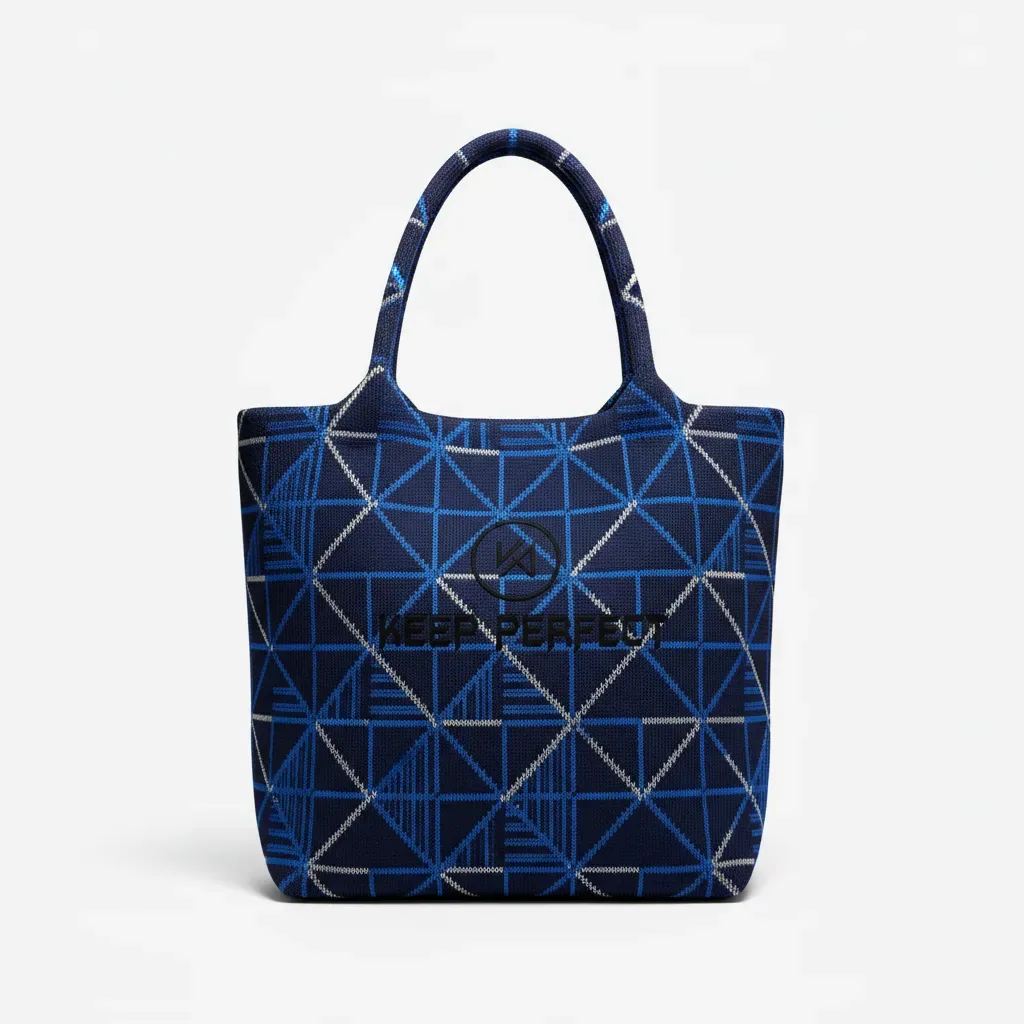
Smaller than most brands want, and placed lower. A property crest around 60 mm at the lower front panel or at the strap end reads as considered rather than as advertising, and it is the difference between a bag a guest uses again and one left in the wardrobe. Very large hospitality logos tend to produce exactly the outcome operators fear: pieces used for the duration of the stay and then discarded at the airport.
Crest near 60 mm
Large enough to photograph, small enough that a guest will still carry it on the high street afterwards.
Lower panel placement
Putting the mark low keeps the upper field clean and stops it reading across a restaurant table.
Tone-on-tone for suites
Same yarn, different stitch direction: suited to executive floors where identity should be felt rather than read.
No room numbers
Pieces carrying identifying numbers are not reused or taken home, which removes the whole marketing return.
What Does Replacement Volume Look Like After Opening?
Model it before fitting out, because the answer decides the colourway strategy. A 180-room property needs about 220 pieces in first issue, allowing roughly 20% of spares for the laundry loss that always occurs in month one. Quarterly replacement typically runs near 10% of installed pieces through combined guest loss, staining and laundering wear, which is why the order floor of 100 pcs per style and colourway fits hospitality unusually well.
Plan the replenishment rather than reacting to it. Because sampling takes 7 working days and bulk takes 30 days, a replacement order placed when stock visibly runs short arrives around six weeks later, which in hospitality terms means a mismatched or missing amenity in the intervening period. Keeping one standing colourway on file and reordering against a fixed threshold avoids the problem entirely and costs nothing in advance.
Six Answers in One Specification Table
| Piece | Capacity and load | Lining decision | Identity treatment |
|---|---|---|---|
| Welcome tote | 14 L, about 2.5 kg to the pool | none; towel loads are dry | 60 mm crest, lower front panel |
| Spa or wet kit | 8 L, about 1 kg damp contents | 0.12 mm liner tray plus open upper panel | 60 mm crest or debossed badge |
| Laundry bag | 20 L, up to 4 kg of damp towels | none; open ventilated structure instead | woven label at the draw cord channel |
| Executive floor tote | 12 L, about 2 kg documents plus device | device sleeve liner only | tone-on-tone structure, no contrast |
Procurement Questions Answered Before the Site Visit
Five questions close most hospitality briefs. Which pieces get laundered and for how many cycles? What are the actual installed quantities plus spares? Is compliance documentation needed at property level - most international groups want OEKO-TEX STANDARD 100 evidence and, for recycled claims, transaction-level documentation? Are the pieces delivered to the property or to a central warehouse? And what is the reorder trigger? Answering those five removes most second rounds.
Evidence then sits alongside the answers rather than being requested later. Inspection to AQL 2.5 under ISO 2859-1 sets the acceptance baseline, abrasion figures to ISO 12947-2 cover the three contact zones, laundering fastness to ISO 105-C06 covers colour retention, and dimensional change to ISO 5077 covers shrinkage after washing. Properties with sustainability reporting obligations should also read the sustainable knit route before the yarn is selected.
Specify guest pieces around the laundering route
Tell us the room count, which pieces get washed and how many tiers of usage apply. You will get capacity and load figures, zone-by-zone abrasion targets, a lining recommendation and identity sizing, quoted at 100 pcs with 7 working days sampling and 30-day bulk FOB Xiamen. Start on the contact page.
Frequently Asked Questions
Which knitted bag do hotel guests actually use?
The welcome tote, and it becomes the pool bag within an hour of arrival. That means it should be specified for about 2.5 kg of towels and bottles, at roughly 14 L, with a strap near 32 mm wide rather than a cord, because it makes several trips between room and pool each day.
How many wash cycles should hospitality knit pieces survive?
Around 100 industrial cycles at roughly 60 degrees Celsius is a realistic target for laundered pieces. Verify colour retention against ISO 105-C06 with washing procedures following ISO 6330, and verify dimensional change against ISO 5077, because a bag that shrinks unevenly looks damaged even when the colour holds.
Should welcome totes have a lining?
No. Towels, bottles and paperbacks are dry, and a liner adds cost, mass and a longer drying time in humid climates. A lining belongs in the spa or wet kit, where damp swimwear sits overnight, and specifically as a base tray rather than as a full interior.
What capacity suits a hotel spa or wet kit?
About 8 L holding roughly 1 kg of damp contents, with a wipe-clean liner of around 0.12 mm in the base tray and an open knit upper panel. The open structure lets damp items dry in place overnight rather than developing odour, which closed pouches almost always do.
How large should a hotel logo be on a knitted bag?
Around 60 mm, placed low on the front panel or at the strap end. Above roughly that size guests tend to treat the piece as hotel property and leave it behind, which removes the return that the gift was meant to generate. Never print room numbers on guest pieces.
Which parts of hospitality bags fail first?
Three zones: the strap top against chrome hooks at about 25,000 rubs, the base panel against wet tile at about 30,000 rubs, and the side panel against housekeeping trolleys at roughly 15,000 rubs. All three should be verified separately to ISO 12947-2 rather than as one body sample.
How many pieces does a 180-room property need?
About 220 pieces for first issue, allowing around 20% spares for month-one loss through the laundry. Quarterly replacement then runs near 10% of installed pieces once guest loss, staining and wash wear are combined, so the reorder should be planned against a threshold rather than triggered by visible shortage.
Why does knit outperform coated material for laundry bags?
Because an open knit structure allows damp contents to dry rather than sealing the moisture in, which is the source of most odour complaints. Ventilation here matters more than barrier protection, so a ventilated knit outperforms a sealed pouch even though it protects less against spills.
What documentation do international hotel groups require?
Most require OEKO-TEX STANDARD 100 evidence for restricted substances across the assembled item, and many require transaction-level documentation behind recycled content claims. Where procurement is centralised, compliance files are usually requested at fit-out stage rather than at delivery, so prepare them early.
How long does a hospitality replenishment order take?
Around six weeks from order to property when sampling takes 7 working days and bulk takes 30 days. That is why standing colourways should be kept on file and reordered against a trigger threshold, rather than ordered once visible stock runs low in the linen room.
Can different tiers of the same hotel share one bag?
Yes, by varying identity treatment rather than structure. Standard floors take a 60 mm contrast crest, and executive floors take the same body in tone-on-tone structure. Sharing the base construction keeps development at one sampling round of 7 working days, lets two tiers be ordered together at the same 100-piece minimum, and avoids maintaining two separate tech packs for what is essentially the same product.
What strap width suits a pool bag?
Around 32 mm. A cord or narrow webbing strap concentrates roughly 2.5 kg into a small area, which becomes uncomfortable on repeated trips between room and pool, and it rubs against wet skin. Wider than about 40 mm starts to read as luggage rather than as a hospitality amenity.
Should laundry bags be the same spec as welcome totes?
No. Laundry bags take up to 4 kg of damp towels and hundreds of wash cycles, so they want a ventilated structure and a draw cord rather than appearance specification. Specifying both pieces identically wastes money in one direction and creates failures in the other.
People Also Ask
What is the best knitted bag for a hotel welcome kit?
A 14 L tote carrying about 2.5 kg of pool towels and bottles, with a 32 mm strap and a 60 mm crest placed low. Oversizing identity is what stops guests reusing it.
Do hotel knit bags need to survive industrial washing?
Only if they are laundered pieces. Those should target about 100 cycles near 60 degrees and be verified against ISO 105-C06, ISO 6330 and ISO 5077 rather than assumed.
How much do hospitality bags cost to replace?
Plan near 10% of installed pieces each quarter. For a 180-room property with roughly 220 pieces at first issue, that is a small order every three months against a 100-piece minimum.
Should spa bags be lined or ventilated?
Both, in different zones. A 0.12 mm liner tray holds damp swimwear at the base while an open knit upper panel lets the contents dry overnight rather than developing odour.
Where should a hotel put its logo on a knitted bag?
Low on the front panel or at the strap end, around 60 mm. Marks placed higher or larger tend to keep the bag inside the room and out of the guest's later life.
Sources and further reading
Every figure on this page is either our own programme data or attributed below. Open the originals before you write them into a specification.
- ISO 105-C06:2010 - Textiles, tests for colour fastness, Part C06: colour fastness to domestic and commercial launderingISO Referenced when a laundered hospitality piece needs colour retention evidence.
- ISO 6330:2021 - Textiles, domestic washing and drying procedures for textile testingISO Sets the washing and drying procedure used alongside colour fastness testing.
- ISO 5077:2007 - Textiles, determination of dimensional change in washing and dryingISO Used to set a shrinkage tolerance for pieces entering a laundering route.
- ISO 12947-2:2016 - Textiles, determination of abrasion resistance by the Martindale methodISO Method behind rub figures on strap tops, base panels and trolley-contact sides.
- OEKO-TEX STANDARD 100OEKO-TEX Restricted-substance evidence most international hotel groups request at fit-out stage.
- ISO 2859-1 - Sampling procedures for inspection by attributes, Part 1: AQL-indexed sampling schemesISO Sampling framework behind an AQL 2.5 acceptance agreement on fit-out deliveries.
Why the Laundering Question Comes First
Every subsequent decision in a hospitality specification bends around whether the piece is washed. Laundering touches yarn selection, colour method, stitch stability, hardware choice and what any identity mark can be made from, and each of those changes the cost line. Properties that answer it first tend to get their first-right decision set inside one sampling round; properties that answer it third usually spend two rounds discovering it.
Treat guest pieces as a two-part programme with two lifetimes. The one the guest uses and possibly takes home should be specified for touch and restraint, while the one housekeeping uses should be specified for a hundred cycles of heat and abrasion. Blending those two into a single middle-of-the-road specification is the most common mistake in this category, and programmes coordinated since 2014 show it every time it happens.