Colour Fastness Testing for Knit Bags: Which ISO 105 Part Covers Which Risk, and How to Write the Ratings into a Purchase Order
Which colour fastness tests does a knit bag need? Map the risk first and the method follows: rubbing to ISO 105-X12, laundering to ISO 105-C06 or AATCC 61, light to ISO 105-B02, water to ISO 105-E01 and perspiration to ISO 105-E04. Each is rated on a 1 to 5 grey scale, or on a 1 to 8 blue wool scale for light, and a bag specification should state the part, the rating and the colourway it applies to. A single pass statement with no part number covers nothing.
The Risk List First: Six Ways a Bag Loses or Transfers Colour
Colour fastness is not one property. It is a family of behaviours, and each one has its own method because each one is caused by a different mechanism. A bag can be excellent against light and poor against rubbing, or excellent dry and poor wet, and a single generic colour fastness clause cannot express either.
Start by listing the exposures the bag will actually meet. A shopper carried against a light coat risks colour transfer by rubbing. A beach bag risks light, water and chlorine. A bag sold with a care instruction risks laundering. A backpack risks perspiration against a shirt. Each line on that list maps to a different part of ISO 105.
The reason to do this in order is that it stops over-testing. Most bag programmes need three or four parts, not twelve, and a laboratory asked for a full colour fastness panel will run many more methods than the bag will ever meet in service. The risk list is what keeps the testing proportionate.
Checklist: Assigning an ISO 105 Part to Each Risk
- Carried against clothing: rubbing, dry and wet. Use ISO 105-X12, or AATCC 8 on a crockmeter for North American programmes.
- Sold with a wash care instruction: laundering. Use ISO 105-C06, or AATCC 61 for the accelerated route used in North America.
- Displayed in daylight or used outdoors: light. Use ISO 105-B02 with a xenon arc source, rated against blue wool references 1 to 8.
- Caught in rain or used at the beach: water. Use ISO 105-E01, with ISO 105-E02 for sea water where the bag meets it.
- Worn against the body: perspiration. Use ISO 105-E04 with acidic and alkaline artificial perspiration solutions.
- Dark colourway against a pale lining or trim: staining onto adjacent material. Check the multifibre staining result from the laundering test.
- Printed or panel-joined designs: colour transfer between panels. Test the assembled construction, not a single-colour swatch.
- Bleach or chlorine exposure: ISO 105-C06 variants with bleach, or the relevant part for chlorinated water where the bag will meet a pool.
Eight lines, and most bag programmes need the first four. The value of writing them down is that the specification then names a part for each exposure, so a report can be checked against it rather than merely accepted as a colour fastness pass.
Rubbing Fastness: ISO 105-X12 and AATCC 8
Rubbing, or crocking, is the test most bag programmes need first, because a bag rubs against clothing constantly and the complaint is visible immediately. ISO 105-X12 rubs a white cloth over the specimen under controlled conditions, once dry and once wet, and rates the staining of the cloth against a grey scale.
AATCC 8 is the North American equivalent, run on a crockmeter, and AATCC 116 covers rotary rubbing for smaller or irregular areas. The methods are broadly comparable in principle but not identical in stroke, force and cloth, so results should not be converted between them.
The pattern buyers need to expect is that wet rubbing rates lower than dry, commonly by one to two grades on a dark shade, because moisture helps loosely held dyestuff detach. Setting one minimum rating for both conditions effectively sets the requirement at the wet figure, which is correct for a bag but worth stating deliberately.
- Rubbing
- ISO 105-X12, dry and wet, rated against the grey scale for staining
- Rubbing, AATCC route
- AATCC 8 on a crockmeter, AATCC 116 for rotary rubbing on small areas
- Laundering
- ISO 105-C06, with single and multiple test variants at defined temperatures
- Laundering, AATCC route
- AATCC 61, accelerated, with numbered conditions representing home washes
- Light
- ISO 105-B02, xenon arc source, rated against blue wool references 1 to 8
- Water
- ISO 105-E01, with ISO 105-E02 for sea water
- Perspiration
- ISO 105-E04, acidic and alkaline solutions
- Rating scale, staining and change
- Grey scale 1 to 5, with half steps, 5 being no change
- Rating scale, light
- Blue wool 1 to 8, higher being better
Laundering Fastness: ISO 105-C06 and AATCC 61
Laundering fastness measures two things at once: the colour change in the specimen itself, and the staining of adjacent material. The adjacent material is a multifibre strip combining several fibre types in one strip, so a single test shows which fibre the dye tends to migrate onto.
ISO 105-C06 offers single and multiple test variants at defined temperatures and chemical intensities, and the multiple variants are more severe because of increased mechanical action. AATCC 61 uses numbered conditions designed to approximate a given number of home launderings in an accelerated cycle. The two serve the same purpose and should not be converted one to one.
For a knitted bag the common cause of a poor laundering result is residual hydrolysed dyestuff left after inadequate washing following dyeing. That is a process issue rather than a dye selection issue, which is why a failed laundering test is often fixable without changing the colour at all.
Light Fastness: ISO 105-B02 and the Blue Wool Scale
Light fastness is rated differently from everything else in the family. ISO 105-B02 exposes the specimen to a xenon arc source representative of natural daylight alongside blue wool reference strips numbered 1 to 8, and the rating is the number of the reference whose fading matches the specimen.
That scale runs the other way from the grey scale in terms of expectation. A grey scale rating of 4 or better is the usual commercial floor for staining and change. On blue wool, a rating of 4 is unremarkable, and anything sold for outdoor or window-adjacent use typically needs materially higher.
Light fastness matters for bags more than buyers assume, because a bag left on a car seat, on a beach or in a shop window receives far more exposure than a garment worn indoors. Where a range has an outdoor colourway, test that colourway rather than the house dark.
Water, Perspiration and the Other Parts
Water fastness under ISO 105-E01 covers rain and accidental wetting, and ISO 105-E02 covers sea water where a bag will meet it. Perspiration fastness under ISO 105-E04 covers prolonged contact with skin, using both acidic and alkaline artificial perspiration solutions, and it belongs on any bag worn against the body.
Both are usually lower priority than rubbing and laundering for a tote or a shopper, and both become first-order for a backpack or a bag carried against a shirt. This is precisely why the risk list comes first: the same range justifies different test sets depending on how it is carried.
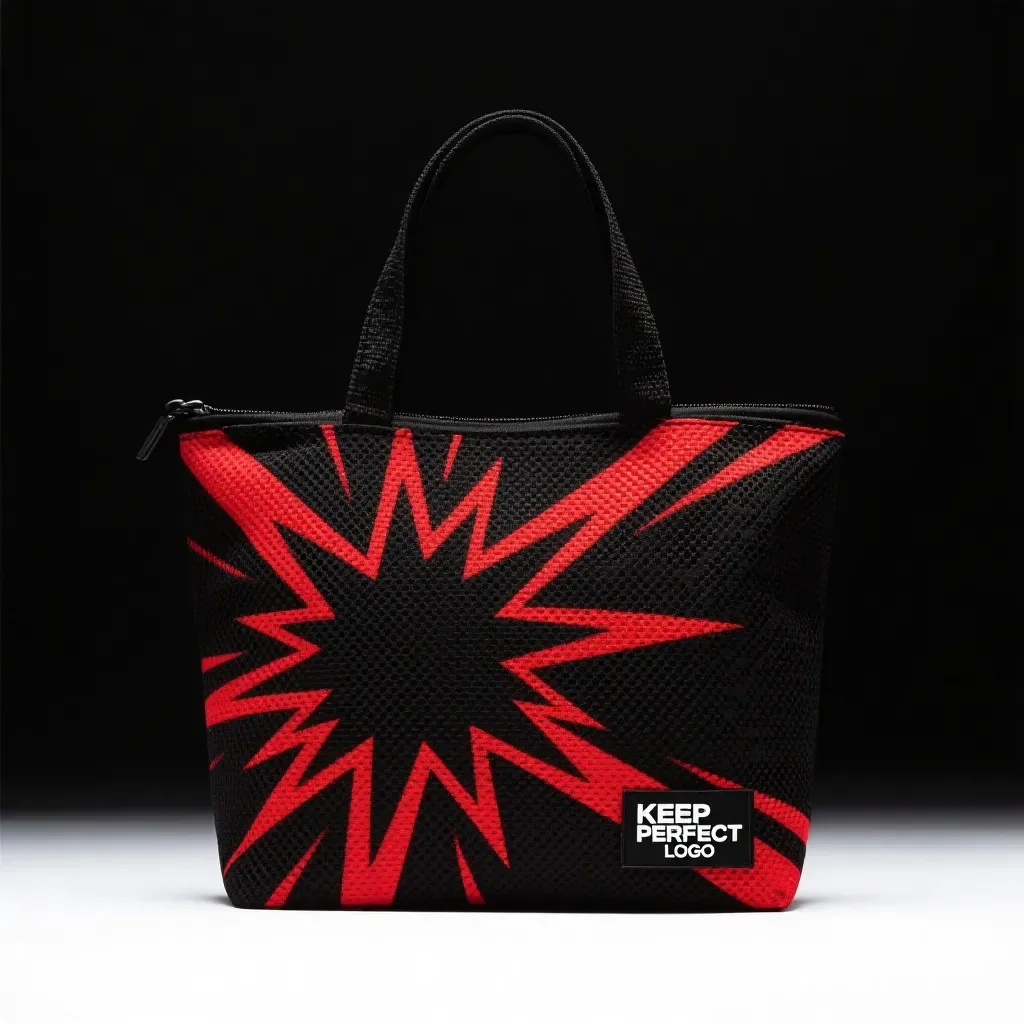
One part worth knowing about for bags with printed decoration is that a print can behave differently from the base fabric. Testing the printed area, or the assembled bag where the print sits against another panel, catches transfers that a plain swatch test will never show.
There is a commercial argument for running the wider set on the first programme even where the risk list is short. Each additional part costs a small increment against one order and produces a reference file for the whole range, so that a later question about a poolside or rain-exposed colourway can be answered from records rather than from a fresh commission and another wait.
Reading a Grey Scale Rating: What 4 Actually Means
The grey scale runs 1 to 5 with half steps, where 5 is no visible change or no staining and 1 is severe. A rating of 4 represents a slight but perceptible difference, and it is the usual commercial floor for change and staining on apparel and accessories.
Half steps matter in practice. A result reported as 3 to 4 means the assessor placed it between the two, and a specification requiring a minimum of 4 is not met by a 3 to 4 result. Writing the minimum as a whole number and requiring the report to do the same removes the ambiguity.
The other thing to understand is that grey scale assessment is a controlled comparison, not a promise that a customer will never notice anything. It is repeatable between trained assessors under defined lighting, which is exactly why it is useful, and it says nothing about whether a particular shade change is acceptable on a particular product.
| Exposure | ISO part | Rating scale | Typical commercial floor |
|---|---|---|---|
| Rubbing, dry | ISO 105-X12 | Grey scale 1 to 5 | 4 |
| Rubbing, wet | ISO 105-X12 | Grey scale 1 to 5 | 3 to 4 on dark shades, often 4 elsewhere |
| Laundering, colour change | ISO 105-C06 | Grey scale 1 to 5 | 4 |
| Laundering, staining | ISO 105-C06 | Grey scale 1 to 5 per fibre in the multifibre strip | 3 to 4 |
| Light | ISO 105-B02 | Blue wool 1 to 8 | 4 or higher, more for outdoor use |
| Water | ISO 105-E01 | Grey scale 1 to 5 | 4 |
| Perspiration | ISO 105-E04 | Grey scale 1 to 5 | 4 |
| Chlorinated water | Relevant ISO 105 part for the exposure | Grey scale 1 to 5 | Set per end use |
Colour Fastness on a Knitted Panel Specifically
A knitted surface behaves differently from a woven one under rubbing, because the loop presents more surface area to the rubbing cloth and holds loose dyestuff at the crown where the cloth meets it first. The practical consequence is that a knit can rate lower on rubbing than a woven of the same colour and dyeing.
Structure shade is the second knit-specific issue. A knitted body and a knitted handle from the same dye lot can read as different colours because the two structures reflect light differently, and no colour fastness test detects that. It is caught by visual assessment of the assembled bag under the lighting it will be sold under.
The third is that pile and raised finishes hold more loose dyestuff at the surface. Where a bag uses a brushed or raised knit, expect wet rubbing to be the binding test in the range, and consider whether the finish is worth the rating it costs on the darkest colourway.
Loop surface
A knit presents more surface to the rubbing cloth, so it can rate lower than a woven of the same colour and dyeing. Test the actual construction.
Structure shade
Body and handle from one dye lot can read differently because the structures reflect light differently. No fastness test catches this.
Raised finishes
Brushed and raised knits hold more loose dyestuff at the surface, so wet rubbing usually becomes the binding test on dark colourways.
Darkest first
Test the darkest colourway in a range first. If it passes, the paler ones usually will, and if it fails the range fails.
Printed areas
A print can behave differently from the base fabric. Test the printed area or the assembled bag, not a plain swatch.
Wet versus dry
Wet rubbing commonly rates one to two grades below dry on a dark shade. Set the requirement deliberately rather than discovering it later.
Writing the Colour Fastness Clause
The clause needs the ISO 105 part, the condition, the scale and the minimum rating, stated per colourway. Four fields per line, one line per exposure, and a report can then be checked line by line rather than accepted as a general colour fastness pass.
Add the colourway clause and the clause is complete. Naming the darkest colourway as the one to be tested first, and requiring the report to state which colourway was tested, prevents the common outcome where the laboratory tests whichever swatch arrived first.
The colour fastness clause in one line
- Colour fastness to ISO 105-X12 dry 4 and wet 3 to 4.
- ISO 105-C06 colour change 4 and staining 3 to 4.
- ISO 105-B02 blue wool 4.
- on the darkest colourway of the range.
- with the tested colourway named on the report.
Set colour fastness requirements for a knit bag range
Send the bag type, the colourways and where the bag will be used. We will return the ISO 105 parts, the rating floors and the colourway to test first, and quote FOB Xiamen at 100 pcs per style and colourway with 7 working days sampling and 30 days bulk. Start on the contact page.
Frequently Asked Questions
Which colour fastness tests does a bag need?
It depends on exposure. Most programmes need rubbing to ISO 105-X12, laundering to ISO 105-C06 or AATCC 61, and light to ISO 105-B02. Water to ISO 105-E01 and perspiration to ISO 105-E04 are added where the bag meets rain or is worn against the body.
What is ISO 105-X12?
The ISO 105 part covering colour fastness to rubbing, tested once with a dry cloth and once with a wet cloth, with the staining on the cloth rated against a grey scale. AATCC 8 is the equivalent crockmeter route used in North America, and AATCC 116 covers rotary rubbing on small areas.
Why does wet rubbing rate lower than dry?
Moisture helps loosely held dyestuff detach from the surface, so the wet cloth picks up more colour. On a dark shade the gap is commonly one to two grey scale grades, which is why the two conditions are reported separately and why one minimum across both effectively sets the requirement at the wet figure.
What is a multifibre strip?
An adjacent test fabric combining several fibre types in one strip, used during laundering tests so a single run shows which fibre the dye migrates onto. It makes the staining result specific rather than general, and the report should give a rating for each component rather than one averaged figure.
Can ISO 105-C06 results be converted to AATCC 61?
No. The two accelerate laundering on the same principle but differ in temperature, cycle duration, mechanical action and detergent formulation, so a figure written for one should not be satisfied by running the other. Where a range supplies both markets, specify both and pay for both.
How is light fastness rated?
Against blue wool reference strips numbered 1 to 8 under ISO 105-B02, using a xenon arc source representative of natural daylight. The rating is the number of the reference whose fading matches the specimen's, so the scale runs the other way from the grey scale used elsewhere in the family.
What is a good light fastness rating for a bag?
A rating of 4 is unremarkable on the blue wool scale, and anything intended for outdoor use or window display typically needs materially higher. Bags receive far more light exposure than garments worn indoors, because they are left on car seats, on beaches and in shop windows.
What does a grey scale rating of 4 mean?
A slight but perceptible difference from the reference, where 5 is no change and 1 is severe. Ratings are given in half steps, so a reported 3 to 4 sits between the two and does not meet a minimum written as 4. Write the floor in the same half-step terms.
Why does a knitted panel rate lower on rubbing?
The loop presents more surface area to the rubbing cloth and holds loose dyestuff at the crown where contact begins. A knit can therefore rate below a woven of the same colour and dyeing, and the difference is structural rather than a fault in the dyeing process itself.
Can a knitted body and handle look like different colours from one dye lot?
Yes, because two knitted structures reflect light differently even from one dye lot. No colour fastness test detects it; it is caught by assessing the assembled bag under the lighting it will be sold under, which is why approval should happen in shop lighting rather than at a bench.
Which colourway should be tested first?
The darkest one. If it passes, the paler colourways usually will, and if it fails the range fails. Require the report to name the colourway actually tested, because otherwise the laboratory will test whichever swatch happened to arrive first in the submission envelope. Test the deepest shade before the palest.
Should a printed bag be tested differently?
Yes. A print can behave differently from the base fabric, so test the printed area or the assembled bag where the print sits against another panel, rather than a plain swatch of the base colour. A report on unprinted fabric proves nothing about the printed article shipped.
What causes a poor laundering fastness result?
Commonly residual hydrolysed dyestuff left after inadequate washing following dyeing. That is a process issue rather than a dye selection issue, so it is often fixable without changing the colour at all, which is why a failed laundering result should not immediately trigger a new lab dip.
Are grey scale assessments repeatable?
Between trained assessors under defined lighting, yes, which is exactly why they are useful. They are a controlled comparison rather than a promise that no customer will ever notice a shade change, and a buyer should read them as the first of those and not the second.
What belongs in a colour fastness clause?
The ISO 105 part, the condition, the scale and the minimum rating, per exposure, plus a clause naming the darkest colourway as the one tested first and requiring the tested colourway on the report. Four fields per line, one line per exposure, and the report becomes checkable line by line.
People Also Ask
What is colour fastness testing for bags?
A family of laboratory tests measuring whether a colour changes or transfers under a defined exposure. Rubbing runs to ISO 105-X12, laundering to ISO 105-C06, and light to ISO 105-B02.
What colour fastness rating should a bag reach?
Typically a minimum of 4 on the grey scale for change and staining, with 3 to 4 accepted for wet rubbing on dark shades. Light uses the blue wool 1 to 8 scale instead.
Why is wet rubbing lower than dry rubbing?
Moisture helps loosely held dyestuff detach from the surface. On a dark knitted shade the wet result is commonly one to two grey scale grades below the dry one, so the two conditions are always reported separately.
How is light fastness measured?
By exposing the specimen to a xenon arc source alongside blue wool references numbered 1 to 8 under ISO 105-B02. The rating is the number of the reference whose fading matches the specimen at the end of the exposure.
Which colourway should be tested for colour fastness?
The darkest in the range, because it carries the most dyestuff and is the most likely to stain adjacent material. Require the report to name the colourway tested so a result cannot be taken from a paler swatch.
Sources and further reading
Every figure on this page is either our own programme data or attributed below. Open the originals before you write them into a specification.
- ISO 105-X12:2016 — Textiles, tests for colour fastness, Part X12: colour fastness to rubbingISO The rubbing method covering dry and wet conditions, rated against the grey scale for staining.
- ISO 105-C06:2010 — Textiles, tests for colour fastness, Part C06: colour fastness to domestic and commercial launderingISO The laundering method, including the single and multiple test variants and the effect of increased mechanical action.
- ISO 105-B02:2014 — Textiles, tests for colour fastness, Part B02: colour fastness to artificial light, xenon arcISO The light fastness method and the blue wool 1 to 8 reference scale used to rate it.
- AATCC colorfastness test method training moduleAATCC Lists AATCC TM8 for crocking and TM61 for accelerated laundering, the North American routes compared with the ISO 105 parts here.
- ISO 6330:2021 — Textiles, domestic washing and drying procedures for textile testingISO The washing and drying procedures referenced when a bag carries a wash care instruction.