Knitted Bag Wash Fastness Testing: Picking Between ISO 105-C06 and AATCC 61, and Reading Colour Change Against Staining
When does a knitted bag need wash fastness testing? When it carries a wash care instruction, will be laundered by the customer, or risks staining adjacent material in a wash load. One test produces two ratings: colour change in the specimen and staining on a multifibre strip. ISO 105-C06 uses single and multiple variants where a multiple test approximates up to five domestic launderings, and AATCC 61 accelerates roughly five home washes into about 45 minutes. The two do not convert.
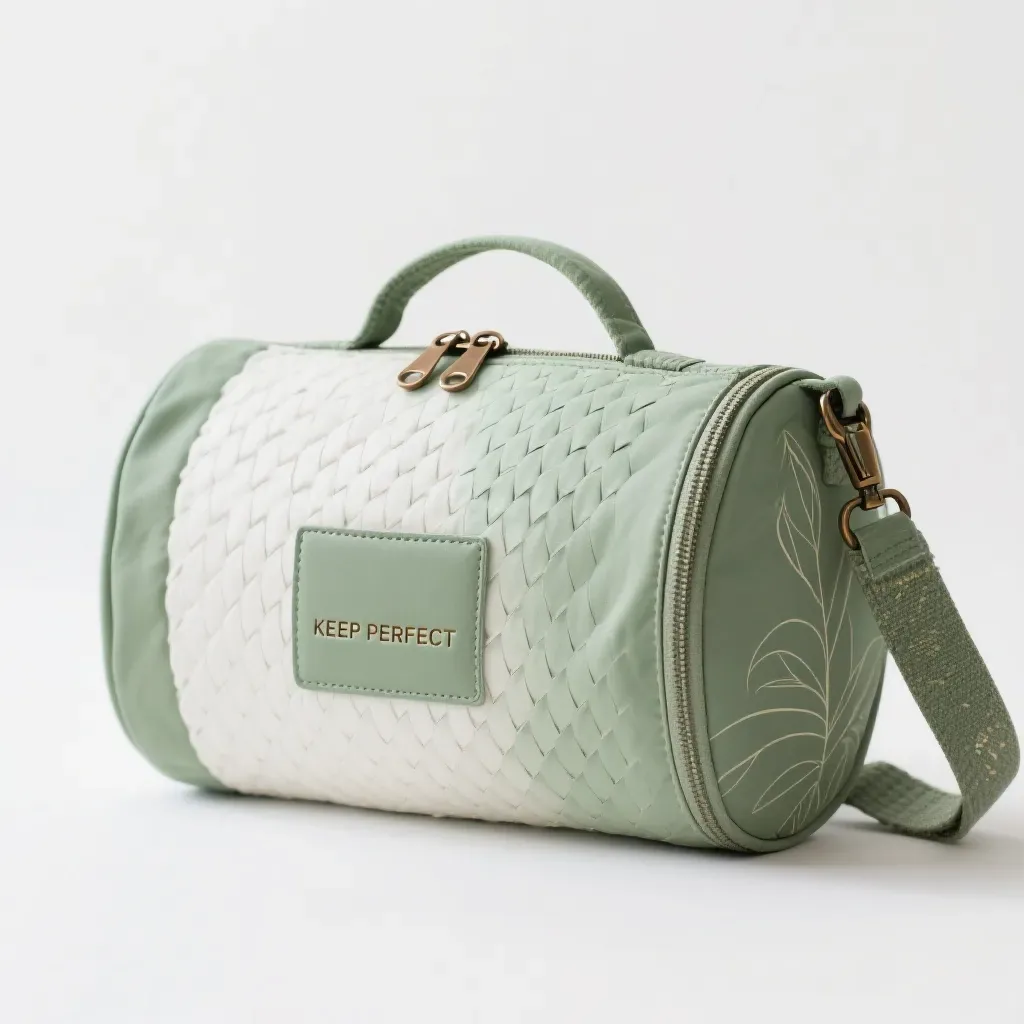
Question One: Does This Bag Actually Get Washed?
Start here, because a large share of bag programmes test wash fastness out of habit. A structured tote with no care label, a gift-with-purchase shopper and a promotional bag will mostly never see a washing machine. A foldable shopping bag, a gym bag, a beach bag and any bag sold with a wash care instruction will see one repeatedly.
Where the answer is no, the money is better spent on rubbing fastness to ISO 105-X12 and light fastness to ISO 105-B02, because those are the exposures the bag will actually meet. Where the answer is yes, wash fastness is likely the most important colour test in the specification and everything else is secondary.
There is a third case worth naming: the bag that will not be washed but will get wet. Rain, a poolside afternoon and a spilled drink are water exposures rather than laundering, and those are covered by water fastness to ISO 105-E01 rather than by a wash test.
The decision also has a labelling consequence. A care instruction on a bag is a promise, and an untested one is a promise the buyer cannot support if a customer follows it and the colour moves. Either test to the instruction and stand behind it, or label the bag as wipe clean and test rubbing instead, but do not do neither and leave the label to whoever writes it last.
Question Two: What Is Being Measured, Change or Staining?
A wash fastness test produces two ratings and they answer different questions. Colour change measures how much the specimen itself has faded or shifted, rated against a grey scale for colour change. Staining measures how much dye has migrated onto adjacent material, rated against a grey scale for staining.
Staining is measured on a multifibre strip, which combines several fibre types in one strip so a single run shows which fibre the dye prefers. Acetate, cotton, nylon, polyester, acrylic and wool are the usual components, and the report gives a rating per component rather than one overall figure.
The distinction matters commercially because the two fail independently. A navy bag can hold its own colour perfectly and still ruin a pale cotton shirt in the same wash load, and a bag can fade badly without staining anything. A specification that asks for a wash fastness pass without naming both ratings has asked for half a result.
Question Three: ISO 105-C06 or AATCC 61?
ISO 105-C06 covers colour fastness to domestic and commercial laundering using a reference detergent, and it comes in single and multiple variants. A single test approximates one commercial or domestic laundering. A multiple test is more severe because of increased mechanical action and may approximate up to five domestic launderings at temperatures not exceeding 70 degrees Celsius.
AATCC 61 takes the accelerated route, compressing roughly five home launderings into a cycle of about 45 minutes using elevated temperature, a low liquor ratio, abrasive action and a standard reference detergent. It is the default in North American programmes and ISO 105-C06 is the default almost everywhere else.
They serve the same purpose and they do not convert. Temperature, cycle duration, mechanical action and detergent formulation all differ, so a figure written for one should not be treated as satisfied by the other. Where a range supplies both markets, specify both and pay for both, which is a small cost against a season.
Question Four: Which Test Condition Represents the Real Wash?
Both standards offer several conditions and picking the wrong one is a common and invisible error. ISO 105-C06 variants are defined by letter and number combinations designating temperature and chemical intensity, and AATCC 61 uses numbered conditions. Each corresponds to a different severity, and the difference between two adjacent conditions can be a full grey scale grade on a marginal shade.
The condition should match the care instruction the bag will carry. A bag labelled for a cool delicate wash does not need the hottest condition in the standard, and specifying it will produce failures that no customer would ever create. Equally, a bag labelled for a hot wash should not be tested at the coolest condition.
Where the care label has not been decided, decide it before commissioning the test rather than after. The label and the test condition are one decision, and making them separately is how a bag ends up with a test result that contradicts its own care instruction.
- ISO route
- ISO 105-C06, domestic and commercial laundering with a reference detergent
- ISO single test
- Approximates one commercial or domestic laundering
- ISO multiple test
- More severe through increased mechanical action, approximating up to five launderings at no more than 70 degrees Celsius
- AATCC route
- AATCC 61, accelerated laundering, roughly five home washes in about 45 minutes
- Washing procedure source
- ISO 6330:2021, which defines 16 Type A, 12 Type B and 7 Type C washing procedures
- Drying procedures
- Six under ISO 6330: line, line drip, flat, flat drip, flat press and tumble
- Adjacent material
- Multifibre strip combining several fibre types in one strip
- Ratings reported
- Colour change and staining, each on a grey scale of 1 to 5 with half steps
- Not covered
- The effect of optical brighteners present in commercial washing products
Question Five: Is the Bag Washed Whole or as a Swatch?
Standard colour fastness specimens are small, and a bag is not. Washing a whole bag introduces abrasion against the vessel, against the steel balls and against itself in ways a flat specimen never experiences, and a folded or crumpled bag abrades unevenly, so the result is more realistic and considerably more variable.
The recommended split is to use the standard specimen for the specification figure, because it is the comparable one, and to add a whole-bag wash on the approved sample as a practical check. The first produces a number a retailer will recognise; the second catches print lifting, trim damage and shape change that no swatch shows.
If a whole-bag wash is run as an acceptance test rather than a check, the acceptance criteria have to be written first: how many cycles, what counts as unacceptable, and against what reference the result is judged. Without that, the exercise produces an opinion that two people can reasonably disagree with.
Question Six: How Many Cycles Before the Result Means Anything?
One accelerated cycle is not the same as one wash in a customer's machine, and a single-cycle result is a weak basis for a durability claim. Where a buyer wants to state that a bag survives repeated washing, the defensible route is a whole-bag test run to a stated cycle count with an agreed acceptance criterion, complemented by the standard specimen result.
The accelerated standards exist for a good reason: they compress time. AATCC 61 estimates about five washes in under an hour and the ISO multiple test does something similar through mechanical action. Neither is a prediction of twenty washes, and a buyer should not present either as one.
A sensible structure for a bag sold as washable is three lines: ISO 105-C06 or AATCC 61 for the comparable figure, a whole-bag wash to a stated cycle count for the practical check, and dimensional change to ISO 5077 so the bag is known to still be the right size afterwards.
Why Wash Fastness Is Harder on a Knit Than on a Woven
A knitted structure gives the dye liquor more surface to work on and more surface to hold residue after dyeing. The usual cause of a poor wash fastness result is residual hydrolysed dyestuff left after inadequate washing following dyeing, and a knit holds more of it than a woven of equivalent mass because of the greater surface area.
The second factor is mechanical. A loop structure moves under agitation, so more of the surface rubs against the vessel and against the steel balls than a flat woven specimen would. That extra mechanical action is part of why multiple test variants are more severe, and it bites harder on a knit.
The third is that a knit may change shape as well as colour. A bag that holds its shade perfectly and comes out of the wash a different shape has still failed, which is why the dimensional change line belongs in the same clause rather than in a separate document nobody reads.
| Decision | ISO 105-C06 | AATCC 61 | Practical effect |
|---|---|---|---|
| Basis | Domestic and commercial laundering with a reference detergent | Accelerated laundering, about 45 minutes | Both compress time by different routes |
| Severity options | Single and multiple variants at defined temperatures | Numbered conditions of increasing severity | Adjacent conditions can differ by a full grey scale grade |
| Approximate equivalence | Multiple test may approximate up to five launderings | Designed to approximate about five home washes | Neither predicts twenty washes |
| Detergent | Reference detergent defined by the method | AATCC standard reference detergent | Formulations differ, so results differ |
| Optical brighteners | Not reflected by the method | Not reflected by the method | A gap in both, worth knowing |
| Where it is used | Europe and most of Asia | North America | Specify both where a range supplies both markets |
What a Wash Fastness Report Should Show
A usable report names the method and edition, the test condition, the colour change rating, the staining rating per component of the multifibre strip, the tested colourway and the construction. Six fields, and the fifth is the one most often missing, which matters because the darkest colourway in a range is the one that binds.
Staining should be given per fibre component rather than as a single figure. A navy bag that stains acetate at 3 and cotton at 4 is not described by either number alone, and a buyer supplying a market where pale cotton linings are common needs the cotton figure specifically.
Half steps apply here as everywhere in the grey scale system. A result reported as 3 to 4 does not meet a minimum written as 4, so write the floor in the same half-step terms the buyer is actually willing to accept, and require the report to use the same convention.
Two ratings, not one
Colour change in the specimen and staining on the multifibre strip. They fail independently, so a specification needs floors for both.
Per fibre staining
Ask for the rating for each component of the multifibre strip, because a single average hides the fibre that actually matters.
Match the care label
Choose the test condition from the instruction the bag will carry. Deciding the two separately produces contradictory documents.
Darkest colourway
Test the deepest shade in the range and require the report to name it. A result from a pale swatch says nothing about the navy.
Add a whole-bag wash
The standard specimen gives the comparable figure; a whole-bag wash catches print lifting, trim damage and shape change.
Pair with ISO 5077
A bag that holds its shade and changes shape has still failed, so dimensional change belongs in the same clause.
Writing the Wash Fastness Clause
The clause needs the method and edition, the test condition, the minimum colour change rating, the minimum staining rating per fibre or at least for the fibres that matter, and the colourway tested. Add ISO 6330 for the washing and drying procedure where a whole-bag check is included, and the clause is complete.
Where a buyer supplies both North America and Europe, write both methods into the clause rather than picking one and hoping. The incremental cost is small, and the alternative is a recurring conversation each season about whether one report satisfies the other market's buyer.
The wash fastness clause in one line
- Colour fastness to laundering to ISO 105-C06 and AATCC 61 at the condition matching the care instruction.
- colour change minimum 4.
- staining minimum 3 to 4 per multifibre component.
- on the darkest colourway.
- with the tested colourway named on the report.
Set a wash fastness requirement for a knit bag range
Send the bag type, the care instruction you intend to use and the markets you supply. We will return the method, the condition and the rating floors, and quote FOB Xiamen at 100 pcs per style and colourway with 7 working days sampling and 30 days bulk. Start on the contact page.
Frequently Asked Questions
When does a knitted bag need wash fastness testing?
When it carries a wash care instruction, will be laundered by the customer, or risks staining adjacent material in a wash load. A structured tote with no care label rarely needs it; a foldable shopper, a gym bag or any bag sold as washable always does.
What is the difference between colour change and staining?
Colour change measures how much the specimen itself has faded or shifted. Staining measures how much dye has migrated onto adjacent material. They fail independently, so a specification needs a floor for each, and a single wash fastness pass with no ratings named covers neither of them properly.
What is a multifibre strip?
An adjacent test fabric combining several fibre types in one strip, allowing a single run to show which fibre the dye migrates onto. Usual components include acetate, cotton, nylon, polyester, acrylic and wool, and the report should rate each of them separately rather than averaging.
What is the difference between ISO 105-C06 and AATCC 61?
Both accelerate real laundering with a reference detergent. ISO 105-C06 offers single and multiple variants at defined temperatures; AATCC 61 compresses roughly five home washes into about 45 minutes. Temperature, cycle duration, mechanical action and detergent differ, so the results do not convert between the two.
What does a multiple test under ISO 105-C06 represent?
It is more severe than a single test because of increased mechanical action, and may approximate up to five domestic or commercial launderings at temperatures not exceeding 70 degrees Celsius. A single test approximates one laundering, so the variant chosen has to appear on both the request and the report.
How long does an AATCC 61 test take?
About 45 minutes. It accelerates laundering through elevated temperature, a low liquor ratio, abrasive action and a standard reference detergent, and is designed to approximate roughly five home washes. It is the default in North American programmes and ISO 105-C06 is the default almost everywhere else.
How should the test condition be chosen?
From the care instruction the bag will carry. A bag labelled for a cool delicate wash should not be tested at the hottest condition, and the label and the condition are one decision rather than two, made together before the test is commissioned rather than argued about afterwards.
Should the whole bag be washed or just a swatch?
Both. The standard specimen produces the comparable figure a retailer recognises, and a whole-bag wash on the approved sample catches print lifting, trim damage and shape change that a flat specimen cannot show. Where the whole-bag wash is an acceptance test, write its criteria first.
Why is wash fastness harder on a knitted bag?
A knit has more surface area to hold residual dyestuff after dyeing, and the loop moves under agitation so more of the surface abrades. Residual hydrolysed dyestuff from inadequate washing-off is the most common cause of a poor result, and it is fixable without changing the colour.
Can a wash fastness result predict twenty washes?
No. Both standards compress roughly five washes into one accelerated cycle. Where a durability claim is needed, run a whole-bag test to a stated cycle count with an agreed acceptance criterion written beforehand, and present the accelerated figure as what it is rather than as a twenty wash prediction.
What is ISO 6330 and why is it referenced?
It defines domestic washing and drying procedures for textile testing, with 16 Type A, 12 Type B and 7 Type C washing procedures and six drying procedures. It is cited where a whole-bag wash is part of the specification, and it is what makes a washing check reproducible.
Does wash fastness testing cover optical brighteners?
No. Neither method reflects the effect of optical brighteners present in commercial washing products, and both are designed around the detergents and bleach systems that the method itself specifies. A bag washed with a brightener-containing product can behave differently from the report. The gap is worth knowing before a care label is written.
Which colourway should be tested?
The darkest and most saturated one, because it carries the most dyestuff and stains adjacent material most readily. Require the report to name the tested colourway, so the result cannot be taken from whichever swatch the laboratory happened to have on the bench that morning.
How should staining be reported?
Per fibre component of the multifibre strip rather than as one averaged figure. A navy bag staining acetate at 3 and cotton at 4 is not described by either number alone, and a buyer supplying a market with pale cotton linings needs the cotton figure specifically rather than a mean.
What belongs in a wash fastness clause?
Method and edition, test condition, minimum colour change rating, minimum staining rating per relevant fibre, and the colourway tested. Add ISO 6330 for the washing and drying procedure where a whole-bag check is included, and require the report to state the tested colourway. Six fields, and each one prevents a later argument.
People Also Ask
What is wash fastness testing for bags?
A laboratory test of whether a colour changes or transfers during laundering. One run produces two ratings: colour change in the specimen and staining on a multifibre strip, and a specification needs a floor for each of them.
What is the difference between ISO 105-C06 and AATCC 61?
Both accelerate laundering with a reference detergent, but differ in temperature, cycle duration, mechanical action and detergent formulation. Neither result converts into the other, so specify both where a range supplies North America and Europe.
How many washes does AATCC 61 represent?
Roughly five home launderings, compressed into a cycle of about 45 minutes. It is not a prediction of twenty washes, and a whole-bag test run to a stated cycle count is needed for any longer durability claim.
Why does a knitted bag stain more in the wash?
The loop structure holds more residual dyestuff after dyeing and moves under agitation, so more of the surface abrades. Inadequate washing-off after dyeing is the usual root cause, and it is fixable without changing the approved colour.
Should a bag be tested whole or as a swatch?
Both. The swatch gives the comparable rating a retailer recognises and the whole bag catches print lifting, trim damage and shape change. Pair both with ISO 5077 dimensional change so the bag is known to still be the right size.
Sources and further reading
Every figure on this page is either our own programme data or attributed below. Open the originals before you write them into a specification.
- ISO 105-C06:2010 — Textiles, tests for colour fastness, Part C06: colour fastness to domestic and commercial launderingISO The ISO wash fastness method, including the single and multiple test variants and their relative severity.
- ISO 6330:2021 — Textiles, domestic washing and drying procedures for textile testingISO Defines 16 Type A, 12 Type B and 7 Type C washing procedures plus six drying procedures, used for whole-bag washing checks.
- ISO 5077:2007 — Textiles, determination of dimensional change in washing and dryingISO The dimensional change test that belongs in the same clause, because a bag can hold its shade and still change shape.
- AATCC colorfastness test method training moduleAATCC Lists AATCC TM61, the accelerated laundering method compared here with ISO 105-C06.
- ISO 105-X12:2016 — Textiles, tests for colour fastness, Part X12: colour fastness to rubbingISO The rubbing test recommended where a bag will never actually be laundered.