Dimensional Stability Testing for Knit Bags: Setting Shrinkage and Growth Limits on a Loop Structure That Moves Under Load
How should a buyer set a dimensional stability limit on a knitted bag? Work through five decisions in order: whether to measure flat or as a volume, which washing and drying procedure, whether laundering or spot cleaning applies, how many cycles and where to measure, and only then the percentage. ISO 5077 measures dimensional change in washing and drying, taking its washing procedure from ISO 6330 and its specimen preparation from ISO 3759. On a knit the limit must be set per direction, because a loop structure shrinks and grows differently on the two axes.
The Decision Tree: Five Choices Before You Set a Percentage
A dimensional change figure is the output of five decisions, and the percentage everyone argues about is the last of them. In order: what gets measured, which washing and drying procedure applies, whether laundering is the right exposure at all, how many cycles and which measurement points, and finally the limit itself.
Skipping to the fifth decision is the standard error and it produces a limit nobody can test against. A limit of plus or minus 3 percent is meaningless until someone has decided whether that is on a flat panel or on the assembled bag, after one wash or after five, tumble dried or line dried.
The ordering also settles the argument about whether a result is a failure. Most dimensional disputes are not disagreements about the number; they are two people measuring different things and both being correct about what they measured.
- Decision 1
- Measure a flat panel, the assembled bag, or both
- Decision 2
- Choose the washing and drying procedure from ISO 6330
- Decision 3
- Confirm laundering applies, or use a spot clean or water exposure route
- Decision 4
- Set the cycle count and the measurement points, recorded to ISO 3759
- Decision 5
- Set the limit per direction, with separate figures for length, width and depth
Step One: Decide Whether the Bag Is Measured Flat or as a Volume
ISO 3759 covers the preparation, marking and measuring of specimens and garments for dimensional change tests, and it works on marked distances. For a flat panel that is straightforward: mark two distances, wash, measure, express the change as a percentage.
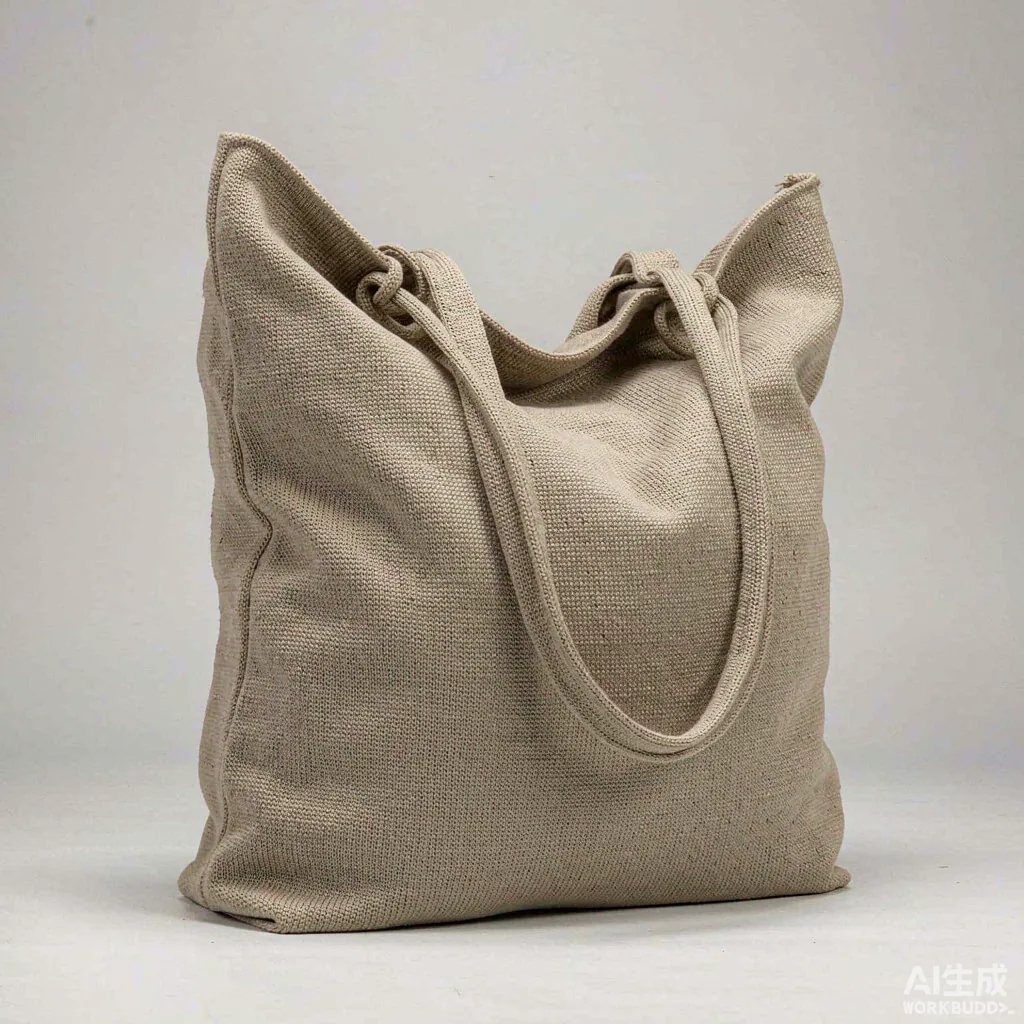
A bag is not flat. It has a base, a depth and a shaped opening, and a shopper that loses three percent in height and gains three percent in width still holds roughly the same volume while looking wrong on a shelf. Measuring only flat distances can therefore report a pass on a bag a customer would notice.
The workable answer is both. Use marked distances on the panel for the comparable laboratory figure, and add a simple volume check on the assembled bag, measured before and after by a repeatable method such as filling with a known quantity of a uniform medium. Two numbers, and the second is the one customers actually perceive.
Step Two: Choose the Washing and Drying Procedure
ISO 5077 determines dimensional change in washing and drying but does not itself define the wash; it takes the procedure from ISO 6330. The 2021 edition of ISO 6330 defines 16 washing procedures on a Type A front-loading horizontal axis machine, 12 on a Type B top-loading agitator machine and 7 on a Type C top-loading pulsator machine.
It also defines six drying procedures: line dry, line drip dry, flat dry, flat drip dry, flat press and tumble dry. Drying is where a large share of dimensional change actually happens, and a buyer who specifies the wash and leaves the drying to the laboratory has specified half the test.
Choose the pair that matches the care instruction. A bag labelled tumble dry low should be tested tumble dried, and a bag labelled dry flat should be tested flat dried. The two produce different results on the same knit, and a specification that names only the wash will get whatever drying the laboratory defaults to.
Step Three: Confirm That Laundering Is the Right Exposure
Some bags are washed and some are not, and testing the wrong exposure wastes the allowance and can fail a perfectly good bag. A structured tote with a wipe-clean instruction does not need a laundering dimensional test; it needs to be checked for what happens when it gets wet and dries, which is a different and gentler question.
Where a bag is genuinely laundered, ISO 5077 with an ISO 6330 procedure is the right route. AATCC 135 covers dimensional changes of fabrics after home laundering and is the common North American alternative. The two share a purpose and differ in machine, detergent and drying detail, so results should not be converted.
There is also the relaxation case, which applies to every knitted bag whether or not it is ever washed. A knit relaxes after knitting and again after packing and shipping, so a bag can change dimension with no exposure at all. That is why conditioning and resting before measurement matter more here than in any other textile test.
Step Four: Set the Cycle Count and the Measurement Points
One cycle tells a buyer what happens once. Three or five cycles tell a buyer where the change settles, which is the more useful figure because most dimensional movement in a knit is front-loaded and then flattens. Where a bag is sold as repeatedly washable, three cycles with measurement after each is a defensible protocol.
Measurement points should be recorded on the approved sample so the test is reproducible, and the same points must be used before and after. ISO 3759 exists precisely to make that discipline standard, and a laboratory asked to measure a bag without marked points will choose its own, which is how two reports on one bag come to disagree.
Conditioning before each measurement is not optional. ISO 139 sets the standard atmosphere for conditioning and testing, and a knit that has not been conditioned and rested will report a change that is partly moisture and partly recovery rather than genuinely dimensional.
Step Five: Set the Limit, and Set It Per Direction
This is the decision the whole tree exists to support, and the rule is simple: never one number. A knitted panel is anisotropic, so length, width and depth need separate limits, and on a knit the two in-plane directions often move in opposite senses rather than both shrinking.
Commercially workable starting points for a knitted bag are plus or minus 3 percent where the bag is structured and must hold a precise shape, and plus or minus 5 percent where it is a soft shopper and some movement is acceptable. Both are starting points rather than standards, and both should be replaced by a measured figure from a bag the buyer already sells.
State whether growth is permitted. Many specifications write shrinkage limits only, and a bag that grows four percent passes a shrinkage limit while no longer fitting the display fixture it was designed for. Writing the limit as a range with both signs is one extra word and removes the ambiguity.
| Bag type | Suggested limit per direction | Cycles | Why that figure |
|---|---|---|---|
| Structured tote with a base panel | plus or minus 3 percent | 1, then 3 where washable | Holds a precise shape and sits on a fixture |
| Soft foldable shopper | plus or minus 5 percent | 1, then 3 | Some movement is acceptable and expected |
| Bag with a printed panel | plus or minus 3 percent | 3 | Distortion distorts the artwork as well as the shape |
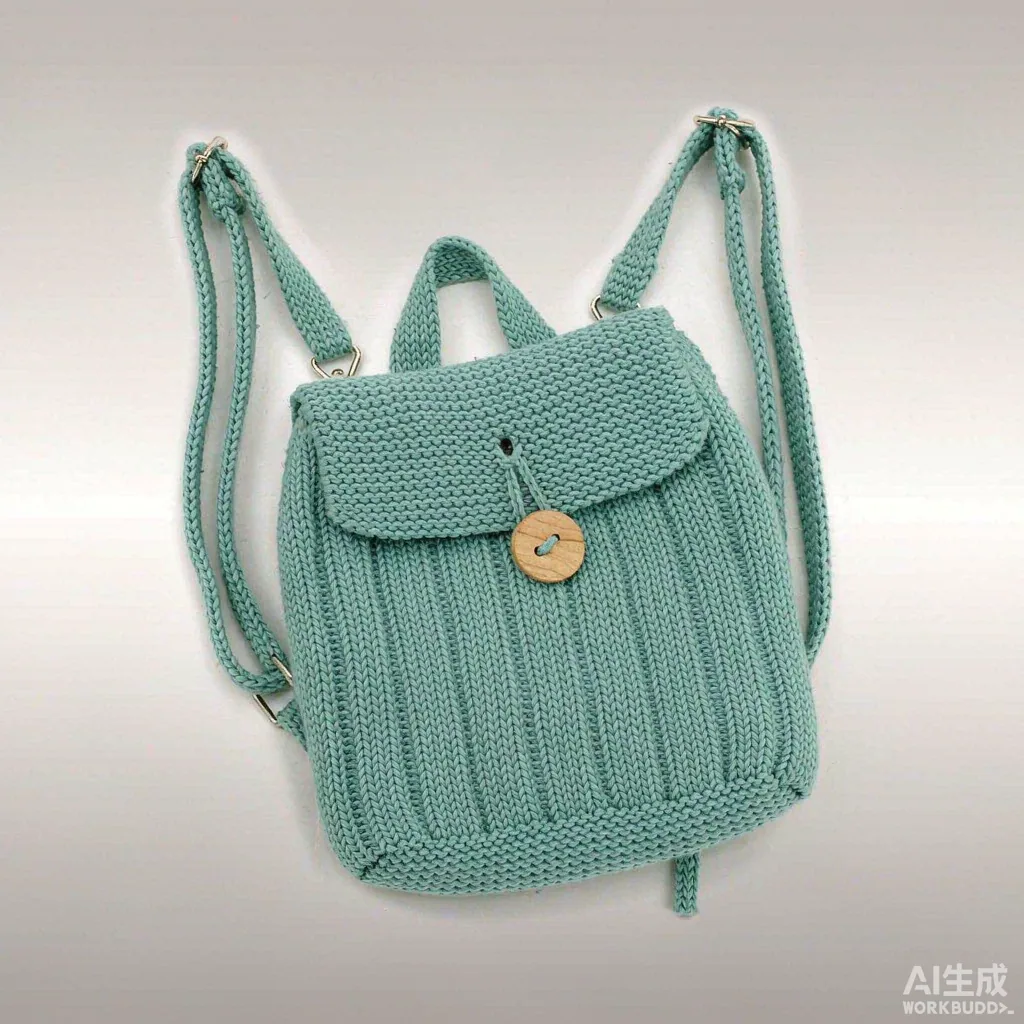
| Backpack with strap geometry | plus or minus 3 percent on strap length | 1 | Strap length change is immediately perceptible when worn |
| Bag sold as repeatedly washable | plus or minus 5 percent, measured after each cycle | 3 to 5 | Shows where the movement settles rather than the first step only |
| Wipe-clean structured bag | No laundering test; check after wetting and drying | 1 wetting | Laundering is not the exposure the bag will meet |
Shrinkage, Growth and Relaxation: Three Ways a Knit Moves
Shrinkage is the fabric contracting, and on a knit it is usually driven by the loop relaxing toward a lower energy configuration when it is wetted and agitated. Growth is the opposite, and on a knit it is usually driven by load: a loop structure extends under weight and does not fully recover, so a bag that has carried heavy contents gets longer.
Relaxation is the third and the one buyers never specify. A knitted panel comes off the machine under tension and continues to relax for a period afterwards, then relaxes again after packing and shipping. A bag measured the day it is made will read differently from the same bag measured a week later, with no washing involved at all.
That is why the practical protocol is to condition and rest before the first measurement, and to record the interval. Where a buyer and a laboratory disagree on a result, the resting interval is one of the first three things to check, alongside the drying procedure and the measurement points.
Shrinkage
The loop relaxes toward a lower energy configuration when wetted and agitated. Usually the larger effect in the course direction.
Growth
Load-driven extension that does not fully recover. A bag that has carried heavy contents gets longer, and a shrinkage-only limit will not catch it.
Relaxation
Movement with no washing at all, continuing after knitting and again after packing. Condition and rest before measuring.
Per direction limits
Never one number. Length, width and depth need separate limits, and on a knit the two in-plane directions can move in opposite senses.
Permit growth explicitly
Write the limit as a range with both signs, or a bag that grows four percent passes a shrinkage limit and misses the fixture.
Drying is half the test
ISO 6330 defines six drying procedures. Specifying only the wash hands the other half to the laboratory's default.
What a Dimensional Change Report Should Show
A usable report names the method and edition, the washing procedure and the drying procedure, the number of cycles, the conditioning statement, the result per direction with its sign, and the tested construction. Six fields, and the fifth is the one that turns a pass into an argument when it is missing.
The sign matters as much as the size. A result of minus 2 percent and a result of plus 2 percent are both 2 percent and they are not the same bag, and a summary that reports only the magnitude has thrown away the half of the result that tells a buyer what will happen on the fixture.
Individual specimen results matter here too, for the same reason they do everywhere. Five specimens all moving about 2 percent describe a stable construction; five moving between minus 1 and plus 6 describe a construction that cannot be specified at all.
Writing the Dimensional Stability Clause
The clause needs the method and edition, the washing procedure and the drying procedure from ISO 6330, the cycle count, the conditioning reference to ISO 139, and the limit per direction with both signs stated. Six fields, and each one prevents a conversation that would otherwise happen after delivery.
Add the volume check and the clause covers the customer's perception as well as the laboratory's number. Requiring the assembled bag to hold a stated proportion of its original volume after the same procedure is one line, and it catches the case where length and width move in opposite senses and the flat figures both pass.
The dimensional clause in one line
- Dimensional change to ISO 5077 using the ISO 6330 washing and drying procedure matching the care instruction, three cycles, conditioned under ISO 139, plus or minus 3 percent per direction with both signs reported, plus a volume check on the assembled bag.
Set a dimensional stability limit for a knit bag range
Send the bag type, the care instruction and whether the bag carries heavy loads. We will return the procedure, the cycle count and limits per direction, and quote FOB Xiamen at 100 pcs per style and colourway with 7 working days sampling and 30 days bulk. Start on the contact page.
Frequently Asked Questions
What is dimensional stability testing for bags?
A measurement of how much an item changes size after a defined washing and drying procedure, expressed as a percentage. ISO 5077 covers the measurement, taking its washing procedure from ISO 6330 and its specimen preparation, marking and measuring from ISO 3759. The result is reported per direction rather than as one number.
What is the difference between ISO 5077 and ISO 6330?
ISO 5077 determines the dimensional change and expresses it as a percentage. ISO 6330 supplies the washing and drying procedure used to create that change, with 16 Type A, 12 Type B and 7 Type C washing procedures and six drying procedures including tumble. One supplies the method of measurement and the other supplies the exposure.
Why does the drying procedure matter so much?
A large share of dimensional change happens during drying rather than washing. ISO 6330 defines six drying procedures including line, flat and tumble, and a specification naming only the wash hands the other half of the test to whatever the laboratory defaults to. Specify both on the request.
Should a bag be measured flat or as a volume?
Both. Marked distances give the comparable laboratory figure, and a volume check on the assembled bag reflects what a customer perceives. A shopper can lose height and gain width, still hold the same contents and yet look wrong on the shelf. The two numbers answer different questions.
How many wash cycles should be used?
One cycle shows the first step; three to five show where the movement settles. Most dimensional movement in a knit is front-loaded and then flattens, so a bag sold as repeatedly washable warrants three cycles, with measurement taken after each one and recorded. Record the result after each cycle.
Why must the bag be conditioned before measuring?
ISO 139 sets the standard atmosphere for conditioning and testing. A knit that has not been conditioned and rested reports moisture content and loop recovery as though they were dimensional change, which is why the resting interval belongs on the protocol alongside the tolerance. Both belong on the written protocol.
What is relaxation in a knitted bag?
Movement with no washing at all. A knitted panel comes off the machine under tension and continues to relax afterwards, then relaxes again after packing and shipping, so a bag measured the day it is made reads differently from the same bag a week later.
Can a knitted bag grow rather than shrink?
Yes, and it is load-driven rather than wash-driven. A loop structure extends under weight and does not fully recover, so a bag that has carried heavy contents gets longer. A shrinkage-only limit will not catch it, which is why limits need both signs. Both signs belong on the stated limit.
What dimensional limit should a bag specification set?
Per direction with both signs stated. Around plus or minus 3 percent for a structured bag that must hold a precise shape, and plus or minus 5 percent for a soft shopper, replaced wherever possible by a measured figure from a comparable bag the buyer already sells.
Why should the limit be per direction?
A knitted panel is anisotropic and the two in-plane directions often move in opposite senses rather than both shrinking. One number across the bag cannot express that, and a single figure will pass a bag that no longer fits the fixture it was designed for.
Is AATCC 135 equivalent to ISO 5077?
They share a purpose and differ in machine, detergent and drying detail. Results should not be converted, so a buyer supplying both North America and Europe should specify both rather than assume one satisfies the other market's buyer at goods-in. Specify both where the two markets overlap.
What should a dimensional change report show?
Method and edition, washing procedure, drying procedure, cycle count, conditioning statement, results per direction with signs, and the tested construction. The sign is the field most often dropped, and it is half of what the result actually tells a buyer. Six fields, and none of them optional.
Why do individual specimen results matter?
The spread is diagnostic. Five specimens all moving about 2 percent describe a stable construction; five moving between minus 1 and plus 6 describe one that cannot be specified at all, and only the full list of individual results reveals which. Ask for individual results every time.
Does every knitted bag need a laundering dimensional test?
No. A structured bag with a wipe-clean instruction needs to be checked after wetting and drying instead, which is a different and gentler question. Test the exposure the bag will actually meet, and let the care label decide which of the two applies. Match the test to the exposure.
What belongs in a dimensional stability clause?
Method and edition, the ISO 6330 washing and drying procedure, the cycle count, the ISO 139 conditioning reference, and the limit per direction with both signs stated. Add a volume check on the assembled bag so the customer's perception is covered too. Six fields, one reusable clause.
People Also Ask
What is dimensional stability testing?
A measurement of how much an item changes size after a defined washing and drying procedure, expressed as a percentage. ISO 5077 covers the measurement, drawing its procedure from ISO 6330.
What dimensional change is acceptable for a bag?
Around plus or minus 3 percent for a structured bag and plus or minus 5 percent for a soft shopper, set per direction with both signs stated. Replace these with a measured figure from a comparable bag.
Why do knitted bags change size without washing?
A knitted panel is made under tension and relaxes afterwards, then relaxes again after packing and shipping. Conditioning and resting under ISO 139 before measurement separates this from genuine change.
Can a bag grow instead of shrinking?
Yes. Load-driven growth happens when a loop structure extends under weight and does not recover, so a bag that carried heavy contents gets longer. Shrinkage-only limits miss it entirely, so state both signs on the limit.
How many wash cycles should be tested?
One cycle shows the first step, but three to five show where the movement settles. For a bag sold as repeatedly washable, three cycles with measurement after each is defensible, and the results should be recorded per cycle.
Sources and further reading
Every figure on this page is either our own programme data or attributed below. Open the originals before you write them into a specification.
- ISO 5077:2007 — Textiles, determination of dimensional change in washing and dryingISO The dimensional change method itself, expressing the result as a percentage after a specified washing and drying procedure.
- ISO 6330:2021 — Textiles, domestic washing and drying procedures for textile testingISO Supplies the washing procedures across Type A, B and C machines and the six drying procedures including line, flat and tumble.
- ISO 139:2005 — Textiles, standard atmospheres for conditioning and testingISO The conditioning atmosphere that must be applied before measurement, because a knit relaxes after knitting and after packing.
- AATCC test methodsAATCC The North American method set, including AATCC 135 for dimensional changes after home laundering, compared here with ISO 5077.
- ISO 13934-1:2013 — Textiles, tensile properties of fabrics, Part 1: maximum force using the strip methodISO The tensile method referenced for the load-driven growth mechanism, where a loop extends and does not fully recover.