Solution Dyed vs Piece Dyed Knitted Bags: A Sourcing Decision Tree for Colour, Volume and Timing
Which dye route suits a knitted bag programme? Solution dyeing puts pigment into the polymer melt before extrusion, removing the dye bath and its rinse stages and lifting light fastness to grade 6 to 7, but it commits about 300 kg per colour up front. Piece dyeing keeps the shade decision open until after knitting. MOQ 100 pcs, sampling 7 working days, bulk 30 days, FOB Xiamen.
The First Question: Is the Shade Already Fixed?
Ask whether the colour is decided before anything else, because a fixed core shade points to solution dyeing and an unsettled fashion shade points to piece dyeing, and almost every other variable follows from that.
A core shade is one the programme knows it will repeat: black, navy, charcoal, a brand colour with a defined reference. Those carry volume and predictability, which is exactly what a spinner needs before it schedules a coloured lot. A fashion shade is one that is being tested; if it misses, the programme needs to be able to change it without writing off yarn.
The distinction is commercial rather than technical. Both routes produce a perfectly good bag. What differs is when the colour has to be committed, and how expensive it is to be wrong. Programmes that get this wrong do not usually fail in testing — they fail in inventory.
It also helps to separate the two questions buyers tend to merge: which route produces the better bag, and which route produces the better outcome for this order. The first is a technical question with a fairly stable answer. The second depends on volume confidence, timing and what the brand intends to claim, and it is the one that actually decides the specification.
Branch A: The Shade Is Already Fixed
Where the shade is fixed and the volume per colour is high, solution dyeing usually wins on water, energy, light fastness and unit cost.
- Pigment addition point
- Polymer melt, before extrusion
- Typical masterbatch loading
- 2 % to 4 % by weight
- Dye bath temperature avoided
- About 130 °C
- Typical liquor ratio avoided
- 1:8 to 1:15
- Light fastness, ISO 105-B02
- Grade 6 to 7
- Washing fastness, AATCC TM61 2A
- Grade 4 to 5
- Rubbing, AATCC TM8
- Grade 5 dry and wet
- Colour commitment
- About 300 kg per shade
- Spinner scheduling addition
- 10 to 15 working days
- Sampling
- 7 working days
The water argument is the one that reaches the brand's sustainability report. A conventional polyester piece-dye route uses, in round terms, of the order of 100 to 150 litres of water per kilogram of fabric across the dye bath and the rinses that follow. Solution dyeing removes those stages from the fabric route entirely, because the colour is already in the filament when it arrives.
The energy argument is quieter but just as solid. Heating a bath to 130 °C and then drying the fabric afterwards are the two biggest loads in piece dyeing. Take both away and the fabric route gets measurably lighter, which shows up in the conversion cost rather than in the yarn price.
There is a second benefit that shows up on the production floor rather than in a report. Because the yarn arrives already coloured, the route from cone to finished panel is shorter, with fewer hand-offs and fewer opportunities for a lot to be mixed or mis-routed. Programmes running many colours at once notice this most.
Branch B: The Shade Is Still Moving
Where the colour is not yet fixed, piece dyeing protects the programme, because the shade decision can move weeks later without touching the yarn.
| Factor | Piece dyeing | Solution dyeing |
|---|---|---|
| Shade decision timing | After knitting | Before spinning |
| Correction possible | Yes, within limits | No |
| Colour gamut | Wide | Narrower |
| Minimum per colour | Low, near the MOQ | About 300 kg |
| Water load at fabric stage | Bath plus rinses | Near zero |
| Best fit | New or seasonal shades | Repeat core shades |
Piece dyeing is not the inferior route; it is the flexible one. For a programme testing six colours and expecting two to survive, committing 300 kg of each would guarantee write-off. Knitting first and dyeing later keeps the exposure where it belongs, on finished goods rather than on raw yarn.
Node 2: How Much Volume Sits Behind One Colour
Divide the colour minimum by the yarn weight per bag: at a 520 g/m² shell using about 158 g of yarn, 300 kg covers roughly 1,900 shoppers.
| Pieces per colour | Route | Reason | Exposure |
|---|---|---|---|
| Under 500 | Piece dye | Below the colour minimum | Low |
| 500 to 2,000 | Either | Depends on repeat confidence | Moderate |
| 2,000 to 10,000 | Solution dye | Minimum is comfortable | Low |
| Over 10,000 | Solution dye | Water and energy saving is material | Very low |
The arithmetic is worth doing on the costing sheet rather than in an email, because the answer changes with GSM. A heavier weekender reaches the colour minimum in about 800 pieces, while a light pouch needs several thousand. Programmes that run multiple sizes should do the calculation per size.
Where a programme runs several sizes in one colour, do the threshold calculation on the largest size first. The commitment is set by kilograms, and the larger sizes consume the minimum fastest, so they determine whether the route is viable for the group.
It is also worth separating the two questions buyers usually merge: which route gives the better bag, and which route gives the better outcome for this particular order. The first has a fairly stable technical answer; the second depends on volume confidence, calendar pressure and what the brand intends to claim on the pack.
Node 3: Where the Bag Will Spend Its Life
Indoor use narrows the gap between the two routes; outdoor and high-abrasion use widens it decisively in favour of solution dyeing.
Daily commute
Both routes work. Choose on volume and colour confidence rather than on performance, since abrasion exposure is moderate and light exposure is limited.
Outdoor and travel
Solution dyeing, mainly for light fastness grade 6 to 7 against 5 to 6 for piece dye. Sun exposure is where the gap shows first.
Gym and swim
Either route, but check washing and chlorinated-water fastness specifically, since both are tested separately and neither is covered by a general fastness claim.
Window display
Solution dyeing. Display lighting is a sustained light exposure, and it is the one retail condition that reliably separates the two routes.
Where a programme covers several of these at once, the usual resolution is to run the core colour solution dyed and keep the seasonal colours piece dyed. That gives the performance where the volume is and the flexibility where the risk is.
Use environment also decides which test becomes limiting. Indoors, rubbing is usually the constraint, because the bag touches clothing and furniture. Outdoors, light fastness becomes the constraint. Naming the limiting test on the specification tells the lab what matters and stops a programme paying for performance it will never need.
Node 4: How Consistent Does the Colour Have to Be?
Solution-dyed yarn is extremely consistent within a lot and slightly less predictable between lots, while piece-dyed fabric varies more within a lot but is easier to correct toward a target.
- Within-lot consistency — solution dyeing wins, because the pigment is dispersed in the melt rather than applied to a surface.
- Lot-to-lot repeatability — piece dyeing can be adjusted toward the reference; a solution-dyed lot is fixed once spun.
- Multi-component programmes — solution dyeing makes matching body, trim and lining harder when each comes from a different lot.
- Correction path — piece dyeing allows re-dyeing; solution dyeing does not.
Agreeing a tolerance before production removes most of the difficulty. A Delta E of 1.0 within a lot and 1.2 between lots, assessed in a light box under an agreed source, gives both sides a number to work to instead of an argument about whether the colour looks the same.
Consistency requirements also interact with programme size. A large order knitted across several lots will show any between-lot variation as visible shading differences within the shipment, so higher volume argues for the tighter route even where the colour is settled.
Node 5: Timing and the Certificate Load
Solution dyeing removes two wet stages from the fabric route but adds spinner scheduling, so the calendar is roughly a wash and the document load is what actually changes.
In sequence, a solution-dyed programme commits pigment and polymer together, waits 10 to 15 working days for the spinner, then knits, inspects to AQL 2.5 and ships. A piece-dyed programme knits first, then enters the dyehouse queue, which varies with the dyehouse's own workload. Neither is reliably faster; they are exposed at different points.
The certificate load is where they diverge. Where a recycled claim is involved, the transaction certificate has to name both the polymer lot and the pigment system, and it should be requested when the lot is committed rather than when the goods are finished.
Whatever the route, approve the colour the same way: a lab dip produced from the production lot, measured against the retained reference swatch in a light box under an agreed source, with a stated Delta E tolerance. That is the only reliable way to compare a solution-dyed lot with a piece-dyed one, because the two are fixed at different points in the route.
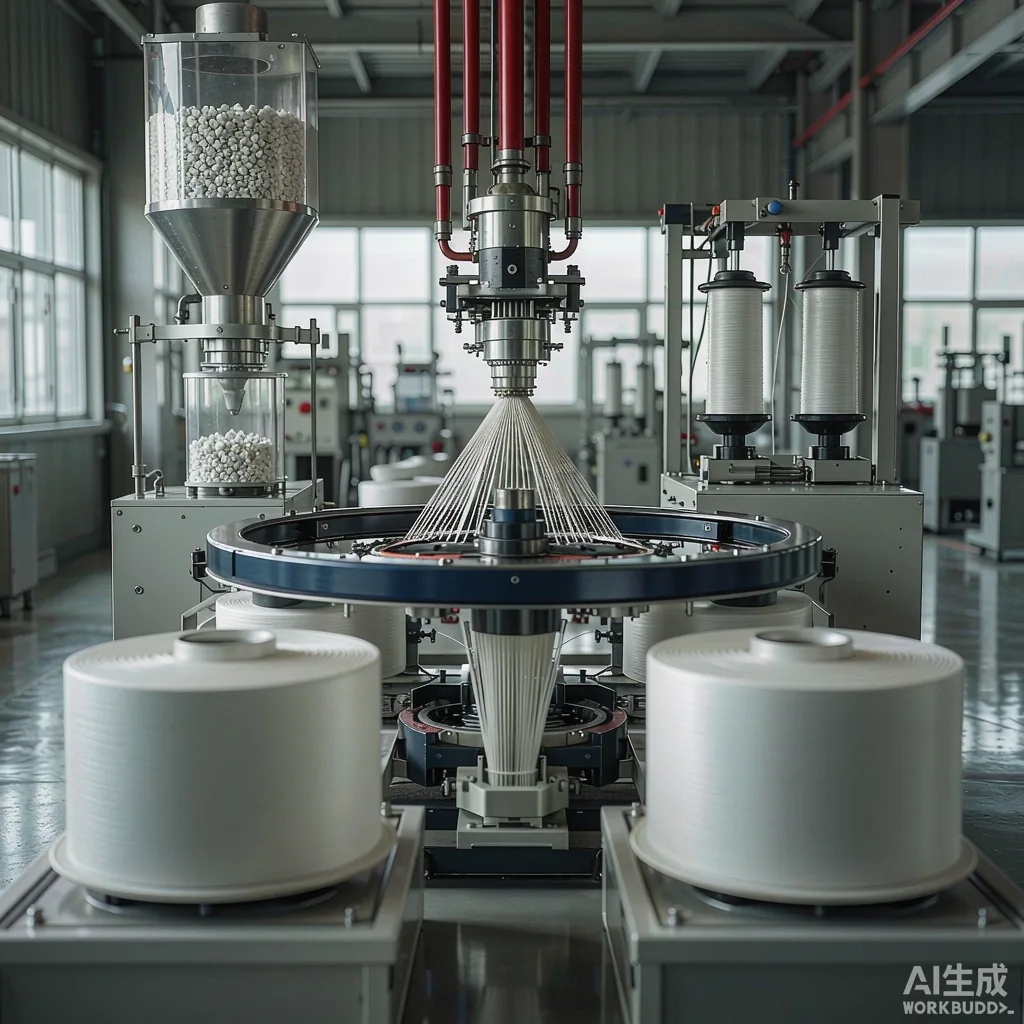
Timing pressure changes the answer too. Where a delivery window is genuinely tight, piece dyeing keeps the yarn generic and therefore available, while a coloured lot has to be scheduled. The flexible route is usually the faster one when the clock is already short.
Node 6: Compare Unit Cost, Not Yarn Cost
Solution-dyed yarn costs more per kilogram but the fabric route costs less, so the decision has to be made on unit cost rather than on the yarn line.
The yarn premium covers the masterbatch and the shorter coloured runs. Against it sit the removed dye bath, the removed rinses and the removed drying stage, which is where the energy sits. At low volume the premium dominates; at high volume the route savings overtake it, and the crossover is usually somewhere below 2,000 pieces for a mid-size shopper.
The other cost to count is write-off. A colour that does not repeat leaves yarn on the shelf. Programs that specify solution dyeing for unproven shades tend to discover this in the second season, which is why the volume node matters more than the unit cost node.
The unit cost comparison should also include scrap. A route that allows correction produces less write-off when something goes wrong, and that difference is invisible on a yarn price list but visible in the season's margin.
The Two End States This Tree Produces
Most knit bag programmes settle into one of two arrangements: core colours solution dyed with full certificate trails, and seasonal colours piece dyed to keep the shade decision open.
The first arrangement suits programmes with stable colour and repeat volume. It gives the strongest light fastness, the lowest water load at the fabric stage and the cleanest documentation, at the cost of committing colour earlier.
The second suits programmes that are still finding out which colours sell. It gives up some performance and carries a higher water load, and in exchange it keeps the ability to change the shade without writing off yarn. Most ranges end up running both, split by colour rather than by style.
Documentation is the final differentiator. A recycled-content claim needs a shipment-level transaction certificate, and a solution-dyed lot has to name the pigment system as well as the polymer. Requesting both when the lot is committed, rather than when the goods are packed, is what keeps the certificate queue off the critical path.
Programmes that review the split once a season tend to converge on a small number of solution-dyed core colours and a rotating set of piece-dyed seasonal ones. That is usually the most stable arrangement, and it is worth revisiting whenever a shade repeats for a third time.
Choose a dye route per colour
Send the shade list with expected volume per colour and we will return a route recommendation with water, energy, fastness and cost impacts. Request a route recommendation
Frequently Asked Questions
What is the difference between solution dyed and piece dyed?
Solution dyeing adds pigment to the polymer melt before the filament is extruded, so colour sits through the whole cross-section. Piece dyeing knits the fabric first and then dyes it in a bath, leaving colour concentrated near the fibre surface. Confirm which route the spinner is quoting before comparing prices.
Which route gives better light fastness?
Solution dyeing, typically grade 6 to 7 to ISO 105-B02 against about 5 to 6 for piece-dyed polyester of the same construction. The gap is widest on pale shades and under sustained display lighting. Record the colour minimum alongside the unit cost. Most programmes test fastness on the finished panel, not the cone.
Why does solution dyeing use less water?
Because the dye bath and the rinse stages that follow it never happen at the fabric stage. Colour arrives with the yarn, so the water normally used to apply and clear dye is not consumed in fabric processing. Treat any shade without a production lab dip as provisional.
What is a typical masterbatch loading?
About 2 to 4 per cent pigment concentrate by weight of polymer. Deeper and more saturated shades sit at the top of that band, and very high loadings can make the filament slightly stiffer. Compare inventory risk as well as the yarn price. Confirm the lead time runs from yarn commitment, not from order.
Can solution-dyed yarn be re-dyed if the shade is wrong?
No. The pigment is inside the filament, so it cannot be stripped or over-dyed. That is why a lab dip on the actual production lot matters more with this route than with piece dyeing. Confirm which route the spinner is quoting before comparing prices. Record the colour minimum alongside the unit cost.
How much yarn does one colour minimum cover?
About 1,900 mid-size shoppers at a 520 g/m² shell using roughly 158 g of yarn each. Heavier styles reach the minimum in fewer pieces, so the calculation should be done per size. Most programmes test fastness on the finished panel, not the cone.
Does solution dyeing change the feel of a knit bag?
Only slightly. Without a wet relaxation stage the fabric can feel a little firmer, and high pigment loading adds stiffness. A boarding pass after knitting usually brings the handle back to what was intended. Treat any shade without a production lab dip as provisional. Compare inventory risk as well as the yarn price.
Is solution dyeing realistic for a first small order?
Usually not, because the colour minimum is about 300 kg. A first order below roughly 500 pieces is normally better piece-dyed, converting to solution dye once the shade has repeated twice. Confirm the lead time runs from yarn commitment, not from order. Record the colour minimum alongside the unit cost.
Which route should a retail window display use?
Solution dyeing. Display lighting is continuous light exposure, and it is the condition where the one to one and a half grade advantage translates into a visible difference over a season. Record the colour minimum alongside the unit cost. Most programmes test fastness on the finished panel, not the cone.
Does solution dyeing work with recycled polyester?
Yes, and the combination is common. The recycled-content certificate covers the polymer, pigment is added at extrusion, and the programme keeps both the recycled claim and the improved fastness. Treat any shade without a production lab dip as provisional. Compare inventory risk as well as the yarn price.
How does solution dyeing affect the inspection plan?
It does not change the sampling plan, which stays at AQL 2.5 to ISO 2859-1, but it adds a document check, because the pigment lot and the polymer lot both have to reconcile on the certificate. Confirm the lead time runs from yarn commitment, not from order.
Can a programme run both routes at once?
Yes, and most do. Core colours go solution dyed for performance and water savings; seasonal colours stay piece dyed for gamut and flexibility. The tech pack then carries two routes and two document sets. Confirm which route the spinner is quoting before comparing prices. Record the colour minimum alongside the unit cost.
What is the sampling time for each route?
Seven working days either way, since the programme is written before knitting. The difference is in what has to be approved up front: a solution-dyed programme approves the lab dip before the spinner runs the lot. Most programmes test fastness on the finished panel, not the cone.
How should a colour tolerance be written?
State Delta E 1.0 within a lot and 1.2 between lots, name the light source, and require specimens to be conditioned before assessment. That makes the tolerance testable rather than a matter of opinion. Treat any shade without a production lab dip as provisional.
Which route suits a programme with many fashion colours?
Piece dyeing. Where six colours are being tested and only two are expected to survive, committing 300 kg of each would guarantee write-off. Knit first, dye later, then convert the survivors. A colour that misses can be adjusted in the bath; a solution-dyed lot already committed to 300 kg cannot be recalled or re-shaded without writing the yarn off.
Does solution dyeing change what a certificate must contain?
Yes. The transaction certificate has to name the pigment system as well as the polymer lot, since both are part of the production record the auditor follows back through the spinner. Compare inventory risk as well as the yarn price. Confirm the lead time runs from yarn commitment, not from order.
People Also Ask
Is solution dyed the same as dope dyed?
Yes. Solution dyed, dope dyed and spin dyed describe the same route: pigment is added to the polymer melt before extrusion, so the colour is inside the filament. Confirm which route the spinner is quoting before comparing prices.
Which dye route is better for the environment?
Solution dyeing, because it removes the dye bath, the rinses and the drying stage from fabric processing. It does not remove the need for chemical compliance testing or recycled-content certificates.
Can solution-dyed programmes match a Pantone reference?
Often, but bright and very pale shades are harder because the achievable colour space is narrower. Approve a lab dip made from the production masterbatch rather than a development sample.
Does piece dyeing give better colour consistency?
It gives an easier correction path rather than better consistency. Within a lot, solution dyeing is usually more uniform; between lots, piece dyeing can be adjusted toward the reference. Record the colour minimum alongside the unit cost.
How does the colour minimum affect cash flow?
It converts a variable yarn cost into committed inventory. Compare the pieces the minimum covers against the repeat you actually expect before committing. Most programmes test fastness on the finished panel, not the cone.
Sources and further reading
Every figure on this page is either our own programme data or attributed below. Open the originals before you write them into a specification.
- Standards — Recycled Claim Standard and Global Recycled StandardTextile Exchange Sets the recycled-content and chain-of-custody documentation required when a solution-dyed recycled yarn is specified.
- GRS-202 Guide to Recycled MaterialsTextile Exchange Explains how recycled input and pigment additions are recorded for certificate purposes.
- Colorfastness training moduleAATCC Overview of the rubbing, laundering, perspiration and light fastness methods used to compare the two dye routes.
- EU Strategy for Sustainable and Circular TextilesEuropean Commission Policy driver behind water, chemical and circularity requirements that make solution dyeing attractive to brands.