Knitting Cycle Time: Five Drivers, What Each One Adds in Minutes, and Which to Attack First
What actually sets the knitting cycle time on a bag body? Five drivers, in order of effect: gauge at 6, 9 or 14 minutes per piece across E7, E12 and E14; course count and how much shaping is in it; yarn feed and carrier changes; structural content such as jacquard or inlay; and the number of systems on the carriage. Of these, gauge is the one a buyer should decide deliberately, because the same silhouette costs 9 minutes at E12 and 14 at E14 with no functional gain. This article compares all five and states which to attack for each bag type.
Cycle Time Is the Cost Driver, Not the Labour
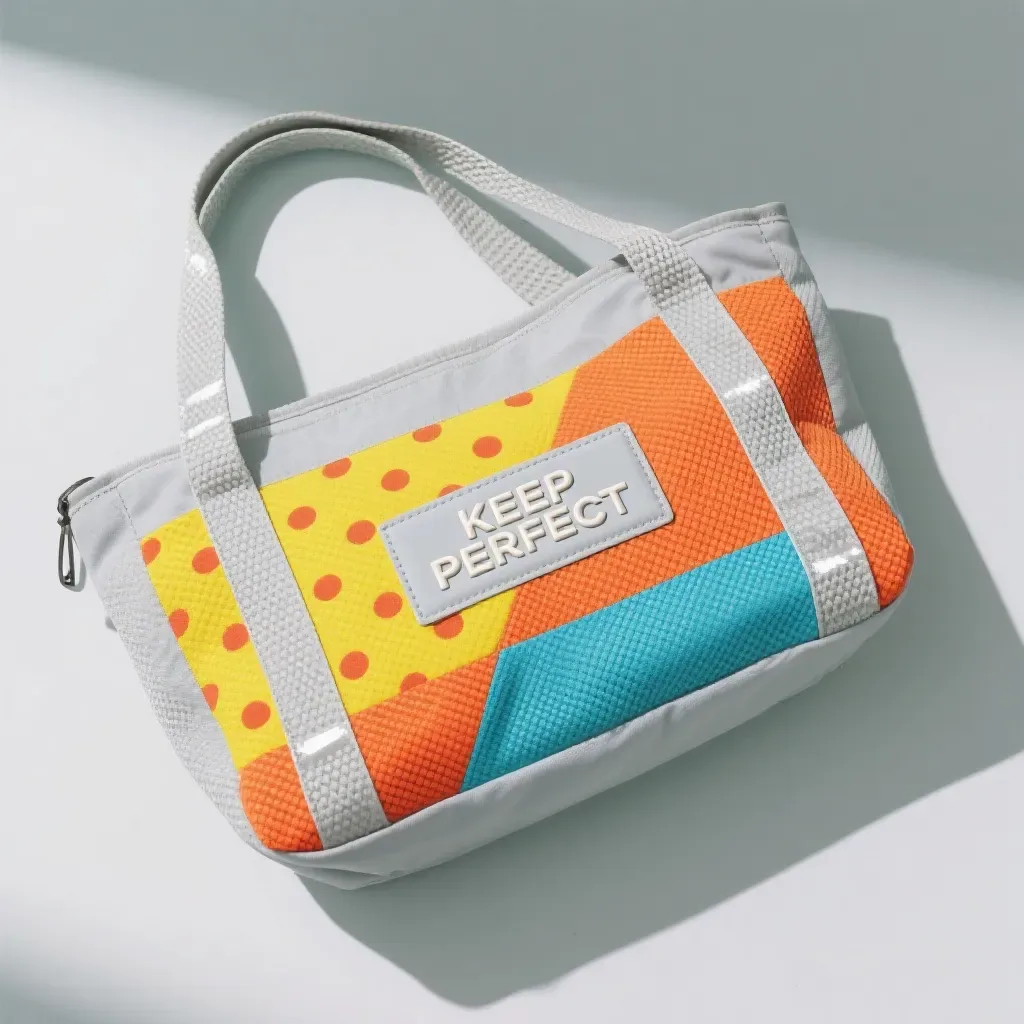
On a knitted bag the machine time line is about 31% of unit cost, and the variable behind it is how long the bed is occupied — so cycle time per piece is the single most useful number on a quote, and the one most often missing from one.
Knitting is capital-intensive rather than labour-intensive. The bed does the shaping, the operator supervises it, and the cost per piece is governed by occupancy rather than by hands. That is why a quote without a cycle time is not comparable: two facilities can quote the same price on the same bag with cycle times 4 minutes apart, and the one with the shorter cycle has either a faster bed, a coarser gauge or a simpler programme. None of those is visible in the total. Asking for gauge, yarn count, finished GSM and cycle time makes a quote legible, and the fourth figure is the one that tells you whether the first three were chosen well.
The reference unit cost for a standard E12 tote at specification is USD 4.80, and the reference cycle is about 9 minutes. Everything in this article is a delta against those two figures.
Driver One: Gauge — 6, 9 and 14 Minutes Compared
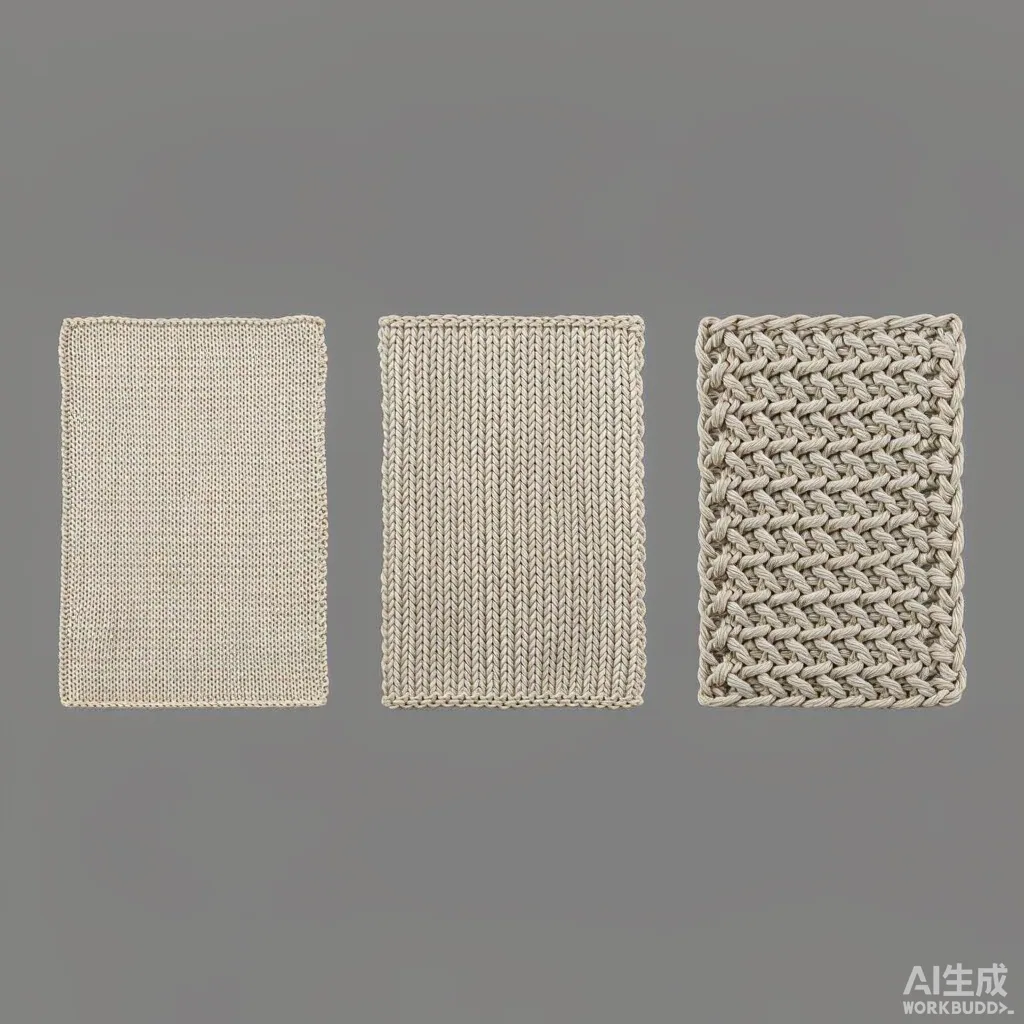
Gauge is the largest single driver: the same 34 x 38 cm tote takes about 6 minutes at E7 in 600D, 9 minutes at E12 in 300D and 14 minutes at E14 in 150D, and the difference is almost entirely course count.
A coarser gauge lays fewer courses over the same height, so the carriage makes fewer traverses and the piece clears sooner. E7 at 16 to 20 courses per inch over a 380 mm body needs about 240 courses; E14 needs roughly 420. That is the whole mechanism, and it is why the coarsest gauge the brief will tolerate is nearly always the correct commercial choice. The counter-argument is hand and surface: E14 gives a finer, flatter surface and a fabric-like drape, and some briefs genuinely want it. The discipline is to want it for a stated reason. Specifying E14 on a promotional tote buys a longer cycle and a finer surface without buying any function the buyer asked for.
| Gauge and count | GSM | Courses over 380 mm | Cycle per piece | Hand |
|---|---|---|---|---|
| E7 in 600D | about 520 g/m² | about 240 | about 6 minutes | Firm, structured |
| E10 in 450D | about 400 g/m² | about 270 | about 7.5 minutes | Medium-firm |
| E12 in 300D | about 320 g/m² | about 300 | about 9 minutes | Balanced |
| E14 in 150D | about 240 g/m² | about 420 | about 14 minutes | Fine, fabric-like |
| E12 with reinforcement band | about 340 g/m² average | about 320 | about 10.5 minutes | Balanced, firmer at the load path |
Driver Two: Course Count and Shaping Density
A whole-garment body knits at roughly 30 courses per minute where shaping is involved, against 120 or more for plain fabric with no needle selection — because every narrowing, widening and transfer costs a traverse of its own.
That ratio explains a lot of apparently contradictory quotes. Two bags of the same dimensions and the same gauge can differ by several minutes if one is a straight tube and the other has a shaped base transition, a waisted silhouette and an integral handle aperture. Each shape change requires the carriage to stop knitting, perform the transfer or selection, and resume, and those traverses produce no fabric. The design consequences are practical: a generous radius costs less than a tight one, because a tight radius forces more shaping steps; and a silhouette that can be knitted with few transfers is faster than one that needs many, even at the same course count.
- Straight tube, no shaping: up to about 120 courses per minute.
- Whole-garment body with shaping: about 30 courses per minute.
- Each narrowing or widening step costs a traverse and produces no fabric.
- A generous base radius costs less in cycle time than a tight one.
- Reinforcement by loop density adds about 1.5 minutes per piece on a tote.
Driver Three: Yarn Feed and Carrier Changes
Every carrier change interrupts the traverse sequence, and a two-colour body with frequent colour changes can add 15% to the cycle — which is why intarsia and per-course colour work are expensive in machine time rather than in yarn.
The mechanism is mechanical rather than chemical. A carriage can only draw from the carriers assigned in the programme, and switching between them takes time at each changeover point. A body knitted in one colour from one carrier runs continuously; a body with a contrast band every forty courses pays for every switch. The practical guidance is to group colour changes rather than distribute them, and to place a contrast in a band rather than in a pattern, because a single band is one change and a repeating motif is dozens. Where a buyer wants the look of two colours, a jacquard structure in one yarn is usually faster than two yarns, because the structure is produced by stitch selection rather than by carrier switching.
Driver Four: Jacquard, Inlay and Structure Changes
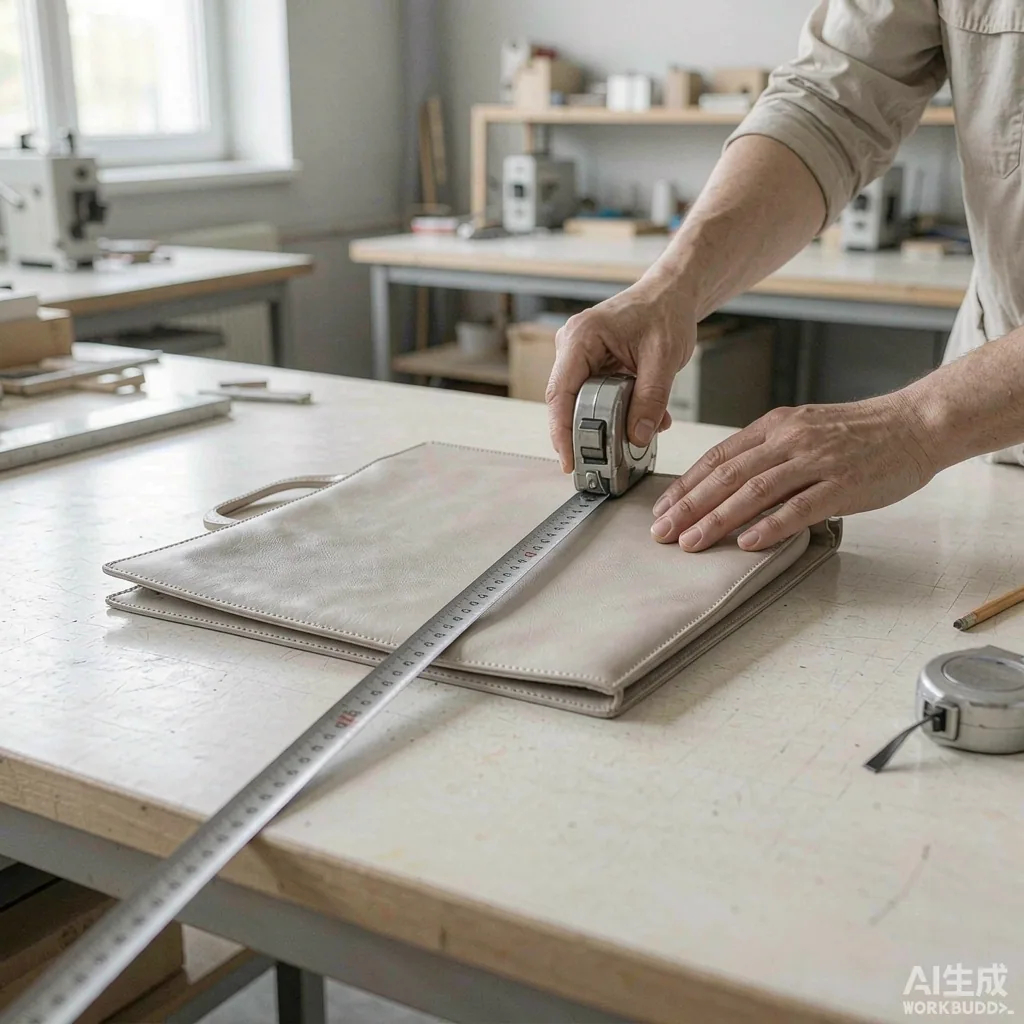
Structural content is the fourth driver: a jacquard or plated structure adds about 40% to the cycle, an inlay adds roughly 25 seconds per piece, and a reinforcement band built by density adds about 1.5 minutes.
These are the costs buyers agree to most willingly, because they buy something visible or functional. Jacquard puts pattern and texture into the fabric at no material cost, and 40% of 9 minutes is about 3.6 minutes, which is a real but defensible addition on a retail bag. An inlay costs less in time than jacquard and is usually specified for strength rather than appearance: a 600D inlaid into a 300D body across the base adds material cost and about 25 seconds of cycle. Reinforcement by density is the most expensive of the three in time and the least in material, and it is the one that should never be cut, because it is what keeps the handle root intact under load.
- Baseline tote at E12 in 300D
- about 9.0 minutes per piece
- Gauge change to E14 in 150D
- about 14.0 minutes, plus 5.0 minutes
- Gauge change to E7 in 600D
- about 6.0 minutes, minus 3.0 minutes
- Jacquard or plated structure
- adds about 40%, roughly 3.6 minutes
- Reinforcement by loop density
- adds about 1.5 minutes
- Inlay yarn across the base
- adds about 25 seconds
- Frequent carrier changes
- add about 15% to the cycle
- Style changeover
- 45 minutes, amortised across the run
Driver Five: Machine Systems and Carriage Speed
A four-system carriage can knit up to four courses per traverse in plain fabric, but in a shaped whole-garment body the effective rate drops towards one course per traverse, so the system count matters far less on a bag than it does on a panel.
This is the driver buyers over-estimate. On a flat panel with no shaping, more systems means proportionately faster output and the specification is worth paying for. On a shaped bag body, most traverses are performing shaping rather than knitting, and the carriage speed limit of about 1.0 to 1.4 metres per second applies regardless of how many systems are fitted. The honest conclusion is that system count is a facility capability rather than a buyer decision, and a buyer comparing two quotes should not read a higher system count as a shorter cycle on a shaped bag. What does transfer to the buyer is whether the facility has enough beds of the right gauge available in the requested window, which is a capacity question rather than a speed one.
The Comparison: Minutes Added by Each Driver
Ranked by effect on a standard tote, gauge is worth 8 minutes across its range, shaping density about 4, structural content about 3.6, carrier changes about 1.4 and system count almost nothing on a shaped body — which tells a buyer where to look first.
Gauge
Worth 8 minutes across the E7 to E14 range on the same silhouette. The biggest lever and the one decided earliest.
Shaping density
About 4 minutes between a straight tube and a fully shaped body. Reduced by generous radii and fewer transfers.
Structural content
Jacquard about 3.6 minutes, reinforcement about 1.5. Both buy something, so decide rather than cut.
Carrier changes
About 1.4 minutes. Group colour into bands rather than repeating motifs and the cost nearly disappears.
System count
Almost nothing on a shaped bag, because most traverses perform shaping rather than knitting.
Which Driver to Attack First, by Bag Type
The right lever depends on the bag: a promotional tote should be attacked on gauge, a shaped day bag on shaping density, a retail bag with graphics on carrier changes, and a load-carrying style should not be attacked on reinforcement at all.
For a promotional tote the answer is unambiguous. Take the coarsest gauge the brief tolerates, hold the structure plain and put the spend into the yarn rather than the pattern, because the bag will be judged on weight and price. For a shaped day bag the lever is geometry: a generous base radius and a silhouette that needs few transfers can remove several minutes without any visible change. For a retail bag carrying graphics, group the colour into bands or use a jacquard structure in one yarn instead of two-colour intarsia. For a load-carrying style, leave the reinforcement alone: the 1.5 minutes it costs is the difference between a bag that holds 8 kg and one that fails at the handle root.
Turning Cycle Time Into a Date and a Price
Cycle time converts directly into both: at about 9 minutes per piece a 3,000-piece order occupies about 450 hours of bed time, which across 7 lines is roughly 6.5 working days of knitting, and the remaining 23 days of the 30-day window are yarn, finishing, inspection and packing.
That arithmetic is the reason cycle time belongs in the brief. A buyer who knows the cycle can sanity-check a quoted date, and a buyer who does not is accepting a number they cannot test. It also explains why a small change in gauge moves a date: going from E12 to E14 on 3,000 pieces adds about 250 hours of bed time, which is more than three additional working days across the programme. Programme windows sit behind all of it: MOQ 100 pcs per style and per colourway, 7 working days of sampling, 30 days of bulk, 7 production lines at about 200,000 pcs per month, AQL 2.5 release under ISO 2859-1 and FOB Xiamen as the standard term. For the capacity arithmetic behind the hour count, see 3D knit production capacity planning.
Get a cycle time for your specification
Send the silhouette, the gauge preference, the yarn count and the quantity per colourway. Our knit team will return a cycle time per piece, the hour count against the order and a costed quote against MOQ 100 pcs per style, 7 working days of sampling and 30 days of bulk production. Start on the contact page.
Frequently Asked Questions
What is a typical knitting cycle time for a bag?
About 9 minutes for a 34 x 38 cm tote at E12 in 300D. The range across gauges is 6 minutes at E7 in 600D to 14 minutes at E14 in 150D for the same silhouette, and the difference is almost entirely course count.
Why does gauge change the cycle time so much?
A coarser gauge lays fewer courses over the same height. A 380 mm body needs about 240 courses at E7, 300 at E12 and 420 at E14, so the carriage makes fewer traverses and the piece clears sooner at the coarser setting.
How many courses per minute does a whole-garment body knit?
About 30 where shaping is involved, against 120 or more for plain fabric with no needle selection. Every narrowing, widening and transfer costs a traverse of its own that produces no fabric, which is what makes shaped bodies slower.
Does a four-system carriage make a bag faster?
Far less than buyers expect. A four-system carriage knits up to four courses per traverse in plain fabric, but on a shaped body most traverses perform shaping rather than knitting, so the effective rate drops towards one course per traverse.
How much does jacquard add to the cycle?
About 40%, which on a 9-minute baseline is roughly 3.6 minutes. It is usually worth it on a retail bag, because jacquard puts pattern and texture into the fabric at no material cost and no additional component.
How much does reinforcement add?
About 1.5 minutes per piece when built by raising loop density, taking a tote from 9.0 to 10.5 minutes. It is the one cycle-time addition that should never be cut, because it is what keeps the handle root intact under a stated load.
Do two colours slow the machine down?
Yes, by about 15% where colour changes are frequent. Each carrier change interrupts the traverse sequence, so grouping colour into a single band is far faster than a repeating motif, and a jacquard structure in one yarn is faster than two-colour intarsia.
What is the fastest way to shorten a cycle time?
Move to the coarsest gauge the brief tolerates. It is worth about 8 minutes across the E7 to E14 range, against about 3.6 for jacquard and about 1.4 for carrier changes, and it is decided earlier than either.
How does cycle time convert into a delivery date?
At about 9 minutes per piece a 3,000-piece order occupies roughly 450 hours of bed time, which across 7 lines is about 6.5 working days of knitting. The remaining days of the 30-day window are yarn, finishing, inspection and packing.
Why should a quote state the cycle time?
Because two quotes at the same price can differ by 4 minutes of cycle, meaning one has a faster bed, a coarser gauge or a simpler programme. None of that is visible in the total, and the fourth figure is what tells you whether the first three were chosen well.
Does an inlay add much cycle time?
About 25 seconds per piece, which is modest. It is usually specified for strength rather than appearance, carrying a 600D yarn through a 300D body across the base, and the material cost is larger than the time cost.
How much time does a style changeover add?
About 45 minutes on a knitting line plus 20 minutes downstream, amortised across the run. On a short run of 100 pieces that is a much larger share of the total than on a run of 3,000, which is what MOQ per colourway reflects.
Can a tight curve be knitted faster?
Not faster, but a generous one costs less. A tight radius forces more shaping steps, and each step costs a traverse that produces no fabric, so increasing the radius in the file removes cycle time without a visible change.
What carriage speed should I expect?
About 1.0 to 1.4 metres per second, and the limit applies regardless of how many systems are fitted. It is a facility capability rather than a buyer decision, and it is not a lever a buyer can negotiate.
Which driver should a promotional bag attack?
Gauge. Take the coarsest setting the brief tolerates, hold the structure plain and put the spend into the yarn rather than the pattern, because that bag will be judged on weight and price rather than on surface detail.
Should reinforcement ever be removed to save time?
Not on a load-carrying style. The 1.5 minutes it costs is the difference between a bag that holds 8 kg and one that fails at the handle root, and a failure there is a critical defect rather than a cost issue.
People Also Ask
What is cycle time in knitting?
The minutes the needle bed is occupied producing one piece. It is the main driver of the machine time line, which is about 31% of unit cost, and it is the figure that makes two quotes comparable.
Why is my knit bag quote higher than expected?
Often because the gauge was specified finer than the brief requires. The same silhouette costs 9 minutes at E12 and 14 at E14, and the extra 5 minutes is machine time the buyer is paying for without a functional gain.
Does a lighter bag knit faster?
No, usually the opposite. A lighter body comes from a finer yarn at a higher gauge, which means more courses over the same height and therefore a longer cycle, not a shorter one.
How do I reduce cost without changing the look?
Group colour into bands instead of repeating motifs, use a jacquard structure in one yarn rather than two-colour intarsia, and increase tight radii. All three remove traverses without changing the appearance much.
Is a faster machine always better?
Only on plain fabric. On a shaped whole-garment bag most traverses perform shaping rather than knitting, so carriage speed limits apply regardless of the number of systems fitted to the machine.
Sources and further reading
Every figure on this page is either our own programme data or attributed below. Open the originals before you write them into a specification.
- Shima Seiki — WHOLEGARMENT flat knitting machines and design systemsShima Seiki The flat knitting lineage behind the carriage speed and system-count discussion in this article.
- ISO 12947-2:2016 — Textiles, determination of abrasion resistance by the Martindale methodISO Referenced because a coarser gauge changes both cycle time and the abrasion result.
- ISO 13934-1:2013 — Textiles, tensile properties of fabrics, Part 1: maximum force using the strip methodISO The test used to confirm that a cycle-time saving did not come at the cost of strength.
- ISO 2859-1:2026 — Sampling procedures for inspection by attributes, Part 1: AQL-indexed sampling schemesISO Defines the sampling plan behind the AQL 2.5 release at the end of the bulk window.
- OEKO-TEX STANDARD 100OEKO-TEX Finished-textile testing for harmful substances, requested alongside REACH and Prop 65 on knit bag programmes.
One Number Makes a Quote Legible
Gauge, yarn count and GSM tell a buyer what a bag is. Cycle time tells them what it costs to make. A quote carrying all four can be compared against another; a quote carrying three cannot, because the missing figure is where the difference between two equal prices usually hides. Ask for it on every quote, and ask for it again whenever the gauge or the structure changes.
For the capacity arithmetic that turns cycle time into a date, see 3D knit production capacity planning. For the gauge and yarn choices behind the course count, see knit bag materials and yarns.