Seamless Knit vs Stitched Bag: Twelve Questions Before You Choose a Construction
Should a bag be knit seamless or cut and stitched? Twelve questions settle it. Seamless shaped knitting removes four to seven seams from the load path and lifts panel yield to 96 to 98 percent against 82 to 88 percent. Stitched construction still wins where a panel needs to be replaced, where abrasion is severe, and where decoration needs a flat woven surface. Start from expected service conditions.
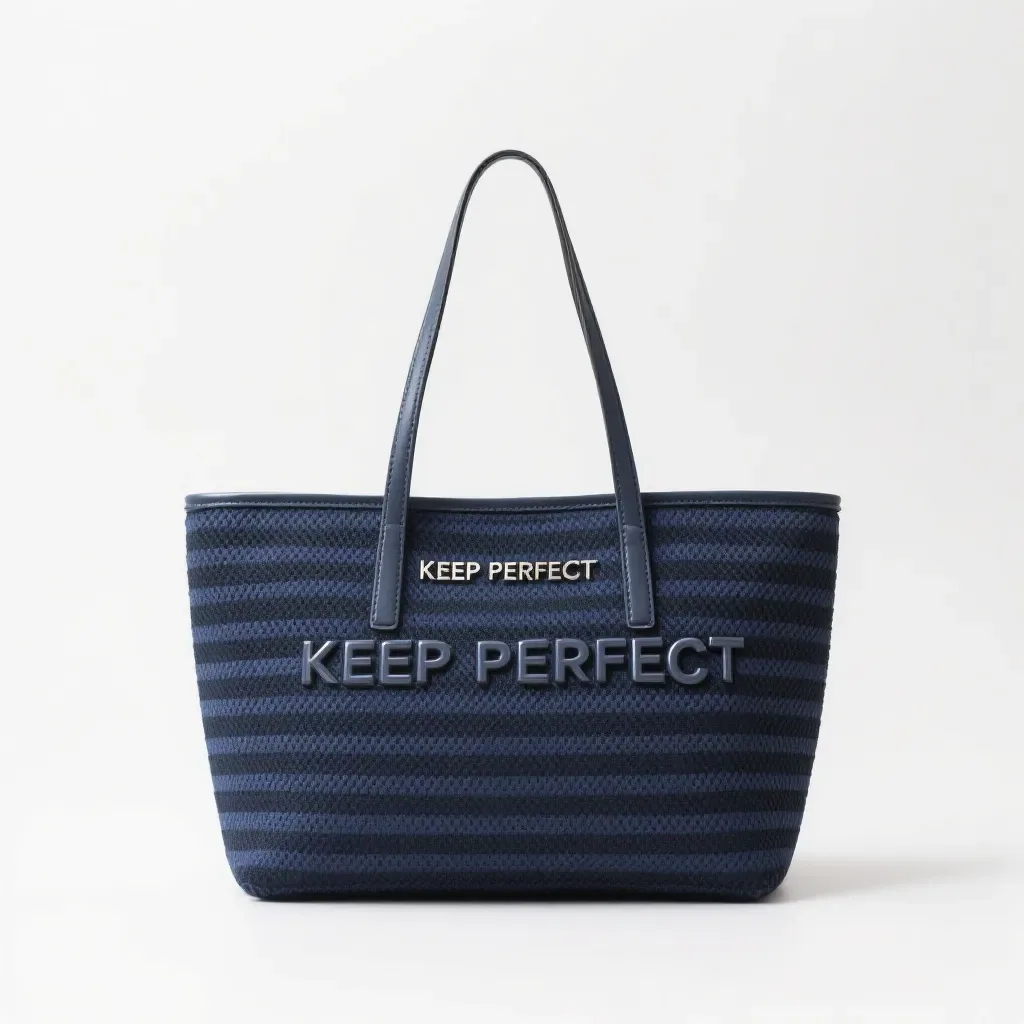
The shaped approach also changes what can be done in a single panel. Openings, reinforcement zones and integral handles can all be formed during knitting rather than added afterwards, which is why the operation count falls from seven to nine down to three or four on a comparable tote.
What Does Seamless Actually Mean in a Knitted Bag
In a knitted bag, seamless means the body leaves the machine shaped rather than assembled. The tube or panel is knit to its finished outline, with the base integrated and the handle root formed during knitting. What remains is usually one short join and the handle attachment, not the six to nine seams a cut-and-sew body carries.
The word is worth qualifying, because no bag is entirely without a join. A typical shaped knit tote carries zero to two seams against six to nine for an equivalent stitched body. That is a reduction of roughly eighty percent in seam length, which is the number that matters for both failure risk and labour.
The machinery side of this is well established. Shaped knitting on modern electronic flat machines produces the panel and the shaping in one operation, which is why sampling can run in 7 working days rather than the 15 to 25 a woven route needs.
Where Stitching Still Does the Work
Stitching is not obsolete, and there are four places it remains the better answer. Where a panel might need to be replaced rather than the whole bag. Where the load path is complex and a seam distributes it better than a knit transition. Where the bag carries heavy, sharp contents that would snag a knitted surface.
The fourth is where the design needs a flat, non-extensible surface for decoration. A conventional woven panel takes a dense embroidery or a fine screen print that a knitted surface cannot hold with the same definition. Where the brand mark is the point, stitched woven cloth still wins.
None of these is an argument against knit; they are arguments for choosing the construction that fits the brief. Programmes that pick knit for a decorative, high-abrasion brief tend to be disappointed, and programmes that pick woven cloth for a packable, low-impact brief pay for weight they did not need.
How Much Material Does Each Approach Use
Yield is the clearest number. Shaped knitting leaves 2 to 4 percent waste because the panel is knit to shape; cut-and-sew leaves 12 to 18 percent because a rectangular roll has to yield a shaped piece. On a 255 g yarn input, that is 8 to 10 g per bag not bought, not dyed, not discarded.
- Shaped knit yield
- 96 to 98 percent
- Cut-and-sew yield
- 82 to 88 percent
- Seams, shaped knit
- 0 to 2
- Seams, stitched
- 6 to 9
- Sewing operations, knit
- 3 to 4
- Sewing operations, stitched
- 7 to 10
- Handle join elongation, knit
- 8 to 12 percent
- Handle join elongation, webbing
- 3 to 5 percent
Multiplied across a programme the effect is large. At about 200,000 pieces a month, a fourteen-point yield improvement represents a material saving measured in tonnes per year, before any change to the yarn route itself.
Waste is only half the material story. The other half is what happens to what remains: waste from a shaped panel is a single material and can be fed back into recycling streams more easily than mixed offcuts carrying coatings, interlinings and thread from a cut-and-sew operation.
Does Removing Seams Change the Failure Mode
Yes, and this is the part buyers most often get wrong. Removing seams does not make a bag fail less often; it moves the failure somewhere else. In a stitched body the failure is usually the stitch line at the handle join. In a seamless knit body it is abrasion at the base and the handle root.
The consequence for specification is that reinforcement is different, not absent. A stitched bag needs reinforcement at the join; a seamless knit bag needs density at the base and root. Applying a stitched-bag solution to a knit bag adds mass without addressing the mechanism.
A third behaviour is specific to shaped bodies and surprises buyers: there is no seam to fail gradually. A stitched handle join often shows threads loosening before it fails, which gives warning. A knitted root that is under-specified tends to hold and then open, which is why a load-cycling requirement matters more than a single pull test.
Elongation is the second behaviour worth specifying. A knitted-in handle root typically stretches 8 to 12 percent under full load, against 3 to 5 percent for stitched webbing. Some end users read that stretch as weakness; most read it as comfort. Decide which matters for the brief.
What Changes in the Specification
Three specification lines change when moving from stitched to seamless knit. Seam strength is replaced by, or supplemented with, a load-cycling requirement on the handle root. Fabric mass gains a tolerance band because yarn is bought by weight. And abrasion moves to the base zone as an explicit line item.
- Replace the seam-strength-only requirement with a load-cycling requirement on the knitted handle root.
- Add a tolerance band to fabric mass, typically plus or minus 5 percent, testable on a cut square.
- Specify abrasion for the base and handle root zones separately from the body.
- Name the stitch density at the handle root, since that is the lever for controlling elongation.
- Record the pilling requirement with a test method and a target grade.
None of the five is onerous, and each maps to a test that an inspector can check. The point of naming them is to make the construction verifiable rather than described.
A sixth line is worth adding where the programme sells into more than one market: name the certificate standard for any recycled claim, together with the issuing body and the shipped quantity. Construction changes do not alter that requirement, and a new specification is a convenient moment to make sure the file still matches the claim on the packaging.
How Do the Two Compare on Cost and Lead Time
On unit cost the two are closer than the material difference suggests, because knit trades higher fabric mass against higher yield and fewer operations. On lead time knit is clearly faster, and the gap is largest where a programme is still iterating.
| Measure | Seamless knit | Stitched construction | Comment |
|---|---|---|---|
| Panel yield | 96 to 98 percent | 82 to 88 percent | Drives material cost and waste |
| Seams in load path | 0 to 2 | 6 to 9 | Around 80 percent less seam length |
| Sewing operations | 3 to 4 | 7 to 10 | Fewer operations, fewer defect sites |
| Sampling lead time | 7 working days | 15 to 25 working days | Largest practical difference |
| Bulk lead time | 30 days | 45 to 60 days | Matters against a launch calendar |
| Minimum order quantity | 100 pcs per style and colourway | commonly 200 to 500 pcs | Knit suits testing new styles |
| Repair in service | usually replaced | restiched or repanelled | Leather and woven advantage |
Where a programme is past its first season and the specification is stable, the sampling advantage matters less. Where it is still iterating, seven working days against twenty is the difference between two rounds and one.
Where Does Seamless Knitting Struggle
Three limitations are worth stating plainly. Severe abrasion favours a woven or leather surface. Very large panels can exceed the practical knitting width without a join, which reintroduces the seam the construction was meant to remove. And structural stiffness, where a bag has to stand on its own, is harder to achieve in knit.
The third limitation has a partial answer. Inserting a stiffener at the base or specifying a tighter construction with a heavier yarn can deliver most of the required structure without abandoning shaped knitting, but there is a limit beyond which a woven panel is simply the right component.
Naming these limits is more useful than arguing the construction wins everywhere. A specification written against known limits is enforceable; one written around marketing copy is not.
A fourth limitation is commercial rather than technical. Shaped knitting rewards programmes that repeat a construction across colourways and seasons, because pattern development is the fixed cost. A one-off style with a unique shape carries that development in a single unit cost, which can make knit look expensive against a cut-and-sew alternative.
The lead-time gap is where most programmes find the benefit. A specification that would take two woven sample rounds to settle can take three knit rounds in the same calendar window, which usually produces a better bag rather than merely a faster one.
How to Decide Without a Laboratory
Three questions settle most choices before any testing. How long must the bag last in service. How will it be branded. And how often will the specification change in the first two seasons. The answers point to one construction more reliably than a comparison table does.
- Short replacement cycle, transfer or knit-in branding, and an evolving specification: choose seamless knit.
- Long service life, severe abrasion, or dense embroidery: choose a stitched woven or leather construction.
- Genuinely uncertain: sample both at 100 pcs per style and colourway and test to the same methods.
- Confirm the result on bulk goods at inspection to AQL 2.5 under ISO 2859-1 before the next season commits.
The last item is what turns a sample result into a decision. Laboratory samples are made under different conditions from production goods, and inspection before loading is where the difference either shows up or does not.
Two specification lines should never move during a construction switch: the inspection standard, held at AQL 2.5 under ISO 2859-1, and the restricted-substance assessment, held at its current scope. Changing construction is not a reason to relax either.
Programmes that work through these questions in order tend to reach a defensible answer in an afternoon and keep the file for next season. Programmes that start from the material usually revisit the decision later, when changing it costs more.
Writing the Construction Choice Into the Brief
The final step is to write the choice into the brief rather than leaving it in an email. Name the construction, the stitch density at the handle root, the fabric mass with tolerance, the abrasion band by zone, the pilling grade and the inspection standard.
Six lines, each testable, each attached to a method. That is the difference between a specification that governs a programme and a description that merely accompanies it.
Where a programme is genuinely undecided, the most economical experiment is not a full comparison study. It is two samples at the same quantity, tested to the same methods in the same round. Sampling runs 7 working days, so the whole exercise fits inside a single planning cycle rather than consuming a season.
Seamless moves failure, not removes it
Shaped knitting removes four to seven seams from the load path, but abrasion then concentrates at the base and handle root. Reinforce there.
Yield is the clearest number
96 to 98 percent knit yield against 82 to 88 percent for cut-and-sew. Across 200,000 pieces a month that is a material saving in tonnes.
Specify elongation, not just strength
A knitted-in handle root stretches 8 to 12 percent under full load against 3 to 5 percent for webbing. Decide which the brief wants.
Know the three limits
Severe abrasion, panel widths beyond practical knitting width, and self-supporting structure. Name them, then specify around them.
The construction rule in one line
- Choose seamless knit for packable, low-impact programmes with evolving specifications; choose stitched woven or leather for abrasion, structure and repair.
Choose a construction for your knit bag programme
Send the bag type, target dimensions, colourway count and branding method. We will return both constructions sampled against the same protocol, at 100 pcs per style and colourway with 7 working days sampling and 30 days bulk, inspected to AQL 2.5 and shipped FOB Xiamen. Start on the contact page.
Frequently Asked Questions
What does seamless mean for a knitted bag?
It means the body is knit to its finished outline rather than cut and assembled. The base is integrated and the handle root is formed during knitting, leaving zero to two seams against six to nine for a stitched body. No bag is entirely join-free, but the reduction in seam length is around eighty percent.
Does seamless construction make a bag stronger?
It changes where the bag fails rather than whether it fails. Fewer seams in the load path removes the usual handle-join failure, but abrasion then concentrates at the base and handle root. Specify density in those zones instead of relying on the construction alone. Keep the specification tied to named test methods rather than descriptive adjectives.
How much less material does seamless knitting use?
Panel waste drops from 12 to 18 percent to 2 to 4 percent, so roughly 8 to 10 g of material per 255 g input is never bought, dyed or discarded. Across a programme of about 200,000 pieces a month, that is a saving measured in tonnes a year.
When is a stitched construction better?
Where abrasion is severe, where the bag must support its own structure, where a panel may need replacing in service, or where the decoration requires a flat woven surface for dense embroidery or fine screen print. In those four cases a stitched panel is the better component. Confirm the choice on bulk goods at inspection to AQL 2.5 under ISO 2859-1 before shipping.
What limits seamless knitting?
Three things: abrasion resistance, practical knitting width for very large panels, and structural stiffness. The third is partly solvable with a stiffened base panel or a tighter construction on a heavier yarn, but not indefinitely, and the first is a property of the fibre. Record the decision with the test reports, so the following season reviews rather than repeats.
How do sampling times compare?
Shaped knit samples in 7 working days because the panel is programmed and knit directly. A woven or leather route commonly runs 15 to 25 working days, since hide selection, weaving or yarn dyeing has to be booked before cutting begins on the first sample. Confirm the choice on bulk goods at inspection to AQL 2.5 under ISO 2859-1 before shipping.
What is the minimum order quantity?
100 pcs per style and colourway for shaped knit programmes. Woven and leather routes commonly start at 200 to 500 pcs because of weaving, yarn-dye or hide commitments, which matters most when a programme is testing a new style or a new colourway. Record the decision with the test reports, so the following season reviews rather than repeats.
How should the construction choice be verified?
Sample both constructions at the same quantity, test both to the same methods on the same day where possible, then confirm the result on bulk goods at inspection to AQL 2.5 under ISO 2859-1 before the following season commits volume. Confirm the choice on bulk goods at inspection to AQL 2.5 under ISO 2859-1 before shipping.
Does a seamless bag still need stitching?
Usually some. The handle attachment is normally sewn even when the root is knitted in, and any zip, lining or pocket requires stitching. Seamless refers to the body construction rather than to a complete absence of sewing anywhere in the bag. Record the decision with the test reports, so the following season reviews rather than repeats.
What should the specification say about the handle root?
Name the stitch density, the expected elongation under the rated load, and the test method to be used. Stitch density is the lever for controlling both elongation and abrasion resistance at the point where knitted bags actually fail in service. Confirm the choice on bulk goods at inspection to AQL 2.5 under ISO 2859-1 before shipping.
How does seamless knitting affect lead time?
It shortens sampling to 7 working days and bulk to 30 days, against roughly 15 to 25 and 45 to 60 for woven or leather routes. The difference is largest while a specification is still changing between sample rounds. Record the decision with the test reports, so the following season reviews rather than repeats.
Can a programme mix both constructions?
Yes, and it is often sensible. A knit everyday tote alongside a stitched leather executive bag covers two briefs and two price points, and both can share a colour palette, a trim specification and a branding file. Confirm the choice on bulk goods at inspection to AQL 2.5 under ISO 2859-1 before shipping.
What inspection standard applies to both?
AQL 2.5 under ISO 2859-1 applies to either construction, with inspection before loading. What changes is the defect profile, because knit concentrates defects at the base and the handle root, so those zones warrant specific attention. Record the decision with the test reports, so the following season reviews rather than repeats.
How does a programme record the decision?
File the scoring sheet, the test reports and a short paragraph stating why the construction was chosen and what was traded away, all against the style and colourway code, with a review date set for the following season. Confirm the choice on bulk goods at inspection to AQL 2.5 under ISO 2859-1 before shipping.
People Also Ask
What is a seamless knitted bag?
A bag whose body is knit to its finished outline on the machine, with the base integrated and the handle root formed during knitting. It carries zero to two seams against six to nine for a stitched body.
Are seamless knitted bags stronger?
They fail in a different place. Removing seams removes the usual handle-join failure, but abrasion then concentrates at the base and the handle root, so density must be specified there rather than assumed.
How much waste does seamless knitting save?
Panel waste falls from 12 to 18 percent to 2 to 4 percent, roughly 8 to 10 g per 255 g yarn input, which is why the material line improves even at higher fabric mass.
When should a bag be stitched instead?
Where abrasion is severe, the bag must stand unaided, a panel may need replacing, or the decoration needs a flat woven surface for dense embroidery or fine print on the finished panel. Review the outcome annually, since yarn routes and certificate supply both move.
What is the MOQ for seamless knitted bags?
100 pcs per style and colourway, with sampling in 7 working days and bulk in 30 days. Woven and leather routes commonly require 200 to 500 pcs and longer scheduling windows. Keep the specification tied to named test methods rather than descriptive adjectives.
Sources and further reading
Every figure on this page is either our own programme data or attributed below. Open the originals before you write them into a specification.
- WHOLEGARMENT knittingShima Seiki Background on shaped knitting technology that produces a finished panel with integrated structure in one operation.
- Shima Seiki Mfg., Ltd.Shima Seiki Manufacturer background on the electronic flat knitting machines used for shaped bag panels.
- ISO 13934-1 Textiles, tensile properties of fabrics, Part 1ISO The test method used for handle join force figures in both constructions.
- Textile Exchange standardsTextile Exchange The chain-of-custody standards behind the recycled yarn routes used in shaped knitting.
- ISO 2859-1 Sampling procedures for inspection by attributesISO The standard behind the AQL 2.5 inspection carried out before bulk shipment.