Knitted Bag vs Leather Bag: The Complete Comparison for B2B Buyers
Is knit a serious alternative to leather for a B2B bag programme? Across twelve factors the answer is yes for most corporate and promotional briefs, and no for heritage or luxury positioning. A knit tote weighs 230 to 280 g against 650 to 900 g, samples in 7 working days against 15 to 25, and starts at 100 pcs. Leather lasts longer and develops patina. Choose by positioning first.
Two Different Definitions of Durability
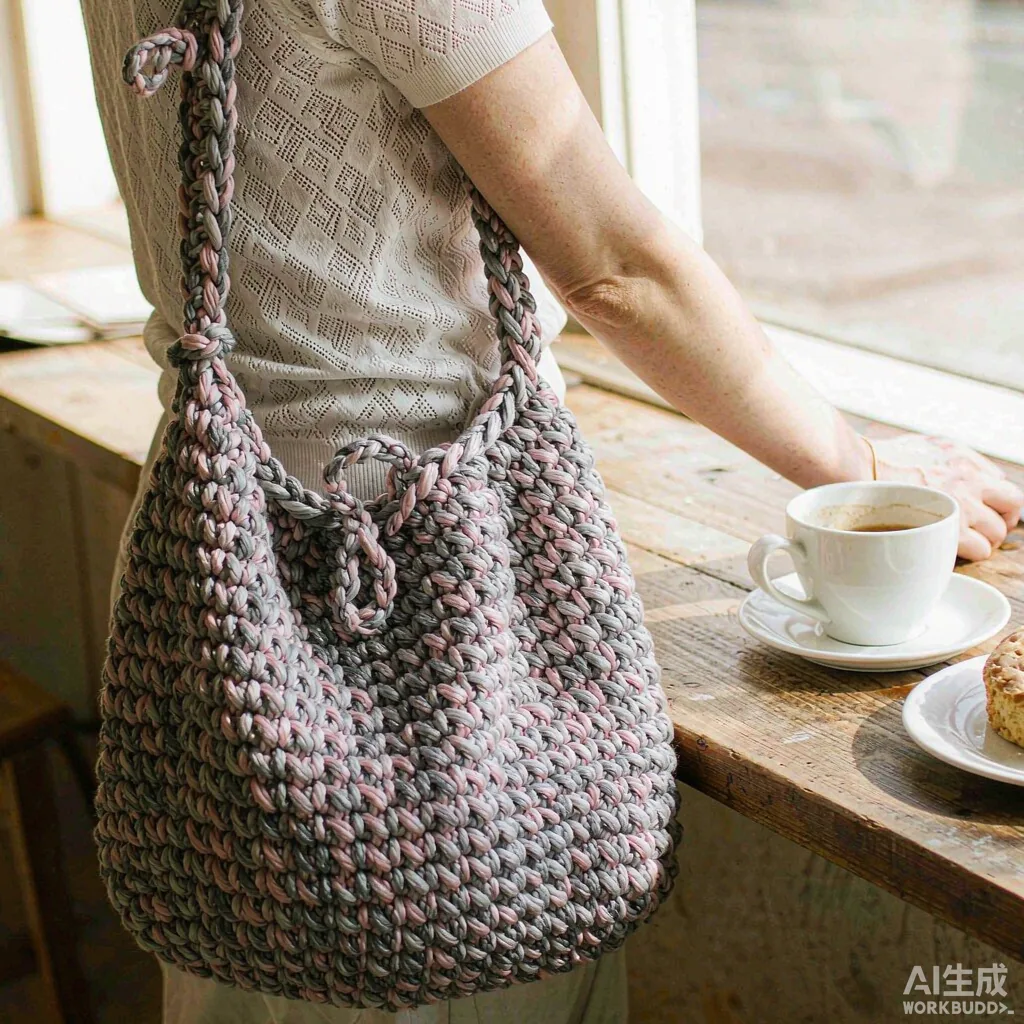
Knit and leather are both durable, but they mean different things by it. Leather resists puncture, abrasion and tearing, and it improves in appearance with use. Knit resists repeated flexing and variable load, recovers its shape, and maintains its appearance until it eventually pills or snags.
The practical difference is the shape of the failure curve. Leather degrades slowly and visibly, which owners tend to accept and even value. Knit performs consistently and then degrades relatively quickly at the end, which makes replacement timing more predictable but less forgiving.
For a B2B programme the question is which curve suits the buyer's replacement cycle. A corporate gifting programme replacing bags every two to three years suits knit. A heritage product with a ten-year expectation suits leather.
There is also a difference in how each material tolerates abuse. Leather accepts scuffing and puncture without structural loss, and a scratch becomes part of the surface. A knitted body resists either better than expected or fails suddenly, depending on whether a yarn is snagged, and a snag at the handle root is the usual starting point.
The Comparison Grid
Twelve factors, scored for a mid-weight tote in each construction. Bands are given rather than single figures, because the spread within each material is wider than the gap between them for several of these measures.
| Factor | Knitted bag | Leather bag | Notes |
|---|---|---|---|
| Fabric mass | 380 to 450 g per square metre | 700 to 1,000 g per square metre | Leather is roughly double |
| Finished tote weight | 230 to 280 g | 650 to 900 g | Affects carry comfort and freight |
| Abrasion, ISO 12947-2 | 20,000 to 30,000 rubs | 50,000 rubs and above | Leather's clearest win |
| Tear, ISO 13937 | 12 to 25 N | 40 to 90 N | Large gap in favour of leather |
| Expected service life | 2 to 4 years | 5 to 10 years | Depends on use intensity |
| Carbon, cradle-to-gate | 1.0 to 2.4 kg CO2e per bag | 4.5 to 9.0 kg CO2e per bag | Hide production dominates |
| Water per kg of material | 60 to 100 L | 300 to 600 L | Tanning is water intensive |
| Care requirement | Machine washable, low heat | Conditioning, no machine wash | Affects end-user satisfaction |
| Repairability | Usually replaced | Restitched and refinished | Leather advantage in lifetime cost |
| Sampling lead time | 7 working days | 15 to 25 working days | Hide sourcing and cutting |
| Minimum order quantity | 100 pcs per style and colourway | commonly 200 to 300 pcs | Hide matching adds constraint |
| Bulk lead time | 30 days | 45 to 60 days | Tanning and finishing schedule |
Read the grid as a trade rather than a scoreboard. Knit wins on mass, carbon, water, care, sampling speed and minimum quantity. Leather wins on abrasion, tear, service life and repairability. Which set matters depends on the brief, not on the material.
Mass, Hand and the Carry Experience
Weight is the difference an end user notices first. A knitted tote of 230 to 280 g feels materially different from a leather tote of 650 to 900 g before anything is put in it, and the gap widens with load because the knit body does not need the same reinforcement.
Hand is the more subjective measure, and leather wins it in most blind comparisons. A knitted surface is warmer and softer, which suits casual and promotional briefs, while leather's density and coolness read as formality and permanence.
For a programme where the bag is carried all day, the weight difference is a functional argument rather than a preference. Where the bag is carried occasionally and displayed often, the hand and appearance arguments dominate instead.
Aging: Patina Versus Pilling
The two materials age in opposite directions. Leather darkens, softens and develops a surface record of use that most owners value. A knitted body holds its appearance and then begins to pill at abrasion points, which most owners read as wear.
Pilling is controllable through yarn choice and stitch density, but it cannot be eliminated. The specification lever is fibre: filament polyester yarns pill far less than spun yarns, and a tighter construction pills less than an open one.
The practical guidance is to specify pilling resistance as an explicit requirement with a test method and a grade, rather than discovering the behaviour after the first season. A woven leather programme has no equivalent line item, which is worth remembering when comparing specifications.
Care, Repair and End of Service
Care requirements separate the two in daily use. A knitted bag is machine washable at low temperature and dries quickly because polyester regain is around 0.4 percent. A leather bag needs conditioning, cannot be machine washed, and is damaged by prolonged soaking.
Repair is where leather holds a real advantage. A leather bag can be restiched, refinished and reshaped by a cobbler or a leather specialist, which extends service life substantially. A knitted bag with a failed handle join is usually replaced.
- Knit fabric mass
- 380 to 450 g per square metre
- Leather substance
- 1.0 to 1.6 mm
- Knit tote weight
- 230 to 280 g
- Leather tote weight
- 650 to 900 g
- Knit service life
- 2 to 4 years
- Leather service life
- 5 to 10 years
- Minimum order quantity
- 100 pcs per style and colourway
- Sampling lead time
- 7 working days
The net effect on lifetime cost depends on how long the programme intends to keep the bag in service. Over ten years, one leather bag may outlast three knit bags. Over two years, knit wins clearly on cost, weight and carbon.
Carbon, Water and Chemical Load
This is where the gap is widest and least ambiguous. Hide production carries a heavy upstream burden, and cradle-to-gate carbon for a leather tote commonly runs 4.5 to 9.0 kg CO2e against 1.0 to 2.4 for a knitted bag of comparable size.
Water tells the same story. Tanning and finishing commonly use 300 to 600 litres per kilogram of material against 60 to 100 for a polyester knit body, and the difference widens where a wet-finish route is specified for leather.
Chemical load is more nuanced. Modern tanning is regulated and chromium VI is controlled, but tanning chemistry still requires screening against restricted-substance lists. Knit routes require the same screening, plus attention to dye recipe changes after a yarn route switch.

For programmes reporting against a product standard, the boundary has to be stated either way. Cradle-to-gate figures exclude the use phase, which for a bag that is washed frequently is not negligible for either material.
Cost Structure Over a Programme Lifetime
Unit cost compares badly without a time horizon, because the two constructions have different cost shapes. Leather carries higher material and finishing cost with a long service life. Knit carries lower material cost and a shorter replacement cycle.
- Material per bag: about 255 g of yarn input for knit, against substantially more hide area per leather tote.
- Finishing: knit routes carry dyeing and any functional finish; leather carries tanning, fatliquoring and surface finish.
- Sampling: 7 working days for knit against 15 to 25 for leather, which changes how much iteration the time allows.
- Replacement: knit bags are usually replaced rather than repaired, so the cycle length matters to lifetime cost.
- Freight: a knit tote packs roughly 15 to 20 percent less cube than a leather tote of the same dimensions.
The comparison that matters is cost per year of service, not cost per bag. On a mid-weight tote, knit sits near USD 4.80 landed against a leather band that is materially higher, but the gap narrows considerably once service life is applied.
Where Leather Remains the Right Answer
Leather is the better choice in four situations. Where the product positioning depends on heritage, craft or permanence. Where the expected service life exceeds five years under regular load. Where the bag will be repaired rather than replaced.
The fourth is where the end user associates material with status and is prepared to care for it. None of these is an argument about performance data; they are arguments about what the object is meant to communicate and how long it is meant to last.
Acknowledging that framing is more useful to a buyer than a material comparison that claims one option wins on every axis, because no material does.
Switching a Programme From Leather to Knit
The switching exercise has four steps, and the order protects the outcome. Record the leather performance that actually drove satisfaction. Set target bands with methods rather than copying figures. Zone the knit construction to close gaps. Approve on a tested physical sample.
- Record the leather properties that drove satisfaction: hand, edge finish, structure, aging behaviour, perceived value.
- Set a band and a test method for each, rather than copying the leather specification figure.
- Zone density at the base and handle root instead of raising the uniform fabric mass.
- Choose the branding method before sampling, since knit-in, transfer and patch routes differ in lead time.
- Confirm on bulk goods at inspection to AQL 2.5 under ISO 2859-1 before the next season commits.
Sampling runs 7 working days, which is short enough to iterate on construction within a season. Bulk runs 30 days, and inspection to AQL 2.5 under ISO 2859-1 confirms that production goods match what the sample promised.
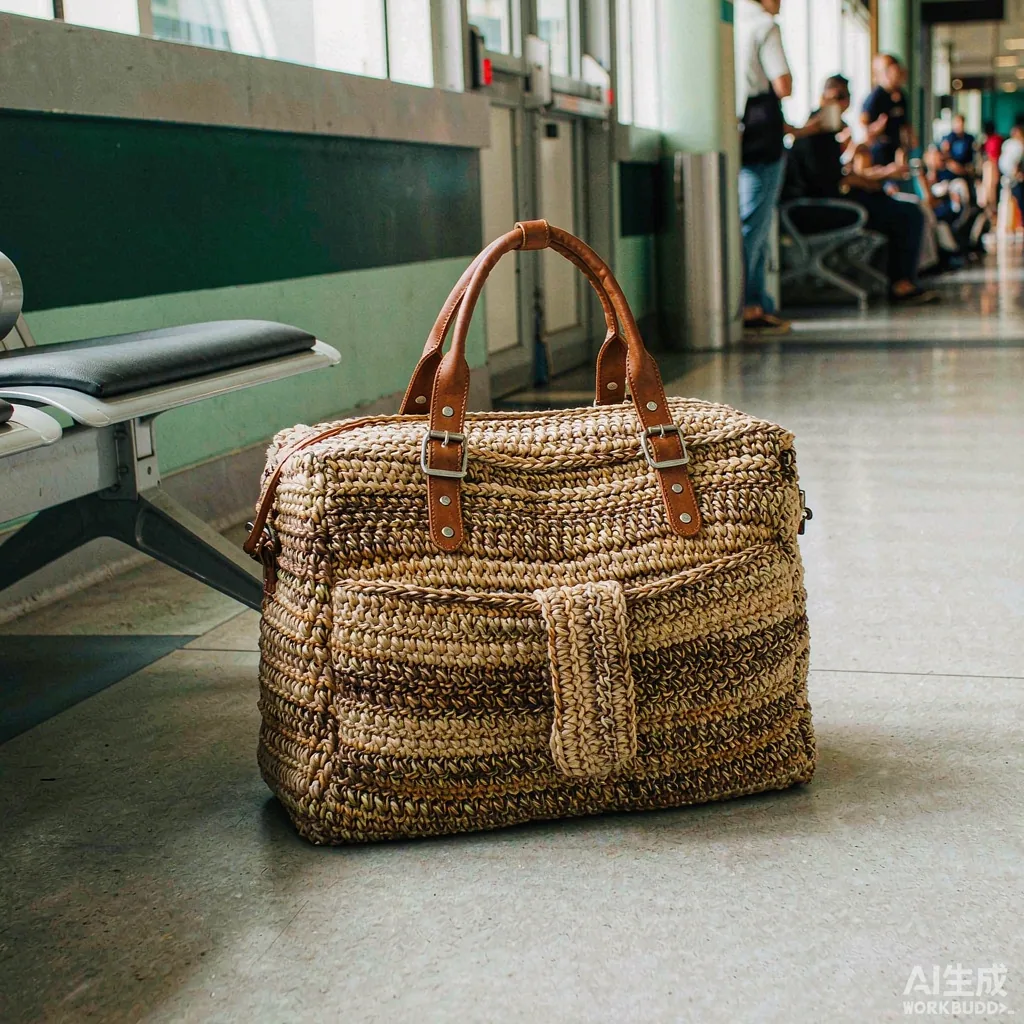
For programmes weighing the switch, the honest summary is that knit wins on weight, carbon, water, sampling speed and minimum quantity, while leather wins on abrasion, tear and repairability. Positioning decides which set matters.
The two materials also differ in how they are stored and shipped. A knitted tote folds flat and recovers, which suits mail-order and event distribution. A leather tote holds a crease if stored folded for long periods, so it usually ships stuffed or boxed, which adds both packaging and cube.
What to Put in the Specification Either Way
Whichever construction is chosen, three specification lines do most of the work. Name the material and its route, including the recycled share and the certificate standard. State the mass with a tolerance band. And name the test methods and target grades for abrasion, tear and colourfastness.
Those three lines are what make a specification enforceable at inspection. Everything else is detail that can be settled at sampling, and sampling runs 7 working days, which is enough to settle it.
Weight is the first difference
A knit tote weighs 230 to 280 g against 650 to 900 g for leather. That changes carry comfort, packing cube and freight per unit.
Leather wins abrasion and tear
Above 50,000 rubs and 40 to 90 N tear, against 20,000 to 30,000 rubs and 12 to 25 N for knit. It decides rough-use briefs.
Compare cost per service year
Unit price alone misleads. Over ten years one leather bag may outlast three knit bags; over two years knit wins clearly.
Three lines make it enforceable
Material and route, mass with tolerance, and test methods with target grades. The rest can be settled at sampling.
The comparison rule in one line
- Decide by positioning and expected service life, then specify material route, mass tolerance and test methods with grades.
Compare knit against leather on your programme
Send the bag type, target dimensions, colourway count and how the bag will be used. We will return both constructions against the same protocol, sampled at 100 pcs per style and colourway with 7 working days sampling and 30 days bulk, inspected to AQL 2.5 and shipped FOB Xiamen. Start on the contact page.
Frequently Asked Questions
Is a knitted bag a serious alternative to a leather bag?
For most corporate, promotional and everyday briefs, yes. A knitted tote weighs 230 to 280 g against 650 to 900 g, carries far lower carbon and water, samples in 7 working days and starts at 100 pcs. For heritage, luxury or ten-year service expectations, leather remains the better answer.
Which lasts longer, knit or leather?
Leather, typically five to ten years under regular use against two to four for a knitted body. Leather also degrades in a way owners accept, developing patina, while knit holds its appearance and then pills at abrasion points, which most owners read as wear rather than character. Confirm the outcome on bulk goods at inspection to AQL 2.5 under ISO 2859-1.
How does weight compare between knit and leather totes?
A knitted tote of the same dimensions weighs 230 to 280 g against 650 to 900 g for leather. The gap widens under load, because a knit body does not need the same reinforcement at the handle join in order to carry the same total weight. Keep specification lines testable, with a method named for every target band.
Does leather resist abrasion better than knit?
Yes, and by a wide margin. Leather commonly reaches 50,000 rubs and above to ISO 12947-2, against 20,000 to 30,000 for a knitted body of comparable specification. Where the bag is dragged, set down on rough surfaces or carried sharp-edged contents, that gap usually settles the question.
How much water does leather use compared with knit?
Tanning and finishing commonly run 300 to 600 litres per kilogram of material, against 60 to 100 litres per kilogram for a polyester knit body. A dope-dyed knit route reduces the figure further, to roughly 20 to 30 litres per kilogram, and removes the rinse sequence entirely. Record why the construction was chosen and what was traded away for the next review.
Can a knitted bag be repaired like leather?
Not usually. Leather can be restiched, refinished and reshaped by a specialist, which extends service life considerably. A knitted bag with a failed handle join is normally replaced rather than repaired, which is why the replacement cycle belongs in the specification. Add the weights before scoring, so the result reflects the brief rather than the preference.
How should a programme choose between them?
Start with positioning and expected service life, since those decide which set of advantages matters. Then specify the material route, the mass with a tolerance, and the test methods with target grades, so that the choice can be verified at inspection. Record why the construction was chosen and what was traded away for the next review.
What is the MOQ for knitted bags compared with leather?
Knit programmes start at 100 pcs per style and colourway. Leather routes commonly start at 200 to 300 pcs, and hide matching across a large order adds a further constraint that knit does not carry. Add the weights before scoring, so the result reflects the brief rather than the preference.
How do sampling lead times compare?
Knit runs 7 working days because the panel is programmed and knit directly. Leather typically runs 15 to 25 working days, since hide selection, cutting and finishing all have to be scheduled before a physical sample exists. Record why the construction was chosen and what was traded away for the next review.
How do bulk lead times compare?
Knit runs 30 days. Leather commonly runs 45 to 60 days because tanning and finishing are batch processes with their own scheduling. For programmes tied to a launch calendar, that difference is often more important than unit cost. Add the weights before scoring, so the result reflects the brief rather than the preference.
Does knit feel less substantial than leather?
It feels different rather than inferior. Leather is dense, cool and structured; knit is warmer, softer and more forgiving in the hand. Whether the difference reads as less substantial depends entirely on the positioning the programme is aiming for. Record why the construction was chosen and what was traded away for the next review.
Are there compliance differences between the two?
Both require restricted-substance screening and both need certificates for any claim carried on the product or its packaging. Leather adds tanning chemistry to the assessment; knit adds attention to dye recipe changes after a yarn route switch. Add the weights before scoring, so the result reflects the brief rather than the preference.
How do carbon footprints compare?
Cradle-to-gate carbon for a leather tote commonly runs 4.5 to 9.0 kg CO2e, against 1.0 to 2.4 for a knitted bag of comparable size. The gap is driven by upstream hide production rather than by bag assembly. Record why the construction was chosen and what was traded away for the next review.
Should a programme offer both materials?
Frequently yes. A knit everyday tote alongside a leather executive bag covers two use cases and two price points, and both can share a colour palette, a trim specification and a branding file, which keeps the compliance work manageable. Add the weights before scoring, so the result reflects the brief rather than the preference.
People Also Ask
Which is better, a knitted bag or a leather bag?
Depends on positioning and service life. Knit wins weight, carbon, water and speed. Leather wins abrasion, tear and repairability. Corporate and promotional briefs usually favour knit. Add the weights before scoring, so the result reflects the brief rather than the preference.
How long do knitted bags last compared with leather?
Typically two to four years for a knitted body against five to ten years for leather under regular use, though heavy abrasion shortens both. Record why the construction was chosen and what was traded away for the next review.
Is leather more durable than knit?
For abrasion and tear, clearly. Leather exceeds 50,000 rubs and 40 to 90 N tear, against 20,000 to 30,000 rubs and 12 to 25 N for knit. Add the weights before scoring, so the result reflects the brief rather than the preference.
Do knitted bags wash better than leather?
Yes. A knit body is machine washable at low temperature and dries quickly, while leather requires conditioning and cannot be machine washed. Record why the construction was chosen and what was traded away for the next review.
What is the MOQ for knitted versus leather bags?
Knit starts at 100 pcs per style and colourway. Leather routes commonly start at 200 to 300 pcs, plus hide matching constraints. Add the weights before scoring, so the result reflects the brief rather than the preference.
Sources and further reading
Every figure on this page is either our own programme data or attributed below. Open the originals before you write them into a specification.
- ISO 12947-2 Textiles, determination of abrasion resistance, Part 2: specimen breakdownISO The abrasion method behind the rubs bands compared between knitted bodies and leather.
- ISO 13934-1 Textiles, tensile properties of fabrics, Part 1ISO The tensile and seam method used for the force figures quoted in the comparison grid.
- Textile Exchange standardsTextile Exchange The chain-of-custody framework behind recycled content routes referenced in the comparison.
- Substances restricted under REACHECHA The restricted-substance list applied to both materials, including tanning and dye chemistry.
- Ecodesign for Sustainable Products Regulation (ESPR)European Commission The framework behind product passport and durability expectations that affect material selection.