Knitted Bag vs Woven Bag: A Decision Tree for Choosing a Construction
Knit or woven for the next bag programme? Six junctions decide it, in order. Expected service life, abrasion environment, colourway count, branding method, quantity with timing, and reporting load. Shaped knitting yields 96 to 98 percent against 82 to 88 percent and samples in 7 working days. Woven cloth wins where abrasion is severe and decoration is dense. Work the junctions in sequence.
One Decision Tree, Six Junctions
Construction choices go wrong when they are made on preference rather than on the brief. A decision tree fixes that by forcing six questions in a fixed order, each with a consequence that narrows the field. The order matters because later junctions depend on earlier answers.
The six junctions are expected service life, abrasion environment, colourway count and palette, branding method, quantity with timing, and reporting and compliance load. Each takes minutes to answer, and together they produce a defensible construction choice rather than a reversible one.
Work them in sequence, not in parallel. Answering the branding question before the service-life question produces an answer that has to be revised when the first is revisited, and programmes rarely revisit once samples are in hand.
Construction is the most expensive thing to change once bulk starts, which is why the order of these questions matters. A yarn route can be swapped at sampling for the cost of one round. A construction cannot be changed after approval without repeating pattern development, sampling, testing and inspection, which costs a season rather than a fortnight.
Junction One: Expected Service Life
Start with how long the bag has to last. Under two years, knit is usually right: it is lighter, lower in carbon and water, and faster to iterate. Five years and beyond, a woven or leather construction generally justifies its higher material and finishing cost.
Between two and five years is where most programmes sit, and where the other junctions decide the answer. In that band, the abrasion environment and the branding method carry more weight than the material preference.
Be specific about the replacement cycle rather than the aspiration. A corporate gifting programme that intends to refresh annually and a heritage retail product intended to last a decade are not the same brief, even at identical dimensions.
The second element in this junction is how much the specification is expected to move. Programmes still iterating on construction benefit disproportionately from a 7 working day sampling route; programmes with a frozen specification benefit less. Decide which you are before choosing, because the answer changes which advantage is worth paying for.
Junction Two: Abrasion Environment
Abrasion is the clearest technical separator. A knitted body measured to ISO 12947-2 commonly reaches 20,000 to 30,000 rubs to breakdown; woven bag cloth of comparable specification typically lands between 25,000 and 50,000, and leather higher still.
Where the bag is dragged, overfilled or set down on rough surfaces, that gap should decide the construction. Where it is carried lightly and folded between uses, knit is comfortably adequate and considerably lighter.
The mitigation for knit is zoning rather than mass. Adding density at the base and handle root narrows the gap measurably and costs less yarn than a heavier fabric across the whole body.
Usage intensity moves service life more than material choice does. A knitted tote carried lightly a few times a week will outlast a leather tote used daily under heavy load, and the reverse also holds. Programmes should therefore specify the expected duty cycle alongside the material, because without it no service-life figure is meaningful.
The base zone deserves its own abrasion requirement. Most knit bag failures begin at the base panel or the handle root rather than the side body, so a single figure for the whole bag understates the risk. Specify a higher band for the base and root, and add density there rather than across the entire body.
Junction Three: Colourway Count and Palette
Colourway count drives cost, lead time and discharge load in both constructions, but it bites harder on recycled routes. Each additional shade is another dye lot, another rinse sequence and another set of approvals, and the discharge rises close to in proportion.
Recycled yarns also carry a narrower shade window. Deep shades on recycled routes can show around half a grey-scale grade of lot-to-lot variation, against roughly a quarter grade on conventional routes. Programmes running six or more colourways should confirm the window before freezing the palette.
The practical guidance is to group shades by depth and sequence them pale to dark where the dyehouse schedule allows. Total bath count is unchanged, but the shock load on treatment falls, which protects both compliance and consistency.
Junction Four: Branding Method
Branding is the junction most often answered last and most often regretted. A flat woven surface accepts dense embroidery and fine screen print with a wide process window. A knitted surface is more extensible and more textured, so those routes are less reliable.
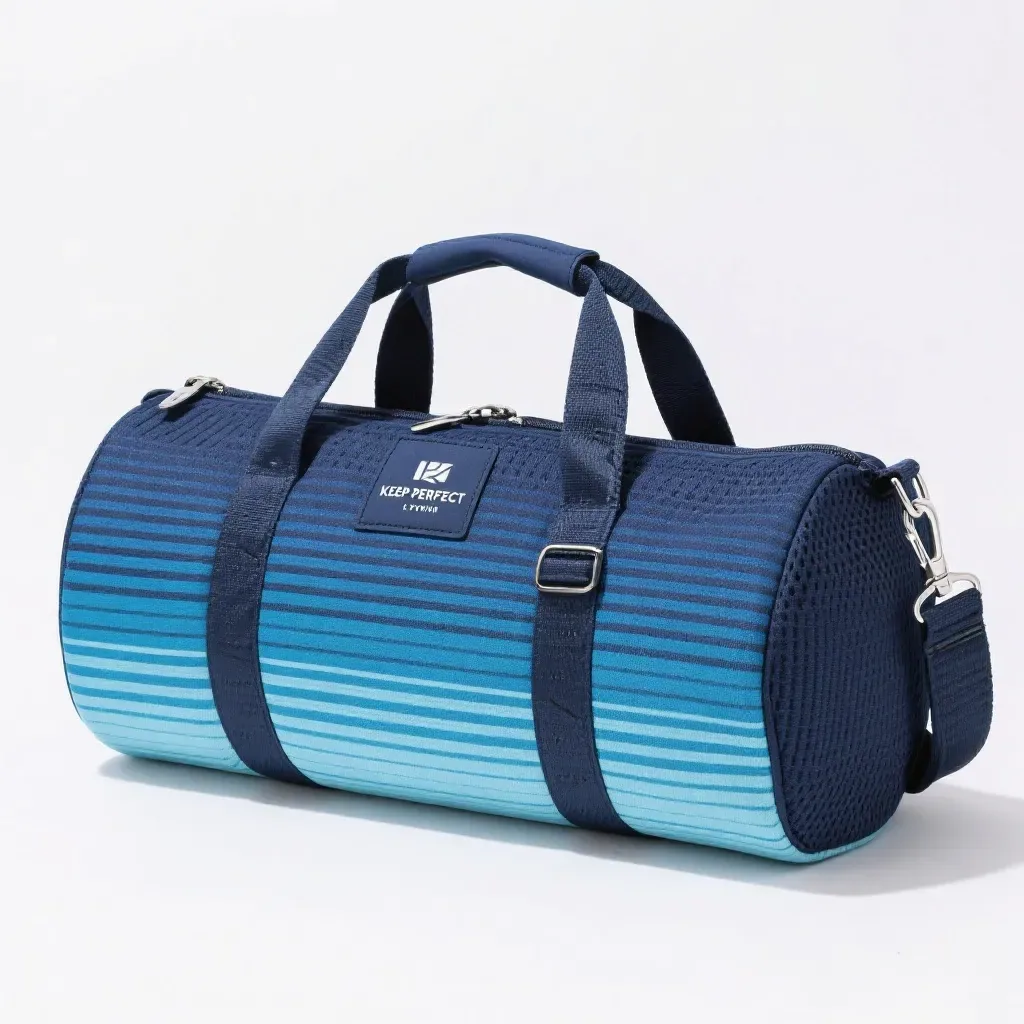
The three workable routes for knit are heat transfer at a controlled temperature and pressure, an applied woven or knitted patch, and a knit-in mark produced by changing stitch structure or yarn colour during knitting. The last adds no material and no separate operation.
Decide before sampling rather than after approval. A branding method chosen after the sample is approved reintroduces a round, and at that point the round costs weeks rather than days.
Colourway count interacts with minimum quantity in a way that catches programmes out. At 100 pcs per style and colourway, eight colourways means eight dye lots on the same style, each with its own approval sequence. Consolidating to four shades halves the approval work and reduces discharge load at the same time.
Heat transfer on a knitted surface needs a controlled window: too little pressure and the film lifts at the first wash, too much and the fabric glazes and loses its hand. Programmes should approve the transfer on the actual production fabric rather than on a laboratory reference, and record the settings alongside the sample.
Knit-in marks avoid the problem entirely by forming the logo during knitting, through a change of stitch structure or yarn colour. There is no added material and no separate operation, and the mark cannot peel. The trade-off is definition, since fine detail and small type are harder to reproduce than with a transfer or a patch.
There is also a commercial consequence to palette size that is easy to miss. Every colourway added to a style adds a dye-lot minimum, an approval round and a lab-dip sequence, so an eight-colourway programme carries roughly twice the pre-production work of a four-colourway one for the same total volume.
Where the brief genuinely needs many shades, the mitigation is standardisation across styles. Sharing a palette across a tote, a pouch and a backpack lets a programme consolidate dye lots rather than booking each style separately, which reduces both cost and discharge load.
Junction Five: Quantity, Timing and Change
Quantity and timing decide more programmes than performance data. Knit programmes start at 100 pcs per style and colourway; woven and leather routes commonly start at 200 to 500 pcs because of weaving, yarn-dye or hide commitments.
- Knit minimum order quantity
- 100 pcs per style and colourway
- Woven or leather minimum
- commonly 200 to 500 pcs
- Knit sampling lead time
- 7 working days
- Woven sampling lead time
- 12 to 25 working days
- Knit bulk lead time
- 30 days
- Woven bulk lead time
- 40 to 60 days
- Production lines
- 7
- Monthly output
- about 200,000 pcs
The third element in this junction is expected change. Programmes still iterating on construction benefit disproportionately from a 7 working day sampling route; programmes with a frozen specification benefit less. Decide which you are before choosing.
Capacity is the quiet constraint in this junction. With 7 production lines and roughly 200,000 pieces a month of output, a programme that commits late in the quarter competes for a slot that may already be allocated. Booking against the published 30 day bulk window rather than against an internal target date is what protects the calendar.
Where a programme carries heavy reporting obligations, the construction choice interacts with the document set rather than replacing it. A knit switch does not remove the need for transaction certificates, restricted-substance reports or audit evidence; it changes the process data behind them, which is why the file should be refreshed rather than rebuilt.
Junction Six: Reporting and Compliance Load
The final junction is documentation. A programme carrying a recycled content claim needs transaction certificates; a programme selling into Europe needs restricted-substance screening and, increasingly, product passport data; a retailer programme needs social audit evidence.
| Junction | Points to knit when | Points to woven when | Weight |
|---|---|---|---|
| Service life | under 2 years | 5 years and beyond | high |
| Abrasion | light carry, folded storage | dragged, overfilled, rough surfaces | high |
| Colourways | 1 to 4 shades | 6 or more with tight tolerance | medium |
| Branding | transfer, patch or knit-in | dense embroidery or fine print | high |
| Quantity and timing | 100 pcs, 30 days | 200 pcs and above, flexible timing | medium |
| Reporting | certificate-backed claim | heavy declaration or passport scope | medium |
Documentation load rarely changes the construction by itself, but it changes what has to be collected and when. Certificates before quotation, test reports at sampling, declarations during bulk, audit evidence before release.
Where two constructions score similarly, this junction is the tiebreaker: choose the one whose evidence already exists in the file rather than the one that requires a new collection round.
Programmes that skip this junction tend to discover its weight late. The construction is chosen on performance, the branding method is chosen on appearance, and the two are incompatible in production. A knitted surface does not take a dense embroidery the way a woven panel does, and discovering that after approval costs a round.
Reading the Result
Add up the junctions rather than arguing from any single one. A programme that favours knit on five of six and woven on one should choose knit, and note the one as a specification line to manage rather than a reason to reverse.
The reporting junction is also where a knit switch can quietly create work. Changing construction changes the process data behind a declaration: dyeing method, water and energy per kilogram, and the waste record. Those lines have to be re-collected at sampling, or the next declaration request arrives with a file that no longer matches the product.
Two cautions keep the result honest. Weight the junctions before scoring rather than after, and record the weights with the outcome. A comparison weighted after the fact is a justification rather than a decision.
Writing the Outcome Into the Specification
The last step is to write the choice into the brief. Name the construction, the stitch density at the handle root, the fabric mass with tolerance, the abrasion band by zone, the pilling grade, the branding method and the inspection standard.
- Name the construction: shaped knit, or cut-and-sew woven or leather.
- State the stitch density at the handle root, since that controls elongation and abrasion.
- Give the fabric mass with a tolerance band, typically plus or minus 5 percent.
- Set the abrasion band separately for the base, the handle root and the body.
- Record the pilling grade, the branding method and AQL 2.5 under ISO 2859-1.
One closing practical note: the six junctions are re-usable. Once the answers are recorded against the style and colourway code, the following season becomes a review of six lines rather than a fresh decision. Programmes that keep the file find the construction question resolves itself after two cycles.
Where a programme runs both constructions, keep one template with a construction field rather than two unrelated documents. Shared sections for yarn route, recycled share, dyeing method, trims, packaging and inspection mean the only differences sit in the construction and mass lines, which is exactly where they belong.
Work the junctions in order
Service life, abrasion, colourways, branding, quantity and timing, then reporting. Later answers depend on earlier ones.
Branding is a high-weight junction
Knit suits transfers, patches and knit-in marks. Woven suits dense embroidery and fine screen print. Decide before sampling.
Zone rather than add mass
Density at the base and handle root narrows the abrasion gap and costs less yarn than a heavier fabric across the body.
Let evidence break a tie
Where scores are close, choose the construction whose certificates and test reports are already current in the file.
And where the decision is close, prefer the route that allows another sample. Sampling at 7 working days means a close call in one season can be re-tested properly in the next, rather than being carried forward on the strength of a single round.
The decision rule in one line
- Answer the six junctions in order, weight them before scoring, and write the outcome into the specification with test methods and grades.
Work the decision tree on your bag programme
Send the bag type, target dimensions, colourway count and branding method. We will return both constructions sampled against the same protocol, at 100 pcs per style and colourway with 7 working days sampling and 30 days bulk, inspected to AQL 2.5 and shipped FOB Xiamen. Start on the contact page.
Frequently Asked Questions
How do I choose between a knitted bag and a woven bag?
Work six junctions in order: expected service life, abrasion environment, colourway count, branding method, quantity with timing, and reporting load. Add the result rather than arguing from any single junction in isolation. Confirm the result on bulk goods at inspection to AQL 2.5 under ISO 2859-1. Record the junction answers with the test reports for the following season's review.
Which construction lasts longer?
Woven cloth, and leather longer still. A woven bag commonly lasts five to ten years against two to four for a knitted body. Knit holds its appearance and then degrades relatively quickly at abrasion points. Review the file annually, since yarn routes and freight rates both change over time.
Is knit or woven better for the environment?
Knit, primarily through yield. Shaped knitting wastes 2 to 4 percent against 12 to 18 percent for cut-and-sew, so less material is bought, dyed and discarded per shipped bag packed to order. Record the junction answers with the test reports for the following season's review. Keep the specification lines testable, with a method named for each target band.
Which is lighter to carry?
Knit. A knitted tote of the same dimensions typically weighs 230 to 280 g against 650 to 900 g for leather, and the gap widens under load because a knit body needs less reinforcement at the handle join. Confirm the result on bulk goods at inspection to AQL 2.5 under ISO 2859-1.
Which takes decoration better?
Woven cloth. A flat, non-extensible surface accepts dense embroidery and fine screen print with a wide process window. Knit needs heat transfer, an applied patch or a knit-in mark, chosen before sampling rather than after approval. Keep the specification lines testable, with a method named for each target band.
What is the minimum order quantity for each?
Knit programmes start at 100 pcs per style and colourway. Woven and leather routes commonly start at 200 to 500 pcs because of weaving, yarn-dye or hide commitments, which matters when testing new styles. Confirm the result on bulk goods at inspection to AQL 2.5 under ISO 2859-1.
How long does sampling take?
Shaped knit runs 7 working days because the panel is programmed and knit directly. A woven baseline commonly runs 12 to 25 working days, since weaving or yarn dyeing has to be booked before cutting begins. Keep the specification lines testable, with a method named for each target band.
Can I use both constructions in one programme?
Yes, and it is frequently the right answer. A knit everyday tote alongside a stitched leather executive bag covers two briefs and two price points while sharing a palette, trim specification and branding file. Confirm the result on bulk goods at inspection to AQL 2.5 under ISO 2859-1.
What inspection standard applies?
AQL 2.5 under ISO 2859-1 applies to either construction, with inspection before loading. What changes is the defect profile, since knit concentrates defects at the base and handle root rather than along a seam line. Keep the specification lines testable, with a method named for each target band.
How do I record the decision?
Any change of yarn route, dye recipe or trim specification invalidates the reports covering the previous version. Book the re-test at the same time as the change, rather than waiting for the next scheduled review cycle. Confirm the result on bulk goods at inspection to AQL 2.5 under ISO 2859-1.
Does seam count really matter?
Often yes. A heavy-duty woven tote and a lighter knit shopper can share a palette, a trim specification and a branding file, and the compliance work overlaps because the underlying test methods are identical. Keep the specification lines testable, with a method named for each target band. Review the file annually, since yarn routes and freight rates both change over time.
What tolerance should a knitted bag carry?
File the scoring sheet, the test reports and one paragraph stating why the construction was chosen and what was traded away, all against the style and colourway code, with a review date for the next season. Record the junction answers with the test reports for the following season's review.
People Also Ask
Which is better, a knitted bag or a woven bag?
Depends on the brief. Knit wins yield, weight, carbon, water and sampling speed. Woven wins abrasion, tear strength, repairability and fine decoration. Confirm the result on bulk goods at inspection to AQL 2.5 under ISO 2859-1.
Do knitted bags last as long as woven bags?
Usually not. A knitted body typically lasts two to four years against five to ten for woven cloth under comparable use. Keep the specification lines testable, with a method named for each target band.
Which bag construction is more sustainable?
Knit, mainly through yield: 96 to 98 percent against 82 to 88 percent for cut-and-sew, plus roughly 15 to 20 percent less packing cube. Confirm the result on bulk goods at inspection to AQL 2.5 under ISO 2859-1.
Can you print on knitted bags?
Yes, by heat transfer at controlled temperature and pressure, by an applied patch, or by a knit-in mark produced during knitting. Keep the specification lines testable, with a method named for each target band.
What is the MOQ for knitted bags?
100 pcs per style and colourway, with sampling in 7 working days and bulk in 30 days. Confirm the result on bulk goods at inspection to AQL 2.5 under ISO 2859-1. Record the junction answers with the test reports for the following season's review.
Sources and further reading
Every figure on this page is either our own programme data or attributed below. Open the originals before you write them into a specification.
- ISO 12947-2 Textiles, determination of abrasion resistance, Part 2: specimen breakdownISO The abrasion method behind the rubs bands compared between knitted and woven constructions.
- ISO 13934-1 Textiles, tensile properties of fabrics, Part 1ISO The tensile and seam method used for handle join force comparisons.
- ISO 13934-1 Textiles, tensile properties of fabricsISO Standard reference for the strip-method force figures quoted in specification clauses.
- ISO 2859-1 Sampling procedures for inspection by attributesISO The standard behind the AQL 2.5 inspection carried out before bulk shipment.
- Textile Exchange standardsTextile Exchange The chain-of-custody framework behind recycled yarn routes used in both constructions.