Seamless Knit Bag vs Welded Bag: A Twelve-Point Selection Checklist
Should a bag body be seamless knitted or radio-frequency welded? Welding wins whenever the brief contains water, oil or wipe-down: a TPU-coated 420D panel reaches about 5,000 mm hydrostatic head to ISO 811 and a weld peel of about 45 N per 50 mm, where an uncoated knit sits under 100 mm. Seamless knitting wins on cold behaviour, on handle-root strength at about 620 N, and on end-of-life, because a monomaterial recycled polyester body recycles and a coated mixed-polymer panel does not.
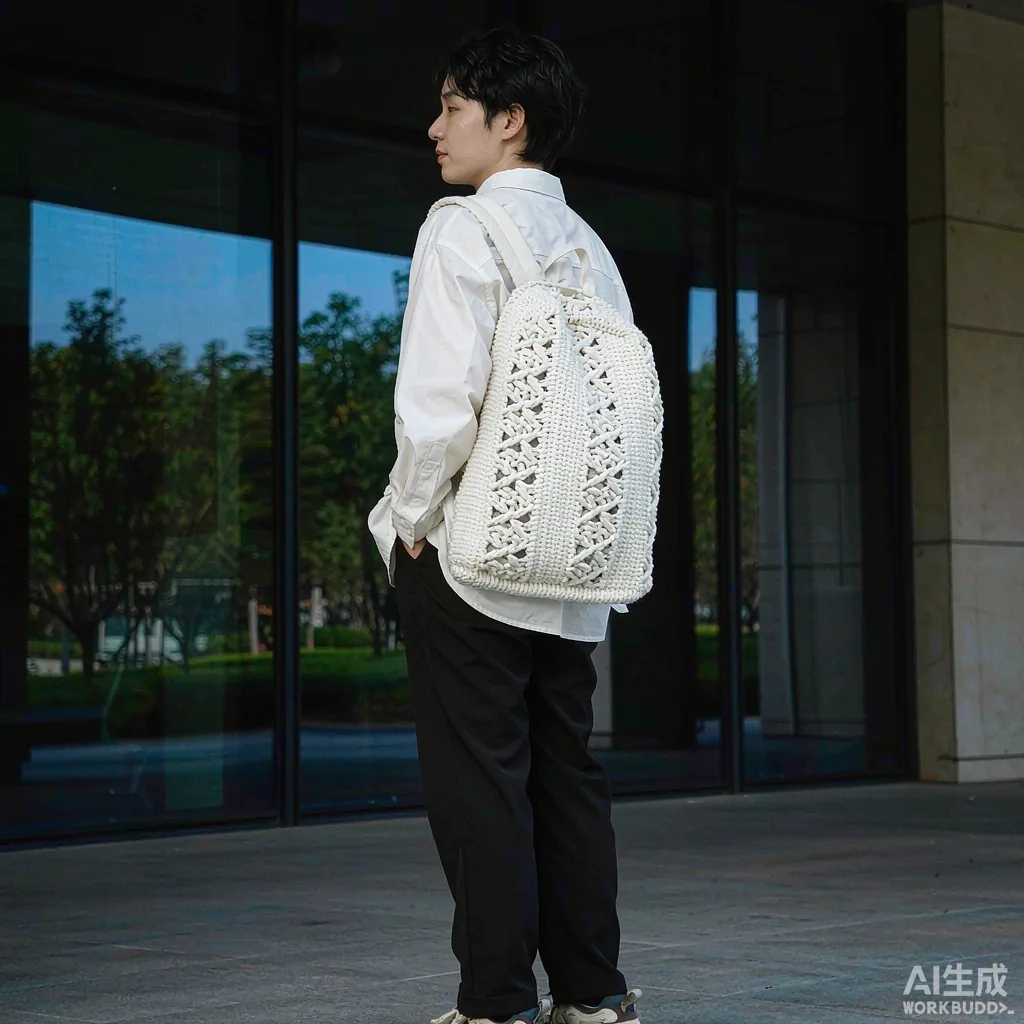
Twelve Checks to Run Before Choosing a Joining Method
These two routes are often quoted against each other because both promise a bag with few or no sewn seams, and they are not substitutes. Welding is a joining method applied to a coated panel; seamless knitting is a forming method that removes the join altogether. The fastest way to choose is to run the same twelve checks on both and see how many each one fails outright.
Work the checks in the order below, because the first three are disqualifying. If a bag fails check one or check two, no amount of argument about the other nine will rescue it. Where a check can be satisfied by either route, note it and move on; those are the rows where price, capacity and lead time should decide.
Water, Wipe-Down and Chemical Contact: Checks 1 to 3
Check one is hydrostatic head. A TPU-coated 420D woven welded at the seams reaches about 5,000 mm to ISO 811 and stays there after flexing, because the coating is continuous across the weld. An uncoated knitted body measures under 100 mm; water passes through the interstices between loops regardless of how tight the stitch is. A coated knit can reach about 1,500 mm, which is shower-resistant but not immersion-proof.
Check two is wipe-down. A welded TPU surface releases marker pen, sunscreen and food residue with a damp cloth. A knitted loop surface holds residue in its texture, and the raised loop structure abrades the cloth rather than the dirt. Check three is chemical contact: TPU resists mineral oil and most cosmetic solvents, while an untreated polyester knit absorbs oil and carries the stain permanently. For a gym bag, a changing-room bag or a medical carry case, checks two and three usually settle the decision on their own.
| Check | Welded TPU-coated 420D | Seamless knit 600D | Which route wins |
|---|---|---|---|
| 1. Hydrostatic head, ISO 811 | about 5,000 mm | under 100 mm uncoated | Welded, decisively |
| 2. Wipe-down of marker and food | releases with a damp cloth | holds residue in the loop | Welded |
| 3. Oil and solvent contact | resists mineral oil | absorbs and stains | Welded |
| 4. Seam peel strength | about 45 N per 50 mm | no seam to peel | Knit, structurally |
| 5. Handle-root force, ISO 13934-1 | about 380 N at the weld | about 620 N knitted in | Knit |
| 6. Cold flex at minus 10 °C | PVC grades crack | no change to minus 30 °C | Knit |
| 7. Abrasion, ISO 12947-2 | about 60,000 rubs | about 30,000 rubs | Welded |
| 8. Puncture, 1 mm probe | about 95 N | about 40 N | Welded |
| 9. Field repair of a snag | not re-weldable once soiled | ladder can be stopped | Knit |
| 10. Finished mass, 40 cm body | about 540 g | about 480 g | Knit |
| 11. End-of-life stream | mixed polymer, hard to separate | monomaterial rPET | Knit |
| 12. Unit cost at 5,000 pcs | about USD 4.20 | about USD 5.40 | Welded |
Seam Strength, Peel and Cold Behaviour: Checks 4 to 6
Check four is seam peel. A radio-frequency weld on TPU-coated fabric typically reaches about 45 N per 50 mm, which is strong for a join but is still a join, and peel is the failure mode. A seamless knit body has no peel plane at all, because the handle is knitted into the body in the same course sequence. Structurally the knit route wins, and it wins by removing the test rather than passing it.
Check five is handle-root force, measured to ISO 13934-1. A handle welded onto a coated panel fails near 380 N, usually by peeling away from the coating rather than tearing the fabric. The same handle knitted integrally with a zoned reinforcement reaches about 620 N. Check six is cold flex: PVC-coated grades start to crack at about minus 10 °C, while a polyester knit shows no change down to about minus 30 °C. For a bag sold into a cold-climate market, check six matters more than any other.
Abrasion, Puncture and Repairability: Checks 7 to 9
Check seven is abrasion, and here the coated panel wins clearly. A TPU-coated 420D surface reaches about 60,000 rubs to ISO 12947-2 at 12 kPa because the coating carries the load and the yarn underneath is protected. A 600D knit reaches about 30,000 rubs; the loop crowns take the abrasion directly and the first sign of failure is a fuzzy surface that looks worn long before it is structurally compromised.
Check eight is puncture, and the gap is wider still: about 95 N on a 1 mm probe for the coated panel against about 40 N for the knit. This is the honest answer to why knitting does not suit tool bags or bags that carry sharp contents. Check nine is the one the knit route wins: a snag in a knit can be ladder-stopped with a few stitches or a heat-set patch, while a contaminated weld cannot be re-welded reliably in the field.
Weight, End of Life and Unit Cost: Checks 10 to 12
Check ten is finished mass. On a 40 cm body the coated welded panel weighs about 540 g and the knit about 480 g, because the coating adds roughly 60 g/m² that contributes nothing to tensile strength. Check eleven is end-of-life, and it is increasingly a purchasing criterion rather than a marketing one: a monomaterial recycled polyester knit body enters a single polymer stream, while a coated woven bonds two polymers together and most mechanical recyclers will not accept it.
Check twelve is unit cost. At 5,000 pieces the welded body quotes about USD 4.20 against about USD 5.40 for the knit, and the gap widens with volume because welding is fast — roughly 0.6 s of dwell per seam at 27.12 MHz with a 1.2 kW electrode, against about 22 minutes of machine time for a knitted body. Knitting loses this row plainly, and it is the reason the welded route dominates high-volume waterproof programmes.
What a Weld Seam Actually Does to the Panel
Radio-frequency welding places the coated panels between two electrodes and heats the polymer dielectric at about 27.12 MHz until the coating melts and fuses. Dwell is around 0.6 s, pressure around 0.4 MPa, and the result is a join whose strength is limited by the coating rather than the fabric. Hot-wedge and ultrasonic variants exist, but all three share one property: they need a thermoplastic coating, which means the base fabric is no longer the material the buyer thinks it is.
The practical consequences follow from that. The panel becomes impermeable, which is the point, and it also becomes non-breathable, heavier, more reflective in hand and harder to recycle. Weld width is typically 8 to 12 mm, and a weld line that wide is visible on a small pouch. Surface print adhesion on TPU is good, which is why welded bags dominate branded cooler bags and wash bags.
What a Seamless Knit Body Does Instead
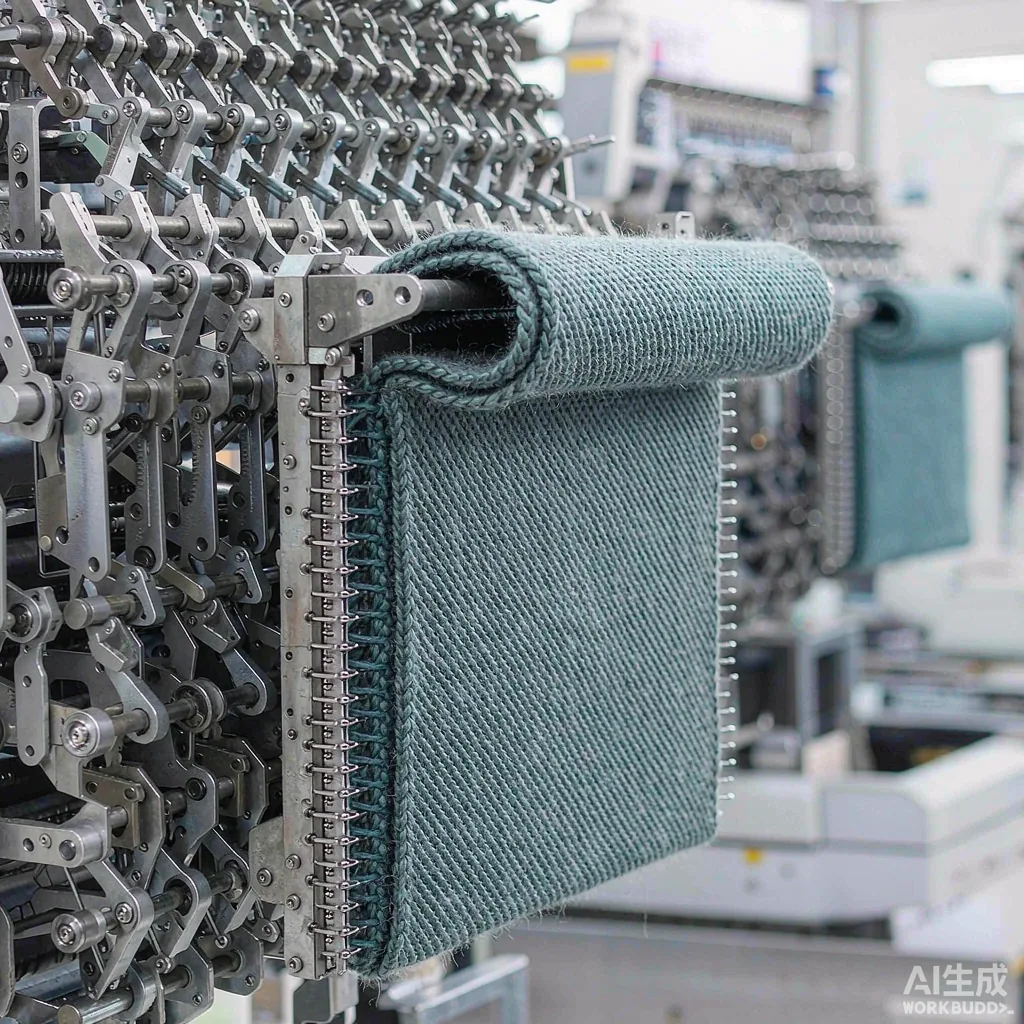
A seamless knit body removes the join by knitting the shape: the sides, the base and the handle roots form in one program on a whole-garment machine. There is no coating unless one is added afterwards, so the fabric stays breathable, light and monomaterial. Structure is placed by stitch rather than by reinforcement tape — a tuck stitch in the base zone, a denser loop at the strap root — which is why a knitted body can be strong exactly where it needs to be and light everywhere else.
The trade is time and permeability. A knitted body takes about 22 minutes of machine time at E12, against roughly 40 seconds of welding plus cutting for a comparable panel, and it will not hold water without a coating or an inserted liner. Programmes that need both properties usually end up with the hybrid described below rather than with a pure choice between the two.
Welded: best briefs
Cooler bags, wash bags, gym bags that get wiped down, medical carry cases, anything that must survive immersion or oil contact.
Seamless knit: best briefs
Cold-climate ranges, monomaterial sustainability programmes, bags with integral handles, low-volume drops at 100 pcs per colourway.
Avoid welding when
The bag ships to a market below minus 10 °C in PVC, or when the brand has committed to a single-polymer end-of-life claim.
Avoid seamless knit when
The brief says waterproof, wipe-clean, or puncture-resistant against sharp contents, and no liner is allowed in the specification.
Four Briefs Where Welding Wins Without Argument
First, a cooler bag: it must hold meltwater, and a welded TPU liner at about 5,000 mm hydrostatic head does that while a knit does not. Second, a wash bag: it is wiped down weekly with a wet cloth and sees cosmetics, and the loop structure of a knit holds both. Third, a gym bag for a wet kit compartment, where the compartment must be sealed and cleaned.
Fourth, any brief with a hard unit-price ceiling at volume above roughly 20,000 pieces, where the 0.6 s weld cycle beats 22 minutes of knitting time decisively. In all four, choosing the knit route means adding a coating or an inserted liner, and once that happens the cost advantage of knitting disappears and the wipe-down performance still lags.
Four Briefs Where Seamless Knit Wins Without Argument
First, a cold-climate range: PVC welds embrittle near minus 10 °C and a polyester knit does not change down to about minus 30 °C. Second, a monomaterial sustainability programme, where a single-polymer recycled polyester body can be claimed and verified and a coated mixed panel cannot. Third, a bag with an integral handle, where removing the peel plane raises the root strength from about 380 N to about 620 N.
Fourth, a programme that needs many small drops. At 100 pcs per style and colourway with 7 working day sampling and 30-day bulk, a knitted range can test sixteen shades in a season. Welding needs a die per shape at roughly USD 480 and a coating lot commitment, so small drops carry a setup cost that knitting does not.
The Hybrid: A Knitted Body Over a Welded Base
The answer most programmes eventually reach is a hybrid: a seamless knitted body for structure, breathability and appearance, with a welded or coated base panel that takes the water and the abrasion. The base is the part that sits on wet ground, and it is also the part that fails first, so putting the coated material only there captures most of the waterproof benefit at about a fifth of the coating mass.
Specify the hybrid carefully. The join between the knitted body and the coated base is the weak point, and it should be tested for peel at about 45 N per 50 mm and for abrasion at the fold. Confirm that both materials are accepted by the same end-of-life stream if the sustainability claim depends on it, because a knitted rPET body bonded to a PVC base is still a mixed-polymer product at the recycler.
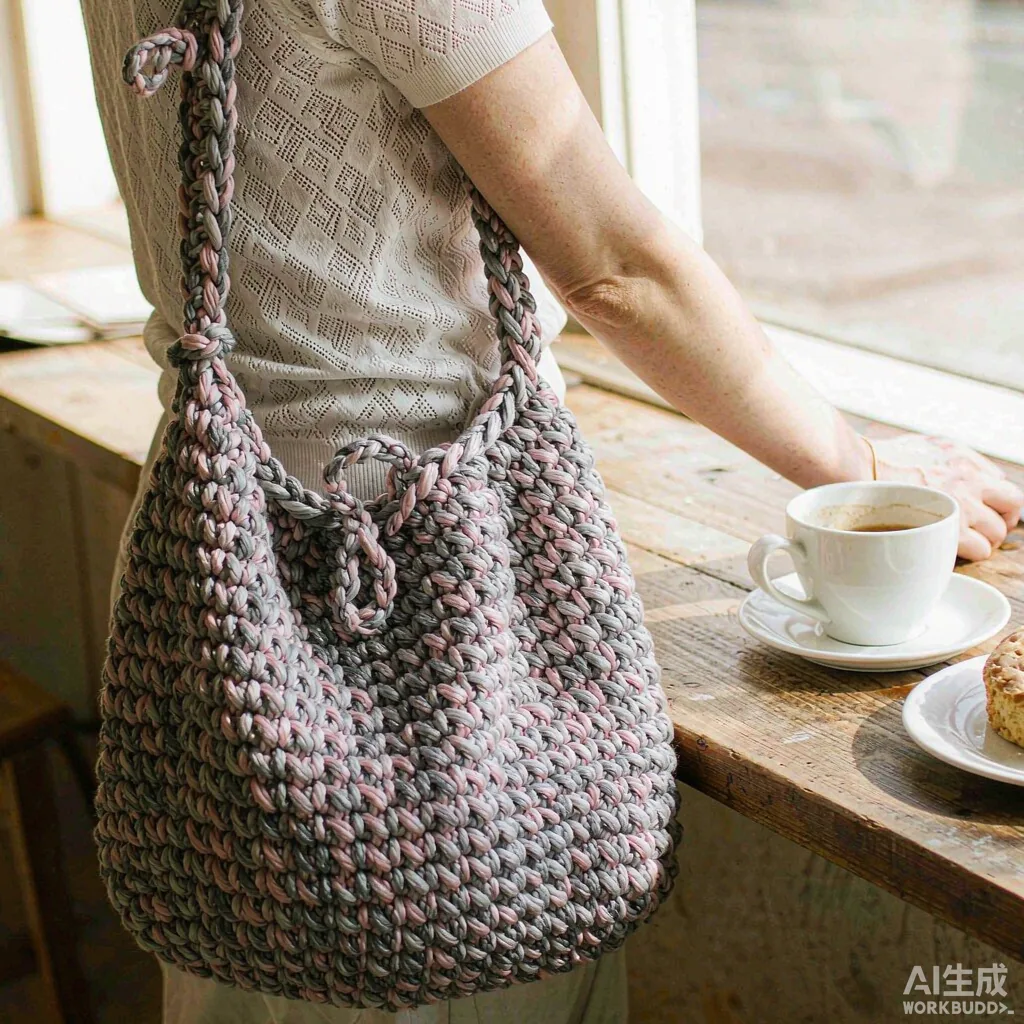
Compare both routes on your own brief
Send the bag dimensions, the rated load and whether the body must resist water, oil or wipe-down. The team will quote a seamless knit body and a welded alternative, test both to ISO 811 and ISO 12947-2, and return FOB Xiamen pricing at 100 pcs per style and colourway. Start on the contact page.
Frequently Asked Questions
Is a welded bag stronger than a seamless knitted bag?
It depends which strength. A welded seam peels at about 45 N per 50 mm and a welded handle root fails near 380 N, while a knitted integral root reaches about 620 N with no peel plane. Welded panels win on puncture at about 95 N against 40 N and on abrasion at 60,000 rubs against 30,000.
Can a seamless knitted bag be made waterproof?
Not on its own. An uncoated knit body measures under 100 mm hydrostatic head to ISO 811 because water passes between the loops. Adding a coating takes it to roughly 1,500 mm, which is shower-resistant, and an inserted welded liner is needed for true immersion performance near 5,000 mm.
What is radio-frequency welding and why does it matter?
It heats the polymer coating of a panel at about 27.12 MHz between two electrodes until it fuses, typically with a 0.6 s dwell and a 1.2 kW electrode. It produces a strong, clean join in seconds, but it requires a thermoplastic coating, which adds about 60 g/m² and makes the panel harder to recycle.
Which route is better for a cold-climate market?
Seamless knitting. PVC-coated welded panels begin to crack under flex at about minus 10 °C, while a polyester knit shows no change down to about minus 30 °C. TPU-coated welds perform better than PVC in the cold but still stiffen noticeably, and the stiffness transfers stress to the weld line.
How do the two routes compare on abrasion?
A TPU-coated 420D welded panel reaches about 60,000 rubs to ISO 12947-2 at 12 kPa, against about 30,000 for a 600D knit. The coating carries the abrasion load and protects the yarn underneath. On a knit the loop crowns take it directly, so the surface looks worn well before the structure is compromised.
Which route suits a small seasonal drop?
Seamless knitting, because the minimum is 100 pcs per style and colourway with 7 working day sampling and 30-day bulk. Welding needs a die per shape at roughly USD 480 and a coating lot commitment, so a 500-piece drop carries setup costs that are hard to amortise.
Is a welded bag recyclable?
Usually not through a mechanical stream. The coating bonds two polymers to the base fabric, and most recyclers will not accept a mixed-polymer input. A monomaterial recycled polyester knit body enters a single-polymer stream, which is why knit wins the end-of-life row in most corporate sustainability scoring.
Can a knitted bag take a printed logo as well as a welded one?
No. A smooth TPU-coated panel accepts screen and digital print with detail down to about 0.2 mm, while a knitted loop surface has a practical minimum stroke near 1.5 mm for a knitted-in logo. A heat transfer on knit reaches about 0.4 mm but adds a polymer layer that affects recyclability.
What is the hybrid option and when is it worth it?
A seamless knitted body with a welded or coated base panel. It captures waterproofing and abrasion resistance where the bag actually fails, at about a fifth of the coating mass of a fully coated body. The join between the two materials then becomes the weak point and must be peel tested.
How much does each route cost at 5,000 pieces?
About USD 4.20 FOB Xiamen for a welded TPU-coated body against about USD 5.40 for a seamless knit body, both including hardware and AQL 2.5 inspection. The gap widens with volume because a weld takes roughly 0.6 s per seam against about 22 minutes of knitting machine time.
Which route handles heavy loads better?
Seamless knitting, for loads up to about 15 kg, because the handle root is knitted in rather than joined and reaches about 620 N against about 380 N. Above that, and where the load includes sharp objects, a coated woven with a welded seam and a base board is the safer construction.
What tests should I request at sampling?
Ask for hydrostatic head to ISO 811, abrasion to ISO 12947-2 at 12 kPa, handle-root tensile to ISO 13934-1, seam peel for any welded join, and a cold flex check at the lowest temperature the market sees. Request all five at sampling, because a missing report in the final week costs far more than the test.
People Also Ask
Are welded seams stronger than stitched seams?
They are more consistent and impermeable, peeling at about 45 N per 50 mm, but they do not exceed a well-engineered integral knit join. The real advantage is waterproofing, not strength, and a welded join cannot be re-welded once contaminated.
What bags are usually welded?
Cooler bags, wash bags, dry bags, medical carry cases and any product that must hold water or be wiped down. All of them share a requirement for an impermeable body, which a coated thermoplastic panel provides and an uncoated knit does not.
Can a knitted bag hold a wet swimsuit?
Only with a coated or welded liner. An uncoated knit body wicks, and the moisture reaches the outside within minutes. Specify a welded TPU compartment inside a knitted outer body if the brief requires both texture and waterproofing.
How thick is a weld line?
Typically 8 to 12 mm, which is visible on a small pouch and can limit how tight a corner radius can be. Knitted integral corners have no such line, which is one reason knit bodies suit small curved shapes such as pouches and sleeves.
Is TPU better than PVC for welded bags?
Generally yes. TPU flexes better in the cold, resists plasticiser migration and avoids the restricted phthalates that some markets limit under REACH Annex XVII. PVC remains lower in material cost but cracks near minus 10 °C and carries more compliance risk.
Sources and further reading
Every figure on this page is either our own programme data or attributed below. Open the originals before you write them into a specification.
- ISO 811 — Textile fabrics, determination of resistance to water penetration (hydrostatic head test)ISO The test behind the 5,000 mm coated figure and the under-100 mm uncoated knit figure.
- ISO 12947-2 — Abrasion resistance of fabrics by the Martindale methodISO Referenced for the 60,000 rub coated panel result and the 30,000 rub knit result at 12 kPa.
- ISO 13934-1 — Tensile properties of fabrics, maximum force by the strip methodISO Used for the 620 N knitted handle-root figure and the 380 N welded handle-root figure.
- REACH — Annex XVII restrictionsEuropean Chemicals Agency (ECHA) Referenced for the plasticiser limits that affect PVC-coated welded panels sold into the EU.
- Incoterms rulesInternational Chamber of Commerce (ICC) Defines where cost and risk transfer under the FOB Xiamen terms used in both quotations.
How to Write the Specification So Both Routes Can Quote
Write the brief as performance rather than as construction. State the hydrostatic head the body must reach, the wipe-down agents it must survive, the temperature range it must flex across, the abrasion target to ISO 12947-2 and the handle-root force to ISO 13934-1. Then let each route propose how it meets those numbers. A brief written as "welded seams" or "seamless knit" removes the comparison before it starts.
Finish with the end-of-life requirement and the inspection level. Ask for both quotations at AQL 2.5 under ISO 2859-1 and require a peel or handle-root test report at sampling, not at bulk. More on the wider comparison sits in the knit versus traditional bag guide.