Knitted Bag vs Mesh Bag: A Nine-Criteria Comparison Matrix
Knitted bag or mesh bag? Start with the honest framing: most mesh is itself knitted, just on a warp-knitting machine with an open lapping construction rather than a weft-knit jersey. What differs is the structure. A closed 600D weft knit at about 420 g/m² carries 12 kg and survives about 25,000 rubs; an open 200D monofilament mesh at about 120 g/m² carries 4 kg, survives about 8,000 rubs, and moves air at 1,200 mm/s against 180.
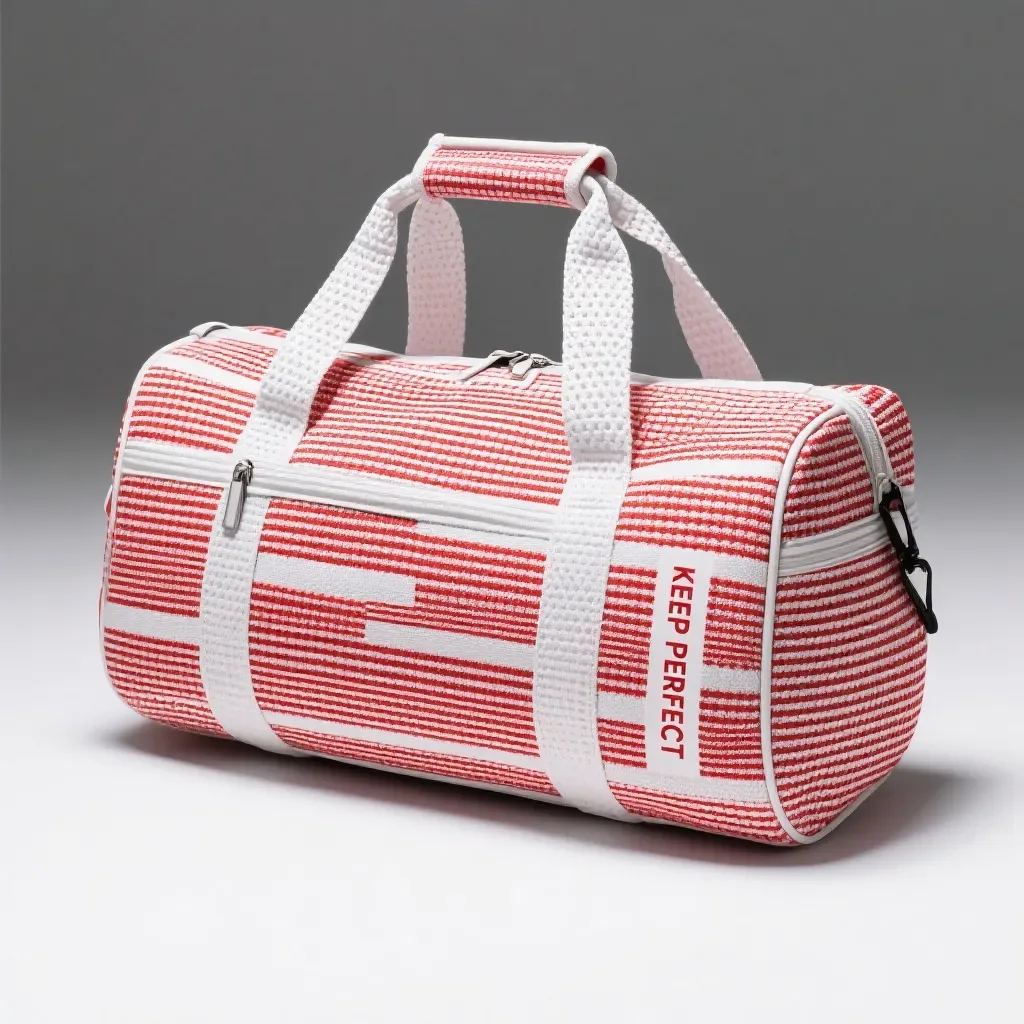
Two Fabrics That Solve Opposite Problems
A closed weft-knit bag body and an open mesh body are not rivals on the same brief. One is chosen to contain, protect and carry load; the other is chosen to drain, dry and let air through. Most sourcing mistakes in this category happen when a buyer asks for "a knitted bag" and receives a mesh, or asks for a beach bag and receives a closed body that holds sand.
The vocabulary is the trap. Mesh is produced on warp-knitting machines, usually raschel, with a lapping movement that leaves deliberate apertures between the pillar stitches. A bag body is produced on weft-knitting machines as a jersey, rib or tuck structure with closed loops. Both are knitting, and both can run on the same recycled polyester yarn — but they behave like different materials once they are filled.
The Nine-Criteria Matrix
Score both fabrics on nine criteria before deciding. The criteria below are the ones that actually change a purchase order: mass, air flow, drying time, abrasion life, safe load, snag behaviour, print surface, unit cost and cycle time. Score each row 1 to 5 for your own brief, because a beach programme and a laundry programme will weight these very differently.
| Criterion | Closed weft knit, 600D | Open warp mesh, 200D | Winner |
|---|---|---|---|
| Finished mass | about 420 g/m² | about 120 g/m² | Mesh, by 3.5 times |
| Air permeability, ISO 9237 | about 180 mm/s | about 1,200 mm/s | Mesh |
| Drying time, wet swatch | about 2 hours | about 20 minutes | Mesh |
| Abrasion, ISO 12947-2 at 12 kPa | about 25,000 rubs | about 8,000 rubs | Knit, by 3 times |
| Safe working load | about 12 kg | about 4 kg | Knit |
| Snag propagation | localised, ladder stops | runs across the panel | Knit |
| Print and logo surface | heat transfer at 0.4 mm | label only | Knit |
| Unit cost at 2,000 pcs | about USD 5.20 | about USD 3.10 | Mesh |
| Machine cycle per body | about 18 minutes | about 4 minutes | Mesh |
Read the matrix as a question about what the bag must let through. If the answer is air, water or sand, mesh wins four rows outright and the other five do not matter. If the answer is nothing, a closed knit wins the rows that decide whether the bag survives a season. Very few briefs sit genuinely in the middle, which is why this comparison usually resolves quickly once the criteria are written down.
Row by Row: Where the Matrix Actually Decides
Three rows decide almost every real decision: air permeability, abrasion life and safe working load. The remaining six are consequences. A mesh that moves air at 1,200 mm/s is light because it has apertures, and it abrades at 8,000 rubs for the same reason. A knit that closes its loops gains strength, print surface and abrasion life and loses the air flow that made mesh attractive.
The practical method is to disqualify first. Write the one thing the bag absolutely must do — drain wet kit, hold 10 kg of groceries, carry a printed campaign logo — and eliminate the fabric that cannot do it. Then compare the survivors on cost and cycle time. Trying to score all nine rows before eliminating is how programmes end up with a fabric that is adequate at everything and good at nothing.
Air Flow and Drying: 1,200 Against 180 mm/s
Air permeability measured to ISO 9237 at 100 Pa is the clearest single number in this comparison. An open monofilament mesh with about 42% open area passes roughly 1,200 mm/s. A closed 600D jersey passes about 180 mm/s, and a denser tuck structure passes less than 100. That ratio is what makes a mesh bag dry in about 20 minutes against about 2 hours for the closed body.
This row matters in three briefs. A swimming bag must drain, or the kit stays wet for the whole journey home. A laundry bag must breathe, or damp fabric mildews inside it. A gym bag must release heat after use. In all three the closed knit loses outright, and adding a coating or a liner to make it drain defeats the point of choosing knit in the first place.
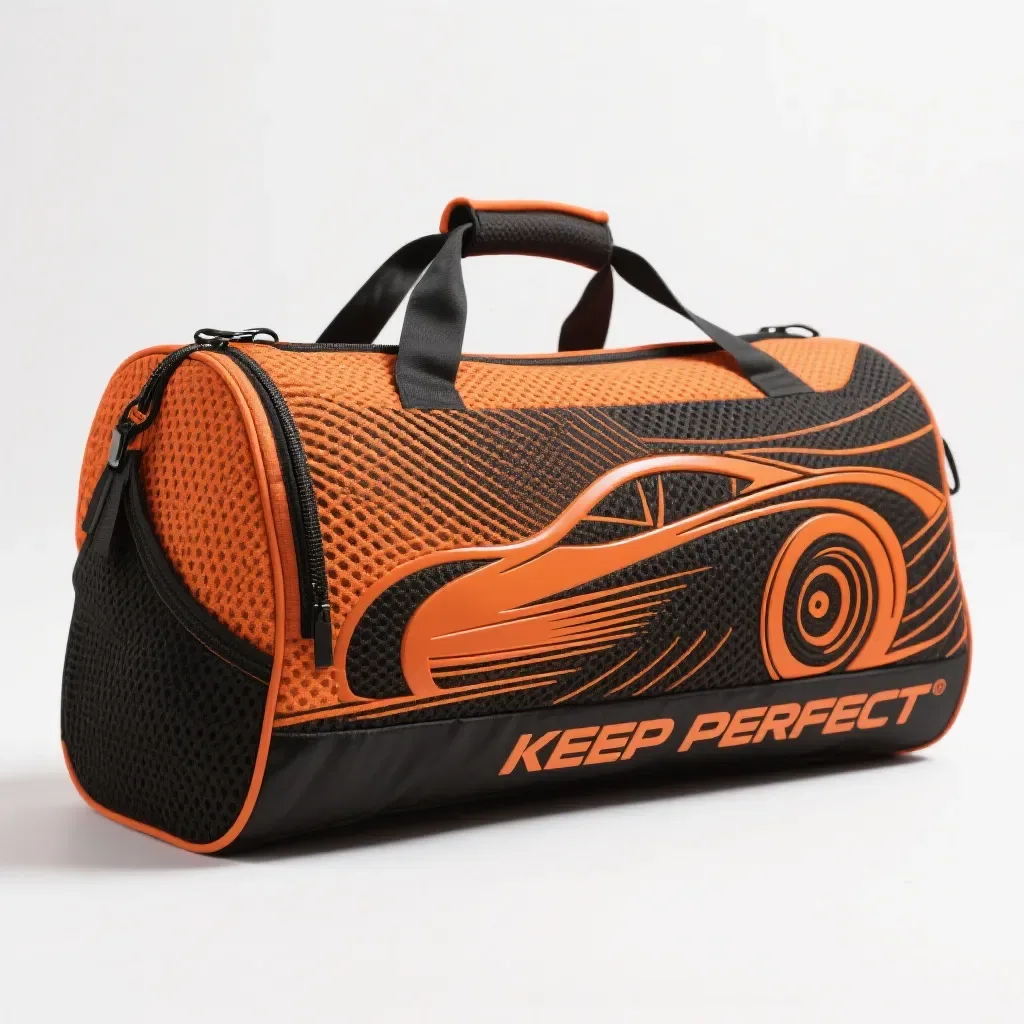
Abrasion and Snagging: 25,000 Against 8,000 Rubs
Abrasion is where mesh loses badly. Monofilament filaments are stiff and exposed, and the aperture edges concentrate contact stress, so a 200D mesh reaches only about 8,000 rubs to ISO 12947-2 at 12 kPa. A 600D closed knit reaches about 25,000 rubs because the load is spread across loop crowns and the yarn is protected inside the structure. On a bag dragged across a car park, that is a full season of difference.
Snagging is related and worse. Catch a monofilament pillar on a zip pull or a key and the run travels across the panel, because there is no loop geometry to stop it. A closed weft knit can also snag, but the ladder usually stops within a few stitches and can be heat-set. For a bag that will meet keys, tools or a boot interior, mesh needs to be specified with a heavier monofilament and a tighter lapping, which costs back some of the air flow.
Load, Stretch and What Happens at 4 kg
Safe working load is not a marketing number; it is where permanent deformation begins. A 200D monofilament mesh is stiff in tension but its apertures distort under point loads, so the practical working limit is about 4 kg before the bag starts to look misshapen. A 600D closed knit with a zoned base handles about 12 kg, and a 900D version about 15 kg.
The failure mode differs too. Mesh fails by aperture distortion: the openings elongate, the bag grows and the contents start to bulge through. Knit fails by loop elongation at the strap root, which is slower and more visible. If the bag will carry bottles, books or tools, the point-load behaviour of mesh is the disqualifying factor and no amount of reinforcement tape fixes it at an acceptable cost.
Weight and Pack Volume: 120 Against 420 g/m²
Mass is the row that surprises buyers most. A 200D mesh finishes near 120 g/m² against about 420 g/m² for a 600D knit, so a 40 cm mesh shopper weighs roughly 150 g where the knit version weighs about 480 g. For a bag that lives folded in a pocket or a suitcase, that difference is the entire product. Mesh also packs to about a third of the folded volume because there is less material to compress.
The cost is durability. Every gram removed from a mesh panel comes out of the yarn that would have carried abrasion and load. Brands that sell a packable mesh bag should state the working load plainly on the hangtag, because a customer who fills a 4-kg-rated mesh shopper with 10 kg of groceries will blame the brand rather than the brief.
Cost and Cycle Time: Where Mesh Wins Plainly
Mesh wins the commercial rows without argument. At 2,000 pieces a mesh body quotes about USD 3.10 against about USD 5.20 for a closed 600D knit, FOB Xiamen with the same hardware and the same AQL 2.5 inspection. Roughly two thirds of the gap is yarn mass — about 0.16 kg of yarn against about 0.55 kg — and the rest is machine time.
Cycle time follows the same logic. A warp-knitting machine runs at roughly 900 courses per minute and produces a mesh body in about 4 minutes; a weft-knit whole-garment body takes about 18 minutes. Across 7 production lines at about 200,000 pcs per month, that capacity difference is real money. Knitting only recovers it when the brief needs the strength, the print surface or the load rating that mesh cannot deliver.
Choose mesh when
The bag must drain, dry fast or let sand fall through, and the working load stays under about 4 kg.
Choose closed knit when
The bag carries more than 6 kg, needs a printed logo, or will be dragged and abraded across a season.
Choose a hybrid when
The body needs to breathe but the base needs to survive: mesh panels above, a closed knit or reinforced base below.
Avoid mesh when
Contents are sharp, heavy or confidential. Apertures leak small items, advertise the contents and catch on anything with an edge.
Beach, Gym and Laundry: Three Briefs Scored
A beach bag is the clearest mesh brief and the clearest knit failure. Sand falls through apertures, wet towels drain and dry in about 20 minutes, and the empty bag weighs about 150 g. A closed knit holds sand in the loop structure and needs shaking out every trip. Mesh wins this brief on five of the nine criteria and should be specified without hesitation.
A gym bag splits the difference. Kit needs to breathe, but shoes and a water bottle are point loads that distort mesh apertures. The usual answer is a hybrid: mesh ventilation panels above a closed knit base, or a mesh outer pocket with a closed body. A laundry brief belongs firmly with mesh, because damp fabric in a closed body mildews within about 24 hours.
When to Use Both in One Bag
Hybrid construction is the most under-used answer in this category. A whole-garment machine can change structure within a panel, so a bag can have open lapping across the upper body for ventilation and a closed tuck structure at the base for abrasion and containment. The transition course is the engineering risk and should be sampled before it is quoted.
Specify the hybrid with numbers, not adjectives: give the open-area percentage for the ventilation zone, the finished mass for each zone, and the abrasion target for the base. Request both zones on the same sample, because the two structures relax differently after steam boarding and a mismatch shows as a rippled seam line across the panel.
Get both fabrics sampled on one brief
Send the bag dimensions, the working load and whether the body must drain or contain. The team will sample a closed knit and an open mesh on the same geometry, test both to ISO 9237 and ISO 12947-2, and quote FOB Xiamen at 100 pcs per style and colourway. Start on the contact page.
Frequently Asked Questions
Is mesh a type of knitted fabric?
Yes, and this is the most common confusion in the category. Most bag mesh is warp-knitted on a raschel machine with an open lapping movement that leaves deliberate apertures. A bag body is weft-knitted as a jersey or tuck structure with closed loops. Both use the same yarn family and both are knitting.
Which fabric lasts longer as a bag body?
A closed knit, by roughly three times on abrasion: about 25,000 rubs to ISO 12947-2 at 12 kPa against about 8,000 for a 200D monofilament mesh. Mesh loses because its filaments are stiff and exposed and the aperture edges concentrate contact stress at every point of contact.
How much weight can a mesh bag carry?
About 4 kg as a safe working load before the apertures distort permanently. A closed 600D knit handles about 12 kg and a 900D version about 15 kg. Mesh fails by aperture elongation, so the bag grows and the contents bulge, whereas a knit fails more slowly at the strap root.
Why does mesh dry so much faster?
Because of air permeability, measured to ISO 9237 at 100 Pa. An open mesh passes about 1,200 mm/s against about 180 mm/s for a closed knit, and it holds far less water in the first place because there is less material. A wet mesh swatch dries in about 20 minutes against about 2 hours.
Can a mesh bag take a printed logo?
Not directly. There is no continuous surface for a transfer or a screen, so a mesh bag normally carries a woven or satin label, or a printed tape sewn along a bound edge. A closed knit accepts a knitted-in logo at about 1.5 mm minimum stroke or a heat transfer at about 0.4 mm.
Is a mesh bag less expensive?
Yes, by a wide margin. At 2,000 pcs a mesh body quotes about USD 3.10 against about USD 5.20 for a closed 600D knit. About two thirds of the gap is yarn mass, roughly 0.16 kg against 0.55 kg, and the rest is machine time: about 4 minutes against about 18 minutes per body.
What is the best fabric for a beach bag?
Mesh, because sand falls through the apertures, wet items drain and the empty bag weighs about 150 g. A closed knit holds sand in its loop structure and needs shaking out on every trip. The trade is load: keep the working load under about 4 kg and use a heavier monofilament if the bag will be dragged.
Can one bag combine mesh and closed knit?
Yes, and it is usually the right answer for gym and travel briefs. A whole-garment machine can change structure within a panel, giving open lapping for ventilation and a closed tuck structure at the base. Sample the transition course first, because the two structures relax differently after steam boarding.
How do I stop mesh from snagging?
Specify a heavier monofilament and a tighter lapping, and avoid apertures wider than about 3 mm. Be aware that both changes reduce air permeability, so the drainage benefit shrinks. A closed knit snag usually stops within a few stitches, where a mesh run travels across the whole panel.
What should I write in the specification?
Write finished mass in g/m², air permeability in mm/s to ISO 9237, abrasion target to ISO 12947-2, safe working load in kilograms and the open-area percentage if apertures matter. Those five numbers make two quotations comparable and prevent a supplier from substituting whichever structure suits their machines.
Are recycled yarns available for both structures?
Yes. Recycled polyester runs on both warp and weft machines from 150D through 900D, and Global Recycled Standard documentation covers the chain of custody for either. The tenacity gap against virgin yarn is small, about 8.0 against 8.5 cN/dtex, and does not change the ranking between the two structures.
What are the minimums and lead times?
The minimum is 100 pcs per style and colourway for either structure. Sampling runs 7 working days and bulk 30 days after approval, with finished goods inspected to AQL 2.5 under ISO 2859-1. A hybrid sample with two structures in one panel may need one additional sampling cycle to tune the transition.
People Also Ask
Are mesh bags durable?
Less than closed knits. A 200D monofilament mesh reaches about 8,000 rubs to ISO 12947-2 against about 25,000 for a 600D knit, and a snag runs across the panel. Mesh suits light loads that need to drain, not bags that get dragged.
What is mesh fabric used for in bags?
Beach bags, laundry bags, gym ventilation panels, shoe compartments and produce bags. Every one of those briefs needs air or water to pass through the body, which is the single property that a closed knit cannot deliver without a coating.
How much lighter is mesh than a knitted bag?
Roughly a third. A 200D mesh finishes near 120 g/m² against about 420 g/m² for a 600D knit, so a 40 cm shopper weighs about 150 g in mesh and about 480 g in a closed knit. Mesh also folds to about a third of the packed volume.
Can mesh bags be recycled?
Yes, if they are monomaterial. A mesh body in a single recycled polyester grade enters the same stream as a closed knit in the same polymer. Problems start when a mesh panel is bonded to a coated base or combined with a polyester-cotton binding tape.
Is a mesh bag waterproof?
No, and that is the point. Mesh is designed to pass water through, so it has no meaningful hydrostatic head and the contents get wet. If a brief needs both drainage and water resistance, use a mesh outer pocket over a closed or coated inner compartment.
Sources and further reading
Every figure on this page is either our own programme data or attributed below. Open the originals before you write them into a specification.
- ISO 9237 — Textiles, determination of the permeability of fabrics to airISO The test behind the 1,200 mm/s mesh figure and the 180 mm/s closed knit figure at 100 Pa.
- ISO 12947-2 — Abrasion resistance of fabrics by the Martindale methodISO Referenced for the 25,000 rub knit result and the 8,000 rub mesh result at 12 kPa.
- ISO 13934-1 — Tensile properties of fabrics, maximum force by the strip methodISO Used for the load and strap-root figures quoted for both structures.
- Global Recycled StandardTextile Exchange Chain-of-custody standard referenced for recycled polyester running on both warp and weft machines.
- Shima Seiki — WHOLEGARMENT knitting systemsShima Seiki Machine platform referenced for changing stitch structure within a single knitted panel.
How to Write a Brief That Gets the Right Fabric
Never write "knitted" alone, because it covers both structures and suppliers will quote whichever suits their machines. Write the finished mass in g/m², the air permeability in mm/s to ISO 9237, the abrasion target to ISO 12947-2 and the safe working load in kilograms. Those four numbers remove all ambiguity and make two quotations genuinely comparable.
Then state the open-area percentage if apertures matter, and require a dimensional check after steam boarding, because open and closed structures shrink at different rates. Both routes run 7 working days for sampling and 30 days for bulk, inspected to AQL 2.5 under ISO 2859-1. The wider selection logic is set out in the knit versus traditional bag guide.