Martindale Abrasion for Bag Fabric: Choosing the End Point, Reading the Rating and Setting a Knit-Specific Acceptance Figure
How should a buyer specify Martindale abrasion for bag fabric? Work through six decisions in order: whether abrasion governs, which end point, which pressure, which abradant, which specimen, and only then the acceptance figure. Most bag specifications start at the sixth step and therefore carry a cycle count that no laboratory can interpret unambiguously. On a knitted panel the ordering matters more than usual, because a loop structure usually fails on appearance long before it fails on breakdown, and the rating scale chosen decides which of the two the report will show.
The Decision Order: Six Choices Before Commissioning a Test
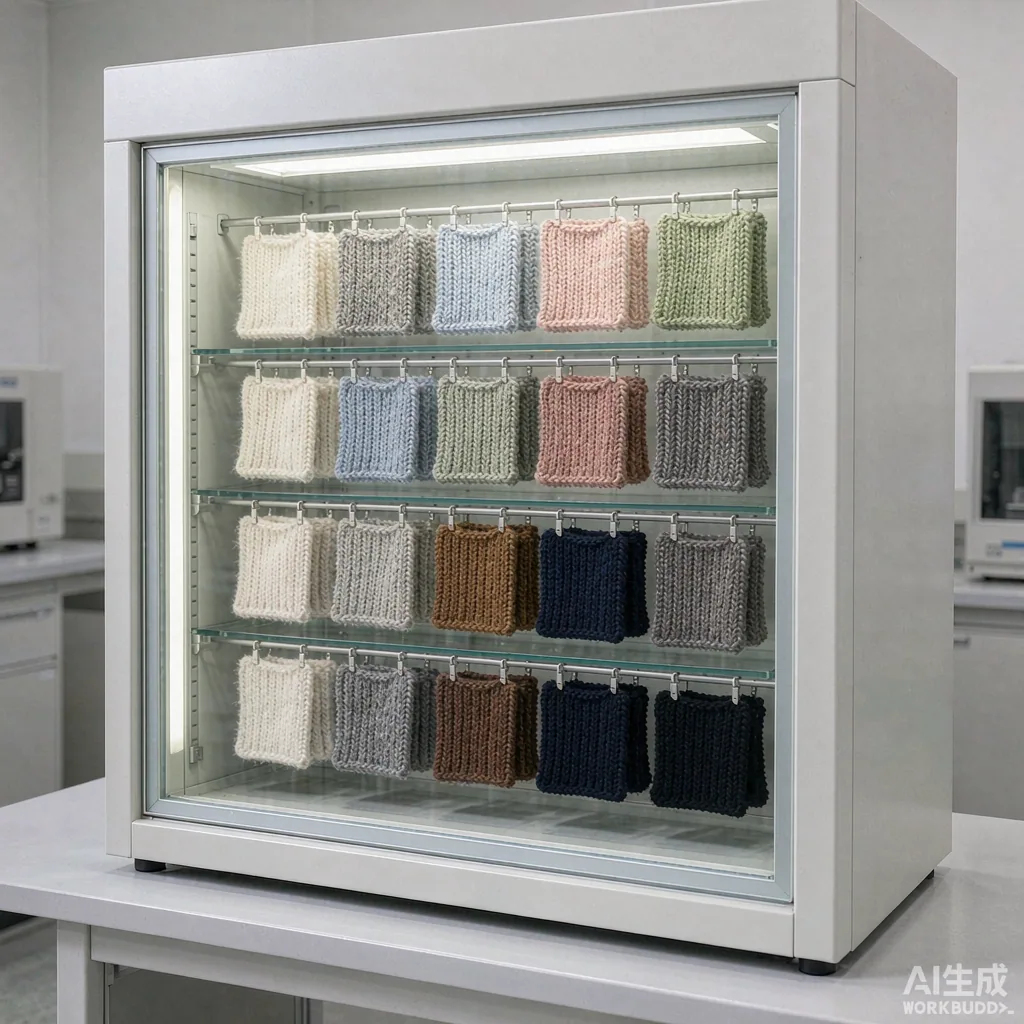
A Martindale result is the output of six choices, and only one of them is the number everyone talks about. In order: whether abrasion is the governing risk at all, which end point the method should measure, which nominal pressure applies, which abradant and change interval, which specimen and direction, and finally what counts as an acceptable result.
Working in that order takes about fifteen minutes and prevents the common outcome, which is a report with a number that is technically correct and commercially silent. A buyer who starts at step six has already skipped the decisions that determine whether the number means anything.
The order also makes the conversation with a laboratory short. A request that arrives with the end point, pressure, abradant and construction already chosen can be quoted and scheduled immediately; one that asks for Martindale testing on a bag fabric generates three rounds of clarification.
- Decision 1
- Is abrasion the governing failure mode, or does the bag fail on seams, handles or colour first?
- Decision 2
- End point: breakdown under ISO 12947-2, mass loss under Part 3, or appearance change under Part 4
- Decision 3
- Nominal pressure: 9 kPa for apparel-weight use, 12 kPa for heavier duty
- Decision 4
- Abradant: standard wool, changed at the interval the method sets
- Decision 5
- Specimen: the production construction, with gauge and yarn count stated, tested in both directions
- Decision 6
- Acceptance figure: a cycle count plus a rating, never a cycle count alone
Step One: Decide Whether Abrasion Governs at All
Before commissioning anything, ask what the returns desk actually sees. If complaints are about handles pulling away, a seam opening, or a colour transferring onto a shirt, abrasion is not the governing risk and testing it first is spending the test allowance on the wrong row of the matrix.
Abrasion governs where the bag meets a repeated rubbing surface: a base set down on pavement, a body carried against a coat seam, a strap against a shoulder. It sits alongside tensile strength to ISO 13934-1 or ASTM D5034, seam strength to ISO 13935-2, and colour fastness to the ISO 105 series, and none of those four substitutes for another.
For a first programme, run all four on five pieces per colourway. The cost is modest relative to a season, and the result tells a buyer which row actually governs for this construction, so subsequent seasons can test one row instead of four and still be defensible.
There is a second reason to run the full set once: it converts an argument into a measurement. A dispute about whether a bag failed because the surface wore or because the join gave way is settled in one afternoon by two reports, and settled in a way that survives a retailer's question rather than resting on whoever spoke most confidently in the meeting.
Step Two: Choose the End Point
ISO 12947 is published in parts and each part measures a different thing. Part 2 determines specimen breakdown, the point at which a stated number of threads or loops have broken. Part 3 determines mass loss. Part 4 assesses appearance change, covering fuzzing, pilling and colour change.
For a bag, Part 2 and Part 4 are the two that matter and the choice between them is commercial. Breakdown answers how long until the panel holes through. Appearance change answers how long until the panel looks tired, and for a branded bag that threshold usually arrives first.
Where the two are close, specify both and accept whichever binds first. Where a buyer can only fund one, appearance change is the better single choice for a knitted body and breakdown is the better single choice for a base panel, because those are the ways those two surfaces actually get returned.
Step Three: Choose the Pressure
ISO 12947-2 works at two nominal pressures, 9 kPa for apparel-weight end uses and 12 kPa for heavier duty. The same fabric produces a materially lower cycle count at the higher pressure, so the pressure is not a detail and a report without it is not comparable with another report.
For bag fabric the split is usually by panel rather than by style. A body panel rubbing a coat is reasonably modelled at 9 kPa. A base panel meeting pavement, or any panel on a work or travel bag, is better modelled at 12 kPa, and stating two pressures on one submission form is normal and adds no lead time.
One caution: because the two pressures give different counts, changing pressure between seasons silently invalidates the trend line. Where a buyer tracks abrasion results across programmes, fix the pressure in the specification and do not move it.
Step Four: Choose the Abradant and the Change Interval
The standard abradant is a specified wool fabric, and it wears. The method sets the interval at which it must be changed, and a laboratory that runs past that interval produces results that drift progressively lower across the specimens in a batch. This is a common and entirely avoidable source of a suspicious spread.
Ask the laboratory to state the abradant and the change interval on the report. It is one line, it costs nothing, and it is the fastest way to tell a genuine fabric inconsistency from a method artefact when a spread looks odd.
Where a bag has a specific adversary, such as a coated base against concrete, a project-specific abradant can sometimes be agreed. That is a deviation from the standard and must be recorded as one, because a result obtained against a non-standard abradant is not comparable with any published figure.
Step Five: Choose the Specimen and the Direction
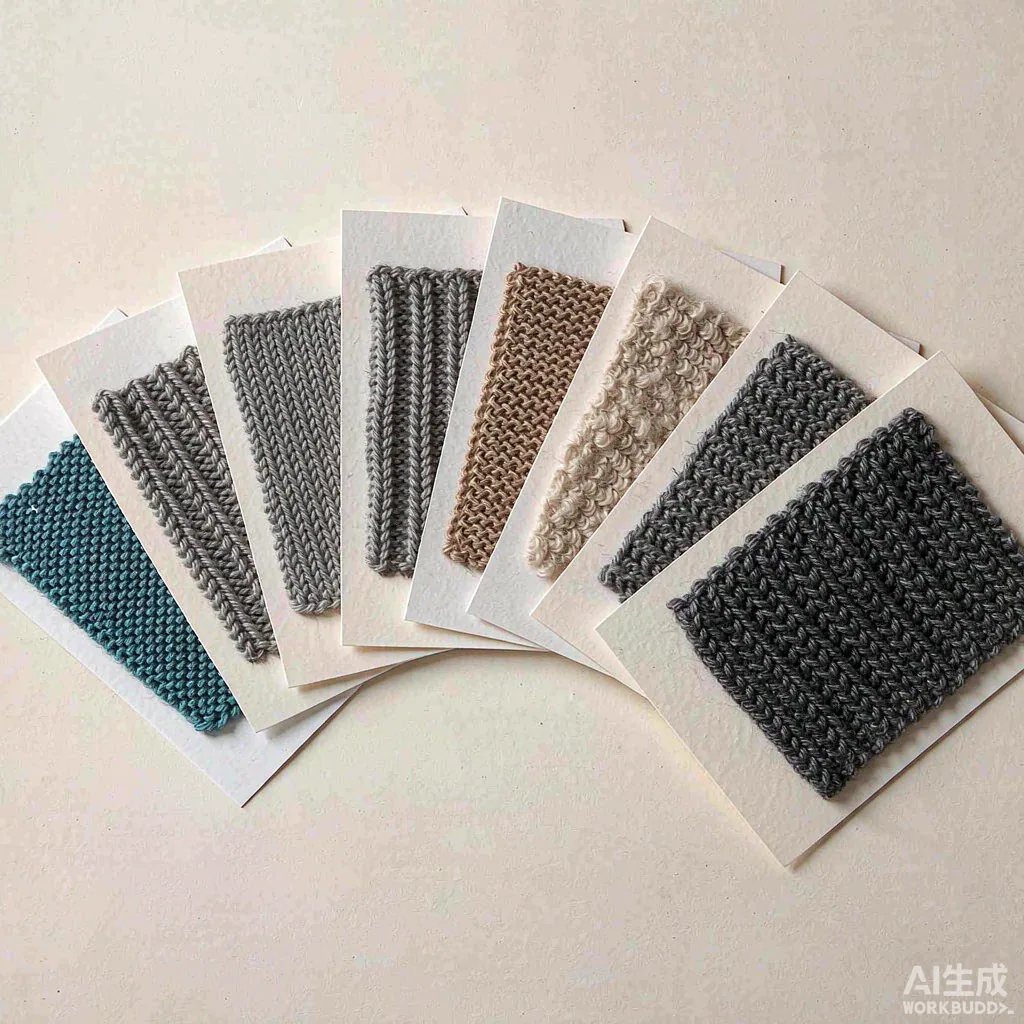
Test the construction that ships, not a representative swatch. State the gauge, the yarn count and the finished grammage on the submission form, and require the report to repeat them. A body knitted at E12 from a 300D yarn and a base knitted at E7 from a 600D yarn are two fabrics needing two submissions.
A knitted panel has a course direction and a wale direction, and they do not abrade alike. Where the method allows directional testing, test both and require both on the report. A single figure is usually the better of the two, and a buyer who does not ask for both will not know which one was reported.
Specimen count matters as much as direction. Five specimens gives enough information to see a spread; one gives a number with no context. Where the test allowance genuinely allows only one, record that the figure is indicative rather than a specification limit, so it is not reused as one next season.
Step Six: Choose the Acceptance Figure
An acceptance figure for a bag fabric has two components: a cycle count and a rating. For breakdown the cycle count is the result. For appearance change the rating is the result and the cycle count is the point at which it was assessed, so a specification needs both: 20,000 cycles with a pilling rating of at least 4, for example.
Pilling is rated on a 1 to 5 scale under the ISO 12945 series, where 5 is no change and 1 is severe pilling. Appearance change and colour change are assessed against grey scales running 1 to 5, where 5 is no change. A buyer who writes a cycle count but no rating has left the more informative half of the result unspecified.
Calibrate the figure against something already owned. Test a bag the buyer sells successfully and set the new target at or above that result, rather than against a published table, because end-use severity varies far more between ranges than any generic table can capture.
| End point | What it reports | When it governs on a bag |
|---|---|---|
| ISO 12947-2 breakdown | Cycles to a stated number of broken threads or loops | Base panels and any surface where the complaint is a hole |
| ISO 12947-3 mass loss | Percentage mass lost after a set number of cycles | Comparative work between constructions, rarely an acceptance limit |
| ISO 12947-4 appearance change | Assessment of fuzzing, pilling and colour change | Branded body panels where the complaint is a tired-looking bag |
| ISO 12945-2 pilling | Pilling rating on a 1 to 5 scale, 5 being no change | Knitted bodies, where fuzzing precedes breakdown by a wide margin |
| Grey scale assessment | Colour change rated 1 to 5, 5 being no change | Dark colourways where the complaint is greyed or dulled appearance |
| Combined clause | A cycle count plus a minimum rating | Most bag programmes, because neither component alone is sufficient |
Where a Martindale Result Breaks Down on a Knit
A Martindale machine rubs flat, and a knitted surface is not flat. The loop stands proud of the plane, so abrasion concentrates on the crown of the loop first, which is why knit fuzzing appears so much earlier than knit breakdown and why a breakdown-only figure systematically overstates the serviceable life of a knit body.
The second issue is that a knit moves. Under the multidirectional Lissajous rub the loop can distort and shift, so the abraded area is not identical to the specimen area and edge effects appear sooner than they do on a woven fabric of similar mass. This is normal and is not a laboratory error, but it means knit results should not be compared with woven results.
The third is coated and laminated constructions. ISO 12947-2 excludes them and directs coated-surface abrasion to the ISO 5470 series. A coated knit needs the second method, and a buyer who asks for more Martindale cycles instead is asking for a number outside the scope of the method.
Loop crown wear
A knit surface abrades at the crown of the loop first, so fuzzing appears long before threads break. Expect appearance to govern on a knit body.
Structural movement
Under a multidirectional rub the loop shifts, so the abraded area differs from the specimen area. Knit and woven results are not comparable.
Coated constructions
Excluded from ISO 12947-2. Move coated and laminated bases to the ISO 5470 series rather than extending the Martindale run.
Rating scales
Pilling runs 1 to 5 with 5 as no change, and colour change uses the same grey scale logic. State the minimum rating alongside the cycles.
Pressure discipline
Fix 9 kPa or 12 kPa in the specification and hold it across seasons, because changing pressure silently breaks the trend line.
Calibration
Set the target by testing a bag the buyer already sells successfully. Published tables cannot capture how severely a specific range is used.
Turning the Six Decisions into One Specification Line
The six decisions compress into one clause with seven fields: method and part, pressure, abradant, end point, minimum cycle count, minimum rating, and the tested construction with its gauge and yarn count. Written once, it can be reused across colourways and seasons with only the construction line changing.
Add the reference sample clause and the clause is complete. Requiring the laboratory to test the same construction as the approved reference, and naming that reference on the report, closes the last route by which a strong number on a different fabric can satisfy a written requirement.
The Martindale clause in one line
- Abrasion to ISO 12947-2 at 9 kPa.
- standard wool abradant.
- breakdown end point.
- minimum 20,000 cycles on five specimens.
- with appearance change assessed to ISO 12947-4 and a minimum pilling rating of 4.
- on the production construction at the stated gauge and yarn count.
Specify Martindale abrasion for a knit bag fabric
Send the bag type, the yarn and the panel that takes the wear. We will return the end point, the pressure, the rating scale and a defensible acceptance figure, and quote FOB Xiamen at 100 pcs per style and colourway with 7 working days sampling and 30 days bulk. Start on the contact page.
Frequently Asked Questions
What is Martindale abrasion testing for bag fabric?
A laboratory method that rubs a fabric specimen against a standard wool abradant in a multidirectional Lissajous figure and records how many cycles it survives to a defined end point. For bags it is usually run to ISO 12947 at 9 kPa or 12 kPa.
Which ISO 12947 part should a bag specification use?
Part 2 for breakdown on base panels, Part 4 for appearance change on branded body panels, and Part 3 only for comparative work between constructions. Specifying both Part 2 and Part 4 on the first programme is the safest opening move, then drop whichever never binds.
What pressures does ISO 12947-2 use?
Nominal 9 kPa for apparel-weight end uses and 12 kPa for heavier duty. The same fabric gives a materially lower cycle count at the higher pressure, so the pressure must appear on both the request and the report. Fix one and hold it across seasons so the trend stays readable.
Why does a knitted panel fail on appearance before breakdown?
Because the loop stands proud of the plane and the crown abrades first. Fuzzing and pilling therefore appear well before any thread breaks, so a breakdown-only figure overstates how long a knit body actually looks acceptable to the customer carrying it. That is why appearance change is the better single choice for a knit body.
How is pilling rated?
On a 1 to 5 scale under the ISO 12945 series, with 5 indicating no change and 1 indicating severe pilling. Colour change is assessed against grey scales on the same 1 to 5 logic, where 5 is no change and half steps are permitted between them.
Should a bag specification state a cycle count or a rating?
Both. For breakdown the cycle count is the result; for appearance change the rating is the result and the cycle count is the point at which it was assessed. One without the other leaves the more informative half unspecified and the report open to interpretation.
Can knit and woven abrasion results be compared?
No. A knitted loop moves under the multidirectional rub, so the abraded area differs from the specimen area and edge effects appear sooner than on a woven of similar mass. Compare knit against knit and woven against woven, and never mix the two on one trend line.
Does ISO 12947 cover coated bag fabric?
No. Part 2 explicitly excludes coated fabrics including laminated ones and directs coated-surface abrasion to the ISO 5470 series. Requesting more Martindale cycles does not bring a coated base into scope, because the exclusion is about mechanism rather than severity. The ISO 5470 series is the correct reference instead.
How many specimens should be tested?
Five, where the allowance allows. Five results reveal a spread; one result is a number without context. If only one can be funded, record the figure as indicative rather than as a specification limit, so that it is not quietly reused as one in a later season.
Why should a knitted panel be tested in two directions?
A knit has a course direction and a wale direction and they do not abrade alike. Asking for both on the report prevents the usual outcome, which is that only the better of the two is reported. The weaker direction is the one that governs how the panel wears.
How should a buyer set an acceptance figure?
By testing a bag the buyer already sells and is satisfied with, then setting the new target at or above that result. Published tables cannot capture how severely a particular range is used, and end-use severity varies more between ranges than any table allows for.
Why does the abradant need changing during a test?
The wool abradant wears, so running past the change interval set by the method makes results drift progressively lower across the batch. That drift looks like a fabric inconsistency and is entirely avoidable. Ask the laboratory to state the abradant and the interval used. One line on the request removes the doubt entirely.
Can a project-specific abradant be used?
Sometimes, for example a coated base against concrete. It is a deviation from the standard and must be recorded as one, because a result obtained against a non-standard abradant is not comparable with any published figure or with the buyer's own previous reports. Record the deviation on the report as well.
What belongs in a Martindale specification clause?
Method and part, pressure, abradant, end point, minimum cycle count, minimum rating, and the tested construction with gauge and yarn count. Add a clause tying the test to the approved reference sample, so a strong number on a different fabric cannot satisfy the requirement. Seven fields, and the clause can be reused across colourways.
How does abrasion testing fit with the other bag tests?
As one row in a short matrix alongside tensile to ISO 13934-1 or ASTM D5034, seam strength to ISO 13935-2, and colour fastness to the relevant ISO 105 parts. None of the four substitutes for another, and a bag can pass all four and still fail on hardware.
People Also Ask
What is Martindale abrasion for bag fabric?
A cyclic rubbing test to ISO 12947 that records how many cycles a fabric survives to a defined end point. Bag programmes typically run it at 9 kPa for bodies and 12 kPa for bases.
What Martindale rating should a bag fabric reach?
There is no universal figure. Set a cycle count plus a minimum rating, calibrated by testing a bag the buyer already sells successfully under comparable conditions. Published tables cannot capture how severely a particular range is used in service.
Why do knitted bags pill in a Martindale test?
The loop crown abrades first, so fibre ends migrate to the surface and fuzz before any thread breaks. That is why appearance change usually governs on a knit body, and why a breakdown-only figure overstates how long the bag looks acceptable.
Does Martindale work on coated bag fabric?
No. ISO 12947-2 excludes coated and laminated fabrics and directs coated-surface abrasion to the ISO 5470 series instead. Extending a Martindale run does not bring a coated base into scope, because the exclusion concerns the mechanism.
What is the difference between 9 kPa and 12 kPa in Martindale?
They are the two nominal pressures in ISO 12947-2, for apparel-weight and heavier duty respectively. The same fabric gives different counts at each, so the pressure must be stated on the request and on the report, and held constant across seasons.
Sources and further reading
Every figure on this page is either our own programme data or attributed below. Open the originals before you write them into a specification.
- ISO 12947-2:2016 — Textiles, determination of abrasion resistance by the Martindale methodISO Part 2, covering specimen breakdown, the two nominal pressures and the exclusion of coated fabrics.
- ISO 12947-1:1998 — Textiles, Martindale abrasion testing apparatusISO Part 1, specifying the apparatus and auxiliary materials used for the methods in Parts 2 to 4.
- ASTM D4966 Abrasion Resistance of Textile Fabrics (Martindale)ASTM International The ASTM counterpart to ISO 12947, and the route cited in North American bag specifications.
- ISO 13934-1:2013 — Textiles, tensile properties of fabrics, Part 1: maximum force using the strip methodISO The tensile row of the bag test matrix, which a Martindale result does not predict.
- ISO 13935-2:2026 — Textiles, seam tensile properties, Part 2: maximum force to seam rupture by the grab methodISO The seam strength row of the same matrix, used where a bag fails at the join rather than the surface.