Knitted Bags for Bookshops: Capacity, Corner Abrasion and Counter Display
What does a knitted tote have to survive in a bookshop? Six hardbacks with square corners, carried one-handed alongside a coffee, then set down on a floor that is swept rather than vacuumed. The specification that survives that duty cycle is a 12 L body around 35 by 30 by 10 cm, a governing load of 3.5 kg, an E12 gauge in 300D yarn for a readable jacquard quote, and four interior corner patches rated to about 12,000 rubs under ISO 12947-2. Every other line follows from the corner, not from the handle.
Check 1: Capacity From the Shelf, Not From the Bag Aisle
Size a bookshop tote to what the shop actually sells, which is a stack of octavo hardbacks laid flat plus one paperback and a drink. A 12 L body measuring roughly 35 by 30 by 10 cm takes that stack without forcing the customer to tilt the books, and it is shallow enough that a cashier can slide a receipt and a bookmark in without unpacking.
Deeper bodies look more generous and sell worse. Below about 8 cm of depth the hardback stack has to be tipped on edge, which is how square corners start punching into the side wall rather than resting on the base. The ruling dimension in this channel is depth, not height, because depth decides whether the corners land on the base panel or against the knit.
Check 2: The Book Corner Load Case
A hardback is a rigid rectangular block whose corner concentrates its whole weight onto roughly 5 mm of fabric. Six of them is about 3.5 kg of point loading, and that is a fundamentally different load case from the 9 kg of distributed groceries a supermarket tote sees. Governing load should therefore be written as 3.5 kg of rigid point load rather than as a general weight figure.
Why the corner rules a bookshop brief
- Corner pressure comes from mass divided by contact area.
- A 3.5 kg stack resting on four corners loads each corner at roughly 0.9 kg over about 5 mm of knit, which is a higher local stress than a 9 kg shop spread across a base panel.
- Specify four interior corner patches and a 3 mm base board, and the panel itself can stay light enough to fold to A5.
That distinction explains why a bookshop tote and a grocery tote are not the same product at different sizes. The grocery piece is engineered for a handle root that carries a hanging load; the bookshop piece is engineered for a base that resists a punching load. Buying one construction for both channels is the commonest way a bookshop programme ends with a corner failure in month two.
Check 3: Where a Bookshop Tote Abrades
Three zones take the wear, and they are not the ones most briefs name. The four interior base corners take the punch; the interior base surface takes the drag as books slide in and out; and the outer base corners take the scuff from being set down on a shop floor. The handle root, which dominates a grocery brief, is comparatively quiet here because 3.5 kg is well inside what an integral knitted strap carries.
Set a rub target per zone rather than one figure for the body: about 12,000 rubs to ISO 12947-2 on the interior corner patches, around 8,000 on the base surface, and about 10,000 on the outer base corners. Pair that with AATCC 8 for rubbing fastness, because a bookshop bag is carried against wool coats in winter and a printed quote that transfers onto a sleeve becomes a returns conversation.
Check 4: Lining and Base Board for Square Corners
A bookshop tote earns a lining where a grocery tote does not. The contents are rigid, dry and sharp-cornered, so a full lightweight liner in 210D protects the knit from the inside without the moisture problems that rule out lining in a food channel. Add four double-layer knit patches of about 40 by 40 mm at the interior base corners and a 3 mm removable board, and the corner stops being the failure point.
The board should be removable and slightly smaller than the base footprint, by about 4 mm on each side, so it can be taken out for washing and does not telegraph its outline through the knit. A fixed board that is cut exactly to size will eventually wear a visible line into the base, and on a piece sold as a literary object that line is a quality complaint.
Check 5: Identity at Three Price Points
Bookshops sell identity in a way few other channels do, because the bag is frequently bought as a gift object in its own right. Three levels work: a jacquard quote panel of about 160 by 100 mm knitted into the front, a 40 mm woven label at the side seam carrying the shop name, and a printed hangtag carrying the barcode, the title tie-in and the care wording.
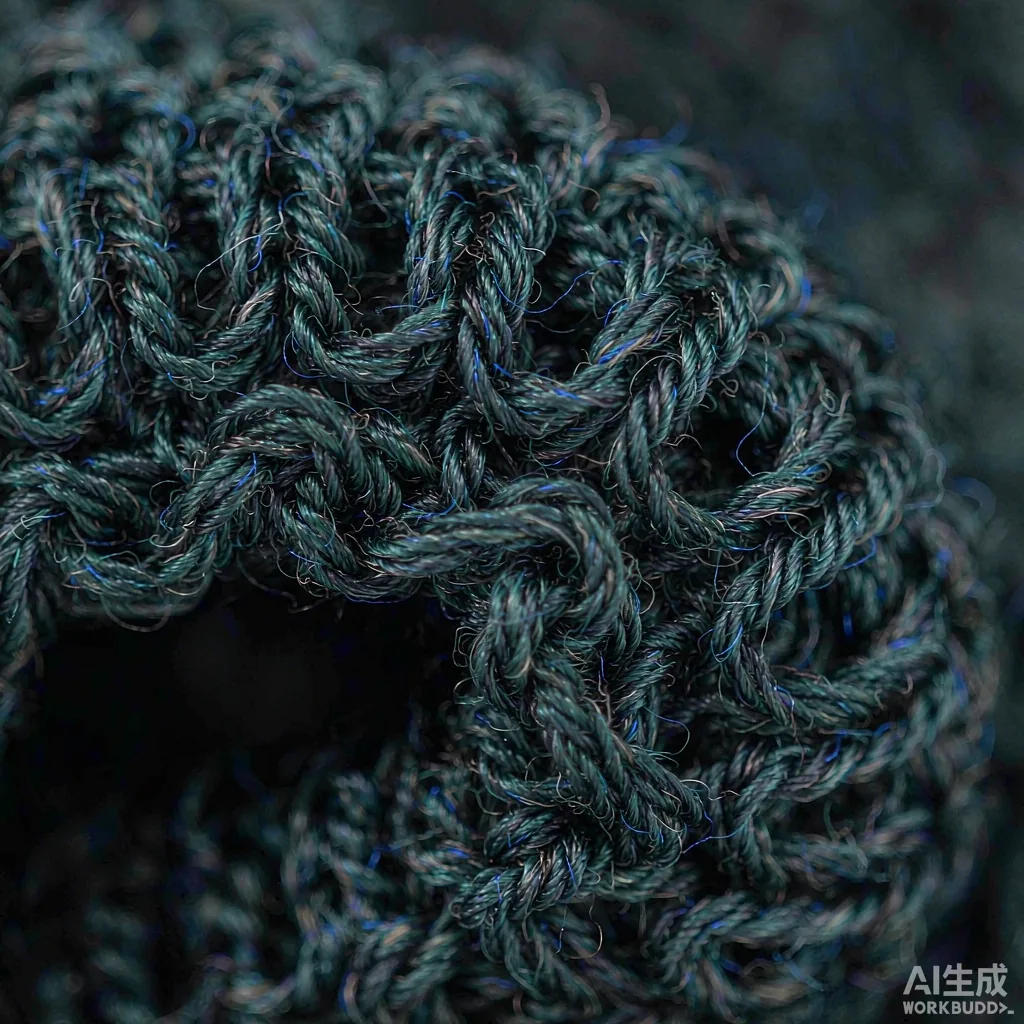
An E12 gauge in 300D is the enabler for the first of those. A fine gauge resolves small serif type and long quotes legibly, where an E7 would render the same artwork as blocks. The trade-off is snagging, which is why the fine gauge works here and not in grocery: books do not have the burrs and sharp edges that a trolley frame and a boot lip present.
Check 6: Paper and Print Compliance on the Hangtag
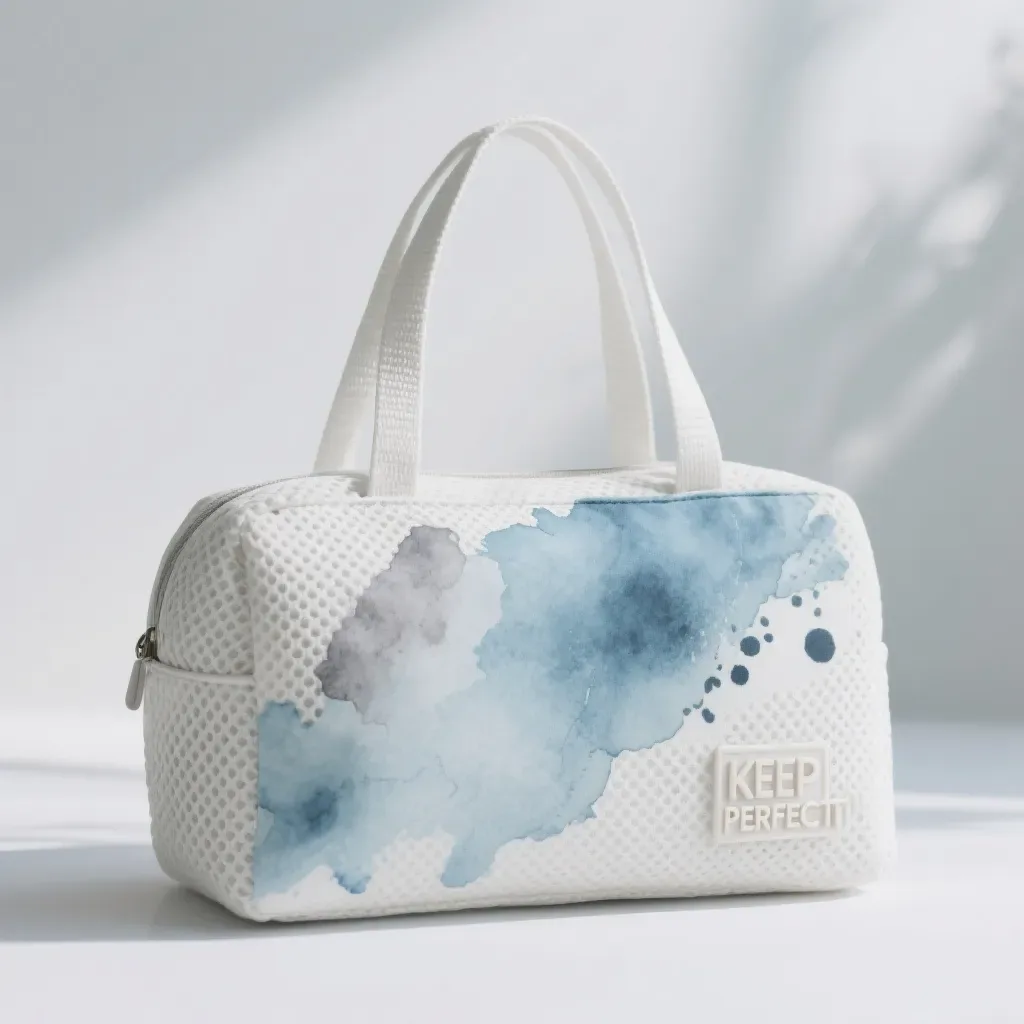
The hangtag is the compliance carrier and it is usually the only paper component in the pack, which makes it easy to get right. Specify FSC-certified board for the tag and any belly band, keep the print to a restricted-substance declaration against ECHA REACH Annex XVII, and add a California Prop 65 statement for any US doors the shop ships to.
Where the tote is marketed on a recycled yarn claim, Textile Exchange GRS certification supplies the transaction certificate that ties the claim to the lot actually knitted. OEKO-TEX STANDARD 100 covers the chemical conversation on the knit itself. Both should be requested at yarn stage, because neither can be produced retrospectively once the lot is on the machine.
Check 7: Children's Titles and the CPSIA Line
A tote sold alongside children's books changes category. If it is marketed to children or placed in a children's section, it falls under the Consumer Product Safety Improvement Act in the United States, which brings lead and phthalate limits plus tracking label requirements that an adult gift tote does not carry. That is a specification decision, not a paperwork afterthought.
The practical consequence is that hardware and applied prints need to be declared, not just the knit. A programme run with a single undivided adult specification will fail a children's line review even though the fabric is identical, so decide at brief stage whether the drop is adult gift, children's, or both, and split the colourways accordingly.
Check 8: Counter Display, Folded to A5
Bookshop retail space is priced by the metre and the counter is the most expensive part of it. A tote that folds to A5, about 148 by 210 mm, fits a standard counter display unit and a shelf-edge rack, and it lets a single display hold roughly twice the units of a piece that only folds to A4. Folded size is the line that decides whether the shop manager gives the programme counter space at all.
Presentation at the counter should put the jacquard quote face outward with the hangtag at the top edge, because the quote is the reason the unit sells. Where the shop sells the bag as a tie-in with a specific title, a printed belly band can be changed without touching the knit programme and lets one tote serve a whole season of title promotions.
Check 9: Carton Pack and Store Delivery
Independent bookshops receive small deliveries and have limited back-room space, so the carton has to work for a shop that cannot break a pallet. Around 60 pieces per carton at roughly 55 by 38 by 30 cm, packed flat in folded A5 format, fits a shop stockroom shelf and lets a single-manager shop open a case without a knife.
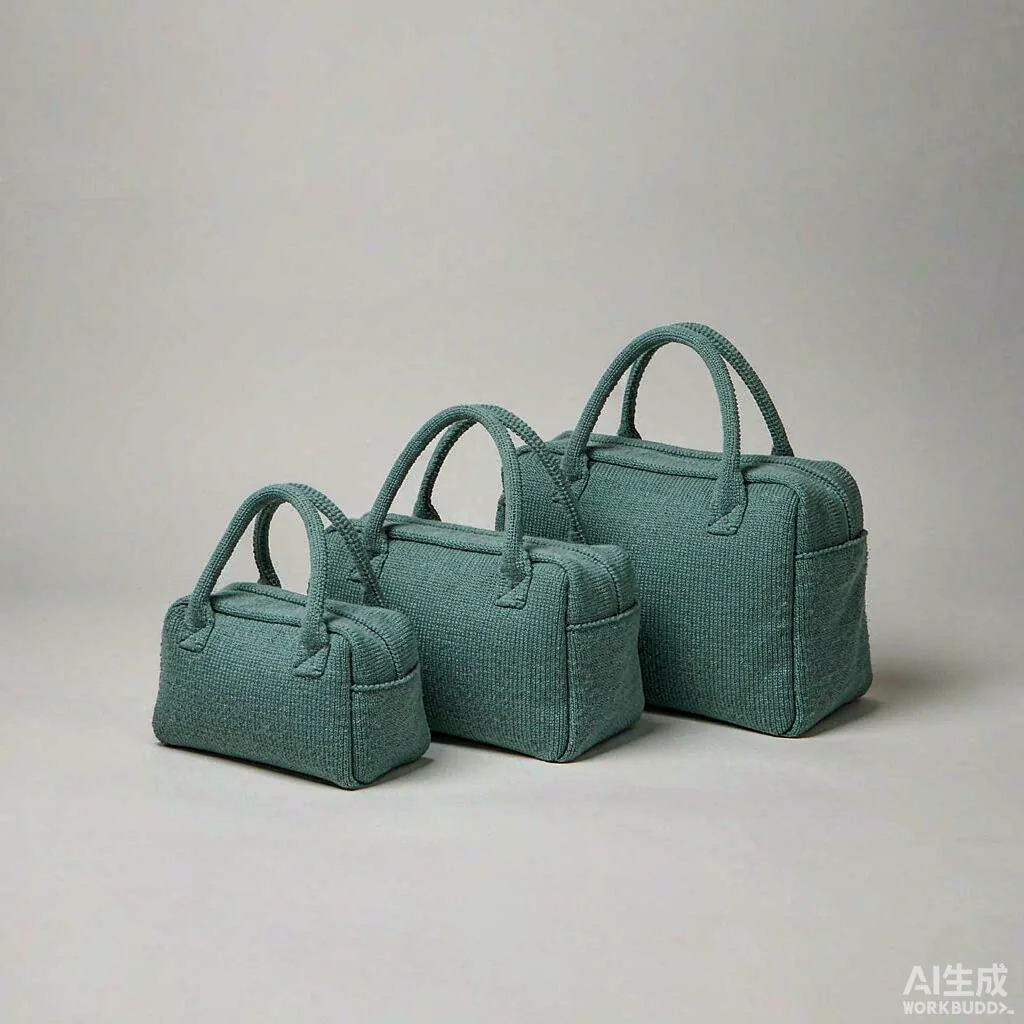
Carton marking matters more for bookshops than for most channels because deliveries are split across many small doors. A clear carton label with the shop name, the title tie-in and the piece count prevents the common failure of a shop receiving the right units in the wrong colourway split and having to re-sort before the promotion opens.
Bookshop Tote Specification Sheet
- Capacity
- about 12 L
- Dimensions
- roughly 35 x 30 x 10 cm, depth ruled by hardback stack
- Governing load
- 3.5 kg of rigid point load
- Gauge and yarn
- E12 in 300D, for legible jacquard type
- Fabric mass
- near 300 g/m²
- Corner patches
- four, about 40 x 40 mm, double-layer knit
- Corner abrasion
- about 12,000 rubs, ISO 12947-2
- Base board
- 3 mm, removable, 4 mm inset from the footprint
- Lining
- lightweight 210D full liner
- Folded size
- A5, about 148 x 210 mm
- Identity
- 160 x 100 mm jacquard panel, 40 mm woven label, hangtag
- Carton
- 60 pcs, roughly 55 x 38 x 30 cm
- Inspection
- AQL 2.5 under ISO 2859-1
One number on that sheet deserves a second look: the 4 mm inset on the base board. It is the difference between a piece that survives a wash cycle with its shape intact and one that develops a permanent ring on the base after three months, and it costs nothing to specify at sampling.
Check 10: Reorder Rhythm for a Title-Linked Drop
Bookshop drops are tied to publication dates rather than to seasons, which makes the calendar tighter than the volumes suggest. MOQ is 100 pcs per style and colourway, so a promotion across 30 independent shops at 20 pieces each is 600 units and can carry six colourways or six quote variants without commissioning six knit programmes.
Sampling takes 7 working days and bulk takes 30 days, which against a publication date means locking the quote artwork roughly 8 weeks before the on-sale date. Seven production lines at about 200,000 pcs per month mean a mid-promotion reorder is a scheduling question rather than a capacity question, and knit bag programmes have been coordinated on this rhythm since 2014.
What to Send With the First Bookshop Enquiry
The enquiries that come back closest to production are the ones that state the corner load case explicitly. Send the capacity, the hardback count, the corner patch requirement, the folded size and the identity split, and the first sample arrives as a bookshop piece rather than as a generic tote.
- Capacity, dimensions and the number of hardbacks the piece must take flat.
- Corner patch requirement and per-zone abrasion targets.
- Whether a full liner and a removable base board are required.
- Gauge decision: E12 for legible type, E7 for snag resistance.
- Identity split across jacquard panel, woven label and hangtag.
- Compliance scope: REACH, Prop 65, CPSIA if children's, GRS or OEKO-TEX.
Specify a bookshop tote programme
Send capacity, hardback count, corner patch requirement and identity split. Sampling takes 7 working days, bulk takes 30 days, MOQ is 100 pcs per style and colourway, FOB Xiamen. Start the conversation at /contact/.
Frequently Asked Questions
What size should a knitted bookshop tote be?
About 12 L, measuring roughly 35 by 30 by 10 cm, which takes six octavo hardbacks laid flat plus a paperback and a drink. Depth is the ruling dimension: below about 8 cm the stack has to be tipped on edge and the corners start pressing into the side wall instead of resting on the base.
Why does a bookshop bag fail differently from a grocery bag?
Because the load is rigid and pointed rather than distributed. Six hardbacks put about 0.9 kg on each of four corners over roughly 5 mm of knit, which is a higher local stress than a 9 kg grocery shop spread across a base panel. Corner patches matter more here than handle reinforcement.
Which gauge should a bookshop tote use?
E12 in 300D at roughly 300 g/m² when the design carries a knitted quote or small serif type, because the fine gauge resolves the lettering legibly. Choose E7 in 600D instead if the piece is expected to meet sharp burrs, which is the trade-off the fine gauge makes.
Does a bookshop tote need a lining?
Yes, more often than a grocery tote does. The contents are dry, rigid and sharp-cornered, so a lightweight 210D liner protects the knit from inside without the moisture problem that rules lining out in a food channel. A full liner plus four corner patches takes the punch off the panel.
How thick should the base board be?
About 3 mm, removable, and inset roughly 4 mm from the base footprint on each side. The inset stops the board outline telegraphing through the knit as a visible ring after a few months of use, and removability lets the piece go through a wash without damaging the board seat.
What abrasion target suits a bookshop bag?
Set it per zone: about 12,000 rubs to ISO 12947-2 on the interior corner patches, around 8,000 on the base surface, and about 10,000 on the outer base corners. Add AATCC 8 for rubbing fastness, since the bag is carried against winter coats for long stretches.
Can a literary quote be knitted into the panel?
Yes, and it is usually the reason the unit sells. A jacquard panel of about 160 by 100 mm knitted at E12 reproduces long quotes and small serif type legibly. The artwork file must be settled before knitting starts, because a jacquard cannot be changed once the programme is on the machine.
What paperwork does a bookshop buyer request?
A restricted-substance declaration against ECHA REACH Annex XVII, a California Prop 65 statement for US doors, FSC certification for the hangtag and belly band, and either Textile Exchange GRS or OEKO-TEX STANDARD 100 for the knit. Request all of them at yarn stage.
When does CPSIA apply to a bookshop tote?
When the tote is marketed to children or placed in a children's section, which brings lead and phthalate limits and tracking label requirements. The fabric may be identical to an adult gift tote, but the declared hardware and applied prints have to meet the stricter line, so decide at brief stage.
How small should a bookshop tote fold?
To A5, about 148 by 210 mm. That format fits a standard counter display unit and a shelf-edge rack, and it lets one display hold roughly twice the units of a piece that only folds to A4, which is the argument that wins counter space in an independent shop.
What is the minimum order for a bookshop programme?
MOQ is 100 pcs per style and colourway. A promotion across 30 independent shops at 20 pieces each is 600 units, which comfortably covers six colourways or six quote variants without commissioning six separate knit programmes or paying six setup charges.
How far ahead of a publication date should the order start?
Lock the quote artwork roughly 8 weeks before the on-sale date. Sampling takes 7 working days and bulk takes 30 days, which leaves room for one colourway adjustment and the sea leg against a fixed publication calendar that cannot move for a late sample.
How many pieces ship in one carton?
About 60 pieces per carton at roughly 55 by 38 by 30 cm, packed flat in the folded A5 format. That pack suits independent shops with limited back-room space and lets a single-manager shop open a case without a knife or a pallet break.
Can one tote body serve several title promotions?
Yes, if the changeable identity sits on paper rather than in the knit. Keeping the body constant and rotating the hangtag and belly band lets one approved sample serve a season of promotions, which shortens every reorder to the paper lead time alone.
People Also Ask
Why do bookshop totes wear at the corners?
Hardback corners concentrate the whole stack weight onto about 5 mm of knit. Four double-layer patches of roughly 40 by 40 mm at the interior base corners move that stress off the panel and onto a replaceable zone.
Is a full lining worth it on a book tote?
Usually yes. Books are dry and sharp, so a 210D liner protects the knit without the moisture retention that makes lining a poor choice in a grocery channel.
Which gauge reads best for knitted lettering?
E12 in 300D. The finer loop resolves serif type and long quotes; E7 renders the same artwork as illegible blocks but resists snagging better.
How does a bookshop bag earn counter space?
By folding to A5, about 148 by 210 mm. A display unit then carries roughly twice the units of an A4-folded piece, which is the measure a shop manager applies.
Can a tote be sold with a specific book title?
Yes, with a printed belly band carrying the title. The band changes per promotion without touching the knit programme, so one approved body supports a whole season of launches.
Sources and further reading
Every figure on this page is either our own programme data or attributed below. Open the originals before you write them into a specification.
- ISO 12947-2:2016 - Textiles, determination of abrasion resistance by the Martindale methodISO Method behind the per-zone rub targets on the interior corner patches and base of a bookshop tote.
- Consumer Product Safety Improvement Act (CPSIA)U.S. Consumer Product Safety Commission Determines when a tote placed in a children's section carries lead, phthalate and tracking label duties.
- FSC certificationForest Stewardship Council Chain-of-custody basis for the hangtag and belly band board used in bookshop promotions.
- Substances restricted under REACHEuropean Chemicals Agency Restricted-substance declaration requested by bookshop buying groups before listing a gift line.
- ISO 105-X12:2016 - Textiles, tests for colour fastness, Part X12: colour fastness to rubbingISO Referenced alongside AATCC 8 where a printed quote could transfer onto winter clothing.
- ISO 2859-1 - Sampling procedures for inspection by attributes, Part 1: AQL-indexed sampling schemesISO Sampling framework behind an AQL 2.5 acceptance agreement for title-linked drops.
Why Depth Beats Height in This Channel
Most bag briefs specify height first, because height is what a photograph shows. In a bookshop the ruling dimension is depth, since depth decides whether a stack of hardbacks rests on the base panel or presses its corners into the side wall. A 12 L body that is 10 cm deep will outlast a 14 L body that is 7 cm deep, even though the second one reads as the larger bag on a specification sheet.
Treat the second title drop as part of the first plan rather than as a separate project. With sampling at 7 working days and bulk at 30 days, one tote body can serve a season of promotions if the changeable identity sits on the hangtag and belly band rather than in the knit. Programme records coordinated since 2014 show that shops which keep the body constant and vary the paper components reorder roughly twice as often as shops that commission a new knit for every title.