Knitted Bag Logo Application Methods: Five Routes From Knitted-In Jacquard to Silicone Patch, Priced and Tested
A loyalty programme needed 3,000 knitted bags carrying a wordmark that had only ever been printed. The mark had 1.4 mm hairlines, and at gauge E12 those hairlines close up during heat setting, so the first sample came back with the brand name half legible. The answer was not a better transfer; it was a route change, to a knitted-in jacquard at a 3 mm minimum stroke backed by a woven label for the legal line. This article follows that decision through the five application routes available on a knitted surface, with the cost per piece and the durability evidence for each.
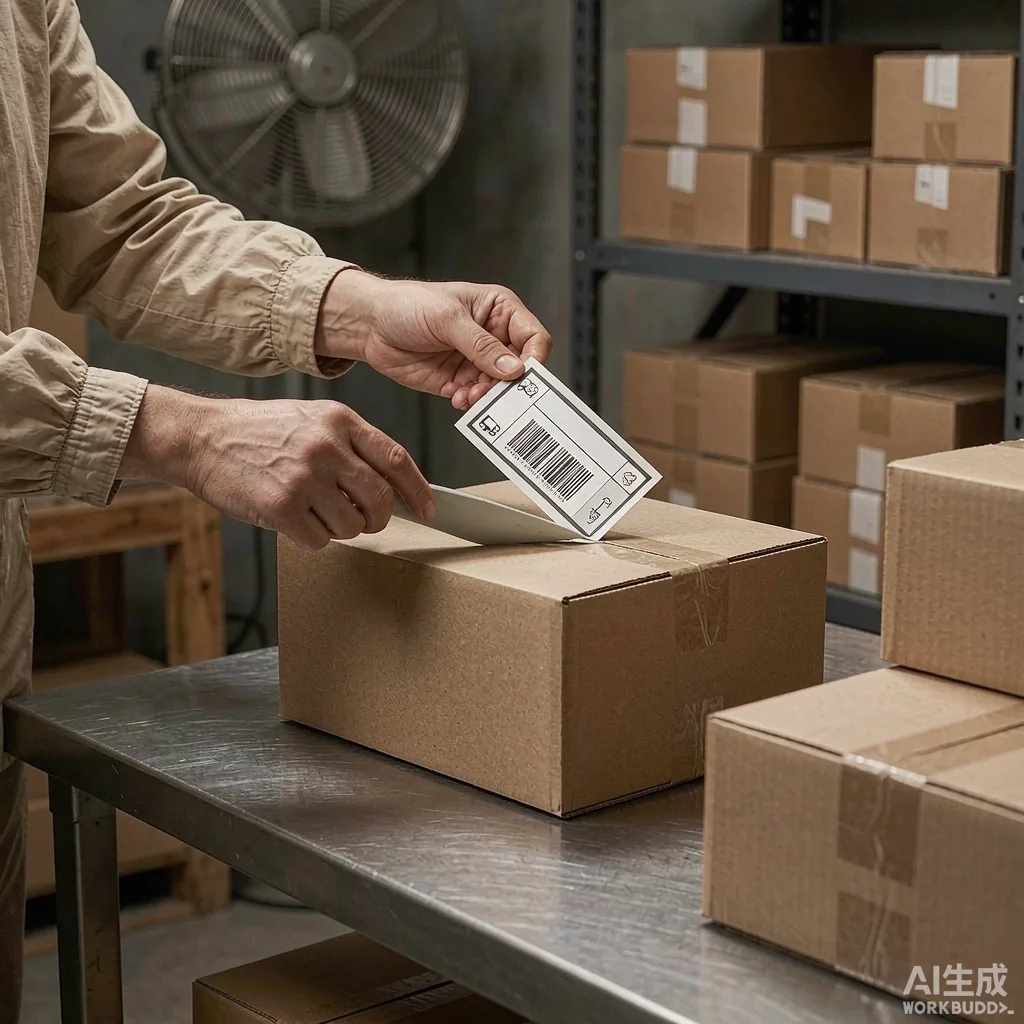
A Logo Brief That Arrived as a Print File
Five application routes exist for a knitted bag logo — knitted-in jacquard, woven label, heat transfer, silicone patch and direct embroidery — and the right one is decided by stroke width and carry life, not by which sample looks best on a desk.
The brief in question was a 3,000-piece loyalty gift at a 320 g/m² E12 body in two colourways. The artwork was a print lockup: a wordmark with 1.4 mm hairlines, a legal line at 5 pt, and a colour count of four. None of those three facts is a problem in ink. All three are problems in yarn, and the first sample made that visible within seven working days rather than after 30 days of bulk. That is the whole argument for routing the decision before the tech pack is signed.
What the first sample showed was specific. The hairlines were present on the bed and gone after setting, because a loop structure relaxes under heat and fine detail is the first thing it loses. The legal line at 5 pt had fused into a bar. The four-colour mark had rendered, but as four shades of the same tone rather than as four distinct colours, because at E12 a single stitch carries roughly 2.1 mm of yarn and cannot resolve a colour boundary finer than that.
The Five Application Routes Available on a Knitted Surface
The five routes split into two families: two that change the knitting programme itself, and three that add an operation to a finished panel — and that split, not the visual result, is what decides the unit cost.
A knitted-in mark is a structural decision. It lives in the stitch file, it costs nothing per piece beyond the programming, and it cannot peel, crack or be removed. An applied mark is an operation decision. It reproduces finer detail than any gauge can knit, it carries a per-piece placement cost, and its failure mode is adhesion. Programmes buying a long carry life generally want a structural mark; programmes buying a photographic reproduction generally need an applied one, and the interesting cases are the ones that use both.
- Knitted-in jacquard
- Structural, in the stitch file; no per-piece add-on beyond programming
- Intarsia colour block
- Structural, in the stitch file; best for large flat colour fields
- Woven or printed label
- Applied, sewn on; carries the legal line and fibre content
- Heat transfer
- Applied, pressed at about 150 °C for 12 seconds; photographic detail
- Silicone patch
- Applied, pressed at about 160 °C for 15 seconds; raised and durable
- Direct embroidery
- Applied, stitched through the panel; adds local stiffness and weight
Route One: Knitted-In Jacquard, the Structural Option
A knitted-in jacquard carries a legible mark from about 40 cm² upward with a minimum stroke width of 3 mm at E12 and 5 mm at E7, and once programmed it adds nothing to the unit cost of the piece.
The economics are unusual and worth stating. The route carries a one-off programming charge and no per-piece cost, so the unit cost falls below the applied routes at every volume above it, which on a standard tote sits around 300 pieces. It also removes an entire failure class: there is no adhesive to soften in a hot car, no edge to lift in a wash, and no second material to classify for compliance. What it cannot do is fine detail. A wordmark designed for print usually needs a knit-specific lockup, and obtaining that approval from the brand team is the longest lead item on the whole programme.
- Minimum stroke: about 3 mm at gauge E12, about 5 mm at gauge E7, wider at E5.
- Minimum legible area: roughly 40 cm² for a wordmark on a front panel.
- Colour count: two or three yarn colours resolve cleanly; four or more start to blur at E12.
- Cost shape: one-off programming, then no per-piece add-on at any volume.
- Failure mode: none mechanical. The mark cannot peel because there is nothing applied.
Route Two: Woven and Printed Labels, the Applied Options
A woven label at 20 mm or 25 mm width reproduces type down to about 4 pt legibly, costs a small per-piece amount plus a set-up for the loom, and is the correct home for the legal line that no knitted surface should be asked to carry.
This is the route the case programme chose for its second element, and it is the most under-used of the five. Brand teams ask a knitted surface to carry a fibre-content line, a country-of-origin line and a care line, all of which are legally required in most markets and none of which reproduce well in yarn. A woven label carries them at a fraction of the cost of attempting them structurally, and it also carries the size reference and the batch code. The label itself should be specified: polyester satin for a soft hand, ultrasonic cut or folded ends to prevent fraying, and a stitch line rather than a heat-set edge.
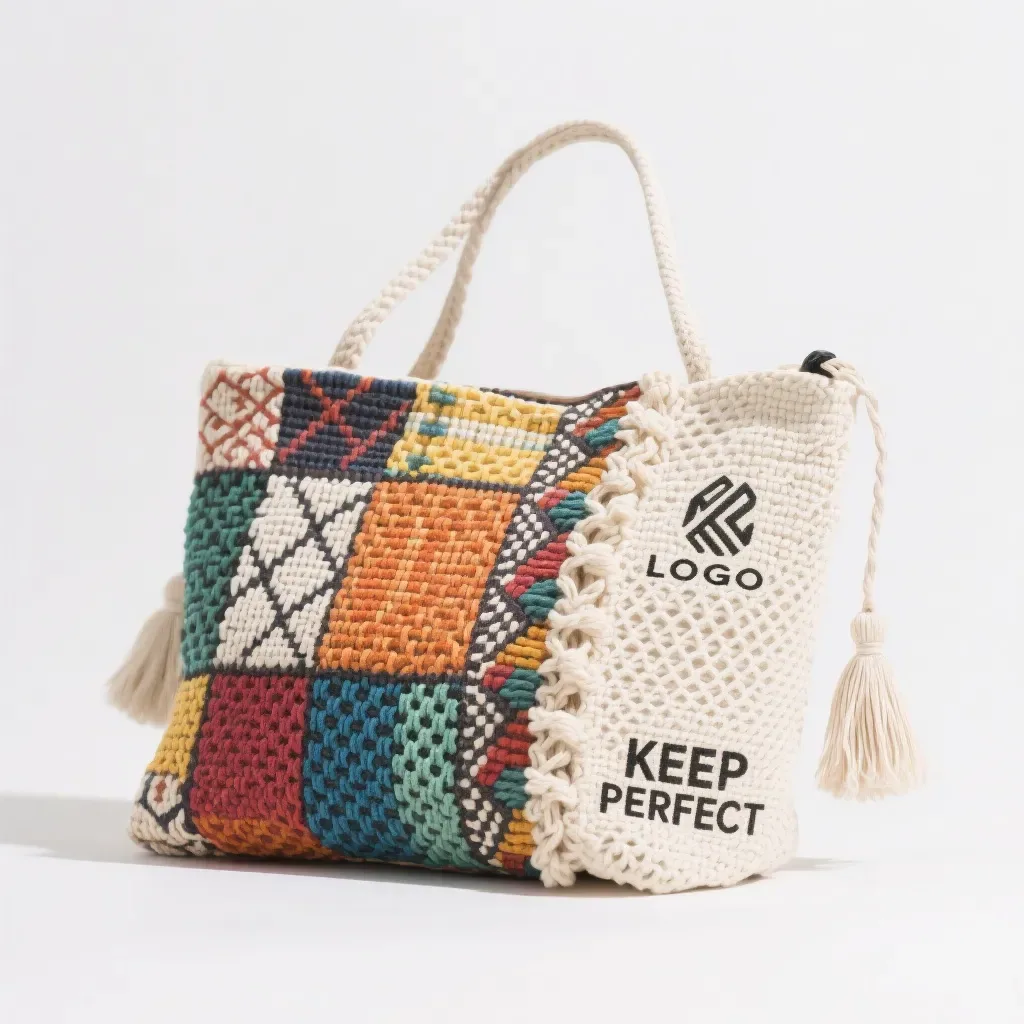
Placement is the part of a label specification that most packs omit, and it is the part that inspection cannot resolve without it. A label sewn into a side seam is protected by the seam allowance and reads from the inside; a label applied to a front panel is exposed to abrasion and reads from the outside. Stating the placement as a measurement from a stated reference edge, with a tolerance in millimetres, converts an opinion into an inspectable dimension and lets the AQL 2.5 defect list actually cover it.
Route Three: Heat Transfer, Silicone Patch and Embroidery
Heat transfer pressed at about 150 °C for 12 seconds reproduces photographic detail a knitted surface cannot; a silicone patch pressed at about 160 °C for 15 seconds adds a raised, durable mark; and direct embroidery adds roughly 2,500 to 4,000 stitches for a 40 cm² mark.
All three are operations on a finished panel, and all three share the same risk: adhesion to a loop structure rather than to a flat weave. A knitted surface has less contact area than a woven one, which is why transfer parameters developed for woven carriers fail on knit. Two controls fix it. The first is a pre-press to close the surface before the mark goes down. The second is a wash test on the actual panel rather than on a standard swatch, run to AATCC 61 2A and read after five cycles rather than one, because adhesion failure on knit usually appears at the edges between the third and fifth cycle.
Knitted-in jacquard
Programming charge, no per-piece add-on, break-even near 300 pcs. Carries a 3 mm stroke minimum and unlimited wash life.
Woven label, 25 mm
Small per-piece cost plus a loom set-up. The correct home for legal, care and origin lines at 4 pt legibility.
Heat transfer
About 150 °C for 12 seconds, photographic detail, lowest set-up of the applied routes. Edge lift is the failure mode on knit.
Silicone patch
About 160 °C for 15 seconds, raised and highly durable, 0.8 to 1.2 mm thick. Adds local weight and a stiffer hand.
What Each Route Costs Per Piece and Per Programme
On a 3,000-piece two-colourway programme, a knitted-in jacquard added nothing per piece beyond programming, a woven label added about 2%, a heat transfer about 4% and a silicone patch about 9% — measured against a USD 4.80 FOB reference body.
The percentages hide the shape, which is what a buyer should actually be reading. The jacquard is a fixed cost and the applied routes are variable costs, so the two families cross somewhere. Above the crossing the structural route is free and the applied routes keep charging; below it, the programming charge dominates and an applied mark is better value. The crossing moves with the size of the mark and the colour count, because both drive programming time, and it moves down as volume rises. A programme that expects to reorder should therefore weight the structural route more heavily than a single 100-piece run would justify on its own.
| Route | Unit cost add-on | Detail resolution | Durability evidence |
|---|---|---|---|
| Knitted-in jacquard | Programming only; about 0% per piece | 3 mm stroke at E12, 5 mm at E7 | No applied layer; survives the life of the body |
| Intarsia colour block | Programming plus yarn handling; about 3% | Large flat fields only | Structural; same life as the body |
| Woven label | About 2% per piece plus loom set-up | Type down to about 4 pt | Stitch line is the weak point, not the label |
| Heat transfer | About 4% per piece, low set-up | Photographic, full colour | Read after five AATCC 61 2A cycles, not one |
| Silicone patch | About 9% per piece, higher set-up | Fine detail, raised profile | Best applied durability; edge lift still possible |
| Direct embroidery | About 7% per piece, stitch-count driven | Medium detail, 2,500 to 4,000 stitches | Adds local stiffness; check abrasion on the panel |
Durability: How Each Route Survives Washing and Abrasion
Applied marks on a knitted body should be released against five AATCC 61 2A wash cycles with no edge lift, grade 4 colour fastness to AATCC 8, and no measurable loss on the panel after 20,000 Martindale rubs to ISO 12947-2.
One cycle is not evidence. Adhesion failure on a loop structure is progressive and starts at the corners, where the contact area is smallest and the peel stress highest; a single-cycle test passes almost everything and predicts nothing. The fifth-cycle read is where a transfer formulation either holds or lifts, and it costs little to run on the approval sample. Abrasion matters for a different reason: a raised patch changes the local abrasion behaviour of the panel around it, so the rub test should be run on the marked panel rather than on bare fabric, with the mark inside the abraded area.
How the Case Programme Was Specified and What Shipped
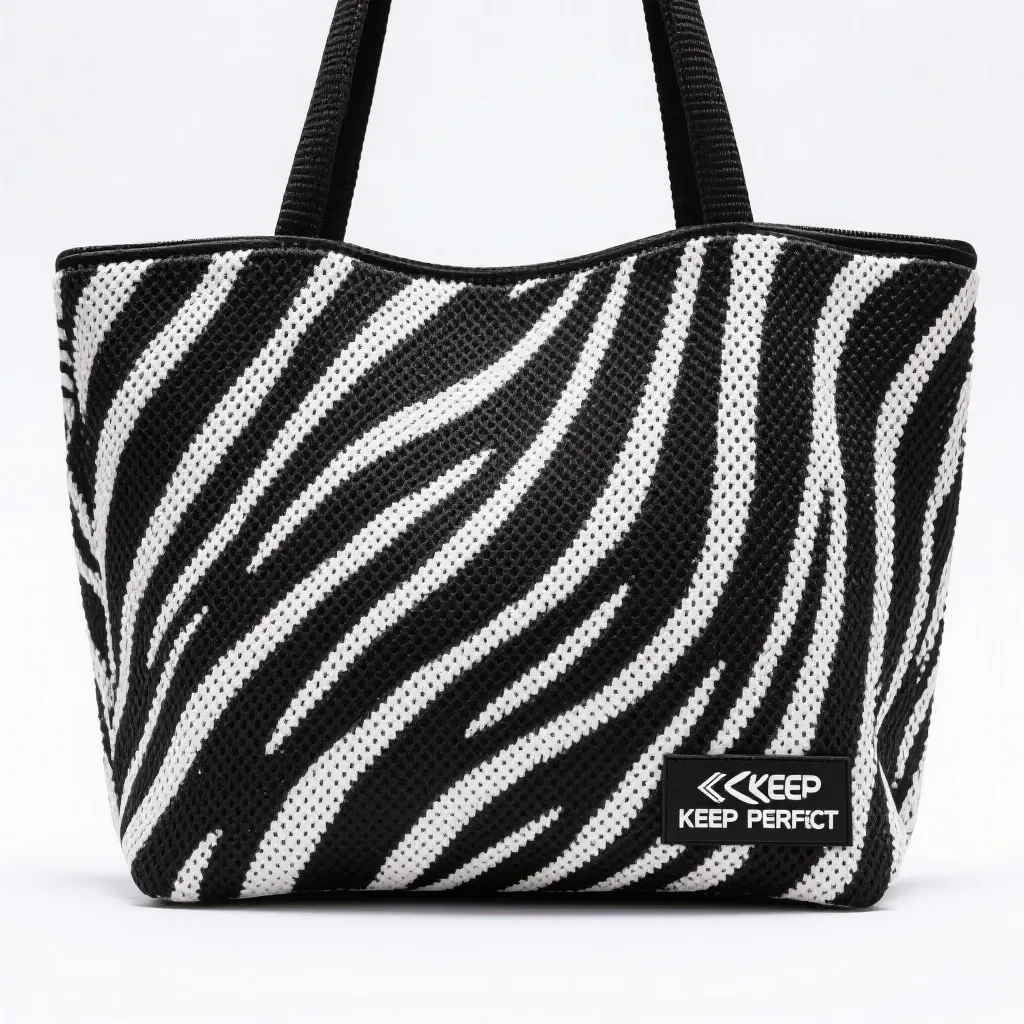
The 3,000-piece loyalty programme shipped with a two-route specification: a knitted-in jacquard wordmark at 3 mm minimum stroke for the identity, and a 25 mm woven label in the side seam for the legal and care lines.
The sequence that got there took 7 working days of sampling plus one revision round, because the brand team had to approve a knit-specific lockup. That approval was the critical path, not the knitting. The programme then ran 30 days of bulk across two colourways at MOQ 100 pcs per style and colourway, released against AQL 2.5 under an ISO 2859-1 sampling plan, and shipped FOB Xiamen. Capacity behind it was 7 production lines running about 200,000 pcs per month, which is why a 3,000-piece gift programme is never capacity-constrained; the constraint was the artwork approval, and it is on almost every programme.
Route the logo on your knit programme
Send the artwork, the body gauge, the volume per colourway and the target carry life. Our knit team will return a route recommendation with the stroke-width limits, a cost add-on for each option, a five-cycle wash plan and a quotation on 7 working days of sampling and 30 days of bulk. Start on the contact page.
Frequently Asked Questions
What are the main knitted bag logo application methods?
Five: knitted-in jacquard and intarsia, which change the stitch file, plus woven label, heat transfer and silicone patch, which add an operation to a finished panel. Direct embroidery is a sixth where the brand wants a stitched mark.
What is the smallest logo a knitted surface can carry?
About 40 cm² of legible area with a minimum stroke width of 3 mm at gauge E12 and 5 mm at gauge E7. Below those widths, fine detail fills in during heat setting and the first wash.
Why did my printed logo look wrong on the first knitted sample?
Because print reproduces any vector artwork at any size and a loop structure does not. Hairlines around 1.4 mm knit correctly on the bed and close up after setting. Most brands approve a simplified knit-specific lockup instead.
Is a knitted-in logo more expensive than an applied one?
It depends on volume. Knitted-in carries a programming charge and no per-piece cost, so it breaks even near 300 pieces and stays lower above that. An applied mark keeps charging per piece at every volume.
Where should the legal and care lines go on a knitted bag?
On a woven label, typically 20 mm or 25 mm wide, sewn into a side seam. A knitted surface cannot resolve fibre content or country-of-origin text reliably, and a label carries both at a fraction of the cost.
What temperature is used for a heat transfer on knitted fabric?
About 150 °C for 12 seconds, with a pre-press to close the surface first. A knitted body has less contact area than a woven one, so parameters developed for woven carriers tend to fail on knit.
How durable is a silicone patch on a knitted bag?
It is the most durable of the applied routes, pressed at about 160 °C for 15 seconds and typically 0.8 to 1.2 mm thick. It adds local weight and a stiffer hand, and edge lift remains possible at the corners.
How many wash cycles should an applied mark be tested for?
Five to AATCC 61 2A, read for edge lift. A single cycle passes almost everything and predicts nothing, because adhesion failure on a loop structure is progressive and starts at the corners.
Does embroidery weaken a knitted bag panel?
It adds local stiffness and weight rather than weakening the panel, at roughly 2,500 to 4,000 stitches for a 40 cm² mark. The check to run is abrasion on the marked panel, not on bare fabric.
Can two application routes be combined on one bag?
Yes, and it is usually the right answer. A knitted-in jacquard carries the identity and a woven label carries the legal and care lines. Each element goes to the route that reproduces it best.
How long does a logo routing decision add to a programme?
It should add nothing to the 7 working days of sampling if the artwork arrives with the tech pack. What adds time is a brand team approving a knit-specific lockup, which is the critical path on most programmes.
How many yarn colours can a knitted-in mark resolve?
Two or three resolve cleanly at gauge E12; four or more begin to blur, because a single stitch carries roughly 2.1 mm of yarn and cannot resolve a finer colour boundary. Intarsia suits larger flat fields.
What inspection standard applies to a branded knit bag run?
AQL 2.5 under an ISO 2859-1 sampling plan, with logo placement, legibility and edge condition written into the defect list. Placement tolerances must be stated in the pack or they cannot be inspected.
Does the logo route affect the compliance classification?
An applied mark introduces a second material that has to be screened alongside the body. A knitted-in mark introduces none, which is one reason structural routes simplify REACH and Prop 65 documentation.
People Also Ask
What is the best way to put a logo on a knitted bag?
Knitted-in jacquard for the identity if the artwork can hold a 3 mm stroke, and a woven label for the legal line. The structural mark cannot peel, and the label carries text no gauge can knit.
Can a detailed logo be knitted into a bag?
Only down to a limit. Minimum stroke width is about 3 mm at gauge E12 and 5 mm at gauge E7. Photographic or hairline artwork needs a heat transfer or a silicone patch instead.
How much does a knitted bag logo add to the unit cost?
From about 0% per piece for a knitted-in jacquard after programming, to 2% for a woven label, 4% for a heat transfer and 9% for a silicone patch, measured against a USD 4.80 FOB body.
Will a heat transfer logo peel off a knitted bag?
It can, at the corners, typically between the third and fifth wash cycle. Specify a pre-press to close the surface and release the mark only after five AATCC 61 2A cycles with no edge lift.
Should the legal text be knitted into the bag?
No. Put fibre content, country of origin and care on a 25 mm woven label in the side seam. It reproduces type down to about 4 pt and costs less than attempting the same lines in yarn.
Sources and further reading
Every figure on this page is either our own programme data or attributed below. Open the originals before you write them into a specification.
- AATCC colour fastness test methodsAATCC Home of AATCC 61 accelerated washing and AATCC 8 crocking, the two release tests quoted for applied marks.
- ISO 12947-2 — Textiles, determination of abrasion resistance, Part 2: specimen breakdownISO The 20,000-rub threshold, run on the marked panel rather than on bare fabric.
- ISO 2859-1 — Sampling procedures for inspection by attributes, Part 1: AQL-indexed sampling schemesISO Defines the AQL 2.5 release that placement and legibility defects are inspected against.
- OEKO-TEX STANDARD 100OEKO-TEX Applies to the applied mark as a second material alongside the knitted body.
- Consumer Product Safety Improvement ActU.S. Consumer Product Safety Commission Tracking-label requirements that sit behind the legal line carried on a woven label.
- WHOLEGARMENT knitting technologyShima Seiki The machine family behind gauge references such as E7 and E12 and the stroke limits that follow from them.
Route the Decision Before the Tech Pack Is Signed
Logo routing is a cost decision disguised as a design one. The structural routes buy durability and remove a compliance material; the applied routes buy detail and charge per piece. Deciding which element belongs on which route before sampling starts is what keeps a branded programme inside 7 working days of sampling and 30 days of bulk, rather than discovering the answer on the first sample.
For the direct comparison between the two most common choices, see knitted-in logo versus woven label. For the shade work beneath a brand mark, see custom knitted bag colour matching, and for the volume commitment behind the quotation, see custom knit bags.