Knitted Bag Launch Timeline: A Week-by-Week Critical Path From Sampling 7 Working Days to Bulk 30 Days
A knitted bag launch is twelve weeks from an approved brief to a set fixture, and almost every late launch is late for the same reason: the content track was treated as a downstream task rather than as a parallel one. The critical path is short and fixed — 7 working days of sampling, 30 days of bulk, about five days of AQL 2.5 inspection and roughly three weeks of sea freight from FOB Xiamen — which leaves about four weeks of genuine slack. This article walks the twelve weeks in decision order, sets out the four gates that gate each stage, and shows where a week can be recovered without touching the quality checks.
The Decision Gate Before Day One
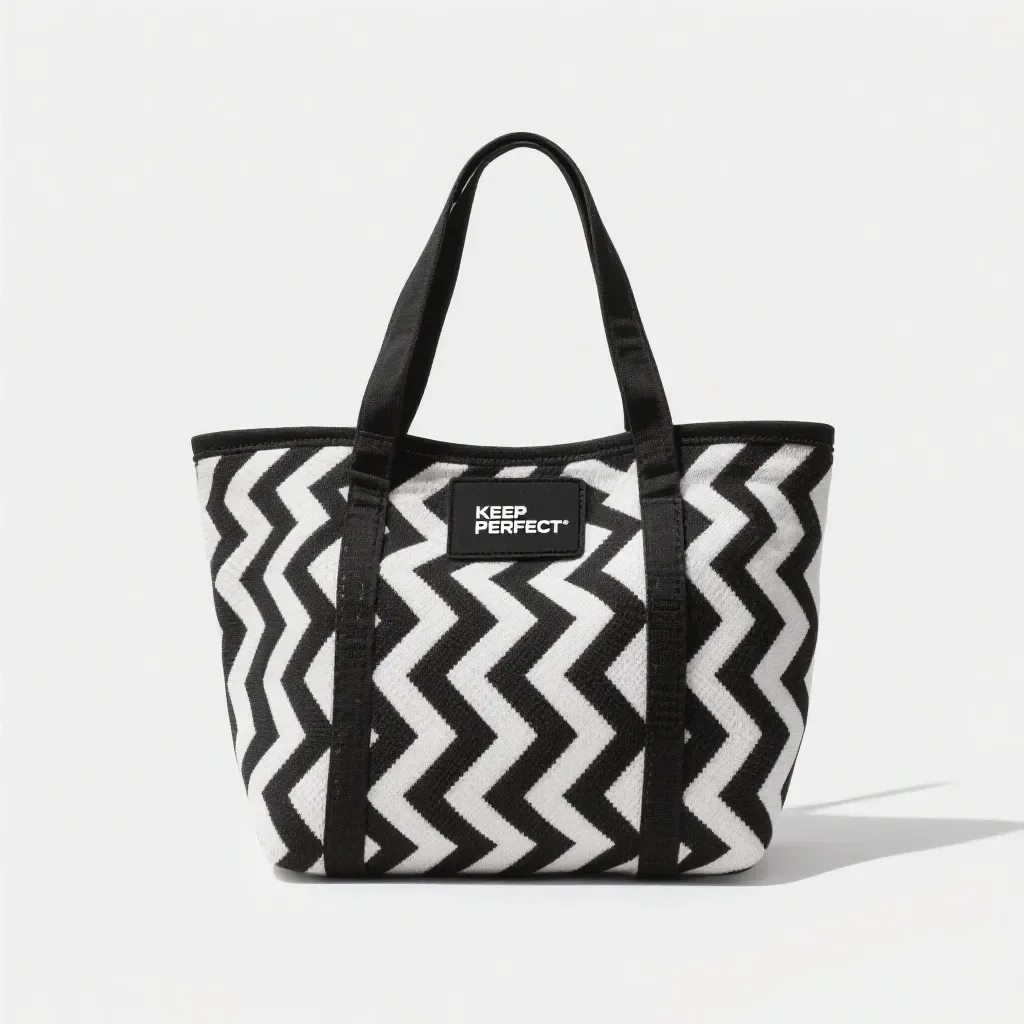
Before week one, three decisions have to be closed — the brief, the shade reference and the volume per style and colourway — because sampling cannot start on an open brief and the 7 working days only begin once all three are fixed.
The gate exists because sampling is a physical iteration, not a document revision. Once the sample is on the bed, a change to the shade reference is a re-dip and a change to the yarn is a new programme, and either one resets the seven days. Brands that treat week one as the moment the clock starts usually discover that the clock was never started, because the artwork was still moving or the colourway split was still being argued. The discipline that prevents this is a written brief with three named sections — construction, materials and volume — and a date on which the brief is frozen. Freezing a brief is a decision, and it is the first one on the critical path.
- Construction decided: shape, gauge, dimensions and the trim list, with a tech pack revision number.
- Materials decided: yarn count and composition, shade reference with an acceptance figure, and the trim specification.
- Volume decided: pieces per style and per colourway, against MOQ 100 pcs, and the split of the first drop.
- Brief frozen and dated, so the 7 working days of sampling have a definable start.
- Content brief opened in the same week, so the photography track can run in parallel.
Weeks One to Three: Brief, Tech Pack and Sampling
Weeks one to three cover the tech pack, the yarn booking and 7 working days of sampling, and the reason three weeks are allocated to seven days of work is that the yarn booking and the approval loop sit either side of the knitting.
Sequencing inside this window matters more than its length. The yarn has to be booked before the bed can run, and on a custom shade the dye lot has to be booked before the yarn, so a custom colourway adds about 10 working days that sit in front of sampling rather than after it. The tech pack has to be complete before the bed is programmed, and the two items most often missing from it are the gauge and the trim list, which are also the two items a revision is most often raised against. Running the week-one work as a checklist rather than a conversation is what keeps the seven days intact: if the pack is complete and the yarn is booked, sampling is genuinely seven working days.
Weeks Four to Five: Approval and Bulk Booking
Weeks four and five are the approval window, and the single decision that governs them is whether the approval is given against a physical sample at production gauge or against a digital rendering, because only the first starts the 30 days of bulk on schedule.
The approval loop is where most of the slack in a knit launch is consumed, and it is almost always consumed by indecision rather than by rework. A sample arrives, three people look at it, and two of them want a change that was not in the brief. Each of those changes is legitimate and each of them costs a revision, which is 7 working days rather than a day. The remedy is to decide the revision policy before the sample arrives: how many revisions are in the plan, who signs, and what happens to the schedule if a revision is raised. A programme that plans two revisions and uses none finishes early; a programme that plans none and uses two finishes four weeks late.
- Sampling
- 7 working days from a frozen brief, a complete tech pack and a booked yarn
- Custom shade
- About 10 working days for the dye lot, in front of sampling rather than after it
- Bulk production
- 30 days from approval of the production sample
- Inspection
- About five days for AQL 2.5 (ISO 2859-1) release and the documentation pack
- Sea freight
- About three weeks from FOB Xiamen to a northern European port
- Content track
- About two weeks, running in parallel from week seven
Weeks Six to Nine: Production and Inspection
Bulk production runs 30 days from approval, and the inspection at the end of it adds about five days for an AQL 2.5 release, which is the window most plans forget to put on the chart.
The inspection window is not a formality. AQL 2.5 under ISO 2859-1 is a sampling scheme with a defined acceptance number, and when a lot fails, the remedy — a re-sort, a re-work or a re-run — has its own duration that no plan has accounted for. Holding five days rather than one is what makes a failure survivable without moving the launch date, and it costs far less than the alternative, which is shipping an unreleased lot and discovering the problem at the distribution centre. It also protects the launch date, which is the one thing the plan exists to defend. The other item worth booking inside this window is the documentation pack: test reports, the declaration of conformity and the transaction certificate for any recycled content, all of which are needed at receipt and none of which can be produced in a day.
Weeks Seven to Ten: Content Built in Parallel
The content track runs from week seven and takes about two weeks, and it must be built on a production sample rather than on a prototype, because a knit surface photographed at the wrong gauge produces imagery that does not match the bulk.
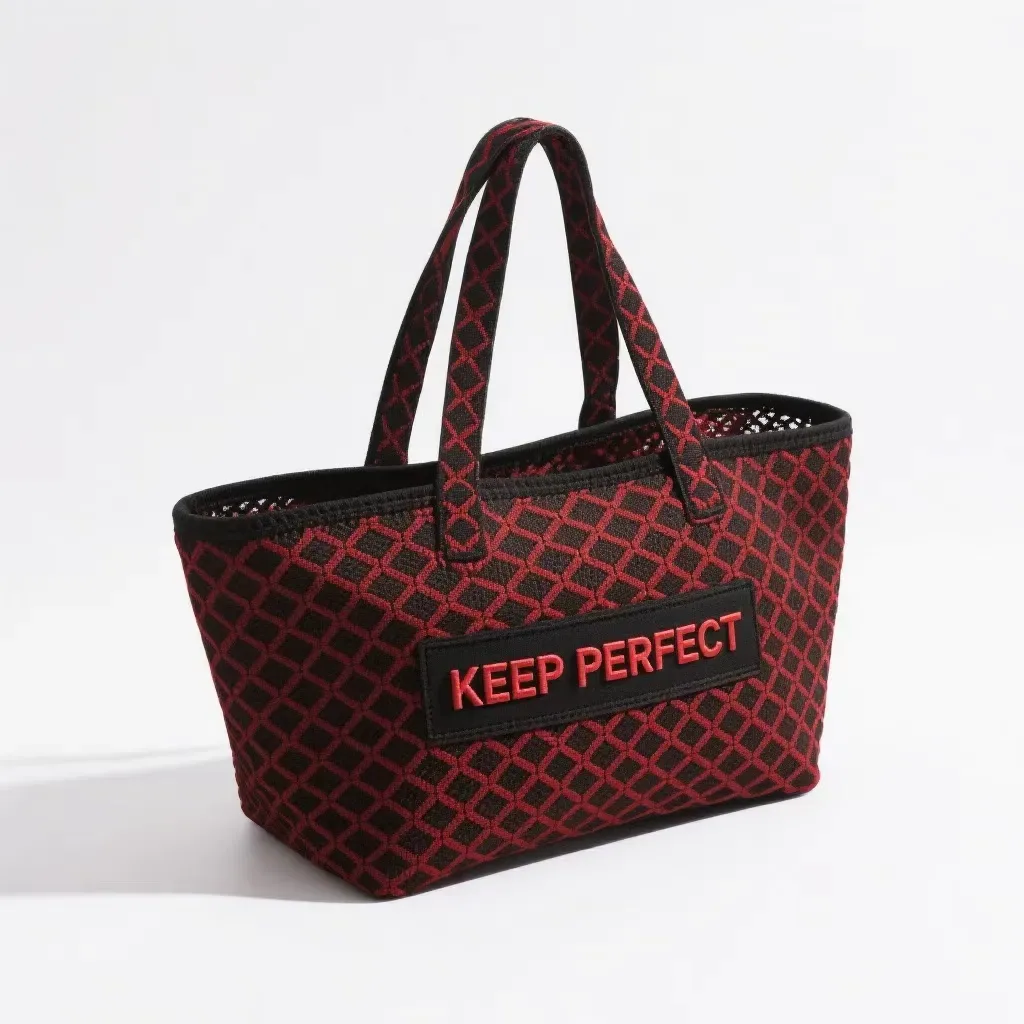
This is the single largest source of recoverable time on the whole critical path, and it is recoverable because it runs alongside production rather than after it. A programme that waits for bulk to arrive before commissioning imagery adds two to three weeks at the end of the chart for no reason other than habit. The production sample, taken from the bed at production gauge in production yarn, is available from about week five and is photographically identical to the bulk. Booking the studio and the writer against that date, rather than against an arrival date, is what makes the parallel track work, and it is the one item on the chart that a brand controls entirely. The one thing that has to be managed is the shade: if the approval round is still open at week seven, the sample may not be the final shade, and imagery shot against a provisional shade has to be reshot. This is why the content track starts in week seven and not in week four.
Weeks Ten to Twelve: Freight, Receipt and Floor Set
Sea freight from FOB Xiamen takes about three weeks to northern Europe, and the receipt, ticketing and floor set add roughly one week, which is why the last three weeks of the chart have no slack at all.
The final window is the one that cannot be compressed by working harder, because it is governed by the ship. Air freight is available and typically removes about two weeks at a cost that on a knit consignment is usually justified only for a launch date with a hard retail commitment. The receipt end is more elastic: ticketing, bagging and distribution are the activities that expand to fill the time available, and a distribution centre given five days will use five. Setting the floor-set date and working backwards to receipt is the reliable way to hold it, and it is the reason the chart should be read from the launch date rather than from week one. A floor set booked without a receipt date behind it tends to slip by about a week, because the two teams planning them rarely share a calendar, and the slip is discovered on the morning the fixture was due to be dressed.
The Four Gates and What Happens at Each
Four gates hold a knitted bag launch together — brief freeze, sample approval, AQL 2.5 release and receipt — and each gate has a named owner, a document and a consequence if it is passed without being met.
| Gate | Evidence required | Consequence of passing it early |
|---|---|---|
| Brief freeze, week one | Dated tech pack with construction, materials and volume closed | Sampling restarts; the 7 working days are lost |
| Sample approval, week five | Physical sample at production gauge, signed, with the shade reference recorded | Bulk runs to an unapproved construction; the 30 days are wasted |
| AQL 2.5 release, week ten | Inspection report to ISO 2859-1 with the acceptance number stated | A failed lot is discovered at the distribution centre, not at the port |
| Receipt, week twelve | Documentation pack: test reports, conformity declaration, transaction certificate | Goods arrive and cannot be ticketed or listed |
Compressing the Critical Path Without Cutting Quality
A knitted bag launch can be compressed by about three weeks without touching a single quality check, by booking the yarn in week one, running content in parallel from week seven, and using air freight only where a launch date is contractually fixed.
Book yarn in week one
The dye lot sits in front of sampling, so booking it with the brief removes about 10 working days for a custom shade.
Run content in parallel
Photography and copy against a production sample from week seven. Removes two to three weeks at the end of the chart.
Pre-book inspection
Reserve the AQL 2.5 slot before bulk finishes, so the five-day window does not become ten days of queueing.
Air freight selectively
Only where the launch date is contractually fixed. Removes about two weeks at a cost a knit consignment rarely justifies.

What should not be compressed is the pair of windows that protect the product: the sampling revision and the inspection. Cutting a revision out of a plan does not remove the revision, it moves it into bulk, where the same change costs 30 days rather than seven. Cutting the inspection window does not remove the inspection, it moves the discovery to the distribution centre. The twelve-week chart has about four weeks of slack, and those four weeks are where the compression should come from, because they were never doing any work.
Plan the critical path for a knit launch
Send the launch date, the style and colourway count and the market the goods ship to. Our knit team will return a week-by-week critical path with the four gates dated, built on 7 working days of sampling, 30 days of bulk and MOQ 100 pcs per style and colourway. Start on the contact page.
Frequently Asked Questions
How long does a knitted bag launch take from brief to shelf?
About twelve weeks from a frozen brief to a set fixture. The fixed elements are 7 working days of sampling, 30 days of bulk, about five days of inspection and roughly three weeks of sea freight, leaving about four weeks of slack.
When does the 7 working days of sampling actually start?
When the brief is frozen, the tech pack is complete and the yarn is booked. Sampling is a physical iteration, so a change to the shade or the yarn after it starts resets the seven days rather than extending them.
How much time does a custom shade add to the schedule?
About 10 working days, and it sits in front of sampling rather than after it, because the dye lot has to be booked before the bed can run. Booking the yarn in week one is the most effective single compression available.
Can content production run before bulk arrives?
Yes, and it should. From about week five a production sample exists at production gauge in production yarn, and it is photographically identical to the bulk, so imagery and copy can run in parallel from week seven.
Why should the content track not start in week four?
Because the approval round may still be open. Imagery shot against a provisional shade has to be reshot once the final shade is approved, and the reshoot costs the set fee twice and about a week of schedule.
How long does inspection take and should it be booked early?
About five days for an AQL 2.5 release under ISO 2859-1. Book the slot before bulk finishes, because an unbooked inspection becomes a queue of ten days rather than a window of five.
What happens if a bulk lot fails AQL 2.5?
The remedy is a re-sort, a re-work or a re-run, each with its own duration. Holding five days rather than one in the plan is what makes a failure survivable without moving the launch date.
How long is sea freight from FOB Xiamen?
About three weeks to a northern European port. This window cannot be compressed by working harder, because it is governed by the ship; air freight removes about two weeks at a cost a knit consignment rarely justifies.
What documents are needed at receipt?
The test reports, the declaration of conformity and the transaction certificate for any recycled content. None of them can be produced in a day, and without them goods arrive and cannot be ticketed or listed.
What are the four gates on a knit launch?
Brief freeze in week one, sample approval in week five, AQL 2.5 release in week ten and receipt in week twelve. Each needs a named owner, a document and a stated consequence if it is passed without being met.
Which windows should never be compressed?
The sampling revision and the inspection. Cutting a revision out of a plan moves it into bulk, where the same change costs 30 days rather than seven; cutting inspection moves discovery to the distribution centre.
How many sample revisions should a plan allow?
Two, decided before the sample arrives. A programme that plans two and uses none finishes early; a programme that plans none and uses two finishes about four weeks late, because each revision is 7 working days.
Does MOQ 100 pcs affect the timeline?
Not the critical path directly, but it does affect the bulk slot. A booking of 100 pcs per style and colourway takes the same 30 days as a larger run, so the volume decision affects cost and capacity rather than schedule.
What is the most common cause of a late knit launch?
Treating content as a downstream task. Waiting for bulk to arrive before commissioning imagery adds two to three weeks at the end of the chart, at the point where the freight window has already consumed the slack.
People Also Ask
How long does it take to launch a bag range?
About twelve weeks from a frozen brief to a set fixture on a knit programme: 7 working days of sampling, 30 days of bulk, five days of inspection and three weeks of freight.
When should product photography happen in a launch?
From week seven, against a production sample at production gauge. Running it in parallel with bulk removes two to three weeks that would otherwise sit at the end of the chart.
Can you shorten a bag production schedule?
Yes, by about three weeks: book the yarn in week one, run content in parallel, and pre-book the inspection slot. Do not shorten the sampling revision or the inspection windows.
What is a production sample?
A unit taken from the production bed at production gauge in production yarn. It is photographically identical to bulk and is the only honest approval surface on a knit programme.
Why does inspection need its own slot in the plan?
Because AQL 2.5 under ISO 2859-1 is a sampling scheme with a defined acceptance number, and a failed lot needs a re-sort or re-work whose duration no plan has otherwise accounted for.
Sources and further reading
Every figure on this page is either our own programme data or attributed below. Open the originals before you write them into a specification.
- ISO 2859-1 — Sampling procedures for inspection by attributes, Part 1: AQL-indexed sampling schemesISO Defines the AQL 2.5 scheme and acceptance number that gate the release of bulk in week ten.
- Incoterms rulesInternational Chamber of Commerce The rules that define where cost and risk pass under FOB Xiamen, and therefore when the freight window begins.
- WHOLEGARMENT knitting machinesShima Seiki The machine class behind the production sample taken from the bed at production gauge.
- Global Recycled Standard (GRS)Textile Exchange The scheme behind the transaction certificate required in the documentation pack at receipt.
- OEKO-TEX STANDARD 100OEKO-TEX Referenced among the test reports packed for receipt on a knitted bag consignment.
Read the Chart From the Launch Date
A knit launch chart read forward from week one always looks comfortable, because the slack sits at the end where nothing has been booked against it. Read backwards from the launch date and the same chart shows exactly where the slack really was: in the yarn booking, in the parallel content track and in a pre-booked inspection slot — three places that are decisions rather than effort.
For the volume decisions made at the first gate, see knitted bag assortment planning. For the narrative built alongside the range, see knitted bag brand storytelling, and for the prices the launch has to support, see knitted bag price architecture. Commercial terms sit under custom knit bags.