How to Evaluate Knitted Bag Samples: Twelve Criteria, Two Approval Methods Compared, and the Record That Makes a Decision Defensible
How should a buyer evaluate knitted bag samples? On twelve measurable criteria rather than on an impression, because an approval that exists only in one person's memory cannot be inspected against, repeated by a second production partner, or used to settle a dispute. Compared side by side, impression-based approval passes samples that fail on shade, GSM and hardware cycles, while measurement-based approval catches all three within the 7 working days of sampling. This article sets out the twelve criteria in checking order, the figures worth recording for each, and the revision path when a criterion fails.

Two Ways to Approve a Sample, Compared
There are two ways to approve a knitted bag sample, and they differ in one respect that decides everything downstream: measurement-based approval produces a record, while impression-based approval produces an opinion.
An impression-based approval goes like this: the sample arrives, it is handled, it looks right, it is approved. It takes minutes and it feels efficient. What it leaves behind is nothing. There is no standard for inspection to measure against two months later, no reference for a second production partner to be compared against, and no basis for settling a disagreement about whether the bulk matched the sample. A measurement-based approval records twelve figures at the point of approval. It takes an extra two hours and it converts the sample from a object into a specification that the rest of the programme can be run against.
The difference shows up in three places, and all three are expensive. At inspection, where an appearance check will pass almost anything while a defect list built from the twelve figures will not. At the second source, where a stitch file and a specification can be handed over but an impression cannot. And at the repeat, where recorded figures let the buyer confirm that the second run matches the first rather than hoping it does. None of this requires laboratory equipment beyond a tape measure, a scale and a shade reference.
| Dimension | Impression-based approval | Measurement-based approval |
|---|---|---|
| Time at approval | Minutes | About two additional hours |
| Shade control | Reads right by eye, often by 1.8 Delta E | Delta E of 1.0 or tighter under a named illuminant |
| Weight control | Feels substantial | GSM target with a tolerance of about 5% |
| Hardware | Opens and closes | Cycle count recorded, typically 5,000 for a zipper |
| At inspection | Appearance check that passes almost anything | Defect list with tolerances, closed against AQL 2.5 |
| At a second source | Nothing transferable | Stitch file, specification and recorded figures |
| On the repeat run | Hoping the second run matches | Confirming it against the recorded figures |
The Twelve Criteria, in Checking Order
The twelve criteria are best checked in a fixed order, from structure through to documents, because the earlier ones determine whether the later ones are worth measuring at all.
Structure and gauge come first: if the shell is knitted at the wrong gauge or the loop length is wrong, every subsequent measurement is measuring the wrong object. Weight and shade come next, then dimensions, seams and attachment, then hardware and interior finish, then labelling and compliance, and finally the packing and carton state. Working in that order means a structural rejection is reached in the first ten minutes rather than after two hours of measuring. It also means a revision request is specific, which matters because a small revision costs about 3 working days and a structural one restarts the 7 working days of sampling.
- 1. Gauge and machine class
- E7 for a chunky shell, E12 for a finer one; stated on the pack
- 2. Loop length and structure
- Recorded in the stitch file, not on the sample
- 3. GSM
- Target with a tolerance of about 5%
- 4. Shade
- Delta E of 1.0 or tighter, formula and illuminant named
- 5. Dimensions
- Tolerance of about plus or minus 10 mm, measurement points named
- 6. Seam and join condition
- No skipped loops, no laddering at the join
- 7. Abrasion resistance
- About 20,000 to 30,000 rubs under ISO 12947-2
- 8. Tensile and tear
- ISO 13934-1 for maximum force, ISO 13937 for tear
- 9. Colour fastness
- AATCC 8 for rubbing, AATCC 61 for laundering
- 10. Hardware cycles
- About 5,000 for a moulded zipper under ASTM D2061
- 11. Labelling and compliance
- Fibre content, country of origin, care symbol set
- 12. Packing state
- Carton count, polybag spec and carton markings
Structure and Gauge: What the Loop Is Doing
The first criterion is structure, and it is read rather than measured: the gauge, the stitch type and whether the body is a whole-garment piece or an assembly of panels.
Gauge is the number of needles per inch, and on knit bags the working range is roughly E5 to E16. A chunky structured tote sits at E5 or E7 and a finer, denser one at E12 to E16. Reading the gauge on a sample is a matter of counting wales across a known width, and it matters because gauge drives everything else: hand feel, drape, weight and the amount of yarn in the bag. A buyer who approved at E12 and receives bulk at E7 has received a different product, not a variation of the same one, and the only way to prove it is to have recorded the gauge at approval.
Loop length is the second structural variable and the one that controls hand feel. Shortening the loop by about 4% firms the shell; lengthening it softens the bag and reduces its weight slightly. This is the most common revision requested on a first sample and it is an inexpensive one in time, about 3 working days, because it is a stitch-file change rather than a new development. The trap is approving a sample whose handle is right without noting what produced it, because the repeat run then has no way to reproduce the handle other than by guesswork.
Weight and Hand: GSM and Its Tolerance
The third criterion is GSM, measured on a cut specimen rather than on the whole bag, and the tolerance that matters is about 5% rather than an exact figure.
GSM on a knitted shell is not a fixed property of the yarn; it is a consequence of gauge, loop length and yarn count working together. A 600D polyester at E7 gives a different weight from the same yarn at E12, which is why GSM should always be stated alongside gauge and count rather than alone. In practice a mid-weight tote lands somewhere between 280 and 450 g/m² depending on the structure and whether the shell is lined. The point of recording it is not to hold production to a gram; it is to detect the change that matters, which is a yarn substitution or a loop-length drift that will also show up in the handle and the strength figures.
Conditioning matters here and is frequently ignored. Textiles are measured after conditioning in a standard atmosphere, specified in ISO 139, because a knitted structure absorbs moisture and a sample weighed straight off a machine in a humid week will read differently from the same sample a month later. Recording the test conditions alongside the figure is a small discipline that prevents a false rejection of a perfectly good bulk run.
Colour: Reading Shade on a Knitted Panel
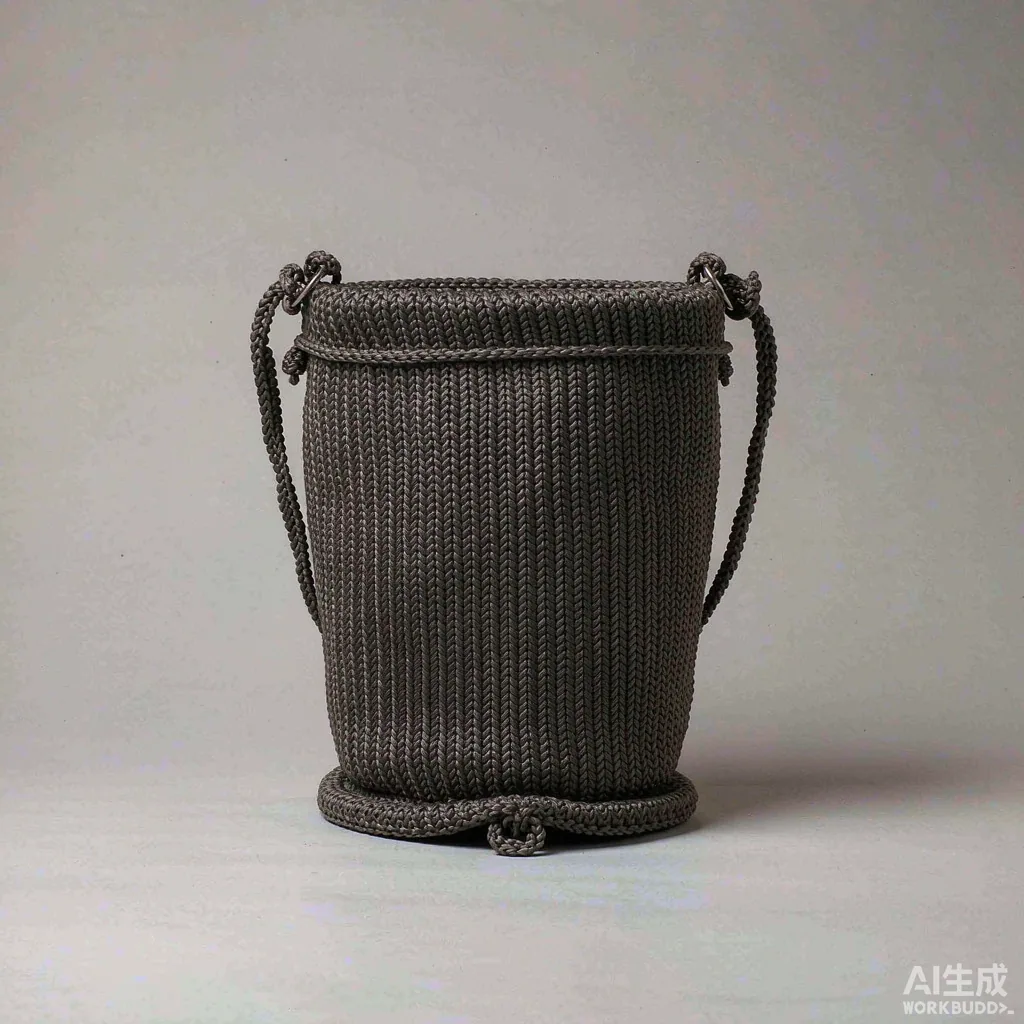
The fourth criterion is shade, and the rule is simple: approve colour on a knitted panel of production gauge, under a named illuminant, with the Delta E formula stated, at a target of 1.0 or tighter.
The reason is that a loop structure reflects light differently from a flat surface, so the same dye lot reads differently at E7 than at E12, and differently again after relaxation and steaming. A shade approved on a yarn cone or a flat knit swatch is an approval of something that is not the product. In practice, a cone approval that looked correct has been measured at a Delta E of about 1.8 against the reference once knitted, which is visible on a retail shelf but invisible on a cone. Stating the illuminant, usually D65, and the formula matters just as much, because two parties measuring under different lights will disagree about a figure they both measured correctly.
Dimensions and the Measurement Points
The fifth criterion is dimensions, and it is worth stating the measurement points as well as the figures, because a knitted bag is soft and two people measuring the same bag can disagree by 15 mm without either being wrong.
A workable tolerance on a soft knitted body is about plus or minus 10 mm, measured flat, with the bag laid on a surface and lightly smoothed rather than stretched. The points that should be named are the body width at the base and at the mouth, the height excluding the handle, the handle drop and the gusset depth. Handle drop is the one most often omitted and most often disputed, because it is the dimension the user actually feels. Recording it at approval, along with how it was measured, removes a category of argument that has nothing to do with quality.
Strength: Seams, Loops and Attachment
The sixth to ninth criteria are strength and durability, and they are the ones that separate a bag that survives a season from one that is returned: abrasion, tensile, tear and colour fastness.
Abrasion is measured in rubs under ISO 12947-2 or ASTM D4966, and a bag shell that will be carried daily should be specified somewhere in the 20,000 to 30,000 rub range. Tensile strength under ISO 13934-1 and tear strength under ISO 13937 confirm that the structure can carry a load without a ladder running, and the figure worth recording is the maximum force, typically in the hundreds of newtons for a knitted shell of this weight. Colour fastness to rubbing under AATCC 8 and to laundering under AATCC 61 matter for a light-coloured bag against dark clothing, and a grade of 4 or better is the usual commercial expectation.
Seam and join condition is a visual criterion with a measurable consequence. A knitted structure ladder: a single broken loop can run, and a join that has skipped loops is the most common origin of a return. The check is to look along every join under good light, and where the programme justifies it, to pull-test the handle attachment. A handle root that fails is the single most damaging defect a bag can have, because it makes the product unusable rather than merely imperfect, and it should carry a zero tolerance on the defect list regardless of what the AQL allows elsewhere.
Hardware and Closure Cycles
The tenth criterion is hardware, evaluated by cycle count rather than by whether it opens: a moulded zipper should be specified at about 5,000 cycles, and a metal component at a defined plating and nickel-release result.
Zipper strength and operation are covered by ASTM D2061, and the figure to ask for is the cycle count the supplier warrants rather than a pass statement. Magnetic closures, turn-lock and hook-and-loop all have equivalents: hook-and-loop is usually specified in the low thousands of open and close cycles before the closure strength drops materially. Plated metal components also carry a compliance dimension, because nickel release is restricted under REACH Annex XVII and the California Prop 65 list is a separate screen. Asking for the hardware test result at sampling rather than at bulk is the difference between a decision and a discovery.
Abrasion
About 20,000 to 30,000 rubs under ISO 12947-2 for a bag carried daily.
Tensile and tear
ISO 13934-1 for maximum force, ISO 13937 for tear resistance. Record the force in newtons.
Colour fastness
AATCC 8 for rubbing and AATCC 61 for laundering; a grade of 4 or better is the commercial norm.
Closure cycles
About 5,000 for a moulded zipper under ASTM D2061, with plating and nickel release confirmed.
The Record That Makes an Approval Defensible
The eleventh and twelfth criteria are documentation, and the output of the whole exercise is one sheet: twelve figures, each with a tolerance, signed and dated, which later becomes the inspection defect list.
That sheet is what makes an approval defensible. It tells an inspector what to measure, it tells a second production partner what to reproduce, and it tells both parties what the standard was if they disagree later. Under ISO 2859-1 at general inspection level II and AQL 2.5, a lot of 281 to 500 pieces draws 50 with an acceptance number of 3, and a lot of 1,201 to 3,200 draws 125 with an acceptance number of 7. Those figures say how many to look at; the defect list says what to look for, and it is built directly from the approval sheet. Writing it while bulk runs rather than at its end costs nothing and changes the character of the release decision.
What to Do When a Sample Fails a Criterion
A failed criterion is not a failed programme, but the response should be proportionate: a loop-length or shade revision costs about 3 working days, while a gauge or structural change restarts the 7 working days of sampling. At 100 pcs per style and colourway a revision round is economically workable, which is the practical reason a low minimum matters here. Where the programme ships FOB Xiamen, a structural revision caught at sampling still lands inside the 30-day bulk window.
The distinction is worth stating to whoever is requesting the revision, because it is not obvious from their side. A change to GSM of more than about 5% or a change of gauge sends the programme back to knitting, since the stitch file has to be rewritten and the panels re-made. A change to a dimension of up to about 10 mm can usually be absorbed in cutting and assembly. Naming which category a revision falls into, before it is requested, is what keeps a sampling window from turning into a second development round. Where a programme is running to a fixed date, the three working days of buffer that belong after colour approval are what make the small revision survivable.
Get a sample evaluation sheet for your style
Send the style, the gauge and GSM target, the shade reference and the destination market. Our knit team will return a sample in 7 working days with the twelve criteria recorded, ready to become your inspection defect list. Start on the contact page.
Frequently Asked Questions
How should I evaluate a knitted bag sample?
On twelve measurable criteria in a fixed order: gauge, structure, GSM, shade, dimensions, seam condition, abrasion, tensile and tear, colour fastness, hardware cycles, labelling and packing state. Record the figures at approval rather than approving on impression alone. It is worth stating in writing before production begins, because it is far harder to agree once the goods exist.
Why not just approve a sample that looks right?
Because an impression leaves no record behind. There is nothing for inspection to measure against two months later, nothing for a second production partner to reproduce, and no basis for settling a disagreement about whether the bulk matched the sample. Record the figure at approval so that inspection and any later run can be measured against it.
What gauge should a knitted bag be?
E5 or E7 for a chunky structured shell, and E12 to E16 for a finer, denser one. Gauge drives hand feel, drape, weight and yarn consumption together, so it should be recorded at approval and stated alongside the yarn count. Both sides are better served when this is agreed early rather than discovered halfway through the programme.
What GSM tolerance is realistic for a knitted shell?
About 5%. GSM is a consequence of gauge, loop length and yarn count working together, so it should always be stated alongside those rather than as a standalone figure. A mid-weight tote lands between about 280 and 450 g/m². That is the practical control, and it costs nothing to put in place before the deposit is paid.
Why must shade be approved on a knitted panel?
Because a loop structure reflects light differently from a flat surface. The same dye lot reads differently at E7 than at E12, and a cone approval has been measured at a Delta E of about 1.8 against the reference once knitted. Programmes that skip this step tend to rediscover the same problem on the following season.
What dimensional tolerance should I specify?
About plus or minus 10 mm on a soft knitted body, measured flat and lightly smoothed rather than stretched. Name the measurement points, including the handle drop, which is the dimension that users actually feel in daily use. Ask for it as a figure rather than a statement, since a statement cannot be checked or compared.
How much abrasion resistance does a bag need?
About 20,000 to 30,000 rubs under ISO 12947-2 for a bag carried daily. It is measured on the shell rather than on a swatch, and the resulting figure should be recorded on the approval sheet alongside the GSM and the shade reading. Getting it right at this stage removes a whole category of argument from the rest of the programme.
Which strength tests apply to a knitted bag?
ISO 13934-1 for tensile maximum force, ISO 13937 for tear resistance, ISO 12947-2 or ASTM D4966 for abrasion, and AATCC 8 and AATCC 61 for colour fastness. Each result belongs on the sheet that later becomes the defect list. It belongs in the written specification rather than in a conversation that nobody can quote later.
How many cycles should a bag zipper survive?
About 5,000 cycles for a moulded zipper, tested under ASTM D2061. Plated metal components also need a plating specification and a nickel-release result under REACH Annex XVII, which should be requested at sampling rather than at bulk. It is worth stating in writing before production begins, because it is far harder to agree once the goods exist.
How long does sampling take for a knitted bag?
7 working days from a complete technical pack. A small revision, such as a loop-length or shade change, costs about 3 working days, while a gauge or structural change restarts the full window because the panels have to be knitted again. Record the figure at approval so that inspection and any later run can be measured against it.
People Also Ask
What should I check on a bag sample before approving it?
Twelve things in order: gauge, structure, GSM, shade, dimensions, seam condition, abrasion, tensile and tear, colour fastness, hardware cycles, labelling and packing state. It costs nothing and prevents the argument later. That is the figure worth recording at approval.
How long does it take to get a knitted bag sample?
7 working days from a complete technical pack. A small revision takes about 3 more working days, while a gauge or structural change restarts the full window because the panels are knitted again.
Why does my bag sample look a different colour from the yarn?
Because loop structure changes perceived shade. The same dye lot reads differently at each gauge and again after steaming, so approve colour on a production-gauge knitted panel. Confirm it before production rather than after.
What is a good GSM for a knitted tote bag?
Somewhere between 280 and 450 g/m² depending on gauge and whether the shell is lined. State it with the gauge and yarn count, and allow a tolerance of about 5%. Check the detail before the deposit is paid.
How do I turn a sample into an inspection standard?
Record twelve figures with tolerances on one signed sheet at approval, then use that sheet as the defect list for the AQL 2.5 release inspection at the end of bulk. Both are free to agree at the first contract.
Sources and further reading
Every figure on this page is either our own programme data or attributed below. Open the originals before you write them into a specification.
- ISO 12947-2 — Abrasion resistance of fabrics by the Martindale methodISO The abrasion method behind the 20,000 to 30,000 rub specification for a daily-carry shell.
- ASTM D5034 — Breaking Strength and Elongation of Textile Fabrics (Grab Test)ASTM International One of the tensile methods used to confirm a knitted shell can carry its rated load.
- ASTM D2061 — Standard test methods for strength tests for zippersASTM International Referenced for the cycle and strength figures recorded for closure hardware.
- AATCC colour fastness test methodsAATCC Source of AATCC 8 for rubbing and AATCC 61 for laundering, both on the approval sheet.
- ISO 139:2005 — Textiles, standard atmospheres for conditioning and testingISO Standard conditioning before GSM and strength measurement, which prevents a false rejection.
- ISO 2859-1 — Sampling procedures for inspection by attributes, Part 1: AQL-indexed sampling schemesISO The sampling plan the approval sheet becomes a defect list for, at AQL 2.5.
Approve on Figures, Not on Feel
Two extra hours at the sampling stage buy a record that the rest of the programme runs on. Twelve figures with tolerances turn an approval into a specification, and that specification is what makes inspection meaningful, a second source possible and a repeat run reproducible. The alternative is an opinion that one person remembers and cannot prove.
For what follows the approval decision, see knitted bag contract terms, and for confirming the floor behind the sample, see knitted bag capacity verification. The full framework is in the knit bag sourcing guide.