Water Repellent Finish for Knitted Bags: Ratings, Fluorocarbon-Free Chemistry and Wash Durability
A water repellent finish on a knitted bag is specified with five lines: the rating system, the fresh rating, the rating after washing, the chemistry family and the cure. A fluorocarbon-free durable repellent at 15 g/m² add-on reaches spray rating 4 under ISO 4920 fresh and holds rating 3 after 20 washes, which is the point at which most retail programmes stop caring. Repellency is not waterproofness, and a knitted bag will not pass a hydrostatic head test without a coating or a film.
What Water Repellent Means on a Knitted Bag
Water repellency is the ability of a surface to shed liquid water before it wets the fibre, and it is a surface property rather than a barrier property. A repellent bag sheds a shower and stays dry; put it under a tap for a minute and it wets through.
That distinction is the first thing to settle, because it decides whether the answer is a finish or a construction. If the bag has to shed rain in transit, a repellent finish is enough. If it has to hold water inside a wet compartment, the answer is a welded liner or a laminated membrane, and no finish will substitute.
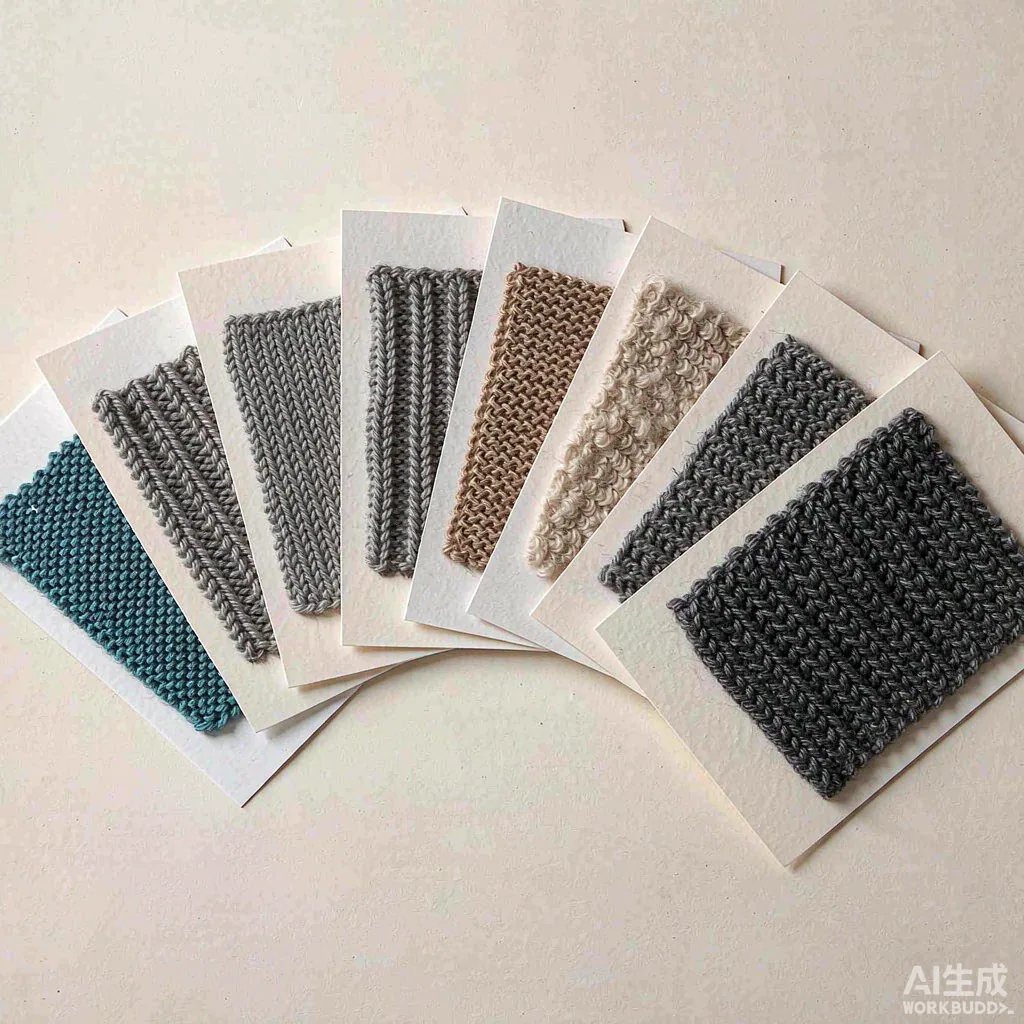
The knitted structure matters as much as the chemistry. A knitted surface is a series of loop crowns with valleys between them, so water collects in the valleys and the finish has to work on a three-dimensional surface rather than on a flat film. That is why a bag needs a higher add-on than a woven fabric for the same rating.
The five-line spec
- Rating system, fresh rating, rating after a stated number of washes, chemistry family and cure conditions.
- A repellent clause missing any one of those five cannot be verified at final inspection, and the argument surfaces after the container has shipped.
Rating Systems: Spray Test, Rain Test and Hydrostatic Head
Three rating systems are used commercially and they measure different things. Choosing the wrong one is the most common reason a laboratory result and a field result disagree.
ISO 4920, the spray test, is the default for a bag. A specimen is mounted at 45 degrees, sprayed with a fixed volume of water and compared against photographic standards rated 0 to 5, with 5 showing no wetting. Rating 4 is the usual commercial floor and corresponds to slight wetting at the spray points only.
AATCC 22 is the US equivalent, reporting a spray rating on the same 0-100 scale expressed as a number: 90 is broadly equivalent to ISO rating 4. AATCC 35, the rain test, is harsher and measures the mass of water that penetrates to a blotter behind the specimen, reported in grams. Hydrostatic head under ISO 811 measures resistance under pressure and is the right test only for a coated or laminated fabric.
| Test | What it measures | Scale | Typical bag floor | Use it when |
|---|---|---|---|---|
| ISO 4920 spray test | Surface wetting after a fixed spray | Rating 0 to 5 | Rating 4 fresh, 3 after 20 washes | Default for any shower-resistant bag |
| AATCC 22 spray test | Surface wetting, numeric equivalent | 0 to 100 | 90 fresh, 80 after 20 washes | US programmes |
| AATCC 35 rain test | Water penetrating under impact | Grams absorbed | Under 5 g | Outdoor bags exposed to driving rain |
| ISO 811 hydrostatic head | Resistance under pressure | mm water column | 1,000 mm or above | Coated or laminated wet compartments |
Fluorocarbon-Free Chemistry: What Replaced C8
The chemistry choice is now a compliance choice before it is a performance choice. Long-chain fluorocarbon chemistry, known as C8, delivered the best repellency and has been withdrawn from responsible supply chains because its breakdown products persist in the environment.
Two families replaced it. Short-chain fluorocarbon, or C6, gave ratings close to C8 with a better environmental profile, and it is now itself under scrutiny. The fluorocarbon-free family, sometimes called C0, is based on silicone, wax or polyurethane chemistry and is what most retail programmes specify today.
The performance trade is real but modest. A C6 finish reaches spray rating 5 fresh and holds 4 after 20 washes; a well-formulated fluorocarbon-free finish reaches 4 fresh and holds 3 after 20. On a bag, where the requirement is shedding a shower, that difference is rarely visible to the end user.
- Chemistry
- Fluorocarbon-free, silicone or polyurethane based
- Add-on
- 12 to 18 g/m² dry, higher than a woven equivalent
- Contact angle
- 130 degrees or above on a flat reference surface
- Cure
- 150 to 160 °C for 60 to 90 seconds
- Fresh rating
- ISO 4920 rating 4 minimum
- After 20 washes
- ISO 4920 rating 3 minimum, rating 4 after re-activation
Application Routes: Pad, Spray and Foam
Three application routes deliver a repellent finish, and they differ in penetration, add-on control and effect on hand. On a knitted structure the choice matters more than on a woven one, because the liquor has to reach the valleys as well as the crowns.
Padding is the standard route and gives the most even add-on. The panel passes through a bath and a mangle, with wet pick-up controlled to about 60-80 percent and the dry add-on calculated from the bath concentration. It penetrates well and it is the route used for a rating that has to survive 20 washes.
Spray application puts finish only where it is needed and it is the route for a one-sided requirement, such as an outer face that must shed rain while the inner face stays wicking. Foam application uses less water and less energy and suits a thick or lofty structure where padding would saturate the panel.
- Pad: most even add-on, best wash durability, the default for a retail bag.
- Spray: one-sided treatment, keeps the inner face wicking, lower add-on and lower durability.
- Foam: lowest water and energy use, suited to lofty or spacer structures.
- Exhaust: rarely used on bags, better suited to a garment dyeing route.
Curing and Re-activation: The Step Most Programmes Miss
A repellent finish is not finished when it is applied; it is finished when it is cured. An under-cured finish tests well on the day and fails after the first wash, and this is the single most common cause of a repellency complaint.
The working cure for a fluorocarbon-free finish on polyester is 150-160 °C for 60-90 seconds, with the panel at temperature rather than the oven air at temperature. That distinction matters on a thick knitted panel, which takes longer to reach temperature than a woven shirting.
Re-activation is the other half. A fluorocarbon-free finish loses part of its effect in washing and recovers much of it with heat: 20 minutes in a tumble dryer at 60 °C, or a cool iron with a cloth, typically restores half to a full rating point. This belongs on the care label, because a consumer who air-dries will report a failure that is really a missing instruction.
Durability: Ten, Twenty and Thirty Washes
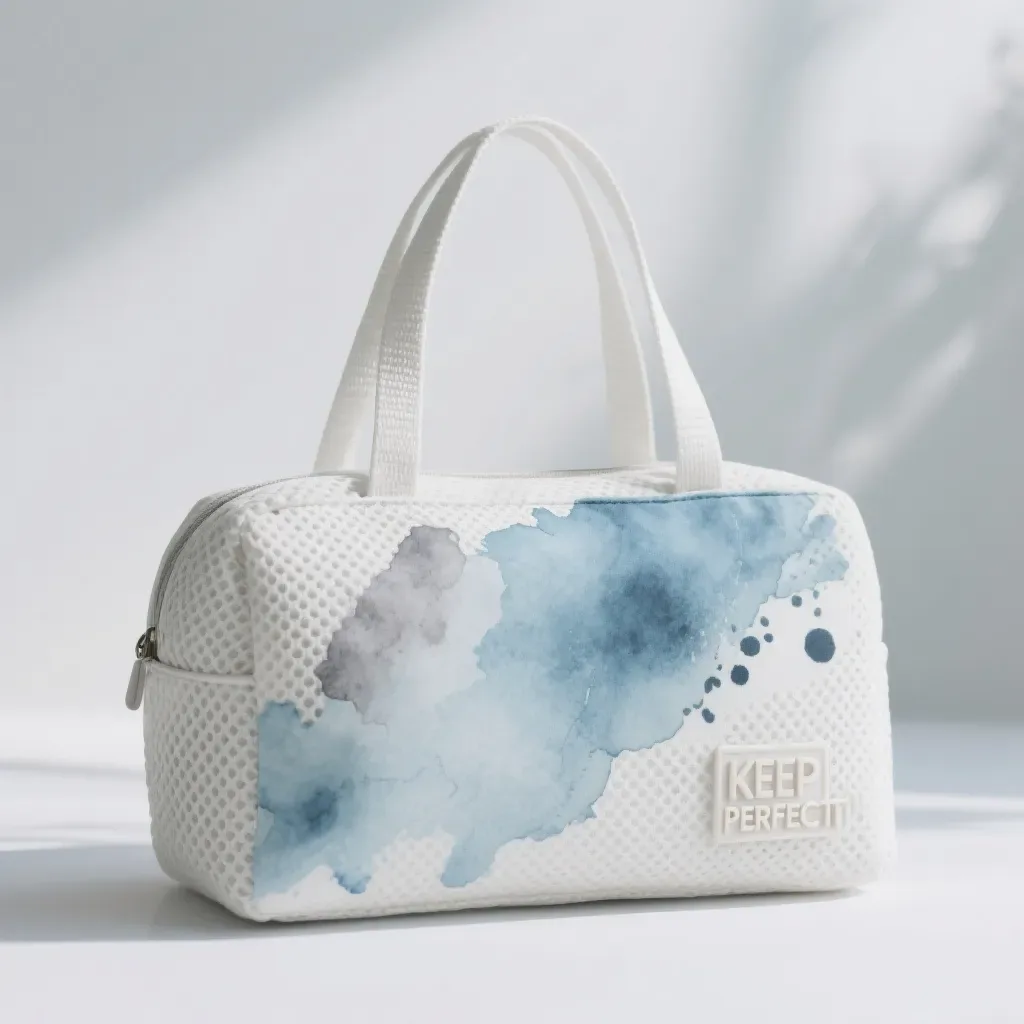
Repellent durability is tested by measuring the rating after a stated number of standard wash cycles, and the honest way to write the clause is to give the rating at two points: as washed and after re-activation.
On a fluorocarbon-free finish at 15 g/m² on a 300D PET body, the typical curve is rating 4 fresh, rating 3-4 after 10 washes, rating 3 after 20 and rating 2-3 after 30. After re-activation by tumble drying, the 20-wash figure returns to 4 and the 30-wash figure returns to 3.
A C6 finish holds roughly one rating point higher at each stage, which is why it is still specified for workwear and technical outdoor product. For a bag that will be washed a few times a season, the fluorocarbon-free curve is sufficient and the compliance position is cleaner.
| Stage | Fluorocarbon-free | Fluorocarbon-free, re-activated | C6 short chain |
|---|---|---|---|
| Fresh | Rating 4 | Rating 4 | Rating 5 |
| After 10 washes | Rating 3 to 4 | Rating 4 | Rating 4 to 5 |
| After 20 washes | Rating 3 | Rating 4 | Rating 4 |
| After 30 washes | Rating 2 to 3 | Rating 3 | Rating 3 to 4 |
Where Repellency Conflicts With Other Bag Requirements
Repellency does not sit alone on a bag, and three conflicts come up repeatedly. Each has a standard resolution, and none of them is solved by simply increasing the add-on.
Against wicking
A repellent makes water bead and a wicking yarn makes it spread. Resolve by zoning: repellent outer face, wicking liner.
Against print and branding
A repellent surface rejects inks and heat-transfer films. Print first and finish after, or mask the branding zone.
Against hand
Heavy add-on stiffens a soft knit. Keep to 12 to 18 g/m² and re-activate rather than over-apply.
Against breathability
Repellency is a surface effect and costs little breathability; a coating costs a lot. Choose the surface route for bags.
The print conflict is the one that costs the most rework. A heat-transfer badge applied over a cured repellent finish will lift within a few washes, so the sequence is print, then finish, or mask the badge area during application. That has to be written into the process instruction, not left to the line.
PFAS Position and the Documentation a Buyer Needs
Per- and polyfluoroalkyl substances are under active regulatory pressure in both the EU and the United States, and a bag programme needs a documented position rather than an assumption. Two screens and one certificate cover the current position for most buyers.
The first screen is REACH: the restricted-substance list maintained by ECHA is checked against the finish formulation and its impurities. The second is the US state position, of which California's Proposition 65 is the one most buyers are asked about. The certificate that evidences the finished panel is OEKO-TEX STANDARD 100.
Because the regulatory position is moving, the practical advice is to specify a fluorocarbon-free finish by default and to keep the formulation declaration with the bulk record. That way a future restriction is a documentation exercise rather than a reformulation.
A repellent clause that names only a spray rating allows any chemistry that reaches it, including one that may be restricted before the container lands. Name the chemistry family, require a formulation declaration, and keep it with the lot record.
Cost, Weight and Programme Effects
A repellent finish is one of the lower-cost additions available on a knitted bag, and its effect on weight is negligible. The numbers below are for a fluorocarbon-free finish on a 300D PET body at a 100 pcs run.
| Line | Effect | Note |
|---|---|---|
| Finish cost | 3 to 6 percent of yarn cost | Chemistry and add-on dependent |
| Weight | 12 to 18 g/m² dry add-on | About 6 g on a typical tote |
| Process step | One padding and curing pass | Runs inside the 30-day bulk window |
| Sampling | 7 working days | Rating tested on the trial panel |
| MOQ | 100 pcs per style and colourway | Unchanged |
| Hand change | Slight firming | Re-activate rather than over-apply |
A Worked Repellent Spec You Can Copy
Below is a complete repellent clause set that has run at 100 pcs and cleared final inspection at AQL 2.5. Copy it and change the rating floor and the wash count to suit the product.
- Style
- Commuter tote, 380 x 340 x 120 mm
- Body yarn
- 300D/96f recycled PET, E12, 420 g/m²
- Finish
- Fluorocarbon-free durable water repellent, 15 g/m² dry add-on
- Application
- Pad, both faces, wet pick-up 60 to 80 percent
- Cure
- 155 °C for 75 seconds, panel at temperature
- Fresh rating
- ISO 4920 rating 4 minimum
- After 20 washes
- Rating 3 as washed, rating 4 after tumble re-activation
- Documentation
- Formulation declaration plus OEKO-TEX STANDARD 100 on the panel
- Inspection
- AQL 2.5 under ISO 2859-1
- Commercial
- 100 pcs per colourway, 7 working days sampling, 30 days bulk, FOB Xiamen
Pre-Bulk Checklist for a Repellent Finish
Seven checks close the repellency risk before a 30-day bulk run. Each corresponds to a specific way a finish passes a swatch test and fails in service.
- Name the rating system and the two points: ISO 4920 rating 4 fresh and rating 3 after 20 washes.
- Name the chemistry family and require a formulation declaration with the lot.
- Specify the add-on in grams per square metre, not just the bath concentration.
- Specify the cure as panel temperature and dwell time, and verify it on the thickest panel.
- Confirm the print sequence: print then finish, or mask the branding zone.
- Test after re-activation and put the re-activation instruction on the care label.
- Retain the washed and re-activated reports against the yarn lot reference.
Send the bag type and the weather it has to handle
Share the style, the exposure, the wash frequency and the chemistry position you need to document. A 100 pcs trial runs in 7 working days and returns ISO 4920 ratings fresh, washed and re-activated before bulk is quoted.
Frequently Asked Questions
What does a water repellent finish do on a knitted bag?
It makes the fibre surface shed liquid water before it wets in, so a shower beads and runs off. It is a surface property, not a barrier: a repellent bag sheds rain in transit and will still wet through under sustained contact. Waterproofness needs a coating or a welded liner.
What spray rating should a bag meet?
ISO 4920 rating 4 fresh is the commercial floor, equivalent to about 90 on the AATCC 22 scale, with rating 3 acceptable after 20 washes. Rating 5 means no wetting at all and is specified for technical outdoor product rather than for a general bag.
What is the difference between ISO 4920 and AATCC 22?
Both are spray tests and both measure surface wetting after a fixed spray. ISO 4920 reports a rating from 0 to 5 against photographic standards; AATCC 22 reports a number from 0 to 100. A rating of 4 corresponds roughly to 90, and the two are used by region rather than by preference.
Is a fluorocarbon-free finish as good as a fluorocarbon one?
Close, but about one rating point lower at each wash stage. A fluorocarbon-free finish reaches spray rating 4 fresh and holds 3 after 20 washes; a short-chain C6 finish reaches 5 and holds 4. For a bag that meets ordinary rain, the difference is rarely visible to the end user.
How much finish is applied to a knitted bag?
About 12 to 18 g/m² dry add-on, which on a typical tote is roughly 6 g. A knitted surface needs more than a woven one for the same rating, because the liquor has to cover loop crowns and reach the valleys between them.
Why does a repellent finish fail after the first wash?
Usually because it was under-cured. A fluorocarbon-free finish needs 150 to 160 °C for 60 to 90 seconds with the panel itself at temperature, and a thick knit takes longer to reach temperature than a woven fabric. An under-cured finish tests well on the day and drops sharply after washing.
What is re-activation and does it matter?
It is the recovery of repellency by heat after washing: 20 minutes in a tumble dryer at 60 °C typically restores half to a full rating point. It matters commercially, because a consumer who air-dries will report a failure that is really a missing care instruction.
Can a bag be water repellent and wicking at the same time?
Not on the same face, because a repellent makes water bead and a wicking yarn makes it spread. Resolve it by zoning: a repellent outer face and a wicking liner. This is the standard construction for a gym bag that meets rain outside and damp kit inside.
Does a repellent finish affect printing and branding?
Yes, and it is a common cause of rework. A cured repellent surface rejects inks and heat-transfer films, so a badge applied over it lifts within a few washes. The sequence has to be print then finish, or the branding zone has to be masked during application.
What documentation should a buyer ask for on a repellent finish?
Three items: a formulation declaration naming the chemistry family, a REACH restricted-substance check against the ECHA list, and an OEKO-TEX STANDARD 100 certificate for the finished panel. Together they evidence the chemistry rather than just the performance.
Is a PFAS-free finish required by regulation?
Requirements differ by market and are changing. The practical position for a bag programme is to specify fluorocarbon-free by default, check the formulation against the REACH restricted list, and keep the declaration with the lot so a future restriction is a documentation exercise.
How much does a repellent finish add to bag cost?
About 3 to 6 percent of yarn cost, which is modest for the function delivered. Weight rises by 12 to 18 g/m², roughly 6 g on a tote, and the process adds one padding and curing pass that fits inside the 30-day bulk window.
Does a repellent finish make a bag waterproof?
No. Repellency is a surface effect and a knitted structure remains permeable. A bag that has to contain water needs a welded TPU liner or a laminated membrane, tested by hydrostatic head under ISO 811 at 1,000 mm or above.
How is repellency verified on a bulk lot?
One specimen per colour per lot tested to ISO 4920 fresh, with a second specimen washed 20 cycles and tested both as washed and after re-activation. Reports are kept against the yarn lot. Final inspection of the sewn bag runs at AQL 2.5 under ISO 2859-1.
Does a repellent finish change the hand of a knit?
Slightly, in the direction of firming. Keeping to 12 to 18 g/m² limits the change, and re-activating by tumble drying is preferable to increasing the add-on to chase durability. A heavy add-on is the usual cause of a stiff, papery hand.
How long does a repellent trial take?
Sampling runs 7 working days from a confirmed spec at 100 pcs per style and colourway, with the spray rating tested on the trial panel. Wash durability testing to 20 cycles runs alongside. Bulk then runs 30 days on FOB Xiamen terms.
People Also Ask
Why does water soak into my bag even though it is water repellent?
Because repellency sheds water from the surface but does not seal the structure. Sustained contact, pressure against a wet surface, or immersion will wet a knitted bag through. If the bag must contain water, it needs a welded liner or a laminated membrane.
What is the Bundesmann test and when is it used?
It measures water absorption and penetration under simulated rainfall with mechanical action, which is closer to real use than a static spray test. It is specified for outdoor bags and technical shells where driving rain and movement combine.
Does a spray-on repellent work as well as a padded one?
It works well where the requirement is one-sided and short-lived, and it saves add-on. It is generally less durable than padding, because the finish sits more on the crowns and less in the valleys. For 20-wash durability, padding is the reliable route.
Can an existing bag be re-treated after washing?
Yes, with a consumer spray or wash-in product, and that is what re-activation means in practice at retail. From a programme standpoint it is better to design for it: specify the finish, cure it properly and put the re-activation instruction on the care label.
Is a silicone finish a real alternative to fluorocarbon?
Yes, and it is widely used. Silicone-based finishes reach spray rating 4 fresh and hold 3 after 20 washes, cost less than short-chain fluorocarbon, and carry a cleaner regulatory position. They are slightly less resistant to oil-based staining.
Sources and further reading
Every figure on this page is either our own programme data or attributed below. Open the originals before you write them into a specification.
- Substances restricted under REACHECHA Restricted-substance list checked against the repellent formulation and its impurities.
- Proposition 65OEHHA California warning assessment for treated bag panels sold into that market.
- OEKO-TEX STANDARD 100OEKO-TEX Certification evidencing the restricted-substance position of the finished repellent-treated panel.
- AATCC test methodsAATCC AATCC 22 spray test and AATCC 35 rain test used by US buyers alongside ISO 4920.
- ISO 2859-1:1999 Sampling procedures for inspection by attributesISO The AQL 2.5 plan under which finished repellent-treated bag lots are inspected.