rPET vs Virgin Polyester Knitted Bags: Tenacity, Colour Consistency, Claim Documentation and When Virgin Is the Correct Choice
rPET or virgin polyester for a bag programme? The recycled yarn costs 8 to 15% more and gives up roughly 12% of tenacity, at 3.8 to 4.4 cN/dtex against 4.5 to 5.2, and it holds colour to a tolerance of 1.2 to 1.5 against 0.6 to 0.8. In exchange it carries a documented greenhouse gas reduction and a Global Recycled Standard claim that can be traced to the yarn lot. Virgin remains correct where colour matching is critical or the load rating is tight.
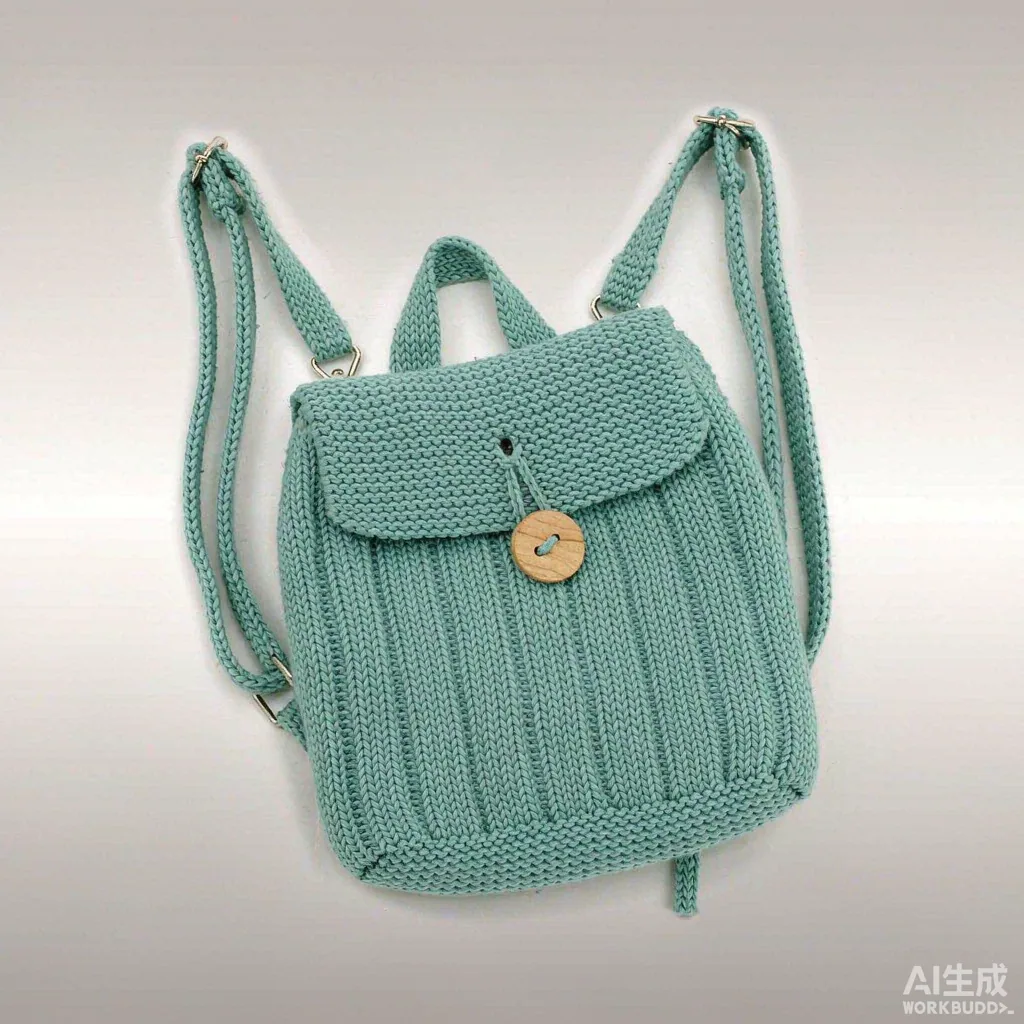
The Matrix: Nine Criteria Where the Two Yarns Diverge
Across nine criteria rPET wins three, virgin polyester wins four, and two are effectively equal, so the decision is a weighting exercise rather than a matter of which material is better.
The two that are equal are worth naming first, because they remove a lot of unnecessary argument. Light fastness and wash fastness are governed by the dye and the fibre chemistry, and both yarns are polyester dyed with disperse dyes, so a recycled body and a virgin body tested to ISO 105-B02 both reach grade 4 to 5 and both behave the same way in a 40 degree wash. What differs is mechanical and commercial: strength, colour consistency between lots, price, minimum lot size and documentation. Those five are where the decision is actually made, and they push in consistent directions, which is what makes the matrix usable.
The single most important thing a buyer can do before choosing is decide which of the nine criteria is contractual. If a retailer has committed to a recycled-content percentage in a buying agreement, three of the four criteria virgin wins stop mattering, because the claim is a condition of the order rather than a preference. If no such commitment exists, the strength and colour gaps are real and should be weighed against the marketing value honestly.
Tenacity and Abrasion: 3.8 to 4.4 Against 4.5 to 5.2 cN/dtex
Recycled polyester filament runs at 3.8 to 4.4 cN/dtex against 4.5 to 5.2 for virgin, which is roughly 12% less tenacity and shows up as a modest reduction in abrasion life, at 18,000 to 26,000 Martindale rubs against 20,000 to 30,000.
The mechanism is chain length. Every melt and re-extrusion cycle shortens the polymer chains and lowers intrinsic viscosity, so a recycled flake-fed yarn typically sits at 0.62 to 0.68 dL/g against 0.72 to 0.80 for virgin. Shorter chains mean lower tenacity and lower elongation at break, which is 18 to 25% against 20 to 30%. None of this makes an rPET bag fragile, and for a tote carrying 5 kg the difference is invisible. It matters in three specific places: a bag with a tight load rating, a bag whose abrasion life is a contractual warranty term, and a very fine yarn where there is simply less material per filament to begin with.
Colour Consistency: Tolerance 1.2 to 1.5 Against 0.6 to 0.8
Recycled yarn holds a colour match to a tolerance of roughly 1.2 to 1.5 in CIELAB units between lots, where virgin yarn holds 0.6 to 0.8, and that gap is the most common practical complaint about rPET programmes.
The cause is input variability rather than dyeing skill. Post-consumer feedstock varies in colour and in intrinsic viscosity from bale to bale, so the base yarn is not perfectly consistent in its dye affinity and dye exhaustion runs 92 to 96% against 96 to 98% for virgin. On a single-order, single-lot programme this is manageable. On a repeat programme with a colourway that has to match last season's goods across two years, it is the reason buyers sometimes revert to virgin. The practical mitigations are to book the whole programme from one yarn lot, to approve a physical shade band rather than a single reference swatch, and to agree the tolerance in writing before the first bulk run rather than after it.
- Tenacity, rPET filament
- 3.8 to 4.4 cN/dtex
- Tenacity, virgin filament
- 4.5 to 5.2 cN/dtex
- Intrinsic viscosity, rPET
- 0.62 to 0.68 dL/g
- Intrinsic viscosity, virgin
- 0.72 to 0.80 dL/g
- Elongation at break
- rPET 18 to 25%, virgin 20 to 30%
- Dye exhaustion
- rPET 92 to 96%, virgin 96 to 98%
- Colour tolerance between lots
- rPET 1.2 to 1.5, virgin 0.6 to 0.8
- Abrasion, ISO 12947-2
- rPET 18,000 to 26,000 rubs, virgin 20,000 to 30,000
- Yarn price difference
- rPET 8 to 15% higher
- Minimum yarn lot, recycled
- 500 to 1,000 kg per colour
Cost, Lot Size and Availability
Recycled polyester yarn carries a price premium of 8 to 15% and a larger minimum lot, typically 500 to 1,000 kg per colour against about 300 kg for virgin, which is why a low-volume multi-colourway programme is often a poor fit for rPET.
The lot-size point interacts with MOQ 100 pcs per colourway in a way buyers should check before committing. A hundred totes at 320 g/m² uses roughly 40 kg of yarn, so a single colourway can easily clear a 300 kg virgin lot across several styles but may struggle to clear a 1,000 kg recycled lot on its own. The usual resolution is to group colourways onto a common recycled lot where the shades permit, or to accept a booking of the whole lot and draw from it across two seasons. The price premium itself is usually absorbed without difficulty: on a reference unit cost of USD 4.80 for an E12 tote, an 8 to 15% yarn premium translates to roughly 0.15 to 0.30 USD on the finished bag, because yarn is only part of the cost.
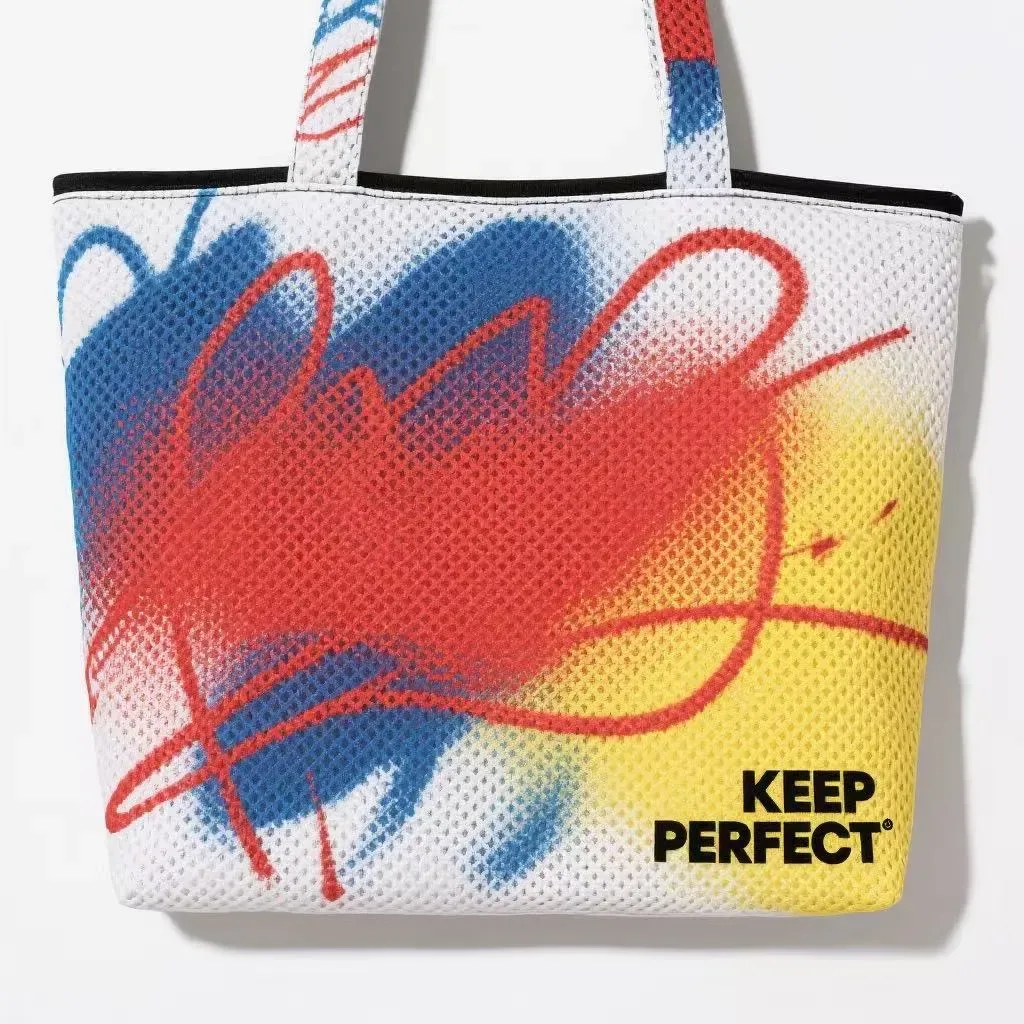
Where Virgin Polyester Is the Correct Choice
Virgin polyester is the correct choice in four situations: a tight load rating, a colourway that has to match previous seasons, a fine yarn below about 150D, and a multi-colourway programme where no single colour clears a 500 kg recycled lot.
The fine-yarn point deserves a note because it is rarely raised. Below about 150D the filament count per yarn is low and there is little margin, so a 12% tenacity reduction is a larger practical risk than it is in a 600D yarn. A buyer specifying an E14 body in 150D for a smooth printing surface is better served by virgin yarn, and the honest advice is to take the recycled content in a different part of the product, such as the lining, the webbing or the packaging, rather than forcing it into the one component where it costs performance. That is not a compromise; it is how most credible recycled-content claims are actually constructed.
Choose rPET
A retailer commitment to recycled content, a marketing claim that needs substantiation, a coarse to mid yarn count, one or two colourways per programme.
Choose virgin
Tight load ratings, multi-season colour matching, yarn below about 150D, many small colourways, contractual abrasion life.
Split the programme
Recycled body and virgin reinforcement yarn, or recycled lining and webbing with a virgin outer shell where print quality dominates.
Neither
A fully compostable or bio-based brief: polyester of any origin is the wrong answer and will fail the claim substantiation test.
What the Recycled Claim Actually Requires
A recycled claim on a finished bag requires a Global Recycled Standard transaction certificate tied to the specific yarn lot, not a generic statement from the yarn spinner, and the certificate has to travel with the order rather than being produced on request.
This is the part buyers most often underestimate. Under GRS 4.0 the chain of custody runs from the recycler through the spinner to the knitting floor, and each transfer generates a transaction certificate stating the recycled percentage for that lot. A claim of 95% recycled content on a bag body is only defensible if the certificate covering the yarn used in that production run says so, and if the percentage is calculated on the certified weight rather than on the finished article. Where a bag has a lining, hardware and a coating, the recycled figure for the finished product will be lower than the figure for the yarn, and stating the yarn figure on the hangtag is exactly the kind of claim that draws a substantiation challenge.
| Criterion | rPET | Virgin polyester | Winner |
|---|---|---|---|
| Tenacity | 3.8 to 4.4 cN/dtex | 4.5 to 5.2 cN/dtex | Virgin |
| Abrasion life | 18,000 to 26,000 rubs | 20,000 to 30,000 rubs | Virgin |
| Colour consistency between lots | 1.2 to 1.5 | 0.6 to 0.8 | Virgin |
| Price | 8 to 15% higher | baseline | Virgin |
| Minimum yarn lot | 500 to 1,000 kg per colour | about 300 kg | Virgin |
| Documented emissions reduction | yes, with a certificate | no claim available | rPET |
| Marketing and tender value | substantiated claim | none | rPET |
| End-of-life recyclability | monomaterial, same stream | monomaterial, same stream | Draw |
| Light and wash fastness | grade 4 to 5, ISO 105-B02 | grade 4 to 5, ISO 105-B02 | Draw |
The shape of that table is worth stating plainly, because it is the honest answer: rPET does not win on any mechanical property. It wins on documentation and on the commercial value of a claim that can be substantiated. A buyer who expects recycled yarn to perform better will be disappointed, and a buyer who expects it to perform slightly worse and is paying for the claim will not.
Abrasion, Light Fastness and Wash Performance Compared
On the three tests buyers ask about most, rPET loses one narrowly and draws two: abrasion at 18,000 to 26,000 rubs against 20,000 to 30,000, and light and wash fastness both at grade 4 to 5.
The abrasion gap is real but small, and it is worth converting into something a buyer can picture. A shopper used twice a week against a supermarket checkout belt accumulates very little of the wear that a Martindale head produces in a few hours, so the practical difference between 22,000 and 28,000 rubs on a tote is a matter of months of use rather than years. Where it does bite is on a bag with a contractual abrasion life written into a tender, because the tender figure is usually set from virgin data and a recycled yarn will land underneath it. The answer there is to confirm the target figure at quotation and, if necessary, to move to a slightly heavier yarn count, which recovers the lost abrasion without changing the polymer.
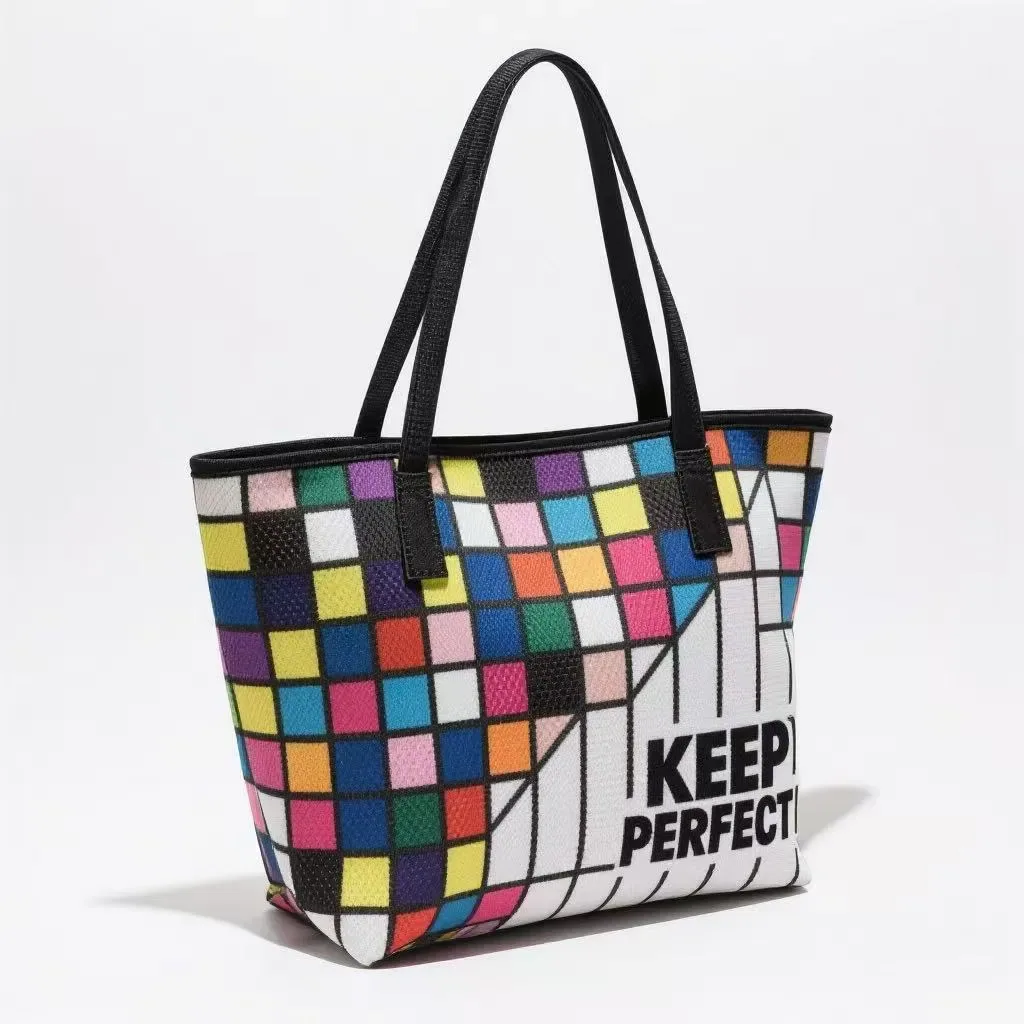
How to Split a Programme Between the Two
The most defensible structure is usually mixed: recycled yarn in the body where the claim is visible, virgin yarn in the reinforcement zones, the lining or the webbing where strength and colour matching matter most.
Mixed construction is common and it is not a dilution of the claim, provided the claim is stated accurately. A bag described as made with 60% certified recycled content by weight is accurate if the calculation is done on the certified components and the certificate covers them. A bag described as a recycled bag when only the lining is recycled is not. The knitting floor can run two yarns in the same programme without difficulty, since the carriers are independent, and a reinforcement zone in virgin yarn at the strap and the base costs very little while restoring most of the strength the recycled body gives up. This is usually the best answer for a buyer who has a recycled commitment and a load rating.
Order Windows and Documentation
Both yarns run on the same programme windows: MOQ 100 pcs per style and per colourway, 7 working days of sampling, 30 days of bulk, 7 production lines at about 200,000 pcs per month, and release against AQL 2.5 under an ISO 2859-1 plan, with FOB Xiamen as the standard term.
The one place the recycled route adds time is documentation rather than production. A GRS transaction certificate has to be requested from the spinner when the yarn is booked, not when the goods are packed, and if the certificate is issued per lot it will name the lot used. Booking yarn and requesting the certificate in the same week as sampling keeps both inside the 7 working day window. Buyers should also ask at quotation for the OEKO-TEX STANDARD 100 status of the finished body, because a recycled yarn with no restricted-substance documentation will not clear a European retailer's chemical requirements regardless of how good the recycled claim is.
Get both yarns quoted with the paperwork
Send the construction, the colourway count and whether a recycled claim has to be substantiated. Our knit team will quote rPET and virgin side by side with the certificate position stated, against MOQ 100 pcs and 30 days of bulk. Start on the contact page.
Frequently Asked Questions
Is rPET as strong as virgin polyester?
No, it is about 12% lower. Recycled filament runs at 3.8 to 4.4 cN/dtex against 4.5 to 5.2 for virgin, because each melt cycle shortens the polymer chains. On a tote carrying 5 kg the difference is invisible in use, but it matters on a tight load rating.
Why does recycled polyester vary in colour between lots?
Post-consumer feedstock varies in colour and intrinsic viscosity from bale to bale, so dye affinity varies and exhaustion runs 92 to 96% against 96 to 98% for virgin. The practical result is a tolerance of 1.2 to 1.5 rather than 0.6 to 0.8.
How much more does rPET yarn cost?
Eight to fifteen percent more at the yarn stage. On a reference unit cost of USD 4.80 for an E12 tote that translates to roughly 0.15 to 0.30 USD on the finished bag, because yarn is only part of the total cost of the article.
What is the minimum yarn lot for recycled polyester?
Typically 500 to 1,000 kg per colour, against about 300 kg for virgin. A hundred totes at 320 g/m² uses roughly 40 kg of yarn, so a small colourway may not clear a recycled lot on its own without grouping shades or booking across seasons.
Does rPET have the same light fastness as virgin polyester?
Yes. Both are polyester dyed with disperse dyes, so both reach grade 4 to 5 under ISO 105-B02, and wash fastness behaves the same way. The differences between the two yarns are mechanical and commercial, not colourfastness.
What documentation proves a recycled content claim?
A Global Recycled Standard transaction certificate tied to the specific yarn lot used in the production run, issued under GRS 4.0 chain of custody. A generic statement from the spinner is not sufficient, and the certificate has to be requested when the yarn is booked.
Can a bag be described as recycled if only the lining is?
No. The claim has to be calculated on the certified components and stated as a percentage by weight. Made with 60% certified recycled content is accurate if that is the calculation; a general recycled bag claim on a virgin shell is not.
When should a buyer choose virgin polyester instead?
When there is a tight load rating, when a colourway must match previous seasons, when the yarn is finer than about 150D, or when no single colour in a multi-colourway programme clears a 500 kg recycled lot.
Can a bag use both recycled and virgin yarn?
Yes, and it is often the best answer. A recycled body with virgin reinforcement at the strap and the base restores most of the strength given up, and the carriers on the machine are independent so running two yarns costs nothing extra in time.
How much lower are the emissions for recycled polyester?
Published figures for recycled polyester commonly fall in the range of 30 to 50% lower greenhouse gas emissions than virgin, and the number that matters for a claim is the one documented on the transaction certificate rather than a general industry average.
Does recycled polyester reduce the abrasion life of a bag?
Slightly. Expect 18,000 to 26,000 Martindale rubs against 20,000 to 30,000 for virgin under ISO 12947-2. Where a tender sets an abrasion figure taken from virgin data, move to a heavier yarn count rather than changing the polymer.
What are the order terms for either yarn?
MOQ 100 pcs per style and per colourway, 7 working days of sampling, 30 days of bulk, 7 production lines at about 200,000 pcs per month, FOB Xiamen with CIF and DDP available, and release against AQL 2.5 under ISO 2859-1.
People Also Ask
Is recycled polyester worse quality than virgin?
Not worse, slightly different. It gives up about 12% of tenacity and some colour consistency, and it gains a documented emissions reduction and a traceable claim. On a normal tote the performance difference is not noticeable in use.
Can recycled polyester be recycled again?
Yes, in principle, though each melt cycle shortens the chains further and lowers intrinsic viscosity. A monomaterial polyester bag body is the easiest construction to recycle at end of life, whatever its origin.
Why is recycled yarn more expensive if the feedstock is waste?
Collection, sorting, cleaning and re-extrusion cost more than producing virgin polymer, and the volumes are smaller. The premium is usually 8 to 15% at the yarn stage, which is a small part of the finished article cost.
Does rPET feel different from virgin polyester?
Very little. Both are polyester and both take the same finishes. The hand is set by stitch structure, gauge and yarn count far more than by whether the polymer is recycled or virgin.
Should a small colourway use recycled yarn?
Usually not on its own. A recycled lot is typically 500 to 1,000 kg per colour, and 100 totes uses roughly 40 kg. Group shades onto one lot, book across two seasons, or take the recycled content in the lining instead.
Sources and further reading
Every figure on this page is either our own programme data or attributed below. Open the originals before you write them into a specification.
- Recycled Claim Standard and Global Recycled StandardTextile Exchange The chain-of-custody standard behind the transaction certificate a recycled claim has to be tied to.
- GRS 202: Guide to recycled inputsTextile Exchange Explains how recycled input percentages are calculated and documented for a finished article claim.
- ISO 12947-2:2016 — Textiles, determination of abrasion resistance by the Martindale methodISO The abrasion method behind the 18,000 to 26,000 rub figure quoted for a recycled polyester body.
- OEKO-TEX STANDARD 100OEKO-TEX Restricted-substance certification needed on a recycled body alongside the recycled claim itself.
- ISO 2859-1:2026 — Sampling procedures for inspection by attributes, Part 1: AQL-indexed sampling schemesISO The sampling plan behind the AQL 2.5 release available on either yarn route.
Pay for the Claim, Not for a Performance Myth
Recycled polyester does not outperform virgin polyester on any mechanical measure. It gives up about 12% of tenacity, some abrasion life and a meaningful amount of colour consistency, and it costs 8 to 15% more at the yarn stage. What it buys is a documented emissions reduction and a claim that can be traced to a yarn lot and defended under the Global Recycled Standard.
For the fibre choice that sits beside this one, see nylon versus polyester for a knitted bag. For the traceability detail behind a recycled claim, see rPET traceability for bag programmes.