Knitted Bag vs Neoprene Bag: Insulation, Cushioning, Breathability and the Three Problems Neoprene Brings With It
A neoprene bag cushions and insulates, and a knitted bag breathes, drains and weighs far less. Three millimetre laminated neoprene sits at 520 to 700 g/m² against about 320 g/m² for a knitted E12 body and holds temperature for 2 to 4 hours, but it tears at 8 to 20 N against 25 to 45 N, does not breathe at all, and stiffens and yellows after two to three years. Choose neoprene for insulation and impact, and knitting for anything carried daily.
The Lunch Bag That Solved One Problem and Created Three
A buyer moving a lunch cooler from neoprene to a knitted body gained weight, breathability and end-of-life recyclability, and lost the two properties that made the product work: thermal retention and drop cushioning, which is a fair summary of this whole comparison.
The neoprene version held a chilled pack at a safe temperature for 2 to 4 hours and survived a drop onto a hard floor without the contents noticing, because 3 mm of closed-cell foam at 180 to 350 kg/m³ absorbs impact that a loop structure simply transmits. The knitted version weighed roughly 190 g against 320 g for the same format, dried in 2 to 3 hours instead of staying damp at the seams, and could be recycled as a single polymer at end of life. All three of those are real gains. The two losses are also real, and a buyer who makes this switch without adding an insulating layer will ship a product that does not do the job its category name promises.
The three problems neoprene brought with it were the reason for the switch in the first place: weight, sweat and age. A lunch bag that weighs 320 g empty before a lunch box goes in it is heavy for what it is. A closed-cell foam against a body does not breathe, so a neoprene bag carried on a shoulder in summer is uncomfortable in a way a knitted body is not. And neoprene oxidises: it stiffens, it yellows at the edges, and after two to three years it cracks at the folds. None of those are defects in the material; they are what a chlorinated polymer foam does.
Cushioning and Insulation: Where Neoprene Wins Clearly
Neoprene beats a knitted body on two properties decisively: thermal retention of 2 to 4 hours from a closed-cell structure at 0.05 to 0.06 W/m·K, and impact absorption from 3 mm of compressible foam, and no stitch or gauge change on a knitting machine recovers either one.
It is worth being precise about why, because it shapes what the knitted route has to do to compete. Thermal performance comes from trapped gas in closed cells, and a loop structure has the opposite: open interstices that move air rather than holding it. A knitted body can be given a reflective or a foam lining and then insulates acceptably, but the insulation is a component rather than a property of the fabric. Impact absorption comes from compressibility, and a loop structure is already partly air, so it compresses easily and bottoms out rather than absorbing. The knitted answer is a removable padded insert, and it works, but it is an added part with an added cost. Neoprene gets both properties from the material itself, which is its genuine advantage.
- Weight, 3 mm laminated neoprene
- 520 to 700 g/m²
- Weight, knitted E12 body
- about 320 g/m²
- Empty weight, lunch bag format
- neoprene about 320 g, knitted about 190 g
- Thermal conductivity, neoprene foam
- 0.05 to 0.06 W/m·K
- Chilled retention, 3 mm neoprene
- 2 to 4 h
- Foam density
- 180 to 350 kg/m³
- Tear, neoprene laminate
- 8 to 20 N, ISO 13937-2
- Tear, knitted body
- 25 to 45 N, ISO 13937-2
- Abrasion, laminated jersey face
- 10,000 to 20,000 rubs
- Abrasion, knitted body
- 20,000 to 30,000 rubs
- Reference unit cost, knitted
- USD 4.80
- Indicative unit cost, neoprene
- USD 6 to 11
Weight, Breathability and the Sweaty Back Problem
A neoprene bag is roughly 60 to 100% heavier for the same format and does not breathe at all, because a closed-cell foam has no air permeability, so anything carried against the body in warm conditions is more comfortable knitted by a margin customers notice immediately.
Breathability is the difference buyers underestimate until they test it. A neoprene laptop sleeve carried under an arm, or a neoprene shoulder bag worn in summer, traps heat and moisture against the body with nowhere for it to go. A knitted body moves air through the structure continuously, which is the same property that makes it dry quickly and makes it comfortable. Weight compounds it: 320 g against 190 g on a small format is a difference the wearer feels before they have put anything in the bag. Where the neoprene bag is carried in a hand or sits on a desk, neither point matters. Where it is worn, both do.
One more consequence follows from the closed-cell structure and it is worth stating because it affects the care label. Neoprene does not absorb water into the foam, but the two laminated textile faces and every stitched seam do, so a neoprene bag that goes through a wash comes out with damp seams and takes 3 to 5 hours to dry. A knitted body drains through the structure and dries in 2 to 3 hours including the seams, because there is nowhere for water to be held. For a product that will be washed weekly, that difference decides the material on its own.
Ageing, Odour and End of Life
Neoprene brings three long-term problems a knitted body does not: oxidative stiffening and yellowing after two to three years, a characteristic odour from residual chlorinated volatiles, and an end-of-life path that is neither mechanically recyclable nor readily accepted in polymer streams.
The odour point is the one that generates customer complaints, and it appears on arrival rather than after years. Freshly produced chloroprene foam carries a distinct smell that some buyers find unacceptable, and it is the reason a number of retailers have moved away from neoprene in food-contact-adjacent products. Ageing is slower but more damaging: oxidation stiffens the foam and the folds crack, which on a lunch bag is exactly where the bag flexes every day. End of life is the hardest of the three. A monomaterial polyester knitted body can be recycled in an existing stream; a laminated chlorinated polymer foam bonded to two textile faces cannot, and it will increasingly fall foul of extended producer responsibility schemes that reward monomaterial design.
There is a practical consequence for anyone planning a repeat programme. A product designed today in a laminated foam will still be in the market when the reporting requirements tighten, and a switch later means a re-tooled specification, a new sampling round and a new set of compliance documents. A knitted body in a single polymer family, with any functional layer made removable, is the specification that ages best against that direction of travel. That is a commercial argument rather than an environmental one, and it is usually the one that persuades a buying committee.
Choose neoprene
Insulated lunch and bottle carriers, laptop and tablet sleeves, camera inserts, anything where impact absorption is the product.
Choose knitting
Daily carry, anything worn against the body, wet-use programmes, monomaterial recyclability, brands with odour or ageing concerns.
Hybrid
A knitted body with a removable insulated or padded insert: the comfort and the recyclability of knit with the function of foam.
Neither
A hard-shell protective case: moulded EVA or an injected shell will beat both on impact and costs less at volume.
Choosing by Use Case: Four Briefs, Four Answers
Four recurring briefs resolve cleanly without further analysis: a lunch or bottle carrier wants neoprene or a lined knitted body, a laptop sleeve wants a hybrid, a daily shoulder bag wants knitting, and a camera or instrument insert wants neoprene.
The lunch and bottle case is the clearest test of whether the buyer has understood the comparison. If the product name promises cooling, the insulation is not optional and a plain knitted body will fail the category. Either specify neoprene or specify a knitted body with a liner and price it honestly. The laptop sleeve case is the hybrid case in its purest form: the impact protection has to come from something compressible, and the comfort and the end-of-life story come from the knitted outer. The daily shoulder bag is the one where neoprene has no argument at all, because the wearer carries it for an hour at a time and both the weight and the lack of breathability are felt immediately. The camera and instrument insert is neoprene's home ground, where the product is a protective shell rather than a bag.
A fifth case deserves a mention because it catches buyers out: a promotional bag intended to be seen rather than used. Where the brief is a conference giveaway that will be carried for a day and then kept, both constructions work and the decision should be made on cost and on print quality. A knitted body takes a knitted-in motif with exact registration, and a neoprene face takes a clean heat transfer. Neither is wrong, and a buyer who applies daily-use reasoning to a single-use product will over-specify.
Numbers Side by Side
Across ten criteria neoprene wins three, a knitted body wins six, and one is a draw, and the three neoprene wins are all the same underlying property: trapped gas in a closed cell doing work that an open loop structure cannot do.
| Criterion | Knitted body, E12 | 3 mm laminated neoprene | Winner |
|---|---|---|---|
| Empty weight, lunch format | about 190 g | about 320 g | Knitted |
| Air permeability | open structure, breathes | closed cell, none | Knitted |
| Dry time after saturation | 2 to 3 h | 3 to 5 h at the seams | Knitted |
| Tear, ISO 13937-2 | 25 to 45 N | 8 to 20 N | Knitted |
| Abrasion of the face | 20,000 to 30,000 rubs | 10,000 to 20,000 rubs | Knitted |
| End-of-life path | monomaterial, recyclable | laminated chlorinated foam | Knitted |
| Odour on arrival | none | residual volatiles | Knitted |
| Thermal retention | needs a lining | 2 to 4 h | Neoprene |
| Drop cushioning | needs an insert | 3 mm of foam | Neoprene |
| Shape retention empty | slumps | holds form | Neoprene |
| Unit cost | USD 4.80 reference | USD 6 to 11 | Draw |
The table looks like a clear win for knitting and in most briefs it is. The caveat is that the three neoprene wins are not marginal preferences, they are the product. A lunch bag that does not keep food cold is not a lunch bag, and no amount of weight saving compensates for a product that fails its category promise. Read the neoprene column as a statement of what the product is for, and then decide whether the knitted route can deliver it with an insert.
What a Knitted Body Needs Added to Match Neoprene
Two components close the functional gap: a removable insulated liner of 4 to 6 mm with a reflective facing for thermal retention, and a removable padded insert of 6 to 8 mm for impact, and both should be specified as line items rather than implied by the word sleeve.
Specifying them separately has a practical benefit beyond function, which is that the knitted body stays recyclable on its own. A liner that unclips or lifts out means the outer body can go into a polyester stream at end of life and the liner can be replaced when it wears, which extends the life of the product rather than ending it. That is a genuine argument a brand can make, and it is the strongest version of the hybrid case. The cost is real: a liner and an insert will add meaningfully to a USD 4.80 base, and a buyer should see that number before choosing rather than after.
Programme Windows for Either Route
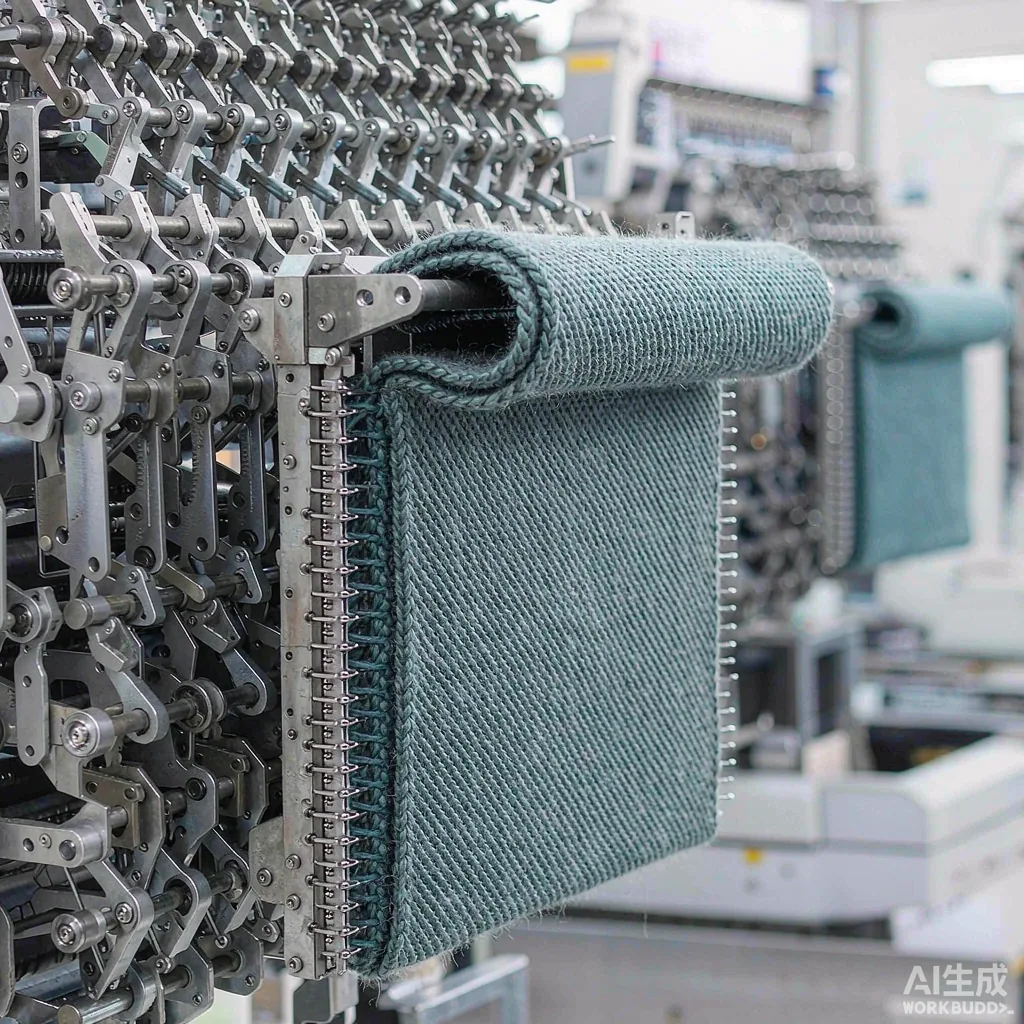
A knitted programme runs on MOQ 100 pcs per style and per colourway, 7 working days of sampling, 30 days of bulk, 7 production lines at about 200,000 pcs per month, and release against AQL 2.5 under an ISO 2859-1 plan, with FOB Xiamen as the standard term.
Two compliance notes matter more on this comparison than on most. Where a neoprene component is included, restricted-substance documentation should be requested specifically for the foam and the adhesive, because a laminate introduces substances a knitted body does not contain and REACH Annex XVII entries apply to chlorinated compounds. Where the brief is a food-contact-adjacent product, the liner should carry its own documentation rather than relying on the outer body's certificate. Both should be asked for at quotation, since neither can be produced retroactively once a bulk run has started.
Get the hybrid quoted properly
Send the format, the thermal or impact requirement and the quantity per colourway. Our knit team will quote a knitted body with and without the liner, against MOQ 100 pcs and 30 days of bulk. Start on the contact page.
Frequently Asked Questions
Is a neoprene bag better than a knitted bag?
For insulation and impact, yes. Three millimetre neoprene holds temperature for 2 to 4 hours and cushions a drop, which an open loop structure cannot do. For daily carry, a knitted body wins on weight, breathability, tear strength and recyclability.
How much heavier is a neoprene bag?
Roughly 60 to 100% heavier for the same format. Three millimetre laminated neoprene sits at 520 to 700 g/m² against about 320 g/m² for a knitted E12 body, which is about 320 g against 190 g on a lunch bag.
Can a knitted bag keep food cold?
Not on its own. A loop structure moves air rather than trapping it. A removable insulated liner of 4 to 6 mm with a reflective facing is the answer, and it should be specified as a separate line item.
Which material is more durable?
Knitted, on the measures that end a bag. It tears at 25 to 45 N against 8 to 20 N and its face survives 20,000 to 30,000 Martindale rubs against 10,000 to 20,000 for a laminated jersey face. Neoprene also stiffens and cracks at folds after two to three years.
Why does neoprene smell?
Residual chlorinated volatiles in freshly produced foam. The smell fades but it generates complaints on arrival, and it is one reason some retailers have moved away from neoprene near food contact.
Is neoprene recyclable?
Not readily. It is a chlorinated polymer foam laminated to two textile faces, so it does not enter polymer streams cleanly. A monomaterial polyester knitted body does, which matters increasingly under extended producer responsibility rules.
Does neoprene breathe?
No. A closed-cell foam has no air permeability, so a neoprene bag carried against the body in warm conditions traps heat and moisture. That is the most common comfort complaint and the strongest argument for a knitted body.
How long does neoprene last?
Two to three years before oxidation stiffens the foam and the folds begin to crack. On a lunch bag the folds are exactly where the product flexes daily, so ageing shows there first.
Which costs more?
Neoprene, roughly USD 6 to 11 per unit against USD 4.80 as the knitted reference, though a knitted body with an insulated liner and a padded insert narrows the gap considerably and that should be quoted rather than assumed.
What is the best construction for a laptop sleeve?
A hybrid. A knitted outer body for comfort and recyclability with a removable 6 to 8 mm padded insert for impact. A pure knitted sleeve will not survive a drop onto a hard floor.
What compliance documents does neoprene need?
Restricted-substance documentation for the foam and the adhesive, requested separately from the outer body certificate, because a laminate introduces substances a knitted body does not contain and REACH Annex XVII applies to chlorinated compounds.
What are the terms for a knitted bag programme?
MOQ 100 pcs per style and per colourway, 7 working days of sampling, 30 days of bulk, 7 production lines at about 200,000 pcs per month, FOB Xiamen with CIF and DDP available, and release against AQL 2.5 under ISO 2859-1.
People Also Ask
Are neoprene bags waterproof?
Largely yes, because closed cells do not absorb water. But the seams and the laminated fabric faces do, so a neoprene bag dries in 3 to 5 hours at the seams while a knitted body drains and dries in 2 to 3.
Can a knitted bag replace a neoprene lunch bag?
Only with a liner. The knitted body brings weight, breathability and recyclability, and a removable 4 to 6 mm insulated liner brings the thermal performance the category requires.
Why do neoprene bags crack?
Oxidation. The foam stiffens with age and the folds crack, typically after two to three years. On a lunch bag the folds are the most flexed part of the product, so that is where it shows.
Is neoprene good for a backpack?
Rarely. It does not breathe, so a neoprene back panel traps heat and moisture. A knitted body with a zoned density panel breathes and supports at the same time.
Which is better for a bottle carrier?
Neoprene for insulation and condensation control, knitted for weight and drying. A knitted carrier with a removable insulated sleeve gives both and stays recyclable once the sleeve is removed.
Sources and further reading
Every figure on this page is either our own programme data or attributed below. Open the originals before you write them into a specification.
- Substances restricted under REACHEuropean Chemicals Agency The Annex XVII entries relevant when a chlorinated foam and its adhesive are specified alongside a knitted body.
- ISO 12947-2:2016 — Textiles, determination of abrasion resistance by the Martindale methodISO The abrasion method behind the comparison between a laminated jersey face and a knitted body.
- OEKO-TEX STANDARD 100OEKO-TEX Restricted-substance certification requested separately for the foam, the adhesive and the knitted body.
- ISO 2859-1:2026 — Sampling procedures for inspection by attributes, Part 1: AQL-indexed sampling schemesISO The sampling plan behind the AQL 2.5 release on a knitted programme.
- EU strategy for sustainable and circular textilesEuropean Commission The policy direction behind extended producer responsibility and the preference for monomaterial design.
Neoprene for Function, Knitting for Everything Else
Neoprene wins three criteria and all three come from one property: trapped gas in a closed cell. That gives it thermal retention of 2 to 4 hours, drop cushioning and shape retention, and no stitch or gauge change on a knitting machine recovers any of them. Knitting wins weight, breathability, tear, abrasion, drying, odour and recyclability.
For the same comparison against a pressed-fibre body, see knitted bag versus felt bag. For the broader weight question, see lightweight bag material comparison.