Knitted Bag Unboxing Experience: The Five-Step Sequence, Shape Recovery and a 12-Point Checklist for Opening Well
What makes a knitted bag unbox well? The sequence runs in five steps and the first one is decided by the packaging, not the bag: outer removed, inner opened, bag lifted out, inserts read, shape recovered. A knitted body recovers about 95% of its loft within 60 seconds of being freed and all of it within about four hours at 20 degrees, which is an advantage most knit programmes never use in their pack design. This article gives the sequence, the recovery behaviour and a 12-point checklist for the opening.
What the Unboxing Actually Is for a Knitted Bag
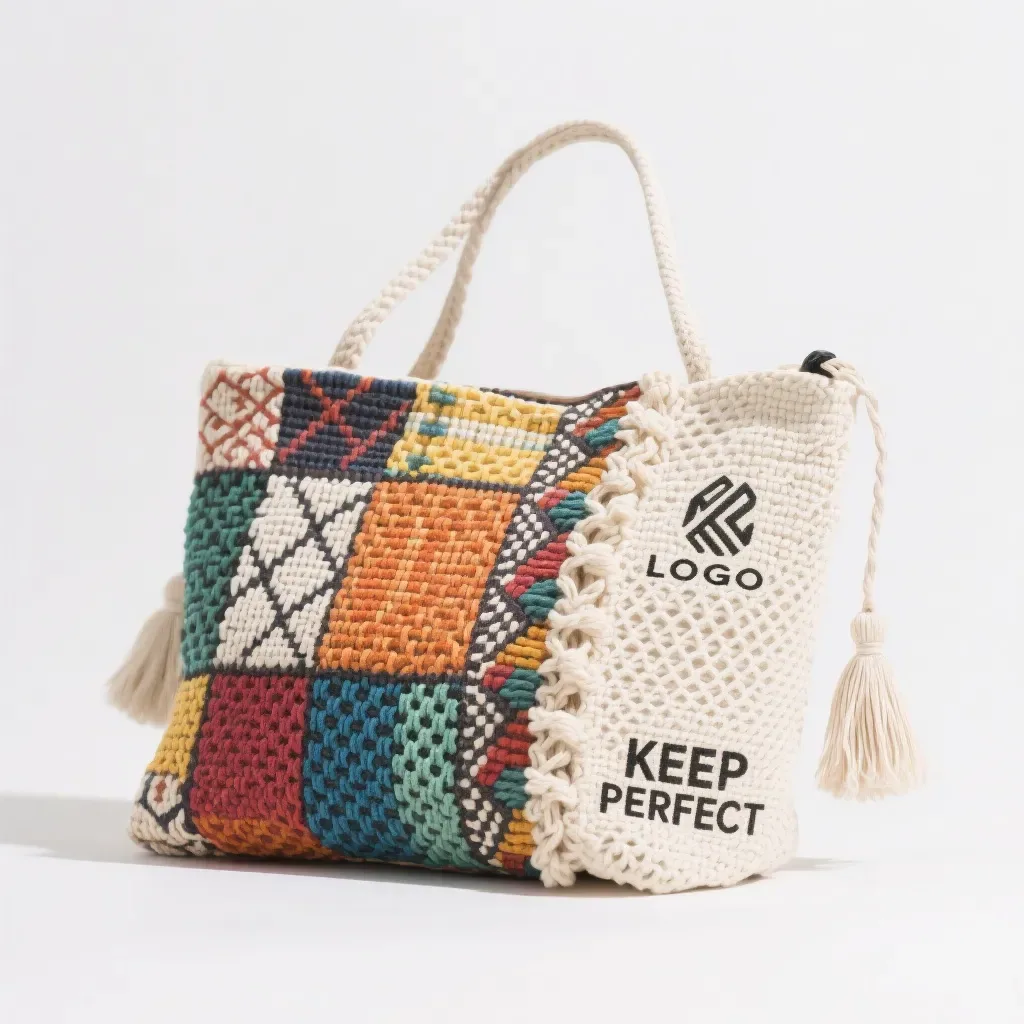
The unboxing of a knitted bag is five moments in a fixed order — the outer is removed, the inner is opened, the bag is lifted out, the inserts are read, and the bag recovers its shape — and the only one of the five a brand fully controls at low cost is the last.
That framing matters because most unboxing spend goes to the first two, which are packaging decisions, while the moment the customer actually forms an opinion is the fifth, which is a knit property. A knitted bag arrives compressed. It was folded or rolled to fit a polybag, it sat in a carton for several weeks, and the customer's first physical impression is of something flat that becomes something three-dimensional in their hands. Handled well, that is the best moment in the whole product experience. Handled badly — a bag that stays creased, a bag that smells of the container, a bag with a fold line across the front panel — it is the worst.
The three things that decide it are all controllable: how hard the bag was compressed in packing, what it was compressed against, and whether the customer is told that recovery is expected. The first two are pack-out specifications. The third is a card costing a few cents, and it is the one nearly every programme omits.
The Five-Step Opening Sequence and Where It Breaks
The unboxing breaks at step two more often than anywhere else, because opening a polybag without a tool takes effort, and a customer who has to fetch scissors has already stopped enjoying the experience.
| Step | What the customer does | Where it breaks | The fix |
|---|---|---|---|
| 1. Outer removed | Opens the mailer or the carton | Tape that needs a blade | A tear strip or a paper tape closure |
| 2. Inner opened | Opens the polybag holding the bag | A sealed film with no opening feature | A 15 mm tear notch, or a resealable flap |
| 3. Bag lifted out | Takes the bag out of the film | A tight film that fights the knit surface | A film 5 mm larger than the folded bag on each axis |
| 4. Inserts read | Finds and reads the card | A card lost in the tissue or absent entirely | The card placed on top, before the tissue |
| 5. Shape recovered | Watches the bag come back to form | A crease that does not come out | Light compression in packing plus a recovery note |
Step three has a knit-specific version of the usual problem. A film sized exactly to the folded bag grips the knit surface because knit has more surface friction against film than a woven fabric does. Specifying the film 5 mm larger than the folded bag on each axis costs nothing in material and makes the bag slide out rather than being pulled out, and pulling a knit bag out of a tight film is what produces the stretched loop and the distorted handle that customers photograph.
Shape Recovery: What the Bag Does When It Comes Out
A knitted bag recovers about 95% of its loft within 60 seconds of being freed from compression, and effectively all of it within about four hours at 20 degrees, provided it was compressed lightly rather than tightly.
The distinction between light and tight compression is the whole specification. Light compression means the bag is folded or rolled to a thickness where it still has air in it, and the polybag holds it there without pressing on it. Tight compression means the bag has been pressed flat or vacuum-packed, and the yarn has taken a set. A yarn that has taken a set can be recovered, but it takes warmth and time and sometimes a light steam, none of which the customer will apply before deciding how they feel about the purchase.
Where a programme must compress tightly — a promotional mailing, a subscription box, any pack where volume determines postage — the mitigation is a note. A card that says the bag will come back to shape within a few hours converts a negative surprise into an expected one, and customers who are told what will happen consistently report it as a feature rather than a fault. This is the lowest-cost intervention available in the whole unboxing, at roughly USD 0.02 per unit including placement.
- Loft recovery
- About 95% within 60 seconds, effectively full within 4 hours at 20 degrees
- Compression in packing
- Light: the bag keeps air and the film does not press on it
- Film size
- 5 mm larger than the folded bag on each axis
- Opening feature
- 15 mm tear notch, or a resealable flap on premium packs
- Tissue
- 17 gsm acid-free tissue, one sheet, folded not crumpled
- Insert card
- 300 gsm, 90 x 55 mm, placed above the tissue
- Care symbols
- ISO 3758 care labelling code, where the market requires them
- Recovery note
- One line on the insert, about USD 0.02 including placement
The Twelve-Point Unboxing Checklist
Twelve checks cover the opening, and the eight that get missed are the ones about what the customer feels rather than what they see.
- The outer can be opened without a blade: a tear strip or paper tape, not a plastic tape needing scissors.
- The inner film has a 15 mm tear notch or a resealable flap, placed where a hand naturally finds it.
- The film is 5 mm larger than the folded bag on each axis, so the bag slides out rather than being pulled.
- The bag was compressed lightly in packing, with air left in the fold rather than pressed flat.
- No fold line crosses the front panel of the bag, which is the face the customer looks at first.
- The insert card sits above the tissue, so it is found before the customer reaches the bag.
- Tissue is one sheet at 17 gsm, folded rather than crumpled, and is acid-free.
- Care instructions use the ISO 3758 symbol set where the destination market requires them.
- The fibre content and origin statements are on the insert or the hangtag, and match the documents.
- A recovery note tells the customer the bag will come back to shape within a few hours.
- There is no scent in the pack: knit absorbs odour and a scented insert transfers it to the yarn.
- The pack is mono-material where the brand makes a recyclability claim, or the claim is not made.
Inserts: Care Card, Story Card and the Compliance Panel
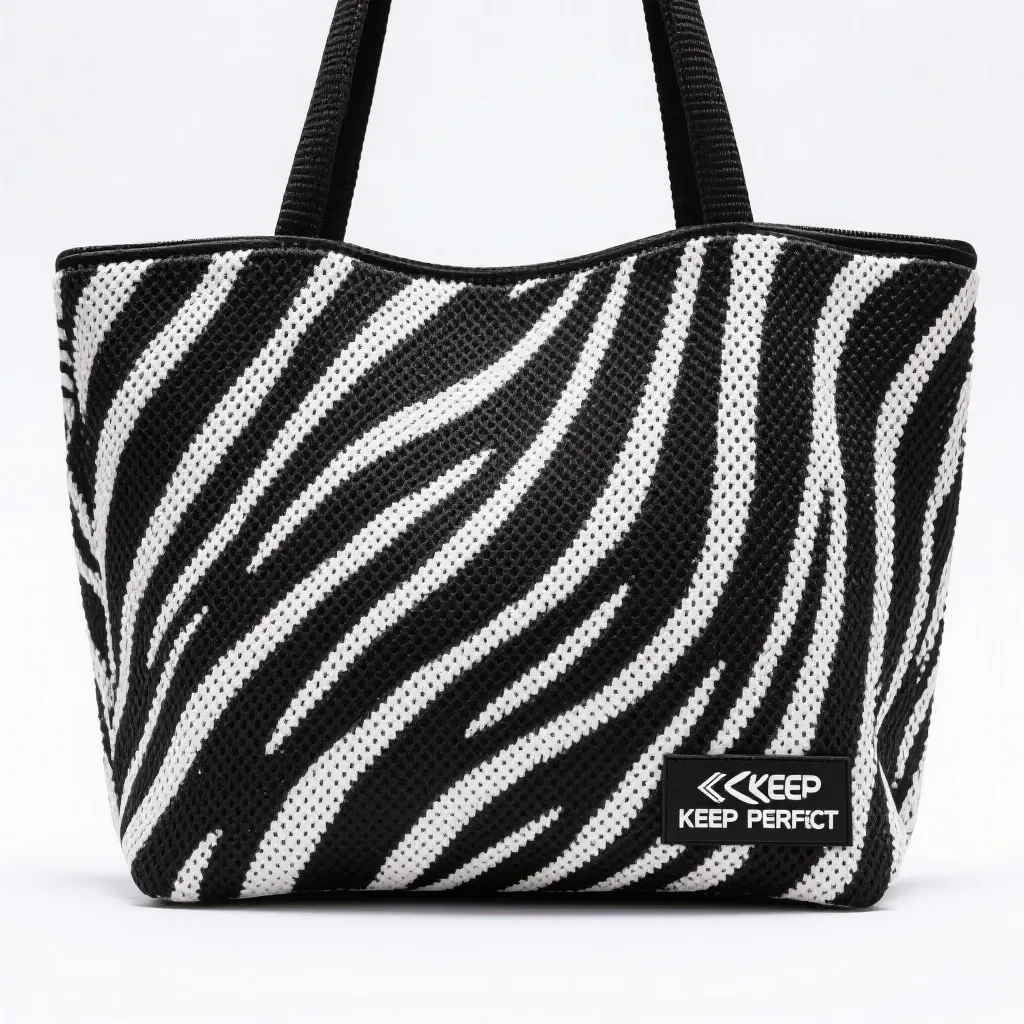
An insert card carries three things and 300 gsm at 90 x 55 mm is enough for all of them: the care symbols, the fibre content and origin statement, and one line of brand voice.
Care symbols are the part with a standard behind them. ISO 3758 defines the care labelling code using symbols, and the destination market decides whether symbols, text or both are required. Four symbols cover most knit programmes: washing, bleaching, drying and ironing, with a fifth for professional care where the programme needs it. Using the symbol set rather than prose has two advantages beyond compliance: it survives translation and it takes about a fifth of the space, which is what allows one card to serve every market the programme sells into.
The compliance panel is the part that must be correct rather than attractive. Fibre content by percentage, country of origin, and the responsible economic operator for the EU market all belong somewhere on the pack, and where the hangtag does not carry them the insert has to. A claim on the insert needs the same certificate behind it as the same claim on a hangtag: a recycled statement needs a GRS transaction certificate, and the certificate has to cover the quantity shipped.
Tissue, Stuffing and Why Knit Needs Less of Both
A knitted bag needs about one sheet of 17 gsm tissue and no stuffing, and the reason is that the bag is already the cushion: knit does not need internal void fill the way a structured bag does.
This is a genuine advantage and programmes routinely waste it. A rigid box holding a structured bag needs void fill, because a rigid object in a rigid box rattles. A knitted bag fills the space it occupies, absorbs the impact itself, and needs only surface protection against abrasion from the outer. The programmes that unbox best tend to be the ones that understood this and spent their packaging spend on the outer presentation rather than on interior fill.
Tissue
One sheet at 17 gsm, acid-free, folded rather than crumpled. Crumpled tissue reads as filler; folded tissue reads as wrapping. Acid-free matters because an acidic paper can transfer to a pale yarn over a long storage period.
Void fill
Usually none. Where the outer is rigid and the bag does not fill it, recycled kraft at about 30 gsm is used rather than a plastic fill, because it keeps the pack mono-material in the paper stream.
Dust pouch
A knitted dust pouch at about USD 0.85 is the premium alternative, and on knit it is a coherent choice because the pouch and the bag are the same material family and the same aesthetic.
Scent
Do not add it. A knitted structure has a large internal surface area and holds odour, and a scented insert or a scented sachet transfers to the yarn and cannot be removed by airing.
What Not to Put in the Box
Four items are commonly added to a knit pack and all four cost more than they return: scented sachets, plastic void fill, a second unnecessary outer layer, and a printed instruction sheet that duplicates the care symbols.
The scent point is worth expanding because it is the one that generates complaints. Knit holds odour for a long time, and a customer who opens a bag that smells of a sachet will associate that smell with the product rather than with the packaging. The second unnecessary outer layer costs freight twice: once in the material and once in the container, because a doubled outer adds millimetres to every unit and millimetres become cartons. The duplicate instruction sheet costs attention: a customer who reads two documents saying the same thing reads neither.
Costing the Unboxing Layer by Layer
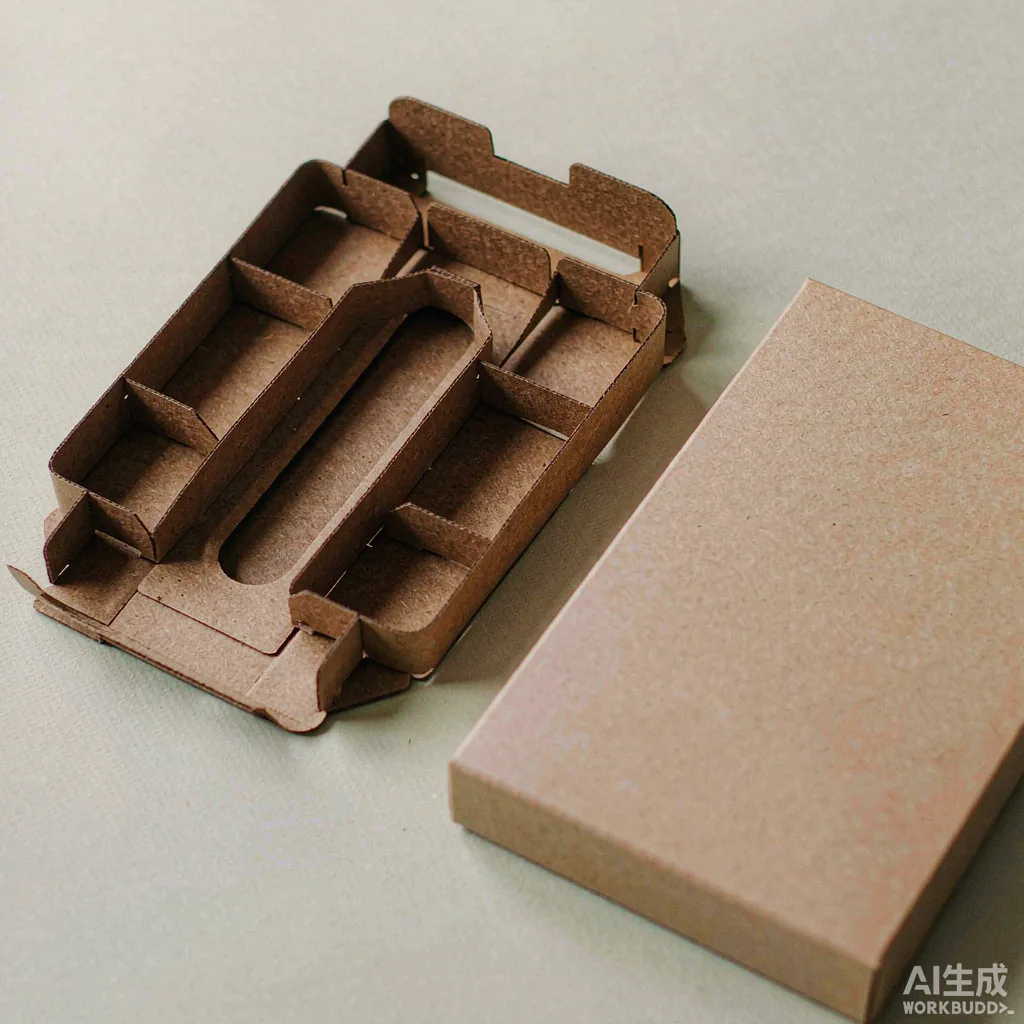
The unboxing layer above the bag itself costs about USD 0.10 to USD 0.45 per unit depending on the outer, and the two items that carry most of that are the outer packaging and the dust pouch where one is used.
A typical build is a 40 micron film at about USD 0.03, one sheet of 17 gsm tissue at about USD 0.02, a 300 gsm insert at about USD 0.04, and placement labour at about USD 0.03, which is about USD 0.12 on top of the outer. Where the route is a printed kraft sleeve the outer adds about USD 0.18; a rigid box adds about USD 1.20 and a knitted dust pouch about USD 0.85. The point of writing it out layer by layer is that the two lowest-cost layers, the tissue and the insert, have more effect on how the unboxing feels than either of the two most expensive ones.
Testing an Unboxing Before Bulk
The unboxing should be tested on a shipped sample rather than on a bench sample, because the two differ: a bag that has been in a carton for three weeks behaves differently from one packed the same morning.
- Pack the sample as bulk will be packed, then leave it compressed for at least 72 hours before opening.
- Open it without a tool and time the opening: under about 8 seconds is the working target.
- Record loft recovery at 60 seconds and again at four hours, with a photograph at each point.
- Check the front panel for a fold line, which is the single most photographed unboxing fault.
- Confirm the insert is found before the bag is touched, not after.
- Smell the bag: it should smell of nothing at all.
That test is done inside the 7-working-day sampling window, and it is the one test in the packaging sequence that a buyer can run themselves on receipt of a sample. Pack-out is then held to the same result through the 30-day bulk production window and inspected under the AQL 2.5 plan (ISO 2859-1) before despatch. Shipments leave FOB Xiamen, with CIF and DDP available.
Build an unboxing spec
Send the outer route, the insert content and the recovery expectation, and the knit team will return a pack-out spec tested on a shipped sample inside the sampling window. Start the spec
Frequently Asked Questions
How long does a knitted bag take to recover its shape?
About 95% of its loft returns within 60 seconds of being freed from compression, and effectively all of it within about four hours at 20 degrees. That holds when the bag was compressed lightly; a tightly pressed bag sets and recovers slowly or not without warmth.
Why does my knitted bag arrive creased?
Because it was compressed tightly in packing and the yarn took a set. Light compression, where the bag keeps air in the fold and the film does not press on it, recovers cleanly. A fold line across the front panel is the most photographed version of this fault.
Should the polybag have an opening feature?
Yes, a 15 mm tear notch or a resealable flap. A sealed film with no opening feature makes the customer fetch scissors, and the unboxing has already gone wrong at that point.
How much bigger should the polybag be than the bag?
About 5 mm larger than the folded bag on each axis. Knit has more surface friction against film than a woven fabric does, so an exactly sized film grips and the bag has to be pulled out, which distorts the handle and stretches loops.
What tissue should be used with a knitted bag?
One sheet at 17 gsm, acid-free, folded rather than crumpled. Crumpled tissue reads as filler and folded tissue reads as wrapping. Acid-free matters because an acidic paper can transfer to a pale yarn over long storage.
Does a knitted bag need void fill?
Usually not. Knit fills the space it occupies and absorbs impact itself, so it needs surface protection against abrasion rather than void fill. Where an outer is rigid and the bag does not fill it, recycled kraft at about 30 gsm is used.
What size should the insert card be?
300 gsm at 90 x 55 mm carries the ISO 3758 care symbols, the fibre content and origin statement, and one line of brand voice. The symbol set takes about a fifth of the space of prose and needs no translation.
Should a scented sachet go in the pack?
No. A knitted structure holds odour, and a scented insert transfers to the yarn and cannot be aired out. Customers associate the smell with the product rather than with the packaging, which is the wrong association to create.
Where should the insert card be placed?
Above the tissue, so the customer finds it before reaching the bag. A card buried in tissue or beneath the bag is a card that is never read, and the compliance text on it is then effectively not delivered.
What does the unboxing layer cost per unit?
About USD 0.10 to USD 0.45 on top of the outer. A typical build is film at about USD 0.03, tissue at about USD 0.02, a 300 gsm insert at about USD 0.04 and placement labour at about USD 0.03.
How should an unboxing be tested before bulk?
On a shipped sample, packed as bulk will be packed and left compressed for at least 72 hours. Time the opening, photograph loft recovery at 60 seconds and four hours, check the front panel for a fold line, and confirm the insert is found first.
Can a recovery note really help?
Yes, and it costs about USD 0.02 including placement. A card saying the bag will come back to shape within a few hours converts a negative surprise into an expected one, which is the least expensive intervention in the whole unboxing.
What care symbols does a knit bag need?
Usually four under the ISO 3758 code: washing, bleaching, drying and ironing, with a fifth for professional care where needed. The destination market decides whether symbols, text or both are required on-pack.
Does the insert need the same certificates as the hangtag?
Yes. Any claim printed on the insert needs the same document behind it, so a recycled statement needs a GRS transaction certificate covering the quantity shipped, and the fibre and origin statements have to match the shipping documents.
Is a knitted dust pouch worth the cost?
Where the positioning supports it, yes. At about USD 0.85 it is the premium alternative, and on knit it is coherent because the pouch and the bag are the same material family and the same aesthetic, which a paper outer is not.
When is the unboxing spec settled?
Inside the 7-working-day sampling window, tested on a shipped sample rather than on a bench sample. Pack-out is then held to the same result through the 30-day bulk window and inspected under the AQL 2.5 plan.
People Also Ask
How long does a knit bag take to regain shape?
About 95% of loft within 60 seconds and effectively full recovery within about four hours at 20 degrees, provided it was compressed lightly rather than pressed flat.
Why is the unboxing different for knitted bags?
Because knit arrives compressed and recovers in the customer's hands. The defining moment is not the opening but the recovery, which no other bag category has.
Should I use tissue paper with a knitted bag?
One sheet of 17 gsm acid-free tissue, folded rather than crumpled. More than that reads as filler, and knit does not need void fill.
What is ISO 3758?
The care labelling code using symbols. It covers washing, bleaching, drying and ironing, survives translation and takes about a fifth of the space of prose.
Can I put a scent sachet in bag packaging?
No. Knit has a large internal surface area and holds odour permanently. A scented insert transfers to the yarn and cannot be aired out.
How do I stop a fold line across the bag?
Fold along a seam or a natural crease rather than across the front panel, compress lightly so the bag keeps air in the fold, and size the film 5 mm larger on each axis.
Sources and further reading
Every figure on this page is either our own programme data or attributed below. Open the originals before you write them into a specification.
- ISO 2859-1 — Sampling procedures for inspection by attributes, Part 1: AQL-indexed sampling schemesISO The AQL 2.5 plan under which pack-out, insert placement and presentation are inspected before release.
- ISO 3758 — Textiles — Care labelling code using symbolsISO The symbol set used on the insert card in place of prose care instructions.
- Recycled Claim Standard and Global Recycled StandardTextile Exchange The transaction-certificate basis for any recycled claim printed on the insert or the outer packaging.
- STANDARD 100 by OEKO-TEXOEKO-TEX The certification behind a next-to-skin claim, which is why an unscented pack matters on knit.
- Incoterms rulesInternational Chamber of Commerce The rule set behind the FOB Xiamen term and the CIF and DDP alternatives offered on knit programmes.
Design for Recovery, Not for the Opening
Unboxing spend goes to the outer layer because that is where the brand mark goes, and the moment that actually decides how a customer feels is the fifth one, when a compressed bag becomes a three-dimensional one in their hands.
Compress lightly, size the film generously, and tell the customer what will happen. For the pack-out decisions behind that, see protective packing for knitted bags. For the outer route, see retail ready packaging for knitted bags.