Knitted Bag Pilling Resistance Testing: Choosing Between the Pilling Box, the Random Tumble Method and Martindale Abrasion
Which pilling test should a knitted bag use? Follow four decisions in order: is the bag sold with a durability claim, is the yarn staple or filament, is the surface brushed or flat, and does the buyer's market follow ISO or ASTM. Those four answers select one of three methods, the pilling box under ISO 12945-1, random tumble under ASTM D3512, or the Martindale method under ISO 12945-2, and each needs its own end point and grade before the result means anything.
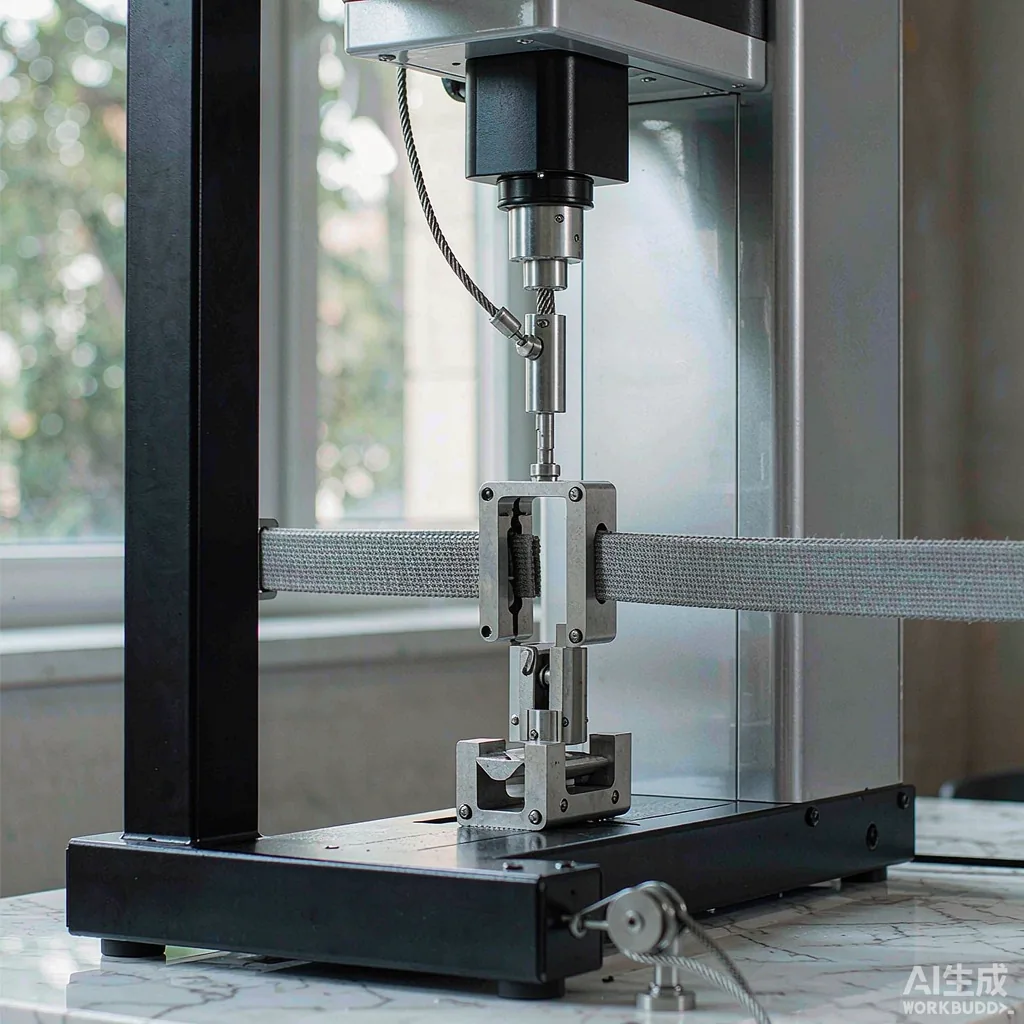
The Decision Order: Four Questions Before Any Test
Pilling testing is usually commissioned backwards. A buyer asks for a pilling test, a laboratory runs the method it has, and a grade arrives that nobody specified an acceptance level for. Four decisions taken in order before the request goes out prevent that, and each one narrows the choice to something defensible.
The first question is whether the bag carries a durability or appearance claim. If it does, the test method and the acceptance grade are evidence a buyer may need to produce later, so they should be chosen for defensibility rather than speed. If it does not, a screening result is enough and the simpler method wins.
The second is whether the yarn is staple spun or continuous filament, because the two pill by different mechanisms. Staple yarns pill by fibre ends migrating out of the yarn and tangling. Filament yarns mostly snag rather than pill, and a pilling box result on a filament structure tells a buyer very little about how the bag will look after a month.
The third question is surface: a brushed or raised surface behaves differently from a flat one and generally needs a gentler method. The fourth is jurisdictional, whether the buyer's market and retailer follow ISO methods or ASTM methods, because a grade obtained under one is not directly comparable with a grade obtained under the other.
Method One: The Pilling Box
The pilling box under ISO 12945-1 is the traditional method: specimens are mounted on tubes and tumbled in a cork-lined box rotating at a constant speed, so the fabric rubs against itself and against the cork. It is a gentle, multi-directional action and it reproduces the kind of abrasion a bag gets in general use rather than against a single hard surface.
The end point is expressed in revolutions, and programmes commonly run to 7,200 or 14,400 revolutions depending on how severe a test is wanted. The higher figure roughly doubles the exposure and is the one to specify where a bag is sold with a durability claim. Whichever is chosen, the number must appear on the report, because a grade with no end point is not a result.
The box has one limitation worth knowing: it is slow, and it under-represents abrasion against hard edges such as a desk corner or a car door frame. A bag that grades 4 in the box can still show surface fuzzing where a customer habitually sets it down on one corner, which is a different mechanism and needs the Martindale method to see.
Method Two: Random Tumble
Random tumble under ASTM D3512 is the North American counterpart and it is faster and more aggressive. Specimens are tumbled in a cylindrical chamber with a small amount of cotton lint and a controlled air stream, and the standard exposure is 30 minutes. The lint is deliberate: it accelerates pill formation and makes the test discriminate more quickly.
Because it is more aggressive, a random tumble result is not interchangeable with a pilling box result on the same fabric. A structure that grades 4 in the box may grade 3 to 4 on random tumble, and neither number is wrong. Buyers comparing quotes across two programmes should check which method produced each grade before concluding that one yarn outperforms another.
The method suits staple-spun yarns and knitted structures with a slightly raised surface, which is where pilling actually occurs in service. On a flat filament structure it produces little and the result is uninformative, which is why the second decision in the sequence above, staple or filament, comes before the method choice rather than after it.
Method Three: Martindale Abrasion and Pilling
The Martindale method under ISO 12945-2 rubs a specimen against a standard abrading fabric in a figure-of-eight path under a defined pressure, and it is the method of choice where abrasion and pilling need to be assessed together. The end point is expressed in rubs, and a common bag programme figure is 7,000 rubs with a grade assessed afterwards.
Its advantage over the box is that it also predicts wear and, at higher rub counts, breakdown. Running the same specimens to 7,000 rubs for a pilling grade and then continuing to a defined end point for abrasion gives a buyer two numbers from one set of specimens, which is efficient and, more importantly, comparable across lots.
The pressure setting matters and should be stated. Standard Martindale work uses a pressure appropriate to the end use, and for a bag body a figure in the region used for upholstery and heavy textiles is more realistic than the apparel setting. A laboratory running an apparel pressure on a bag body will return a flattering number that the field will not reproduce.
| Method | Standard | Action | End point | Best for |
|---|---|---|---|---|
| Pilling box | ISO 12945-1 | Specimens tumbled in a cork-lined rotating box | 7200 or 14400 revolutions | General-use appearance on staple yarns and flat knitted surfaces |
| Random tumble | ASTM D3512 | Tumbled in a cylinder with cotton lint and an air stream | 30 minutes | North American programmes and slightly raised surfaces |
| Martindale pilling | ISO 12945-2 | Figure-of-eight rub against a standard abrading fabric | 7000 rubs, grade assessed after | Where abrasion and pilling are assessed together on one specimen set |
| Martindale abrasion | ISO 12947-2 | Same machine, continued to a defined breakdown point | Specified in cycles, e.g. 20000 for a heavy-duty bag | Wear life and breakdown, not appearance |
| Brush and sponge pilling | ISO 12945-3 | Localised brushing action on the specimen | Defined number of brush strokes | Brushed or raised surfaces where tumbling overstates the effect |
| Visual assessment | Grading against standard photographs | Specimen compared to reference images under controlled lighting | Grade 1 to 5, half grades permitted | All of the above; the grade is always assigned by comparison |
Grading: What a Grade of 4 Actually Looks Like
Pilling is graded by comparing the tested specimen against standard reference photographs under controlled lighting, on a scale from 5 down to 1. Grade 5 is no change, grade 4 is slight surface fuzzing or a few partially formed pills, grade 3 is moderate pilling with clearly formed pills of varying size, and grades 2 and 1 describe dense pilling covering much of the surface.
The realistic acceptance level for a bag body is grade 4 or better after the agreed end point, and grade 3 to 4 is often accepted on a textured or recycled yarn where some surface character is inherent to the material. Grade 3 on a smooth filament body is a failure, because there is no yarn reason for it and it indicates a process problem rather than a material character.
Grading is subjective by nature and that is worth managing rather than denying. Three assessors grading independently and taking the median is the standard control, and using standard lighting rather than a bench lamp is the second. Where a result sits on a half-grade boundary, commission a second assessment before treating it as a pass or a fail.
- Specimens per test
- 4 minimum, two in each direction, cut away from the selvedge and from any seam
- Conditioning
- 4 hours minimum at 20 degrees Celsius and 65 percent relative humidity per ISO 139
- Pilling box end point
- 7200 revolutions for screening, 14400 where a durability claim is made
- Random tumble end point
- 30 minutes with cotton lint, per ASTM D3512
- Martindale pilling end point
- 7000 rubs, grade assessed immediately afterwards
- Acceptance grade, smooth body
- 4 or better; grade 3 indicates a process problem rather than a material character
- Acceptance grade, recycled or textured yarn
- 3 to 4 acceptable, with the character agreed on the approved reference sample
- Assessment control
- Three independent assessors, median grade taken, under standard lighting
- Re-test trigger
- Any yarn lot change, yarn count change, or finish change
The approved reference sample is the quiet fix for the subjectivity problem. If the buyer has signed off a physical reference and the reference is photographed alongside the tested specimen, the grade becomes a comparison against something both sides have held rather than against a memory of what the swatch looked like at approval.
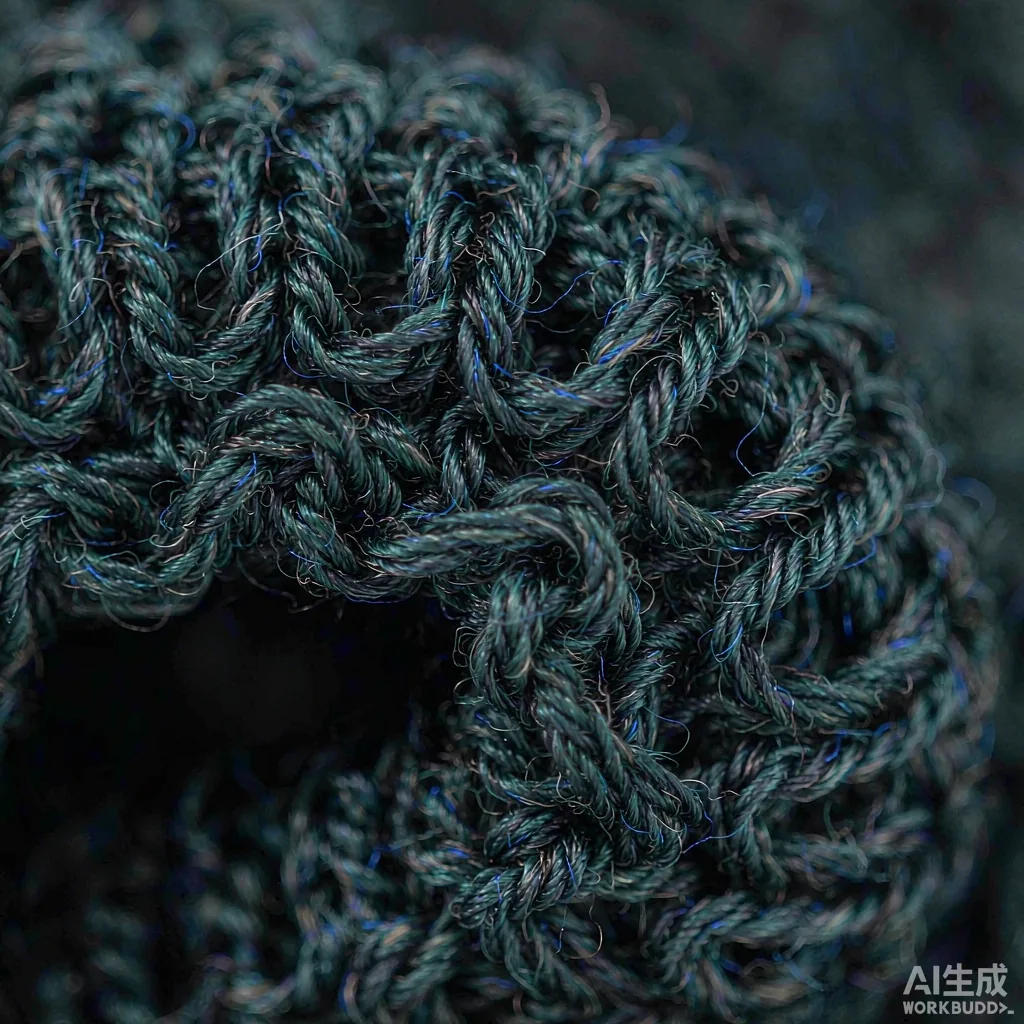
Which Fibres Pill and Why the Yarn Comes First
Pilling is mostly decided at yarn selection, not at testing. A test tells a buyer what the yarn does; it does not change what the yarn does. The variables that matter are fibre type, staple length, yarn twist and whether the yarn has been treated to resist pilling, and all four are set before the first panel is knitted.
Staple versus filament
Staple spun yarns pill because fibre ends migrate out and tangle. Filament yarns mostly snag instead. A pilling box result on a filament structure tells a buyer very little about appearance in service.
Staple length
Shorter staples migrate more readily. A yarn spun from a short staple will pill sooner than the same fibre in a longer staple at identical count and twist.
Twist level
Higher twist holds fibre ends inside the yarn and reduces pilling, at the cost of a firmer hand. The trade-off is chosen at sampling, not discovered at test.
Anti-pilling treatment
Treated yarns sacrifice some surface fibre deliberately to reduce pill formation. Effective, and worth confirming that the treatment survives the programme's washing cycles.
Recycled content
Recycled staple has a wider fibre length distribution and pills differently from virgin fibre of the same nominal count. Re-test after any change in recycled content.
Blends
A strong fibre blended with a weak one can hold pills on the surface rather than shedding them, which looks worse than either component alone. Blends need their own test.
The practical consequence for a programme is that pilling testing is best run at yarn selection rather than at bulk. Testing three candidate yarns at sampling and choosing on the result costs one laboratory booking, whereas testing the chosen yarn at bulk produces a number and leaves the buyer with the same yarn and a shorter window in which to change it.
Setting an End Point and an Acceptance Grade
Two numbers make a pilling requirement: the end point and the grade. Grade 4 alone is meaningless, because grade 4 after 1,000 Martindale rubs and grade 4 after 7,000 are very different products. Write both, in the order the test runs them, and the requirement becomes checkable by anyone holding a report.
Setting the end point to match the product is the part buyers under-specify. A lightweight promotional tote that will be used for a season does not need 14,400 revolutions in a pilling box. A premium everyday bag sold with a two-year expectation does, and specifying the lower figure for it is how an appearance complaint arrives in month four.
One more field belongs in the requirement: what happens at a borderline result. Agreeing in advance that a half-grade below the acceptance level triggers a second assessment by three assessors, rather than an immediate rejection, resolves the most common dispute in pilling testing before it starts and costs nothing to write down.
Where Pilling Testing Fits in the Programme
Pilling testing sits at yarn selection and again at bulk confirmation, and nowhere else. Two bookings per programme is the normal arrangement: one during sampling at 7 working days, when a yarn change is still a decision rather than a disruption, and one on the first bulk lot to confirm the production yarn performs as the approved yarn did.
It does not sit at goods-in. Pilling is a laboratory result on specimens, not an attribute counted on a sample, and no amount of looking at a bag on an inspection table will reveal it. A buyer who wants pilling controlled specifies the yarn, tests it, and then checks at bulk that the yarn is the same yarn, which is a documentation check rather than a test.
The pilling requirement in one line
- Anti-pilling treated polyester staple yarn.
- tested to ISO 12945-1 in the pilling box at 14,400 revolutions.
- acceptance grade 4 or better assessed by three assessors under standard lighting.
- confirmed on four specimens conditioned per ISO 139.
- re-tested on the first bulk lot and after any yarn lot change.
Set the pilling requirement for a knit bag yarn
Send the bag type, yarn preference and whether a durability claim appears on the product. We will return the recommended method, end point and acceptance grade, tested during sampling at 7 working days, and quote FOB Xiamen at 100 pcs per style and colourway with 30 days bulk. Start on the contact page.
Frequently Asked Questions
What is pilling resistance testing on a bag?
A laboratory test that subjects a knitted specimen to controlled abrasive action and then grades the resulting surface pills against reference photographs, from grade 5 for no change down to grade 1 for dense pilling. It predicts appearance in use, which no attribute inspection at goods-in can do.
Which pilling test method should I choose?
Follow four decisions in order: whether a durability claim is printed, whether the yarn is staple or filament, whether the surface is flat or raised, and whether the market follows ISO or ASTM. Those answers select the pilling box, random tumble or the Martindale method.
What is the difference between the pilling box and random tumble?
The pilling box under ISO 12945-1 tumbles specimens in a cork-lined box, usually to 7,200 or 14,400 revolutions. Random tumble under ASTM D3512 tumbles them for 30 minutes with cotton lint, which is faster and more aggressive, so the grades are not interchangeable.
How many revolutions should the pilling box run?
7,200 is a common screening figure and 14,400 roughly doubles the exposure for programmes making a durability claim. Whichever is used must appear on the report, because a grade with no end point stated is not a result anyone can check.
Can the Martindale method test pilling and abrasion together?
Yes, and that is its main advantage. Grade the specimens for pilling after about 7,000 rubs under ISO 12945-2, then continue the same specimens to a defined abrasion end point under ISO 12947-2, producing two numbers from one specimen set.
What pilling grade should a bag have to pass?
Grade 4 or better after the agreed end point is the realistic acceptance for a smooth bag body. On a recycled or textured yarn, grade 3 to 4 is often accepted where some surface character is inherent and has been agreed on the approved reference sample.
Is pilling grading subjective?
Yes, and it is managed rather than eliminated. Three assessors grading independently with the median taken, under standard lighting rather than a bench lamp, is the standard control. A result sitting on a half-grade boundary warrants a second assessment before being treated as a pass or a fail.
Why does the yarn choice matter more than the test?
Because pilling is a material behaviour. The test tells a buyer what the yarn does and does not change it. Fibre type, staple length, twist level and anti-pilling treatment are all set at yarn selection, which is where the outcome is actually decided.
Do filament yarns pill?
They mostly snag rather than pill. A pilling box result on a continuous filament structure tells a buyer little about appearance in service, which is why the staple or filament decision comes before the method choice rather than after it.
How many specimens does a pilling test need?
Four minimum, two cut in each direction, taken away from any selvedge or seam and conditioned for at least 4 hours at 20 degrees Celsius and 65 percent relative humidity under ISO 139 before the test begins.
Should recycled yarn be tested differently?
It should at least be re-tested. Recycled staple has a wider fibre length distribution and pills differently from virgin fibre of the same nominal count, so the grade established on a virgin yarn should not be assumed to carry across to a recycled one.
When should pilling testing be carried out?
At yarn selection during sampling, at 7 working days, when a change is still a decision rather than a disruption, and again on the first bulk lot to confirm production matches approval. It does not belong at goods-in, where no amount of looking at a bag reveals it.
What should the pilling requirement state?
Two numbers and a control: the end point in revolutions, rubs or minutes, the acceptance grade, and how a borderline result is resolved. Grade 4 after 1,000 rubs and grade 4 after 7,000 rubs are very different products and only the end point separates them.
Does pilling testing cover snagging?
No. Snagging is a separate mechanism, mainly affecting filament structures and open gauge knits, and it needs its own test. A bag can grade 4 for pilling and still snag badly against a rough edge in ordinary use.
People Also Ask
What is the best pilling test for knitted bags?
It depends on the yarn and market. The pilling box to ISO 12945-1 suits staple yarns, random tumble to ASTM D3512 suits North American programmes, and Martindale to ISO 12945-2 covers pilling and abrasion together.
What pilling grade is acceptable for a bag?
Grade 4 or better after the agreed end point for a smooth body. Grade 3 to 4 is often accepted on recycled or textured yarn where surface character is inherent to the material.
How long does a pilling test take?
The pilling box runs to 7,200 or 14,400 revolutions and random tumble to 30 minutes of exposure. Laboratory turnaround including conditioning and grading is typically a few working days.
Why does my knitted bag pill after a month?
Usually fibre ends migrating from a staple spun yarn. Shorter staples and lower twist pill sooner, so the cause is yarn selection rather than anything that happened after knitting.
Can pilling be seen at goods-in inspection?
No. It is a laboratory result on conditioned specimens graded against reference photographs. An attribute count at goods-in cannot detect it, which is why the yarn is tested instead.
Sources and further reading
Every figure on this page is either our own programme data or attributed below. Open the originals before you write them into a specification.
- ISO 12947-2 Textiles, abrasion resistance by the Martindale methodISO The abrasion method used alongside pilling grading, with the end point expressed in rubs or cycles.
- ASTM standards for textile testingASTM International Publisher of ASTM D3512, the random tumble pilling method used in North American bag programmes.
- ISO 139 Textiles, standard atmospheres for conditioning and testingISO The conditioning atmosphere required before pilling specimens are tested and graded.
- AATCC test methodsAATCC The North American textile test-method body whose appearance and abrasion methods run alongside ASTM in many programmes.