Why Brands Switch to Knitted Bags: Three Routes Compared, and What the Switch Really Costs
Brands switch to knitted bags for five reasons that survive arithmetic and one that does not: the switch reduces component count, removes the cutting table from the colour conversation, cuts the freight cube, shortens the file-to-bulk calendar and lowers material waste. It does not, on its own, reduce the unit price at high volume — at 1,200 pieces a sewn equivalent can still quote lower. The decision therefore turns on what a programme values: the knitted route wins on specification control and speed at 100 pcs per colourway, and the sewn route wins on unit price once volume is large and the shape is fixed.
The Switch Decision in One Sentence
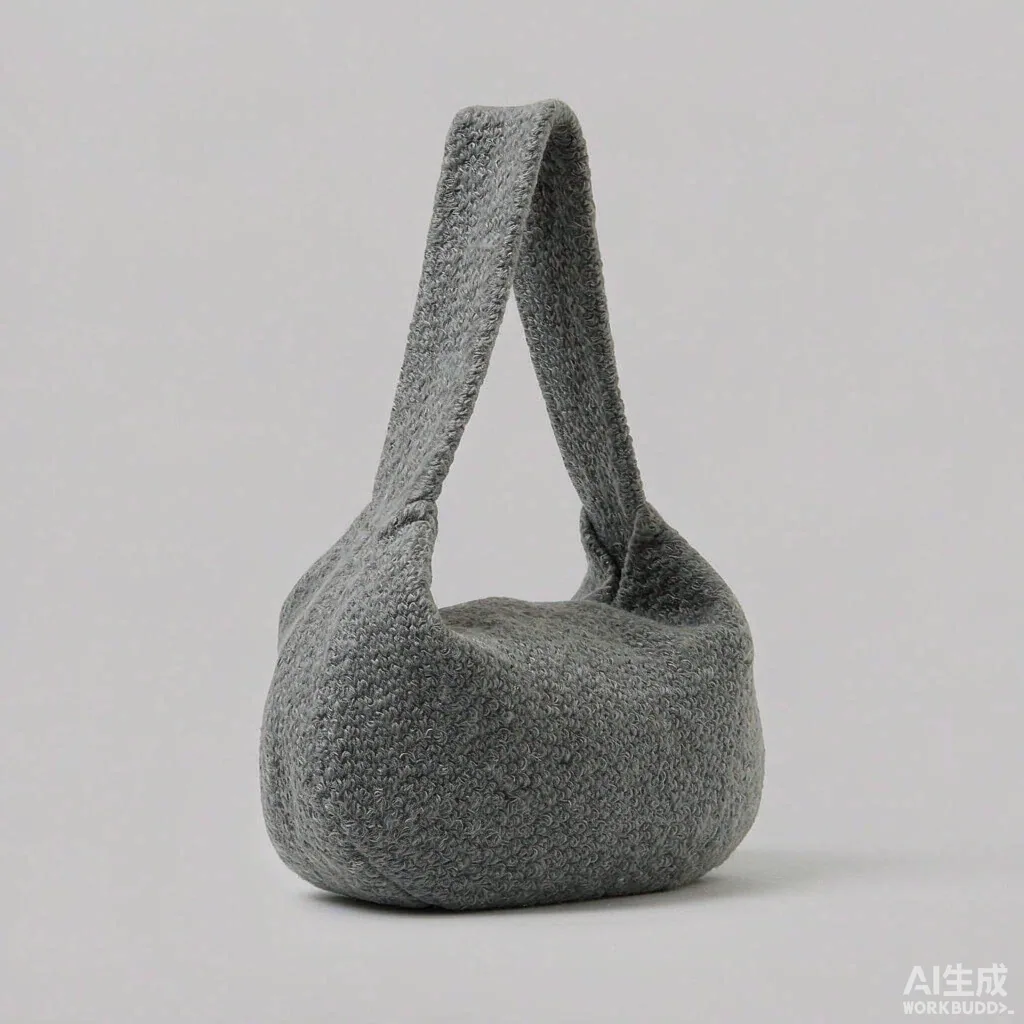
A brand should switch to a knitted bag when it values specification control and calendar speed over unit price at volume, because the knitted route compresses seven assembly operations into four and replaces a cutting table with a stitch file.
That sentence is deliberately conditional, and the condition is the whole decision. The five advantages below are real and measurable: component count, colourway economics, freight cube, calendar length and material waste. The counter-argument is also real: at high volume with a fixed shape, a cut-and-sew floor tuned for repetition can produce the same bag for less money per unit. A switch made for the first five reasons holds up. A switch made in the expectation of a lower unit price at 10,000 pieces usually does not, and it is the most common reason a conversion is reversed after one season.
Three Routes Compared Line by Line
Three routes produce the same tote: cut-and-sew from woven panels, knitted panels cut and assembled, and an integral knitted body with the handle and opening shaped on the bed — and they differ on every line that matters commercially.
The comparison below holds shape, size and hardware constant at 380 by 380 mm, 320 g/m² and one size 5 coil zip. Read across the rows rather than down them: the pattern is that the integral route wins on everything that is counted per operation or per kilogram, and the cut-and-sew route wins on the one line that is counted per unit at scale. A brand choosing between them is therefore choosing which of those two counting systems applies to its programme.
| Line | Cut-and-sew from woven panels | Knitted panels, cut and assembled | Integral knitted body |
|---|---|---|---|
| Operations to finish | About 7 | About 6 | About 4 |
| Material waste | About 12% from cutting | About 6% | About 3%, mostly knitting waste |
| Colourway change | New fabric booking | New yarn booking, same file | New yarn booking, same file |
| Handle construction | Cut strap, sewn on | Cut strap or knitted, sewn on | Knitted integrally on the bed |
| Programming cost | Pattern and marker | USD 180 per stitch file | USD 180 per stitch file |
| Sampling window | 7 to 15 working days | 7 working days | 7 working days |
| Bulk window | 30 days or longer | 30 days | 30 days |
| Freight cube | Higher, panels and stuffing | Lower, knit recovers | Lowest, flat packed |
| Best volume band | Above about 1,200 pcs | 400 to 1,200 pcs | 100 to 1,200 pcs |
Driver One: Component Count and Assembly Minutes
The largest structural advantage of the knitted route is that it removes operations rather than accelerating them: seven becomes four, and each removed operation is a purchase, an insertion and a failure mode.
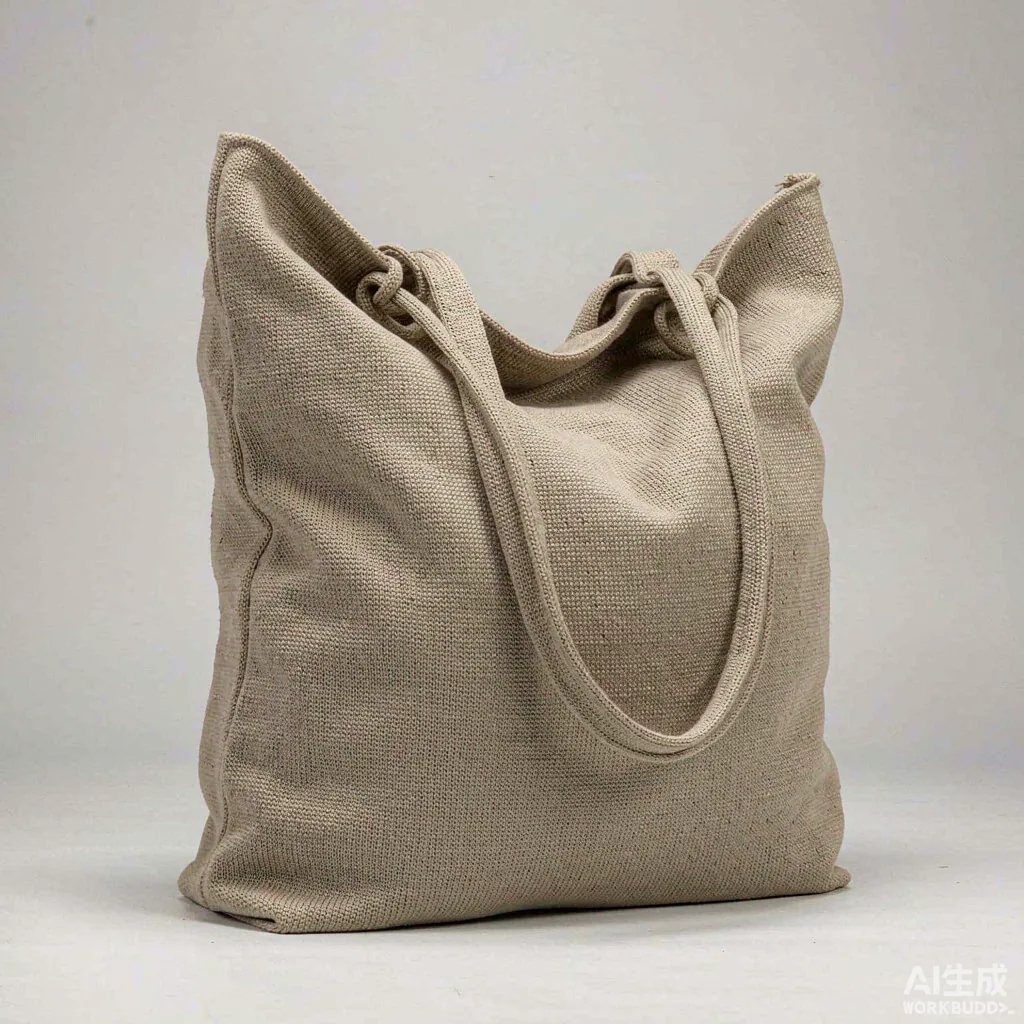
A sewn tote carries a base panel, two handle attachments, a zip insertion, two ring tabs, a label set and a top hem. An integral knitted body carries the zip insertion, one pair of ring tabs and a top hem, because the base and the handle were shaped on the bed. The commercial effect is larger than the assembly line alone: every removed component is also a purchased item with its own minimum, an insertion operation, and a material that may need screening. A brand that counts those three together will usually find the component list is worth more than the unit negotiation it was about to spend the afternoon on.
Driver Two: Colour and Pattern Without a Cutting Table
Colour and pattern are the second driver, because a knitted structure carries them in the yarn and the stitch rather than in a print or a panel layout.
That changes the economics of a range. A woven colourway is a fabric booking with its own minimum, usually in the hundreds of metres; a knitted colourway is a yarn booking against a dyelot of about 300 kg on a custom shade, and nothing at all on a stock shade. A pattern change is a stitch-structure change in the file rather than a new print screen. The consequence for a brand is that a four-colourway range becomes achievable at low volume, provided the shape stays constant — which is exactly the shape a season needs, because the split can be corrected without touching the file.
Driver Three: Weight, Cube and Freight
A knitted bag is lighter than its sewn equivalent and its freight line is decided by cube rather than by weight, so the advantage lands on the carton rather than on the scale.
At 320 g/m² a knitted tote body weighs materially less than a coated woven body of the same dimensions, and it recovers from compression in a way a structured bag does not. That second property is the valuable one: it makes flat packing viable, and on a bulky product charged on volumetric weight, flat packing is paid back on every carton of every shipment. Sea freight at about 21 days costs roughly USD 0.31 per piece on this product class, and a cube reduction of a quarter moves that line by roughly the same proportion. For a brand shipping several containers a season, that is a driver independent of the unit price entirely.
Driver Four: Programme Speed From File to Bulk
The calendar is the fourth driver: 7 working days of sampling and 30 days of bulk, with the stitch file written once and reused across every colourway in the range.
Speed here is structural rather than negotiated. The shape is written to a file, the file runs unchanged, and a colourway is a yarn choice rather than a new development, so a four-colourway range does not take four times as long as a one-colourway range. The comparison that matters is against the alternative: a woven programme adding a colourway books fabric, cuts a marker and re-samples, which is a second development cycle. For a brand working to a retail launch date with a split it has not yet validated, that difference is the reason to switch even when the unit price is flat.
Driver Five: Material Efficiency and Waste
Waste falls from about 12% in a cut-and-sew route to about 3% in an integral knitted route, and the difference is structural: a knitted body is shaped on the bed rather than cut out of a rectangle.
A woven bag is cut from a panel, and the offcuts are waste regardless of how well the marker nests. A knitted body is produced at or near its finished shape, so the waste is knitting waste of about 8% on yarn plus a small allowance for nesting on the bed. That figure matters commercially in two ways. It lowers the yarn bought per bag, which is the largest single line in the unit at about 38%. And it produces a claim a brand can make about material efficiency without qualification, which is increasingly requested at retailer onboarding and under EU ESPR reporting expectations.
What the Switch Costs You: The Honest Counter-List
The switch has four real costs, and a brand that has not counted them will meet all four in the first season: a shape constraint, a programming fee per shape, a durability argument to settle, and a tolerance conversation.
The shape constraint is genuine: a knitted bed produces certain shapes efficiently and others slowly, and a design drawn for cut-and-sew may need redrawing rather than translating. The programming fee is USD 180 per shape and repeats on every new shape, which is why a range should converge on one silhouette. The durability argument has to be settled with numbers rather than with adjectives — about 20,000 Martindale rubs to ISO 12947-2 and roughly 600 N of strip tensile to ISO 13934-1 are the thresholds a bag specification is normally written against. And the tolerance conversation is the one nobody plans for: a loop structure moves after it leaves the bed, so the sample measured on day one and the sample measured on day five must be compared before approval.
Shape constraint
A bed produces some shapes efficiently and others slowly. A design drawn for cutting may need redrawing rather than translating.
Programming per shape
USD 180 per stitch file, repeated on every new shape and never on a new colourway, so ranges should converge on one silhouette.
Durability to settle
Write the thresholds into the specification: about 20,000 Martindale rubs and roughly 600 N of strip tensile strength.
Tolerance conversation
A loop structure moves after it leaves the bed, so measure the sample on day five as well as day one before approving.
Which Route Fits Which Programme
Route selection is a function of volume and shape stability, and the two-variable answer is simpler than the literature suggests.
- Integral knitted body: 100 to 1,200 pcs per colourway, one silhouette across several shades, where calendar and cube matter most.
- Knitted panels assembled: 400 to 1,200 pcs where a structured base is wanted but the knitted face is part of the design language.
- Cut-and-sew from woven panels: above about 1,200 pcs on a frozen shape, where unit price is the dominant criterion and no revision is expected.
- Mixed programme: a knitted body for the seasonal shades and a sewn body for the permanent core, sharing one hardware specification.
- Promotional programme: a knitted body at the 100 pcs minimum, because the fixed block is small enough to make a one-drop test viable.
Two caveats keep that table honest. The volume bands are not price bands: they describe where each route produces the better total, and a programme inside a band can still be won by the other route on a specific criterion such as a structured base or a very high piece count. And a mixed programme is usually the right first move rather than a compromise, because it lets a brand test the knitted route on the seasonal shades while the permanent core stays on the route already validated with its retailer.
The test itself should be designed to produce a decision rather than an opinion. Order one shape in one colourway at the 100 pcs minimum, run it through the same wear and wash protocol the sewn bag already passes, and compare on three recorded figures: the abrasion result, the dimensional change after washing and the return rate over the first quarter. Three figures on one drop will settle the argument, and none of them require a commitment large enough to be regretted.
The Conversion Triggers Buyers Report
Five triggers come up repeatedly in the conversation, and each maps to one of the drivers rather than to a general preference for a new material.
The first is a colourway problem: the range needs four shades and the woven minimum will not support four bookings, so the switch is made for the colour economics. The second is a calendar problem: the launch date moved and the sewn route cannot sample and produce inside it, so the switch is made for the 7 plus 30 structure. The third is a freight problem: the container cost rose and the cube had to come down, so flat packing becomes the argument. The fourth is a waste or reporting problem, where material efficiency is being asked for by a retailer. The fifth is a revision problem: the shape keeps changing, and a file edit is faster than a pattern conversation.
Compare the three routes on your own bag
Send the shape, the volume per colourway and the launch date. The knit programme team will return a route comparison with operations, waste, cube and calendar, plus a quotation at 7 working days of sampling, 30 days of bulk and AQL 2.5 release. Start on the contact page.
Frequently Asked Questions
Why do brands switch to knitted bags?
For five measurable reasons: fewer components, colourways without a fabric booking, lower freight cube, a shorter file-to-bulk calendar and less material waste. Not, on its own, for a lower unit price at high volume. The five are measurable before anything is ordered, which is what separates them from a general preference for a new material.
Is a knitted bag lower in cost than a sewn bag?
Not automatically. At 1,200 pieces and above with a frozen shape, a cut-and-sew floor tuned for repetition can quote lower per unit. Below that, the knitted route usually wins on total programme cost. The comparison has to be made as a landed figure at your own volume, because unit price hides freight, duty and the fixed block.
How many operations does a knitted bag remove?
Typically three. A sewn tote carries about seven operations; an integral knitted body carries about four, because the base and the handle are shaped on the bed rather than sewn on. Each removed operation saves three things at once: the purchased component, the insertion time and a potential failure mode.
How much waste does knitting save?
Cut-and-sew runs about 12% waste from cutting, while an integral knitted body runs about 3%, mostly knitting waste of around 8% on yarn plus nesting allowance. The saving lands on the yarn line, which is the largest line in the unit at about 38%, so it moves the price rather than only the report.
Does a new colourway cost extra?
No programming cost, because the stitch file is written per shape rather than per shade. A stock shade costs nothing beyond the yarn; a custom shade books a dyelot of about 300 kg. That is why a four-colourway range is achievable at low volume, provided the silhouette stays constant across all four shades.
What is the sampling and production calendar?
7 working days of sampling from a confirmed specification and 30 days of bulk from sample approval. Adding a colourway does not extend either, because the file already exists. The practical consequence is that a four-shade range does not take four times as long to develop as a single-shade one.
Does a knitted bag ship for less?
Usually yes, because freight is charged on cube rather than weight and a knit recovers from compression. Flat packing is viable, and a quarter reduction in cube moves the freight line roughly proportionally. Sea freight at about 21 days costs roughly USD 0.31 per piece, against roughly five times that figure by air at about 5 days.
What are the real costs of switching?
Four: a shape constraint imposed by the bed, a USD 180 programming fee per shape, a durability argument to settle with thresholds, and a tolerance conversation about post-knit movement. None of the four are blockers, and all four cost far less to discover during sampling than after bulk has begun.
What durability thresholds should a knitted bag meet?
About 20,000 Martindale rubs to ISO 12947-2 for abrasion and roughly 600 N of strip tensile strength to ISO 13934-1. Both should be written into the specification rather than assumed. Ask for the yarn denier and the gauge on the report too, because the same construction at a finer gauge gives a different figure.
Which volume suits each route?
Integral knitted body from 100 to 1,200 pcs per colourway, knitted panels assembled from 400 to 1,200 pcs, and cut-and-sew from woven panels above about 1,200 pcs on a frozen shape. These are volume bands rather than price bands, and a mixed programme is often the right first move rather than a compromise.
Can a brand keep a sewn core and add a knitted seasonal range?
Yes, and it is a common structure. Sharing one hardware specification across both bodies keeps the component bookings consolidated while the seasonal shades take the knitted route. It also gives a brand a live comparison, because both bodies run through the same retailer and the same return data.
Why does the sample need measuring twice?
Because a loop structure continues to move after it leaves the bed. Measuring on day one flatters the sample, so the day-five measurement is the one that should be compared against tolerance. Heat setting should be a named step in the process, and the protocol belongs in the specification rather than in an email.
What is the minimum order for a knitted programme?
100 pcs per style and colourway. That minimum is what makes a four-colourway range executable at low volume, with a 400-piece floor on four shades. It is also low enough to make a single-drop test viable, which is the quickest way to settle the argument with real data.
Does a knitted bag support branded artwork?
Yes, in three ways: in the stitch structure itself, as an intarsia colour block, or applied to a label or patch. The first two carry no additional component and no additional assembly operation. Artwork carried in the stitch also survives washing better than a surface application, which matters on a bag that is laundered.
What is the usual trigger for a switch?
Most often a colourway problem: the range needs four shades and the woven fabric minimum will not support four separate bookings, so the yarn-based colour economics become the argument. The other four triggers are a moved launch date, a rise in container cost, a retailer reporting request and a shape that keeps changing.
People Also Ask
Why are brands moving to knitted bags?
Because the knitted route removes operations, waste and cube at the same time. Seven operations become four, waste falls from about 12% to about 3%, and flat packing becomes viable.
Is knitting better than cut-and-sew for bags?
It depends on volume and shape stability. Knitting wins below about 1,200 pcs and whenever revisions are expected; cut-and-sew wins above that on a frozen shape. Run the comparison as a landed figure at your own volume rather than as two unit prices, or the answer will be misleading.
What is the biggest advantage of a knitted bag?
Component reduction. The base and handle are shaped on the bed, so each removed component saves a purchase, an insertion and a potential failure mode. Waste falls at the same time, from about 12% in cutting to about 3% in an integral knitted body, which moves the yarn line.
Do knitted bags hold their shape?
Yes, when the specification is written properly. Heat setting stabilises the loop structure, and the tolerance should be checked by measuring the sample again on day five. A post-wash measurement to a standard domestic washing procedure is the figure that should be compared against the stated tolerance.
How long does a knitted bag programme take?
7 working days of sampling plus 30 days of bulk, so about 37 working days from approval. Adding colourways does not extend it, because the stitch file already exists. Transit then adds about 21 days by sea, so the full reorder cycle to landing is about 58 calendar days.
Sources and further reading
Every figure on this page is either our own programme data or attributed below. Open the originals before you write them into a specification.
- ISO 12947-2 — Textiles, determination of abrasion resistance, Part 2: determination of specimen breakdownISO The abrasion method behind the 20,000-rub threshold a switch specification should be written against.
- ISO 13934-1 — Textiles, tensile properties of fabrics, Part 1: maximum force using the strip methodISO Referenced for the 600 N tensile figure used when settling the durability argument in a switch.
- ISO 2859-1 — Sampling procedures for inspection by attributes, Part 1: AQL-indexed sampling schemesISO Defines the AQL 2.5 release that sits between bulk production and despatch in the 30-day window.
- Environment: circular economy and product policyEuropean Commission The policy context behind the material-efficiency and ESPR reporting questions a retailer may ask at onboarding.
- OEKO-TEX STANDARD 100OEKO-TEX The per-material certificate referenced when a switch changes fibre as well as construction.
Switch for the Five Drivers, Not for the Unit Price
The switch to a knitted bag is justified by operations, waste, cube, calendar and colourway economics — five lines that improve together and are measurable before anything is ordered. It is not justified by an expectation of a lower unit price at scale, and a conversion made on that basis tends to be reversed after one season.
For the objections that follow the decision, see knitted bag buyer objections, answered. For the arithmetic that settles it, see knitted bag return on investment, and for the field the switch moves you into, see knitted bag competitive landscape.