Moisture Management Yarn for Knit Bags: The Decision Order, the Numbers and the Acceptance Tests
Moisture management in a knitted bag is decided in six steps, and the first one is whether the water is meant to leave the bag or stay in it. A gym bag needs a hydrophobic face that moves water outward and dries in under 40 minutes; a wet compartment needs a barrier that keeps water in. Polyester at 0.4 percent moisture regain with a channelled cross-section wicks 120 mm in 30 minutes, while nylon 6 at 4 percent absorbency holds water and dries slowly.
The Decision Order: Six Questions Before You Pick a Yarn
Moisture behaviour on a bag is decided in a fixed order, and skipping a step produces a fabric that passes a laboratory test and fails in use. Work the six questions in sequence: direction of movement, regain, mechanism, placement, structure and acceptance.
The order matters because each answer constrains the next. Direction decides whether you need wicking or a barrier; regain decides which fibre family can deliver it; mechanism decides whether the function is built into the filament or applied as a finish; placement decides which zone of the bag carries it.
Only after those four are settled do structure and acceptance numbers matter, and they are the two steps most buyers start with. A wicking figure quoted before the direction is settled is a number without an application.
The sequence in one line
- Direction, then regain, then cross-section or finish, then placement, then structure, then acceptance.
- Reverse it and you will specify a yarn that wicks beautifully into a bag that was supposed to keep water in.
Step 1: Is the Moisture Leaving the Bag or Staying In It?
Two opposite requirements are both called moisture management, and they need opposite yarns. A bag that carries wet kit wants water to leave quickly; a bag with a wet compartment wants water to stay where it is.
For water that must leave, choose a hydrophobic fibre with a channelled cross-section. Polyester or polypropylene move liquid along capillary channels and hold almost none of it in the polymer, so the fabric dries rather than staying damp. A gym bag body in 150D channelled PET at E14 dries from saturated in about 35-40 minutes at 20 °C and 65 percent RH.
For water that must stay in, the requirement is a barrier, and that is a coating or a film question rather than a yarn question. A knitted panel will never be watertight on its own; the realistic answer is a welded TPU liner or a laminated membrane inside the wet zone, with the knit providing structure and abrasion.
Step 2: Read Moisture Regain Before You Read Wicking
Moisture regain is the percentage of water a dry fibre absorbs from standard air, and it predicts how a bag will feel when it is damp. It is the number that separates nylon from polyester in practice, far more than any wicking figure.
Polyester sits at about 0.4 percent regain, polypropylene at essentially zero, nylon 6 at about 4 percent and cotton at about 8.5 percent. A polyester gym bag that gets wet feels dry to the hand within minutes because the water sits between filaments rather than inside them. A nylon bag at 4 percent holds water in the polymer and stays clammy.
That is why nylon is rarely the right answer for a bag that will carry wet kit, even though it wins on abrasion. Where nylon is needed for strength, the usual compromise is a polyester face and a nylon structural yarn in a plated construction, so the skin that touches the wet contents is hydrophobic.
| Fibre | Moisture regain | Wicking, 30 min | Drying from saturated | Verdict for wet carry |
|---|---|---|---|---|
| Polypropylene | 0 percent | 140 to 160 mm | 25 to 30 minutes | Fastest drying, lowest abrasion |
| Polyester PET | 0.4 percent | 110 to 130 mm | 35 to 40 minutes | Best balance, the default choice |
| Nylon 6 | 4.0 percent | 70 to 90 mm | 60 to 80 minutes | Absorbs and stays clammy |
| Cotton | 8.5 percent | 60 to 80 mm | 90 to 120 minutes | Natural hand, slowest drying |
Step 3: Choose Between a Channelled Cross-Section and a Finish
There are two ways to make a hydrophobic yarn move water, and the difference between them is how long the effect lasts. A channelled cross-section is permanent geometry; a hydrophilic finish is a surface treatment that washes off.
Channelled filaments are extruded with grooves running along their length, typically four channels or a W-shaped section. Capillary pressure draws liquid along the grooves, and because the geometry is part of the filament the effect survives the life of the bag. Wicking of 120 mm in 30 minutes is a typical figure at 150D.
A hydrophilic finish coats the filament with a surfactant so water spreads instead of beading. It works immediately and it is inexpensive, but durability is its weakness: a standard finish loses roughly half its effect within 10 washes and is largely gone by 20. For a bag that will be washed often, specify the cross-section.
- Channelled cross-section
- Four-channel or W-section, permanent, 110 to 130 mm wicking
- Hydrophilic finish
- Surfactant top-up, 8 to 12 g/m², halves after about 10 washes
- Plated construction
- Hydrophobic polyester face, nylon structural yarn behind
- Mesh zone
- E14 mesh panel, 60 to 70 percent open area
- Moisture test
- AATCC 195 liquid moisture management properties
- Absorbency test
- AATCC 79, drop penetration, seconds
Step 4: Put the Function Where the Water Actually Is
Moisture function belongs in the zones that get wet, and putting it everywhere is a waste of yarn cost. On most bags that means the base, the lower third of the body and any internal divider next to a wet compartment.
A shoe bag or a gym bag typically needs the channelled yarn across the base and up the lower 100-120 mm of the body, with the upper body in a standard yarn. That is roughly 40 percent of the shell, which keeps the yarn premium near 5 percent instead of 12.
The lining deserves separate treatment. A hydrophobic liner next to wet contents moves water away from the contents and into the shell; an absorbent liner does the opposite and is the usual reason a gym bag smells. Where cost allows, a channelled liner is the single most effective change.
Step 5: Structure, Mesh and Where Air Actually Moves
Wicking moves water, but evaporation removes it, and evaporation needs air. A channelled yarn in a dense structure moves water to the surface and then holds it there, which is why the structure step cannot be skipped.
The most effective structure is a mesh or a net zone placed over the wet area. At E14, a mesh panel with 60-70 percent open area increases the evaporative surface enough to cut the drying time of a saturated panel from about 40 minutes to 22-26 minutes under the same conditions.
Where a mesh is not acceptable visually, an open tuck structure or a spacer knit achieves part of the same result. A spacer knit with a 3-4 mm gap between the two faces holds an air layer against the wet zone and is the route used on premium gym bags and shoe bags.
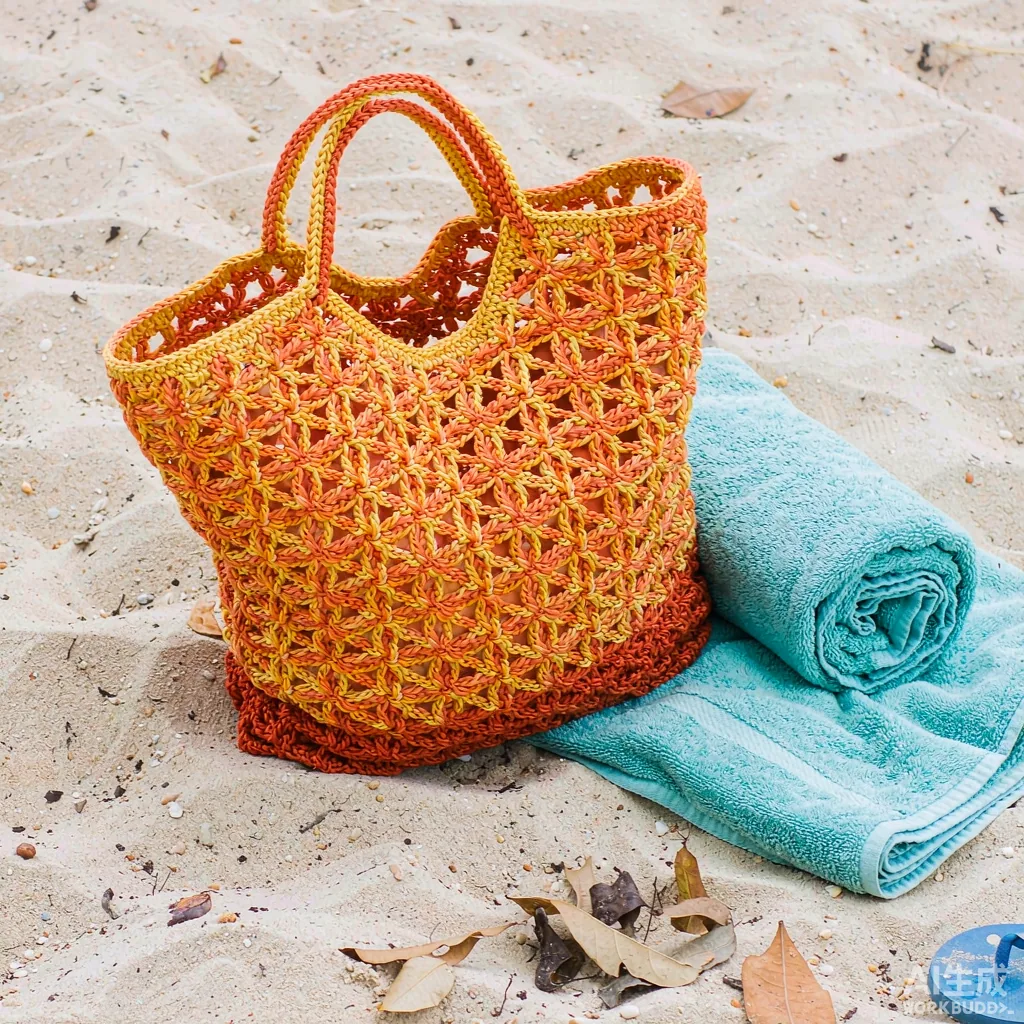
Base and lower body
Channelled PET at E14, 150D/48f, wicking 120 mm in 30 minutes, permanent geometry.
Mesh ventilation zone
E14 mesh at 60-70 percent open area placed directly over the wet area, not at the top.
Liner next to contents
Channelled hydrophobic liner, the single most effective change against odour build-up.
Upper body and mouth
Standard yarn, no moisture function. Water never reaches this zone in normal use.
Step 6: Test Method and Acceptance Numbers
Two tests cover moisture behaviour, and a specification should name both. AATCC 195 measures liquid moisture management on a fabric, and AATCC 79 measures how fast a drop is absorbed. Wicking height by a vertical strip test is a useful third.
AATCC 195 reports several indices rather than one number, so the clause has to say which indices are binding. The usual commercial floor for a bag body is an overall moisture management capability in the upper half of the scale, a one-way transport index above 100, and a wetting time under 10 seconds on the face that meets the water.
Durability has to be tested as well, because the finish route decays. Specify AATCC 195 after 5 and after 20 wash cycles, and require the result at 20 cycles to stay above the same floor. That single line is what separates a permanent cross-section from a finish that disappears.
| Property | Test | Fresh | After 20 washes | Acceptance |
|---|---|---|---|---|
| Wetting time, face | AATCC 195 | 3 to 6 seconds | 4 to 8 seconds | Under 10 seconds |
| One-way transport | AATCC 195 | 150 to 250 | 140 to 230 | Above 100 |
| Absorbency, drop | AATCC 79 | 1 to 3 seconds | 3 to 6 seconds | Under 8 seconds |
| Vertical wicking | Strip, 30 min | 110 to 130 mm | 105 to 125 mm | Above 90 mm |
| Drying time | Gravimetric | 35 to 40 minutes | 38 to 45 minutes | Under 60 minutes |
Where Moisture Management Actually Sells Bags
Four bag categories carry a genuine moisture requirement, and in each one the function is part of the reason the product is bought. Outside those four, moisture management is a spec line with no commercial return.
Gym and swim bags are the first, and the requirement is fast drying plus odour control. Shoe bags are the second, where the base is the wet zone and a mesh panel is visible product language. Cooler and lunch bags are the third, where condensation rather than immersion is the issue and a moderate wicking figure is enough.
Laundry and wet-dry bags are the fourth, and they are the one case where the barrier route is right: the wet compartment needs a welded liner and the dry compartment needs a hydrophobic knit. Mixing the two in one bag is the clearest test of whether a specification has worked the decision order properly.
Durability: What Survives Twenty Washes
The durability question decides between the two routes in Step 3, and it is worth stating in numbers. A channelled cross-section is geometry: it survives washing, abrasion and heat setting essentially unchanged.
A hydrophilic finish decays roughly exponentially. Expect about 80 percent of the original effect after 5 washes, near 50 percent after 10, and under 30 percent after 20. On a bag washed weekly that means the function is gone inside five months.
Heat setting interacts with both routes. Setting a channelled PET panel at 180-190 °C is safe and stabilises the geometry. The same temperature degrades a hydrophilic finish noticeably, so a finished panel that is set hard will start with a lower performance than the swatch suggested.
What Moisture Function Does to Cost, Weight and the Programme
A channelled yarn carries a premium of roughly 10-14 percent over a standard round-section yarn of the same count. Applied to the whole shell that is a significant number; applied to the wet zones only it is about 5 percent on yarn cost.
Weight is unaffected, because the cross-section changes filament shape rather than mass. A mesh zone actually reduces weight slightly, typically 15-20 g/m² against the solid structure it replaces, which partly offsets the yarn premium.
Programme terms do not change. MOQ stays at 100 pcs per style and colourway, sampling runs 7 working days and bulk runs 30 days on FOB Xiamen terms. A non-stock channelled count adds yarn lead time, so the first programme is better served by a stock denier.
A Worked Spec for a Gym Bag Body
Below is a complete specification that has run at 100 pcs and cleared final inspection at AQL 2.5. Copy it and change the count, the gauge and the zone percentages to fit your programme.
- Style
- Gym bag, 450 x 300 x 220 mm
- Body yarn, lower zone
- 150D/48f channelled recycled PET, four-channel section
- Body yarn, upper zone
- 150D/48f standard recycled PET
- Liner
- 100D/36f channelled PET at E14
- Ventilation
- E14 mesh, 60 to 70 percent open area, over the wet zone
- Gauge
- E14 body and mesh, E7 base
- Moisture test
- AATCC 195, wetting under 10 s, one-way transport above 100
- Durability
- AATCC 195 repeated after 20 washes, floor unchanged
- Inspection
- AQL 2.5 under ISO 2859-1
- Commercial
- 100 pcs per colourway, 7 working days sampling, 30 days bulk, FOB Xiamen
Checklist Before You Specify a Moisture Function
Six checks, in the decision order. Each one closes a specific way a moisture specification fails in the field rather than in the lab.
- State the direction: is water leaving the bag or being contained? Containment needs a liner, not a yarn.
- Check moisture regain before wicking: under 1 percent for a bag that must feel dry when damp.
- Choose the permanent cross-section unless the bag will never be washed.
- Place the function in the base and lower body only, roughly 40 percent of the shell.
- Add a mesh or open structure over the wet zone, because wicking without airflow only moves water to the surface.
- Test AATCC 195 fresh and after 20 washes, and hold the same floor at both points.
Send the bag type and what gets wet in it
Share the bag style, the wet zone, the wash frequency and the drying target. A 100 pcs trial runs in 7 working days and returns AATCC 195 results fresh and after 20 washes before bulk is quoted.
Frequently Asked Questions
What is moisture management yarn?
A yarn engineered to move liquid water along the filament surface rather than absorb it. The two routes are a channelled cross-section, which is permanent geometry giving 110 to 130 mm of wicking in 30 minutes, and a hydrophilic finish, which decays with washing. Bags should use the cross-section.
Why does moisture regain matter more than wicking?
Regain predicts how the bag feels when damp. Polyester at 0.4 percent holds water between filaments and feels dry within minutes; nylon at 4 percent absorbs into the polymer and stays clammy for an hour. A high wicking figure on a high-regain fibre still leaves a wet-feeling bag.
Which fibre dries fastest for a gym bag?
Polypropylene is fastest at 25 to 30 minutes but abrades poorly at about 12,000 Martindale cycles. Polyester is the practical answer at 35 to 40 minutes with 25,000 cycles. Nylon and cotton are slower, at 60 to 80 and 90 to 120 minutes respectively.
Can a knitted bag be made waterproof with yarn choice?
No. A knitted structure is inherently permeable and no yarn makes it watertight. Where water has to be contained, specify a welded TPU liner or a laminated membrane inside the wet zone and let the knit provide structure and abrasion resistance.
How long does a hydrophilic finish last?
Roughly 80 percent of the original effect after 5 washes, about 50 percent after 10, and under 30 percent after 20. On a bag washed weekly the function is gone within five months. That is why a channelled cross-section is specified whenever the bag will be washed.
What is AATCC 195 and what floor should a bag meet?
It is the liquid moisture management test, reporting several indices rather than one number. The usual commercial floor for a bag body is wetting time under 10 seconds on the contact face, one-way transport index above 100, and overall capability in the upper half of the scale.
Does a moisture function need to cover the whole bag?
No. Water reaches the base and the lower body, so those zones carry the function and the upper body uses standard yarn. That is roughly 40 percent of the shell and keeps the yarn premium near 5 percent instead of 12 percent.
Why add a mesh panel if the yarn already wicks?
Wicking moves water to the surface; evaporation removes it and needs airflow. A mesh zone at 60 to 70 percent open area at E14 cut the drying time of a saturated panel from about 40 minutes to 22 to 26 minutes under the same conditions.
Does a channelled yarn change the weight of the bag?
No. The cross-section changes filament shape, not mass, so grams per square metre are unchanged. A mesh zone actually reduces weight slightly, typically 15 to 20 g/m² against the solid structure it replaces, which partly offsets the yarn premium.
How much does a moisture-management yarn cost?
About 10 to 14 percent over a standard round-section yarn of the same count. Applied only to the wet zones the effect on total yarn cost is roughly 5 percent, and the mesh substitution recovers some of that in weight.
Does heat setting damage moisture performance?
It damages a hydrophilic finish noticeably but not a channelled cross-section. Setting a channelled PET panel at 180 to 190 °C is safe and stabilises the geometry. A finish-treated panel set at the same temperature starts below the swatch figure.
Is moisture management relevant to a cooler bag?
Yes, but the requirement is milder. Condensation rather than immersion is the issue, so a moderate wicking figure is enough and a full mesh zone is usually unnecessary. The important element is a liner that does not hold water against the contents.
How is moisture performance verified on a bulk lot?
One specimen per colour per lot, tested to AATCC 195 and AATCC 79, conditioned under ISO 139 before testing. Where a finish is used, repeat after 20 wash cycles. Final inspection of the sewn bag runs at AQL 2.5 under ISO 2859-1.
Can a moisture yarn also be recycled?
Yes. Channelled recycled PET is a standard product and carries a Global Recycled Standard claim, with the spinner's documentation carried through texturing and knitting. Keep the transaction certificate against the bulk record so the claim can be evidenced at inspection.
How long does a moisture-function sample take?
Sampling runs 7 working days from a confirmed spec at 100 pcs per style and colourway, which covers the knit trial and the AATCC 195 test. Bulk then runs 30 days. A non-stock channelled count adds yarn lead time before knitting can start.
Should the liner of a gym bag be hydrophobic?
Yes, and it is the single most effective change against odour. A hydrophobic liner moves water away from the contents and into the shell, while an absorbent liner holds it against them. Where cost allows, a channelled liner is worth the premium.
People Also Ask
Why does my gym bag still smell after drying?
Usually because the liner or the shell absorbed water rather than moving it. A fibre at 4 percent regain or more holds moisture in the polymer, which supports bacterial growth. A hydrophobic channelled liner moves water into the shell where a mesh panel can evaporate it.
Is polypropylene better than polyester for wet bags?
It dries faster, 25 to 30 minutes against 35 to 40, and absorbs nothing. But it reaches only about 12,000 Martindale cycles and melts at 165 °C, so it suits a light-use bag rather than one that will be dragged around a gym.
Does a water-repellent finish conflict with wicking?
Yes, on the same face. A repellent makes water bead and a wicking yarn makes it spread, and the two cancel. The resolution is zoning: a repellent outer face and a wicking inner face, separated by the fabric thickness or by plating.
What is one-way transport in AATCC 195?
It measures the difference in liquid movement between the two faces of a fabric, indicating whether water moves from the skin side to the outer side rather than pooling. A value above 100 means net movement outward, which is what a bag body needs.
Can a spacer knit replace a mesh panel?
Often yes, and it looks less technical. A spacer with a 3 to 4 mm gap holds an air layer against the wet zone and achieves part of the drying gain without an open mesh. It is the route used on premium gym and shoe bags.
Sources and further reading
Every figure on this page is either our own programme data or attributed below. Open the originals before you write them into a specification.
- AATCC test methodsAATCC AATCC 195 liquid moisture management and AATCC 79 absorbency, the two tests named for moisture bag yarns.
- ISO 139:2005 — Textiles, standard atmospheres for conditioning and testingISO Conditioning at 20 °C and 65 percent RH required before wicking and drying-rate measurements.
- Recycled Claim Standard and Global Recycled StandardTextile Exchange Documentation for channelled recycled PET yarns used in moisture-management bag bodies.
- ISO 12947-2:2016 — Textiles, determination of abrasion resistance by the Martindale methodISO Abrasion check needed because the fastest-drying fibres are not the most abrasion-resistant.
- OEKO-TEX STANDARD 100OEKO-TEX Restricted-substance screening for hydrophilic finishes applied to bag yarns and panels.