Knitted Bag Packaging Options: Comparing the Polybag, Kraft Sleeve, Gift Box, Header Card and Bulk Pack for Cost, Protection and Shelf Impact
Which packaging suits a knitted bag? Six options cover the range, from a 40 micron polybag at a unit cost near USD 0.18 through a kraft sleeve, a header card and a printed gift box at around USD 1.40, to a bulk pack for a promotional programme. The right choice follows from the sales channel rather than the bag: protection and freight efficiency dominate online, shelf presence dominates retail, and unit cost dominates gifting and promotions.
What Packaging Has to Do on a Knit Bag
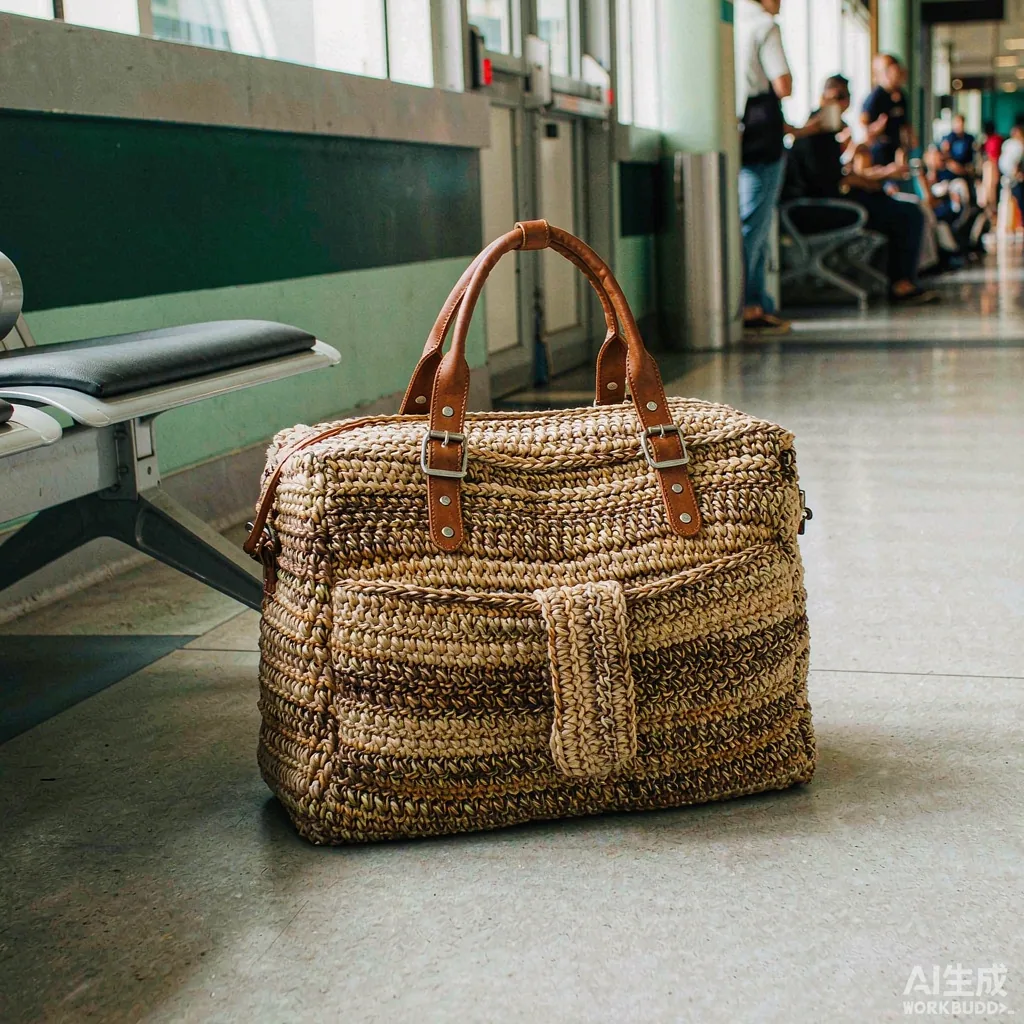
Packaging on a knitted bag does four jobs and most specifications only name one. It protects the bag in transit, it presents the bag at the point of sale, it carries the compliance marking the destination requires, and it sets how many units fit in a container. A pack chosen against one of those four usually underperforms on the other three.
The knitted structure changes the weighting. A knit compresses and creases in a way a structured bag does not, and it recovers slowly, so a bag packed flat under compression for six weeks arrives needing more than unpacking. That makes the pack a presentation decision as much as a protection decision, and it is why loose bulk packing of knitted totes produces more presentation complaints than any other format.
The fourth job, container efficiency, is the one buyers discover last and feel most. A pack that adds 8 mm of board per unit can reduce the unit count in a 40 foot high-cube container by several percent, and on a programme of 20,000 pieces that difference is freight on a meaningful number of units that did not ship.
There is a fifth job that only appears on some programmes, and it is worth naming because it is the one that turns into a documentation problem rather than a returns problem. The pack is where several destination markets require information to appear: fibre content, country of origin, a care symbol, and in some cases a warning. When that information is missing, the goods are held rather than returned, and the cost is measured in days at port rather than in units.
The Six Options Side by Side
Six formats cover essentially every knitted bag programme. The table compares them on the three axes that decide: unit cost, protection and shelf presence, with the channel each suits best. Costs are indicative and move with board and resin prices, but the ranking between options is stable.
| Option | Typical specification | Indicative unit cost | Best channel |
|---|---|---|---|
| Plain polybag | 40 micron LDPE, self-seal or tape, vent holes | From about USD 0.18 | Online fulfilment and any programme where the outer carton is the shipping unit |
| Printed polybag | 50 micron LDPE, one to four colour print, warning text | From about USD 0.34 plus a plate charge | Retail where the bag stays bagged on the fixture |
| Kraft sleeve | 250 gsm kraft board wrap with a printed band | From about USD 0.46 | Retail and gifting where the material story matters |
| Header card | 300 gsm card, euro slot, stapled or taped to the bag | From about USD 0.28 | Hanging fixture programmes and promotional displays |
| Gift box | 350 gsm board, printed, with an inner wrap | From about USD 1.40 | Premium retail, seasonal gifting and corporate programmes |
| Bulk pack | Units interleaved in a carton, no individual pack | Lowest, but with presentation risk | Promotional programmes delivered straight to an event or a warehouse |
Two entries in that table are frequently confused. A plain polybag and a printed polybag differ by more than ink: the printed version generally moves to 50 micron to hold registration and carry the warning text legibly, and it brings a plate charge and a plate lead time of around 10 days that the plain version does not.
Unit Cost and Freight: Where the Trade-off Sits
The trade-off between pack cost and freight is the one buyers model least and it is genuinely simple. A more substantial pack costs more per unit and it also occupies more volume per unit, so it costs twice: once in the pack and once in the units that no longer fit the container.
Worked on a 40 foot high-cube container at roughly 67 cubic metres of usable volume, a tote that packs 60 units per carton in a polybag might pack 48 in a gift box. On a 20,000 piece programme that is a difference of about 70 cartons, and the freight attributable to that difference can exceed the entire incremental pack cost depending on the route.
The counterweight is that a premium pack often allows a higher retail price, and on a gift programme it is frequently the reason the product sells at all. The right way to hold both is to model the landed cost per unit including freight rather than to compare pack prices in isolation, which is what most buyers do and why the decision sometimes goes the wrong way.
Protection: What Each Option Actually Prevents
Protection is often discussed as a single idea when it is three: abrasion between units, moisture in transit, and compression creasing. Different formats address different ones, and a pack chosen for the wrong failure mode leaves the bag exposed to the one that will actually happen.
Unit-to-unit abrasion
Polybag and gift box both prevent it. Bulk pack does not, and surface abrasion between bare knitted panels is visible on arrival.
Moisture in transit
A sealed polybag protects the unit; a kraft sleeve does not. On sea freight the carton and desiccant matter more than the unit pack.
Compression creasing
A box prevents it structurally. No soft pack does. For a knit, which recovers slowly, this is the most common presentation complaint.
Dust and handling soil
Any closed pack prevents it. A header card leaves most of the bag exposed and is the weakest option on this axis.
Hardware marking
A metal puller or ring can imprint an adjacent bag. Interleaving tissue or a polybag prevents it, and bulk packing does not.
What packing cannot fix
A bag folded badly at pack-out creases whatever it is packed in. Pack-out method matters as much as the pack format chosen.
The last card deserves emphasis. Packaging decisions are usually made on format and rarely on pack-out method, and on a knitted bag the method is the larger variable. A consistent fold, a stated pack-out rate of around 900 pieces per hour, and one reference photograph of the correct fold do more for presentation than moving from a polybag to a sleeve.
Retail Readiness and Brand Presence
Retail buyers specify packaging more tightly than any other channel, because the pack is what the shopper sees first and what the shelf fixture has to accommodate. Four requirements recur: a barcode that scans on the pack, a hanging or standing format that suits the fixture, the compliance marking legibly present, and the brand visible without unpacking.
The barcode is the one that causes the most rework. It should be printed on the pack rather than on a hangtag that can rotate, at a size the retailer's scanner reads first time, and verified by an actual scan on a sample of units before packing rather than by checking the artwork on screen.
Brand presence is where a kraft sleeve or a gift box earns its cost. A polybag shows the bag and little else; a sleeve carries a printed band with the brand, the material story and the care information in one place, at a fraction of a box's cost and volume. For most knit programmes that is the best balance available.
Choosing by Channel
Channel is the fastest way to make the decision, because each channel has a dominant constraint that narrows the field to two options before any cost comparison is needed. The parameters below set the working defaults by channel, and they are the figures to start a conversation from rather than to finish one with.
- Online fulfilment
- 40 micron plain polybag, self-seal, barcode on the pack, carton as the shipping unit
- Retail hanging fixture
- 300 gsm header card with euro slot, barcode printed on the card
- Retail shelf, mid-market
- 250 gsm kraft sleeve, printed one or two colours, barcode on the sleeve
- Premium retail and gifting
- 350 gsm printed gift box with inner wrap, barcode on the box
- Promotional and event
- Bulk pack interleaved with tissue, carton count maximised
- Warning text requirement
- Printed on the polybag at the text height specified for the destination market
- Pack-out rate
- Around 900 pieces per hour for a standard fold and polybag combination
- Carton maximum
- 15 kg for manual handling, unless the destination accepts heavier units
- Container planning
- About 67 cubic metres usable in a 40 foot high-cube container
- Plate lead time
- Around 10 days for printed polybags, sleeves and boxes, booked in parallel with sampling
The plate lead time in the last row is the one that catches programmes out. Printed packaging needs artwork approved, a plate made and a proof signed, and running that sequence after sampling rather than alongside it is how a 30 day bulk window slips. Booking packaging artwork at the same time as the first sample is knitted keeps both on the same critical path.
Sustainability and Material Declarations
Packaging is increasingly part of the material declaration rather than separate from it, and two requirements now appear in most European tenders. The first is recycled content, commonly specified as a minimum percentage of post-consumer material in the pack. The second is fibre sourcing, where paper and board are expected to carry chain-of-custody certification.
The EU packaging rules set the direction of travel here, and a buyer planning a programme now should specify packaging that will still comply in a few seasons rather than the minimum acceptable today. In practice that means a recycled content figure on the polybag, FSC or equivalent chain of custody on any paper or board, and a declaration of both on the specification.
There is a genuine tension with protection, because a thinner pack uses less material and protects less. The honest resolution is to optimize the pack for the actual transit mode rather than for a theoretical worst case: a programme shipped by sea in a sealed carton with desiccant does not need the same polybag thickness as one shipped as individual parcels to consumers.
One practical point closes the sustainability question. A recycled polybag and a virgin polybag of the same thickness do not always behave identically on a packing line, particularly on seal strength and on how the film behaves under a heat sealer. Where a programme changes to recycled film, run a short pack-out trial before committing, because a seal failure discovered at goods-in affects the whole lot rather than a few units.
Specifying Packaging in the Order
A packaging specification needs seven fields and most orders carry three. Seven fields: format, material and thickness or grammage, print and colour count, dimensions, packing method and units per carton, barcode and marking, and the compliance declarations. Missing any of the last three produces a pack that arrives and then has to be discussed.
The packaging line for an order
- Each unit in a 40 micron LDPE self-seal polybag with four vent holes and warning text printed at the specified height.
- folded to the approved reference photograph.
- 60 units per carton in a 3-ply 32 ECT carton not exceeding 15 kg.
- barcode printed on the polybag and verified by scan on a sample of units.
- recycled content and chain of custody declared on the specification.
Choose packaging for a knit bag programme
Send the bag type, sales channel and destination. We will return a recommended format with material, thickness, print and units per carton, booked in parallel with sampling at 7 working days, and quote FOB Xiamen at 100 pcs per style and colourway with 30 days bulk. Start on the contact page.
Frequently Asked Questions
What are the main packaging options for a knitted bag?
Six: a plain polybag, a printed polybag, a kraft sleeve, a header card, a printed gift box and a bulk pack. They range from around USD 0.18 to USD 1.40 per unit and each suits a different sales channel.
Which packaging is best for online fulfilment?
A 40 micron plain polybag with a self-seal and vent holes, with the outer carton acting as the shipping unit. It protects against abrasion and dust at the lowest unit cost and occupies the least volume per unit in the container.
What packaging suits a retail shelf?
A 250 gsm kraft sleeve for mid-market positions and a 350 gsm printed box for premium ones. A sleeve carries the brand, the material story and care information in one place at a fraction of a box's cost and volume.
How much does knitted bag packaging cost per unit?
Indicatively from about USD 0.18 for a plain polybag, USD 0.34 plus a plate charge for a printed one, USD 0.28 for a header card, USD 0.46 for a kraft sleeve and USD 1.40 for a gift box. Resin and board prices move these figures.
Does packaging affect how many units fit in a container?
Yes, and materially. A tote packing 60 per carton in a polybag might pack 48 in a gift box, which on 20,000 pieces is roughly 70 extra cartons and freight on units that did not ship.
What protection does packaging actually provide?
Three different things: unit-to-unit abrasion, which a polybag or box prevents; moisture in transit, which a sealed polybag prevents and a sleeve does not; and compression creasing, which only a box prevents structurally.
Why do knitted bags arrive creased?
A knit compresses and recovers slowly, so a bag packed flat under compression for six weeks needs more than unpacking. Pack-out method matters as much as format: a consistent fold and a reference photograph help more than a thicker pack.
Should the barcode be on the pack or on a hangtag?
On the pack. A hangtag rotates and hides the barcode, and the failure is discovered by a retailer's scanner rather than at packing. Verify by scanning a sample of finished units rather than by checking artwork on screen.
What recycled content should packaging specify?
A stated minimum percentage of post-consumer recycled material in the polybag, and chain-of-custody certification such as FSC on any paper or board. Both should be declared on the specification rather than assumed.
How long does printed packaging take?
Around 10 days for plates and proofs once artwork is approved, which is why it is booked in parallel with sampling. Running the sequence after sampling rather than alongside it is a common cause of a slipped bulk window.
What is a bulk pack and when is it appropriate?
Units interleaved in a carton with no individual pack. It suits promotional programmes going straight to an event or a warehouse, where presentation at the unit level does not matter. It is the weakest option on abrasion and creasing.
What should a packaging specification contain?
Seven fields: format, material with thickness or grammage, print and colour count, dimensions, packing method with units per carton, barcode and marking, and the compliance declarations. Most orders carry the first three and omit the rest.
Does packaging need warning text?
Where the destination market requires it, yes, printed on the polybag at a specified text height and in the required languages. This is a compliance item and a missing warning can hold goods at customs entry rather than cause a return.
Can a thinner pack still protect adequately?
Often yes, when matched to the transit mode. A sea shipment in a sealed carton with desiccant needs less polybag thickness than individual parcels shipped directly to consumers. Specify for the actual route rather than a theoretical worst case.
People Also Ask
What is the best packaging for a knitted bag?
It depends on the channel. A 40 micron polybag suits online fulfilment, a header card suits hanging fixtures, a kraft sleeve suits shelf retail, and a printed box suits premium gifting.
How much does bag packaging cost per unit?
Indicatively from about USD 0.18 for a plain polybag to around USD 1.40 for a printed 350 gsm gift box, with sleeves and header cards in between.
Does packaging affect container capacity?
Yes. A bulkier pack reduces units per carton, so on a 20,000 piece programme the freight on the shortfall can exceed the whole incremental pack cost.
Why do knitted bags arrive creased?
A knit compresses and recovers slowly. Pack-out method matters more than pack thickness: a consistent fold and a reference photograph reduce creasing more than a heavier pack.
Should packaging carry recycled content?
Most European tenders now ask for it. Specify a minimum post-consumer percentage in the polybag and chain-of-custody certification such as FSC on any board or paper.
Sources and further reading
Every figure on this page is either our own programme data or attributed below. Open the originals before you write them into a specification.
- Directive (EU) 2018/851 on packaging and packaging wasteEuropean Union The packaging waste rules driving recycled content and material declarations in European tenders.
- Ecodesign for Sustainable Products RegulationEuropean Commission The framework behind durability, recyclability and product information requirements affecting packaging choices.
- Global Recycled StandardTextile Exchange The chain-of-custody standard used to substantiate recycled content claims on packaging and product.
- ISTA transport packaging test proceduresInternational Safe Transit Association The test procedures used to confirm that a chosen pack survives the intended distribution cycle.