Knitted Bag Margin Structure: Five Decisions That Decide Where the Profit Actually Sits
Where does margin actually sit in a knitted bag programme? It sits in five decisions taken before quotation rather than in the unit figure argued afterwards: whether the body is new or carried over, how many colourways the range justifies, what GSM the load case requires, whether the number quoted is FOB or landed, and which channel the retail multiple comes from. This article walks the five in the order they have to be taken, with the arithmetic behind each.
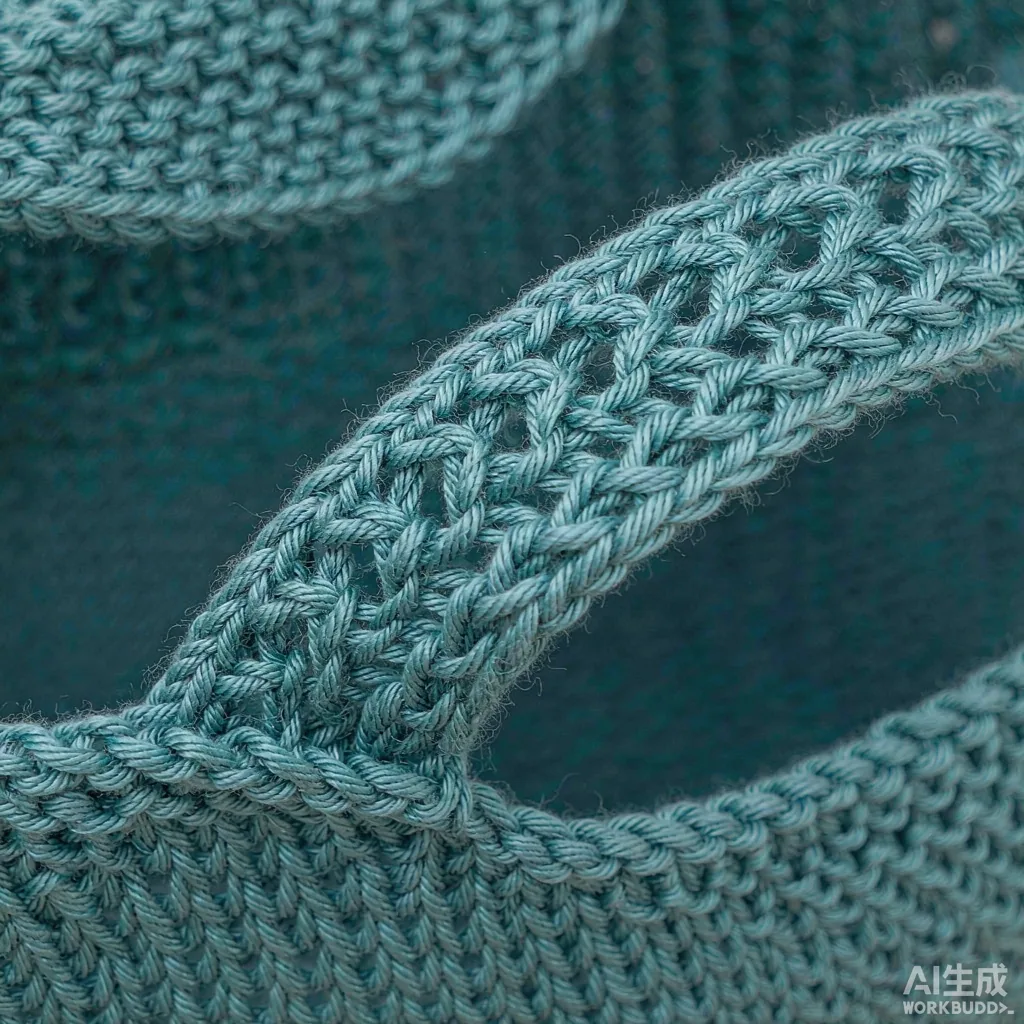
Start Here: The Five Decisions, in Order
Margin in a knit programme is decided in this order: body carried over or new, colourway count, GSM and yarn bill, FOB versus landed, then channel multiple, and reversing the order is why most margin reviews fail.
The sequence matters because each decision constrains the next. Choosing GSM after quotation fixes the largest component of the unit figure without anyone having looked at it. Choosing colourway count after range sign-off commits the exposure before the multiple that would justify it is known. A margin review that begins with the unit price is starting at decision five and discovering that decisions one to four already spent the available room.
None of these five need sophisticated tooling. Each is a decision with arithmetic attached, and the arithmetic is small enough to run in a single sheet. What they do need is to be taken once, in order, before the range is briefed, because all five become expensive to revisit afterwards.
Decision One: New Body or Carried-Over Body
The first margin decision is whether the programme pays for a new body at all, because development cost attaches to the style and is recovered only over the seasons that style survives.
A carried-over silhouette in a new shade reads as new on the floor and carries no new programming, which makes it the single most effective margin move available to most programmes. The counterargument is floor fatigue, and it is real, but it is better answered with shade than with shape. A sensible target is about 40% of styles surviving into a following season, which spreads each development cost across more than one range and leaves the remaining 60% to carry genuine newness.
Where a new body genuinely is needed, the cost should be treated as an investment with a planned payback rather than as an expense to minimise. The relevant question is not what the development costs but how many seasons and how many pieces it will be spread across. Answer that honestly and the decision is easy; skip it and a programme can find itself paying full development on every style every season and never understanding where the money went.
Decision Two: How Many Colourways the Range Justifies
Colourway count is a margin decision rather than a merchandising one, because each additional colourway adds a full set-up and a full minimum of 100 pieces while adding less incremental revenue than most plans assume.
The arithmetic is unflattering to wide ranges. Suppose a range of four styles is planned at two colourways each, which is eight style-and-colourway pairs and 800 pieces at the minimum. Adding a third colourway across all four styles brings the pair count to twelve and the commitment to 1,200 pieces. The additional 400 pieces of commitment buys breadth, and it buys it at full cost while the additional revenue is shared across substitute options rather than new ones.
The honest test for an extra colourway is cannibalisation. If the third colourway mostly takes sales that the second would have made, it has added commitment without adding volume. Programme data usually shows this quickly: volumes per style stay roughly flat while total pieces committed rise. Where that pattern appears, removing colourways improves margin immediately and often improves the floor too, because depth in the popular shade reads better than a thin row of alternatives.
| Range shape | Pairs committed | Pieces at minimum | What it does to margin |
|---|---|---|---|
| 4 styles, 2 colourways | 8 | 800 pcs | Reference case: breadth is adequate, commitment is contained |
| 4 styles, 3 colourways | 12 | 1,200 pcs | 400 extra pieces of commitment for largely substituting revenue |
| 4 styles, 4 colourways | 16 | 1,600 pcs | Commitment doubles against the reference for the thinnest gains |
| 3 styles, 3 colourways | 9 | 900 pcs | Usually better than four styles at four colours on the same fixture |
| 6 styles, 2 colourways | 12 | 1,200 pcs | Same commitment as the second row, but wider choice where it shows |
Decision Three: GSM and the Yarn Bill
GSM is the largest single driver of the unit figure on a knitted body, since yarn is bought by weight, and specifications set from appearance rather than from load case routinely absorb margin that nobody accounted for.
The quantification is simple and worth doing once. A body specified at 340 g/m squared carries roughly 13% more yarn mass than one at 300 g/m squared, and that additional mass runs straight through to the invoice. Moving the same design to 420 g/m squared adds about 40% against the 300 baseline. Since yarn is the largest component of the unit figure, those percentages translate into the unit figure more directly than any labour conversation does.
The remedy is to let the load case write the number before anybody looks at a mood board. Sum the realistic contents, add abrasion exposure, and pick the GSM band from there: around 220 to 260 g/m squared for light carry, 300 to 340 for everyday use, 380 to 420 for structured heavy carry. Once GSM is fixed, gauge follows, and asking for the heavy look at a fine gauge produces a specification that is slow to knit and still not heavy enough.
- Light carry band
- About 220 to 260 g/m squared at E12 or E14
- Everyday band
- About 300 to 340 g/m squared at E12
- Structured heavy band
- About 380 to 420 g/m squared at E7 in 600D
- Yarn mass effect
- 340 g/m squared carries about 13% more yarn than 300; 420 about 40% more
- Tolerance to state
- GSM plus or minus 5%, written into the technical pack
- Reference unit figure
- USD 4.80 FOB Xiamen for a mid-weight commercial tote body
Decision Four: Whether the Number Is FOB or Landed
A margin built on an FOB figure rather than a landed one is not a margin but a hypothesis, because everything after the vessel belongs to the buyer and its size depends on decisions made after the order is placed.
FOB Xiamen covers the goods to the vessel and nothing beyond it, and the [Incoterms rules maintained by the International Chamber of Commerce](https://iccwbo.org/) define that boundary precisely. On top of it sit ocean freight, insurance, duty determined by HS classification, port charges and inland delivery. Each layer varies with mode, volume and destination, which means two buyers receiving identical quotations arrive at different landed figures. Comparing unit prices without comparing landed costs compares two different things.
Duty deserves specific attention because it is a classification question rather than a negotiating one. Similar-looking knitted bags can fall under different tariff headings depending on outer surface material, and the applicable rate follows the heading. Checking it against the relevant schedule before locking the range takes about half an hour and changes the landed figure more reliably than most price conversations do.
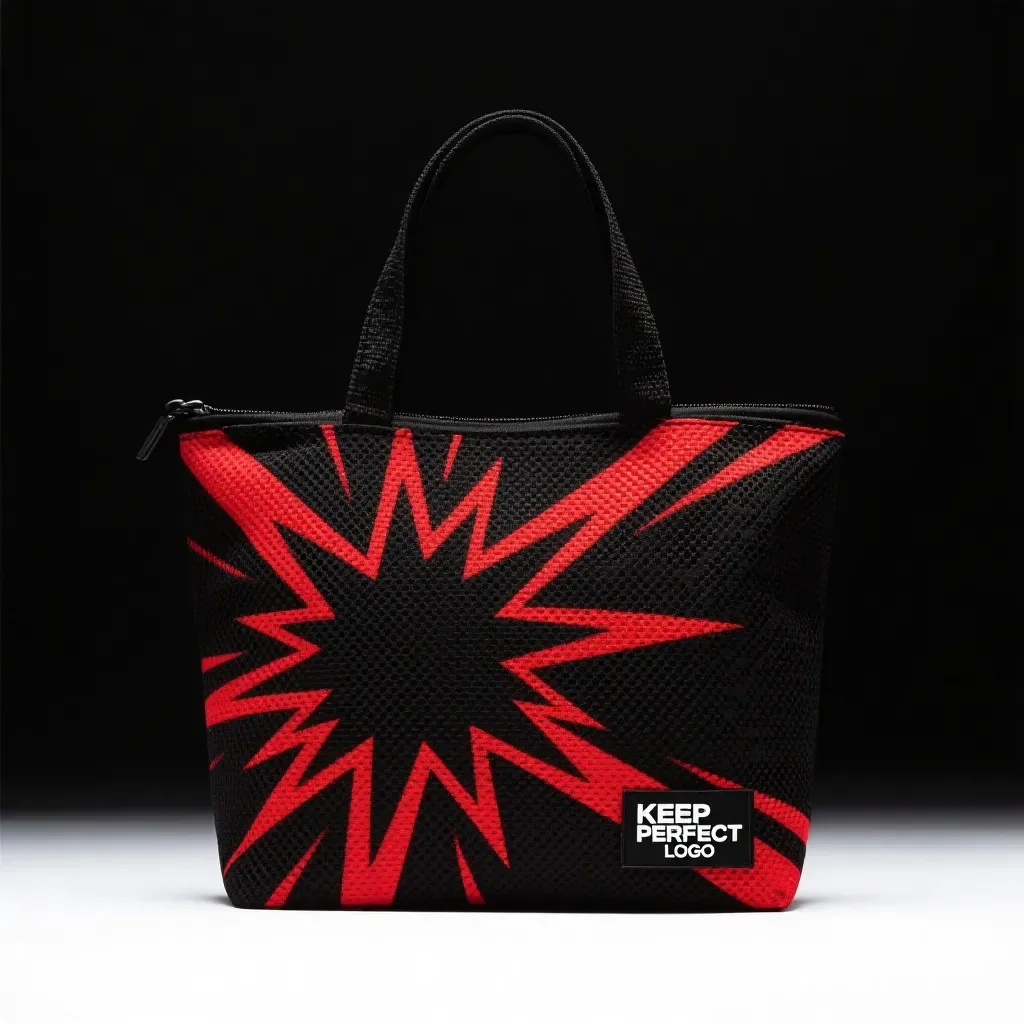
Decision Five: Channel Multiple and Realised Margin
The multiple applied to landed cost depends on channel and positioning rather than being a category constant, and realistic realised margin depends more on sell-through than on the multiple chosen.
This is where planning models most often substitute a convention for a decision. A multiple that works in one channel does not transfer to another, and the differences are large enough to dominate the arithmetic above. The disciplined approach is to fix the landed cost first, apply the multiple the channel genuinely supports, and then test the result against realistic sell-through rather than against perfect sell-through.
Sell-through is the variable that quietly decides realised margin. Each 10% of the range sold at a 40% reduction removes about 4% of planned revenue, since the reduction applies to that share only. A range planned beautifully at full price and then partly reduced can therefore land several points below plan without anything having gone operationally wrong. Modelling a reduction rate at the planning stage rather than discovering it at the end produces a margin that survives contact with the season.
Where Knit Margin Leaks Without Anyone Noticing
Four leaks account for most of the gap between planned and delivered margin in knit: unplanned colourways, unspecified GSM drift, freight mode chosen late, and re-inspection after a failed AQL release.
They share a shape, which is that each is a decision made after the plan rather than inside it. GSM drift happens when the specification says approximately and everyone interprets it upward. Freight mode selected late happens when the calendar was optimistic and air freight becomes the only answer. Re-inspection happens when [AQL 2.5 under ISO 2859-1](https://www.iso.org/standard/85464.html) was treated as a formality rather than as a gate: on a 1,200-piece lot the level II sample is 80 pieces with acceptance at 5 defects and rejection at 6, which is a real threshold.
The countermeasure for all four is the same document discipline that fixed decisions one to three: write the number down at the plan, then compare actuals against it rather than against memory. None of the four requires a better forecast; each requires an agreed figure that somebody checks.
Unplanned colourways
Each one adds a full set-up plus 100 pieces of commitment, often taking sales an existing shade would have made.
GSM drift upward
Yarn is bought by weight and set the unit figure. A specification written loosely reads heavier at quotation every time.
Freight mode decided late
Air freight chosen after the plan absorbs the margin the plan created. Mode belongs in the original calendar.
Re-inspection after failure
A lot released to AQL 2.5 that fails pushes both cash and calendar, and the re-check carries its own cost.
Why Knit Unit Cost Behaves Differently From Sewn Bag Cost
Sewn bag cost falls with labour efficiency and with how tightly panels nest on the cloth, whereas knit cost falls with set-up absorption and rises with yarn mass, which is why the same cost-reduction habits do not transfer between the two.
The practical consequence is that a buyer experienced in sewn bags will look for savings in the wrong places. Negotiating harder, asking for a more efficient nesting plan or proposing a simpler stitch sequence produces modest results on a knitted body, because those are not where the cost sits. The two levers that genuinely move it are quantity per style-and-colourway, which spreads the fixed set-up, and GSM, which sets how much yarn each piece carries. Everything else is second order.
There is a compensating advantage worth mentioning. Because a whole-garment body is knitted near net shape, there is very little offcut to pay for, so the cost structure is unusually transparent: once GSM and quantity are known, the unit figure has very little room to hide surprises. That transparency is what makes the five-decision sequence above work at all, and why programmes that adopt it tend to find the arithmetic more predictable than they expected.
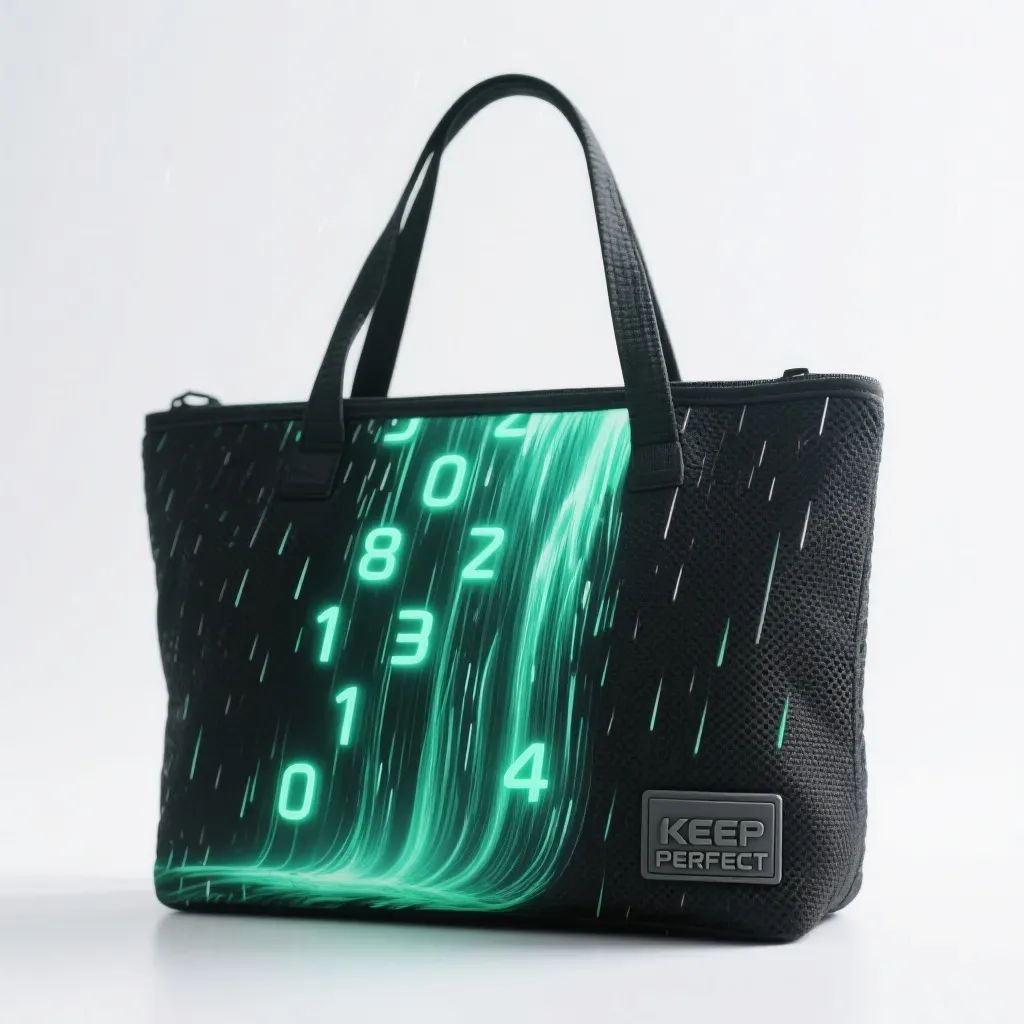
Reading a Weak Margin Line Backwards
Diagnose a weak knit margin by walking the five decisions backwards from the retail multiple to the body choice, because the leak is usually found at whichever decision was skipped rather than at the unit price.
In practice the diagnosis resolves fast. If the multiple is right and landed cost is right but realised margin is short, the problem is sell-through and therefore range shape. If landed cost is above plan while the FOB figure was met, the problem is freight or duty classification. If the FOB figure itself is above plan, the problem is almost always GSM or colourway count, because those are the two inputs that move it most and the two most commonly left unspecified.
There is one structural point worth ending on. Capacity is not usually the constraint on this arithmetic: 7 production lines running about 200,000 pcs per month will absorb a typical brand programme. The constraints are all commitment decisions made inside the buying business, which is good news, because those are the decisions available to change.
Walk the five margin decisions before quoting
Send the range shape, target GSM and destination market. Our knit team will price against MOQ 100 pcs per style and colourway, 7 working days of sampling and 30 days of bulk, then show which decision is moving your unit figure most. Start on the contact page.
Frequently Asked Questions
What is the biggest driver of unit cost on a knitted bag?
Yarn mass, which follows GSM. Knit has very little cutting waste, so the large adjusting variable is weight rather than nesting efficiency. A move from 300 to 420 g/m squared adds roughly 40% to yarn mass per piece.
Why does colourway count affect margin rather than just revenue?
Each colourway carries its own set-up and its own minimum of 100 pieces, so width costs real commitment. Added colourways frequently take sales an existing shade would have made, adding cost without adding total volume.
Should I plan margin on an FOB or a landed figure?
Landed. FOB Xiamen stops at the vessel, after which freight, insurance, duty by HS classification, port charges and delivery all belong to the buyer, and their combined size depends on decisions you make later.
How does HS classification change margins?
Duty rate follows the classification rather than the negotiation, and similar knitted bags can fall under different headings depending on outer surface material. Checking the heading before locking the range protects margin more than most price talks.
How much does reduced selling actually remove from plan?
Each 10% of the range sold at a 40% reduction removes about 4% of planned revenue, because the reduction applies only to that share. Modelling a reduction rate up front produces a margin that survives the season.
What carry-over rate supports healthy knit margins?
About 40% of styles into the following season. Development cost attaches to the style, so spreading it across more than one season is usually the single most effective margin move available.
What GSM band suits an everyday knitted tote?
About 300 to 340 g/m squared at E12. Light carry sits around 220 to 260 at E12 or E14, and structured heavy carry around 380 to 420 at E7 in 600D, with tolerance written into the pack.
What is the reference unit figure used on this site?
USD 4.80 FOB Xiamen for a mid-weight commercial tote body. It is a planning reference for comparing specifications rather than a quotation, since the actual figure depends on GSM, gauge, quantity and destination.
How do failed inspections damage margin?
Release runs to AQL 2.5 under ISO 2859-1, sample 80 on a 1,200-piece lot with acceptance at 5 defects. A failure pushes cash and calendar, and the re-check plus any rework both carry cost.
Is production capacity ever the margin constraint?
Rarely. Seven production lines running about 200,000 pcs per month absorb a typical brand programme. The binding constraints are commitment decisions made inside the buying business, which are also the ones available to change.
How do I diagnose a weak knit margin?
Walk the five decisions backwards from retail multiple to body choice. Short realised margin with correct landed cost points to sell-through; high landed cost with a met FOB figure points to freight or duty.
Does higher quantity always improve knit margins?
It improves unit cost through set-up absorption, but only if the extra pieces sell at the planned rate. Additional volume that ends up reduced can leave realised margin lower than a smaller, better-shaped buy.
People Also Ask
Where does most of the cost in a knitted bag sit?
In the yarn. Knit creates very little cutting waste, so weight rather than nesting efficiency drives the unit figure, which makes GSM the specification worth arguing about most carefully.
Should I compare cost so-called FOB prices between suppliers?
Compare landed instead. Ocean freight, insurance, duty by HS classification and inland delivery all sit above the FOB figure and vary by buyer, making two identical quotations genuinely different.
How do I protect margin when a season sells unevenly?
Model a reduction rate at planning time. Every 10% of the range sold at a 40% reduction removes about 4% of planned revenue, so a realistic allowance produces a margin that survives contact.
Is adding colourways a good way to grow a knit range?
Usually not. Each colourway adds a set-up and 100 pieces of commitment while often substituting for sales an existing shade would have made. Wider choice tends to work better than deeper colour, not vice versa.
What should be checked before locking a range for margin?
Body carried over or new, colourway count, GSM band, HS classification for duty, and the freight mode implied by the calendar. Those five decide more than any subsequent negotiation.
Sources and further reading
Every figure on this page is either our own programme data or attributed below. Open the originals before you write them into a specification.
- ISO 2859-1:2026 — Sampling procedures for inspection by attributesISO Defines the AQL 2.5 gate whose failure costs both cash and calendar in a margin plan.
- ICC and the Incoterms rulesInternational Chamber of Commerce Fixes the FOB boundary that separates a supplier quotation from a landed cost model.
- Harmonized Tariff ScheduleUnited States International Trade Commission Where the HS classification and duty rate above a FOB figure are confirmed.
- OEKO-TEX STANDARD 100OEKO-TEX Testing whose cost belongs in the landed figure rather than being discovered later.
- Textile Exchange standards overviewTextile Exchange Relevant when recycled yarn is specified, which changes both cost and the compliance claim.
- Trade.gov — international trade resourcesUnited States Department of Commerce Reference for the import procedures sitting inside landed cost assumptions.
Margin Is Decided Before Quotation
None of the five decisions is made at the negotiating table. By the time a unit figure is quoted, the body choice, colourway count, GSM band and freight terms have already spent most of the available room, and the multiple belongs to the channel rather than to the programme. Walking the five in order is the whole discipline.
For the figures behind these decisions, see bag programme cost planning and knitted bag demand forecasting, and for the wider market frame see knitted bag market trends.