Knitted Bag Design Protection: Five Layers, the Terms Available in Each Market, and What a Stitch File Is Actually Worth
How does a buyer protect a knitted bag design? In five layers, and the two that cost least cost nothing: a confidentiality agreement signed before any file moves, and a contract clause stating that the stitch file belongs to the buyer. Registration is the third layer and the one with the clearest arithmetic, offering 15 years in the United States and China and up to 25 in the European Union and the United Kingdom. This article prices each layer, sets out the terms available by market, and explains what happens when a design has already been copied.
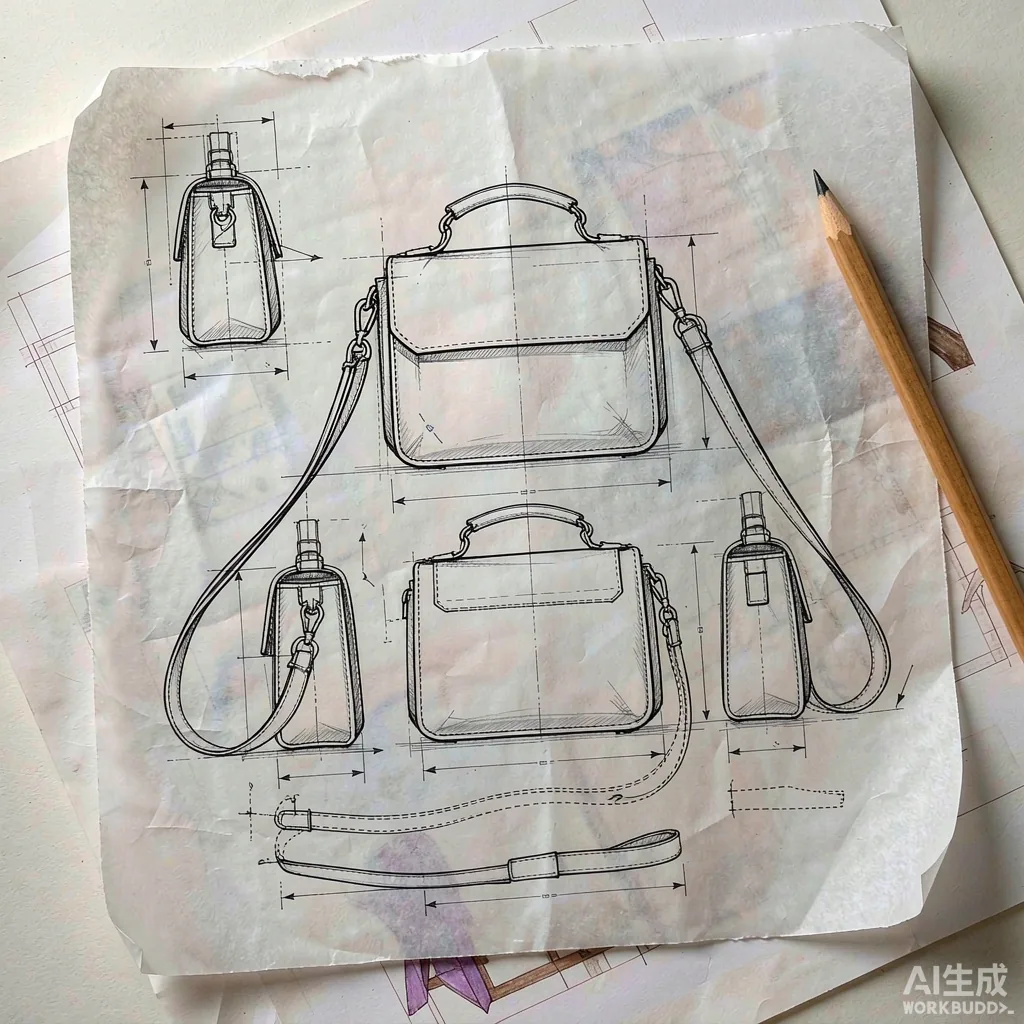
What a Knit Design Is Worth, and What Protecting It Costs
A knitted bag design is worth the development that went into it plus the season it sells, and protecting it costs between nothing and a few hundred dollars: the two layers that matter most are free and the one that costs money is the least used.
The arithmetic is worth stating plainly because it reframes the decision. Developing a knit bag costs a stitch file, a sample round of 7 working days, and often a moulded component or a custom zipper pull with a tooling charge. Against that, a confidentiality agreement costs a signature and a contract clause costs a sentence. Registration costs money and takes time but delivers a term: 15 years from grant for a US design patent, 15 years from filing for a Chinese design patent, and up to 25 years for a registered design in the European Union and the United Kingdom, renewed in five-year blocks.
What makes knit different from most bag categories is where the design lives. On a sewn bag the design is in a pattern and a specification, and a copier has to reverse-engineer both. On a knitted bag the design is a file: gauge, loop length, panel shaping, jacquard placement and colourway sequence are all parameters in it. Hand that file to someone and they can reproduce the product exactly, which is why the first two layers are about control of the file rather than about registration of the appearance.
Layer One: Confidentiality Before Any File Moves
The first layer is a confidentiality agreement signed before the specification, the artwork or the stitch file is shared, and it is the only layer that protects information rather than appearance.
Timing is the whole point. A design disclosed without an agreement in place is disclosed, and in several jurisdictions an unregistered design right depends on the design not having been made public. Signing before the first technical conversation costs nothing and preserves every option downstream. The term should be stated rather than left open: three to five years from the date of disclosure is the normal commercial range for a programme of this kind, and it should cover the specification, the artwork, the volume data and the file itself.
The clause that buyers omit is the return-and-destroy obligation. Without it, an agreement says the recipient must keep information confidential forever without saying what happens to the copies when the programme ends. One sentence requiring the return or destruction of files on request, and confirming that the obligation survives the end of the relationship, is what makes the layer real. Where a buyer is running several programmes, a single agreement covering all of them is simpler than one per style and is worth asking for at the start.
Layer Two: Owning the Stitch File
The second layer is a contract clause stating that the stitch file, the pattern and any development paid for by the buyer are the buyer's property, and that they will be handed over on request in a usable format.
Without that clause, ownership is undefined, and undefined ownership is discovered at the worst moment: when the buyer wants to move the programme or add a second source and finds that the file is not theirs to move. With it, the buyer can take the specification and the file to another production floor and have the same product made, which is also the strongest commercial discipline on price and service that exists. The clause should name the file explicitly rather than referring to intellectual property generally, because a general reference leaves exactly the argument it was meant to prevent.
The handover obligation matters as much as the ownership. A file held in a proprietary machine format is of limited use to another floor, so the clause should state that the buyer can require the parameters in a usable form: gauge, loop length, yarn count, panel dimensions and the jacquard or structure map. Those five parameters plus a specification are enough for another knitting facility to reproduce the product. Asking for them at contract stage is normal; asking for them after a dispute is rarely successful.
- Layer one, confidentiality
- Signed before disclosure; term of about three to five years
- Layer two, file ownership
- Stitch file and development are the buyer's, handed over on request
- Layer three, tooling
- Moulds and custom components owned or amortised, with no reuse for others
- Layer four, registration
- US and China 15 years; EU and UK up to 25; unregistered EU right 3 years
- Layer five, controlled sampling
- Sample quantities and distribution controlled; a 100 pcs minimum helps
- File parameters to request
- Gauge, loop length, yarn count, panel dimensions, structure map
Layer Three: Tooling, Moulds and Physical Assets
The third layer covers physical assets: a moulded zipper pull, a custom buckle, a printed plate or a heat-transfer screen, each of which is a tool that makes copying easy if the buyer does not own it.
A tool is the most portable part of a design. It is also the part with the clearest economics: a component tool has a cost, and whoever owns it controls who can use it. The clause should state that a tool paid for by the buyer is the buyer's property, that it will not be used for another customer's programme, and that it will be released on request. Where the tool cost was amortised into the unit price rather than charged separately, that should be stated too, because otherwise the ownership question is genuinely open.
Minimum quantities interact with this in a useful way. A component tool is usually ordered against a hardware minimum of about 500 to 1,000 pieces, which means a buyer who has paid for a tool has also paid for stock. Recording how much of that stock remains at the end of a season, and where it is held, belongs on the same sheet as the specification. It is a small piece of administration that prevents a recurring argument about whether leftover hardware was the buyer's or the floor's.
Layer Four: Registration, and the Terms Available
The fourth layer is registration, and the terms differ by market: 15 years from grant for a US design patent, 15 years from filing for a Chinese design patent, and up to 25 years for a registered design in the EU and the UK.
Those figures are the reason registration is worth considering on a style expected to run for several seasons, and the reason it is not worth pursuing on a one-season promotional piece. A registered design protects the appearance: the shape, the configuration and the surface pattern. It does not protect the structure or the way the bag is made, which is what the stitch file clause and, in principle, a patent would cover. For most bag programmes the appearance right is the practical one, because a copy is usually a visual copy rather than a structural one.
Filing route matters as much as term. A national filing in each market is straightforward but repetitive; the Hague System administered by WIPO allows one international registration to cover multiple jurisdictions, in five-year terms renewable to a total of 15 years. Unregistered rights also exist and are worth knowing about: in the European Union an unregistered design right runs for three years from the date the design is first made available to the public, which is short but automatic and free. For a fast-moving seasonal style that automatic three years is often the whole commercial life of the product.
| Right | Market | Term |
|---|---|---|
| Design patent, from grant | United States | 15 years for applications filed on or after 13 May 2015 |
| Design patent, from filing | China | 15 years under the amended patent law |
| Registered design | European Union | Renewable in five-year blocks to a maximum of 25 years |
| Registered design | United Kingdom | Renewable in five-year blocks to a maximum of 25 years |
| Unregistered design right | European Union | 3 years from first making available to the public |
| International registration | Hague System, WIPO | Five-year terms renewable to a total of 15 years |
| Confidentiality obligation | Contractual | About three to five years from disclosure, as stated |
Layer Five: Controlling What Leaves the Floor
The fifth layer is operational rather than legal: controlling how many samples exist, who receives them, and what appears in a showroom or a catalogue before the season opens.
This is where a low minimum quantity helps more than anything else. With a 100 pcs per style and colourway minimum, a buyer can produce a small launch quantity, keep sample distribution tight, and still have a commercially viable run. A higher minimum forces a larger first production, which means more units in circulation earlier and more opportunity for the design to be seen before the season. The same applies to sample rounds: three samples sent to three people is controlled, and thirty is not.
Two operational habits close most of the remaining gap. The first is to restrict which styles appear in any shared showroom or open catalogue ahead of the launch, and to say so in writing. The second is to keep the pre-production and the bulk on a schedule that does not leave goods sitting in a shared area: a programme that finishes its 30 days of bulk and then waits three weeks for freight is a programme whose product is visible before it is launched. Neither habit costs anything.
What a Copy Actually Costs, and Where It Appears
A copy costs the buyer the season, not the unit margin: the damage is a launch where the same product is already visible at a lower price, and it appears in three predictable places.
The first is a marketplace listing, which is the most common and the fastest to act on where a registration exists. The second is a trade fair, where a similar style appears on another stand in the same season. The third is a competitor's range the following season, which is the hardest to prove and the most damaging, because it is a season-long problem rather than a listing to be taken down. For all three, what the buyer needs is the same thing: dated evidence that the design existed before the copy, which is a design record, a sample date and if possible a filing date.
That is the practical argument for keeping records rather than for registering everything. A dated sample approval sheet, a dated stitch file and a dated specification together establish priority, and they cost nothing to keep. A registration establishes it more strongly and more publicly. A buyer doing neither has an opinion and no evidence, which is where most design disputes are lost, well before any question of law is reached. Recording the release result at AQL 2.5 alongside the sample sheet completes the dated record. Goods held for freight from FOB Xiamen are the most visible example of a product sitting where it should not be.
Dated sample approval
The twelve recorded figures with a signature and a date establish when the design existed.
Dated stitch file
Gauge, loop length, count and structure map, held with the approval sheet.
Registration
A filing date in the market where the copy appears; 15 or up to 25 years of term.
Controlled sampling
A 100 pcs minimum lets the launch quantity stay small and the pre-season exposure stay low.
What to Do When a Design Has Already Been Copied
When a copy appears, the response order is fixed: gather dated evidence first, check whether a right exists in that market second, and only then decide whether the cost of action is proportionate to the season at stake.
Gathering evidence first matters because it is the step that determines whether anything else is worth doing. A dated approval sheet, a sample with a delivery record and a stitch file with a creation date usually establish that the design predates the copy by months. If a registration exists in the market concerned, action is straightforward; if it does not, the remaining options are a marketplace complaint based on the evidence and a commercial conversation with whoever is selling it. Both are worth attempting, and both go better with dates.
Proportionality is the second half of the decision, and it is where buyers overspend. Action against a listing is inexpensive and fast. Action against a competitor's range is slow and expensive, and it should be weighed against the remaining commercial life of the style. For a one-season promotional piece, the honest answer is usually to move on and tighten the process for the next launch. For a style intended to run for several seasons, the same calculation supports a filing and a formal response.
A Protection Checklist by Programme Stage
Protection is a set of actions at four stages rather than one decision at the start: before disclosure, at contract, before bulk, and at launch.
Before disclosure: sign the confidentiality agreement, and date the design record. At contract: state that the stitch file and any paid tooling are the buyer's property and transferable, and confirm the return-and-destroy obligation. Before bulk: decide whether the style justifies a filing in the destination markets, and confirm that sample distribution is controlled. At launch: keep the launch quantity as small as the programme allows, and keep the evidence folder complete. Four stages, and three of the four cost nothing.
The final point is that none of this requires an adversarial posture. A production partner that has coordinated knit bag programmes since 2014 has a commercial interest in keeping a buyer's programme, and a clause stating that the file belongs to the buyer is standard in the category rather than an accusation. The clauses that protect a design are the same clauses that make a second source possible, and both are worth having whether or not a copy ever appears.
Protect your knit design before the file moves
Send the style, the destination markets and the volume per colourway. Our knit team will return our confidentiality and IP position in writing, including stitch file ownership and handover, before any specification is shared. Start on the contact page.
Frequently Asked Questions
How do I protect a knitted bag design?
In five layers: a confidentiality agreement before disclosure, a contract clause giving you the stitch file, tooling ownership, registration in the destination markets, and controlled sample distribution. The first two cost nothing and control the thing that carries the design. It is worth stating in writing before production begins, because it is far harder to agree once the goods exist.
Why does a knit design need more protection than a sewn one?
Because the design lives in a file. Gauge, loop length, panel shaping and structure are parameters rather than drawings, so whoever holds the file can reproduce the product exactly. Registration protects appearance; the file clause protects the means of making it. Record the figure at approval so that inspection and any later run can be measured against it.
When should a confidentiality agreement be signed?
Before the specification, artwork or stitch file is shared. A design disclosed without an agreement in place is disclosed, and several rights depend on the design not having been made public first. Signing costs nothing and preserves every option downstream. Both sides are better served when this is agreed early rather than discovered halfway through the programme.
What term should a confidentiality clause carry?
About three to five years from the date of disclosure, covering the specification, artwork, volume data and the file itself. It should also include a return-or-destroy obligation on request, which is what gives the clause an ending. That is the practical control, and it costs nothing to put in place before the deposit is paid.
Who owns the stitch file for my bag?
The buyer, if they paid for development, and the contract should say so and require handover in a usable format. Name the file explicitly rather than referring to intellectual property in general terms, which leaves the argument it was meant to prevent. Programmes that skip this step tend to rediscover the same problem on the following season.
What file parameters should I ask for?
Gauge, loop length, yarn count, panel dimensions and the jacquard or structure map. Those five plus the written specification are enough for another knitting floor to reproduce the product inside a single sample round of 7 working days. Ask for it as a figure rather than a statement, since a statement cannot be checked or compared.
How long does a US design patent last?
15 years from grant for applications filed on or after 13 May 2015. It protects appearance, which is what a copy usually reproduces, rather than the structure or the method of making the bag. For most programmes the appearance right is the practical one. Getting it right at this stage removes a whole category of argument from the rest of the programme.
How long does a registered design last in the EU and UK?
Up to 25 years, renewed in five-year blocks. An unregistered design right also exists in the European Union, arising automatically and running for 3 years from the date the design is first made available to the public. It belongs in the written specification rather than in a conversation that nobody can quote later.
Where do copies of bag designs usually appear?
Three places: a marketplace listing, a trade fair in the same season, and a competitor's range the following season. The last is the hardest to prove and the most damaging, because it is a season-long problem rather than one listing. It is worth stating in writing before production begins, because it is far harder to agree once the goods exist.
What evidence do I need if my design is copied?
Dated evidence of priority: a signed sample approval sheet, a stitch file with a creation date and a written specification. Together these establish that the design predated the copy, which is where most disputes are actually decided. Record the figure at approval so that inspection and any later run can be measured against it.
People Also Ask
How can I stop a factory copying my bag design?
Sign confidentiality before disclosure, state in the contract that the stitch file and paid tooling are yours and transferable, keep dated records, and control how many samples leave the floor. It costs nothing and prevents the argument later.
How long does design protection last?
15 years from grant for a US design patent and 15 years from filing in China; up to 25 years for a registered design in the EU and UK, renewed in five-year blocks.
What is an unregistered design right?
In the European Union it arises automatically and runs for 3 years from the date the design is first made available to the public. It costs nothing and requires no filing. Confirm it before production rather than after.
Who owns the mould for a custom bag component?
The buyer, if they paid for it. State it in the contract with a no-reuse obligation, and record how much stock remains against the 500 to 1,000 piece hardware minimum. Check the detail before the deposit is paid.
What should I do if my bag design is copied?
Gather dated evidence first, check whether a right exists in that market second, then weigh the cost of action against the remaining commercial life of the style. Both are free to agree at the first contract.
Sources and further reading
Every figure on this page is either our own programme data or attributed below. Open the originals before you write them into a specification.
- World Intellectual Property OrganizationWIPO Administers the Hague System for the international registration of industrial designs.
- Hague System for the International Registration of Industrial DesignsWIPO One international registration covering multiple jurisdictions, in five-year terms renewable to 15 years.
- WIPO-administered treatiesWIPO The treaty collection behind national design rights in the destination markets.
- Consumer Product Safety Improvement Act (CPSIA)U.S. Consumer Product Safety Commission Referenced for programmes where the protected design is a children's product.
- Substances restricted under REACH (Annex XVII)ECHA The compliance position that sits alongside the design record in the evidence folder.
- ISO 2859-1 — Sampling procedures for inspection by attributes, Part 1: AQL-indexed sampling schemesISO The release standard recorded on the dated approval sheet held as evidence of priority.
The Two Layers That Cost Least Come First
Design protection on a knit programme is mostly administrative. A confidentiality agreement before disclosure and a clause giving the buyer the stitch file cost nothing and control the thing that actually carries the design. Registration adds a term of 15 to 25 years where a style will run for several seasons, and dated records make all of it useful. The order is: sign, own, record, then file.
For making the same clauses work across two floors, see knitted bag second source strategy, and for the clauses themselves, see knitted bag contract terms. The framework is in the knit bag sourcing guide.