Dyehouse Effluent Control: What Knit Bag Buyers Should Check Before Approving a Dyehouse
Can a knit bag programme be stopped by something that never touches the bag? Yes, and effluent is the usual cause. A European retailer held a 12,000-piece recycled tote order for two weeks because the dyehouse discharge exceeded the industrial park inlet limit after a shade change. The bags were perfect. The water was not. Effluent control rests on four parameters: pH in the 6 to 9 window, chemical oxygen demand below 200 mg per litre, true colour and sulphide. Request the discharge permit, the treatment log and the latest third-party report before sampling, not after bulk.
The Audit That Failed on a Technicality
A buyer running a recycled tote programme across three colourways approved the lab dips, signed the sample and released bulk. Four weeks later the retailer's compliance team asked for the dyehouse discharge data as part of a routine supplier review. The chemical oxygen demand had risen from 165 to 310 mg per litre after the programme moved from a pale grey to a deep navy, and the park inlet limit was 250.
Nothing about the bags changed. Colourfastness was 4-5 dry, abrasion was inside the band, and inspection at AQL 2.5 had passed. The hold was purely administrative: a discharge figure that nobody had told the dyehouse to watch, for a shade that nobody had flagged as a load change. The programme waited two weeks for a re-test and a corrected report.
That pattern repeats because effluent sits outside the usual sourcing workflow. It is not on the specification, it is not on the inspection report, and it is not something a buyer sees at a trade show. It is also one of the few things that can stop a compliant, well-made shipment at the gate.
What Comes Out of a Knit Bag Dyehouse
A knit bag dyehouse discharges four things: residual dye and auxiliaries, the salts used to exhaust the dyebath, the alkali or acid used to fix it, and the heat. The first three show up in standard parameters; the fourth shows up as thermal load on the receiving water or as the energy figure in a carbon calculation.
Load varies enormously with shade. A pale shade on a recycled polyester body may discharge 30 to 60 mg per litre of chemical oxygen demand; a deep navy or black on the same substrate can push 200 to 400 mg per litre before treatment, because more dye is applied, more is unfixed, and more auxiliaries are needed to level it.
Knitting changes the profile in one helpful way. Because shaped knitting leaves 2 to 4 percent waste against 12 to 18 percent for cut-and-sew, less fabric enters the bath for a given number of bags, and the absolute load per shipped unit falls accordingly. That advantage disappears if the programme runs many short dye lots.
The Four Parameters That Decide Compliance
Effluent permits vary by jurisdiction, but the same four parameters appear almost everywhere, and they are the four worth putting in a buyer checklist. Chemical oxygen demand measures the oxidisable organic load. Biochemical oxygen demand over five days measures the fraction that microbes will consume, which is what matters for receiving water.
The third is pH, normally permitted in the 6 to 9 window. The fourth is true colour, measured in platinum-cobalt units, which is the parameter most often skipped and most likely to draw a complaint, because visible colour in a receiving channel is the one failure a member of the public can photograph.
- Chemical oxygen demand, treated
- below 200 mg per litre
- Biochemical oxygen demand, 5 day
- below 30 mg per litre
- pH, permitted window
- 6.0 to 9.0
- True colour, Pt-Co units
- below 100
- Sulphide
- below 1.0 mg per litre
- Ammoniacal nitrogen
- below 10 mg per litre
- Typical untreated COD, deep shade
- 200 to 400 mg per litre
- Water reuse with membrane recovery
- 30 to 50 percent
Two secondary parameters catch programmes out. Sulphide, mostly from sulphur dyes and from reducing agents, is corrosive to sewer infrastructure and is usually capped near 1.0 mg per litre. Ammoniacal nitrogen, from urea and from certain fixing chemistries, drives eutrophication and is commonly capped near 10 mg per litre.
Treatment Stages, in the Order They Run
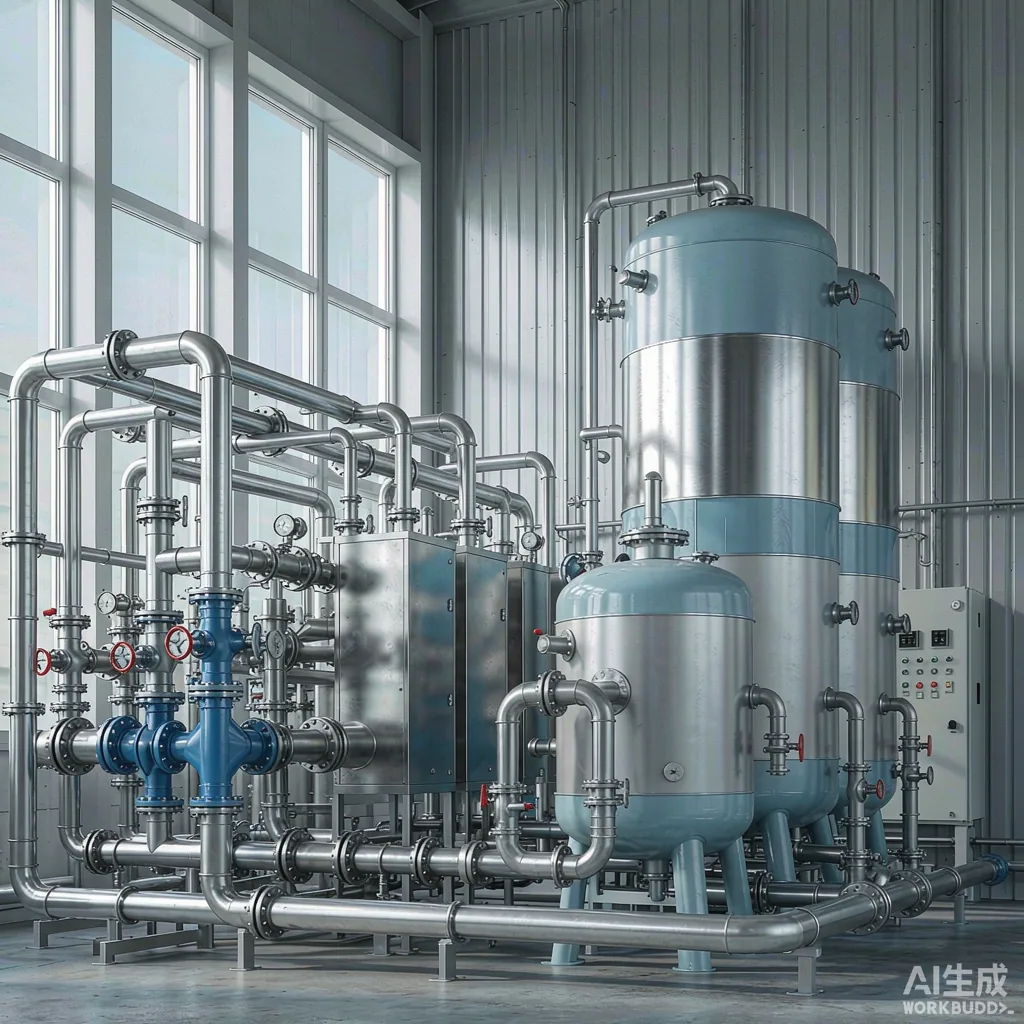
Treatment is a sequence, not a box. Understanding the sequence tells a buyer which parameter is most likely to drift and which log to ask for. Most knit dyehouse plants run the same basic chain, with the optional stages determining whether reuse is possible.
- Equalisation: mix the discharge from different machines so the downstream plant sees a steady load rather than a series of shocks.
- Neutralisation: bring pH into the permitted window, usually with acid or with carbon dioxide rather than with a mineral acid.
- Coagulation and flocculation: destabilise and aggregate suspended solids and a large part of the colour bodies.
- Biological treatment: consume the dissolved organic load, which is where most of the five-day biochemical oxygen demand is removed.
- Tertiary polishing: oxidation, adsorption or sand filtration to close the colour gap when the permit is tight.
- Membrane recovery, optional: ultrafiltration or reverse osmosis to bring 30 to 50 percent of the flow back into production.
- Sludge handling: dewater and dispose of the solids, typically 0.5 to 1.5 kg of dry solids per 100 kg of textile processed.
The stage that fails first under a load change is almost always biological. A deep shade arriving after a run of pale shades raises the organic load faster than a fixed-rate biological plant can respond, and the ammonia figure moves before the chemical oxygen demand does. Watching ammonia gives an earlier warning than watching the headline parameter.
How Effluent Control Changes the Programme Specification
Effluent limits are not only a compliance matter. They constrain what a programme can specify, and the constraints are worth writing down before the colour range is frozen rather than discovered afterwards.
| Specification choice | Effluent consequence | Practical response |
|---|---|---|
| Deep shades across the range | Higher colour and chemical oxygen demand | Cap dark shades or stage them between pale lots |
| Many colourways per style | More short lots, more rinse water | Consolidate to fewer shades or group by depth |
| Piece dyeing the finished body | Full liquor ratio, higher load | Consider dope-dyed yarn for stable core shades |
| Recycled polyester substrate | Narrower dyeing window, more leveling agent | Confirm the recipe with the dyehouse before sampling |
| High fabric mass per bag | More liquor per piece | Zone the density instead of raising mass uniformly |
| Tight colour tolerance | More re-dyeing, more discharge | Agree a grey-scale tolerance of half a grade |
The single most effective lever is colourway count. Each additional shade is another bath, another rinse sequence and another set of lab dips, and the discharge rises close to in proportion. Programmes that cut six colourways to four usually see a larger improvement than programmes that switch yarn route while keeping the palette.
The second lever is lot length. A plant running long, consistent lots holds its biological stage in balance; a plant switching shade every few hours does not. Where a programme must run many shades, sequencing them from pale to dark and back again reduces the shock load even when the total number of baths is unchanged.
Documents to Request Before Sampling
Four documents settle most effluent questions, and all four exist before a single bag is made. Asking for them at sampling costs nothing; asking after bulk has been held costs two weeks.
The first is the discharge permit, which states the limits the plant is actually held to, including the parameter list and the monitoring frequency. The second is the most recent third-party test report, ideally less than twelve months old, showing measured values against those limits.
The third is the internal treatment log, which is where drift shows up before it becomes a breach; a plant that cannot produce one is telling the buyer something. The fourth is the chemical inventory screened against the current manufacturing restricted substances list, which connects effluent control to the restricted-substance question rather than treating them separately.
A Buyer's Question Set for the Dyehouse
Questions beat questionnaires. Six of them, asked on a call or during a visit, will tell a buyer more about an effluent system than a twenty-page self-assessment written for general distribution.
- What is the discharge limit you are held to, and who sets it: the park, the municipality, or a direct consent?
- What is your water reuse rate today, and what plant does it depend on?
- How do you handle a load shock when a deep shade follows a run of pale shades?
- What is your sludge disposal route, and can you show the manifests?
- Which chemicals on your inventory are screened against the current manufacturing restricted substances list, and at what conformance level?
- What happened the last time you breached a limit, and what changed afterwards?
The last question is the most informative. Every plant that has run for a decade has had a breach. A plant that describes the corrective action, the monitoring change and the date is a plant with a working management system. A plant that insists it has never had one is either new or not telling the truth.
Reading a Test Report Without Being Misled
Three traps catch buyers reading effluent reports. The first is a composite sample. A twenty-four-hour composite smooths out the peak that caused the complaint, so check whether the reported value is a composite or a grab sample, and ask for both where the permit allows it.
The second is dilution. A plant discharging into a large, clean cooling-water stream can show a compliant figure at the boundary while the process stream itself is far over the limit. Ask where the sample was taken and whether the reported value is corrected for dilution.
The third is age. Limits tighten, chemistries are reclassified, and a report from three seasons ago may test against a parameter list that no longer applies. Insist on a report dated within twelve months and cross-check the parameter list against the current permit.
Where Effluent Control Meets Restricted Substances
Effluent and restricted substances are usually handled by different teams with different files, which is why programmes fail one and pass the other. The connection is the chemical inventory: a substance that is restricted in the article may also be restricted in discharge, and a chemistry chosen to fix a fastness problem can create a discharge problem.
The practical step is to screen one inventory against both lists. Where a chemistry is needed for a deep shade, check whether an alternative with the same functional result sits at a better conformance level. This is also where the finished-article certificate matters: a yarn route change made for recycled content should be re-checked for chemical compliance before it ships.
None of this requires the buyer to become a wastewater engineer. It requires four documents, six questions, and a note in the specification that the dyehouse will be asked for discharge data at review. That single line turns a two-week hold into a routine request.
Building Effluent Questions into the Sampling Round
Sampling at 7 working days is the natural moment to settle effluent, because the sample batch is the batch that will be dyed. Ask for the recipe the dyehouse intends to run, the auxiliaries it includes and the expected discharge load for that recipe. Where a programme carries a deep shade, ask for the load figure for that shade specifically rather than for the plant average.
Bulk then runs 30 days, and inspection to AQL 2.5 under ISO 2859-1 happens before loading. Putting the discharge request at the sampling stage means any correction happens while the recipe can still change, which is the difference between a revised report and a held container.
Ask at sampling, not at review
Request the intended recipe and its expected discharge load while the sample is being dyed. Corrections made at 7 working days cost a re-test, not a two-week hold.
Watch ammonia, not just COD
The biological stage responds to load shocks more slowly than the headline parameter suggests. Ammonia moves first and gives the earliest warning of a plant out of balance.
Cut colourways before switching yarn
Each shade is another bath and rinse. Programmes that move from six colourways to four usually beat programmes that change yarn route and keep the palette.
Check the sample point
Confirm whether the reported value is a grab or composite sample, and whether it is corrected for dilution. Both change what the number means.
The effluent clause in one line
- The dyehouse will supply its discharge permit, a third-party test report dated within twelve months and the internal treatment log on request at programme review.
Check the dyehouse before you commit bulk
Send the bag type, target fabric mass and colourway count. We will return the intended recipe, the expected discharge load and the four documents to review, then sample at 100 pcs per style and colourway with 7 working days sampling and 30 days bulk, inspected to AQL 2.5 and shipped FOB Xiamen. Start on the contact page.
Frequently Asked Questions
What is dyehouse effluent control in a knit bag programme?
It is the set of limits, treatment stages and records that govern what a dyehouse discharges after dyeing a knitted bag body or its yarn. Control rests on four parameters: chemical oxygen demand, five-day biochemical oxygen demand, pH and true colour. Permits are set by the industrial park or the municipality, and the buyer's interest is that a breach can hold a compliant shipment at the gate.
Which effluent parameters should a knit bag buyer check first?
Start with chemical oxygen demand, five-day biochemical oxygen demand, pH and true colour, because those four appear in nearly every permit. Treated discharge typically sits below 200 mg per litre of chemical oxygen demand and below 30 mg per litre of five-day biochemical oxygen demand, with pH in the 6 to 9 window. Add sulphide and ammoniacal nitrogen where the permit lists them.
Why does a deep shade raise the effluent load?
A deep shade applies more dye, leaves more unfixed dye to rinse out, and usually needs more levelling and dispersing auxiliaries to achieve an even result. Untreated chemical oxygen demand on a deep navy can run 200 to 400 mg per litre against 30 to 60 mg per litre for a pale shade on the same substrate. Staging dark lots between pale lots reduces the shock.
How much water can a knit bag dyehouse reuse?
With membrane recovery, typically 30 to 50 percent of the flow can return to production. Without it, reuse is close to zero and the discharge volume rises accordingly. The limiting factors are colour and dissolved solids, which is why tertiary polishing usually has to precede the membranes. Ask for the current reuse rate and the plant it depends on.
What is the difference between a grab sample and a composite sample?
A grab sample is a single sample taken at one moment, which captures a peak. A composite sample is collected over a period, commonly twenty-four hours, and averages the load. A composite can hide the peak that caused a complaint. Where the permit allows, ask for both and compare them before accepting a discharge figure as representative.
How does dilution distort an effluent report?
If treated process water is mixed with a large, clean cooling-water or stormwater stream before the sampling point, the measured concentration falls while the total mass discharged is unchanged. The report then looks compliant at the boundary while the process stream is over the limit. Ask where the sample was taken and whether the value is corrected for dilution.
How often should discharge testing be carried out?
Monitoring frequency is normally set by the permit and is often monthly for the headline parameters. For a buyer review, a third-party report dated within twelve months is the minimum acceptable evidence, and it should cover the machine that will run the programme. Internal logs should be far more frequent, because drift is visible in the log long before the annual test.
Does the yarn route change the effluent picture?
Yes. Dope-dyed yarn removes the dyebath entirely and brings water use down to roughly 20 to 30 litres per kilogram against 60 to 100 litres for piece dyeing. Recycled polyester can narrow the dyeing window and add levelling agent. Any yarn route change should be re-checked for discharge load and for finished-article chemical compliance before bulk.
How does knitting reduce effluent compared with cut-and-sew?
Shaped knitting leaves 2 to 4 percent waste against 12 to 18 percent for a cut-and-sew route from the same fabric mass, so less fabric enters the bath for a given number of shipped bags. The advantage is real but it disappears if a programme runs many short dye lots, because each lot carries its own bath and rinse sequence.
What should a dyehouse effluent clause in a specification say?
Keep it to one line: the dyehouse will supply its discharge permit, a third-party test report dated within twelve months, and the internal treatment log on request at programme review. Anything longer tends to be paraphrased, and the paraphrase is where the parameter list gets dropped.
How much sludge does knit bag dyeing produce?
Typically 0.5 to 1.5 kg of dry solids per 100 kg of textile processed, depending on how much suspended solids reach the coagulation stage rather than being recovered earlier. Deep shades sit at the upper end. Ask for the disposal route and manifests, since sludge handling is the part of effluent control most often outsourced and least often documented.
Can effluent data be checked before bulk is committed?
Yes, and sampling is the right moment. Sampling runs 7 working days, which is enough to request the intended recipe and its expected discharge load. Bulk then runs 30 days, with inspection to AQL 2.5 under ISO 2859-1 before loading. A correction made at sampling stage costs a revised report rather than a held container.
What is a manufacturing restricted substances list?
It is the list of chemical substances restricted in the manufacturing process rather than in the finished article, published by the Zero Discharge of Hazardous Chemicals programme. Suppliers are assessed at three conformance levels covering chemical inventory, management system and wastewater testing. It is the natural bridge between effluent control and restricted-substance compliance.
How does effluent control connect to a recycled content claim?
Only indirectly, but the two files are often reviewed together. A recycled claim rests on transaction certificates; effluent rests on discharge permits and test reports. Where a programme switches yarn route to raise recycled share, re-check both the discharge load for the new recipe and the finished-article certificate, because one change can move both.
People Also Ask
What are the basics of dyehouse effluent control?
Four parameters, three documents and one habit. The parameters are chemical oxygen demand, five-day biochemical oxygen demand, pH and true colour. Request the permit, a recent third-party report and the internal log, and ask for new data whenever a shade changes.
What COD level is acceptable in textile effluent?
Treated discharge commonly sits below 200 mg per litre, though the binding figure is always the one in the local permit. Untreated deep-shade liquor can run 200 to 400 mg per litre before treatment, which is why biological capacity matters more than the headline number.
How is textile effluent colour measured?
True colour is measured in platinum-cobalt units after filtering out turbidity, which distinguishes dissolved colour bodies from suspended solids. Permits commonly cap it below 100 units, because visible colour in a receiving channel is the failure most likely to draw a complaint.
Do deep shades need more water to dye?
Yes. A deep navy or black needs more dye, more auxiliaries and more rinse stages to remove unfixed dye, pushing water use and discharge load above a pale shade on the same substrate. Grouping shades by depth reduces the number of severe bath changes.
What documents prove effluent compliance?
The discharge permit stating limits and monitoring frequency, a third-party test report dated within twelve months, the internal treatment log showing day-to-day control, and the chemical inventory screened against the current restricted substances list.
Sources and further reading
Every figure on this page is either our own programme data or attributed below. Open the originals before you write them into a specification.
- Manufacturing Restricted Substances List and wastewater guidelinesZDHC Roadmap to Zero The industry framework behind chemical inventory screening, conformance levels and wastewater limits used in effluent programmes.
- Substances restricted under REACHECHA The restricted-substance list under REACH Annex XVII that sits alongside the effluent parameter list in a compliance review.
- EU Strategy for Sustainable and Circular TextilesEuropean Commission Policy direction behind tighter discharge limits and extended producer responsibility reporting for textile articles including bags.
- OEKO-TEX STANDARD 100OEKO-TEX Finished-article limit values to re-check whenever a yarn route or dye recipe changes on a running programme.
- ISO 2859-1 Sampling procedures for inspection by attributesISO The sampling standard behind the AQL 2.5 inspection carried out before bulk shipment.