Knitted Bag for Daily Commute: A Cost-Per-Trip Specification Guide
What should a knitted bag for daily commuting specify? Start from use intensity rather than from style: about 250 return trips a year, an average load near 4.5 kg, a 13-inch device at about 33 cm wide, and a shoulder-contact zone that sees 20,000 rubs of abrasion. A 600D body at about 620 g empty, quoted near USD 4.80 FOB Xiamen at 2,000 pcs, works out at roughly USD 0.01 per trip over three years. Shape retention and heavy rain are where knit loses.
The Number That Starts the Spec: Cost Per Trip
Commute bags are the most heavily used product in most ranges and the least carefully specified. The useful starting number is cost per trip. A body quoted at USD 4.80 FOB Xiamen, carried on about 250 return trips a year for three years, costs roughly USD 0.0064 per trip. Compare that with a bag that fails after one year and the arithmetic stops being about unit price.
That framing changes the specification decisions that follow. It justifies zoning the shoulder area, spending on a better zip and adding a structured base, because each of those costs cents and buys a year. It also exposes over-specification: a 900D body on a 4.5 kg commute load adds about 190 g of mass the customer carries every day and about USD 3 of cost for strength nobody uses.
What 250 Return Trips Does to a Bag
Write the duty cycle down before choosing anything. Two hundred and fifty return trips is about 500 carry events a year, each involving a shoulder load of roughly 4.5 kg, a set-down on a train or office floor, and at least two zip operations. Over three years that is 1,500 carry events, roughly 3,000 zip cycles and about 3,750 kg-metres of abrasion at the strap contact zone.
Two consequences follow. First, abrasion matters more than tensile strength: a commute bag never sees a load high enough to break a strap root, but it sees constant low-level rubbing that wears the surface long before the structure is at risk. Second, hardware becomes the failure point. A zip rated at about 5,000 cycles covers three years with margin; a zip rated at 2,000 does not survive year two.
Where a Commute Bag Wears Out First
Four places, in a consistent order. The shoulder-contact zone of the strap, where the fabric rubs against a coat or a jacket seam for an hour a day. The base corners, where the bag is set down on pavement. The zip tape and the zip garage, which take repeated lateral stress. And the mouth of the bag, which is grabbed and pulled several times a day.
All four are local, which is exactly why zoning is the right response. A whole-garment machine can knit a denser tuck structure into the shoulder zone and the base corners while leaving the rest of the panel at 600D, adding about 40 g and about 3 minutes of cycle time. Running 900D across the whole body instead would add about 190 g and about 15 minutes for a smaller gain in the places that matter.
| Component | Three-year duty | Specification | Why that number |
|---|---|---|---|
| Shoulder contact zone | about 3,750 kg-metres | denser tuck structure, 20,000 rubs | abrasion, not tensile, is the failure mode |
| Base corners | about 1,500 set-downs | zoned tuck or 900D insert | the second most returned failure point |
| Main zip | about 3,000 cycles | rated to 5,000 cycles | a 2,000-cycle zip fails in year two |
| Device sleeve | daily insertion | 34 cm internal, 4 mm foam base | a 13-inch device measures about 33 cm |
| Strap width | hourly shoulder load | 38 mm minimum | a 25 mm strap cuts into the shoulder at 4.5 kg |
| Body mass | carried every day | about 620 g empty | every gram is carried 500 times a year |
| Water resistance | unpredictable | spray rating 4, ISO 4920 | shower resistance, not waterproofing |
The body mass row deserves a second look. Six hundred and twenty grams empty is about right for a 600D body with a 34 cm sleeve and four pockets. A comparable interlined woven commuter weighs about 890 g. Over 500 carry events a year, the 270 g difference is 135 kg of lifting the customer does not do, which is a real product benefit rather than a marketing line.
Load, Volume and the 33 cm Device Test
Size the bag around the device, because that is the one non-negotiable dimension. A 13-inch laptop measures about 33 cm wide, a 14-inch about 32.5 cm and a 15-inch about 35.5 cm, and the sleeve should be about 1 cm larger with the padding at the base rather than the face. A commute bag that fits a 13-inch device needs an internal width near 34 cm and usually lands at about 14 to 16 L.
Volume beyond that is a trade, not a benefit. A 20 L commuter gets filled, weighs more and slops against the wearer on a crowded train. Between 14 and 16 L is the range that suits a device, a lunch container, a water bottle and a jacket, and it keeps the average load near 4.5 kg rather than drifting toward 7 kg. Specify the volume in litres and put it on the hangtag.
Strap Comfort and the Shoulder Abrasion Zone
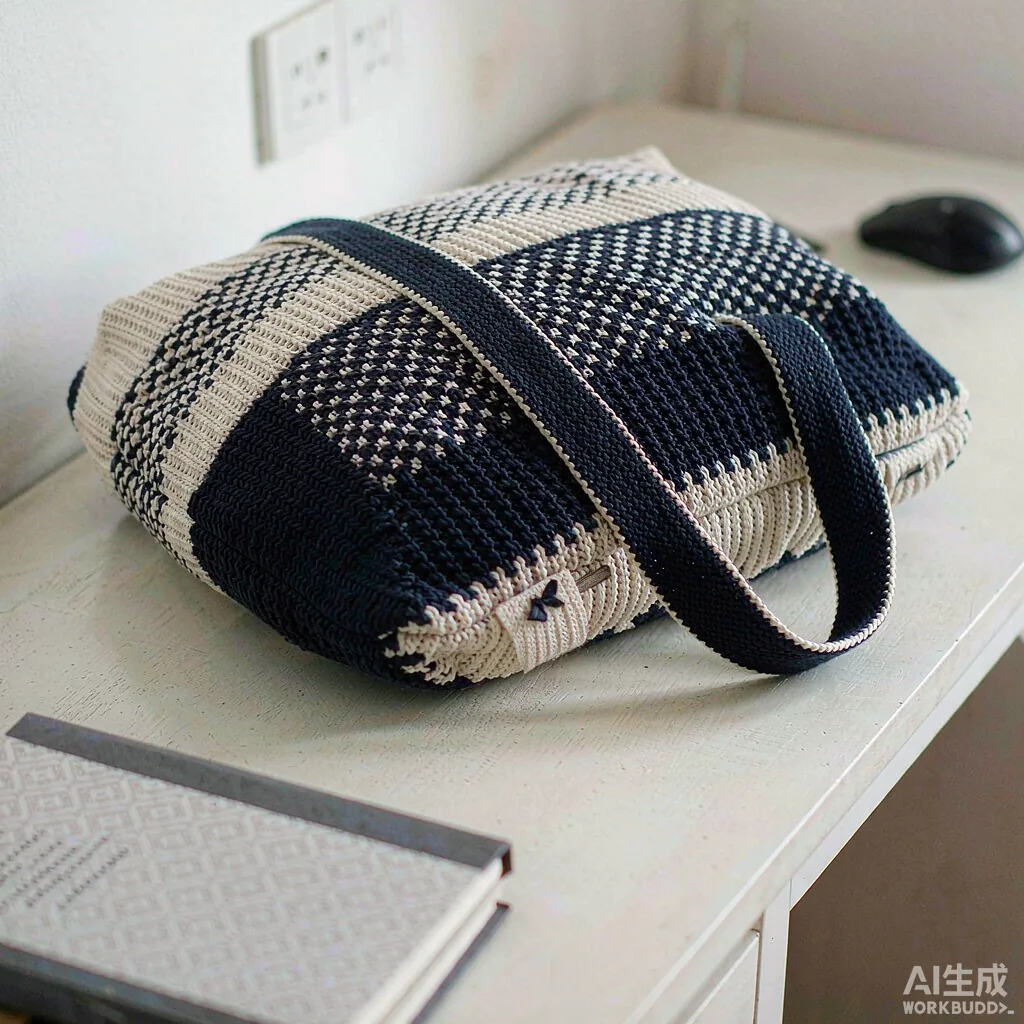
Strap comfort is a width problem before it is a padding problem. At 4.5 kg, a 25 mm strap produces roughly 1.8 N per millimetre of contact pressure and cuts into the shoulder over an hour; a 38 mm strap halves that. Padding helps, but a narrow padded strap still concentrates load at its edges, and the knit surface under it is what wears.
The shoulder zone should therefore be specified as a structure, not as a patch. A tuck-stitch band about 60 mm wide, knitted into the strap where it crosses the shoulder, lifts local abrasion resistance to about 20,000 rubs to ISO 12947-2 at 12 kPa against about 8,000 for a flat knit surface. It adds about 12 g and costs nothing in yarn, which makes it the most efficient change available on a commuter.
Weather: Spray Rating 4 and What It Does Not Cover
A commuter gets caught in rain. A durable water-repellent finish raises the spray rating to about 4 under ISO 4920 or AATCC 22 when new, which means the surface sheds a light shower. It typically falls to about 3 after five laundering cycles, and an uncoated knit body still shows a hydrostatic head under 100 mm, so sustained rain wets the contents.
This is one of the two honest losses against a coated woven commuter. A polyurethane-coated polyester shell reaches about 1,500 mm hydrostatic head and keeps a laptop dry through a ten-minute downpour. If the range is sold into a wet climate, either specify a coated inner panel or a lined compartment, or position the bag as an urban product and say so. A knitted commuter is shower-resistant; it is not a dry bag.
Zip Cycles, Hardware and the Small Parts That Fail
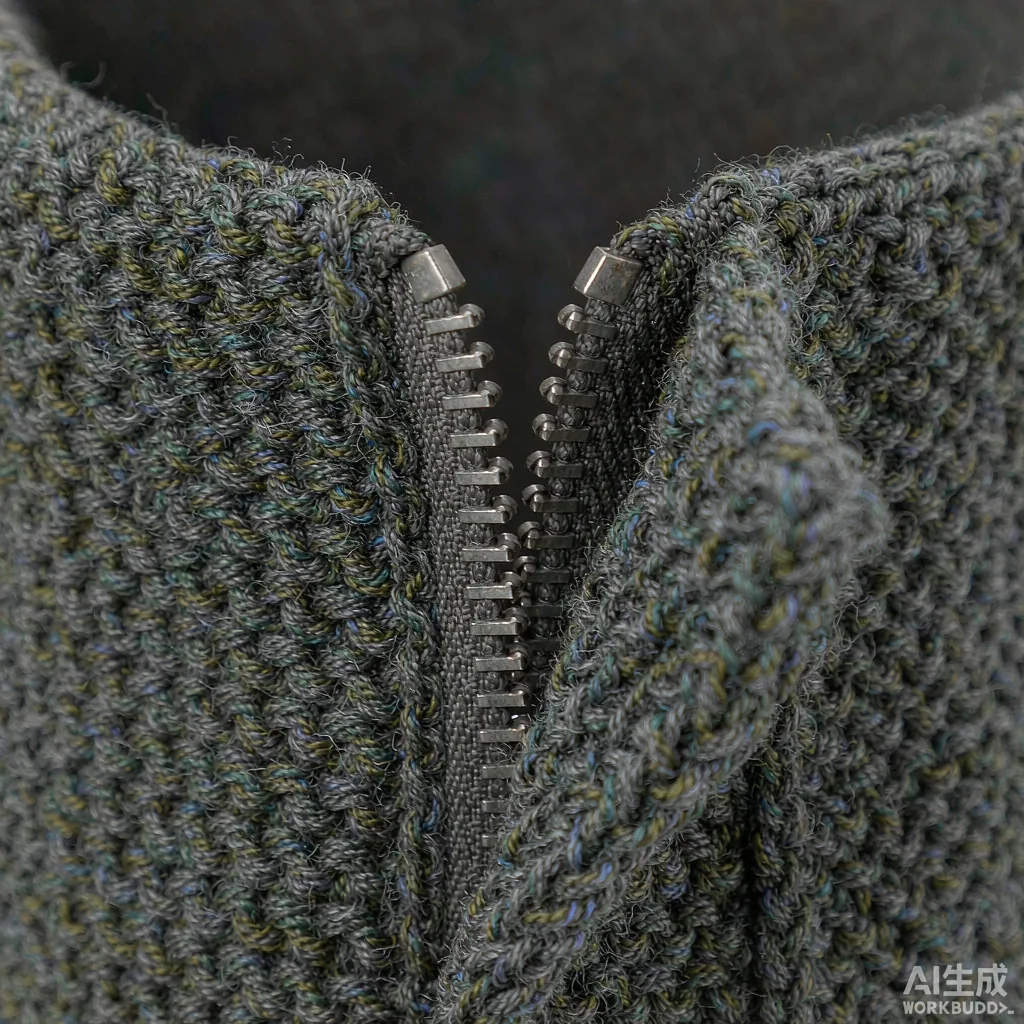
Hardware fails before fabric on a commuter, and it is the least expensive thing to fix at specification stage. Specify the main zip by cycle rating rather than by gauge alone: about 3,000 cycles over three years means a 5,000-cycle rated zip, with a tape tested for lateral pull at the garage. A metal slider looks premium but adds about 45 g and can catch on knit loops.
Check the small parts too. A D-ring carrying the strap should be tested to about 250 N, the webbing should match the body polymer if a monomaterial claim is planned, and any magnetic closure should be checked against the device sleeve because a strong magnet next to a laptop is a warranty claim waiting to happen. All of these cost cents at sampling and pounds at return.
Specify by duty
3,000 zip cycles, 20,000 rubs at the shoulder, 1,500 set-downs at the base. Write the duty, then the number.
Zone, do not upgrade
A tuck band at the shoulder adds about 12 g and beats moving the whole body to 900D, which adds about 190 g.
Size to the device
A 13-inch laptop is about 33 cm wide, so the sleeve needs about 34 cm internal with padding at the base.
Expect two losses
Heavy rain and empty-bag shape. Both are real, and both cost less to design around than to argue about later.
Shape Retention: Where Knit Loses to Interlined Woven
The second honest loss is shape. An interlined woven commuter stands up on a desk when it is empty; a soft knit body slumps. The knit body recovers its shape better after compression, which is why it packs well, but it does not hold a crisp rectangular profile without help, and a commuter that slouches looks tired in month three.
The fix is structural and inexpensive: a 0.8 mm polyester insert in the base and a slightly denser structure in the two side panels. That adds about 70 g and about USD 0.60, brings the bag close to standing on its own, and keeps the body monomaterial if the insert is polyester rather than polypropylene. If the brief demands a fully rigid briefcase silhouette, a woven shell with interlining remains the better answer.
Writing the Brief So the Sample Comes Back Right
Write the brief as duty plus dimensions plus test methods. State the trips per year, the average load in kilograms, the device width in centimetres, the volume in litres, the zip cycle rating, the abrasion target in rubs and the spray rating. Then require the sample to be tested as an assembled bag, not as a fabric swatch, because a commuter fails at the join, not in the middle of a panel.
Finally, confirm the commercial frame: 100 pcs per style and colourway, 7 working days for sampling, 30 days for bulk, FOB Xiamen with CIF and DDP options, and inspection to AQL 2.5 under ISO 2859-1. At about USD 4.80 per unit the product has room for a zoned structure and a rated zip, and both of those pay back across a three-year duty cycle.
Specify a commuter bag around the duty cycle
Send the device size, the average load and the trips per year. The team will recommend a yarn count, gauge and zoned structure, quote FOB Xiamen at 100 pcs per style and colourway, and book a 7 working day sampling slot with 30-day bulk. Start on the contact page.
Frequently Asked Questions
What makes a good knitted bag for commuting?
A 600D body at about 620 g empty, a 34 cm internal device sleeve with padding at the base, a 38 mm strap with a zoned shoulder band, and a zip rated to about 5,000 cycles. Volume between 14 and 16 L keeps the average load near 4.5 kg, which is what most commuters actually carry.
How much weight does a commuter bag carry?
About 4.5 kg on average: a 13-inch laptop near 1.4 kg, a water bottle about 0.7 kg, a lunch container about 0.8 kg and the rest in small items. Specifying for 4.5 kg rather than 10 kg saves roughly 190 g of unnecessary body mass carried 500 times a year.
Where does a commuter bag wear out first?
The shoulder-contact zone of the strap, where the fabric rubs against clothing for about an hour a day, followed by the base corners. Both are local, so zoning with a denser tuck structure works better than upgrading the whole body to a heavier yarn, which adds about 190 g for less benefit in the places that fail.
How wide should a commuter strap be?
38 mm minimum. At 4.5 kg a 25 mm strap produces roughly 1.8 N per millimetre of contact pressure and cuts into the shoulder over an hour. Width solves the comfort problem before padding does, because a narrow padded strap still concentrates load at its edges.
Is a knitted commuter bag waterproof?
No. A durable water-repellent finish gives a spray rating of about 4 under ISO 4920 when new, falling to about 3 after five laundering cycles, and an uncoated knit shows a hydrostatic head under 100 mm. For sustained rain, specify a coated inner compartment or a lined sleeve.
What size should the laptop sleeve be?
About 1 cm larger than the device. A 13-inch laptop measures roughly 33 cm wide, a 14-inch about 32.5 cm and a 15-inch about 35.5 cm. Padding belongs at the base where the device rests, typically about 4 mm of closed-cell foam, not at the face.
How many zip cycles should I specify?
About 5,000. A commuter opens and closes the main zip roughly twice per trip, which is about 3,000 cycles over three years, so a 5,000-cycle rating leaves margin. A zip rated at 2,000 cycles does not survive the second year of daily use.
Does a knitted commuter bag keep its shape?
Less well than an interlined woven. A soft knit slumps when empty, which is the second honest loss against woven. A 0.8 mm polyester insert in the base plus denser side panels adds about 70 g and brings the bag close to standing on its own.
How much does a knitted commuter bag cost?
About USD 4.80 FOB Xiamen at 2,000 pcs including hardware and AQL 2.5 inspection, which works out near USD 0.0064 per trip across three years of 250 return trips a year. A zoned structure and a rated zip both fit inside that figure.
What volume suits a daily commute?
Between 14 and 16 L. That fits a 13-inch device, a bottle, a lunch container and a jacket without encouraging the overfilling that pushes the average load toward 7 kg. State the volume in litres on the hangtag so customers can compare across the range.
Should the commuter use recycled yarn?
Yes, where the brand carries a recycled claim. Recycled polyester at 600D runs about 8.0 cN/dtex against roughly 8.5 for virgin, which still clears 20,000 rubs at the shoulder zone. Keep webbing, thread and label in the same polymer family to protect the monomaterial claim.
How long does a commuter programme take?
Sampling runs 7 working days for one construction and 30 days for bulk after approval. A zoned structure usually needs one sampling cycle, because the tuck band and the base insert have to be tuned together. Book capacity early for a launch date, since a 600D body occupies a machine for about 16 minutes.
People Also Ask
Are knitted bags good for everyday use?
Yes, if the duty cycle is specified. A 600D body with a zoned shoulder band handles about 250 return trips a year at 4.5 kg. The two compromises are sustained rain and empty-bag shape, both of which cost less to design around than to fix later.
How do I stop a bag strap from wearing out?
Zone it. A tuck-stitch band about 60 mm wide where the strap crosses the shoulder lifts local abrasion from about 8,000 to about 20,000 rubs and adds roughly 12 g. Widen the strap to 38 mm at the same time.
What is the lightest practical commuter bag?
About 620 g empty for a knitted 600D body with four pockets and a 34 cm sleeve, against roughly 890 g for a comparable interlined woven. The 270 g difference is about 135 kg of lifting a year that the customer avoids.
Do knitted bags protect laptops?
Only with an inserted panel. The shell transmits a knock straight through, so specify about 4 mm of closed-cell foam in the sleeve base. Size the sleeve about 1 cm wider than the device, so about 34 cm for a 13-inch laptop.
How often should a commuter bag be replaced?
Every three years is a reasonable target. That is about 1,500 carry events and roughly 3,000 zip cycles. Specifying a 5,000-cycle zip and a zoned shoulder band is what makes the three-year target achievable rather than aspirational.
Sources and further reading
Every figure on this page is either our own programme data or attributed below. Open the originals before you write them into a specification.
- ISO 12947-2 — Abrasion resistance of fabrics by the Martindale methodISO The test behind the 20,000 rub zoned shoulder figure and the 8,000 rub flat knit figure.
- ISO 4920 — Textile fabrics, determination of resistance to surface wetting (spray test)ISO Referenced for the spray rating 4 when new and rating 3 after five laundering cycles.
- ISO 13934-1 — Tensile properties of fabrics, maximum force by the strip methodISO Used for the strap-root tensile target and for the 250 N D-ring check.
- AATCC test methods for colour fastness and water repellencyAATCC Referenced for AATCC 8 rubbing fastness, AATCC 61 laundering fastness and AATCC 22 spray testing.
- ISO 2859-1 — Sampling procedures for inspection by attributesISO Defines the AQL 2.5 inspection level applied to commuter bag bulk shipments.
The Three-Year Check Before Repeat Orders
Before re-ordering a commuter, ask for the return data by failure mode. If shoulder-zone abrasion dominates, widen the tuck band from 60 mm to about 80 mm. If zip failures dominate, move up a cycle rating. If shape complaints dominate, add the base insert. Each fix costs under a dollar and each one is informed by data rather than by opinion.
Keep the documentation current at the same time. A commuter range refreshes often, and each refresh is a chance to tighten one row of the specification rather than to restyle the whole bag. Re-test the shoulder zone and the zip on every repeat run, because a yarn lot change or a hardware substitution can move either number without anyone noticing. Keep the documentation current: abrasion to ISO 12947-2, tensile on the strap root to ISO 13934-1, spray rating to ISO 4920, colour fastness to AATCC 8 and AATCC 61, and inspection to ISO 2859-1. For a wider view of where knit fits against established constructions, see the knit versus traditional bag guide.